 Written by Ines Zahraoui — Tunisian home cook and co-founder of The Mediterranean Recipe, developing and testing recipes in her own kitchen since 2020. More about Ines →
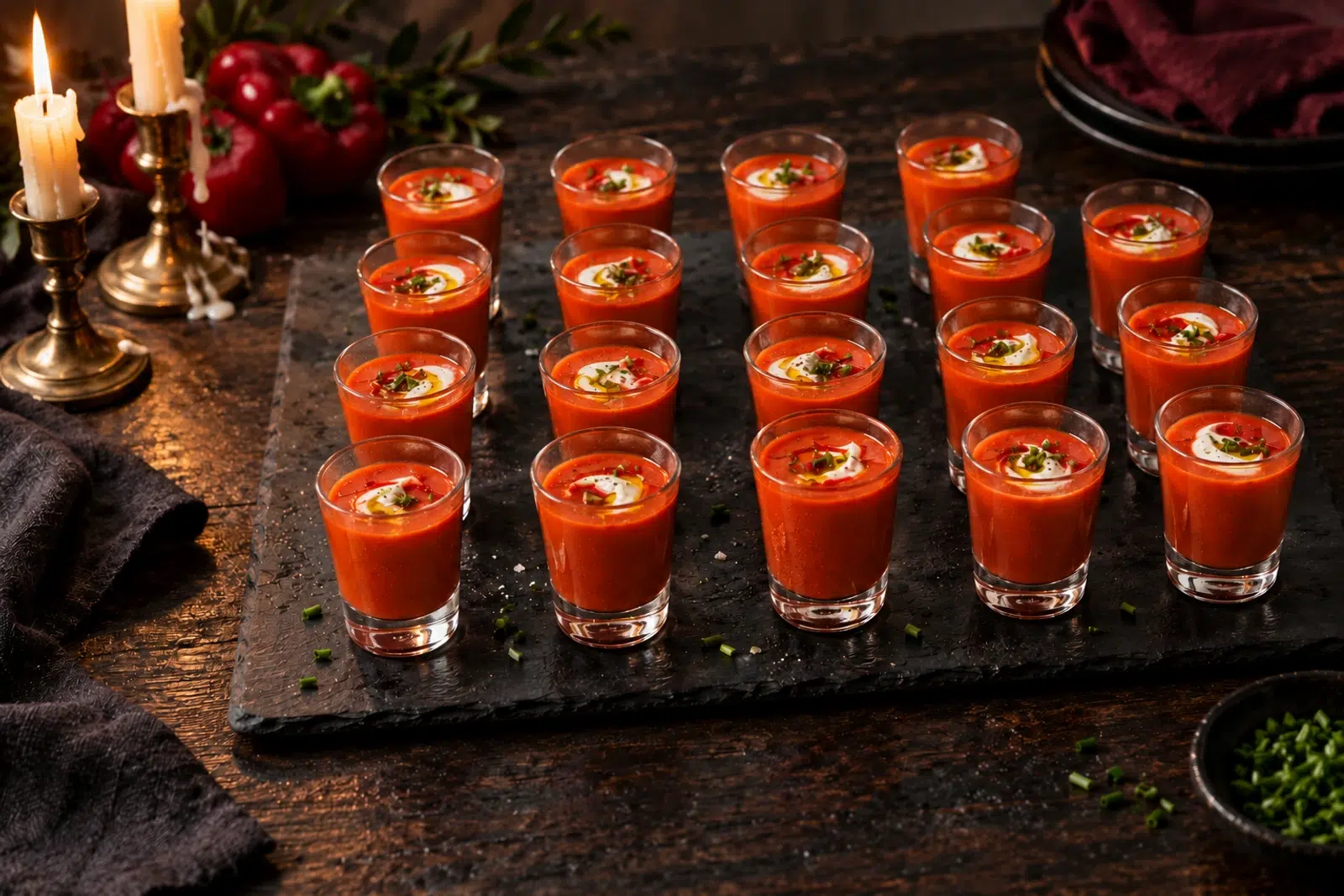
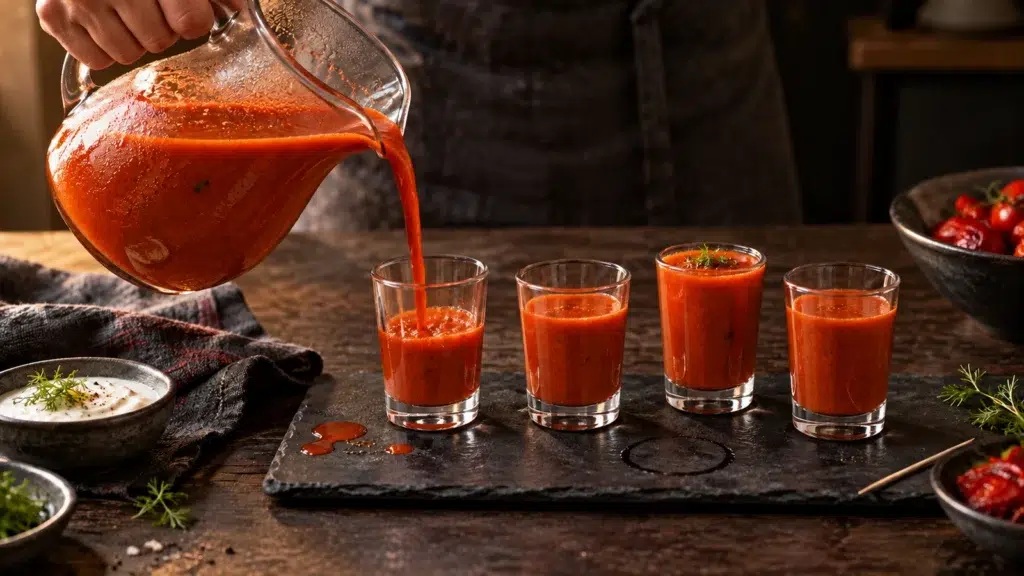
Twenty small glasses of deep red on a dark tray, carried into a candlelit room, create the visual for these Halloween soup shooters. The recipe uses everyday ingredients, and the impact comes from repetition rather than elaborate decoration.
The recipe is a chilled Spanish roasted red pepper soup — a relative of gazpacho and salmorejo, made with roasted peppers and tomatoes, bread for body, aged apple cider vinegar, garlic and good olive oil. It is inspired by the family of cold Andalusian soups, especially gazpacho and salmorejo, and it is a deep, opaque, arterial red without anything added to it.
And here is the part almost every Halloween shooter recipe gets wrong: serve it cold.
A hot shooter creates last-minute reheating, pouring and vessel-temperature decisions. This version avoids those variables: make the soup ahead, keep it refrigerated, pour small rounds into two-ounce tasting glasses and return the jug to the refrigerator.
Table of Contents
Table of Contents
Soup Shooter Recipe Card
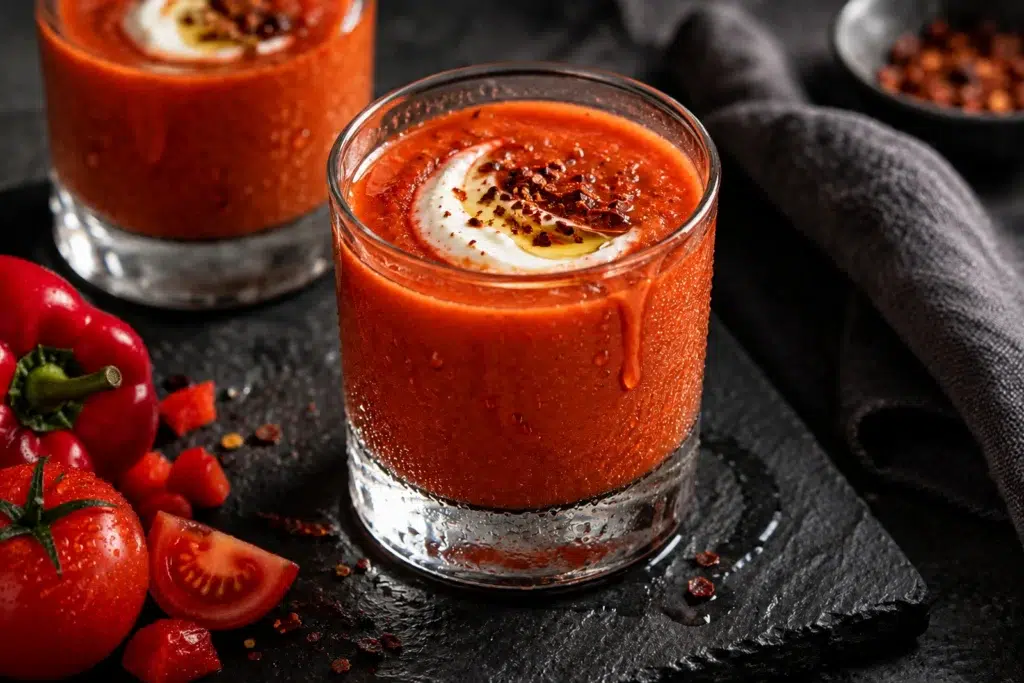
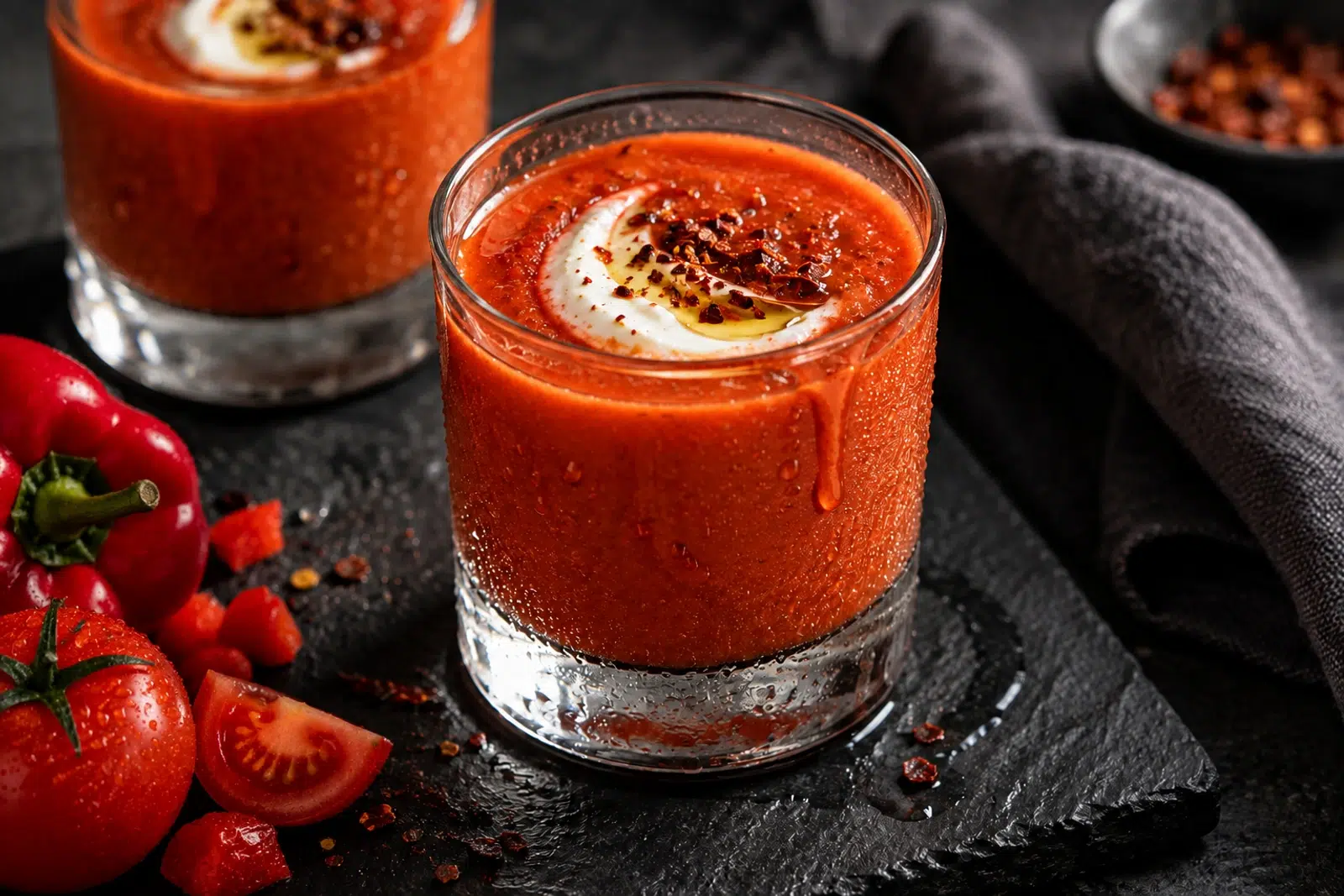
Chilled Red Pepper Blood Soup Shooters
Ingredients
Method
- Heat the oven to 425°F (220°C).
- Toss the peppers, tomatoes, onion and unpeeled garlic with 3 tablespoons of the olive oil and spread cut side down on a tray. Roast 30 to 35 minutes until the pepper skins are blistered and blackened in patches. Colour is flavour here.
- Cool 10 minutes, then slip the skins off the peppers and squeeze the garlic out of its papers. Do not rinse anything.
- Soak the torn bread in a little cold water for 5 minutes, then squeeze it lightly.
- Blend the roasted vegetables, garlic, bread, aged apple cider vinegar, smoked paprika, cumin and salt until completely smooth — a full 2 minutes in a blender.
- With the motor running, add the remaining 2 tablespoons olive oil in a thin stream. The soup will lighten slightly and go glossy.
- Thin with cold water to a consistency that pours cleanly but still coats the back of a spoon. See the section below.
- Pass it through a sieve. Do not skip this — see below.
- Chill at least 4 hours, ideally overnight. Taste again when cold and adjust the vinegar and salt.
- To serve, pour into shot glasses to about three-quarters, then drop a small spoonful of thinned yoghurt on the surface and drag a toothpick through it once. Finish with a drop of olive oil and a pinch of Aleppo pepper.
Nutrition
Notes
Tried this recipe?
Let us know how it was!Why This Recipe Actually Works
- Made two days ahead, and better for it.
- Poured from a jug. No reheating, no timing, no burnt fingers.
- Twenty glasses of deep red on a dark tray is the most theatrical thing in this cluster for the least effort.
- No bowls, no spoons, no seating.
- Its pepper, tomato, bread and olive-oil structure is inspired by familiar cold Spanish soups, so the method also works outside October.
Why the Format Is the Recipe
A shot glass changes what a soup is. Nobody sits down, nobody needs a spoon, and it can be passed around a standing room. It also caps the portion at about a quarter cup, which means a rich, intense, heavily reduced soup that would be too much as a bowl is exactly right as a mouthful.
That is why the yield here is in shooters rather than servings.
Essential Ingredients
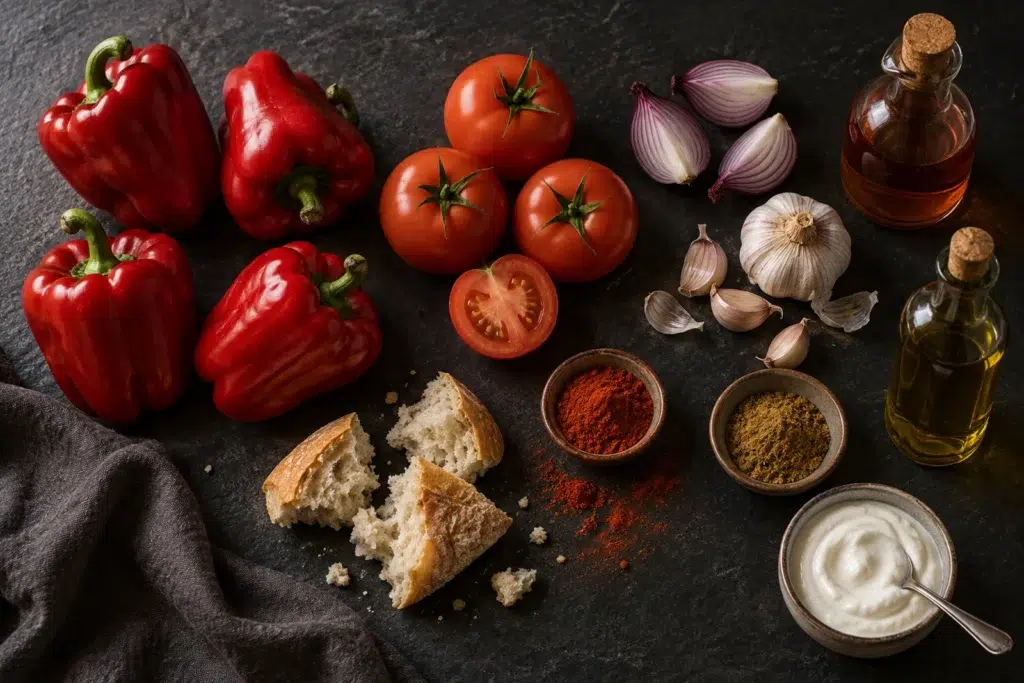
Red peppers. Four large ones, roasted hard. The blackened patches on the skin are the difference between a sweet soup and a deep one.
Tomatoes. Fresh if they are good, tinned plum tomatoes if not — and in October, tinned are usually better.
Stale bread. The Spanish trick. It gives body and a silky texture without cream, and it is why salmorejo has the consistency it does. Two ounces is enough.
Aged apple cider vinegar. Choose a good aged vinegar with clean acidity, then add it gradually and taste the soup again after chilling.
Smoked paprika. Pimentón. Deepens both the colour and the flavour, and reinforces the roast.
Good olive oil. Two tablespoons blended in at the end, which emulsifies and gives the soup its gloss.
Yoghurt for the swirl. Thick, thinned with a little water to a pourable ribbon.
The Foolproof Method
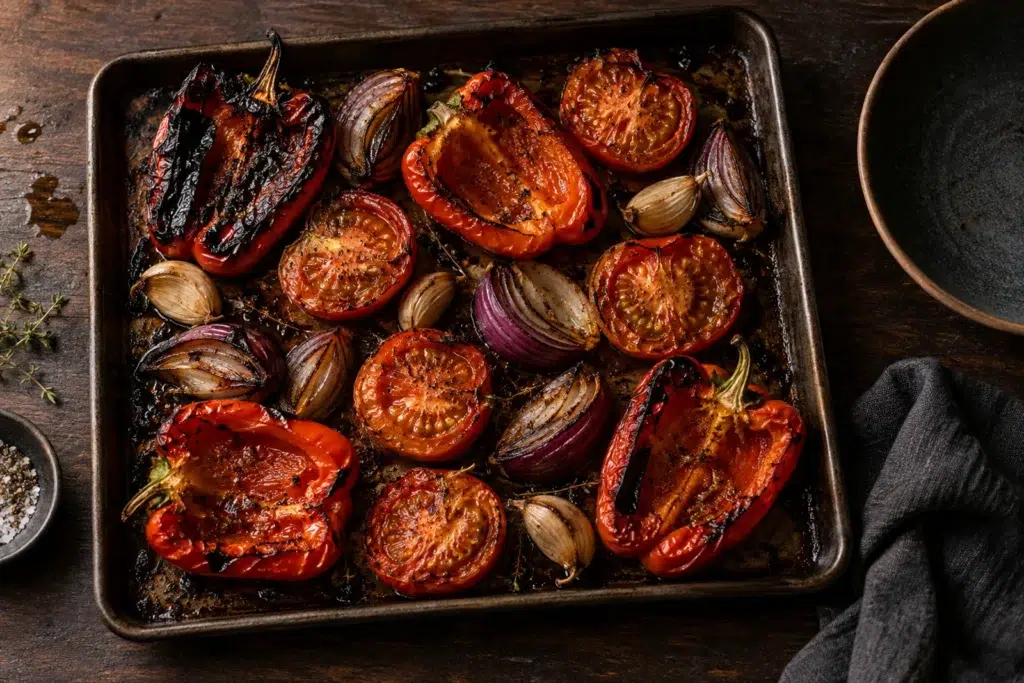
- Roast hard, until the pepper skins blacken in patches.
- Peel, don’t rinse.
- Soak and squeeze the bread.
- Blend 2 full minutes, then stream the oil in.
- Thin with cold water to a pouring consistency.
- Sieve it.
- Chill 4 hours minimum. Re-season cold.
Serve Them Cold
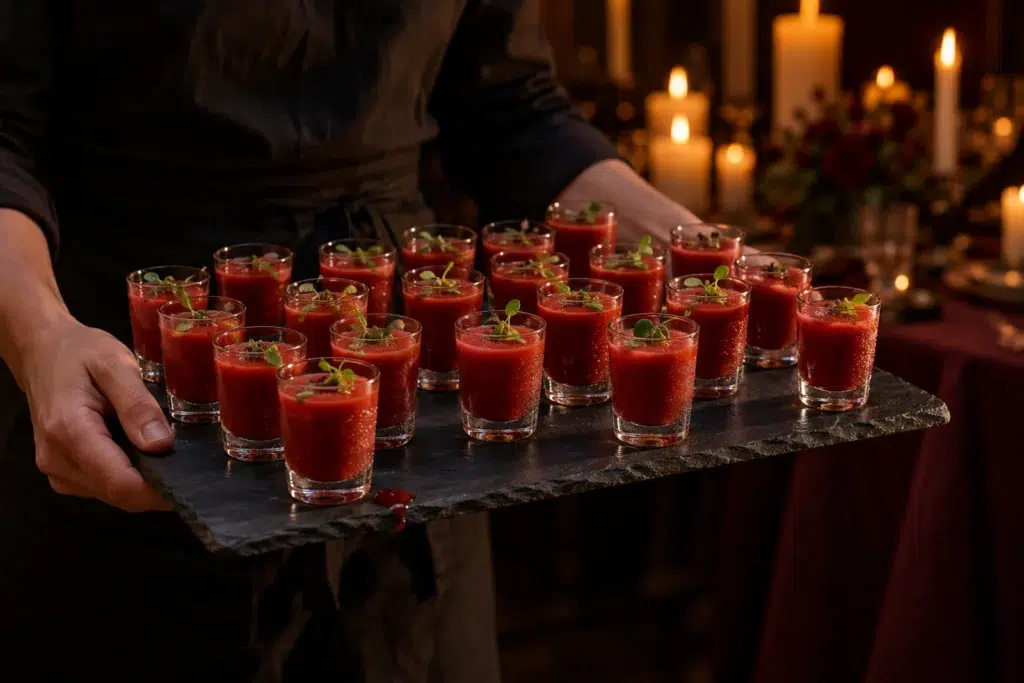
The claim, and it is a practical one rather than a culinary one.
For this make-ahead party version, serve them cold.
Think about what hot requires on the night: reheating while guests arrive, transferring liquid into small heat-safe vessels and serving before the temperature changes. None of that is impossible, but it is unnecessary for this specific recipe.
Cold service removes that timing pressure. Keep the soup in a sealed jug at 40°F (4°C) or below, pour only the next tray and return the rest to the refrigerator. Keep total room-temperature time under two hours, or one hour above 90°F (32°C).
There is also a clear culinary precedent: gazpacho and salmorejo are established cold Spanish soups built around tomatoes, peppers, bread, garlic, vinegar and olive oil. This roasted version is Spanish-inspired rather than a claim to be one canonical regional recipe.
One adjustment cold soup always needs: cold mutes salt and acid substantially. Taste and re-season after chilling, not before. It will almost always want more aged apple cider vinegar and a little more salt than it did warm.
If you genuinely want a hot shooter — and there is a case for it on a freezing night — use the red lentil soup instead, which holds heat far better and is designed to sit on a low burner. [NOT YET LIVE — /halloween-red-lentil-soup/ — scheduled 16 Oct]
Getting the Consistency Right for a Glass
Soup in a glass has a narrower window than soup in a bowl, and this is the part people get wrong.
Too thick and it will not pour cleanly, it clings to the inside of the glass in an unappetising film, and drinking it requires an unattractive amount of commitment.
Too thin and it looks like tomato juice, the yoghurt swirl sinks straight through it, and it reads as a drink rather than as food.
The test: it should pour in a smooth continuous stream and coat the back of a spoon, with a finger-drawn line through that coating closing slowly rather than instantly. Roughly the consistency of single cream.
Two things get you there:
The bread does the body. Two ounces of stale white bread blended in gives a silky, slightly viscous texture that water alone cannot. This is the whole mechanism behind salmorejo and it is why the soup does not need cream.
Thin with cold water at the end, a splash at a time. Not stock, which muddies the colour and adds savouriness the dish does not want.
And sieve it. Pepper skins, tomato seeds and stray fibres are invisible in a bowl and extremely visible against the side of a glass. Push it through a medium sieve with a ladle — it takes two minutes and it is what makes the finished shooter look professional rather than homemade.
The White Swirl
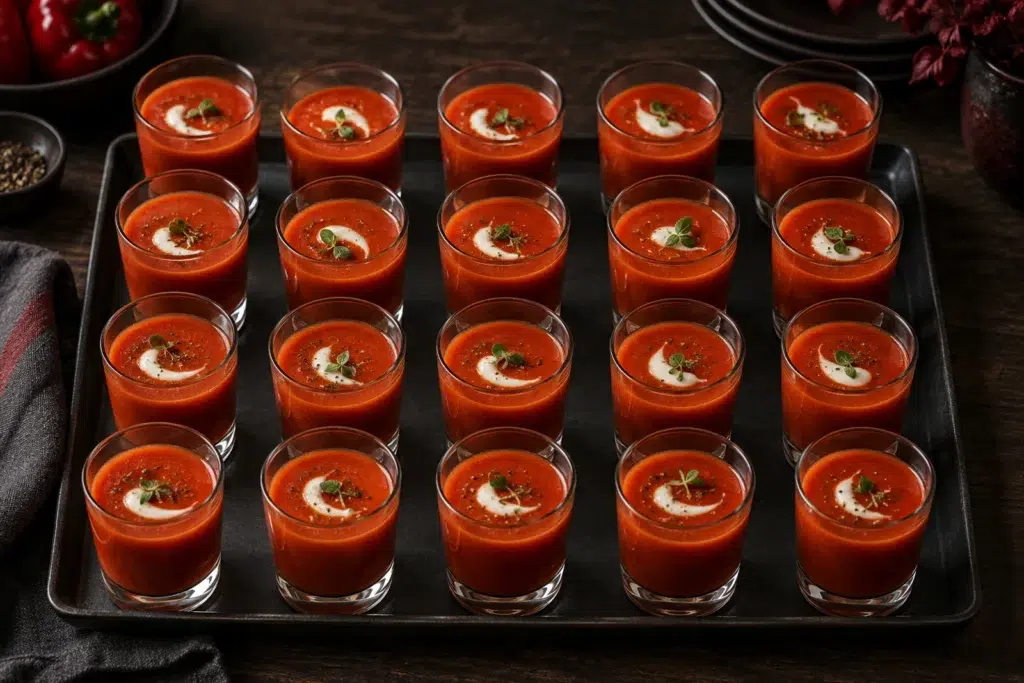
Small and it does most of the visual work.
Thin the yoghurt with a couple of teaspoons of water until it falls from a spoon in a smooth ribbon. Too thick and it sits on top as a blob; too thin and it disperses into pink haze.
Drop it, do not drizzle it. A small spoonful in the centre of the surface, then one single pass with a toothpick dragged through it. One pass. Two makes it muddy and three makes it pink.
Do it in the glasses, not the jug. Obviously — but people do try.
Swirl within about ten minutes of serving. Over half an hour the yoghurt slowly sinks and softens into the surface.
A drop of olive oil on top after the swirl, and a pinch of Aleppo pepper. That is the whole garnish.
Creative Variations
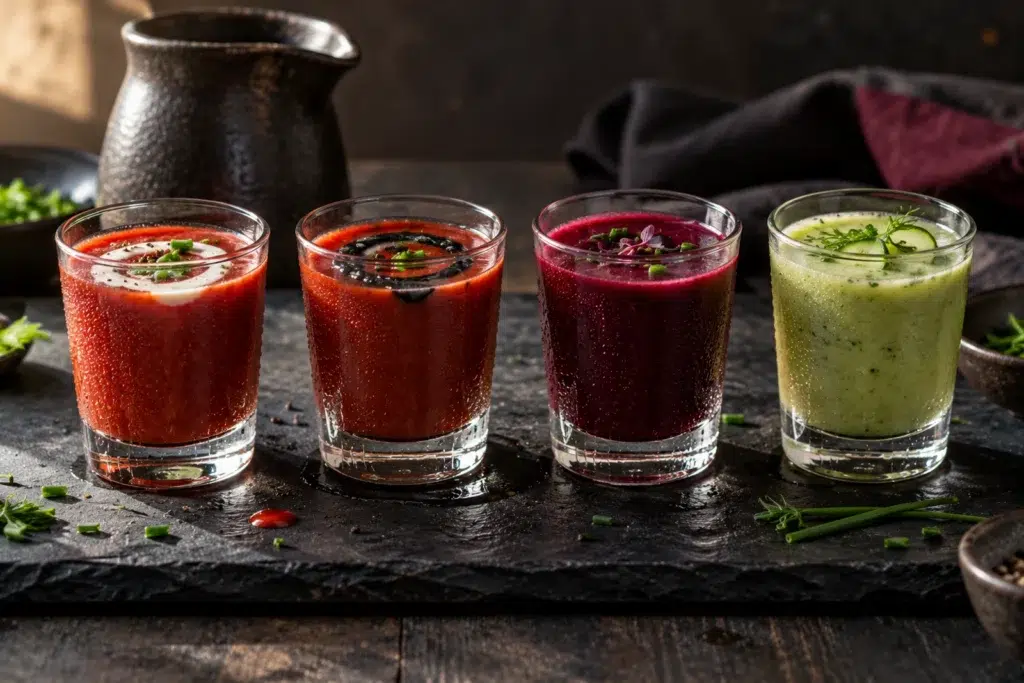
Salmorejo-style. More bread, more olive oil, no water — thicker and richer, garnished with chopped hard-boiled egg, roasted pepper and smoked paprika. The classic Córdoban version and arguably better food, though less bloody-looking.
With a black swirl. Black tahini thinned instead of yoghurt. Black on red rather than white on red, and considerably more sinister.
Beetroot boost. One small roasted beetroot blended in. Pushes the colour from red toward blood-magenta and adds sweetness — cut the vinegar accordingly.
Green version. Cucumber, green pepper, herbs and bread instead of the red vegetables. Serve alongside the red ones for two trays of very different colours.
Lemony herb finish. Add lemon zest, chives and a little extra olive oil for a brighter non-dairy garnish.
Make-Ahead, Quantities and Glassware
Make it two days ahead. It improves for the first two as the vinegar and smoked paprika settle in. Keep it in a sealed jug and shake before pouring.
Chill the glasses for an hour if you have fridge space. Cold glass keeps the soup cold on a warm table.
Quantities: this makes about 5 cups, which is 20 shooters at a quarter cup each. Plan one to two shooters per person when several appetizers are served; appetite and menu size matter more than a universal average.
For twelve guests with other appetizers: one batch. For twenty: make one and a half to two batches, depending on the menu. Keep extra soup cold and pour a second tray only as needed.
Glassware: two-ounce tasting glasses, small tumblers, espresso cups or small jam jars all work. Clear glass is essential — the whole point is the colour, and a ceramic cup hides it entirely. Small, straight-sided and clear is the ideal.
Passing them: a dark tray, glasses spaced so people can lift one without touching three others, and a napkin. Twenty on one tray is about the limit before it becomes difficult to carry.
Nutritional Benefits
Red peppers contribute vitamin C, tomatoes provide carotenoids, and olive oil supplies unsaturated fat. Exact nutrient retention varies with produce and cooking, so the recipe is presented as a vegetable-forward appetizer rather than a health claim.
At around 65 calories a shooter it is one of the lightest things on any Halloween table, and it is essentially a glass of blended roasted vegetables.
Five Rules to Keep Beside the Recipe
Roast until the pepper skins blister
Blend for two full minutes
Thin gradually, then sieve
Chill at least four hours and re-season cold
Keep refrigerated and observe the two-hour room-temperature limit
Scaling line: 10 shooters: 2½ cups · 20: 5 cups · 40: 10 cups, held cold in two jugs and poured in rounds
Frequently Asked Questions
Should soup shooters be served hot or cold?
Cold, for this recipe and for most party purposes. A quarter cup of hot soup in a thin glass loses its heat within minutes, needs reheating and decanting while guests arrive, and gives you a six-minute serving window. Cold soup is poured from a jug in ninety seconds and can be passed in small refrigerated rounds. Chilled roasted-pepper soups are also a genuine Spanish tradition rather than a compromise.
How far ahead can I make soup shooters?
Two days, and the soup improves over that time as the vinegar and smoked paprika settle. Keep it in a sealed jug in the fridge and shake before pouring. Add the yoghurt swirl in the glasses within about ten minutes of serving.
What consistency should soup shooters be?
About the consistency of single cream — it should pour in a smooth stream and lightly coat the back of a spoon. Too thick and it clings to the glass; too thin and the swirl sinks and it reads as a drink. Blended stale bread is what gives the body without cream.
What glasses should I use for soup shooters?
Small, straight-sided and clear — shot glasses, small tumblers, espresso glasses or small jam jars. Clear glass matters more than the shape, because the colour is the entire point and a ceramic cup hides it.
How many soup shooters do I need per person?
Plan one to two per person when several appetizers are served, then adjust for the rest of the menu and the size of the glasses. One batch of twenty covers twelve to fourteen guests comfortably.
Can I make this without bread?
Yes — replace it with a small boiled potato, blended in, which gives similar body and makes the recipe gluten-free. Without either the soup is noticeably thinner and the yoghurt swirl will not hold on the surface.
Pairing and Serving Ideas
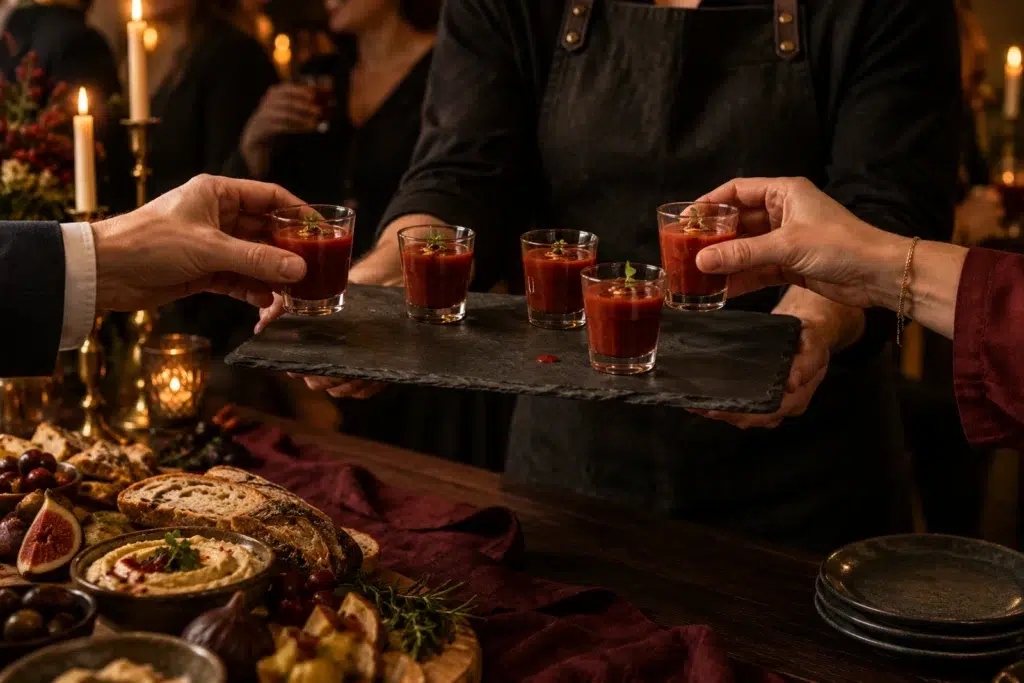
Passed as the first course of a masquerade dinner, about forty-five minutes in, after guests have been on the grazing board. No bowls, no spoons, no sitting down, and it can be eaten in a mask. [LIVE — /midnight-masquerade-halloween-dinner-party/]
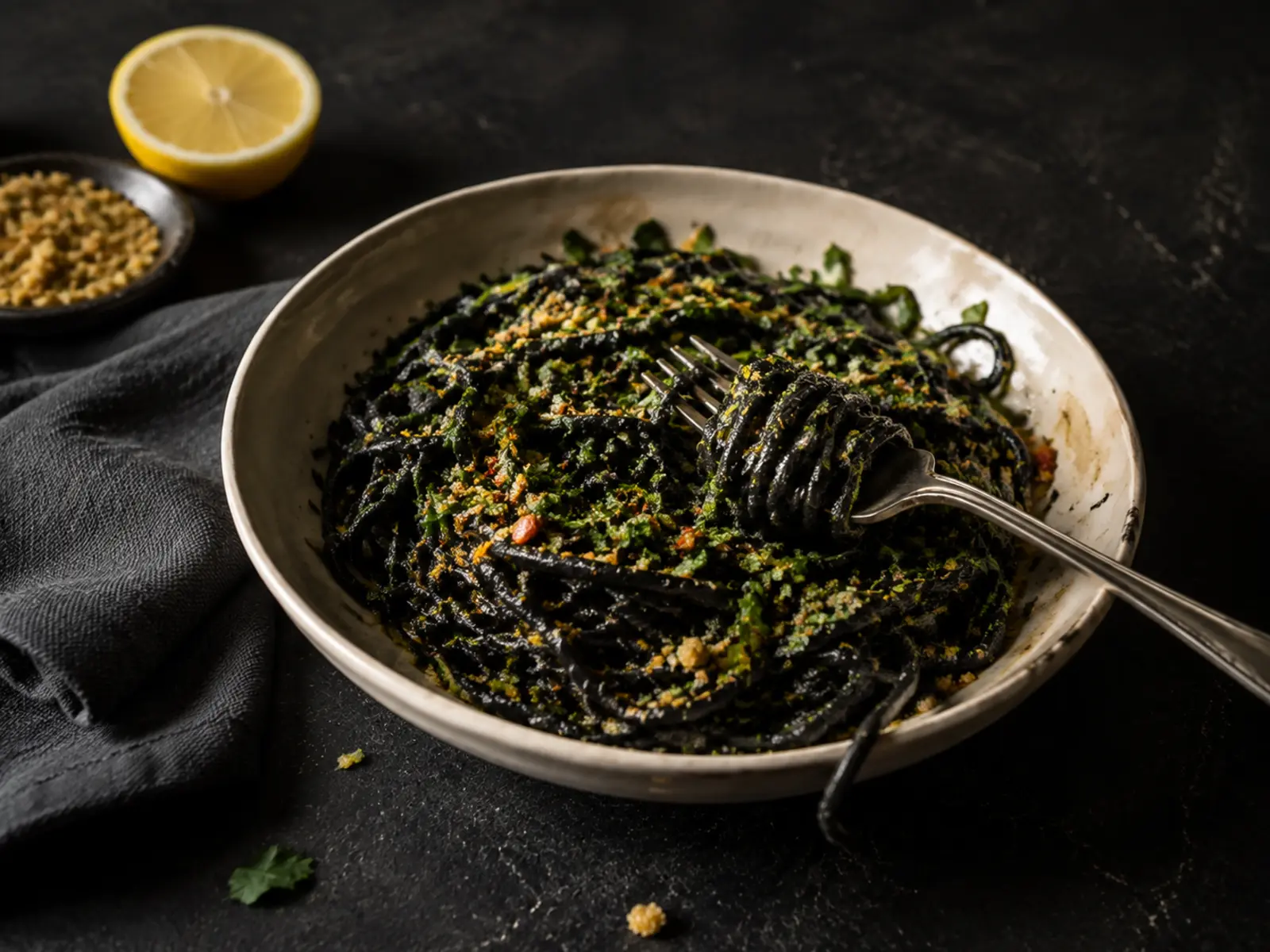
Before something black, like squid ink Halloween pasta. Red then black then something pale is a genuinely satisfying colour sequence across an evening.
On a grazing board, with the tray set at one end so people take one as they pass. The only warm-adjacent element that needs no management.
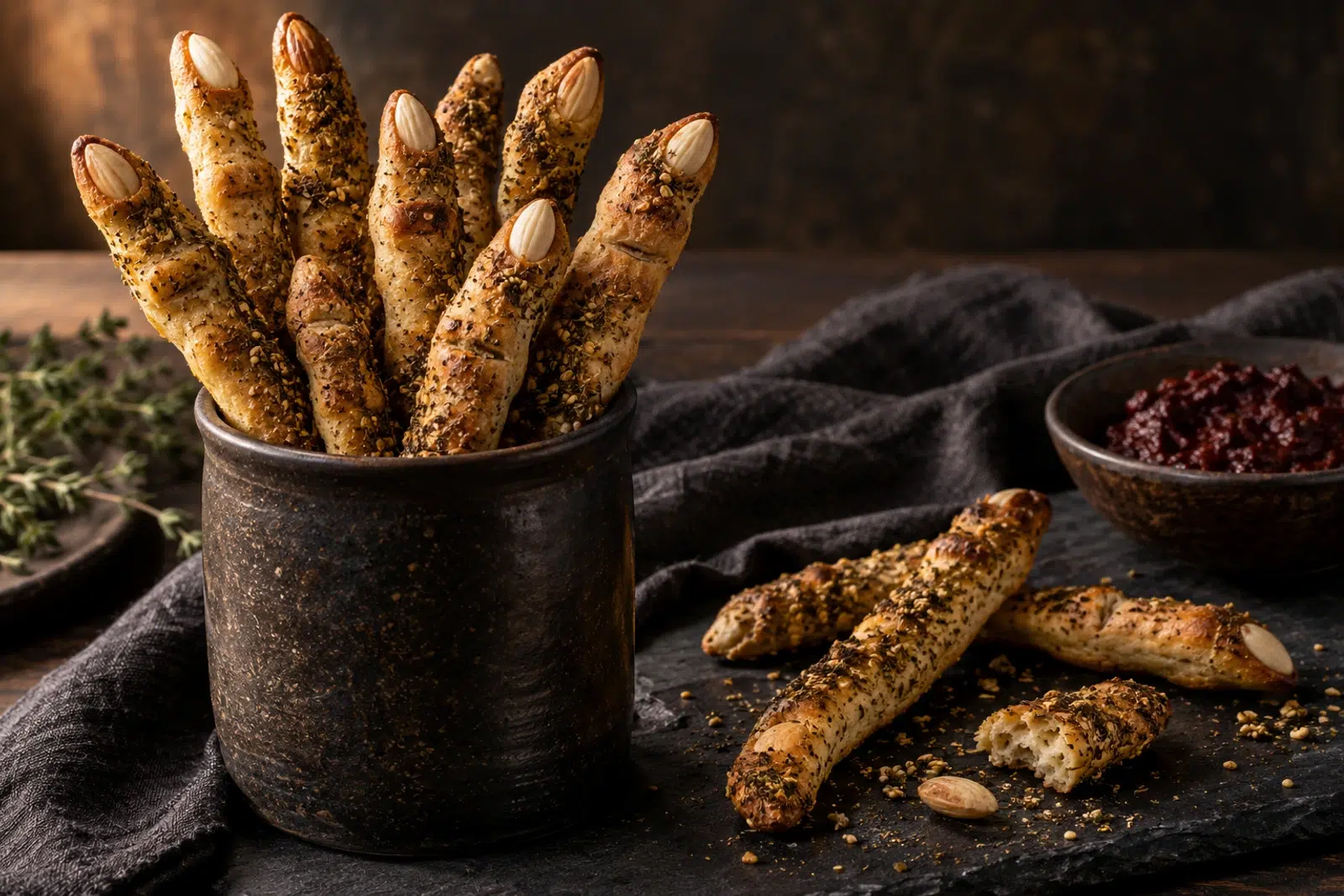
With something crisp to hold in the other hand — the witch finger breadsticks are the right scale and the za’atar works with the smoked paprika. [Article 31 of this batch — /witch-finger-breadsticks-zaatar/, due 18 Sep]
At a buffet for twenty, passed twice across the evening rather than left out, which keeps the room moving.
Watch: Blended, Chilled, Poured
[VIDEO EMBED — 18 seconds, vertical 9:16]
Blistered blackened peppers coming off a roasting tray, skins slipping away, everything blended smooth with olive oil streaming in, the soup pushed through a sieve, then a hard cut to twenty glasses lined up on a dark tray being filled from a jug, with a yoghurt swirl dragged through each.
Ready to Carry Twenty Glasses of Blood Into a Dark Room?
Roast the peppers until they blacken. Blend with bread. Sieve it. Chill it hard and re-season cold.
Then pour it, swirl it, and pick up the tray.