Written by Ines Zahraoui — Tunisian home cook and co-founder of The Mediterranean Recipe, developing and testing recipes in her own kitchen since 2020. More about Ines →
There is no bottle of anything that makes this colour.
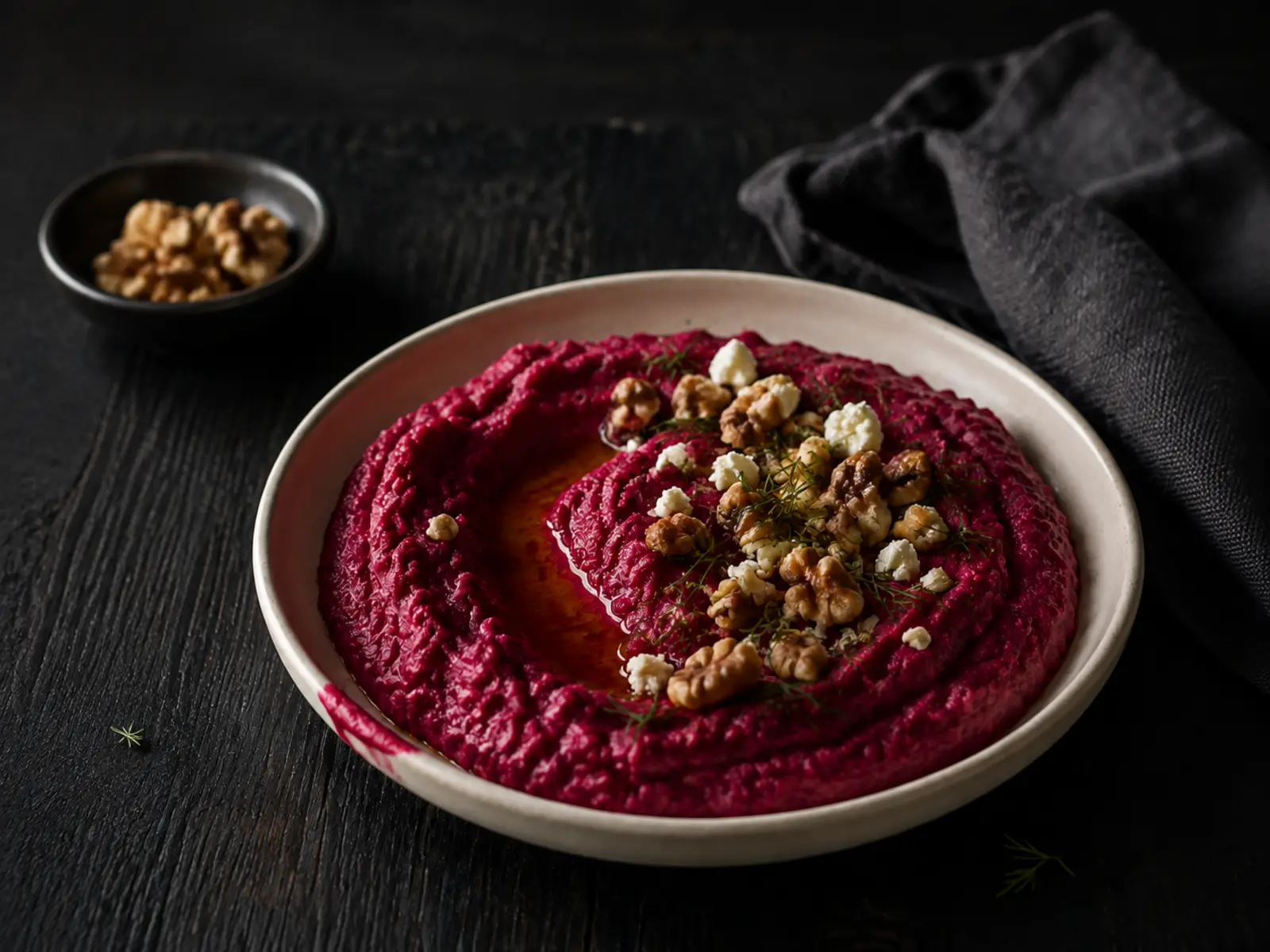
Beetroot produces a magenta so saturated it looks lit from inside — somewhere between arterial and neon, with a purple edge to it that food dye cannot reach because dye is a single flat pigment and this is not. Put it in a pale bowl on a dark board next to something black and it is genuinely startling. People assume you have done something to it.
The recipe is Greek and it is called pantzarosalata, and it is one of those uncontested terms where almost nobody in US search is competing. It is roasted beetroot with garlic, yoghurt, walnuts and enough fresh lemon juice to stop it tasting like a vegetable patch — which is the second thing this page is about, because under-acidified beet dip tastes like soil and a great many of them are.
The first thing this page is about is simpler and it matters more: do not boil the beets.
Table of Contents
Table of Contents
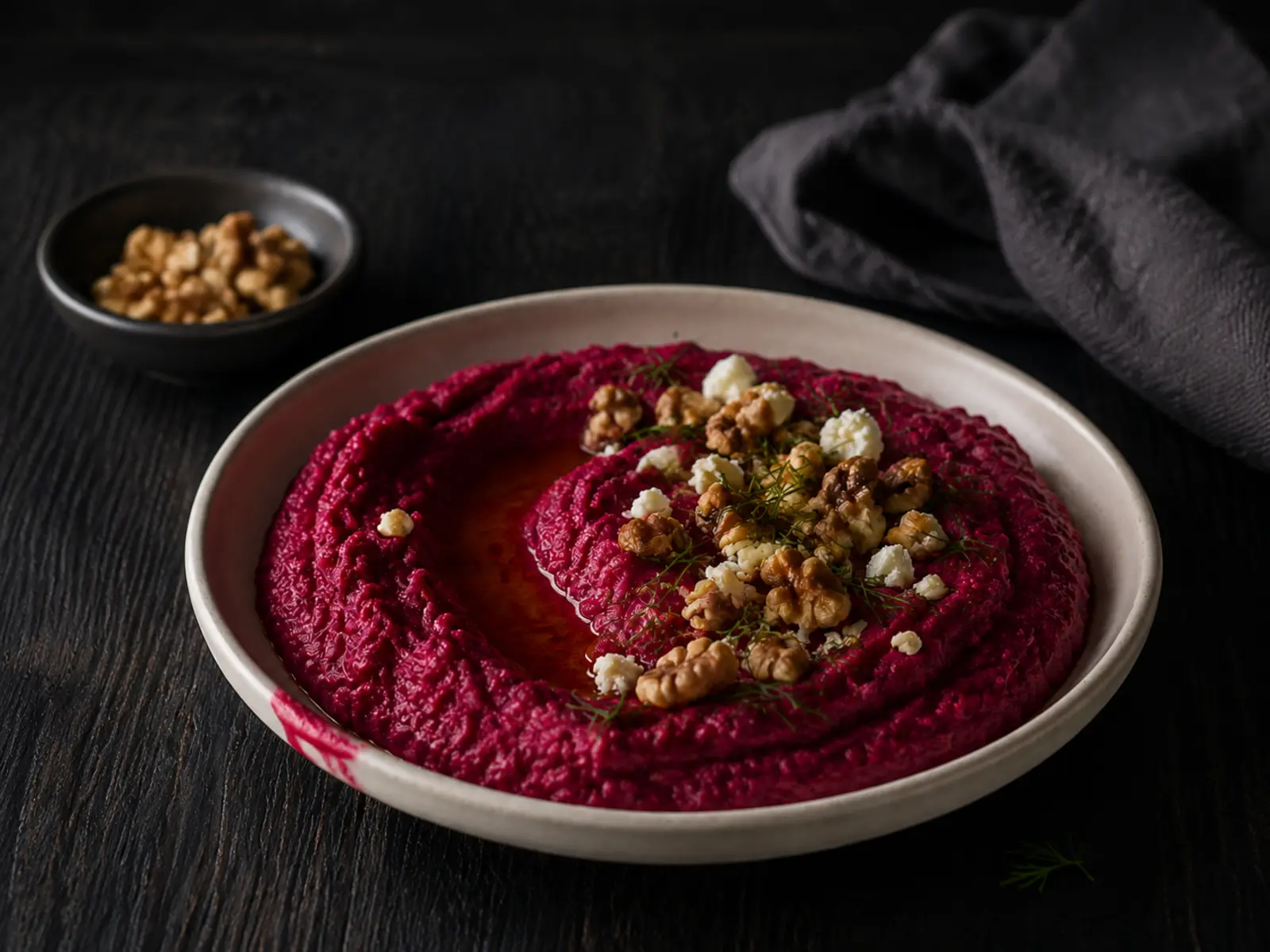
Beetroot roasted whole in its skin, blended with garlic, thick yoghurt, walnuts and fresh lemon juice into a blood-magenta dip. Fifteen minutes of work around fifty minutes of roasting, and no food colouring anywhere near it.
Pantzarosalata Card Recipe
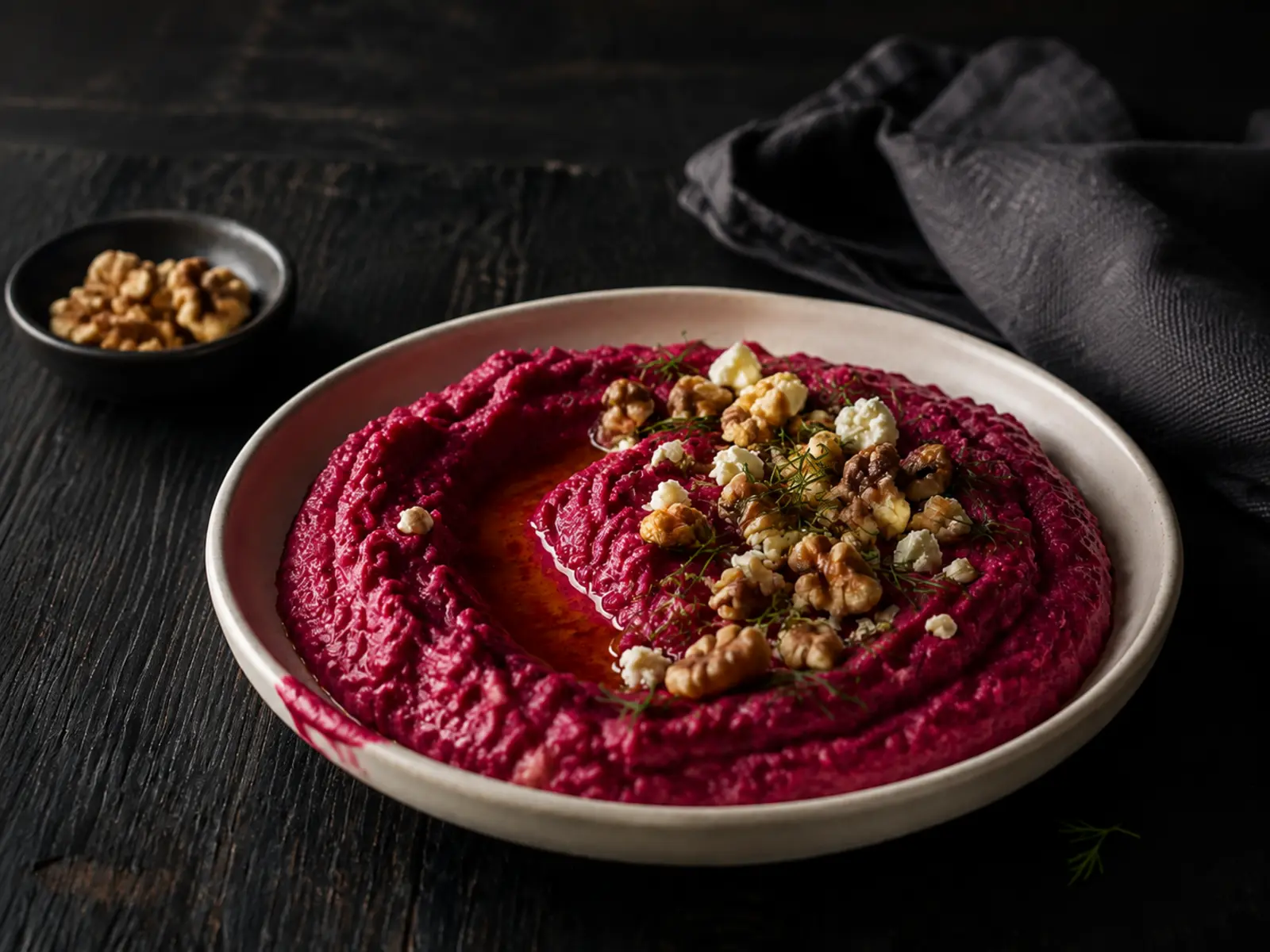

Pantzarosalata (Greek Roasted Beetroot Dip)
Ingredients
Method
- Heat the oven to 400°F (200°C).
- Scrub the beets but do not peel them, and do not trim the root or the top closely. Leave about an inch of stem. Every cut is a place the colour escapes.
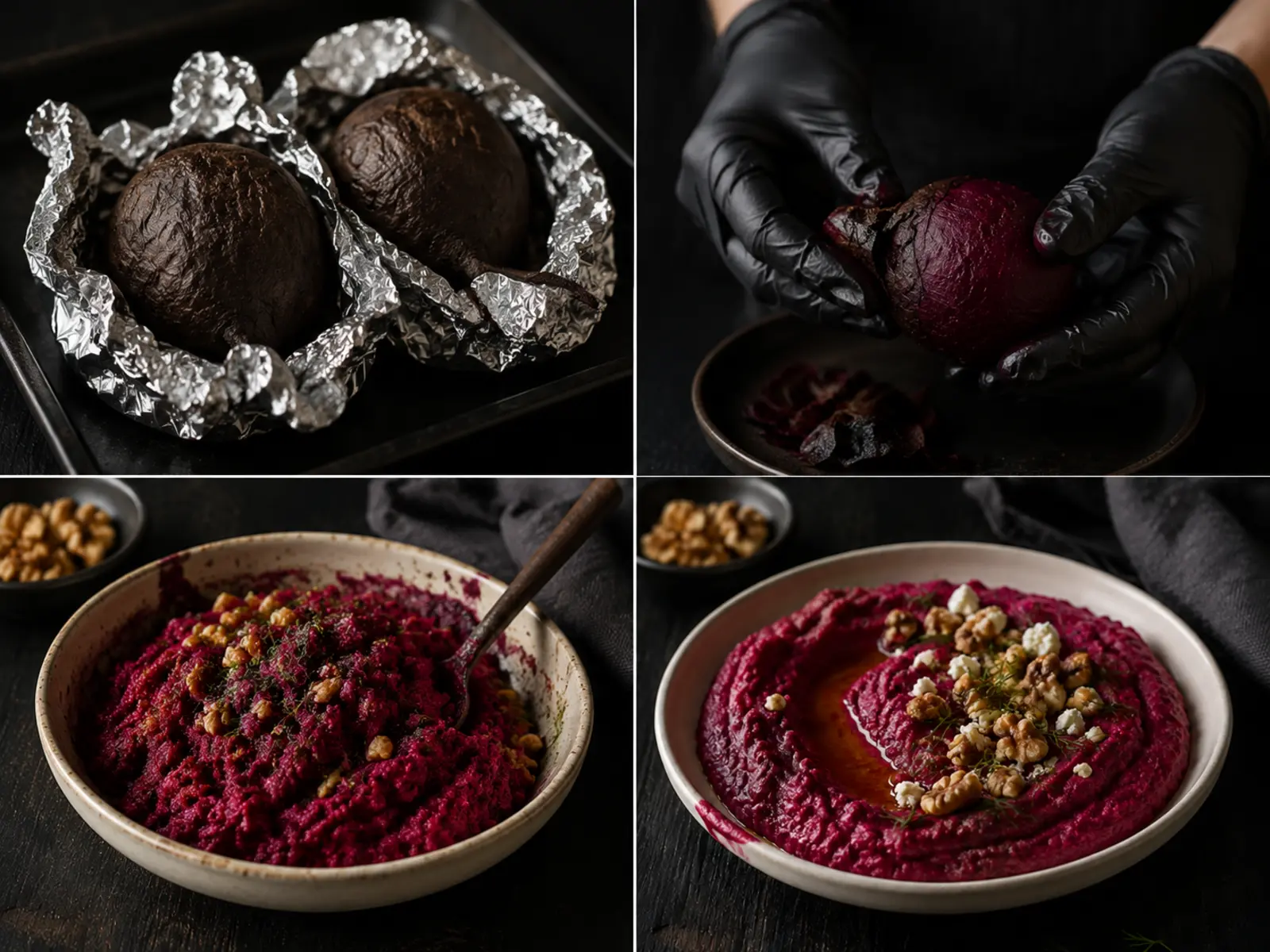
- Wrap them loosely in foil, either individually or in a parcel, and roast 45 to 60 minutes until a knife slides into the centre with no resistance.
- Cool until you can handle them, then rub the skins off with your fingers or a paper towel. They slip off. Wear gloves unless you want to explain your hands all evening.
- Toast the walnuts in a dry pan for 4 minutes and cool.
- Blend the garlic with the lemon juice and salt for 20 seconds, then let it sit 5 minutes to soften the raw garlic edge.
- Add the roasted beets and walnuts and pulse until finely chopped but not completely smooth — you want a little texture from the walnuts.
- Add the yoghurt and olive oil and pulse just to combine. Over-blending after the yoghurt goes in makes it gluey.
- Taste, and add more lemon juice. It will need it. Beetroot is sweet and it takes considerably more acid than you expect. Add half a tablespoon at a time until it stops tasting earthy and starts tasting bright.
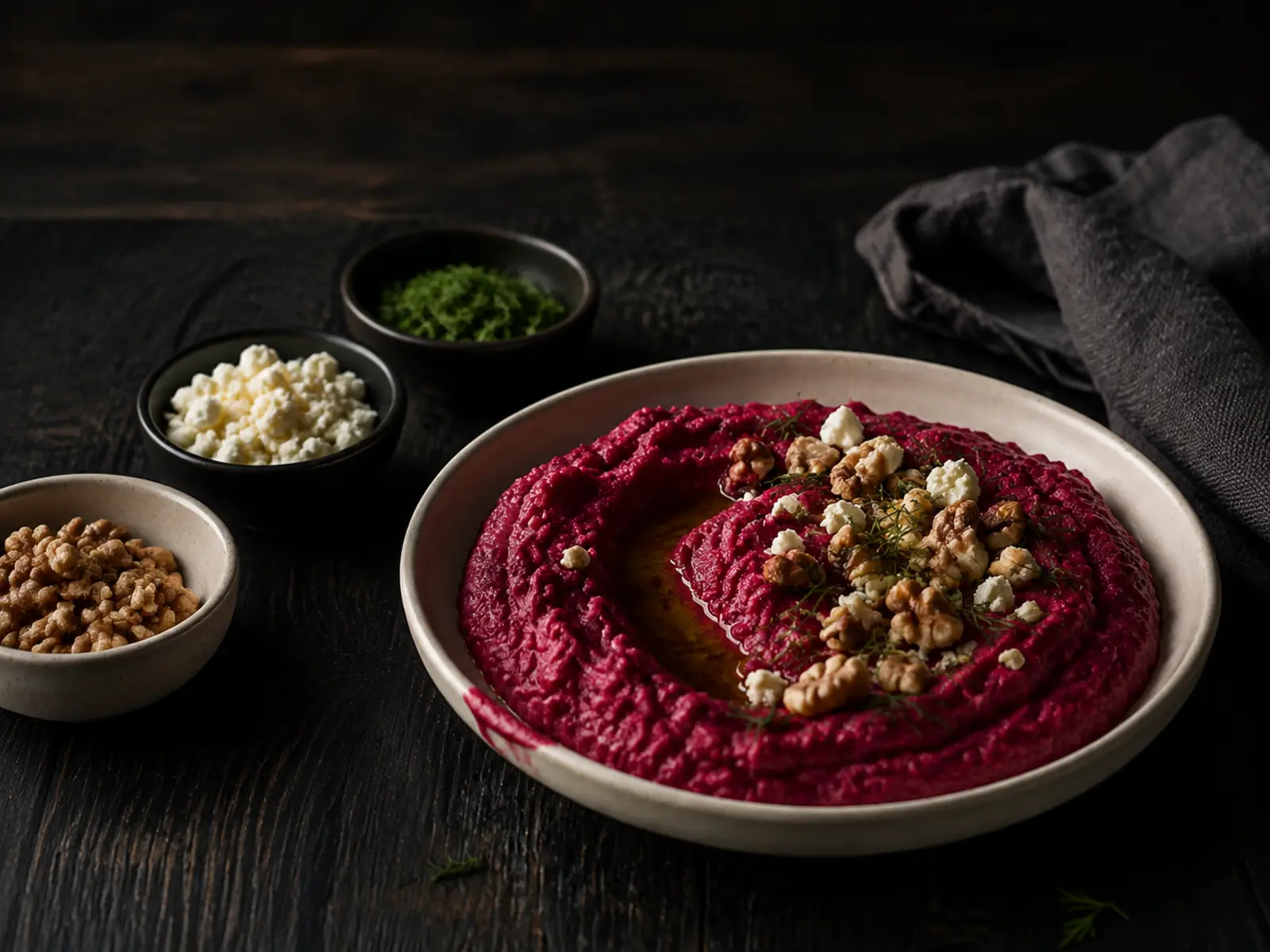
- Chill at least an hour. Serve at cool room temperature with olive oil, chopped walnuts and dill.
Notes
Why This Beet Dip Recipe Actually Works
- The colour is unmatchable. No dye gets there, and that is the whole seasonal argument.
- The lemon juice is measured properly, which is what separates this from the beet dips people politely leave.
- Roasting whole protects the pigment, and the method section explains why.
- It is genuinely cheap — beetroot is one of the least expensive vegetables there is.
- It keeps five days and improves on day two.
Why It Belongs on a Gothic Board
Black, oxblood and magenta is a three-colour system, and magenta is the one that makes it read as designed rather than dark. Two dark bowls look like two dark bowls; add a saturated magenta and the whole board resolves into a palette. This is the third bowl on the gothic Halloween mezze board.
Essential Ingredients
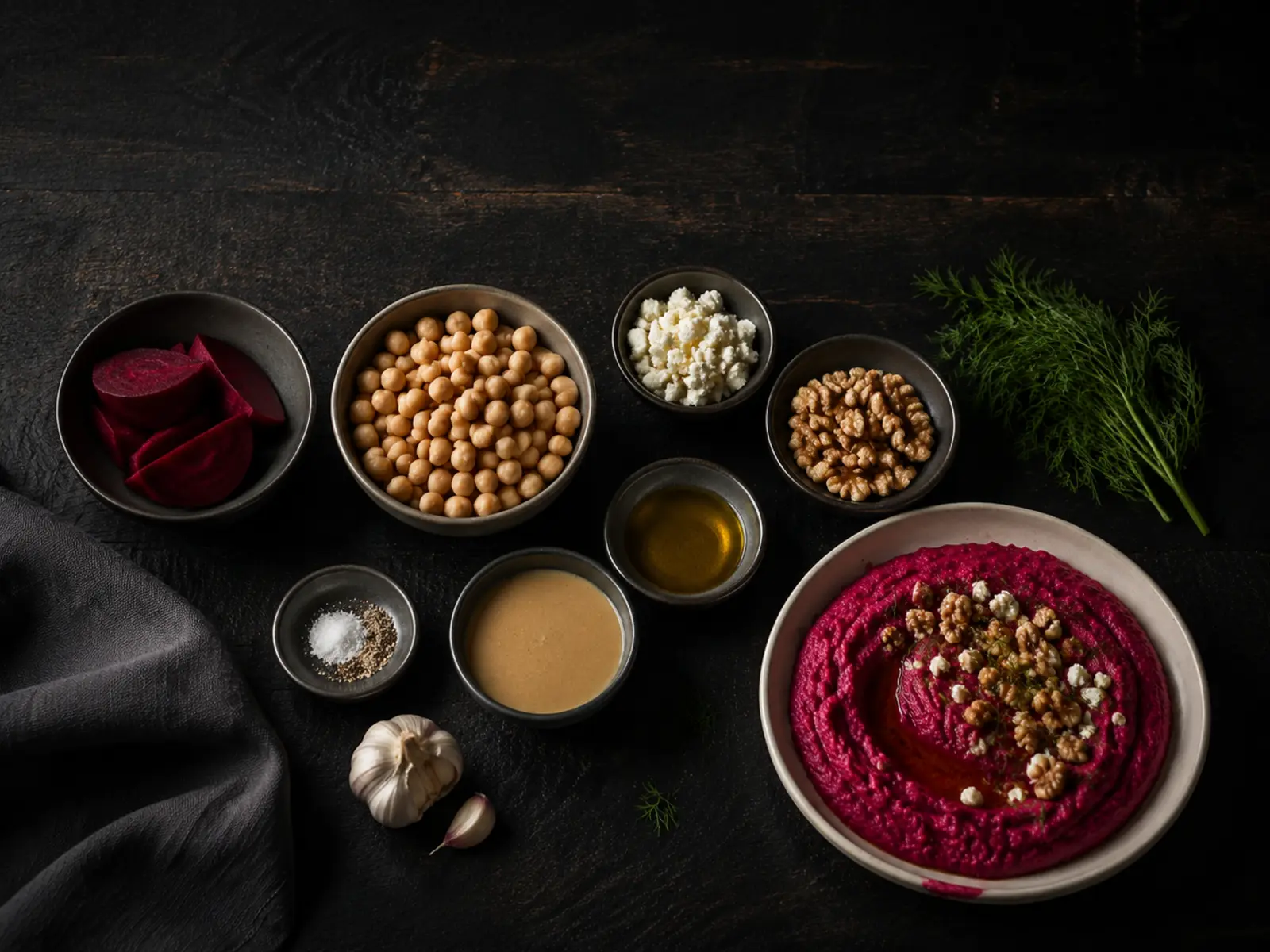
Beetroot. Medium, firm, whole and unpeeled. Smaller beets are sweeter and roast faster; very large ones can be woody at the centre. Golden or chioggia beets are lovely and completely wrong for this — you want the deep purple ones.
Walnuts. Toasted. They add body, a slight bitterness that offsets the sweetness, and a texture that stops the dip being a puree. Untoasted walnuts taste faintly of cardboard.
Thick Greek yoghurt. Full fat, and strained if it is loose. It softens the earthiness and gives the dip body without diluting the colour much. Labneh is better if you have it.
Fresh lemon juice. The most important ingredient after the beets. Not balsamic — too sweet and too brown, and it drags the magenta toward mud.
Garlic. Two cloves, softened in the lemon juice first.
The Foolproof Method
- Roast whole, unpeeled, in foil. 45–60 minutes at 400°F.
- Rub the skins off once cool enough to handle.
- Garlic in lemon juice first, five minutes.
- Pulse beets and walnuts — coarse, not smooth.
- Yoghurt and oil in, pulse briefly only.
- Taste and add more lemon juice. Then taste again.
- Chill an hour.
Never Boil Beetroot
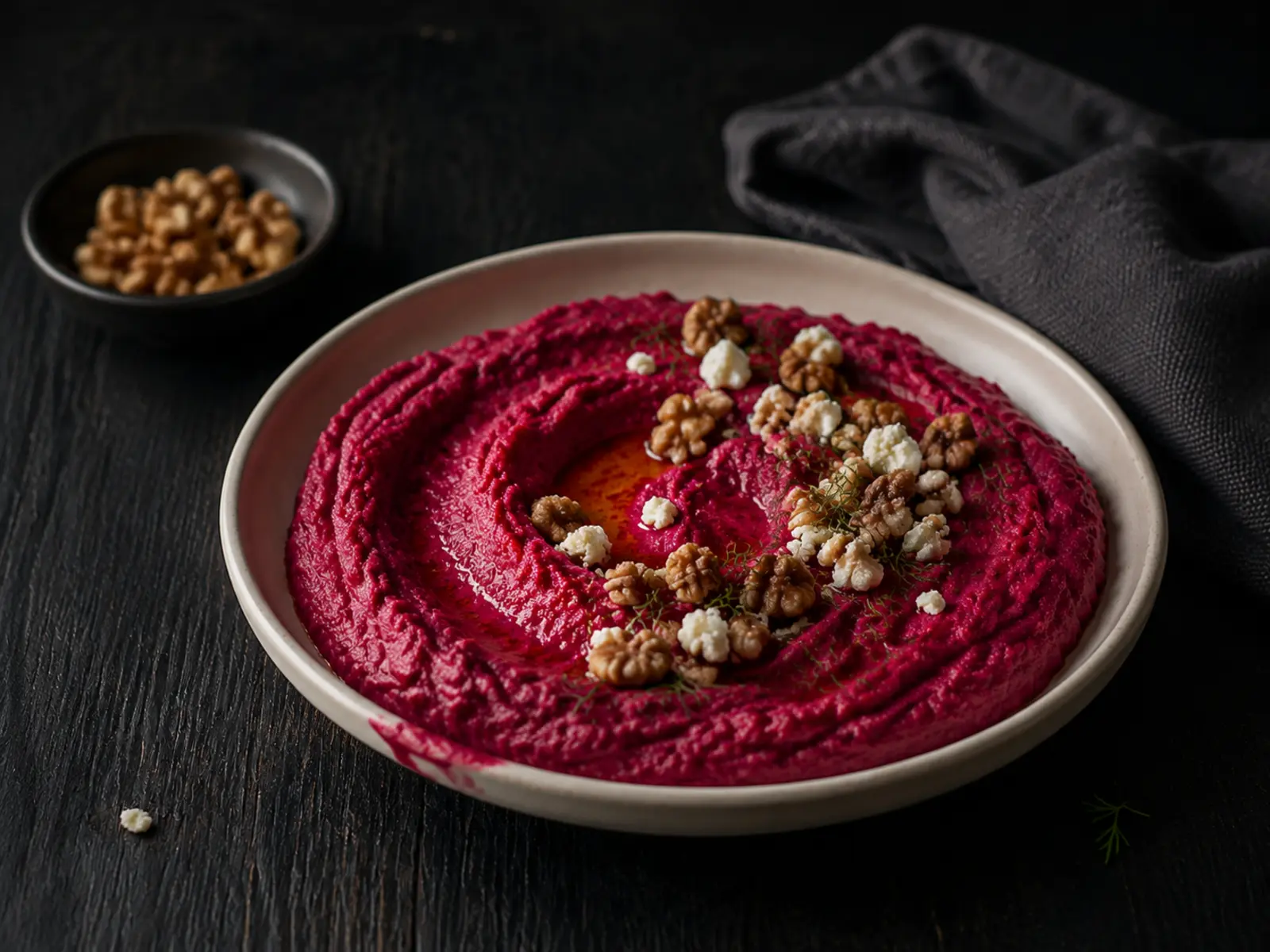
This is the claim, and it is the difference between a dip that stops people talking and one that looks like something spilled.
Boiling beetroot pours most of its colour down the sink.
The pigments in beetroot are betalains, and unlike the carotenoids in peppers and carrots they are water-soluble. Drop a peeled, cut beet into a pan of water and the pigment does exactly what any water-soluble compound does: it leaves the vegetable and enters the water. You end up with a pot of astonishing purple liquid and a beet that is noticeably paler than it went in.
Betalains are also heat-sensitive and degrade over prolonged cooking, shifting from vivid magenta toward brown. Boiling, being both wet and long, does both things at once. A 2023 study on betanin degradation found that heat exposure accelerates pigment loss, consistent with what happens when beets are boiled rather than roasted (Muramatsu et al., 2023).
Roasting whole in the skin avoids both problems. There is no water for the pigment to leach into, the skin acts as a barrier, and the flesh cooks in its own moisture. The sugars also concentrate as a little water evaporates, so a roasted beet is sweeter and deeper-coloured than a boiled one from the same bunch.
Three practical rules that follow:
- Do not peel before cooking. Every square inch of exposed flesh is a leak.
- Do not trim closely. Leave an inch of stem and do not cut the root tail off. Cut surfaces bleed.
- Add the acid at the end, not the start. Betalains are most stable in mildly acidic conditions, so lemon juice helps the colour hold — but acid added before cooking has a long hot time to do other things. Roast plain, acidify after.
If roasting is genuinely not an option, steam them whole and unpeeled rather than boiling. You lose less than boiling and considerably more than roasting.
Roasted vs Pre-Cooked: An Honest Comparison
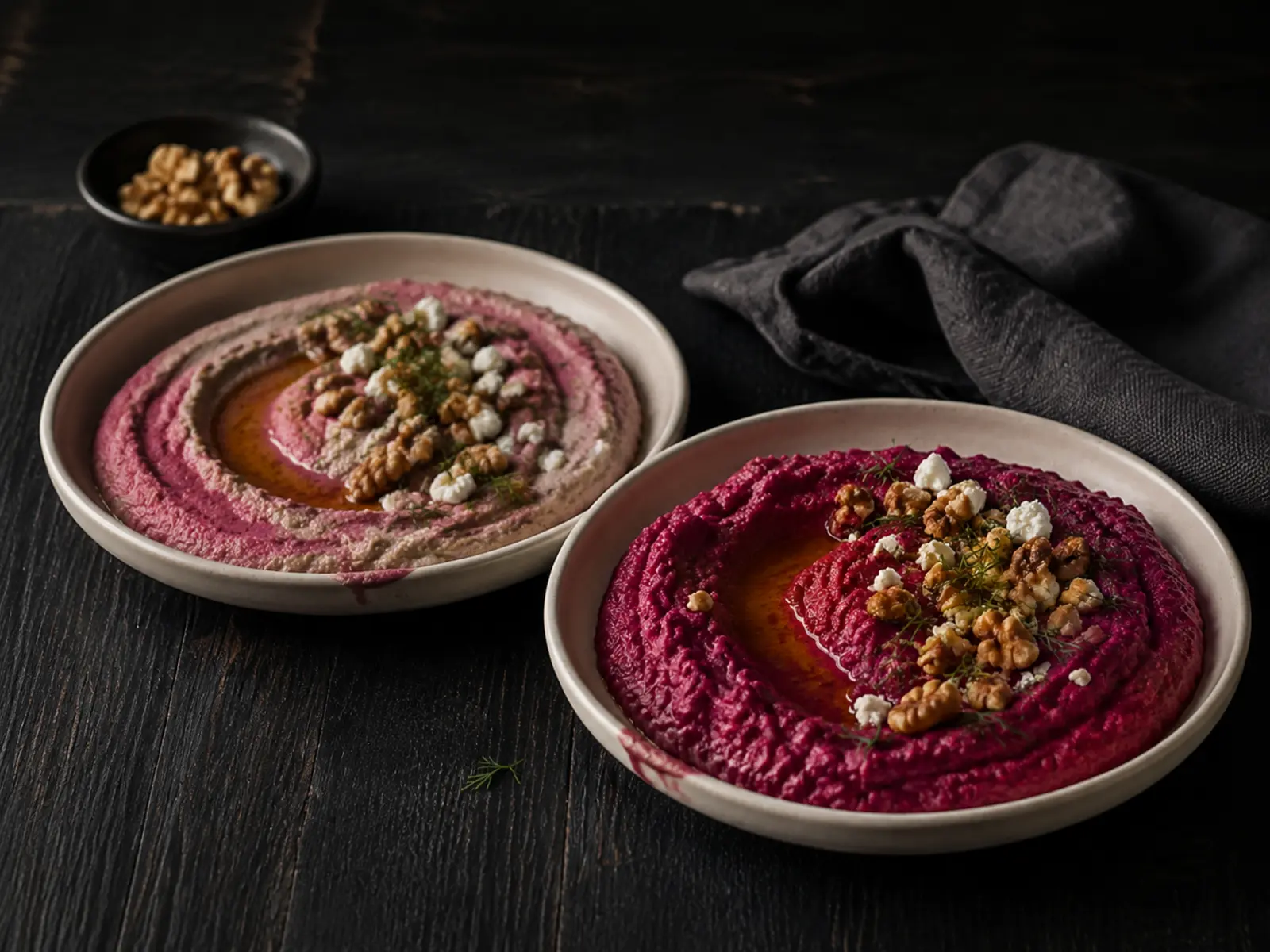
Vacuum-packed cooked beetroot is sold in every large supermarket and it is a completely legitimate shortcut. Here is the honest trade-off.
| Roasted whole | Vacuum-packed cooked | |
|---|---|---|
| Time | 60 minutes, mostly unattended | 10 minutes total |
| Colour | Deepest, most saturated | Good, slightly duller and flatter |
| Flavour | Sweeter, concentrated, faintly caramelised | Milder, wetter, more one-note |
| Texture | Denser, drains less liquid | Wetter — drain it before blending |
| Cost | Cheaper | More expensive per pound |
| When I use it | Whenever I have the hour | Late October, every time |
The honest verdict: roasted is better and the vacuum-packed version is genuinely good. If you are choosing between making this with pre-cooked beets and not making it at all, use the pre-cooked beets.
Two adjustments if you do: pat them dry and drain any liquid in the pack, and add an extra half tablespoon of lemon juice, because they are milder and need more lift.
Avoid pickled beetroot in jars. Already acidified, usually with sugar, and it makes a dip that tastes of lemon juice and nothing else.
Balancing Earthy With Sharp
The reason people say they do not like beetroot is almost always that they have eaten under-acidified beetroot.
Beetroot contains geosmin, the same compound that produces the smell of rain on dry earth and the muddy note in some freshwater fish. It is not a flaw — it is what beetroot is — but at high perceived concentration it reads unambiguously as soil, and human noses are extraordinarily sensitive to it.
Acid is what suppresses it. Lemon juice reduces the perception of geosmin substantially, which is why almost every traditional beetroot preparation across Europe is pickled, dressed or soured in some way. That is not decoration; it is the technique that makes the vegetable palatable to people who think they hate it.
So use more lemon juice than the recipe says, and taste as you go. Two tablespoons is the starting point, not the answer. Add half a tablespoon at a time and keep tasting until the earthiness recedes and something bright arrives in front of it. You will usually land between two and three and a half tablespoons depending on your beets.
Garlic does similar work through a different route — its pungency competes for attention. Do not reduce it.
And salt more than feels comfortable. Beetroot is sweet, and sweet things need salt to stop reading as flat.
The test: if someone tastes it and says it is very beetroot-y, it needs more lemon juice. If they ask what is in it, you have it right.
Serving It Without Staining Everything
Practical, and mildly self-interested.
- Wear gloves to rub the skins off. Beetroot stains hands for about a day and it will be commented on.
- Use a non-porous board. Beetroot goes into wood and stays there. Plastic, glass or a plate.
- Do not wear white. Mentioned from experience rather than theory.
- On the table, keep it away from anything pale and porous — a white linen napkin under a beetroot bowl will not survive. Dark linen, dark board, pale ceramic bowl.
- If it does stain your hands, rubbing them with a cut lemon and salt takes most of it off. Fabric is a lost cause; treat it immediately with cold water and accept the outcome.
Creative Variations
- With feta. Crumbled through at the end rather than blended. Salt and white flecks against the magenta, and the contrast is excellent on camera.
- Vegan, with tahini. A tablespoon of tahini instead of the yoghurt. Slightly richer, slightly darker, and it holds the colour marginally better because there is no white dairy diluting it.
- With horseradish. A teaspoon of grated fresh horseradish. Eastern European in spirit, sharp, and it cuts the sweetness hard.
- With dill and orange zest. Lighter and more aromatic, and it makes the dip feel less autumnal if you want to serve it in spring.
- As a swirl. Spoon it into thick yoghurt or labneh and drag a skewer through once. Magenta bleeding into white is the most literally bloody-looking thing in this entire cluster.
Storage and Serving Suggestions
Fridge: 5 days airtight. Genuinely better on day two as the lemon juice and garlic settle in.
Do not freeze. The yoghurt splits and the texture never recovers.
Serve at cool room temperature. Take it out 20 minutes ahead. Straight from the fridge it is stiff and the flavour is muted.
Make-ahead: roast the beets up to 3 days ahead and refrigerate whole and unpeeled. Blend the dip up to 2 days ahead.
Presentation: a pale bowl. This is the one dip in the cluster that should not go in a black bowl — the whole point is the colour, and matte black swallows it. Pale ceramic on dark slate, olive oil in a groove, walnuts and dill on top.
Quantity: makes about 2 cups, serving 8 as one of three dips. Use the Halloween party food calculator to scale it for your guest count.
Ingredient and Allergen Notes
Allergen note: walnuts are a tree nut and yoghurt and feta contain milk. For a nut-free bowl, omit the walnuts and use toasted pumpkin seeds only if they suit your guests; keep all serving utensils separate.
The deep magenta colour and earthy-sharp balance are the point of this dip. Treat nutrition values as estimates that change with yoghurt, cheese and portion size. Full nutrient breakdowns for beetroot are available from USDA FoodData Central.
Frequently Asked Questions
What is pantzarosalata? A Greek dip of roasted or boiled beetroot blended with garlic, yoghurt or tahini, walnuts and fresh lemon juice. It is a mezze staple served with bread as part of a spread, and versions vary across Greece — some are chunky salads, some are smooth dips, and some skip the nuts entirely.
Can I use pre-cooked beetroot? Yes, and vacuum-packed cooked beetroot is a genuinely good shortcut that cuts this to ten minutes. Pat it dry, drain the liquid from the pack, and add an extra half tablespoon of lemon juice because it is milder than roasted. Avoid pickled beetroot in jars — it is already acidified and sweetened.
How long does beet dip keep in the fridge? Five days in an airtight container, and it is better on day two once the lemon juice and garlic have settled. Do not freeze it — the yoghurt splits.
Can I make this vegan? Yes. Replace the yoghurt with a tablespoon of tahini, or with a thick unsweetened plant yoghurt. The tahini version is slightly richer and holds the colour marginally better, since there is no white dairy lightening it.
How do I stop beetroot staining my hands? Wear gloves when rubbing the skins off — that is when the staining happens. If you forget, rubbing your hands with a cut lemon and salt removes most of it. Use a non-porous board rather than wood, and do not wear white.
Why did my beet dip go brown? Almost certainly boiling rather than roasting, or a long cook. Betalain pigments are water-soluble and heat-sensitive, so boiling leaches them into the water and prolonged heat degrades them toward brown. Roast the beets whole and unpeeled and add the lemon juice at the end.
Why does my beetroot taste like soil? Not enough acid. Beetroot contains geosmin, the compound behind the smell of wet earth, and lemon juice suppresses the perception of it substantially. Add lemon juice half a tablespoon at a time, tasting between, until the earthiness recedes.
Pairing and Serving Ideas
The three-bowl set. Black tahini hummus, oxblood muhammara and this. Black, blood-red and magenta on one dark board is the entire 2026 Halloween palette in about forty minutes of total work, and it is the single strongest thing you can do to a table. See the black tahini hummus and the oxblood muhammara.
Dippers: warm pita, seeded crackers, endive, raw fennel, and cucumber. Pale ones — the point is contrast.
Beyond dip: spread under grilled lamb, spooned alongside roast chicken, or thinned with more yoghurt as a dressing for a grain salad.
The full colour breakdown of how every dip in this cluster gets its colour: see natural Halloween food colouring.
The whole board it belongs on, with quantities and build order: the gothic Halloween mezze board.
Watch: Roasted to Magenta in 15 Seconds
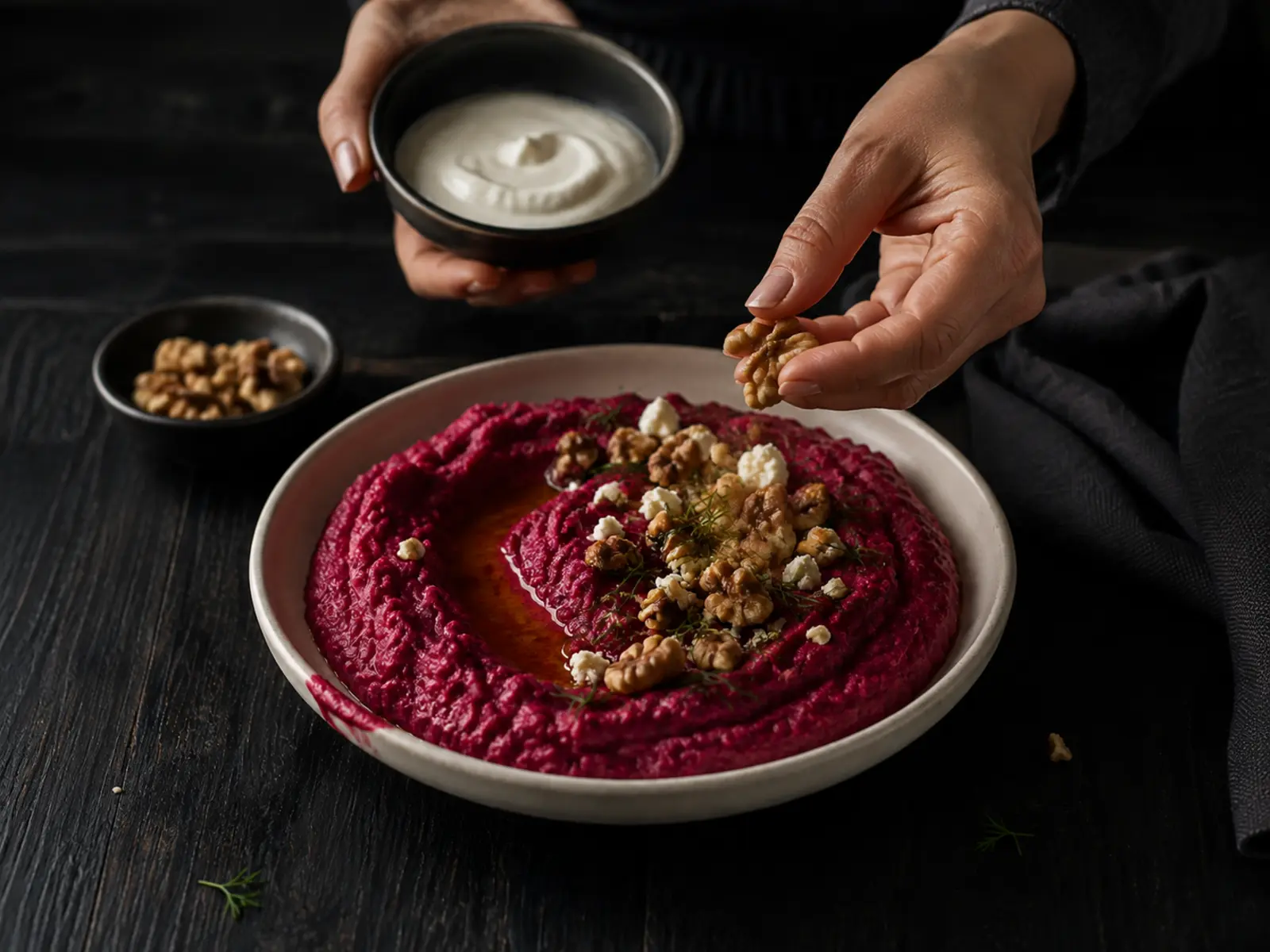
A fifteen-second vertical clip: whole unpeeled beets wrapped in foil, a hard cut to the roasted beets with the skins rubbed away to reveal saturated magenta, the flesh pulsed with walnuts, yoghurt going in, then the finished dip spread in a pale bowl with oil poured into the groove.
Ready to Make the Brightest Thing on a Dark Table?
Roast them whole, never boil them, and use far more lemon juice than you think.
Then put it in a pale bowl between something black and something oxblood, and watch people ask what you did to it.
How to Buy Beetroot for Vivid Color
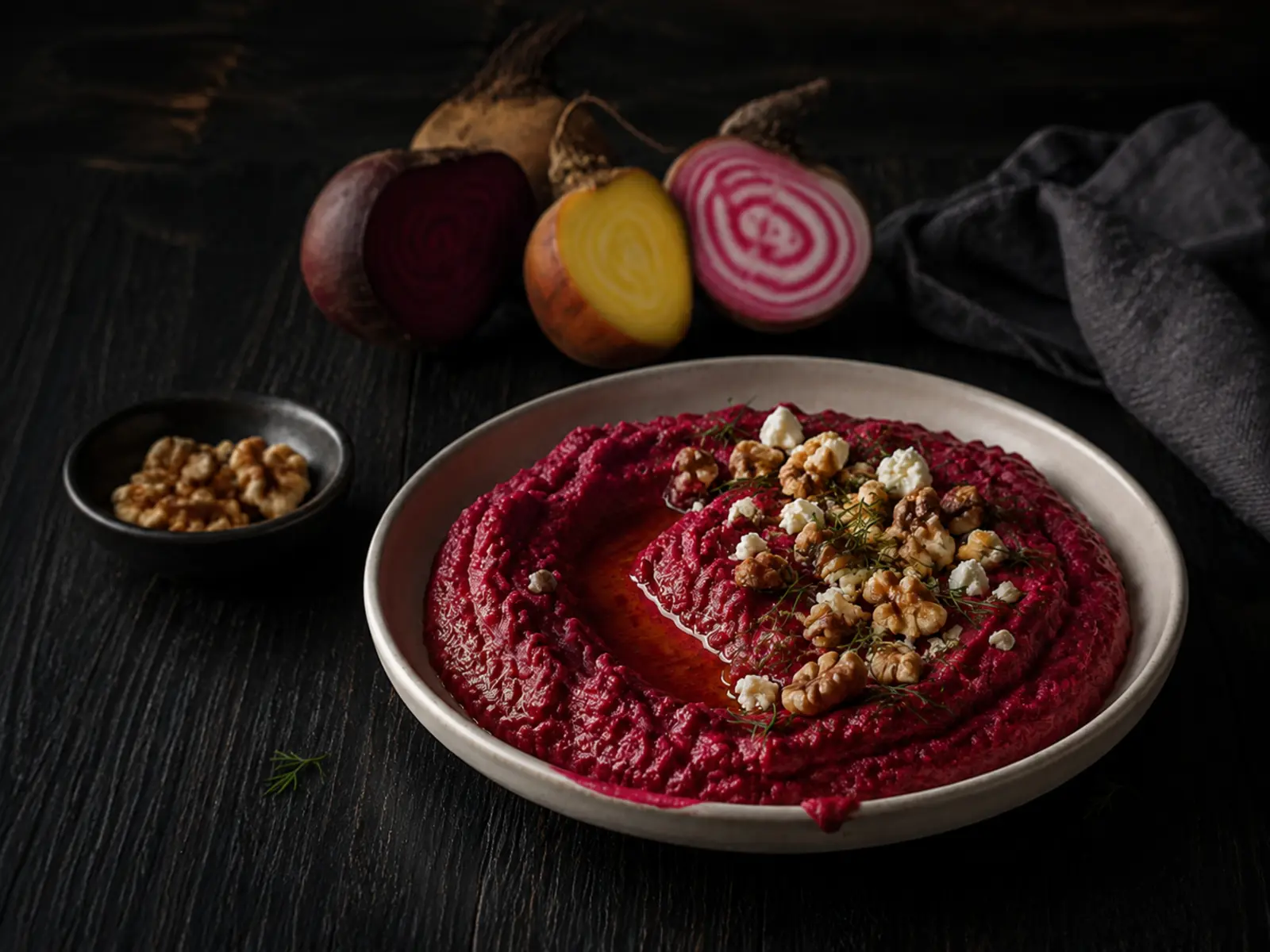
- Heavy for size. Dense roots usually carry less excess water.
- Deep colour at the cut. Avoid pale rings when a sample root is available.
- Firm smooth skin. Soft spots and wrinkles signal age and moisture loss.
Five Rules for Pantzarosalata Beet Dip
- Roast the roots whole.
- Cool before peeling.
- Pulse the walnuts first.
- Add yoghurt gradually.
- Season with lemon at the end.
Pantzarosalata Beet Dip Scaling Chart
- 2–4 guests: 1/2 recipe.
- 6–8 guests: 1 recipe.
- 10–12 guests: 1 1/2 recipes.
- 14–16 guests: 2 recipes.