 Written by Ines Zahraoui — Tunisian home cook and co-founder of The Mediterranean Recipe, developing and testing recipes in her own kitchen since 2020. More about Ines →
Most people who search for black hummus have already been disappointed once.
They tried activated charcoal, because that is what the first three results tell you to do, and they got something the color of wet cement that tasted faintly of nothing and left a strange chalky film on the roof of the mouth. Or they tried black food coloring and got a bruised purple-grey that looked, in photographs, exactly like hummus with food coloring in it.
Black tahini gives you actual black. Not charcoal grey, not aubergine — a dense, matte, light-absorbing black that looks like it should not be food. And unlike both alternatives it adds something: black sesame is deeper, more roasted and slightly more bitter than white, so the dip tastes more interesting than regular hummus rather than less.
It is also silkier than you expect. Every jar of black tahini I have bought has been ground finer than the white tahini sitting beside it on the same shelf, and the result on the tongue is closer to a mousse than a paste.
Fifteen minutes, one ingredient you probably have to go and find, and the single most dramatic bowl you can put on a Halloween table.
Table of Contents
Table of Contents
Black Hummus Recipe Card
Black Tahini Hummus
Ingredients
Method
- Optional but transformative: put the drained chickpeas in a bowl, cover with hot water and the baking soda, and rub them between your palms for a minute. The skins float. Skim and discard. Ten minutes for a genuinely different texture.
- Blend the garlic, lemon juice and salt alone for 30 seconds and let it sit 5 minutes. This takes the raw bite off the garlic.
- Add the black tahini and blend 45 seconds. It will seize and go thick and pasty. This is correct and slightly alarming the first time.
- With the machine running, add ice water one tablespoon at a time until the tahini loosens and turns glossy and pale-ish grey. This is the emulsion forming.
- Add the chickpeas and cumin. Blend for three full minutes. Set a timer. This is the single most important instruction on the page.
- Scrape down, add olive oil, blend 30 seconds more. Adjust with ice water for texture and lemon and salt for taste.
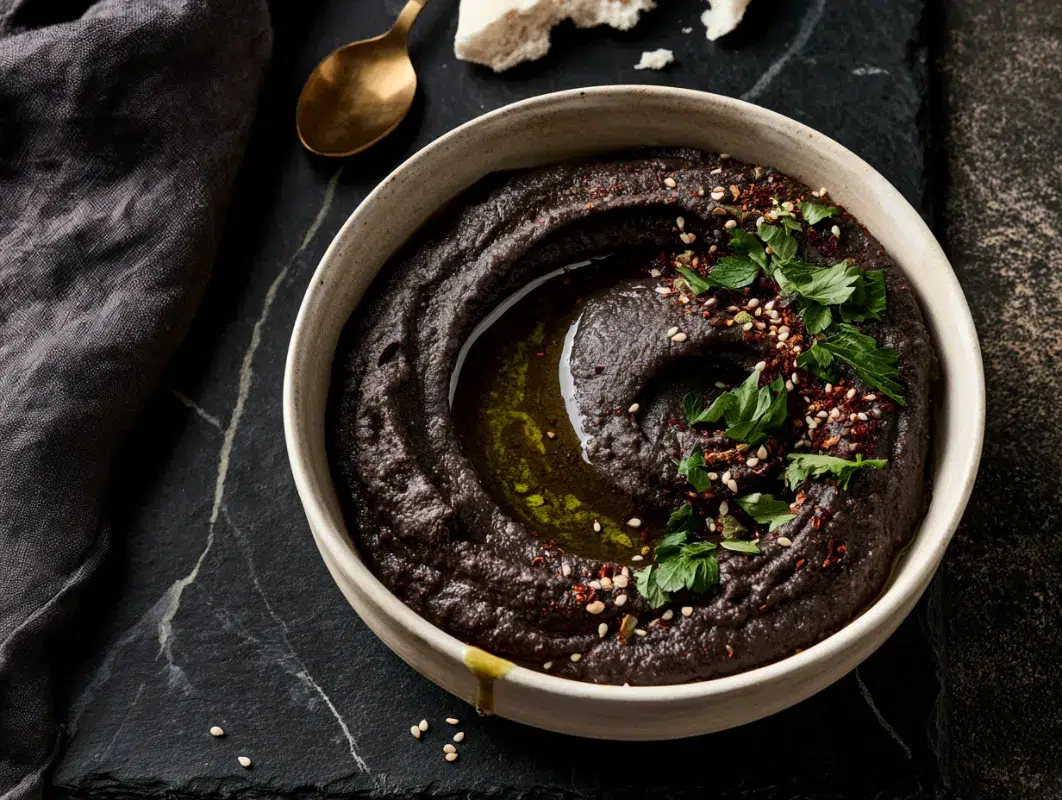
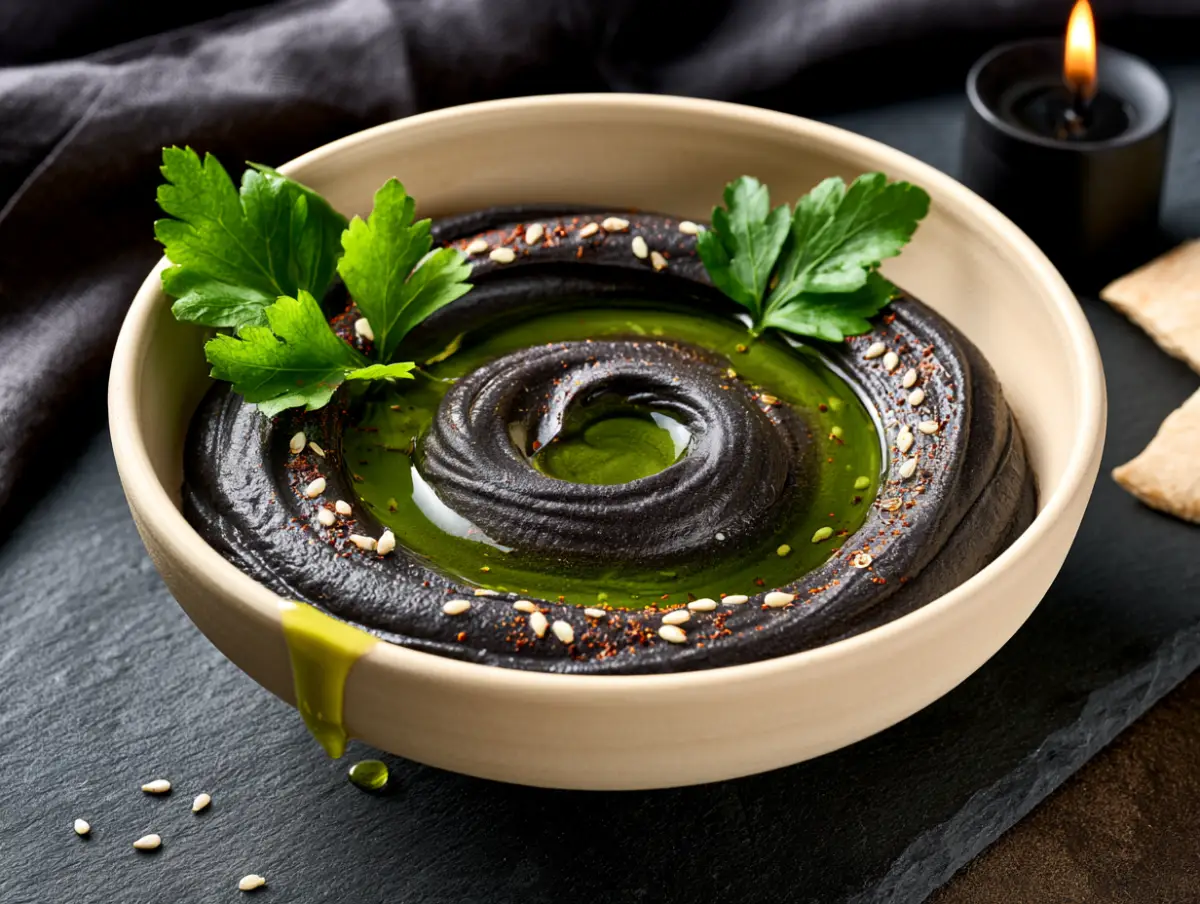
- Spread in a shallow pale bowl, swirl a deep groove with the back of a spoon, and pool olive oil into it. Scatter white sesame seeds, Aleppo pepper and parsley.
Notes
Why This Black Hummus Recipe Actually Works
- The color comes from an ingredient, not an additive. It photographs as food because it is food.
- It tastes better than white hummus, not merely different. Black sesame is deeper and more roasted.
- It is silkier, at least in my experience — the black tahini I have bought has consistently been ground finer than the white tahini beside it on the same shelf.
- No cooking at all.
- Maximum contrast on a board. Against anything red or cream it is genuinely startling.
Why Black Food Photographs So Well
Black food works on Pinterest and on a candlelit table for the same reason: it is the highest-contrast thing you can put next to pale ceramic, and contrast is what stops a scroll and what reads across a dim room. A matte black surface also absorbs rather than reflects, so it holds its shape in a photograph instead of blowing out into highlights the way a glossy dip does. Swirl it deeply — the shadows in the grooves are most of the drama.
Essential Ingredients
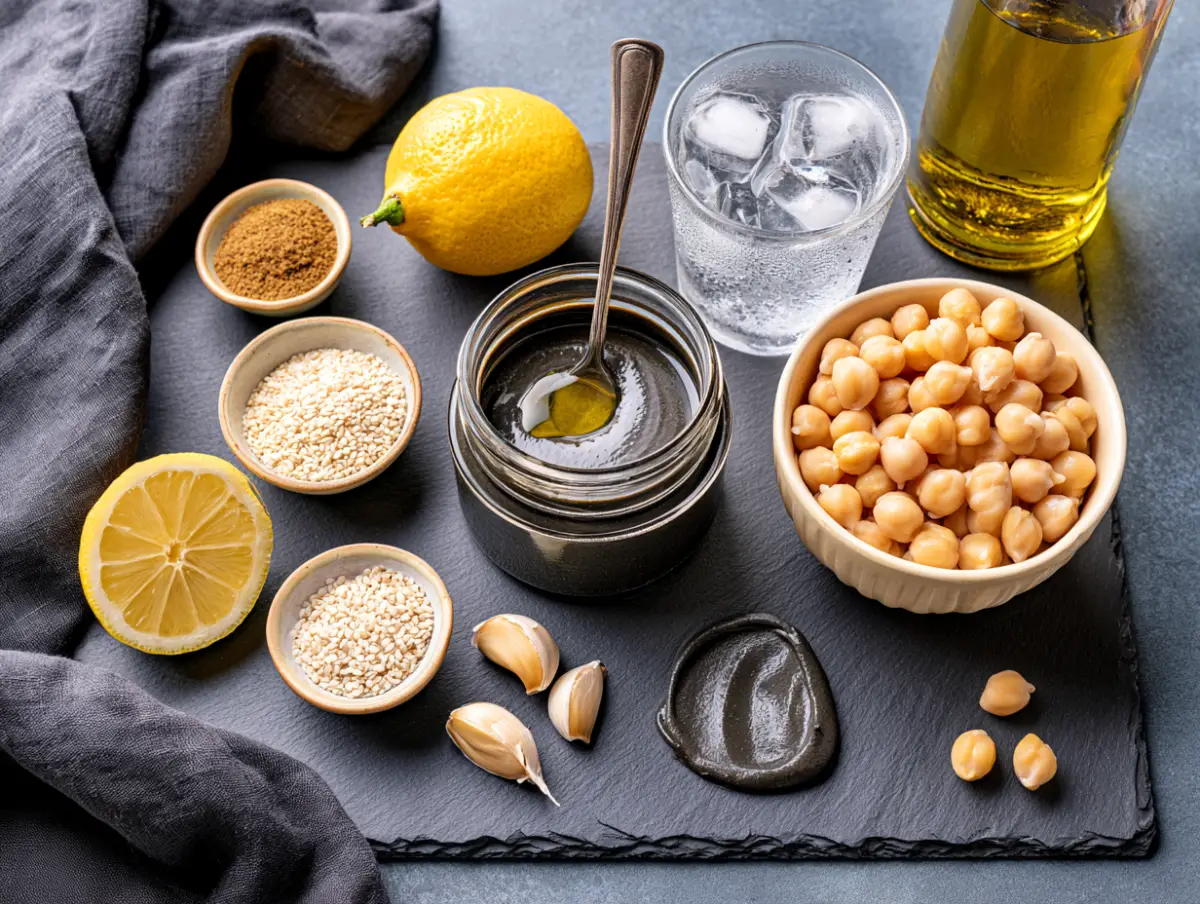
Black tahini. Ground toasted black sesame seeds and nothing else. The whole recipe rests on this one purchase — details below.
Chickpeas. Canned is fine and is what I use. Rinse them properly; the aquafaba in the can is what makes hummus taste tinny.
Lemon. Fresh, always. Bottled lemon juice has a dull, slightly bitter note that hides in a tomato sauce and stands right out in hummus.
Garlic. Two cloves, softened in lemon juice for five minutes first.
Ice water. Not room temperature. Cold water helps the tahini emulsion form and stay light, and it keeps the mixture from warming and turning gluey during a long blend.
Cumin and salt. Restrained. This dip’s job is to be black and nutty, not spiced.
The Foolproof Method
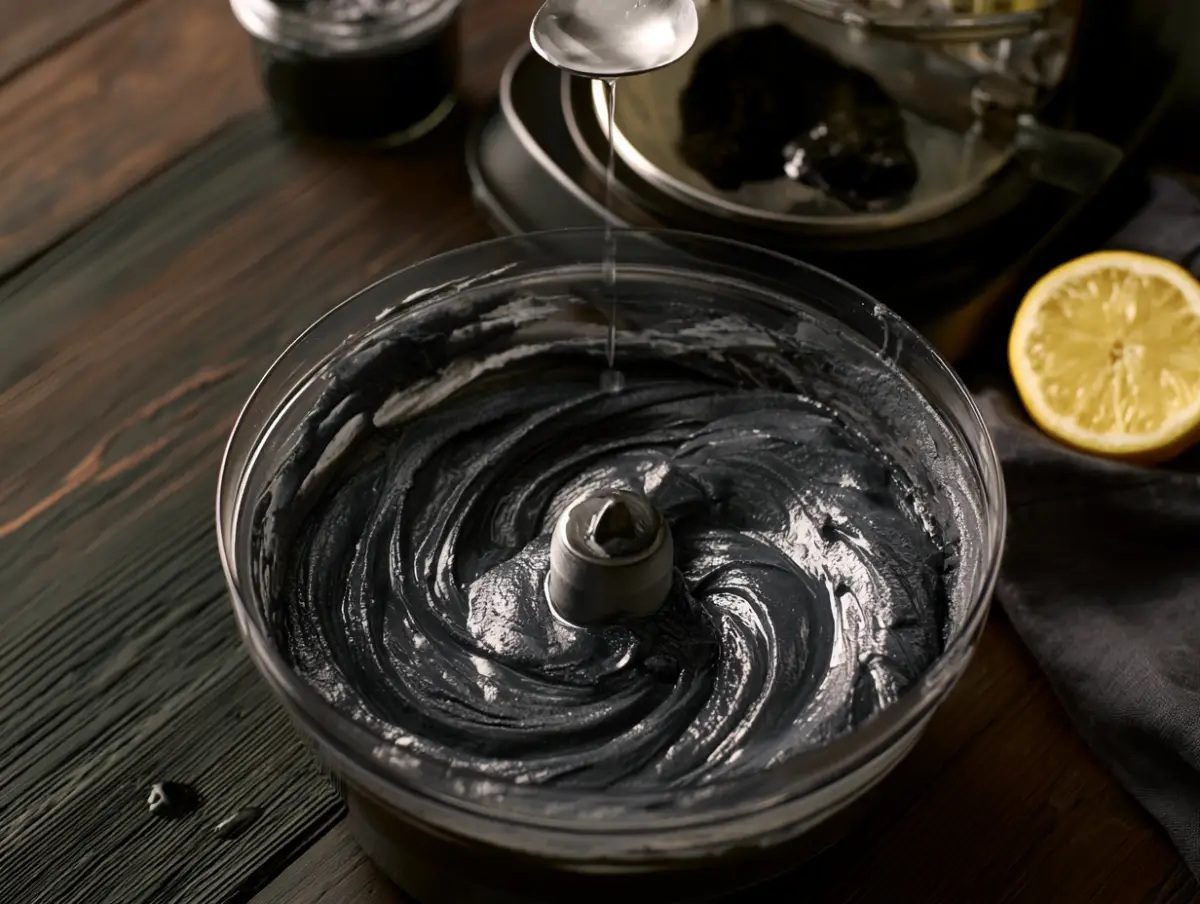
- Peel the chickpeas if you have ten minutes. Baking soda, hot water, rub, skim.
- Macerate the garlic in lemon and salt for 5 minutes.
- Blend the tahini in and let it seize.
- Loosen with ice water, one tablespoon at a time, until glossy.
- Add chickpeas. Blend three full minutes.
- Oil in, adjust, swirl, serve.
Black Tahini vs Activated Charcoal vs Food Dye
This is why the page exists, so here it is straight.
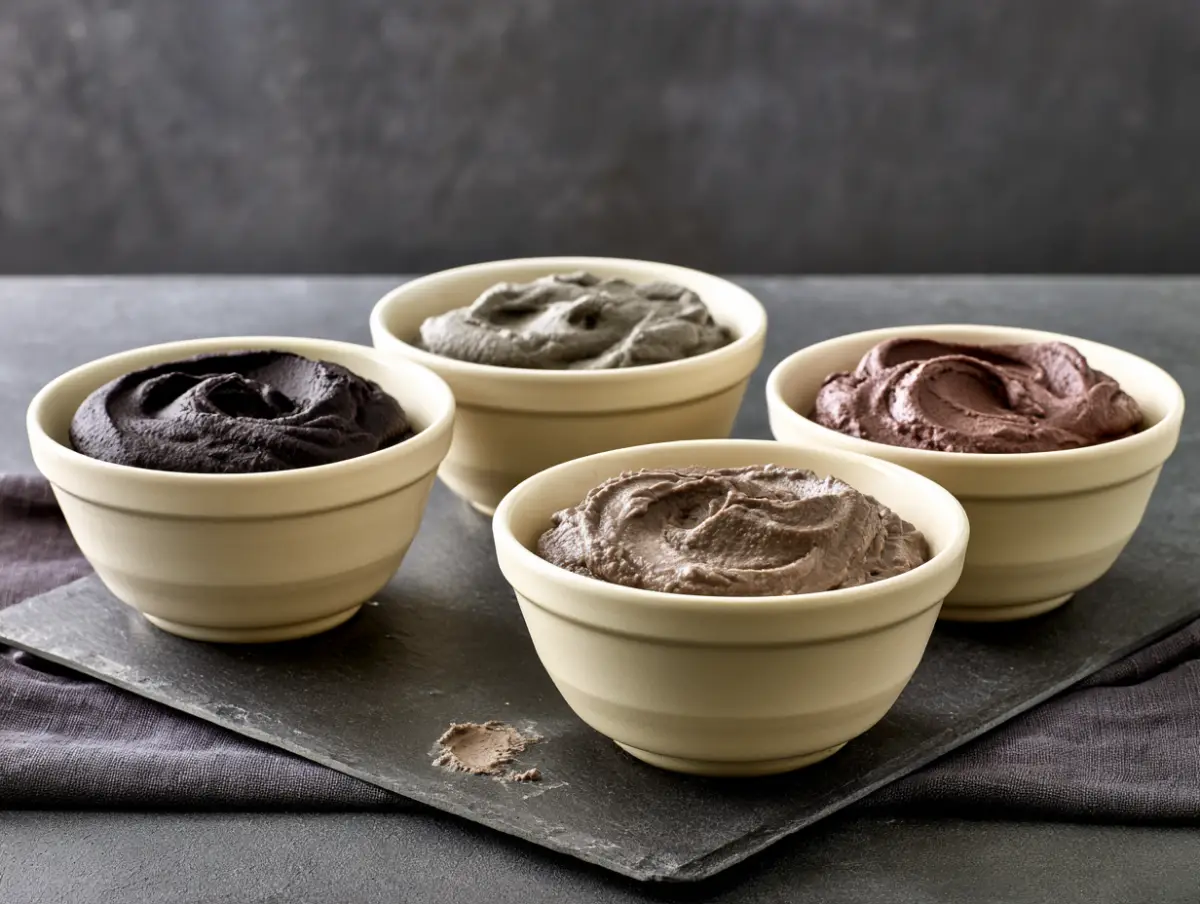
Black tahini — the right answer. Made from toasted black sesame seeds. Gives a true, dense, matte black that is uniform through the whole dip rather than sitting on the surface. It adds flavor: deeper, more roasted and slightly more bitter than white tahini, which suits a savory dip. It has the same nutritional profile as any sesame paste — calcium, iron, healthy fats. The only downsides are cost (roughly two to three times white tahini) and that you probably cannot buy it at a standard supermarket.
Activated charcoal — grey, chalky, and worth avoiding. It does not produce black in a light-colored base; it produces a flat mid-grey, and getting anywhere near black takes so much that texture suffers noticeably. It has no flavor of its own but it adds a dry, chalky mouthfeel that people describe as “powdery.”
Then there is the other thing. Activated charcoal is an adsorbent — binding things in the gut is its entire medical function — and it is known to reduce the absorption of a range of oral drugs. Amberly Johnson, the PharmD who directs the Utah Poison Control Center, puts it plainly: charcoal “can also bind to foods you have eaten, blocking the absorption of nutrients and medications.” Whether the amount used to color a dip does that to any meaningful degree has not been studied, which is precisely the problem when you are serving eight people whose medications you do not know.
On the regulatory side, be clear about what is actually true: activated charcoal has never been approved by the FDA as a food additive or listed as a permitted color additive — and in the US, colors used in food must be on that list.
The Association of Food and Drug Officials went to the FDA about exactly this in 2019, noting that charcoal is not named as a generally recognized as safe direct human food ingredient. On that basis New York City’s health department ordered it removed from food and drink served in the city in 2018. That is not a health scare and I am not making one. It is simply a substance with no food-additive approval, doing a job another ingredient does better.
Black food coloring — the worst of the three. Commercial black gel is a heavy blend of several dyes, usually red, blue and yellow at high concentration. In a beige base it does not read black; it reads bruised — a purplish charcoal that looks, unmistakably, like something that has had dye added to it. It goes muddier under warm light. And at the volume needed it is genuinely bitter, which is why dyed frosting so often has that unpleasant chemical edge.
Squid ink is a legitimate fourth option, but for pasta and rice rather than hummus — it is aggressively briny and marine, which fights chickpeas. It is the right answer for black pasta.
Black sesame paste from an Asian grocery is chemically the same product, and it works — but it is very frequently sweetened, sometimes heavily. Read the label. If sugar appears in the first three ingredients, it is a dessert paste and your hummus will be strange.
Where to Buy Black Tahini (And What to Check on the Label)
Middle Eastern and Turkish grocers. The most reliable source and usually the best price. Look for Lebanese, Palestinian or Turkish brands.
Asian supermarkets. Stocked as black sesame paste. Read the label carefully — the unsweetened version is what you want.
Online. Widely available. Expect to pay noticeably more than white tahini.
Health food stores. Occasionally, usually at the highest price of the four.
On the label, check three things:
- Ingredients: black sesame seeds. Ideally that is the entire list. Salt is acceptable. Sugar means it is a dessert paste.
- “Hulled” or “unhulled.” Unhulled is darker and more bitter; hulled black sesame is milder. Either works — unhulled gives a blacker result.
- Oil separation at the top of the jar is normal and good. It means no emulsifiers. Stir it back in thoroughly; a badly stirred jar gives you an oily top half and a cement-like bottom half.
Getting It Genuinely Silky
Three things separate silky hummus from grainy hummus, and only one of them is optional.
Peel the chickpeas. Ten minutes with baking soda and hot water and the skins slip off in a batch. Those skins are cellulose and they never break down, no matter how long you blend. This is optional, and it is the difference between very good and restaurant-good.
Use ice water, and enough of it. Most home hummus is under-hydrated. The tahini needs to emulsify with water before the chickpeas arrive, and it needs to stay cold to do it. Add it slowly and watch for the moment the mixture goes from thick and dull to loose and glossy — that visible change is the emulsion forming.
Blend for three full minutes. Not thirty seconds. Not “until smooth.” Three minutes on a timer, scraping down once. Almost everyone stops far too early, because it looks finished long before it is. The last ninety seconds is where the texture actually happens: that is when the sesame paste fully emulsifies with the water and the chickpea starch finishes hydrating, and neither of those is visible from outside the bowl — which is exactly why people stop early.
Grind varies by producer far more than it does by seed color, so this is not a property of black sesame — but the black tahini I have bought has consistently been ground finer than the white tahini beside it on the same shelf, which gives this version a head start on all three.
The Five Rules for Silky Black Hummus
- Macerate the garlic in lemon juice and salt for five minutes before anything else goes in. It takes the raw bite off and it costs you nothing.
- Peel the chickpeas. Ten minutes with baking soda and hot water. Optional, and it is the difference between very good and restaurant-good.
- Use ice water, and enough of it, until the mixture turns from thick and dull to loose and glossy.
- Blend three full minutes on a timer. Not until smooth — it looks finished long before it is.
- Swirl deep enough to throw a shadow. On black, the shadow in that groove is most of the photograph.
Creative Variations
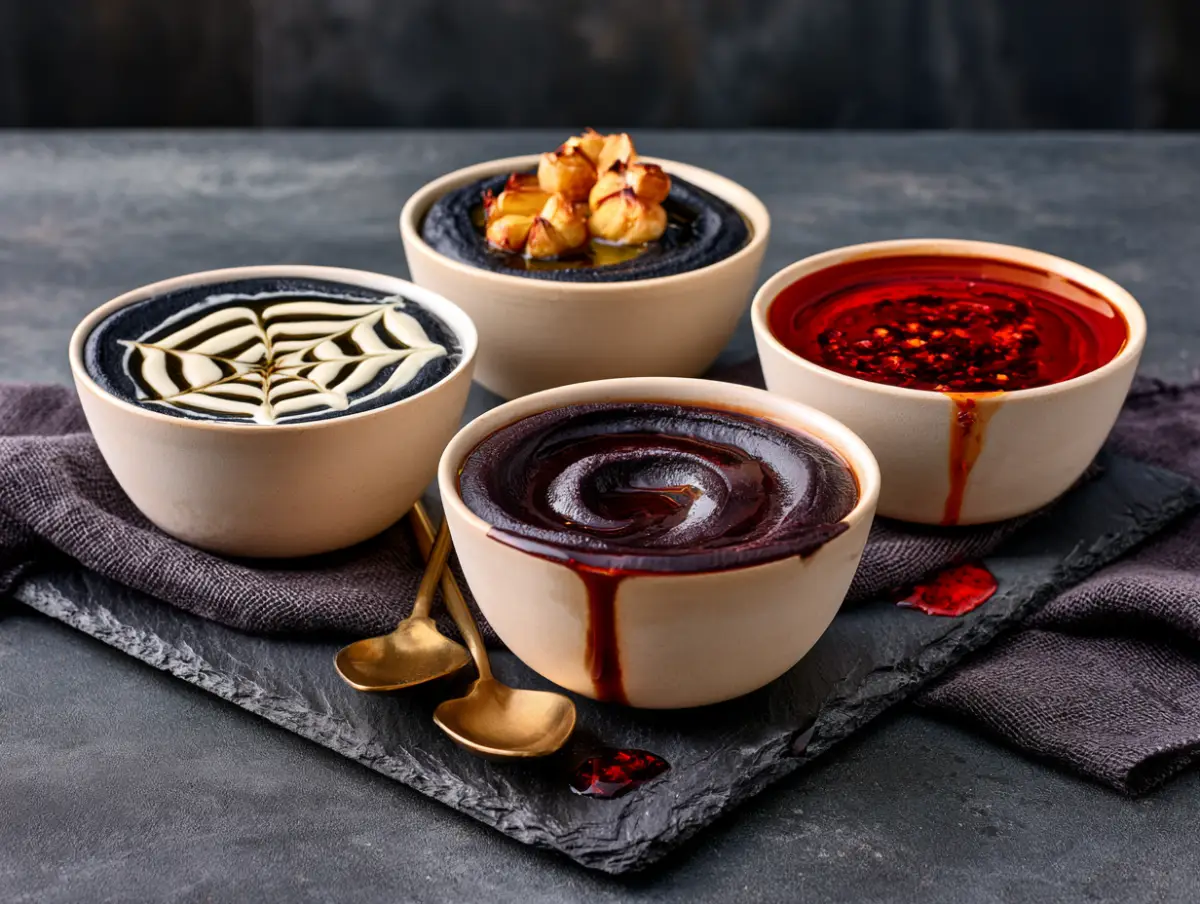
The black-and-white spiral. Make half a batch of regular white hummus and spoon it into the center of the black, then drag a skewer outward in eight lines. It is a spider web, and it takes ninety seconds.
Roasted garlic black hummus. A whole head, roasted, blended in. Sweeter, rounder, less sharp.
Charred scallion. Blistered scallions blended through — smoky, and it gives you flecks of deep green in the black.
Black hummus with chile crisp. Not remotely traditional, extremely good, and the red oil pooling on black is the best-looking version of the lot.
Half-and-half grey. Equal black and white tahini gives a stone grey that works beautifully as the middle bowl on a three-dip board.
Storage and Serving Suggestions
Fridge: 5 days in an airtight container with a film of olive oil over the surface to stop it drying. Better after a few hours as the flavors settle.
Freezer: 3 months. Freeze without the garnish, thaw overnight in the fridge, then blend briefly with a splash of ice water to bring the texture back.
Serve at room temperature. Cold hummus is stiff and tastes muted. Take it out 30 minutes ahead.
Swirl deeply. Press the back of a spoon in and drag a real groove, not a decorative squiggle. Pool oil in it. On black, the shadow in that groove is the whole photograph.
Nutritional Benefits
Black sesame carries more calcium, iron and antioxidant lignans than white, and unhulled sesame seed is among the more calcium-dense foods you can eat by weight — you can compare the seed and the paste side by side in the USDA’s FoodData Central. One caveat that matters when you are buying: most tahini, black or white, is made from hulled seed, and hulling removes the great majority of the calcium, because it sits in the hull. Unless the jar says unhulled, the calcium claim does not carry over. Chickpeas bring fiber and plant protein; olive oil brings monounsaturated fat and polyphenols.
One thing to say clearly on a page about a sesame dip: since January 2023, sesame has been the ninth major food allergen recognised by the FDA, which means packaged foods now have to declare it. A bowl on a grazing table declares nothing, so say it out loud when you set it down.
This is a legitimately nutritious thing that also happens to look like it came out of a cauldron, which is a rare combination on 31 October.
Frequently Asked Questions
Is black hummus made with food coloring?
Not this one. The color comes entirely from black tahini — ground toasted black sesame seeds. Most black hummus recipes online use activated charcoal, which produces grey rather than black and adds a chalky mouthfeel, or black food dye, which reads purple-bruised and turns bitter at the quantity required.
What does black tahini taste like?
Deeper and more roasted than white tahini, with a stronger sesame character and a little more bitterness. In hummus it reads as nuttier and slightly smoky. Most people prefer it once they have tried both side by side.
Can I use activated charcoal instead?
I would not. It gives grey rather than black and adds a dry, chalky texture. As an adsorbent it is known to reduce the absorption of a range of oral drugs; whether it does so meaningfully at the quantity used to color food has not been studied, which is reason enough not to serve it to a room. It has also never been approved by the FDA as a food or color additive, and New York City ordered it out of food and drink served in the city in 2018 on exactly that basis. Black tahini is a better ingredient in every respect except price.
Where can I buy black tahini?
Middle Eastern and Turkish grocers first, then Asian supermarkets (sold as black sesame paste — check it is unsweetened), then online. Expect to pay two to three times the price of white tahini. Check the ingredient list is just black sesame seeds.
Can I use black sesame paste from an Asian supermarket?
Yes, if it is unsweetened. Many are sold as a dessert filling and contain significant added sugar, which will make your hummus taste distinctly odd. Read the label; if sugar is in the first three ingredients, keep looking.
Why is my black hummus grainy?
Chickpea skins, not enough water, or not enough blending. Peel the chickpeas, use ice water until the mixture goes glossy, and blend for a full three minutes with a timer.
Pairing and Serving Ideas
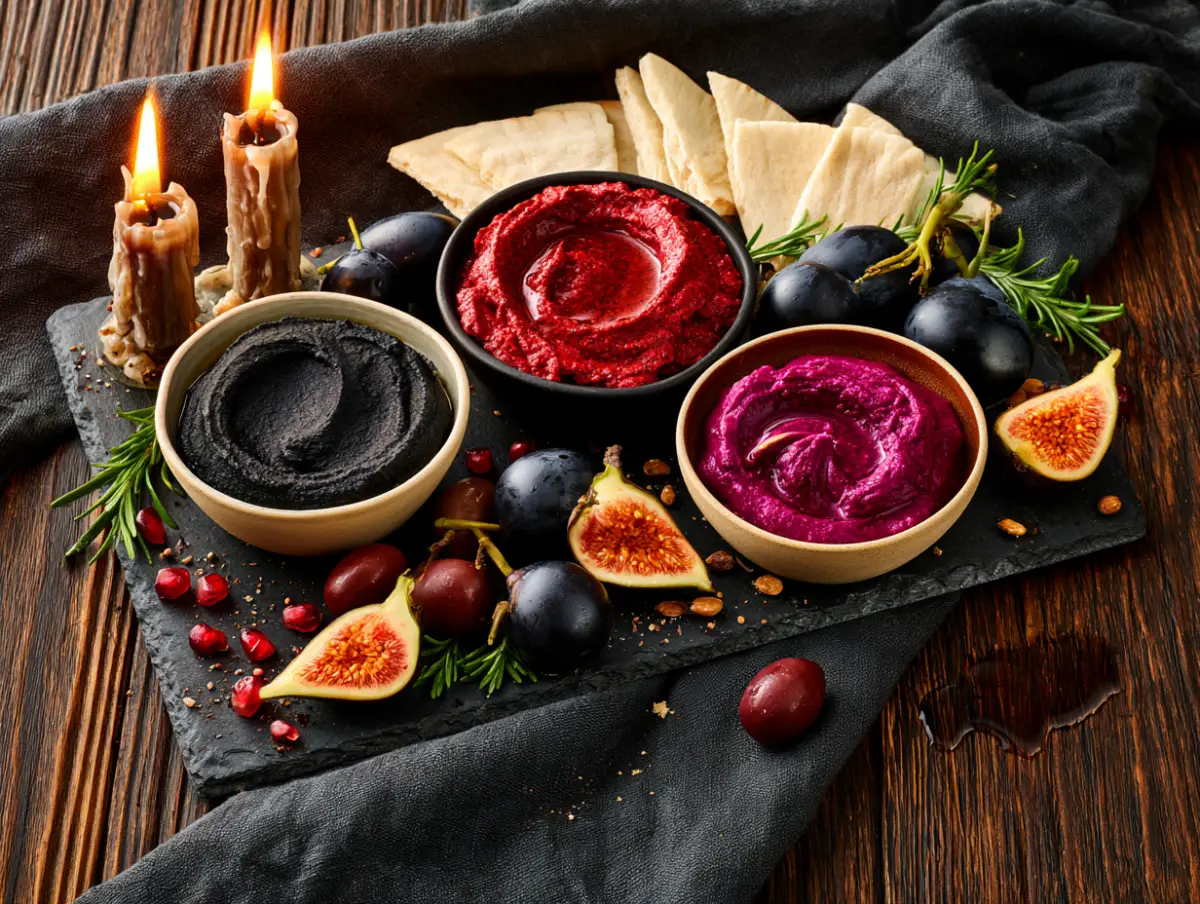
Black hummus is a contrast ingredient. Put it next to red.
The pairing I make every year is this beside muhammara, in two matte bowls, on a dark board. Oxblood and matte black is the whole 2026 Halloween palette, and it takes about twenty-five minutes of total work for both.
A third bowl makes it a system rather than a pair. A blood-beet dip gives you magenta, which sits between the two and stops the board reading as only two colors.
For dippers: pale things. White pita torn into shards, endive, sliced fennel, white crackers. The point is contrast, so nothing brown.
To drink: short tumblers of dark pomegranate-and-hibiscus shrub over ice, or chilled pomegranate juice. Both photograph darker and glossier than anything alcoholic under candlelight, which is what a matte black dip wants beside it.
Watch: Grey to Black in Three Minutes
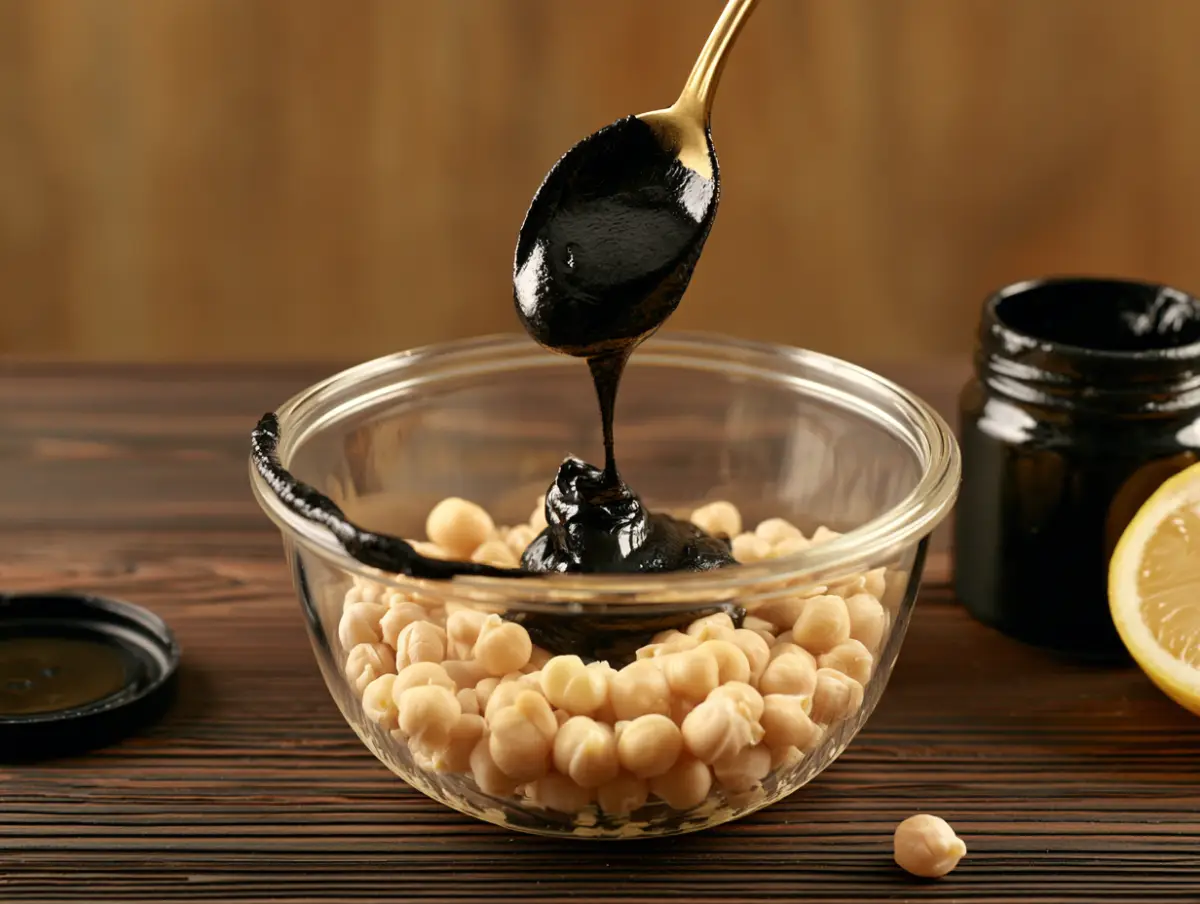
Chickpea skins being rubbed off and floating, black tahini going in and seizing, ice water loosening it to glossy, the long blend, then the finished dip spread and grooved with oil pooling.
Ready to Make the Blackest Thing on the Table?
Find a jar of black tahini, peel your chickpeas, use ice water and set a three-minute timer. That is the whole recipe.
Put it next to something red and let it do the rest.