Written by Ines Zahraoui — Tunisian home cook and co-founder of The Mediterranean Recipe, developing and testing recipes in her own kitchen since 2020. More about Ines →
I am going to be straight with you: spider-web hummus is not an original idea. There are thousands of spider-web hummus platters online and you have seen most of them.
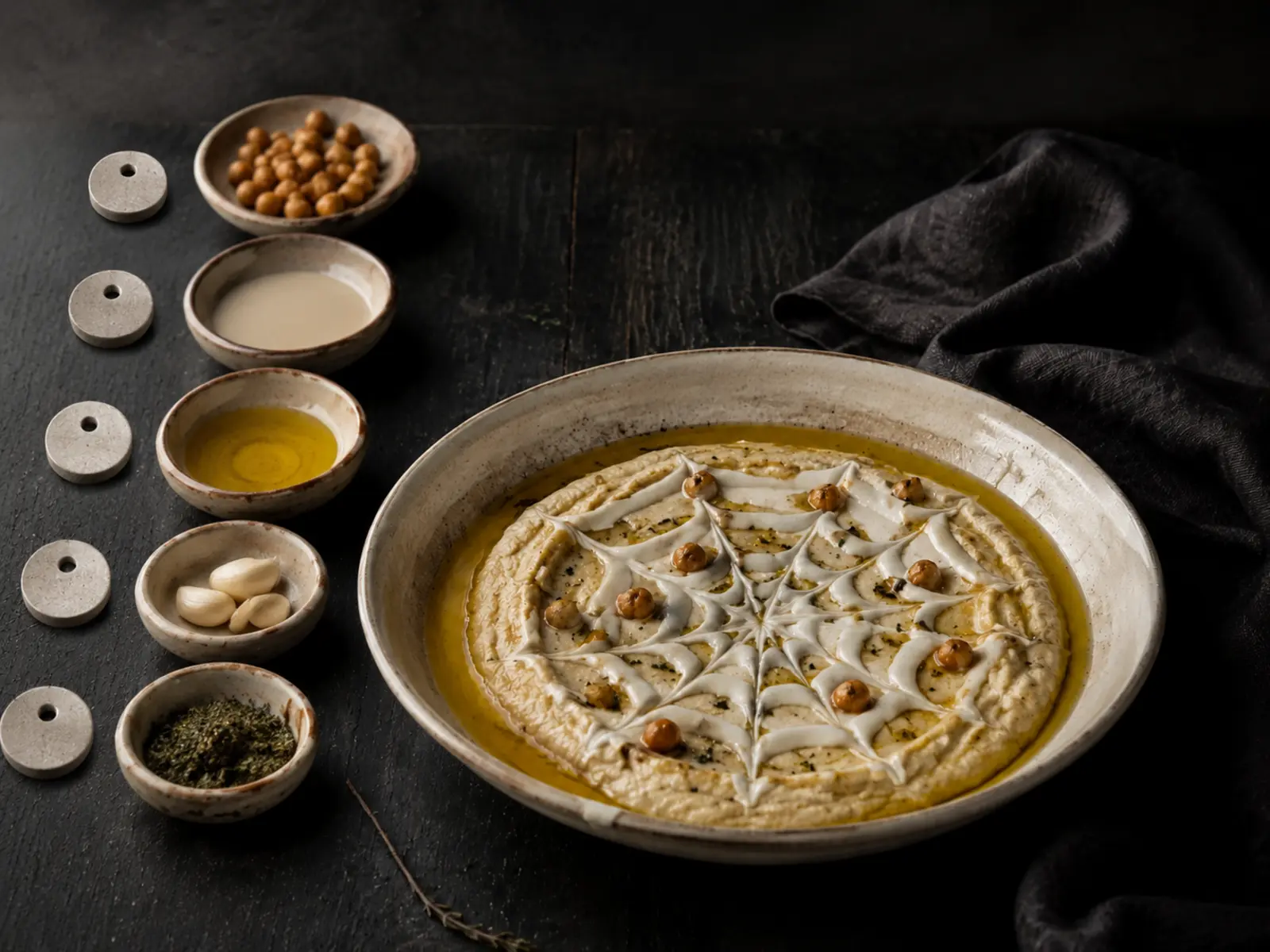
What almost none of them tell you is the one thing that decides whether yours looks like a web or like a smudge, and it takes two seconds to get right: you drag the toothpick from the centre outward, never from the edge inward. That is it. That is the whole skill. Every ruined spider web I have ever made — and there were four before I worked it out — was dragged the wrong way.
The other thing worth saying is that the web is temporary and the hummus is not. Ten minutes after this hits the table the web is gone and what is left is a bowl of hummus that people are still eating. So the recipe below spends as much attention on getting it silky as on the styling, because the styling is for one night and the technique is for the rest of your life.
Silky is the right word, incidentally. Properly made hummus is not smooth so much as light — it should collapse under a cracker rather than resist it, and the difference between that and the grainy version is entirely mechanical.
Table of Contents
Table of Contents
Spider-Web Hummus Recipe Card
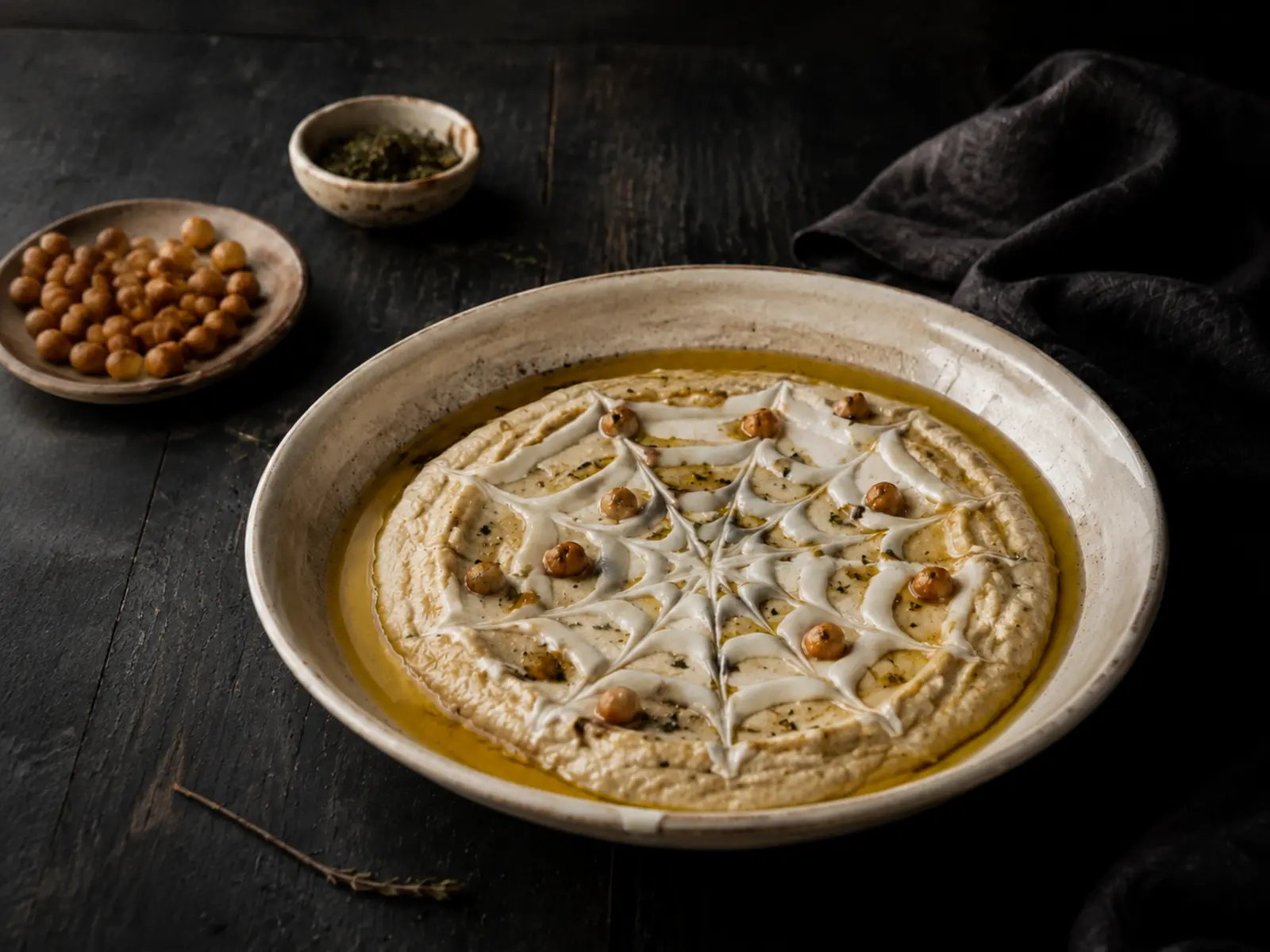
Spider-Web Hummus Platter
Ingredients
Method
- Peel the chickpeas. Cover the drained chickpeas with hot water and the baking soda, rub them firmly between your palms for a minute, then skim off the floating skins. Ten minutes, and it is the difference between good and restaurant-good.
- Blend the garlic, lemon juice and salt alone for 30 seconds, then let it sit 5 minutes to take the raw bite off the garlic.
- Add the tahini and blend 45 seconds. It will seize into a thick pale paste. This is correct.
- With the machine running, add ice water one tablespoon at a time until the tahini loosens and turns glossy and noticeably paler.
- Add the chickpeas and cumin. Blend for three full minutes. Set a timer, scrape down twice.
- Add the olive oil, blend 30 seconds more, then adjust with ice water for texture and lemon and salt for taste.
- Spread it flat. Transfer to a wide shallow platter and smooth the surface with the back of a spoon into an even, level circle. A domed or grooved surface will not hold a web.
- Thin the labneh with milk a teaspoon at a time until it falls from a spoon in a smooth continuous ribbon, roughly the consistency of double cream. Load it into a piping bag or a zip bag with a small corner snipped off.
- Pipe concentric circles from the centre outward, four or five rings, evenly spaced.
- Drag a toothpick from the centre to the edge, eight times, evenly spaced around the circle. Always centre to edge. Wipe the toothpick between each line.
- Finish with olive oil around the outer edge only, a dusting of sumac, and olives at the rim.
Notes
Why This Hummus Recipe Actually Works (Halloween Hummus)
- The web is a two-second rule, not a skill. Once you know the direction, it works first time.
- No food colouring, no props, no plastic.
- The hummus is genuinely good, which is what makes it worth making in March.
- Fifteen minutes, and ten of those are the optional peeling step.
- It feeds ten from about four dollars of ingredients.
Why This One Survives Halloween
Almost every Halloween recipe stops working on 1 November. This one does not, because the web comes off in the first ten minutes and what is left is a bowl of hummus. Treat the styling as removable and you have built an evergreen page with a seasonal costume on it, which is a considerably better use of the work than a page that dies in a week.
Essential Ingredients
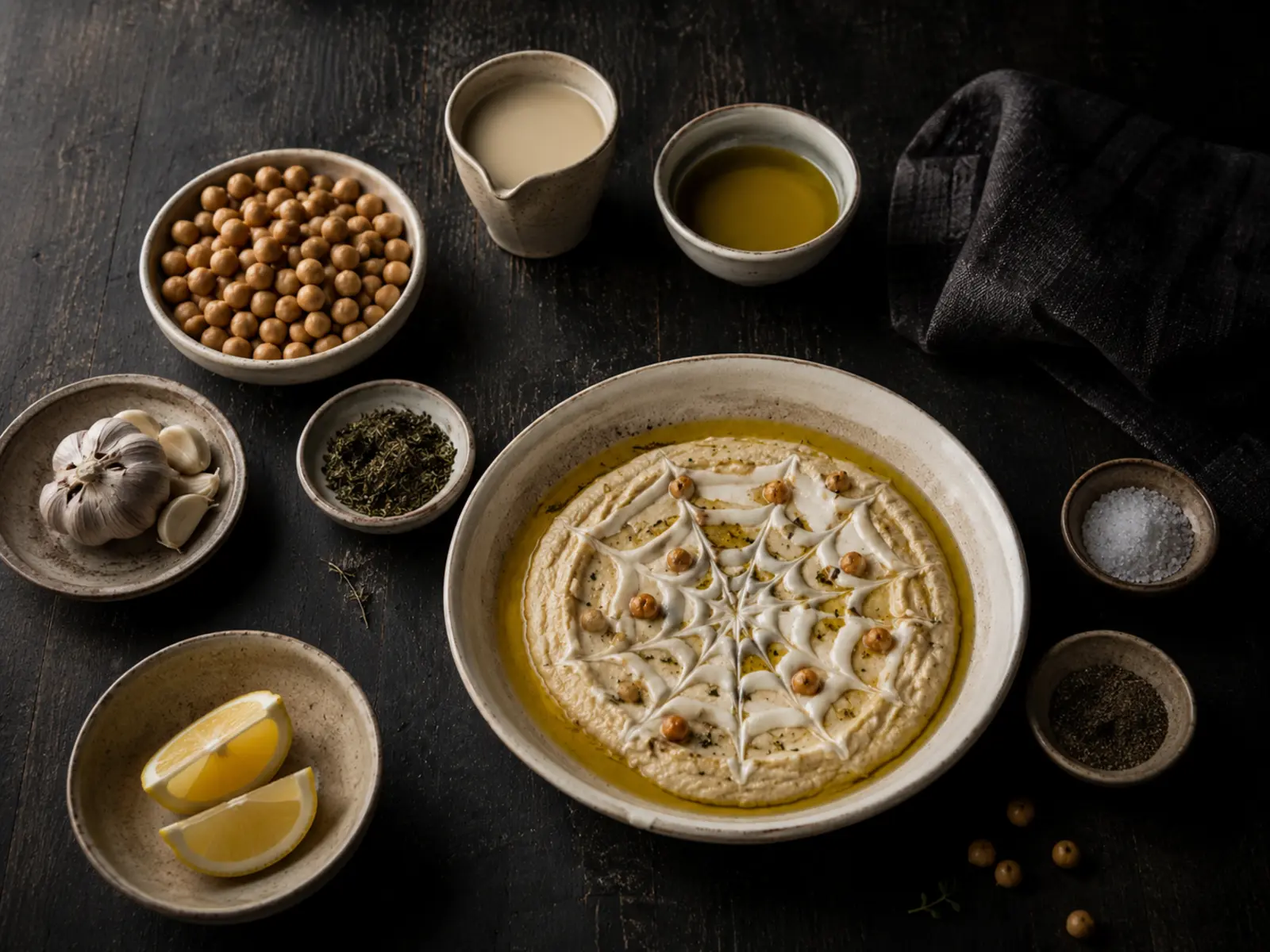
Chickpeas. Canned is fine and is what I use. Rinse them properly — the liquid in the can is what makes hummus taste faintly tinny.
Tahini. The single biggest variable in the whole recipe. Buy a Lebanese, Palestinian or Israeli brand if you can; the difference between good tahini and supermarket tahini is enormous and it is the flavour you are actually tasting. Oil separation at the top of the jar is a good sign — it means no emulsifiers. Stir it back in properly.
Lemon. Fresh. Bottled has a dull bitter note that hides in a stew and stands right out here.
Ice water. Not room temperature. Cold water helps the tahini emulsion form and keeps the mixture from warming and going gluey through a long blend.
Labneh for the web. Thicker and tangier than yogurt, and it thins more predictably. Sour cream is the most widely available substitute and works perfectly well.
The Foolproof Method
- Peel the chickpeas if you have ten minutes.
- Garlic in lemon first, five minutes.
- Tahini in, let it seize, then loosen with ice water until glossy.
- Chickpeas in. Three full minutes on a timer.
- Spread flat and level on a wide platter.
- Pipe concentric circles.
- Drag outward, eight times.
How to Pipe the Spider Web (The Only Tricky Part)
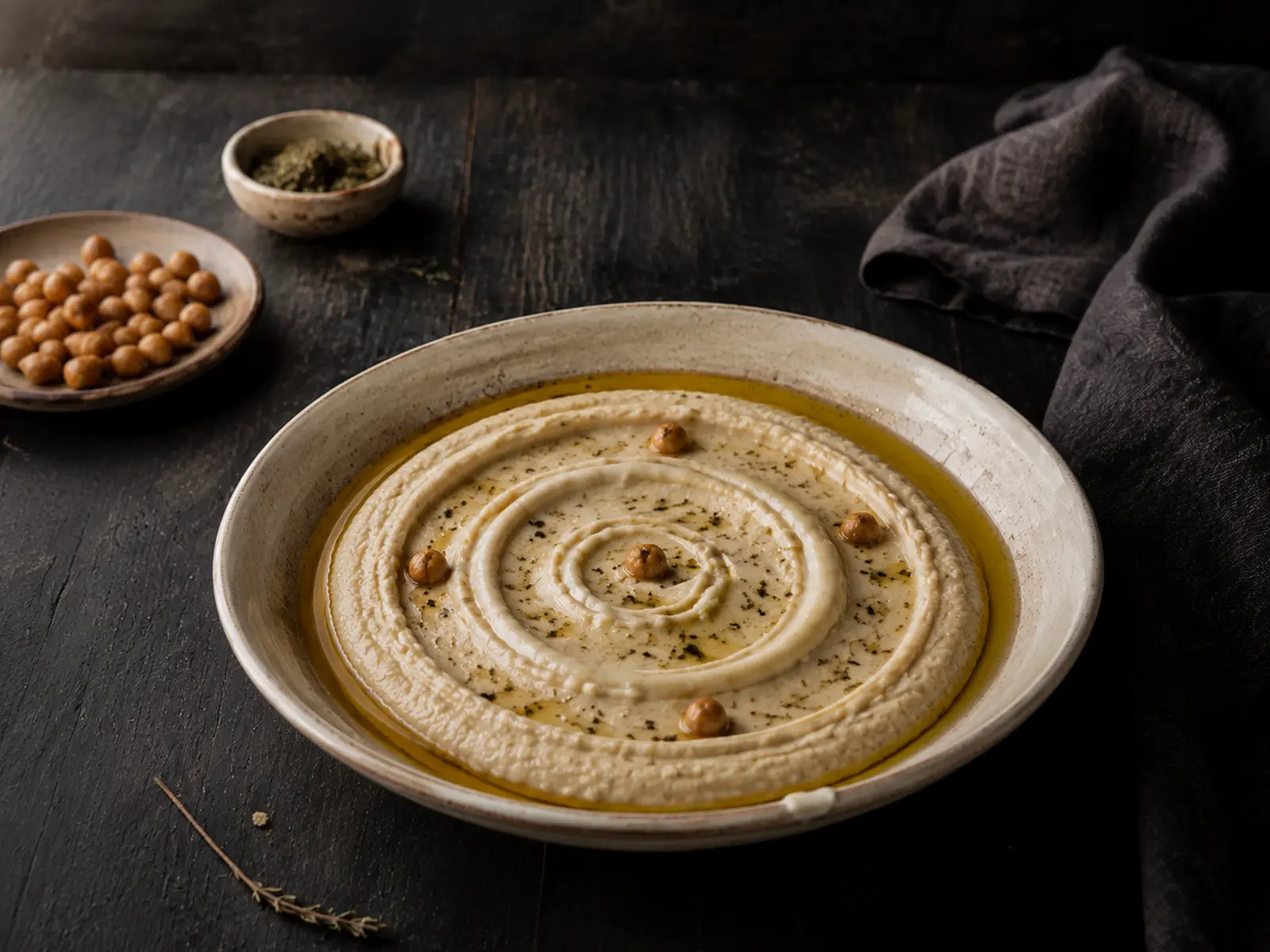
Three things have to be right, and only one of them is about your hand.
The surface must be flat. Spread the hummus into a wide, level, even circle with the back of a spoon. This is the opposite of how you normally serve hummus — no grooves, no dome, no swirl. A grooved surface has nowhere for the web to sit and the rings will pool into the channels.
The cream must be the right consistency. This is the one that actually causes failures. Thin the labneh with milk, a teaspoon at a time, until it falls from a lifted spoon in a smooth continuous ribbon — roughly double cream. Too thick and the piped line sits proud on the surface and tears when you drag it. Too thin and it sinks into the hummus and spreads into a pink-white blur within a minute.
Pipe from the centre outward. Start with a small dot in the middle, then spiral or ring your way out — four or five rings, evenly spaced, about half an inch apart. The gaps matter as much as the lines; rings too close together leave the toothpick nothing to work with.
A zip bag with a very small corner snipped off works as well as a piping bag. Snip less than you think — you can always cut more.
Always Drag Outward
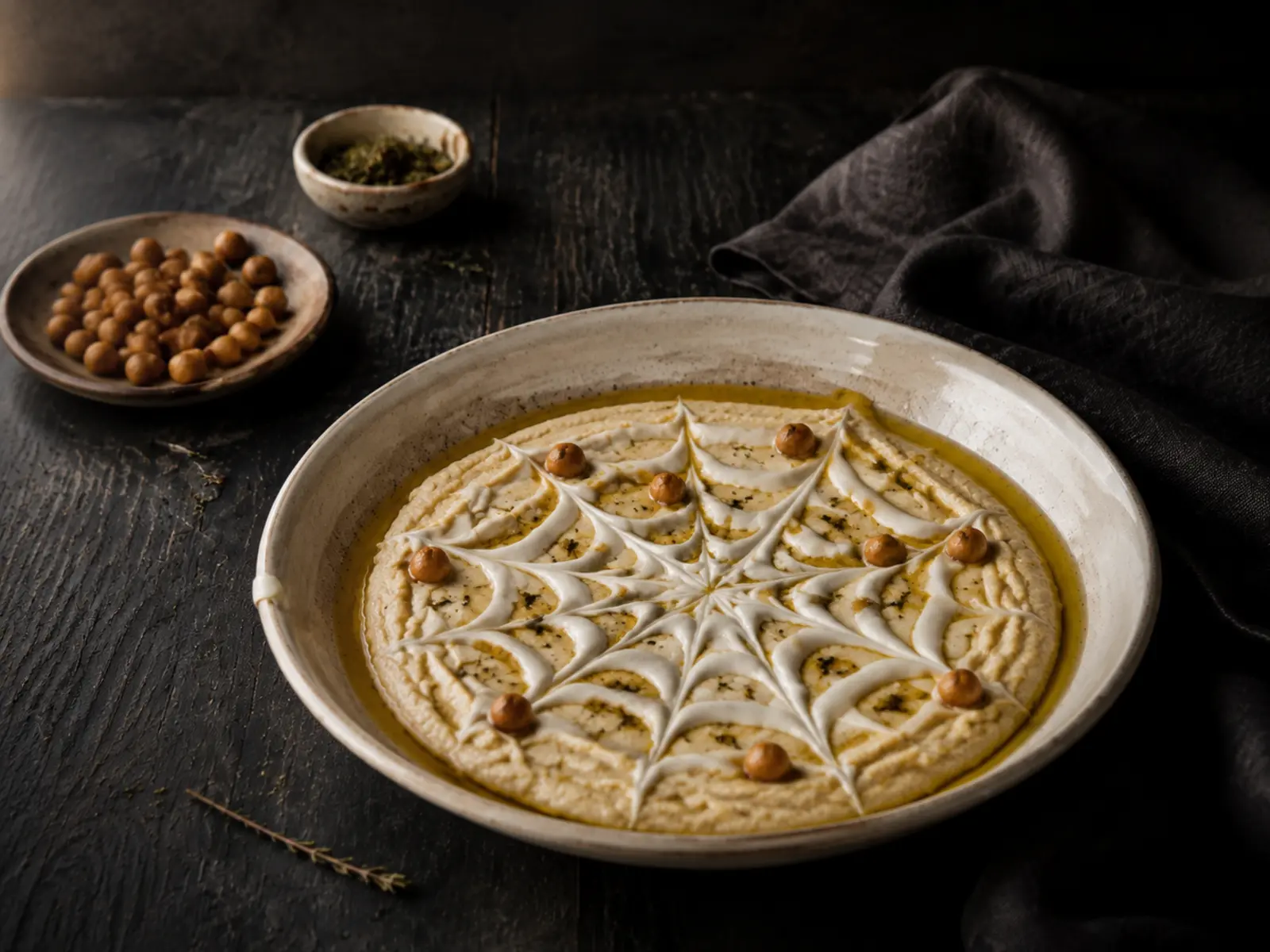
Here is the rule, and it is the reason this page exists.
Drag the toothpick from the centre of the platter to the outer edge. Every time. Never the other way.
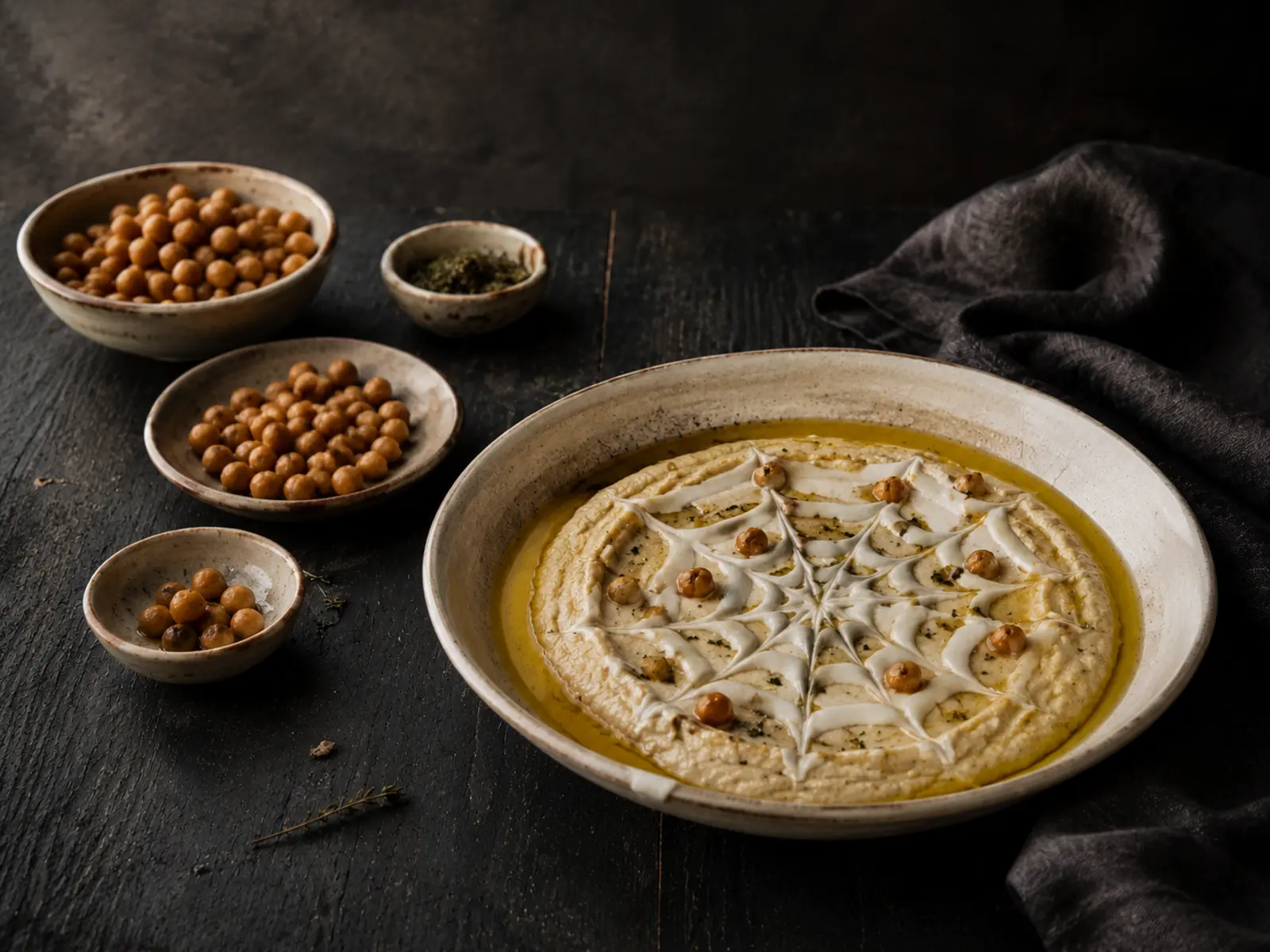
When you drag outward, the toothpick pushes a small amount of hummus and cream ahead of it and the piped rings pull into gentle points that follow the direction of travel. That pulled point is what reads as a spider web — the radial lines that give it structure.
When you drag inward, the toothpick pushes the outer hummus toward the centre, dragging the pale rings into the darker hummus and smearing them. The rings blur, the lines lose definition, and within three passes you have a bowl of streaky beige hummus. It is not fixable, because the cream is now mixed into the top layer rather than sitting on it.
Two supporting details:
Wipe the toothpick between every line. It picks up hummus and cream as it goes, and by line four an unwiped toothpick is dragging a blob rather than cutting a line. A piece of kitchen paper beside the platter is all you need.
Eight lines, evenly spaced. Do four first at north, south, east and west, then split each quarter. Doing them sequentially around the circle is how you end up with three lines crowded on one side.
If you get it wrong: scrape the top quarter-inch off with a spoon, smooth what is left, and pipe again. You will lose a little hummus and nothing else.
How to Get Silky Hummus, Not Grainy
This is the section to keep after Halloween.
Peel the chickpeas. Ten minutes with baking soda and hot water and the skins slip off in a batch. Those skins are cellulose and they never break down no matter how long you blend, so every unpeeled chickpea is a small piece of grit in the finished dip. It is optional and it is the single biggest quality jump available to you.
Use ice water, and more than you think. Most home hummus is under-hydrated. The tahini needs to emulsify with water before the chickpeas arrive, and it needs to stay cold to do it well. Add it slowly and watch for the moment the mixture goes from thick and dull to loose and glossy — that visible change is the emulsion forming, and it is the point at which the texture is decided.
Blend for three full minutes. Not thirty seconds, not “until smooth.” Three minutes on a timer, scraping down twice. It looks finished long before it is, and the last ninety seconds is where it goes from smooth to light.
Do not skimp on the tahini. Two-thirds of a cup for two cans of chickpeas is more than most supermarket recipes suggest and it is roughly what a Levantine kitchen would use. Hummus is a tahini dish with chickpeas in it, not the other way round.
Creative Variations
- The black web. Black tahini thinned to piping consistency instead of labneh, piped onto pale hummus. A black web on cream reads even more strongly than white on beige, and it is my preferred version.
- The reverse. Jet-black hummus as the base with a white labneh web. Maximum contrast, and the most photographed version.
- Roasted garlic hummus base. A whole head, roasted, blended in. Sweeter and rounder, and it takes the edge off for anyone who finds raw garlic aggressive.
- Add a spider. One black olive halved for the body, four thin slivers cut from another for legs, set at the edge of the web. Restrained — one spider, at the rim, not eight scattered across it.
- Individual webs. Small plates, one web each, for a seated dinner. Fiddly but very effective.
Storage and Serving Suggestions
Fridge: hummus keeps 5 days airtight with a film of olive oil over the surface. Better after a few hours as the flavours settle.
Freezer: 3 months without the web. Thaw overnight, then blend briefly with a splash of ice water.
The web is same-day. Pipe it within an hour of serving. Over two or three hours the cream slowly sinks and the definition softens, and by hour four it is a pale blur.
Serve at room temperature. Take it out 30 minutes ahead. Cold hummus is stiff and tastes muted, and a cold surface makes the cream set oddly.
Quantity: this makes about 3 cups, which serves 8–10 as one of several dips. For quantities across a whole party, use the party food calculator.
Ingredient and Allergen Notes
Allergen note: tahini contains sesame, a major food allergen, and labneh or yoghurt contains milk. Offer a clearly labeled sesame-free dip if needed and keep its utensils separate to reduce cross-contact.
Texture and flavor are the reasons to make this platter. Treat any nutrition calculation as an estimate based on the exact brands and serving size used. Because this platter sits out at a party, follow the USDA’s two-hour rule for perishable food safety and refrigerate promptly.
Frequently Asked Questions
Can I make spider web hummus ahead of time? Make the hummus up to two days ahead and refrigerate it. Spread and pipe the web on the day, within about an hour of serving — the cream slowly sinks into the hummus over a few hours and the pattern softens into a blur.
Will the spider web hold its shape for a few hours? Not really. It holds crisply for about an hour, softens noticeably by hour two, and is a pale smudge by hour four. If you need it to look right at a specific moment, pipe it fifteen minutes before that moment.
Can I use store-bought hummus for this? Yes, and there is no shame in it in late October. Buy a plain one rather than a flavoured one, spread it flat and level, and pipe as normal. It works — it just will not be the thing people ask you about.
What can I use instead of sour cream for the web? Labneh is best, thick Greek yogurt is close, crème fraîche works. For a vegan version, a thick unsweetened plant yogurt or cashew cream thinned to a ribbon. Whatever you use, the consistency test is the same: it should fall from a spoon in a smooth continuous ribbon.
How do I stop my hummus turning out grainy? Peel the chickpeas, use ice water until the mixture goes visibly glossy, and blend for a full three minutes on a timer. The skins are the main culprit and no amount of blending breaks them down.
Why did my spider web smudge? Almost certainly because you dragged the toothpick inward instead of outward. Dragging from the edge toward the centre pushes hummus over the piped cream and smears it. Always drag centre to edge, and wipe the toothpick between lines.
Pairing and Serving Ideas
This is the pale bowl on a dark board, so surround it with contrast.
Next to jet-black hummus and blood-red muhammara it completes a three-colour set, and it is the one everyone photographs.
For dippers, keep them dark or neutral so they do not compete: charred pita triangles, black olives, cucumber, endive, radish. Skip anything orange.
If you are building a full spread, the gothic mezze board has the quantities and the build order.
For the other nineteen dips organised by colour, see the full Halloween Mediterranean dips guide.
Watch: The Web in 15 Seconds
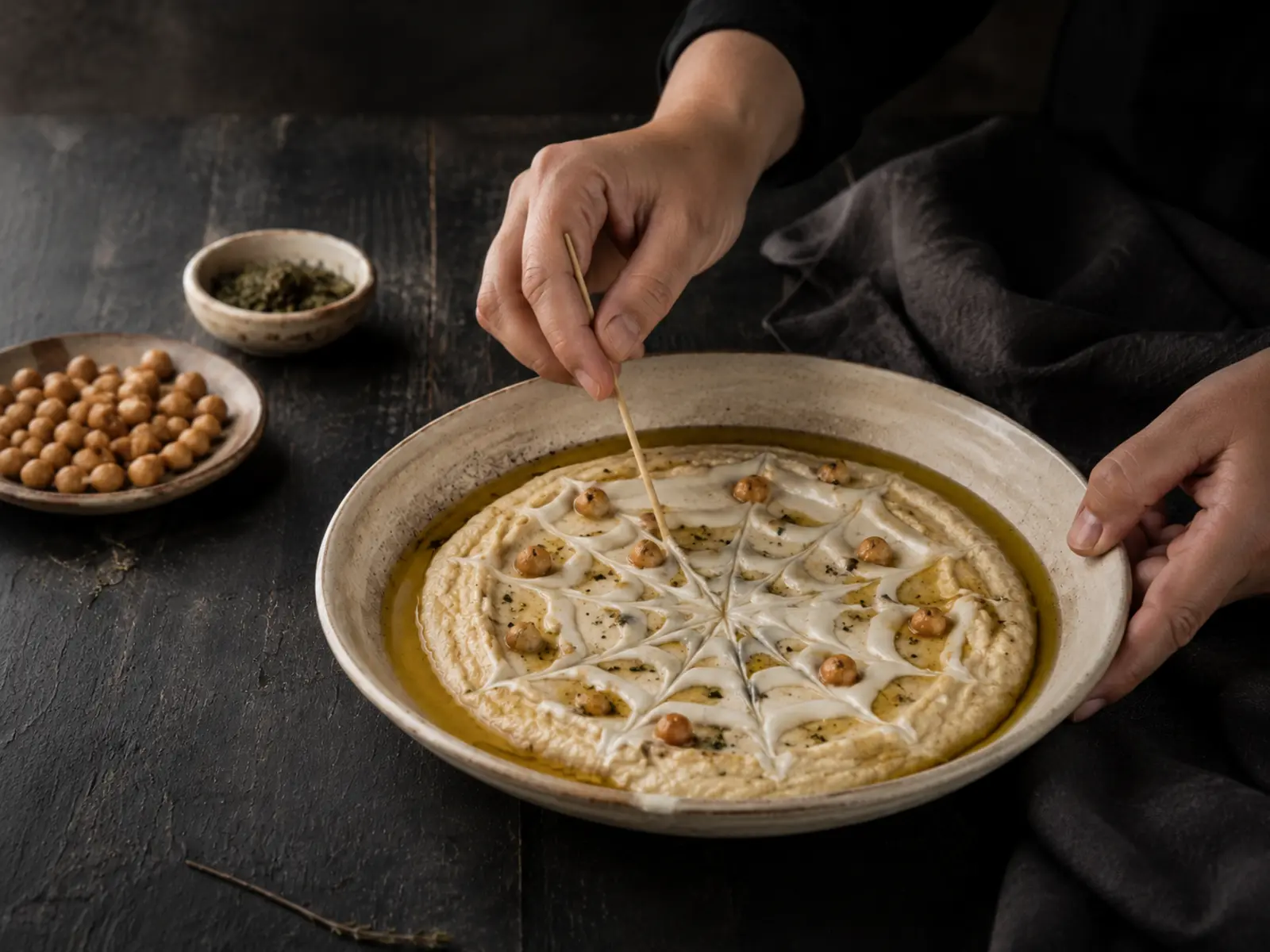
Hummus spread flat and levelled, thinned labneh piped in concentric rings from the centre out, then eight toothpick drags from centre to edge, the toothpick wiped between each one, and a final drizzle of oil around the rim.
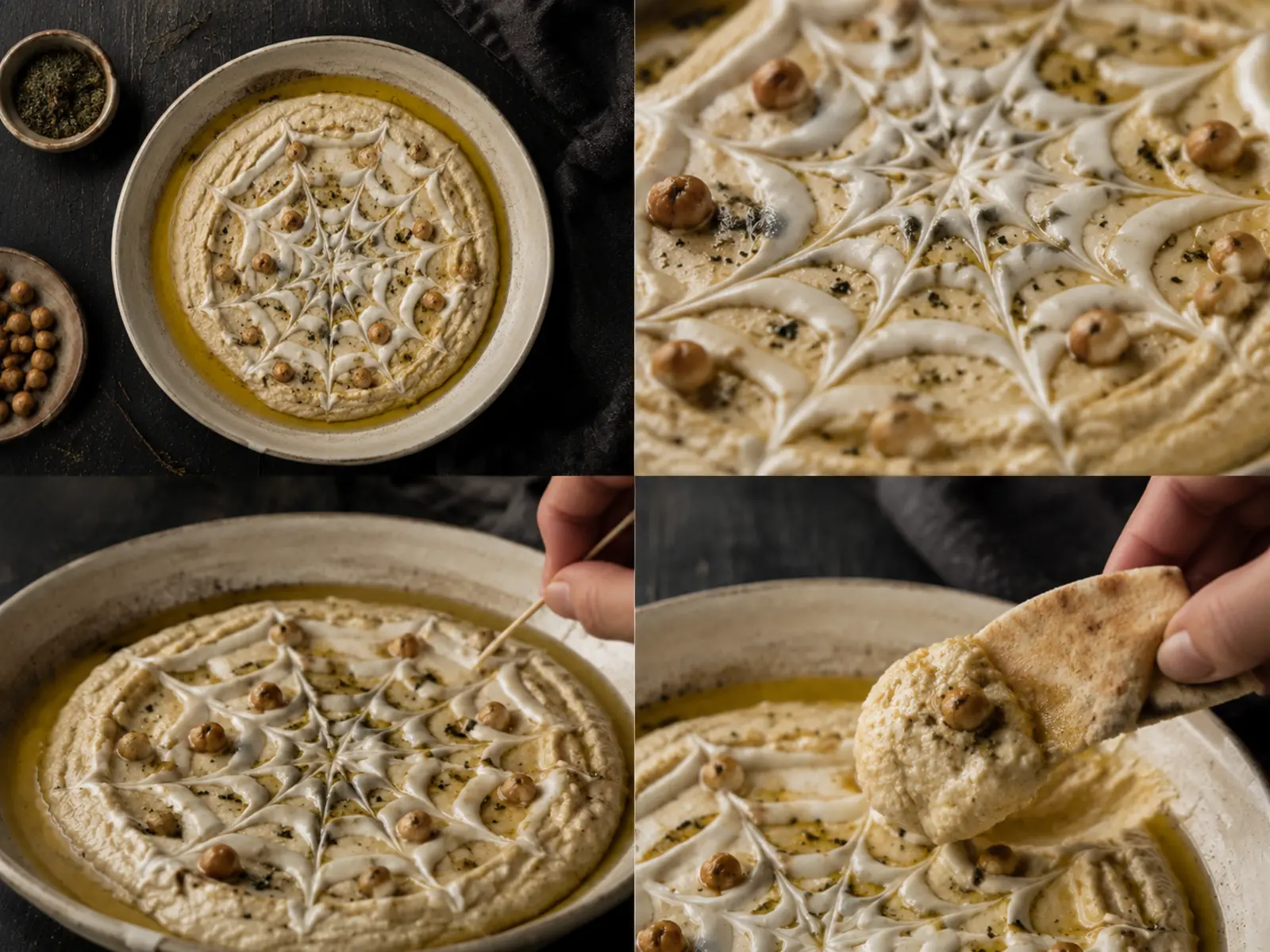
Ready to Make the First Thing That Disappears?
Flat surface, ribbon-consistency cream, concentric rings, and drag outward eight times.
Then peel your chickpeas and blend for three minutes, because in ten minutes the web will be gone and the hummus is what people will remember.
How to Buy Tahini and Chickpeas
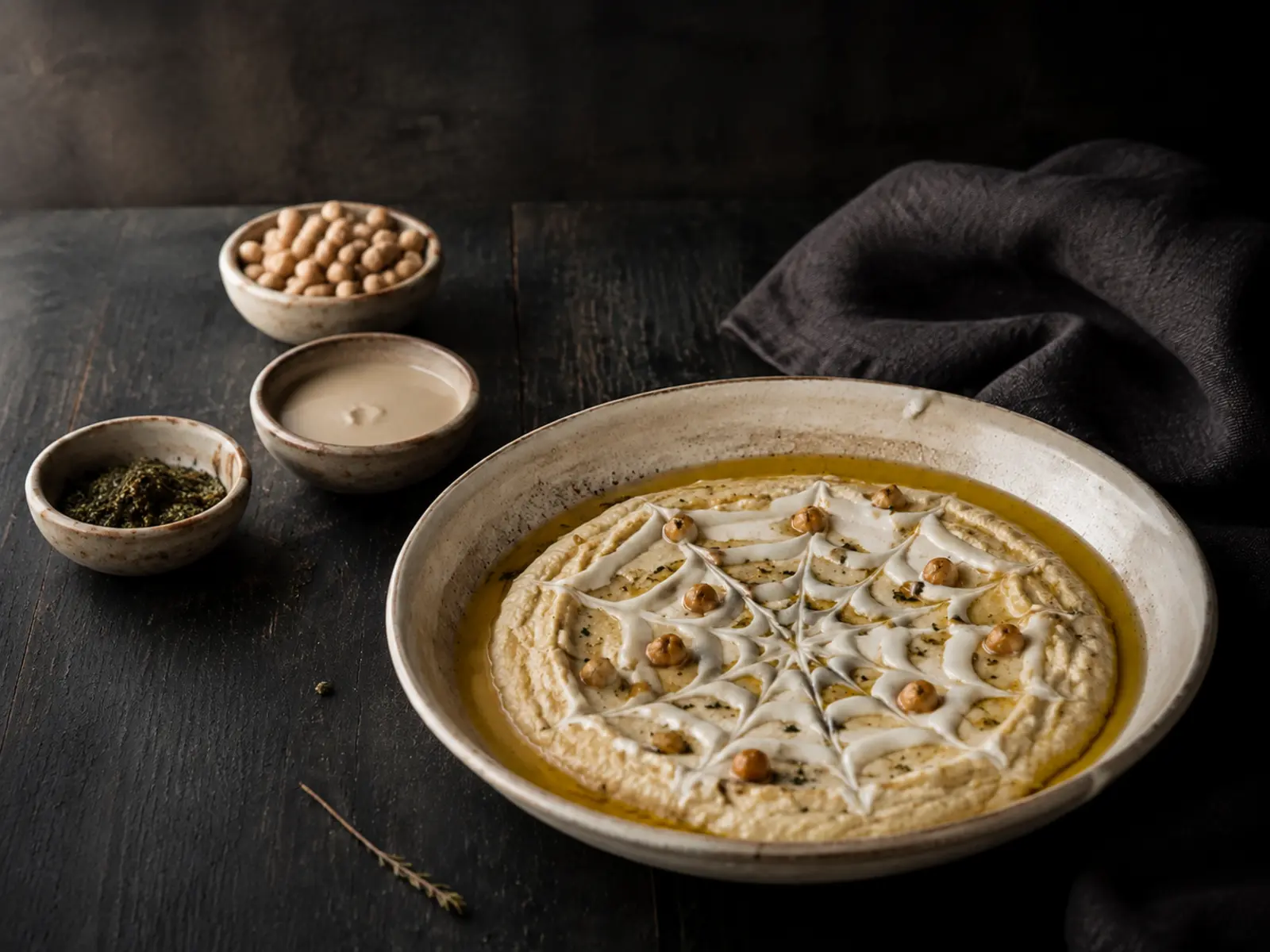
- Loose tahini. It should pour after stirring, not sit like putty.
- Tender chickpeas. Choose low-sodium canned chickpeas or cook dried chickpeas until very soft.
- Thick labneh. It must pipe cleanly after a spoonful of cold water loosens it.
Five Rules for Spider-Web Hummus
- Blend lemon and garlic first.
- Use very soft chickpeas.
- Level the surface completely.
- Pipe thin concentric rings.
- Drag every spoke outward.
Spider-Web Hummus Scaling Chart
- 4–5 guests: 1/2 recipe.
- 8–10 guests: 1 recipe.
- 14–16 guests: 1 1/2 recipes.
- 20 guests: 2 recipes.