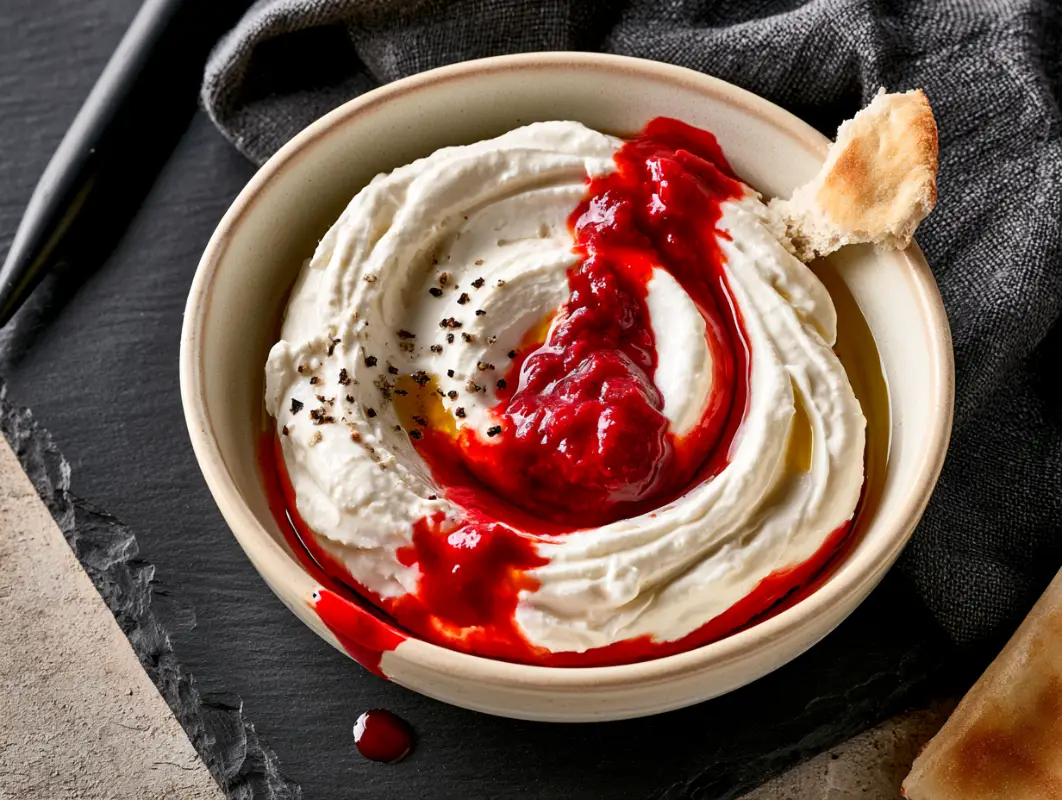
There is no dish on this whole site with a better effort-to-drama ratio. Feta, yogurt, five minutes in a food processor, and a red drizzle poured over the top so it sinks in slightly at the edges and bleeds.
The texture is the reason it works rather than the colour. Properly whipped feta is not a dip in the hummus sense — it is closer to a mousse, light enough that it holds a peak and collapses under a cracker with almost no resistance. Against that softness, the reduced pepper drizzle sits slightly thicker and slightly cooler, and you get two distinct textures in one mouthful. Most Halloween food is one note. This is two.
And I will tell you now what nobody else will, because it is the only thing standing between you and a grainy bowl of disappointment: it is not your food processor. It is the temperature of your feta.
Table of Contents
- Bloody Whipped Feta Recipe Card
- Why This Whipped Feta Recipe Actually Works
- Essential Ingredients
- The Foolproof Method
- Why Your Whipped Feta Isn’t Fluffy (It’s the Temperature)
- The Blood Drizzle: Getting the Consistency Right
- Serving It So It Still Looks Bloody in an Hour
- Creative Variations
- Storage and Serving Suggestions
- Nutritional Benefits
- Frequently Asked Questions
- Pairing and Serving Ideas
- Watch: The Bleed
Bloody Whipped Feta Recipe Card
Bloody Whipped Feta with Roasted Red Pepper Drizzle
Ingredients
Method
- Take the feta and yogurt out of the fridge at least 45 minutes before you start. Cold feta will not whip. This is not a nicety.
- Blend the roasted peppers, lemon juice, pomegranate molasses, smoked paprika and salt until completely smooth.
- Pour into a small pan and simmer over medium-low heat for 10 to 15 minutes, stirring often, until reduced by about half and thick enough to coat the back of a spoon. Cool completely.
- Blend the garlic alone with the lemon juice for 20 seconds, then let it sit 5 minutes to take the raw edge off.
- Add the room-temperature feta and blend 1 minute until it breaks down into a rough paste.
- Add the yogurt and olive oil. Blend for 4 full minutes, scraping down twice. Set a timer. It will look done at 90 seconds and it is not.
- Spread thickly into a shallow bowl and swirl deep grooves with the back of a spoon, pushing it up at the edges so it holds height.
- Just before serving, spoon the cooled drizzle over in a line down the centre and let it find its own way into the grooves. Do not stir. Finish with olive oil, flaky salt and pepper.
Notes
Why This Whipped Feta Recipe Actually Works
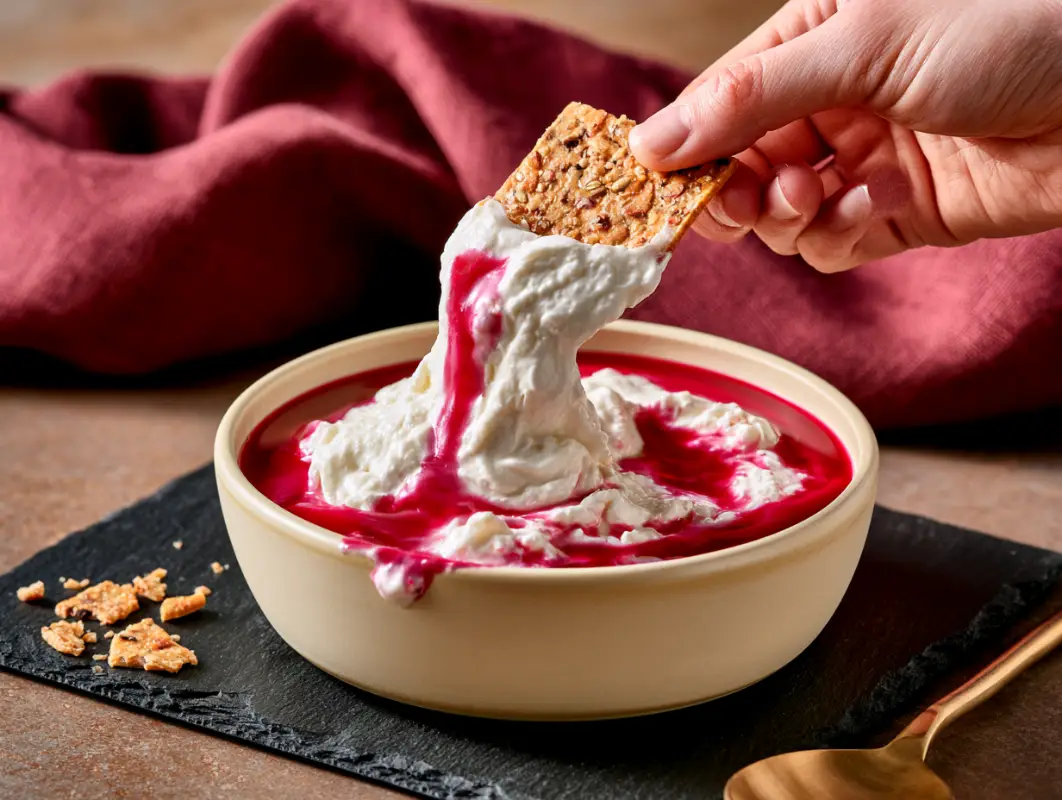
- Two textures, not one. Mousse-light feta against a thicker, cooler drizzle.
- The contrast reads across a dark room and it reads at Pinterest thumbnail size, which is the same skill.
- Five ingredients in the feta, five in the drizzle.
- No dye. Reduced roasted pepper is darker and more convincing than any bottle of red.
- It is genuinely good in February, without the drizzle, which is how you know the Halloween version is not a gimmick.
Whipped Feta Is Having a Moment, and That Helps You
Whipped feta is one of the highest-velocity Mediterranean recipes on Pinterest right now, which means the base term has real standing search volume. The Halloween treatment is your differentiator on top of an existing wave rather than a new term you have to build from zero. Keep the classic version prominent on the page — a good chunk of your traffic will arrive in March.
Essential Ingredients
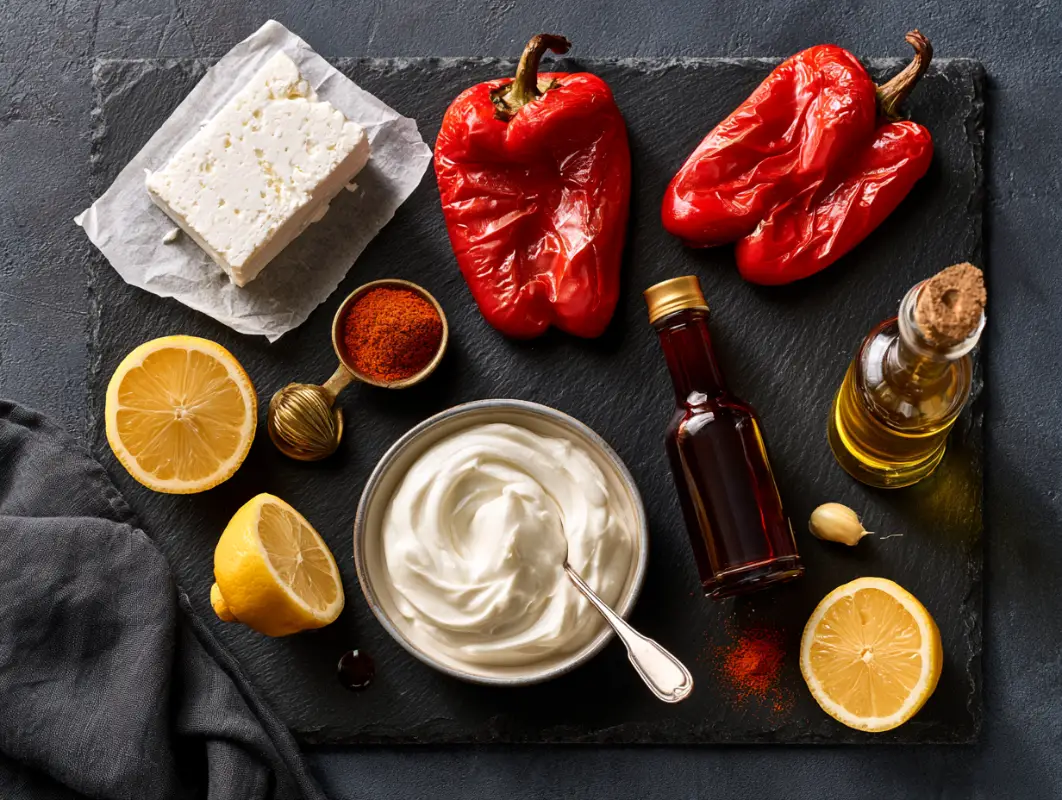
Feta. Greek, block, in brine, at room temperature. Pre-crumbled feta is coated in anti-caking agents that stop it emulsifying and it will stay grainy no matter what you do.
Full-fat Greek yogurt. Not low-fat, not regular yogurt. The fat is what makes it fluffy and the thickness is what stops it going soupy. Labneh works and is richer.
Roasted red peppers. Jarred is fine. Drain and dry them — water in the peppers means a longer reduction and a paler drizzle.
Lemon juice. Sharpens the drizzle and stops a long reduction tasting flat and jammy. What it will not do is brighten the colour, and it is worth knowing why, because this is the most repeated wrong instruction in natural-colour cooking. A ripe red pepper is red because of capsanthin and capsorubin — fat-soluble carotenoids that degrade with light, heat and oxygen but do not shift with pH. Acid changes how a pepper drizzle tastes and does nothing to how it looks. The pigment that genuinely responds to acid is anthocyanin, which is in red cabbage and purple carrot, not in peppers.
So what actually makes it darker? Two things, and neither is a bottle. Reduction, which concentrates the pigment by removing water. And pomegranate molasses, which brings its own deep brown-red and pulls the whole thing from tomato toward something venous — which is why the recipe card calls it not optional.
Garlic. One small clove, softened in the lemon juice first. Whipped feta with too much raw garlic is unpleasant in a way that only reveals itself twenty minutes later.
The Foolproof Method
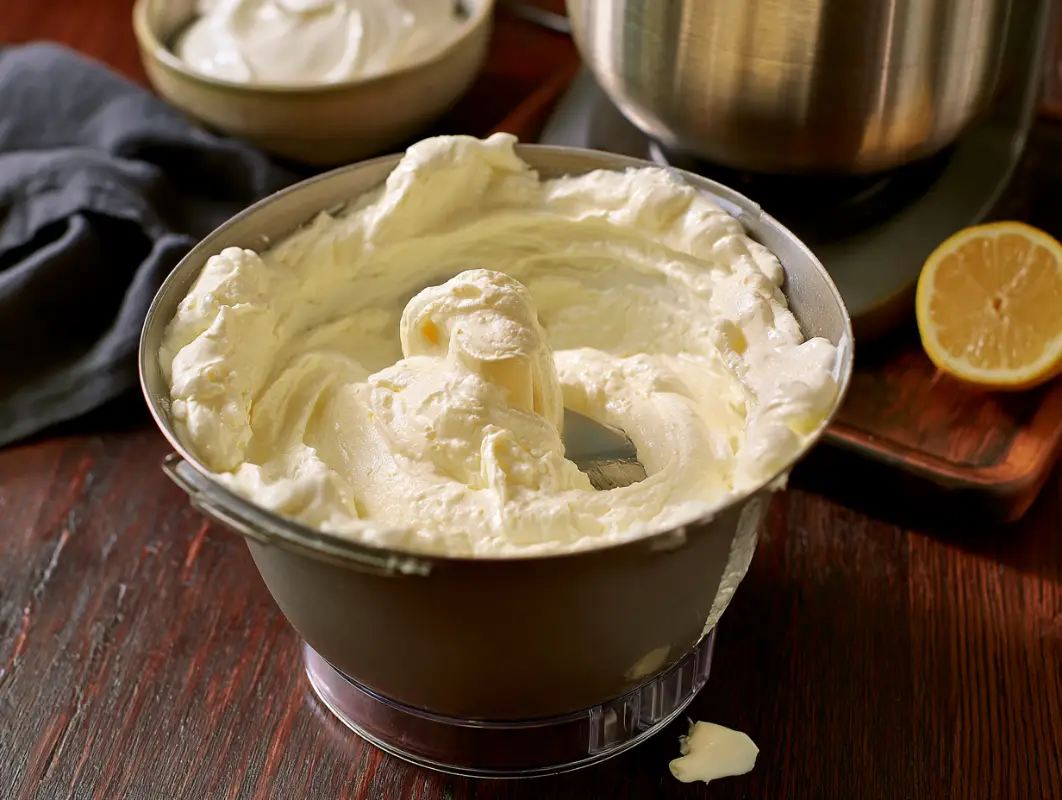
- Room temperature, both of them, 45 minutes minimum.
- Reduce the drizzle and cool it completely.
- Garlic in lemon first, 5 minutes.
- Feta alone for 1 minute to break it down.
- Yogurt and oil in, then 4 full minutes on a timer.
- Spread thick, swirl deep, drizzle last.
Why Your Whipped Feta Isn’t Fluffy (It’s the Temperature)
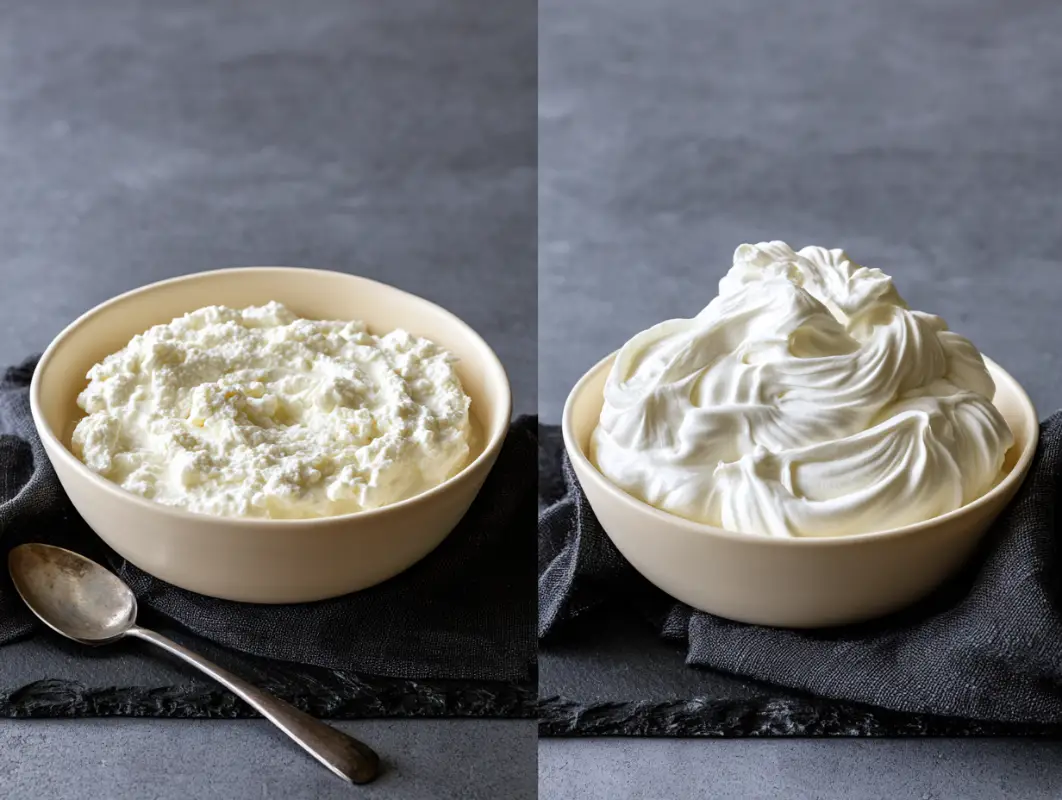
Every whipped feta post on the internet tells you the same thing when it goes wrong: blend it longer. That advice is not wrong, exactly, but it is the second cause, and people follow it for ten minutes with a warm motor and a grainy bowl and conclude their food processor is not powerful enough.
The first cause is that your feta was cold.
Feta straight from the fridge is firm because its milk fat is solid. Solid fat does not emulsify — it fractures. Blending cold feta breaks it into progressively smaller solid particles, which is why it goes from chunky to grainy and then simply stays grainy forever. You are making sand, very efficiently.
At room temperature that same fat is soft, and soft fat disperses into the yogurt’s water phase and traps air while it does. That is what fluffy means here: a fat-in-water emulsion with air whipped into it. It is closer in mechanism to buttercream than to hummus.
Forty-five minutes on the counter. An hour if your kitchen is cold. If you have genuinely forgotten, break the feta into small chunks and microwave it for eight seconds — not longer, or you will start melting it, which causes its own problem.
Then, and only then, the second cause applies: four full minutes of blending, with two scrape-downs. Most people stop at about forty seconds because it looks smooth. Smooth is not the goal. Aerated is the goal, and aeration happens in minutes three and four. Set a timer, because standing over a food processor for four minutes feels considerably longer than it is.
Two smaller things that help: a small pinch of salt early gives the proteins something to work against, and adding the olive oil with the yogurt rather than at the end lets it emulsify in rather than sit on top.
I got this wrong for about two years. I blamed my processor, bought a better one, and made exactly the same grainy dip in it.
The Blood Drizzle: Getting the Consistency Right
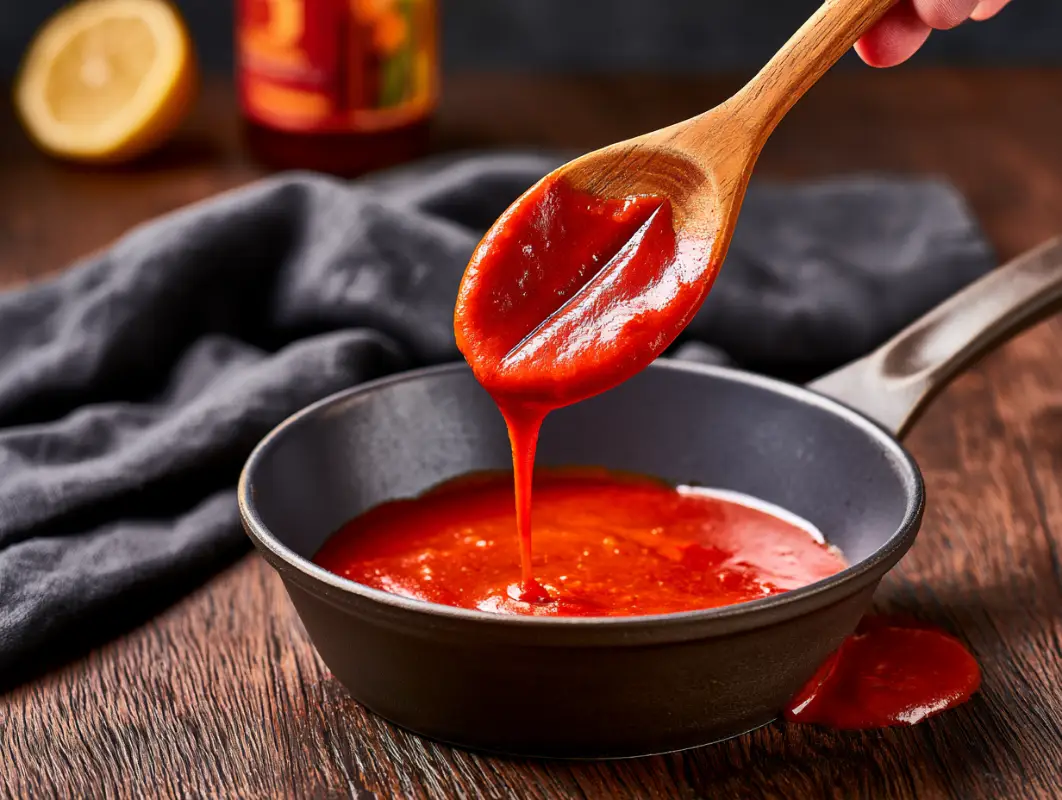
The drizzle has one job and one failure mode in each direction.
Too thin and it sinks. It disappears into the feta within a minute, leaving a pink stain and no definition. This is what happens if you skip the reduction entirely and just blend peppers.
Too thick and it sits. It sits on the surface like a lump of red paste and reads as a topping rather than as something bleeding through.
The test: dip a spoon in and lift it out. The drizzle should coat the back of the spoon in an even layer, and when you draw a finger through that coating the line should hold for two or three seconds before closing. That is the consistency where it sinks in at the edges and holds its shape in the middle, which is exactly what blood does.
Getting there is a ten to fifteen minute simmer, reducing by roughly half, stirring often near the end because it catches. Cool it completely before it touches the feta — warm drizzle melts the fat you just spent four minutes emulsifying, and it will slide straight off.
If you over-reduce, loosen it with a teaspoon of water at a time off the heat.
Serving It So It Still Looks Bloody in an Hour
Small section, entirely practical, and it is the difference between the photograph and the reality.
- Drizzle immediately before serving. Not ten minutes before. Over about twenty minutes the drizzle continues to spread and soften into the feta, and what started as distinct red channels becomes a uniform pink haze. It still tastes identical and it looks like nothing.
- Swirl deep enough to hold it. Shallow decorative squiggles give the drizzle nowhere to sit. Push real grooves into the surface with the back of a spoon and build the edges up higher than the middle — you want channels, not a flat surface.
- Serve it cool but not cold. Straight from the fridge it stiffens and the drizzle will not move at all.
- If you are refilling during a party, re-swirl the surface before adding more drizzle. Pouring fresh drizzle onto an already-pink surface just makes it pinker.
Creative Variations
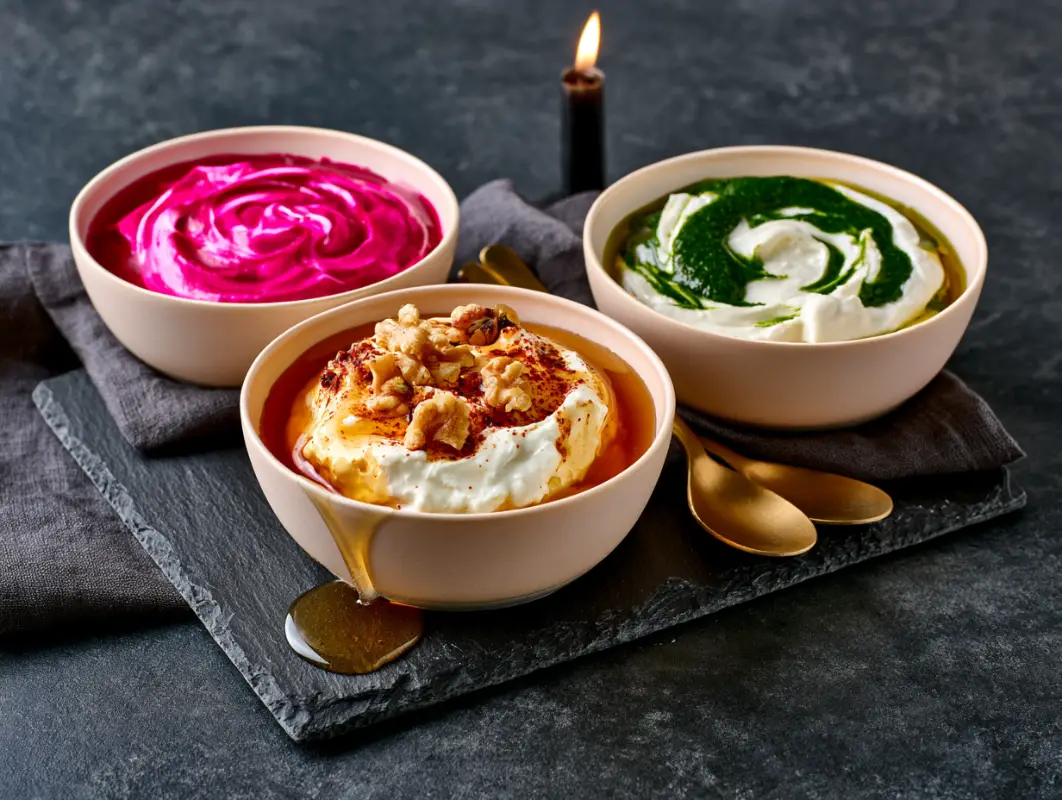
Beetroot drizzle. Roasted beetroot blended with vinegar and reduced the same way. Brighter, more magenta, more aggressive. Some years I prefer it.
Hot honey and Aleppo. Skip the blood entirely. Warm honey with Aleppo pepper poured over, plus toasted walnuts. Not remotely spooky, extremely good, and the version I make from November onward.
Zhoug swirl. A spoonful of green chile sauce dragged through instead of red. Genuinely unsettling — green on white reads more like something gone wrong than red does.
Whipped feta and labneh half-and-half. Lighter, tangier, and it holds height better if you are building it tall.
Black sesame edge. Press toasted black sesame around the rim of the bowl before filling. It frames the white and picks up the board’s black elements.
Storage and Serving Suggestions
Fridge: whipped feta 3 days, drizzle 1 week, always in separate containers. Combined, they turn uniformly pink within a day.
Freezer: the drizzle freezes well in an ice cube tray. The whipped feta does not — it splits on thawing.
Reviving day-two feta: bring to room temperature and whip by hand with a fork for 30 seconds. It comes back almost completely.
Serving temperature: cool room temperature. Take it out 20 to 30 minutes before guests arrive.
Quantity: 8 oz of feta makes about 1½ cups, which serves 6 as one of several dips or 4 if it is the only one.
Nutritional Benefits
Feta carries calcium, protein and phosphorus, and Greek yogurt adds protein and live cultures. Both belong to the dairy tier of the Mediterranean eating pattern as Harvard’s Nutrition Source describes it — eaten daily to weekly in modest quantities rather than treated as a base food.
Two corrections to claims you will see repeated about feta. It is not a low-fat cheese. It is lower in fat than most hard cheeses, which is a different statement, and at roughly a fifth fat by weight it is squarely a full-fat food — which is exactly why it whips. And the conjugated linoleic acid in sheep’s-milk feta is real but present in small amounts; it is a reason to buy sheep’s-milk feta for flavour, not a health claim worth making.
The salt is the thing actually worth flagging. Brined cheese is salty by definition, and feta is among the saltier ones. Treat this as a shared dish for six rather than a personal one, do not add salt to the feta itself before you taste it, and go easy on the flaky salt at the end if your feta was a sharp barrel-aged one. Roasted red peppers are a strong vitamin C source, though a fifteen-minute simmer will cost you some of it — the drizzle is there for colour and flavour, not for nutrition.
This section is general information, not dietary advice. If you are managing blood pressure or sodium intake, a registered dietitian can tell you what a portion of brined cheese means for you specifically.
Frequently Asked Questions
Why is my whipped feta grainy?
Almost always because the feta was cold. Cold milk fat fractures instead of emulsifying, so blending just makes smaller and smaller solid particles. Bring the feta and yogurt to room temperature for at least 45 minutes, then blend for four full minutes. Pre-crumbled feta is the second cause — the anti-caking coating prevents it emulsifying at all.
Can I make whipped feta ahead of time?
The feta base, yes — up to two days, stored airtight. The drizzle keeps a week separately. Never store them combined, because the red bleeds out into a uniform pink overnight. Bring the base back to room temperature and whip it by hand for 30 seconds before serving.
What kind of feta should I use?
Greek feta sold as a block in brine. Barrel-aged if your store has it. Avoid pre-crumbled entirely, and avoid soft cow’s-milk feta-style cheese, which is wetter and gives a looser, saltier result.
Can I make this without a food processor?
A blender works if you scrape down often and add an extra tablespoon of yogurt to keep it moving. By hand with a fork and a bowl you can get a rustic, textured version that is genuinely nice but will not be mousse-light. A stand mixer with the whisk attachment is a good third option.
What do I serve with whipped feta?
Warm pita torn by hand, seeded crackers, endive leaves, raw fennel, sliced pear. Something that shatters and something that resists — a soft dip with only soft dippers is the most common board mistake.
Why did my red drizzle sink and disappear?
It was not reduced enough, or it went on too far in advance. Simmer it until it coats the back of a spoon and a finger-drawn line holds for a couple of seconds, cool it completely, and pour it on in the last minute before serving.
Pairing and Serving Ideas
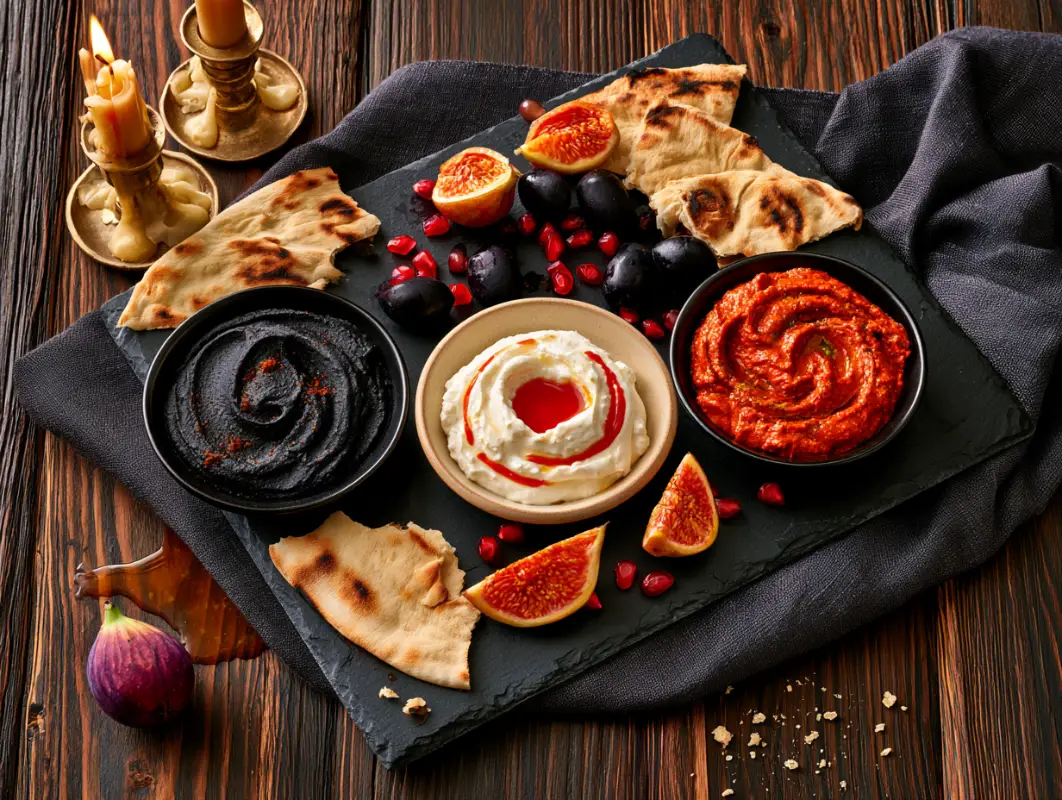
The white is the point, so surround it with dark.
On a three-dip board it is the pale slot, sitting between something black and something oxblood. That black-white-red triangle is the single strongest colour arrangement you can make — put it between black tahini hummus and muhammara.
For dippers, prioritise contrast: charred flatbread, seeded crackers, endive, raw fennel. Skip anything soft.
It also works beyond a board — spread thick on a plate under roasted vegetables, under lamb, or as the base of a sandwich with roasted peppers.
To drink alongside it, something sour rather than sweet: hibiscus tea over ice with a strip of lemon peel, or pomegranate juice cut half and half with sparkling water. Whipped feta is salty and fat-rich, and it wants acid opposite it. A sweet drink flattens it.
The full spread it belongs on, with quantities and a build order: the gothic mezze board. And for the other nineteen dips, organised by colour: 20 spooky Mediterranean Halloween dips.
Watch: The Bleed
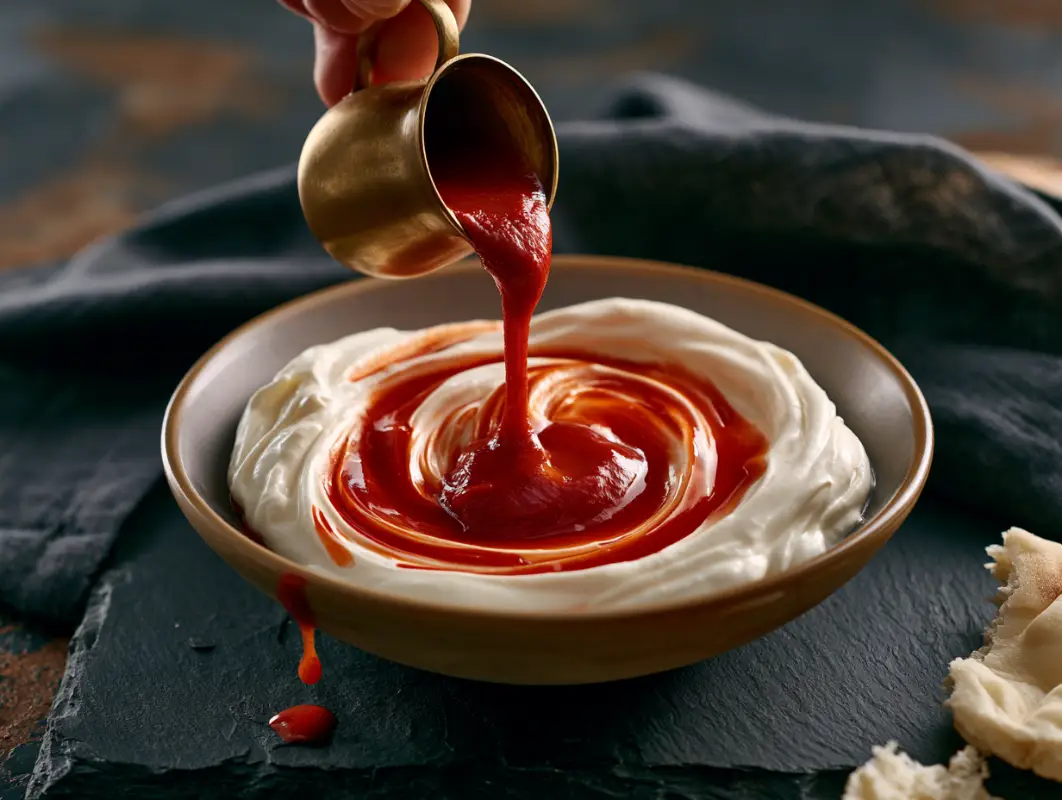
Room-temperature feta going into the processor, the long blend, the mixture visibly lightening, spread thick and swirled deep, then the red drizzle poured down the centre in a slow line and finding its way into the grooves.
Ready for the Easiest Showstopper on the Table?
Take the feta out of the fridge forty-five minutes early. Blend for four minutes on a timer. Reduce the peppers until they coat a spoon. Swirl deep and drizzle at the last possible moment.
That is the whole thing, and it will be the most photographed bowl you own.
Sources and Further Reading
- Red pepper (Capsicum annuum) carotenoids as a source of natural food colors: analysis and stability — a review, Journal of Food Science and Technology. On why acid does not change a pepper drizzle’s colour.
- Harvard T.H. Chan School of Public Health, The Nutrition Source — Mediterranean Diet.
- US Food and Drug Administration — Food Allergies.