The first time I attempted Sheet Pan Mediterranean Shrimp & Asparagus, the shrimp came out like tiny rubber erasers and the asparagus was — I’m not exaggerating — still basically raw. This was March 2024, and my friend Dina laughed so hard she almost knocked over her sparkling water.
Fourteen batches later (yes, I counted, because apparently that’s the kind of person I am now), I cracked the code. The secret isn’t just temperature or timing — it’s understanding why shrimp and vegetables behave differently on the same pan and exploiting that knowledge ruthlessly. Here are the six things nobody tells you about making a truly phenomenal one pan Mediterranean meal.
Table of Contents

Sheet Pan Mediterranean Shrimp & Asparagus
Ingredients
Method
- 1. Preheat oven to 450°F (230°C). Line a large rimmed baking sheet with foil or parchment paper.
- 2. In a medium bowl, toss asparagus, tomatoes, and red onion with 2 tablespoons olive oil, garlic, oregano, paprika, salt, and pepper. Spread in a single layer on the prepared baking sheet.
- 3. In a separate bowl, combine shrimp with 1 tablespoon olive oil, lemon juice, garlic, oregano, paprika, red pepper flakes, vegetable broth, salt, and pepper. Set aside.
- 4. Roast vegetables for 8 minutes.
- 5. Remove pan from oven. Toss vegetables with tongs, then nestle marinated shrimp among the vegetables in a single layer. Pour any remaining marinade over the top.
- 6. Return to oven and roast 6-8 minutes until shrimp are pink, opaque, and curled into a loose C-shape.
- 7. Optional: Broil on high for 60-90 seconds for extra color and charred edges.
- 8. Remove from oven. Scatter crumbled feta, chopped parsley, and a squeeze of fresh lemon juice over the top. Serve immediately with lemon wedges.
Notes
Why This Sheet Pan Shrimp Recipe Actually Works
The Two-Stage Roasting Secret
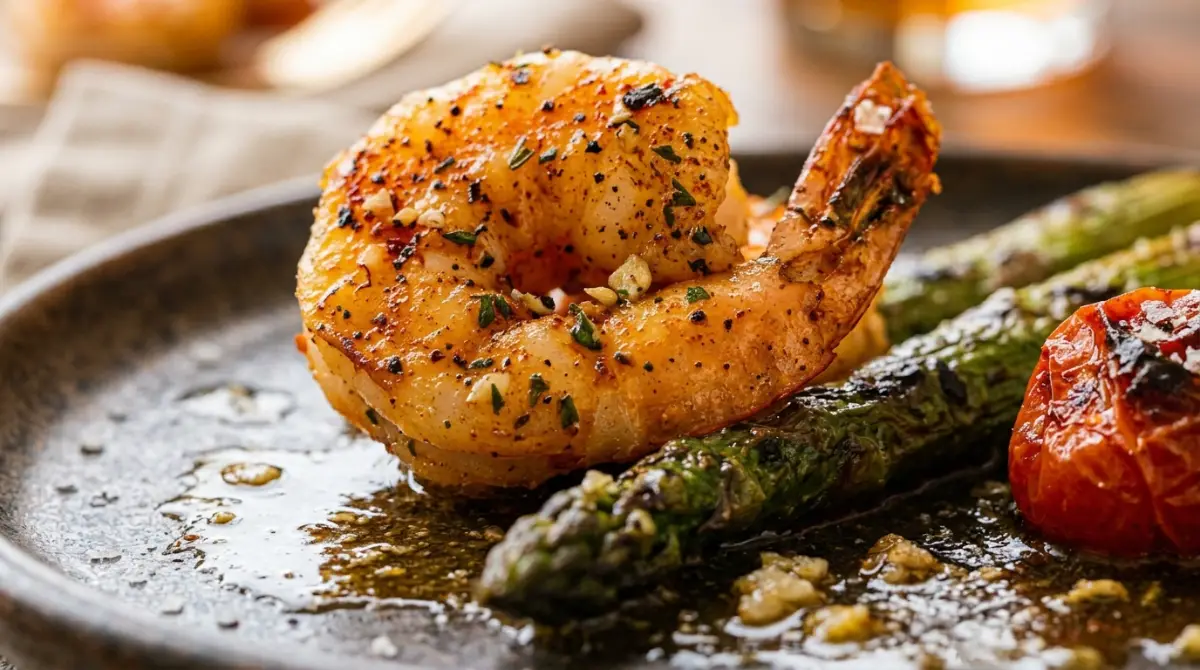
Here’s the fundamental problem with most sheet pan shrimp and veggies recipes: shrimp cook in 6-8 minutes. Asparagus needs 12-15. Tomatoes need about 10 to properly blister. If you throw everything on the pan at once (which is what literally every “easy” recipe tells you to do), something is going to be wrong. Either the vegetables are underdone or your shrimp are overcooked — and overcooked shrimp, as Kenji López-Alt has noted extensively, undergo a protein-denaturing process that squeezes out moisture, turning them from tender to chewy in a depressingly narrow window. The solution? Stage your cooking. Vegetables go in first, shrimp join later. It takes maybe 30 extra seconds of effort and the difference is genuinely dramatic.
When This Becomes Your Weeknight Hero
This easy sheet pan dinner is the meal I make when I have approximately zero motivation to cook but still want something that feels, like, actually good. The whole thing comes together in under 20 minutes. It’s naturally gluten-free, high-protein, low-carb if you skip the grain side, and it looks way more impressive than the effort involved. The same approach to hands-off roasting works beautifully in our Greek sheet pan chicken dinner — once you nail the technique, you’ll start sheet-panning everything.
Essential Ingredients (The Details Matter)
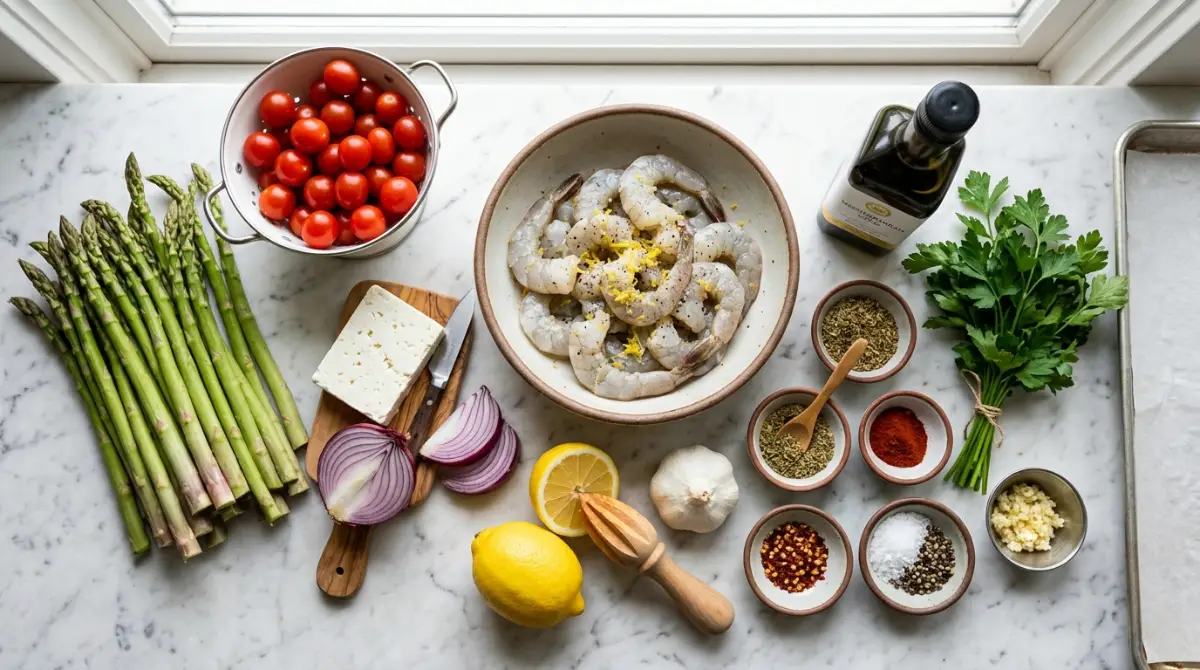
Complete Ingredients List
For the Shrimp:
1 pound large shrimp (26/30 count), peeled and deveined
1 tablespoon extra-virgin olive oil
Juice of ½ lemon
1 clove garlic, minced
½ teaspoon dried oregano
¼ teaspoon smoked paprika
⅛ teaspoon red pepper flakes (optional)
2 tablespoons low-sodium vegetable broth
Kosher salt and freshly ground black pepper
For the Vegetables:
1 bunch asparagus (about 1 pound), trimmed and cut into 2-inch pieces
1 pint cherry or grape tomatoes
1 small red onion, cut into thin wedges
2 tablespoons extra-virgin olive oil
2 cloves garlic, minced
1 teaspoon dried oregano
½ teaspoon smoked paprika
Kosher salt and freshly ground black pepper
For Finishing:
¼ cup crumbled feta cheese
2 tablespoons fresh flat-leaf parsley, chopped
1 lemon, cut into wedges
Extra-virgin olive oil for drizzling
Your Shopping List, Annotated
Let’s break down what goes into this Mediterranean shrimp dinner. The shrimp are the star, obviously — go for large or extra-large (26/30 or 21/25 count per pound), peeled and deveined. I genuinely do not understand people who buy shell-on shrimp for sheet pan cooking. Are they trying to peel burning-hot shrimp at the table? That feels like a punishment, not a dinner. (If you want to peel your own raw shrimp to save money, go for it, but that’s a whole pre-dinner activity.)
For the asparagus, you want medium-thickness spears — too thin and they’ll char before the shrimp are done, too thick and you’re back to the raw-asparagus problem. Cherry or grape tomatoes are non-negotiable because they blister and burst into these gorgeous little flavor bombs in the oven.
A red onion adds sweetness and color. The seasoning is classic Mediterranean: olive oil, lemon, garlic, oregano, paprika, and a pinch of red pepper flakes. I finish the whole thing with crumbled feta, which is — I’ll fight anyone on this — the single best cheese to pair with roasted shrimp. Our Mediterranean shrimp white bean salad uses a similar lemon-herb flavor base, and our whipped feta garlic confit dip makes an insane dipping sauce on the side.
Shrimp Size Guide for Sheet Pan Cooking
| Shrimp Size | Count per Pound | Roasting Time (450°F) | Best For |
| Small | 51/60 | 4-5 minutes | NOT recommended (overcooks easily) |
| Medium | 41/50 | 5-6 minutes | Works but requires close watching |
| Large | 31/35 | 6-8 minutes | Great — our recommended minimum |
| Extra-Large | 26/30 | 7-9 minutes | Excellent — best for sheet pan |
| Jumbo | 21/25 | 8-10 minutes | Impressive, slightly longer cook |
The Game-Changing Marinade Trick
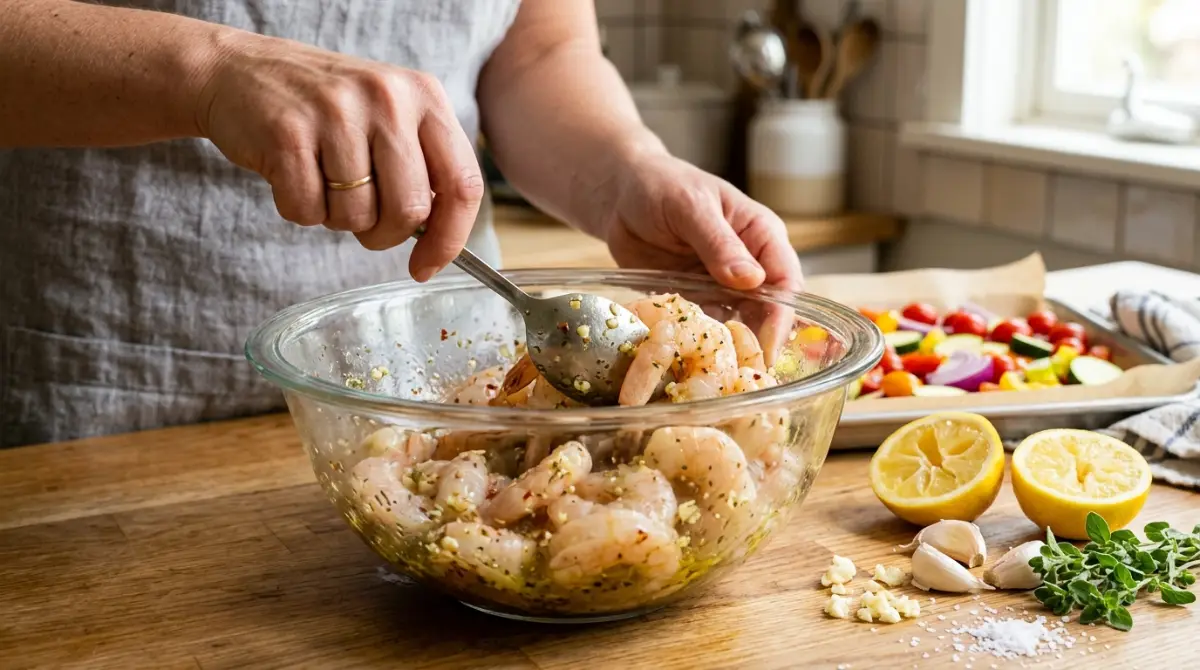
Most recipes have you toss the shrimp directly on the pan with oil and spices. That’s… fine. But here’s what I started doing around batch #7 that changed everything: marinate the shrimp for just 10 minutes in a separate bowl while the vegetables roast. The shrimp absorb the lemon-garlic-oregano flavor so much more deeply than a quick toss. Don’t go longer than 15 minutes though — lemon juice starts to “cook” the shrimp via acid denaturation (it’s the same chemistry behind ceviche, if you’ve ever been curious about that). Some recipes add white wine here; I use a splash of vegetable broth and extra lemon juice instead, which honestly gives a cleaner, brighter flavor.
The Foolproof Method (Tested 14 Times)
Preparation: Your 5-Minute Setup
Preheat your oven to 450°F (230°C). This is non-negotiable. I tried 400°F, I tried 425°F, and neither gives you the charred edges and blistered tomatoes that make this roasted shrimp and asparagus special. Line a large rimmed baking sheet with foil or parchment — this is a cleanup thing, not a cooking thing, but trust me, you want it. The lemon-garlic drippings will bake onto an unlined pan like cement.
While the oven preheats, prep your vegetables. Snap the woody ends off the asparagus (bend each spear near the bottom — it’ll naturally break where the tough part ends), halve the cherry tomatoes if they’re large, and slice the red onion into thin wedges. Toss the vegetables in a bowl with 2 tablespoons olive oil, minced garlic, dried oregano, smoked paprika, salt, and pepper. This vegetable seasoning approach mirrors what we use in our gemista Greek stuffed peppers — Mediterranean herbs + good olive oil does most of the heavy lifting.
In a separate bowl, combine the shrimp with 1 tablespoon olive oil, the juice of half a lemon, a minced garlic clove, oregano, and a splash of vegetable broth. Let them hang out while the vegetables get their head start. Similar brining principles apply in our Greek chicken with lemon and feta — a short marinade makes a huge difference in flavor depth.
Main Method: The Two-Stage Cook
Step 1 (0-2 min): Spread the seasoned vegetables onto your prepared baking sheet in a single layer. This is CRITICAL. Overcrowding steams vegetables instead of roasting them — Harold McGee explains this perfectly in On Food and Cooking: when moisture can’t escape quickly, the Maillard reaction (that beautiful browning) can’t occur. If you have too many vegetables for one pan, use two pans. I’m serious.
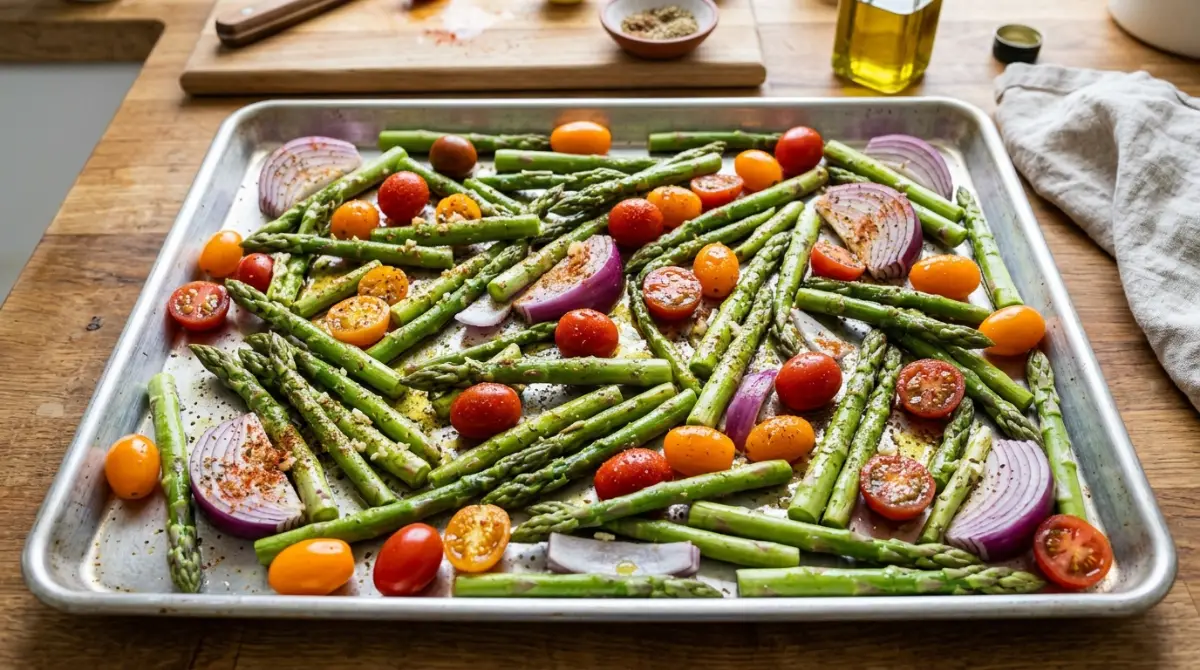
Step 2 (2-10 min): Roast vegetables for 8 minutes. During this time the asparagus will start to get tender and the edges of the onion will begin to caramelize. The tomatoes should be just starting to blister.
Step 3 (10-12 min): Pull the pan out, give the vegetables a quick toss with tongs, then nestle the marinated shrimp among the vegetables in a single layer. Pour any remaining marinade from the bowl over the top. This is where the magic happens — the shrimp pick up all the vegetable juices and roasted garlic flavors from the pan.
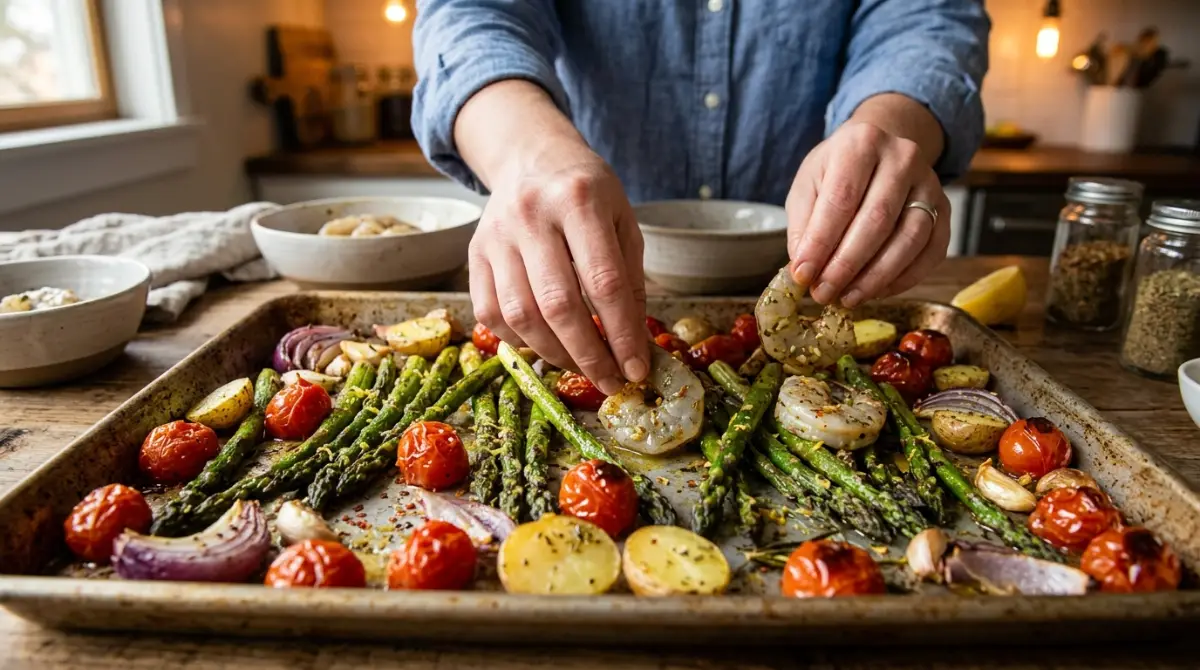
Step 4 (12-18 min): Return to the oven and roast for 6-8 minutes, until the shrimp are pink, opaque, and just curled into a loose C-shape (a tight O-shape means overcooked — pull them immediately). If you want extra color on top, broil on high for 60-90 seconds at the end, but don’t walk away because the jump from “perfect golden” to “charcoal” is disturbingly fast.
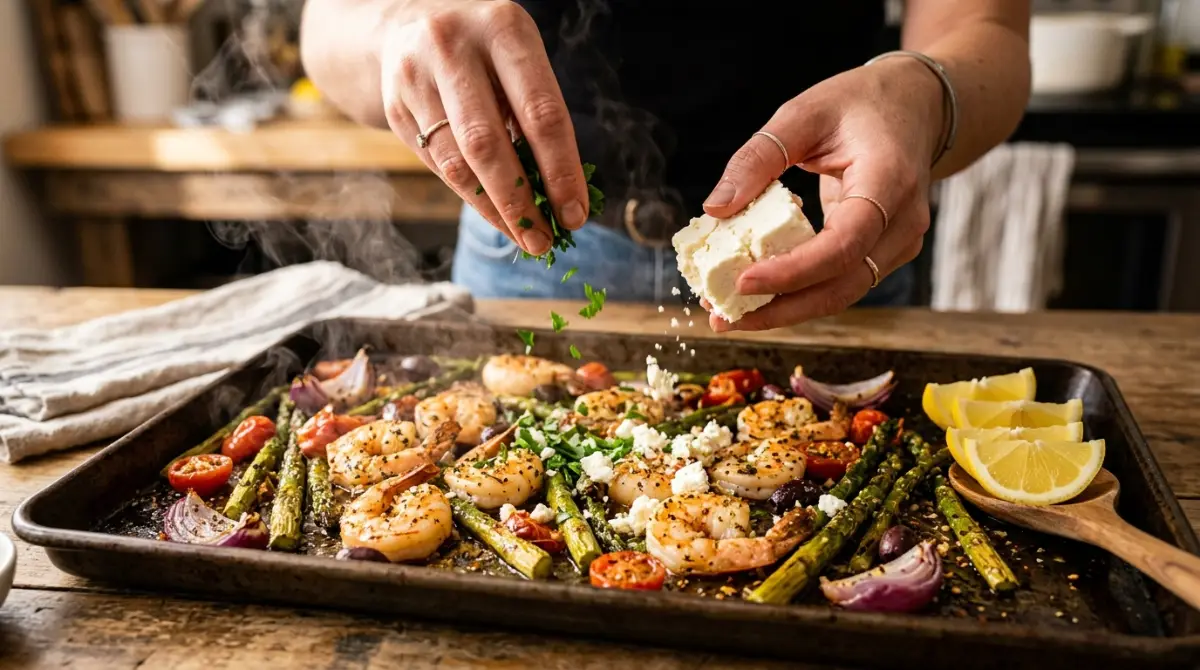
Step 5: Remove from oven and immediately scatter crumbled feta, a squeeze of fresh lemon juice, and chopped parsley over everything. The residual heat softens the feta just slightly while keeping it crumbly. Serve straight from the pan with lemon wedges. This finish is similar to how we top our Mediterranean sheet pan salmon — the feta-lemon-herb combo is basically our house finishing move at this point.
Creative Variations That Actually Work
Four Flavor Directions
Once you’ve nailed the base sheet pan shrimp recipe, the variation possibilities are kind of endless. I’ve tested these four extensively (and several others that… didn’t make the cut. The za’atar version was great. The cinnamon version was a mistake I’d rather not revisit.)
| Variation | Swap / Add | Flavor Profile | Best For |
| Greek Island Style | Add artichoke hearts + kalamata olives + extra feta | Briny, tangy, rich | Date night, entertaining |
| Spicy Harissa Shrimp | Replace paprika with 1 tbsp harissa paste | Smoky, complex heat | Spice lovers, adventurous eaters |
| Lemon-Herb Garden | Add zucchini + bell peppers + fresh dill instead of oregano | Bright, herbaceous, light | Summer dinners, lighter option |
| Middle Eastern Spiced | Add cumin + coriander + Aleppo pepper + sumac finish | Warm, earthy, citrusy | Flavor chasers, autumn meals |
Dietary Modifications & Practical Swaps
Dairy-Free: Skip the feta entirely or use a dairy-free crumble (Violife makes a decent one). The dish is already bursting with flavor without it, honestly — you won’t feel deprived. Our Mediterranean chickpea power bowl takes a similar dairy-free approach to building big Mediterranean flavor.
Paleo/Whole30: Drop the feta, ensure your paprika is compliant, and serve over cauliflower rice instead of grains. Everything else is already compliant.
Kid-Friendly: Dial back the red pepper flakes to zero, skip the olives if they’re the type of kid who considers olives a personal affront, and cut the asparagus into bite-sized pieces. Serve with buttered orzo — my niece Sophie (age 7) calls this “the pink dinner” and requests it weekly, which I consider my greatest culinary achievement. Our creamy chicken orzo is another kid-approved hit if you need backup options.
Budget: Frozen shrimp (thawed in the fridge overnight) work perfectly here — just pat them extremely dry. Buy asparagus when it’s in season (spring through early summer) for the best price and flavor.
Storage & Smart Meal Prep
How to Store (With Honest Expectations)
I’ll be straight with you: Mediterranean baked shrimp is best eaten immediately. The shrimp are at peak tenderness right out of the oven, and the asparagus has that perfect snap. That said, leftovers are still quite good — store in an airtight container in the fridge for up to 2 days (not 3, not 4 — shrimp quality drops fast). Reheat gently in a 350°F oven for 5-7 minutes, or toss cold leftovers into a salad with extra lemon vinaigrette. The microwave? It works, but the shrimp will tighten up a bit. Your call.
I don’t recommend freezing this dish — the asparagus and tomatoes turn mushy once thawed, and reheated shrimp from frozen is… not great. For meal prep, I’d suggest the same component strategy I use for our chicken shawarma crispy rice salad: prep the marinade, chop the vegetables, and store them separately. Cook fresh each night — the actual cooking only takes 15-18 minutes. Also, leftover shrimp + cold orzo + fresh herbs + lemon = an incredible lunch the next day, which is basically a riff on our spinach and feta pasta served cold.
Side Dishes That Complete the Meal
| Side Dish | Why It Works Here | Prep Time |
| Lemon-herb couscous or orzo | Absorbs pan juices beautifully | 10 min |
| Crusty bread or warm pita | Perfect for soaking up the garlic drippings | 2 min |
| Simple arugula salad with lemon | Peppery crunch contrasts tender shrimp | 5 min |
| Greek lemon rice | Pillowy and citrusy, classic pairing | 25 min |
| Quinoa or farro | Hearty, nutty, filling — great for meal prep | 15-20 min |
Nutritional Benefits of Sheet Pan Mediterranean Shrimp
Macronutrient Breakdown (Per Serving)
| Macronutrient | Amount | % Daily Value |
| Calories | 285 kcal | 14% |
| Total Fat | 14 g | 18% |
| Saturated Fat | 3.5 g | 18% |
| Carbohydrates | 12 g | 4% |
| Dietary Fiber | 4 g | 14% |
| Protein | 28 g | 56% |
| Sugar | 5 g | — |
Key Micronutrients & Why They Matter
| Micronutrient | Amount (per serving) | Health Benefit |
| Selenium (from shrimp) | 40 mcg (73% DV) | Thyroid function, antioxidant defense |
| Vitamin B12 (from shrimp) | 1.4 mcg (58% DV) | Nerve health, red blood cell production |
| Vitamin K (from asparagus) | 56 mcg (47% DV) | Blood clotting, bone metabolism |
| Folate (from asparagus) | 70 mcg (18% DV) | Cell division, particularly important in pregnancy |
| Vitamin C (from tomatoes + lemon) | 28 mg (31% DV) | Immune support, iron absorption |
| Lycopene (from tomatoes) | 4.6 mg | Heart health, antioxidant protection |
This healthy shrimp dinner is a nutritional standout. Shrimp deliver an impressive protein-to-calorie ratio — roughly 24 grams of protein per 100 calories — making this one of the most efficient protein sources available. The asparagus contributes prebiotic fiber (specifically inulin) that supports gut health, while the tomatoes provide lycopene, a powerful antioxidant that research has linked to cardiovascular benefits. The olive oil base increases absorption of fat-soluble vitamins and adds monounsaturated fats associated with the Mediterranean diet’s famous heart-health benefits. I’m not a dietitian (just someone who reads too many nutrition papers at 11 pm), so consult a professional for specific dietary guidance. For another high-protein Mediterranean option, our grilled chicken Mediterranean bowl packs a similar nutritional punch.
Glycemic index for this dish is low — the shrimp and vegetables keep blood sugar stable. Adding a grain side like couscous or rice will increase the GI, so choose whole-grain options if that’s a concern for you.
Frequently Asked Questions
What size shrimp works best for a sheet pan Mediterranean shrimp recipe?
Large (31/35) or extra-large (26/30) shrimp are ideal for sheet pan cooking. They’re big enough to withstand oven heat without overcooking instantly, and they cook in roughly the same time as asparagus. Jumbo (21/25) shrimp also work but need an extra minute or two. Avoid small shrimp (51/60) for baked shrimp with asparagus — they’ll overcook before the vegetables are done.
Can I cook raw shrimp and vegetables together on the same pan?
Yes, but timing matters. For the best results with one pan shrimp and vegetables, roast the vegetables for 8 minutes first, then add the shrimp for the final 6-8 minutes. This staggered approach ensures everything finishes perfectly at the same time — no rubbery shrimp or crunchy asparagus.
What temperature should I bake sheet pan shrimp?
450°F (230°C) is the sweet spot for Mediterranean baked shrimp. High heat gives you caramelized vegetables and perfectly cooked shrimp with slightly charred edges. Lower temperatures (400°F) work but produce less browning and the vegetables may steam instead of roast.
Can I use frozen shrimp for this easy sheet pan dinner?
Absolutely. Thaw frozen shrimp overnight in the refrigerator or under cold running water for about 5 minutes. The critical step is patting the shrimp very dry with paper towels before marinating — excess water prevents browning and creates steam on the sheet pan. Frozen shrimp are often flash-frozen at peak freshness and can be equally good as fresh.
How do I prevent shrimp from overcooking on a sheet pan?
Three keys: use a high oven temp (450°F) for a shorter time, add shrimp after vegetables have had a head start, and remove them the moment they curl into a C-shape. Shrimp that curl into a tight O are overcooked. Also, placing them in a single layer ensures even cooking — overcrowding causes steaming, which makes them rubbery.
How long can I store leftover sheet pan Mediterranean shrimp?
Store leftovers in an airtight container in the fridge for up to 2 days. Reheat gently in a 350°F oven for 5-7 minutes — avoid the microwave if possible, as it toughens the shrimp. Freezing is not recommended because the asparagus and tomatoes become mushy upon thawing. For meal prep, store components separately and cook the shrimp fresh.
Pairing & Serving Ideas for Any Occasion
Complete Meal Combinations
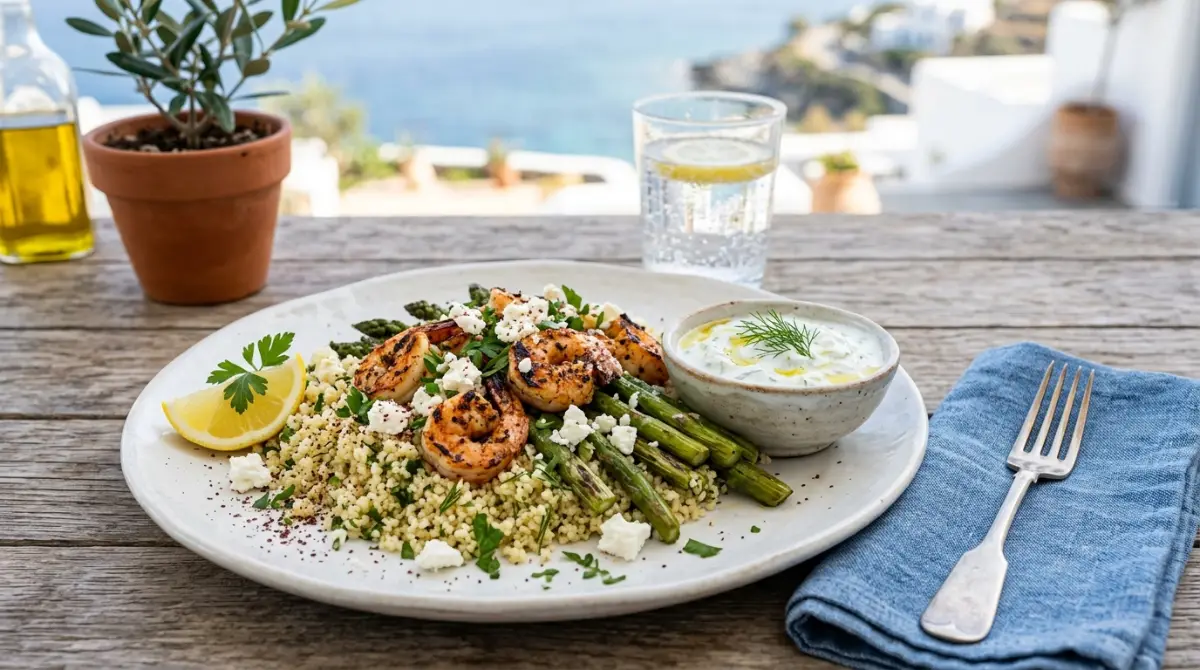
This quick shrimp dinner is incredibly versatile. Serve it straight from the pan for a low-carb meal, pile it over grains for something heartier, or toss with pasta for a completely different vibe. Our classic Greek lemon rice pilafi is honestly the perfect side here — the citrus notes echo the lemon in the shrimp marinade. For bread lovers, our garlic Parmesan focaccia torn into chunks is ideal for soaking up the garlic-infused pan juices (which are, like, unreasonably good).
| Occasion | Serve With | Beverage Pairing |
| Quick Weeknight | Warm pita + tzatziki + arugula | Sparkling water with lemon |
| Date Night | Pearl couscous + cucumber salad + extra feta | Hibiscus iced tea |
| Summer Entertaining | Greek salad + garlic bread + hummus spread | Fresh mint lemonade |
| Meal Prep Lunch | Cold over mixed greens with lemon vinaigrette | Chilled cucumber-mint water |
Non-Alcoholic Beverages That Pair Beautifully
The bright, garlicky, lemony flavors of this Mediterranean diet shrimp dish pair beautifully with citrus-forward drinks. My go-to is sparkling water with a thick slice of lemon and a few fresh mint leaves — it’s refreshing and clean. Hibiscus iced tea works wonderfully too (the floral tartness is gorgeous against the roasted garlic). If it’s a cold evening, a warm chamomile tea with honey is surprisingly perfect. For a full Mediterranean spread, our lemon chickpea patties with yogurt sauce as an appetizer followed by this shrimp as a main creates a meal that feels like a tiny vacation to the Greek islands. Wait — is that too dramatic? Probably. But it’s also true.
Go Make This (Then Tell Me Everything)
Personalize Fearlessly
The beauty of this Sheet Pan Mediterranean Shrimp & Asparagus is that once you understand the two-stage method, the flavor possibilities are limitless. Swap the oregano for za’atar. Add artichoke hearts and olives. Throw in some chickpeas for extra protein. Use the pan juices as a sauce over pasta (um, yes please). The technique stays the same; only the details change. It’s a similar philosophy to our pasta primavera — learn the method, then make it yours.
Join the Conversation
I want to hear your versions. Did you try the harissa variation? Did your kid actually eat the asparagus? (If so, please share your secrets because that feels like sorcery.) Drop a comment, tag us on social media, or just silently enjoy this shrimp in your kitchen — all valid options. And if this lemon garlic shrimp becomes a regular in your rotation, our Mediterranean white bean salad makes a gorgeous make-ahead side that saves you even more time on busy nights. Happy cooking — and remember, even batch #1 fed people. They just didn’t come back for seconds. Unlike batch #14. That one was a triumph.