Here’s the thing: I genuinely thought orzo was just rice pretending to be pasta until I was like, 25 years old. Embarrassing, I know. But when I finally figured it out (thank you, aggressive Googling), I became absolutely obsessed with finding the perfect creamy chicken orzo recipe. Twenty-seven attempts later—including one spectacular failure in February 2023 where I added the cream too early and it curdled into what my husband Greg called “cottage cheese nightmare”—I landed on this version.
It’s creamy without being heavy, comes together in one pan, and has that magical quality where the orzo absorbs all the garlicky, Parmesan-y goodness. My sister-in-law Monica requests it every time she visits, which is the highest compliment she’s capable of giving. Stick around for the technique that makes this chicken orzo recipe absolutely foolproof.
Table of Contents

Creamy Chicken Orzo in 30 Minutes
Ingredients
Method
- Step 1: Prep everything first—this moves fast. Cut chicken into bite-sized pieces (about 1 inch). Season generously with salt, pepper, and Italian seasoning. Mince the garlic, grate the Parmesan, juice and zest the lemon, and wash the spinach. Have your broth and cream measured and ready.
- Step 2: Choose your pan wisely—you need something large with a lid. A 12-inch skillet or sauté pan works perfectly. Deep sides are helpful since everything cooks together. If you only have a smaller pan, reduce quantities slightly or the orzo won’t cook evenly.
- Step 3: Heat 2 tablespoons olive oil in your pan over medium-high heat. Add the seasoned chicken pieces in a single layer—don’t crowd them. Cook 3-4 minutes per side until golden brown and cooked through. The chicken doesn’t need to be perfect; it’ll finish cooking with the orzo. Transfer to a plate.
- Step 4: In the same pan with the chicken drippings (flavor gold!), add a bit more oil if needed. Add minced garlic and cook 30 seconds until fragrant—don’t let it brown or it gets bitter. Add the dry orzo and toast it for 1-2 minutes, stirring constantly. This step sounds weird but it adds nuttiness and helps the orzo hold its shape.
- Step 5: Pour in the chicken broth. It’ll sizzle impressively. Bring to a boil, then reduce heat to medium-low. Cover and cook for about 10-12 minutes, stirring every 3-4 minutes to prevent sticking. The orzo will absorb most of the liquid.
- Step 6: When the orzo is al dente (taste it—it should have just a tiny bite left), add the heavy cream and stir to combine. Let it simmer uncovered for 2-3 minutes until it thickens slightly. This is where it becomes creamy orzo pasta heaven.
- Step 7: Remove from heat. Add the cooked chicken back in, along with the spinach (if using), lemon zest, and lemon juice. Stir until the spinach wilts—this takes about 1 minute from the residual heat.
- Step 8: Add the Parmesan and butter, stirring until melted and glossy. The sauce will thicken as it sits. Taste and adjust seasoning—you’ll likely need more salt and pepper.
- Step 9: Serve immediately, topped with extra Parmesan, black pepper, and a drizzle of good olive oil if you’re feeling fancy. Watch it disappear.
- Pro Tip: The orzo will continue absorbing liquid as it sits. If you’re not serving immediately, keep the heat off and add a splash of broth or cream when reheating. Also, if your sauce breaks or gets clumpy, a splash of warm broth and vigorous stirring will bring it back. Don’t panic—I’ve saved many a sauce this way.
Notes
Why This Creamy Chicken Orzo Actually Works
The Science of Creamy Orzo Pasta Perfection
Orzo is basically the overachiever of the pasta world. It’s shaped like rice but behaves like pasta, which means it releases starch as it cooks—and that starch is crucial for creating a naturally creamy sauce without needing a ton of heavy cream. Harold McGee explains in On Food and Cooking that pasta starch molecules absorb liquid and swell, then release some of that starch back into the cooking liquid.
This is why cooking the orzo directly in the broth-cream mixture works so beautifully—every grain becomes coated in silky sauce. The Parmesan orzo effect happens because you’re adding cheese at the end, off heat, which emulsifies into the starchy liquid without breaking. Kenji López-Alt’s testing confirms this technique creates a creamier result than draining pasta separately.
When This Easy Chicken Orzo Saves the Day
This orzo pasta recipe is my answer to the 5pm “what’s for dinner” panic. You need one pan, thirty minutes, and ingredients you probably already have. It’s substantial enough to be a complete meal but can stretch with a side salad if you’re feeding extra people. The one pan chicken orzo situation means minimal cleanup (my favorite part, honestly). It works for weeknight chaos, weekend lazy dinners, meal prep, and even impresses guests when you serve it in a pretty bowl. My friend Janet made this for a dinner party and everyone thought she’d spent hours on it. She didn’t correct them.
Essential Ingredients for Your Orzo With Chicken
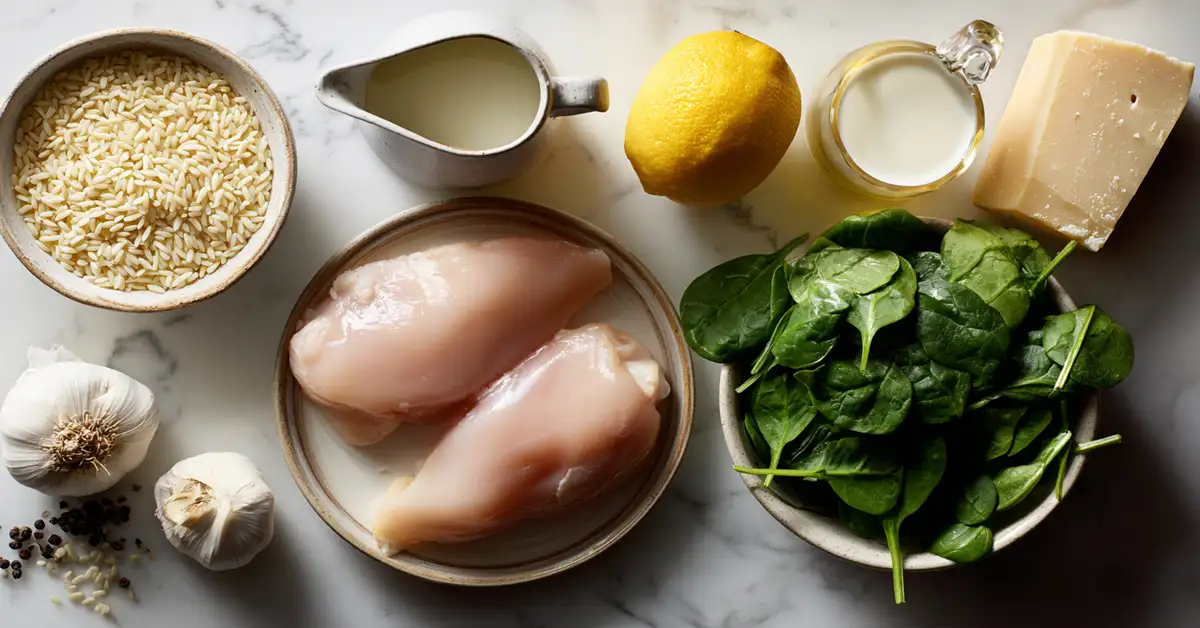
The Core Components
Boneless skinless chicken breasts or thighs (1.5 lbs) — Thighs are more forgiving and stay juicier, but breasts work fine if you don’t overcook them. Cut into bite-sized pieces for even cooking. This is the protein backbone of your skillet chicken orzo.
Orzo pasta (1.5 cups, about 12 oz) — Regular orzo, not whole wheat for this recipe—you want that starchy creaminess. One cup uncooked orzo yields about 2 cups cooked. It’ll absorb a lot of liquid, so don’t worry if it looks like too much.
Chicken broth (3 cups) — Low-sodium is important because you’re reducing it and adding Parmesan. You can use vegetable broth for a slightly different flavor. This is where most of your sauce liquid comes from.
Heavy cream (½ cup) — This makes it creamy chicken pasta territory. Half-and-half works for lighter, but won’t be quite as rich. Added toward the end so it doesn’t curdle—learned that the hard way.
Parmesan cheese (¾ cup, freshly grated) — Please use the real stuff, not the green can. Parmigiano-Reggiano or good domestic Parmesan. It melts into the sauce and creates that garlic Parmesan orzo magic everyone loves.
Garlic (4-5 cloves, minced) — Fresh only. This isn’t the place for garlic powder. It’s a prominent flavor so use the good stuff.
Fresh spinach (3-4 cups) — Optional but highly recommended—it wilts into the dish and adds color plus nutrients. Baby spinach works best. This makes it spinach chicken orzo, which sounds fancy.
Lemon juice and zest (1 lemon) — Brightens everything. Don’t skip the zest—it adds floral notes without the acidity. This gives you lemon chicken orzo vibes.
Ingredient Quality Comparison
| Ingredient | Budget Option | Premium Option | Impact |
| Chicken | Conventional breasts ($4/lb) | Organic thighs ($8/lb) | Moderate – juiciness, flavor |
| Parmesan | Domestic wedge ($8) | Parmigiano-Reggiano DOP ($16) | Significant – umami, meltability |
| Orzo | Store brand ($2) | Italian bronze-cut ($4) | Minimal – texture slightly |
| Heavy Cream | Standard ($4/pint) | Organic grass-fed ($7/pint) | Minimal – richness slightly |
| Chicken Broth | Boxed standard ($3) | Homemade or bone broth ($8) | Moderate – depth of flavor |
The Game-Changer: A splash of the pasta cooking liquid reserved before draining—wait, we’re not draining. Even better: the starchy orzo liquid is already in your pan. The real secret is adding a tablespoon of butter at the end, off heat, with the Parmesan. It emulsifies into the sauce and creates that restaurant-quality glossy finish. My sister-in-law Monica was convinced I was hiding butter from her (I was, just a tablespoon). For USA substitutions, if you can’t find orzo, small shell pasta or ditalini work with similar starch-releasing magic.
The Foolproof Method for Perfect Italian Chicken Orzo
Preparation Phase (5 Minutes)
Step 1: Prep everything first—this moves fast. Cut chicken into bite-sized pieces (about 1 inch). Season generously with salt, pepper, and Italian seasoning. Mince the garlic, grate the Parmesan, juice and zest the lemon, and wash the spinach. Have your broth and cream measured and ready.
Step 2: Choose your pan wisely—you need something large with a lid. A 12-inch skillet or sauté pan works perfectly. Deep sides are helpful since everything cooks together. If you only have a smaller pan, reduce quantities slightly or the orzo won’t cook evenly.
Building Your 30 Minute Chicken Dinner (25 Minutes)
Step 3: Heat 2 tablespoons olive oil in your pan over medium-high heat. Add the seasoned chicken pieces in a single layer—don’t crowd them. Cook 3-4 minutes per side until golden brown and cooked through. The chicken doesn’t need to be perfect; it’ll finish cooking with the orzo. Transfer to a plate.

Step 4: In the same pan with the chicken drippings (flavor gold!), add a bit more oil if needed. Add minced garlic and cook 30 seconds until fragrant—don’t let it brown or it gets bitter. Add the dry orzo and toast it for 1-2 minutes, stirring constantly. This step sounds weird but it adds nuttiness and helps the orzo hold its shape.
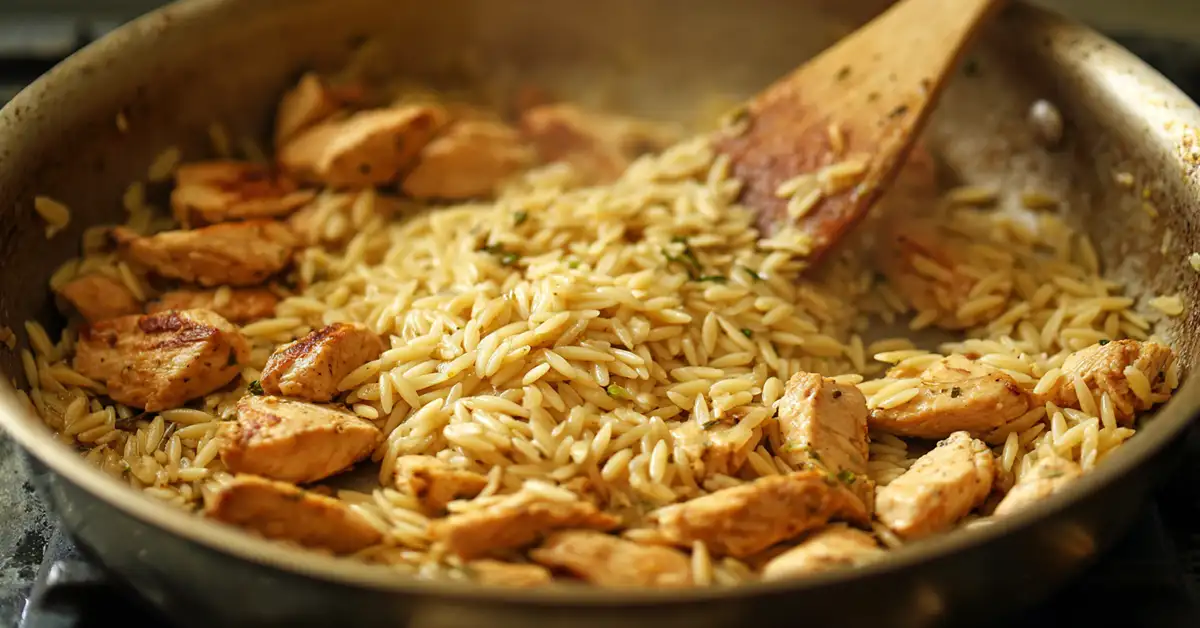
Step 5: Pour in the chicken broth. It’ll sizzle impressively. Bring to a boil, then reduce heat to medium-low. Cover and cook for about 10-12 minutes, stirring every 3-4 minutes to prevent sticking. The orzo will absorb most of the liquid.
Step 6: When the orzo is al dente (taste it—it should have just a tiny bite left), add the heavy cream and stir to combine. Let it simmer uncovered for 2-3 minutes until it thickens slightly. This is where it becomes creamy orzo pasta heaven.
Step 7: Remove from heat. Add the cooked chicken back in, along with the spinach (if using), lemon zest, and lemon juice. Stir until the spinach wilts—this takes about 1 minute from the residual heat.
Step 8: Add the Parmesan and butter, stirring until melted and glossy. The sauce will thicken as it sits. Taste and adjust seasoning—you’ll likely need more salt and pepper.
Step 9: Serve immediately, topped with extra Parmesan, black pepper, and a drizzle of good olive oil if you’re feeling fancy. Watch it disappear.
Pro Tip: The orzo will continue absorbing liquid as it sits. If you’re not serving immediately, keep the heat off and add a splash of broth or cream when reheating. Also, if your sauce breaks or gets clumpy, a splash of warm broth and vigorous stirring will bring it back. Don’t panic—I’ve saved many a sauce this way.
Creative Variations for Every Mood
Dietary Modifications
- For gluten-free, use gluten-free orzo or substitute rice. The sauce technique works the same.
- For dairy-free, this is honestly tough because the cream and Parmesan are central. You could try full-fat coconut milk and nutritional yeast, but manage expectations—it won’t be the same dish.
- For lighter, use half-and-half instead of cream and reduce the Parmesan to ½ cup. Still delicious, just less indulgent.
Flavor Variation Ideas
| Variation Name | Modifications | Best For |
| Sun-Dried Tomato | Add ½ cup chopped sun-dried tomatoes with the garlic; use some of the oil for cooking | Mediterranean vibes, color pop |
| Tuscan Style | Add artichoke hearts, extra spinach, and a pinch of red pepper flakes | Restaurant-worthy, dinner parties |
| Mushroom Lovers | Sauté 8 oz sliced mushrooms before the garlic; add thyme | Earthy, fall/winter comfort |
| Pesto Swirl | Reduce Parmesan to ½ cup; swirl in 3 tbsp basil pesto at the end | Bright, summery feel |
| Kid-Friendly Plain | Skip spinach and lemon; keep it simple with just chicken, orzo, and cheese | Picky eaters, comfort food purists |
The Tuscan variation is legitimately my favorite when I want to impress someone. The sun-dried tomato version is what my husband Greg prefers—he says it has “more going on,” whatever that means. The kid-friendly version is how I got my nephew to try orzo for the first time, and now he requests the spinach version. Progress.
Storage Tips and Meal Prep Strategies
Proper Storage Techniques
Room temperature: 2 hours maximum—this has chicken and dairy, so food safety matters. Refrigerator: This weeknight chicken pasta keeps well for 3-4 days. The orzo will absorb the sauce and get thicker—this is normal. Add a splash of broth or cream when reheating to loosen it up. Freezer: I don’t recommend freezing. The cream sauce can separate when thawed, and the orzo texture changes significantly. If you must, freeze for up to 1 month and accept that it won’t be quite the same.
Meal Prep Strategy
For true meal prep, I recommend cooking the chicken separately and storing it in the fridge. Make the orzo fresh when you want to eat—it only takes 15 minutes if the chicken is ready. The sauce really is best fresh. That said, this reheats better than most creamy pastas because the starchy orzo helps the sauce stay emulsified. Reheat on stovetop over low heat with added liquid; microwave works but stir halfway through.
Perfect Side Pairings
| Side Dish | Why It Works | Effort Level |
| Simple arugula salad | Peppery greens cut richness | 5 minutes |
| Roasted asparagus | Spring freshness, color contrast | 15 minutes |
| Crusty bread | Sauce soaking, classic pairing | 0 minutes (buy it) |
| Roasted cherry tomatoes | Acidity, burst of sweetness | 20 minutes |
| Steamed broccoli | Easy vegetable, kids like it | 8 minutes |
Nutritional Profile (The Honest Truth)
Let’s be real: this is comfort food, not health food. The cream and Parmesan make it indulgent by design. But compared to restaurant pasta dishes that can clock in at 1,500+ calories, this homemade version is actually reasonable. You get protein from the chicken, some vegetables if you add the spinach, and carbs from the orzo for energy. The Parmesan adds calcium. If you use chicken thighs, you get more iron than breast meat. I’m not a registered dietitian—please consult one for personalized advice—but I feel good about this as an occasional comfort meal rather than a daily habit.
Macronutrient Breakdown (Per Serving)
| Nutrient | Amount |
| Calories | 485 kcal |
| Protein | 32g |
| Total Fat | 18g |
| Saturated Fat | 8g |
| Carbohydrates | 45g |
| Fiber | 3g |
| Sugar | 3g |
Key Micronutrients
| Micronutrient | % Daily Value | Source & Benefit |
| Calcium | 25% | Parmesan, cream – bone health |
| Vitamin A | 35% | Spinach (if added) – eye health, immunity |
| Vitamin C | 15% | Lemon juice – immune support |
| Iron | 15% | Chicken (especially thighs), spinach |
| B Vitamins | 20% | Chicken – energy metabolism |
Frequently Asked Questions About Creamy Chicken Orzo
Can I use a different pasta in this chicken orzo recipe?
Absolutely! Small pasta shapes work best—ditalini, small shells, or even macaroni. The key is using a shape that releases starch and absorbs the sauce. Avoid long pasta like spaghetti; it doesn’t work with this cooking method. You may need to adjust liquid amounts slightly depending on the pasta.
Why is my creamy orzo pasta too thick or gummy?
Orzo absorbs a lot of liquid, especially as it sits. If it’s too thick, add warm broth or cream a splash at a time until you reach the desired consistency. If it’s gummy, you may have overcooked it or stirred too aggressively. Gentle stirring and al dente orzo are key.
Can I make this one pan chicken orzo ahead of time?
The sauce is best fresh, but you can cook the chicken ahead and refrigerate for 3-4 days. When ready to eat, make the orzo and add the pre-cooked chicken at the end. The orzo only takes 15-20 minutes, so it’s still fast. Fully assembled, it reheats decently with added liquid.
How do I prevent the cream sauce from curdling?
Add the cream toward the end of cooking, not at the beginning. High heat + prolonged cooking = curdled cream (ask me how I know). Add the Parmesan off heat and stir gently. If it does curdle, a splash of warm broth and vigorous whisking can sometimes save it.
What can I substitute for heavy cream in this Parmesan orzo?
Half-and-half works for a lighter version. Evaporated milk is another option. Full-fat coconut milk for dairy-free (though it’ll taste different). Don’t use regular milk—it doesn’t have enough fat to create the creamy sauce texture.
How do I add more vegetables to this easy chicken orzo?
Spinach is the easiest—just stir it in at the end. For heartier vegetables (zucchini, bell peppers, asparagus), sauté them with or after the chicken before adding orzo. Frozen peas can be stirred in during the last 2 minutes of cooking. Sun-dried tomatoes add with the garlic.
Serving Suggestions and Beverage Pairings
Complete Meal Ideas
| Occasion | Side Dish | Beverage | Dessert |
| Weeknight dinner | Bagged salad | Sparkling water with lemon | Fresh berries |
| Date night in | Roasted asparagus | Sparkling grape juice | Tiramisu |
| Family Sunday dinner | Garlic bread + salad | Italian lemonade | Panna cotta |
| Casual dinner party | Caprese salad | Homemade iced tea | Lemon sorbet |
| Meal prep lunch | Cherry tomatoes | Water | Dark chocolate |
Beverage Pairings
For beverages, keep it light—the dish is already rich. Sparkling water with citrus is refreshing and cuts through the creaminess. Italian lemonade (limonata) or homemade iced tea work beautifully. Avoid anything too sweet; it’ll clash with the savory, lemony flavors of the orzo.
Final Thoughts: Your New Comfort Food Staple
Embrace the Creamy Goodness
Twenty-seven attempts taught me that creamy chicken orzo is all about technique: toast the orzo, add cream late, finish with cheese off heat. Once you nail those three things, you can make this recipe in your sleep. My husband Greg, who was initially skeptical of “that weird rice-shaped pasta,” now puts in specific requests. My sister-in-law Monica, the one who never compliments food, called this “actually pretty good,” which in her language is basically a standing ovation. The beauty of this dish is its flexibility—add whatever vegetables you have, switch up the cheese, throw in some sun-dried tomatoes. Make it yours.
Share Your Creations
I want to hear about your creamy chicken orzo adventures! Found a variation you love? Had a technique question I didn’t answer? Want to tell me about your own “cottage cheese nightmare” incident? Drop a comment below. The community here is incredibly helpful and always has creative ideas. And if you’re looking for more one-pan pasta dinners, my Creamy Tuscan Chicken Pasta uses similar techniques with a tomato-cream sauce twist. Now go make some comfort food. You deserve it.