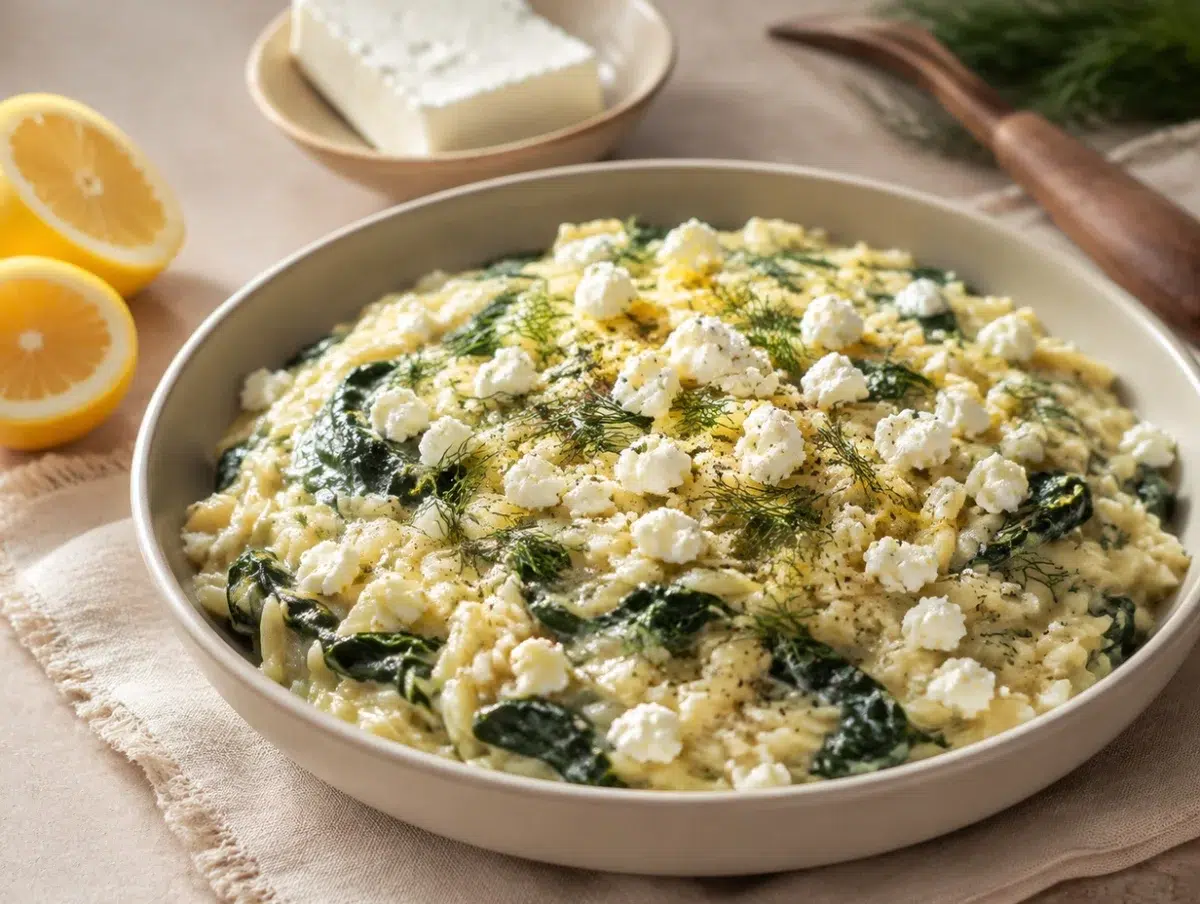
Can we talk about how hard it is to find a pasta dish that’s genuinely satisfying, ready in under 30 minutes, AND nutritious enough that you don’t feel like you need a second dinner? I know — it feels impossible some nights. You’re tired, the fridge is looking questionable, and takeout is dangerously appealing. That’s exactly where this Creamy Lemon Orzo with Spinach & Feta swoops in to save the day.
I’ve been making this recipe on repeat in my San Diego kitchen since I first cobbled it together on a Thursday night with a half-bag of orzo and some leftover feta from my weekend farmer’s market haul. Honestly? My first batch was a little too soupy (I hadn’t yet mastered the broth ratio), but version three? Game. Changer. The orzo turns luxuriously creamy as it absorbs the broth — no heavy cream needed. A squeeze of bright lemon, handfuls of baby spinach, and those salty, tangy crumbles of feta pull everything together into something that tastes so much more special than the 10 ingredients it takes to make it.
Here’s the best part: this is true one-pan simplicity. You’ll have dinner on the table in about 25 minutes with minimal cleanup. It’s vegetarian, easily gluten-free adaptable, totally meal prep-friendly, and loaded with plant-based protein, iron, and heart-healthy fats. Whether you’re feeding a family on a Tuesday or impressing guests at a casual dinner, this creamy lemon orzo delivers every single time. Trust me — this has become my absolute go-to.
Table of Contents
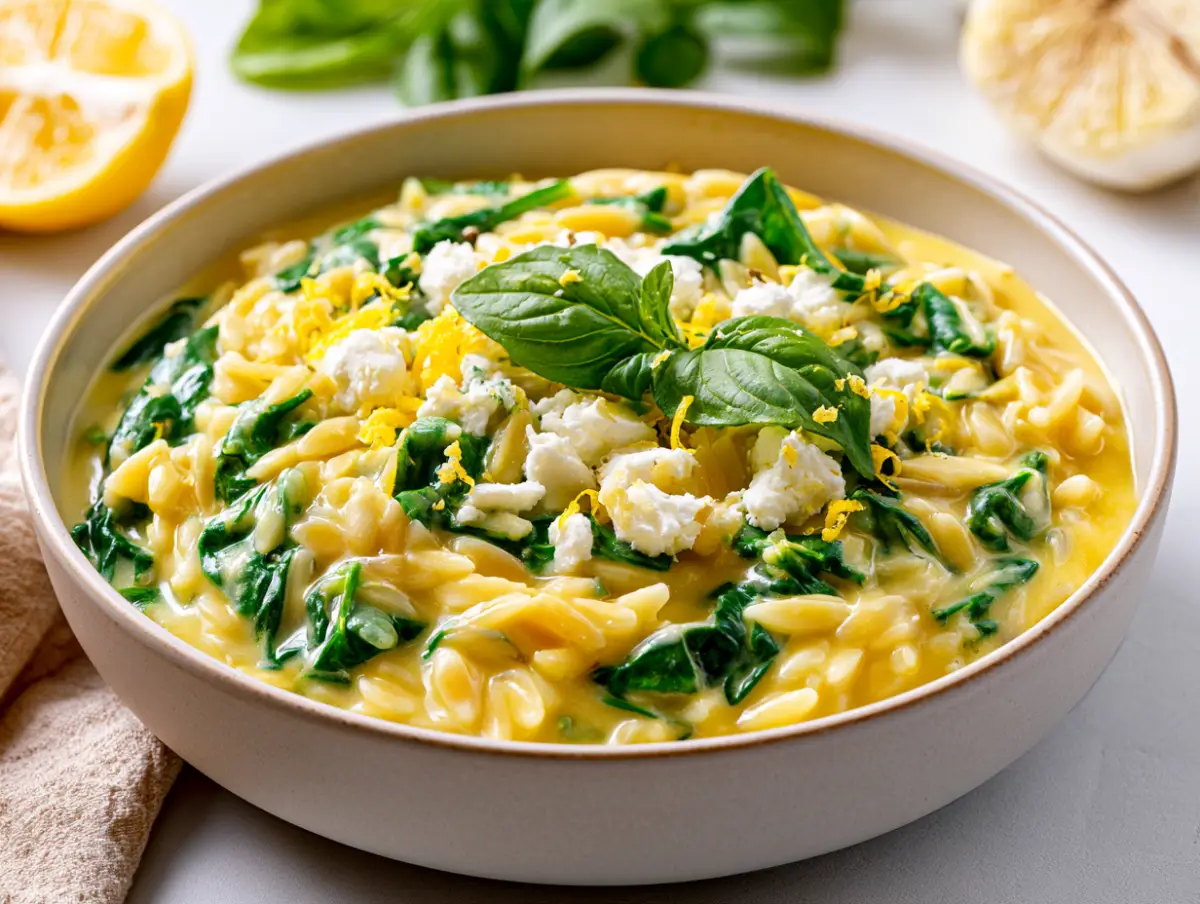
Creamy Lemon Orzo with Spinach & Feta
Ingredients
Method
- 1. Heat olive oil in a large skillet over medium heat until shimmering.
- 2. Add shallot and cook 2 minutes until translucent. Add garlic and cook 60–90 seconds until fragrant.
- 3. Add dry orzo. Toast 2 minutes, stirring often, until lightly golden.
- 4. Pour in warm broth and add lemon zest. Stir, bring to a gentle boil.
- 5. Reduce heat to medium-low, cover, and simmer 10 minutes. Stir once at halfway. Continue 1–2 more minutes uncovered if liquid remains.
- 6. Remove from heat. Add spinach in batches, stirring until just wilted (1–2 min).
- 7. Stir in lemon juice. Taste and adjust seasoning with salt and pepper.
- 8. Fold in crumbled feta gently. Serve immediately with optional garnishes.
Notes
Why You’ll Love This Recipe
Health & Nutrition Benefits
This dish is a nutritional powerhouse disguised as comfort food, and I am here for it. Orzo is a complex carbohydrate that provides sustained energy — none of that blood sugar spike-and-crash cycle. Baby spinach brings a serious hit of iron, folate, vitamin K, and antioxidants to the party. Studies from the Mediterranean Diet research program (including the landmark PREDIMED study) have consistently shown that diets rich in leafy greens, olive oil, and whole grains are linked to reduced inflammation and better cardiovascular health. Feta cheese, a staple in Greek cuisine, provides calcium, protein, and beneficial probiotics — plus that satisfying salty punch that makes every bite feel indulgent.
- ⚡ Ready in just 25 minutes — faster than delivery
- 💚 Packed with iron, folate, and plant-based protein
- 🍱 Meal prep-friendly — stores beautifully for 4 days
- ❄️ Freezer-friendly for easy batch cooking
Practical Benefits
Beyond the nutrition wins, this lemon orzo pasta is a dream from a practical standpoint. One pan means one thing to wash — and if you’re anything like me on a weeknight, that alone sells it. The ingredients are genuinely budget-friendly (we’re talking pantry staples plus fresh spinach and feta, usually under $15 total for four servings). It scales up effortlessly for meal prep Sunday, and it works equally well as a vegetarian main dish or a gorgeous side alongside grilled chicken or salmon. Weeknight-friendly doesn’t even begin to cover it.
The Mediterranean Diet Connection
How This Dish Fits Mediterranean Diet Principles
The Mediterranean Diet isn’t really a “diet” in the restrictive sense — it’s more of a philosophy. Olive oil over butter. Whole grains over refined. Plants at the center of every meal, with animal proteins playing a supporting role. This one pot orzo hits every major pillar: extra-virgin olive oil as the cooking fat, whole-grain pasta as the base, multiple servings of leafy greens, and fermented dairy (feta) for gut-friendly bacteria. The PREDIMED study, which tracked over 7,000 participants across Spain, found that adherence to Mediterranean Diet principles significantly reduced the risk of cardiovascular events. This dish is a delicious way to eat in alignment with those findings.
Maya’s Personal Wellness Connection
Growing up in Valencia, my mamá made rice dishes the way some families make sandwiches — as a reflex, a comfort, a love language. When I moved to California for grad school and started developing recipes that reflected both my Spanish heritage and my nutrition training, dishes like this creamy orzo were a natural evolution. They honor the Mediterranean way of eating while fitting into the beautiful chaos of California life. My Berkeley-educated dietitian brain and my Valencia-raised taste buds finally agree: this is the kind of food that nourishes you deeply and makes you genuinely happy.
Essential Ingredients
Core Ingredients
Here’s everything you need for this Greek orzo masterpiece. I’ve grouped them by category to make shopping (or pantry-raiding) a breeze:
| Ingredient | Amount | Why It’s Great | Best Pick | Substitution |
| Dry orzo pasta | 1½ cups (280g) | Complex carbs, sustained energy; gets luxuriously creamy as it absorbs broth | Italian or Greek-brand orzo | Pearl couscous, ditalini, or small pasta shapes |
| Extra-virgin olive oil | 2 tbsp (30ml) | Heart-healthy monounsaturated fats; anti-inflammatory oleocanthal | Cold-pressed Spanish or Greek EVOO | Avocado oil |
| Garlic cloves, minced | 4 cloves | Anti-inflammatory allicin; depth of flavor | Fresh whole cloves — never jarred | 1 tsp garlic powder (in a pinch) |
| Shallot, finely diced | 1 large (or ½ yellow onion) | Milder sweetness than onion; layers of flavor | European shallots from farmers market | ½ cup finely diced yellow onion |
| Vegetable or chicken broth | 3 cups (710ml) | Creates creamy orzo texture without cream; infuses flavor | Low-sodium broth for control | Water + 1 tsp bouillon paste |
| Fresh baby spinach | 3 cups (85g) | Iron, folate, vitamin K, antioxidants; wilts beautifully | Fresh over frozen for best texture | Arugula, kale (massaged), Swiss chard |
| Feta cheese, crumbled | ¾ cup (110g) | Calcium, protein, probiotics; tangy salty finish | Block feta in brine — far superior to pre-crumbled | Goat cheese, ricotta salata, or dairy-free feta |
| Fresh lemon (zest + juice) | 1 large lemon | Bright acidity; vitamin C; brings the whole dish alive | Unwaxed organic lemons | 2 tbsp lemon juice + ½ tsp lemon extract |
💡 Maya’s Tip: Always zest your lemon before juicing — you cannot zest a squeezed lemon! I keep a Microplane grater on my counter at all times for exactly this reason.
Dietary Modifications & Meal Prep Storage
This healthy pasta dinner is naturally vegetarian and incredibly easy to adapt. Here’s your complete modification and storage guide:
| Dietary Need | Replace | With | Notes |
| Gluten-Free | Regular orzo | Gluten-free rice-shaped pasta (Jovial brand is great) | Cook time may vary by 1-2 mins; check package |
| Vegan | Feta cheese | Dairy-free feta (Violife) or nutritional yeast for savory depth | Use vegetable broth — not chicken |
| High Protein | Plain orzo base | Add 1 can drained chickpeas or 1 cup shredded rotisserie chicken | Stir in chickpeas with spinach; chicken at the end |
| Lower Sodium | Regular feta + broth | Low-sodium broth + reduced-fat feta | Taste before adding any extra salt |
| Dairy-Free | Feta | 2 tbsp nutritional yeast + dairy-free feta alternative | Adds umami without dairy |
Meal prep tip: keep broth, aromatics, and spinach separate from the cooked orzo if prepping components ahead. Combine just before serving for best texture. The one pan orzo will last up to 4 days refrigerated in an airtight container.
Equipment & Quick Prep
Equipment Overview
| Tool | Why It Helps | Alternative |
| 12-inch skillet with lid (or large sauté pan) | Gives orzo room to cook evenly; the lid traps steam for perfect texture | Any wide pot with a fitted lid or foil as a cover |
| Microplane grater / zester | Gets fine lemon zest without bitter pith — makes ALL the difference | Finest holes on a box grater |
| Wooden spoon or silicone spatula | Prevents scratching; perfect for stirring orzo without breaking it | Any heatproof stirring utensil |
| Liquid measuring cup | Accurate broth measurement is key to creamy (not soupy) orzo | Kitchen scale (3 cups = 710g water-equivalent) |
| Chef’s knife + cutting board | For mincing garlic and shallots efficiently | Food processor for garlic in large batches |
Prep-Ahead Checklist
Want to get dinner on the table in under 20 minutes flat? Here’s your 5-minute prep plan: Mince the garlic and dice the shallot (takes about 3 minutes). Zest and juice the lemon — do this before anything else so you don’t forget. Measure out your broth and have it next to the stove. Crumble your feta if using a block (which you should be — it’s so much better than pre-crumbled!). With your mise en place sorted, the actual cooking takes just 18–20 minutes. You’ve got this!
💡 Pro Tip: If you’re doing full meal prep, you can mince the garlic and shallots up to 2 days ahead and store covered in the fridge. This makes weeknight assembly almost instant.
Step-by-Step Instructions
Prep & First Steps (Steps 1–4)
Before you even turn on the heat, take 5 minutes to set yourself up for success. This is the secret to making cooking feel easy rather than chaotic.
- Gather and prep your ingredients (5 min): Mince 4 garlic cloves, dice the shallot finely, zest the lemon (you need about 1 teaspoon of zest), and juice it (you’ll need about 2 tablespoons). Crumble your feta if using a block. Measure out 3 cups of broth and keep it close. Having everything ready makes this one pot orzo come together in a flash.
- Heat the olive oil (1 min): Warm 2 tablespoons of extra-virgin olive oil in your large skillet over medium heat. You want it shimmering but not smoking — you’ll see the surface start to ripple gently, like a mirage. This is your cue.
- Sauté the aromatics (3–4 min): Add the shallot first and cook until translucent and lightly golden, about 2 minutes, stirring frequently. Add the garlic and cook another 60–90 seconds until fragrant. Your kitchen should smell incredible right about now — that warm, caramelized garlic aroma is what I call the “dinner is happening” signal. Don’t rush this step! Properly softened aromatics are the flavor foundation of your creamy lemon orzo.
- Toast the orzo (2 min): Add the dry orzo directly to the pan and stir to coat in the fragrant olive oil mixture. Toast for about 2 minutes, stirring often, until the orzo starts to look slightly golden and nutty-smelling. This extra step — borrowed from my risotto technique from summers in Tuscany — deepens the flavor dramatically. (The Maillard reaction at work, for my fellow food-science nerds!)
Cooking & Assembly (Steps 5–10)
- Add broth and lemon zest (1 min): Pour in all 3 cups of warm broth and add the lemon zest. Stir well, scraping up any toasted bits from the bottom of the pan (that’s flavor, not burning!). Bring to a gentle boil over medium-high heat.
- Cover and simmer (10–12 min): Reduce heat to medium-low, cover the pan, and let the orzo cook undisturbed for 10 minutes, then stir once. The orzo is done when it’s al dente (tender but with a slight chew) and has absorbed most of the liquid. It will look creamy, almost like a loose risotto. If there’s still excess liquid, cook uncovered for 1–2 more minutes.
- Add the spinach (2 min): Remove the lid and add your baby spinach in 2–3 handfuls, stirring between each addition. The spinach will wilt beautifully within 1–2 minutes. You want it just wilted — vivid green with a slight texture — not fully collapsed. This preserves both the gorgeous color and the nutrients. (Overcooking spinach is one of the most common mistakes, and we’re not going there!)
- Add lemon juice and season (1 min): Remove the pan from heat. Stir in the fresh lemon juice. Taste the spinach orzo and season with salt and pepper. Go easy on the salt at first — the feta adds quite a bit of saltiness on its own. Keep tasting as you go. This is where your chef instincts kick in!
- Add feta and finish (1 min): Scatter the crumbled feta over the top and gently fold it in — you want some pieces to melt into the orzo creating creamy pockets, while others remain as beautiful tangy crumbles. The contrast is everything.
- Plate and garnish: Serve immediately in warm bowls. Garnish with a drizzle of your best olive oil, extra feta crumbles, fresh dill or parsley, a few turns of black pepper, and a lemon wedge on the side for those who want extra brightness. Your creamy lemon orzo with spinach & feta is ready to shine. 🍋
💡 Maya’s Tip: Always serve this immediately for maximum creaminess! Orzo continues absorbing liquid as it sits — if reheating, always add a splash of broth or water and stir over medium heat.
Tips, Tricks & Shortcuts
Success Tips for Perfect Results
- Use warm broth (not cold straight from the fridge) for more even cooking and a smoother, creamier texture.
- Don’t skip the toasting step — 2 minutes of toasting orzo in olive oil creates a nutty depth that elevates the whole dish. It’s my secret weapon for lemon orzo pasta that actually has layers of flavor.
- Block feta over pre-crumbled — always. Block feta packed in brine has better flavor, creamier texture, and melts more beautifully into the orzo.
- Stir once during cooking, not constantly. Over-stirring breaks up the orzo and can make it gluey. One good stir at the halfway mark is all you need.
- Season at the end — feta is naturally salty, so always taste your orzo recipe before adding salt. You might not need any extra!
- Fresh lemon only — please, I’m begging you. Bottled lemon juice is flat and one-dimensional. Fresh lemon zest + juice is what makes this lemon pasta recipe taste like you’ve been cooking since childhood in the Mediterranean.
Common Mistakes Table
| Mistake | Result | The Fix |
| Adding cold broth directly | Uneven cooking, lumpy texture | Use room-temp or gently warmed broth for smoother absorption |
| Overcooking the spinach | Yellow-green mush with nutrient loss | Add spinach off-heat (or final 2 min) and stir just until wilted |
| Not tasting before salting | Overly salty dish (feta is already salty!) | Always taste first — you may need very little or no added salt |
| Skipping the lemon zest | Flat, one-dimensional lemon flavor | Zest AND juice — the zest carries aromatic oils that juice alone can’t give you |
| Using pre-crumbled feta | Chalky, dry texture without creaminess | Buy a block of feta packed in brine — crumble it yourself |
Variations & Serving Ideas
Dietary Adaptations & Variations
The beauty of this creamy orzo is how adaptable it is. Here are my favorite ways to riff on the base recipe:
- Add protein: Stir in 1 can of drained, rinsed chickpeas with the spinach for a plant-based protein boost — the result is similar to a simplified version of our Mediterranean Chickpea Power Bowl. Or top with sliced grilled chicken breast for a heartier Mediterranean pasta dinner.
- Make it vegan: Use vegetable broth, swap feta for Violife dairy-free feta, and finish with a drizzle of good olive oil instead of any butter. Totally delicious.
- Greek-style upgrade: Add ¼ cup Kalamata olives and ½ cup halved cherry tomatoes with the spinach. The brininess plays beautifully against the lemon.
- Summer version: Fold in 1 cup of diced zucchini with the aromatics and top with fresh basil instead of dill. Reminds me of Pasta Primavera energy — light, fresh, and seasonal.
- Extra creamy version: Stir in 2 tablespoons of full-fat Greek yogurt off heat for a richer, tangier sauce without heavy cream.
Serving Suggestions & Beverage Pairings
This vegetarian pasta dinner is a natural partner for simple proteins and bright salads. Serve alongside our Mediterranean Sheet Pan Salmon for an elevated weeknight spread, or next to the Grilled Chicken Mediterranean Bowl for extra lean protein. A simple green salad with lemon-herb vinaigrette is all you need to make it a complete meal.
For non-alcoholic pairings that really sing alongside this dish: a tall glass of sparkling water with fresh lemon slices and a sprig of rosemary is my everyday go-to. Iced hibiscus tea brings beautiful color and a floral tartness that complements the lemon in the orzo. Fresh watermelon juice or homemade lemonade works beautifully in summer. Kombucha (especially ginger-lemon) adds some effervescent fun. And honestly? A simple cold glass of water with cucumber slices is perfectly perfect.
Meal Prep & Storage
Storage Guide
| Method | Container | Duration | Notes |
| Refrigerator | Airtight container (glass preferred) | Up to 4 days | Orzo will thicken; add 2–3 tbsp broth or water when reheating |
| Freezer | Freezer-safe zip bags or glass containers | Up to 2 months | Freeze in individual portions; thaw overnight in fridge before reheating |
| Component prep (broth + orzo) | Separate airtight containers | 3 days prepped; combine when ready | Best for maintaining ideal texture; add spinach fresh when reheating |
| Feta (separate) | Small sealed container | 5 days | Store separately and add fresh at serving for best texture and flavor |
Meal Prep Assembly
Meal prep Sunday just got a major upgrade! This orzo meal prep system is one I use constantly in my San Diego kitchen. Cook a double batch of the base (steps 1–6 without spinach and feta) and refrigerate it in portions. Each weeknight, pull out a portion, add a splash of broth, reheat in a pan over medium, stir in fresh spinach for 2 minutes, then top with crumbled feta. Dinner in literally 5 minutes. It’s also incredible served cold as a Greek-inspired orzo salad — just add extra lemon juice, diced cucumber, cherry tomatoes, and herbs after chilling. The Mediterranean White Bean Salad is another great make-ahead option for your weekly spread.
💡 Meal Prep Tip: Invest in good glass containers with locking lids — they go from fridge to microwave to table without extra dishes. I use a set of 1-cup and 2-cup containers to portion individual servings perfectly.
Frequently Asked Questions
Substitution & Technique Questions
Q: Can I use a different pasta shape instead of orzo?
Absolutely! Orzo is ideal because of how it absorbs broth and creates that creamy, risotto-like texture — but pearl couscous (Israeli couscous) is the next best option. Ditalini, small shells, or even farro work too, though you may need to adjust the liquid ratio and cooking time. For each substitution, start checking for doneness 2–3 minutes before the package directions suggest.
Q: How do I prevent the orzo from sticking to the bottom of the pan?
Two keys: don’t skip the toasting step (it creates a slightly protective coating), and stir once at the halfway mark. Using a heavy-bottomed skillet also helps distribute heat evenly. If you notice it starting to stick despite this, reduce heat slightly and add ¼ cup extra broth.
Q: Can I use frozen spinach instead of fresh?
You can! Thaw it completely and squeeze out as much water as possible before adding it — otherwise you’ll add extra liquid to the dish and the texture will suffer. Use about 1 cup of thawed, drained frozen spinach in place of 3 cups fresh. The color won’t be as vivid, but the flavor is still great.
Q: Can I make this in a Dutch oven or Instant Pot?
Yes! Dutch oven works exactly the same way as a skillet. For the Instant Pot, sauté aromatics and toast orzo using the sauté function, add broth and lemon zest, seal and cook on high pressure for 3 minutes, quick release, then stir in spinach and feta. The texture is slightly softer than stovetop but still delicious.
Dietary, Nutrition & Meal Prep Questions
Q: Is this creamy lemon orzo actually healthy?
Such a good question! Yes — a serving of this creamy lemon orzo delivers complex carbohydrates for energy, multiple servings of iron-rich leafy greens, calcium and protein from feta, and heart-healthy monounsaturated fats from olive oil. The PREDIMED study and Blue Zones research both highlight these exact foods as foundational to longevity and disease prevention. My Cornell Plant-Based Nutrition training would agree: abundance of whole foods, not restriction, is the foundation of lasting health.
Q: Can I make this vegan?
Totally! Use vegetable broth (it’s already vegetarian), swap the feta for a plant-based feta like Violife or Add a sprinkle of nutritional yeast for savory depth. A drizzle of good extra-virgin olive oil at the end replaces the richness that feta provides. It’s honestly just as satisfying.
Q: How long does it keep for meal prep?
Stored in airtight containers in the refrigerator, this one pan orzo keeps beautifully for up to 4 days. The texture thickens as it sits, so always add 2–3 tablespoons of broth or water when reheating and stir over medium heat until creamy again. Individual portions reheat in about 90 seconds in the microwave.
Q: Is this recipe gluten-free?
Standard orzo contains wheat, so no — but the recipe is completely gluten-free adaptable! Brands like Jovial make a rice-based orzo that cooks nearly identically. Just check your broth label for hidden gluten, and you’re good to go. The rest of the ingredients are naturally gluten-free.
Q: Can I serve this cold?
Yes — and honestly, it’s incredible as a cold Mediterranean pasta salad! Chill in the fridge for 2+ hours, then toss with extra lemon juice, a drizzle of olive oil, diced cucumber, cherry tomatoes, and fresh herbs before serving. It transforms into something completely different and wonderful. Serve alongside our Mediterranean Shrimp & White Bean Salad for an easy summer spread.
Nutritional Highlights & Closing Thoughts
Why This Recipe Is Good for You
Let’s get into the nutrition science for a moment — I promise I’ll keep it fun. Each serving of this healthy pasta dinner delivers approximately 380 calories with a balanced macronutrient profile: around 52g of complex carbohydrates for sustained energy, 14g of protein (thanks feta + spinach!), and 12g of predominantly heart-healthy unsaturated fat from olive oil. That’s a pretty remarkable nutrition profile for a dish that tastes this indulgent.
Spinach is genuinely one of the most nutrient-dense foods on the planet. Research published in the Journal of Nutrition has linked regular leafy green consumption with reduced cognitive decline and improved cardiovascular markers. The feta cheese brings calcium, phosphorus, and riboflavin — and as a brined, fermented cheese, it also offers gut-friendly bacteria. Meanwhile, the olive oil’s oleocanthal has been compared to ibuprofen in its anti-inflammatory properties by Dr. Gary Beauchamp’s research at the Monell Chemical Senses Center. This dish is working hard for your body while tasting like a treat. Balance over restriction, always.
Closing & Call to Action
I cannot wait for you to make this creamy lemon orzo with spinach & feta. It’s one of those weeknight recipes that earns a permanent spot in your rotation — the kind of thing you’ll find yourself thinking about on your commute home, doing the mental grocery run: Do I have feta? Please say I have feta. (You can also pre-crumble it and keep it in the freezer for exactly these moments — true story, I do this!)
If you make it, I’d love to hear how it goes! Drop a comment below and let me know what protein you added (or if you went full vegetarian — respect). And if you share it on Instagram, tag me @MayaCastellanoKitchen so I can see your beautiful bowl. 🍋✨
Looking for more Mediterranean pasta and grain inspiration? Our Classic Greek Lemon Rice Pilafi is a Spanish-inspired classic that uses similar bright citrus notes, and our Lahanorizo (Greek Cabbage Rice) is another gorgeous one-pan Greek grain dish. For a heartier weeknight dinner, the Creamy Tomato Basil Chicken pairs beautifully with a side of this orzo. And if you love these Mediterranean flavors, the Gemista (Greek Stuffed Peppers & Tomatoes) is an absolutely stunning Greek stuffed vegetable dish you need in your life. Buon appetito — and as we say in Valencia, bon profit! 🌿