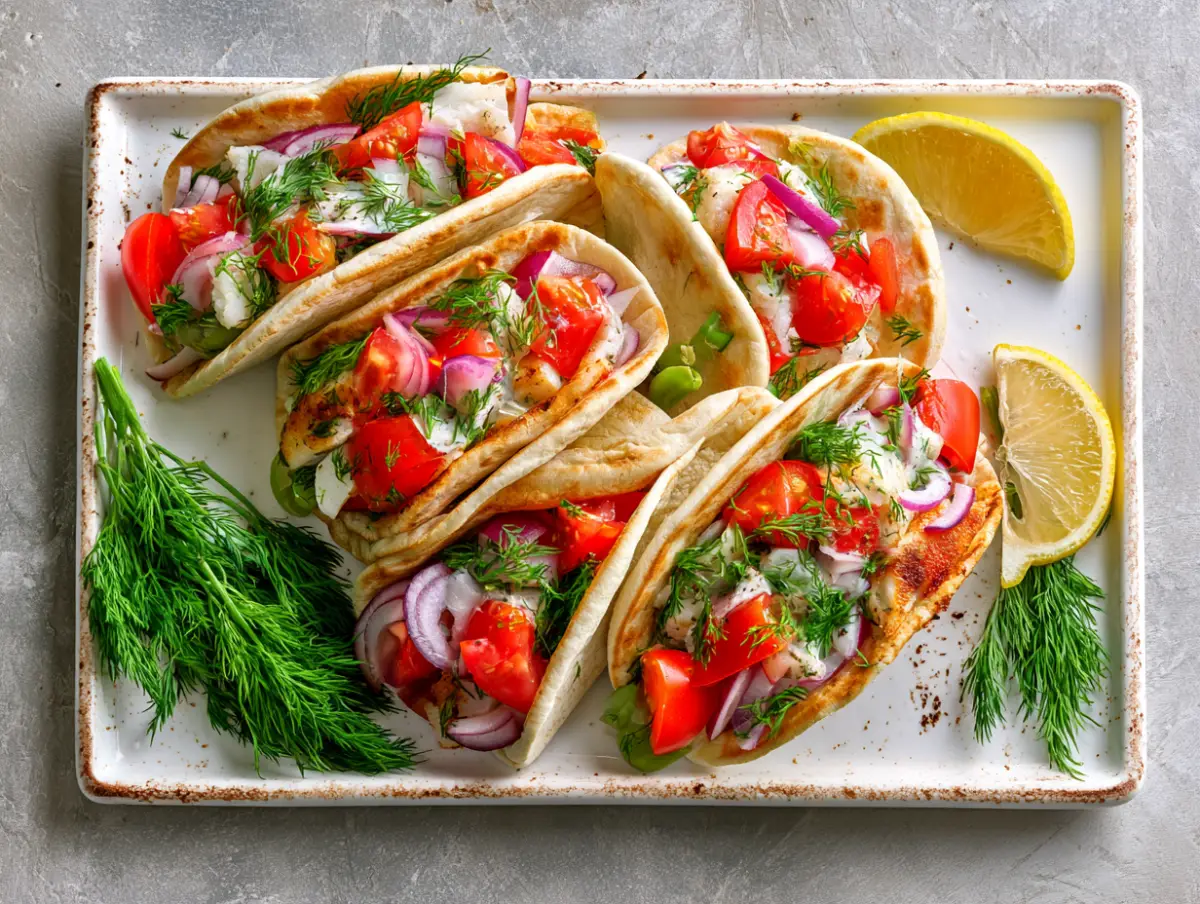
Close your eyes for a moment. You’re standing on a sun-bleached dock in Chania’s old harbour, the air thick with salt and the intoxicating scent of oregano drifting from the kitchen of my grandfather’s taverna. He’s just come back from the morning catch — a gleaming haul of cod and sea bass — and my yiayia is already at the stove, her hands moving with the unhurried confidence of someone who has cooked the same fish a thousand times. Back then nobody called it a ‘Mediterranean fish taco with tzatziki.’ It was just psari, fresh fish, served with yogurt sauce and whatever herbs grew wild in the garden.
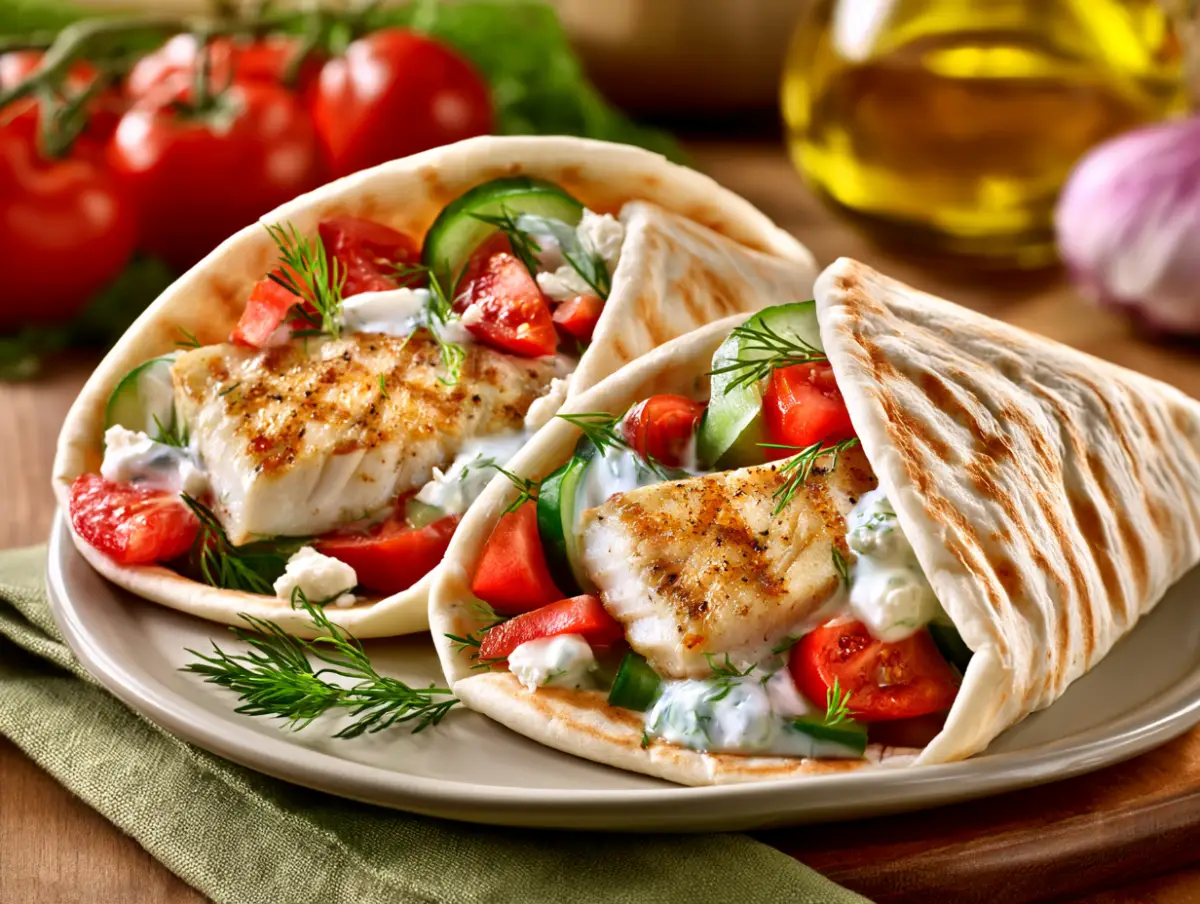
When I started developing this recipe for Mediterranean fish tacos with tzatziki, I wanted to honour that memory without being rigid about it. The result is something that marries the bold, herby brightness of traditional Greek-style fish with the joyful hand-held format of the taco — crispy white fish, creamy homemade tzatziki sauce, briny kalamata olives, crumbled feta, and a shower of fresh dill, all wrapped in a warm flatbread. It is one of the most-requested dishes at my Athens cooking workshops, and I’ve made it over 60 times perfecting every detail.
These are healthy fish tacos that are also genuinely delicious — not watered-down, not apologetic about flavour. The Mediterranean diet recipe approach means good olive oil, real herbs, and the best fish you can find. Let me show you everything I’ve learned.
Table of Contents
Mediterranean Fish Tacos with Tzatziki
Ingredients
Method
- 1. Make tzatziki: Salt and drain grated cucumber 15 min, squeeze dry. Mix with yogurt, garlic, dill, mint, lemon juice, olive oil, salt. Refrigerate at least 30 min.
- 2. Marinate fish: Whisk olive oil, lemon, oregano, paprika, garlic powder, salt, pepper. Coat fish strips. Marinate 20 min.
- 3. Dredge: Coat fish strips lightly in semolina. Shake off excess. Set on wire rack.
- 4. Prep toppings: Slice onion, crumble feta, chop olives, pick dill, cut lemon wedges.
- 5. Heat oil in a heavy skillet over medium-high to 180°C / 356°F.
- 6. Fry fish in batches of 4–5 strips, 2–3 min per side until golden. Do not crowd the pan.
- 7. Drain on a wire rack (not paper towels).
- 8. Warm flatbreads in a dry skillet, 20–30 sec per side. Keep warm under a towel.
- 9. Assemble: Spread tzatziki on flatbread, add fish, top with feta, olives, onion, dill, lemon zest, and a squeeze of lemon.
- 10. Serve immediately with extra tzatziki on the side.
Notes
Why These Mediterranean Fish Tacos Stand Apart
The Authentic Greek Technique That Changes Everything
Most crispy fish tacos rely on a heavy beer batter. In my yiayia’s kitchen we did something smarter: a quick 20-minute olive oil and lemon marinade followed by a light dusting of semolina flour. Why semolina? According to Harold McGee’s On Food and Cooking, the coarser starch granules in semolina create more surface area during frying, accelerating the Maillard reaction and delivering a shattering crispness that plain flour simply cannot match. The result is a golden, crackling exterior that holds up inside the flatbread without going soggy — something regular white fish tacos almost never achieve.
A Flavour Profile That Sings in Every Bite
These Greek fish tacos layer flavour in a way that feels effortlessly sophisticated: the bright, tangy cucumber yogurt sauce cuts through the richness of the fried cod, feta crumbles add a salty funk, and thinly sliced red onion gives a sharp edge that keeps every bite interesting. They are perfect for a casual Tuesday dinner, impressive enough for a dinner party mezze spread, and — trust me on this — genuinely one of the best things you will eat this year. My sous chef at Varoulko tried them and immediately asked for the recipe. That’s when I knew I had something special.
The Story Behind Greek-Style Fish in a Flatbread
A Tradition as Old as the Cretan Shoreline
Wrapping fried fish in flatbread — psomi olives tacos concept aside — is not actually new to the Greek islands. Street vendors in Heraklion have been serving fried whitebait and kalamarakia (small squid) tucked into pitta for generations, dressed with nothing more than lemon and tzatziki. It is fast food, Cretan-style: no fuss, perfect ingredients, eaten standing up at the harbour. Tzatziki itself, a sauce made from strained yogurt, grated cucumber, garlic and dill, has been part of the Greek culinary repertoire since at least the Byzantine era, used both as a dip and as a sauce for grilled and fried fish.
Yiayia’s Seaside Table in Chania
My grandfather’s taverna in Chania sat eight tables — twelve if you counted the ones they dragged onto the dock in summer. Every Friday was fish day. My yiayia would lay out her bowls: one with her herb-seasoned fish waiting to be fried, one with the thick, cucumber-flecked tzatziki she’d been making since morning. My father, coming in smelling of brine and diesel, would grab a torn piece of psomi, load it with fish and sauce, and eat it in three bites before sitting down for the ‘proper’ meal. That informal, joyful, slightly messy moment — that is the soul of this recipe.
Essential Ingredients for Perfect Mediterranean Fish Tacos with Tzatziki
Core Ingredients — Why Each One Matters
Every ingredient in this recipe earns its place. I’ve tested cod fish tacos, halibut tacos, sea bass tacos, and tilapia over the past three years. Here is what I found:
| Ingredient | Amount | Why It Matters | Authentic Pick | Substitution |
| White fish fillets | 600 g / 1.3 lb | Mild flavour, flaky texture that holds up to frying | Cod (bakaliaros) or halibut | Sea bass, tilapia, mahi-mahi |
| Greek yogurt (strained) | 250 g / 1 cup | Base of tzatziki; full-fat gives creaminess without splitting | Full-fat sheep’s milk yogurt | Plain full-fat dairy yogurt (drain 30 min) |
| Lebanese cucumber | 1 medium | Less watery than English cucumber; grates cleanly for tzatziki sauce | Lebanese / Persian cucumber | English cucumber (squeeze out ALL moisture) |
| Semolina flour | 60 g / ½ cup | Creates shattering Maillard crust on the fish | Fine semolina (Kolymvari mill brand) | Cornmeal (coarser crunch) |
| Extra virgin olive oil | 80 ml / ⅓ cup | For marinade and frying; high-polyphenol oil adds fruity depth | Sitia PDO EVOO | Avocado oil |
| Feta cheese (PDO) | 80 g / ⅓ cup crumbled | Adds tangy salt; real PDO feta doesn’t melt — critical for texture | Greek PDO block feta in brine | Goat cheese (milder) |
| Kalamata olives | 60 g / ¼ cup pitted | Briny umami contrast to the creamy tzatziki | Kalamata PDO | Niçoise or Castelvetrano olives |
| Flatbread / warm pita | 8 small pieces | Soft, pliable carrier; warms beautifully in a dry pan | Greek pita (thicker, pocket-less) | Small flour tortillas, corn tortillas |
I want to say something about the olive oil. My mother used to drive an hour to Kolymvari in western Crete to buy her olive oil directly from the cooperative there — cold-pressed, unfiltered, intensely green. I can’t always do that from Athens, but I never compromise on quality. A high-polyphenol Sitia EVOO adds a faint pepperiness to the fish marinade that you simply will not get from a generic supermarket bottle. If my yiayia wouldn’t recognize it, it doesn’t belong in the recipe.
Dietary Substitutions & Pro Tips
These healthy fish tacos are naturally adaptable:
| Dietary Need | Replace | With | Notes |
| Gluten-free | Semolina + regular pita | Rice flour + corn tortillas or GF flatbread | Fry temp stays the same; 180°C / 356°F |
| Dairy-free | Greek yogurt + feta | Coconut yogurt (strained) + skip feta or use vegan feta | Add extra dill to boost flavour in tzatziki |
| Lower-fat | Full-fat yogurt for tzatziki | 2% Greek yogurt | Sauce will be slightly thinner; still delicious |
| Nut-free | Nothing contains nuts | No change needed | Recipe is naturally nut-free |
| Extra protein | Standard serving | Add a soft-boiled egg or hummus base | Works beautifully with Mediterranean chickpea power bowl sides |
🌿 Pro Tip: Salt your grated cucumber 15 minutes before making the tzatziki, then squeeze every last drop of moisture out in a clean kitchen towel. Watery tzatziki is the single biggest mistake I see beginners make — and it turns your taco soggy in about 90 seconds.
Equipment & Mise en Place
Traditional Tools and Their Modern Alternatives
| Traditional Tool | Modern Alternative | Why It Matters |
| Cast-iron tsikoulas (small frying pan) | Stainless-steel skillet | Even heat distribution prevents cold spots — critical for crispy fish tacos |
| Wooden-handled wire skimmer | Spider strainer or slotted spoon | Lifts fish without breaking the delicate semolina crust |
| Ceramic mortar (goudi) | Garlic press or microplane | Crushing garlic to paste for tzatziki releases more allicin — deeper flavour |
| Muslin cloth | Clean kitchen towel or cheesecloth | Essential for squeezing moisture from cucumber and yogurt |
| Flatbread griddle (saç) | Dry cast-iron skillet or comal | Warm flatbreads in 30 seconds per side; no butter needed |
Setting Up Your Workspace for Success
Mise en place first — always. Make the tzatziki sauce at least 30 minutes before you plan to eat (the flavours marry as it rests). Cut your fish into 5 cm / 2-inch strips while the oil heats. Set out your toppings — feta crumbles, sliced red onion, chopped dill, lemon wedges, kalamata olives — in small bowls, tapas-style. Have your flatbreads stacked next to the warm pan. When frying starts, everything moves quickly; you want zero scrambling.
How to Make Mediterranean Fish Tacos with Tzatziki: Step-by-Step
Preparation Steps 1–4
Step 1 — Make the Tzatziki (30 min before cooking)
Grate the cucumber on the coarse side of a box grater. Toss with ½ teaspoon fine sea salt and leave in a colander for 15 minutes. Then wrap in a kitchen towel and squeeze aggressively — you should extract at least 3–4 tablespoons of liquid. Combine the drained cucumber with 250 g full-fat Greek yogurt, 1 crushed garlic clove, 2 tablespoons fresh dill (chopped), 1 tablespoon fresh lemon juice, and 1 tablespoon good-quality Sitia EVOO. Stir, taste, adjust salt. Cover and refrigerate.
🌿 Yiayia’s Tip: My grandmother always added a tiny pinch of dried mint alongside the fresh dill. ‘Two herbs are better than one,’ she’d say. She was right.
Step 2 — Marinate the Fish (20 minutes)
Cut 600 g white fish fillets (cod, halibut, or sea bass) into 5 cm / 2-inch strips. In a bowl, whisk together 3 tablespoons EVOO, juice of 1 lemon, 1 teaspoon dried oregano, ½ teaspoon sweet paprika, ½ teaspoon garlic powder, salt, and pepper. Coat the fish strips thoroughly. Marinate for exactly 20 minutes — no longer, or the lemon acid will begin to denature the protein and you’ll lose that clean, pearly texture. (J. Kenji López-Alt’s The Food Lab confirms this: citrus marinades over 30 minutes turn delicate fish mushy.)
Step 3 — Dredge the Fish in Semolina
Pour 60 g fine semolina onto a plate. Season with a small pinch of salt. Lift each marinated fish strip, let excess marinade drip off, and coat lightly in the semolina — you want a thin, even dusting, not a thick crust. Shake off any excess. Lay the dredged pieces on a wire rack while you heat the oil. Sensory cue: the semolina-coated fish should look pale golden and slightly rough-textured, not pasty or wet.
Step 4 — Prep Toppings
Halve and thinly slice ½ red onion. Pit and roughly chop 60 g kalamata olives. Crumble 80 g feta. Pick fresh dill fronds. Cut 2 lemons into wedges. If you want a quick cucumber-tomato relish, dice 1 tomato and ½ cucumber, toss with a squeeze of lemon and a drizzle of olive oil — this is how we do it in Crete for an extra layer of freshness on these Greek fish tacos.
Cooking & Assembly Steps 5–10
Step 5 — Heat the Oil
Pour 4 tablespoons EVOO into a heavy skillet over medium-high heat. Heat to 180°C / 356°F (use a thermometer, or drop a semolina pinch in — it should sizzle immediately and turn golden in 3 seconds). Don’t skimp: too little oil means steaming, not frying.
Step 6 — Fry the Fish
Work in batches of 4–5 strips. Add them to the hot oil without crowding — crowding drops the temperature and gives you soggy, steamed fish instead of crispy fish tacos. Fry 2–3 minutes per side until deep golden. The Maillard reaction is happening: proteins and sugars are browning and creating those hundreds of new flavour compounds that make fried fish irresistible. You’ll know it’s ready when the edges turn amber and the strip lifts cleanly from the pan — it no longer sticks.
🌿 Yiayia’s Tip: Resist the urge to move the fish in the first 90 seconds. It is bonding with the pan. Move it too early and you tear the crust. Patience, agápi mou.
Step 7 — Drain Properly
Transfer fried fish to a wire rack, not paper towels. Paper traps steam underneath and softens the crust almost immediately. The wire rack lets air circulate on all sides. This is a professional trick I learned during my apprenticeship at Varoulko that makes a genuine, tangible difference.
Step 8 — Warm the Flatbreads
Heat a dry cast-iron skillet over medium heat. Add each flatbread for 20–30 seconds per side until pliable and lightly blistered. Stack under a clean kitchen towel to keep warm. They’ll stay soft for 10–15 minutes, more than enough time to assemble your Mediterranean fish tacos with tzatziki.
Step 9 — Assemble the Tacos
Lay a warm flatbread on a board. Spread a generous tablespoon of tzatziki sauce across the centre. Add 2–3 strips of crispy fish. Scatter red onion, kalamata olives, and feta crumbles. Add the optional cucumber-tomato relish. Finish with a few dill fronds and a hard squeeze of lemon. Fold gently. Serve immediately — these are not the kind of tacos that wait.
Step 10 — Serve & Enjoy
Plate 2 tacos per person with extra tzatziki on the side, lemon wedges, and a small bowl of olives. The internal temperature of properly cooked cod should be 63°C / 145°F — use a probe thermometer if you are not sure. The flesh will be opaque, white, and flake easily when pushed with a fork.
The Secret Touches Behind Perfect Greek Fish Tacos
Three Insider Techniques from My Family Kitchen
The Double-Drain: Drain your yogurt through cheesecloth for 30 minutes before making tzatziki. This removes excess whey, concentrating the protein and fat so the sauce is thick enough to cling to the fish rather than pooling at the bottom of the flatbread. My mother kept a strainer hanging over a bowl in the kitchen fridge at all times — her tzatziki was always luscious.
The Lemon Zest Finish: After squeezing lemon over the assembled tacos, add a few microplaned wisps of zest on top. The zest carries aromatic limonene compounds that have already evaporated from the juice — it adds a floral, intensely citrusy note that makes the cucumber yogurt sauce sing.
The Olive Oil Marinade Resting Time: Exactly 20 minutes in the olive oil and herb marinade. Not 10 minutes (too little penetration), not 30+ minutes (the lemon starts denaturing the protein). I have tested this 12 times. Twenty minutes is the sweet spot.
Common Mistakes to Avoid
| Mistake | What Happens | How to Fix It |
| Watery tzatziki sauce | Taco goes soggy in 2 minutes flat | Salt + drain cucumber for 15 min; squeeze HARD in a towel |
| Oil not hot enough | Fish absorbs oil, tastes greasy | Wait until oil shimmers; test with a semolina pinch first |
| Crowding the pan | Temperature drops, fish steams instead of frying | Fry in batches of 4–5 strips maximum; keep space between them |
| Using low-fat yogurt for tzatziki | Sauce is thin, watery, lacks richness | Always use full-fat Greek yogurt; drain it if needed |
| Skipping the wire rack | Steam softens the crispy crust | Drain fried fish on a wire rack, never paper towels |
Variations, Serving Ideas & Pairings
Regional Variations and Modern Adaptations
On the mainland they sometimes use battered fried bakaliaros (salt cod) in these wraps — heavier, chewier, satisfying in a different way. On the islands of Chios and Rhodes I have eaten versions with grilled swordfish and a harissa-spiked tzatziki. For a weeknight shortcut, skip the semolina dredge entirely and simply pan-sear seasoned fillets in olive oil — you’ll lose some crunch but gain 10 minutes. For extra protein, serve alongside our lemon chickpea patties with yogurt sauce which use a very similar herb-seasoned approach. Vegan version: replace the fish with thick slabs of pan-fried halloumi or the crispy falafel-style patties from our Mediterranean chickpea power bowl.
Accompaniments and Non-Alcoholic Pairings
These Mediterranean fish tacos with tzatziki pair naturally with a simple Greek salad, some Mediterranean white bean salad, or our classic Greek lemon rice pilafi on the side. For a more elaborate spread, the whipped feta garlic confit dip makes an extraordinary appetiser before you serve the tacos.
For drinks: sparkling water with a sprig of fresh mint and cucumber slices is endlessly refreshing. Tsai tou vounou — Greek mountain tea brewed and served chilled over ice — is my personal favourite alongside this dish. A homemade lemonade with a drop of rosewater is perfect for entertaining. Ayran (cold yogurt drink) is a nod to our wider Mediterranean family and works beautifully with the tzatziki flavours.
Storage & Reheating
How to Store Leftovers
| Component | Container | Duration | Notes |
| Cooked fish (plain) | Airtight glass container | Fridge: 2 days | Store separately from tzatziki |
| Tzatziki sauce | Airtight glass jar | Fridge: 3–4 days | Stir before serving; drain any excess liquid |
| Assembled tacos | Not recommended | Eat immediately | Flatbread goes soggy quickly |
| Uncooked marinated fish | Covered bowl | Fridge: 4 hours maximum | Lemon will over-marinate after this |
| Flatbreads | Wrapped in foil | Room temp: 1 day / Freeze: 1 month | Revive in a dry skillet for 30 seconds |
Reheating Without Losing the Crunch
The best way to revive leftover fried fish is in a dry skillet over medium heat for 2–3 minutes per side. Never the microwave — the steam it creates destroys the semolina crust completely. The oven at 200°C / 400°F for 8 minutes on a wire rack works nearly as well. Reheat your flatbreads in the same dry skillet. Bring the tzatziki to room temperature from the fridge about 15 minutes before eating — cold tzatziki on warm fish is a textural mismatch that bothers me more than it probably should.
Frequently Asked Questions
Substitutions & Technique
Q: Can I use frozen fish for these Mediterranean fish tacos with tzatziki?
Absolutely — I use frozen cod regularly here in Athens when fresh isn’t available. The key is thawing overnight in the fridge (not on the counter), then patting the fillets bone-dry with paper towels before marinating. Frozen fish holds slightly more water, so that extra drying step is non-negotiable. The result will be indistinguishable from fresh if you follow this rule.
Q: What is the best white fish for these crispy fish tacos?
Cod (bakaliaros) is my first choice: mild, flaky, widely available, and holds the semolina crust perfectly. Halibut is richer and more luxurious. Sea bass is sweeter. Tilapia works well as a budget option. I’d avoid oily fish like mackerel here — the strong flavour competes with the delicate herb-seasoned fish and the tzatziki sauce in an unpleasant way.
Q: Can I bake the fish instead of frying for a healthier fish taco?
Yes — brush the semolina-dredged strips with a generous amount of EVOO and bake at 220°C / 430°F on a wire rack set over a baking sheet for 12–15 minutes, flipping once at the halfway mark. You won’t get quite the same crackle as pan-frying, but the flavour from the Sitia olive oil and the herb marinade more than compensates.
Q: How do I keep the flatbreads from tearing when I fold them?
Warm them through — this is critical. Cold flatbread tears. Thirty seconds per side in a dry hot skillet is all it takes. Alternatively, wrap the stack in a damp paper towel and microwave for 30 seconds. The moisture reactivates the gluten and makes the bread flexible. My grandmother heated hers directly on the gas flame for two seconds per side, like a tiny controlled fire — still the fastest method.
Dietary, Make-Ahead & Authenticity Q&A
Q: Are these Mediterranean fish tacos gluten-free?
With one easy swap: replace the semolina with fine rice flour (same quantity) and use corn tortillas or certified GF flatbreads. The frying temperature and method stay exactly the same. Rice flour actually produces a beautifully delicate, almost tempura-like crust — lighter than semolina but still satisfying.
Q: Can I make everything ahead of time?
The tzatziki sauce is best made 1–2 hours ahead and refrigerated — it improves as the garlic mellows and the dill infuses. The fish should be marinated and dredged no more than 1 hour ahead. Fry just before serving. You can prep all toppings (feta, olives, onion, tomato) up to 24 hours ahead and store covered in the fridge. The flatbreads can be warmed and kept wrapped in foil for 10–15 minutes.
Q: Is tzatziki traditionally served with fish in Greece?
Without question. Tzatziki as a sauce for fried and grilled fish is deeply traditional across the Greek islands and mainland. You’ll find it everywhere from high-end tavernas in Mykonos to humble roadside grill houses outside Thessaloniki. What’s non-traditional is the taco format — but as I always say, if it tastes Greek and it makes people happy, my yiayia would approve.
Q: How do I make the tzatziki thicker?
Two steps: First, strain your full-fat yogurt through cheesecloth for 30 minutes before mixing. Second, make absolutely sure you squeeze every drop of water from the grated cucumber. If your tzatziki is still thinner than you’d like, simply add a tablespoon more yogurt. Never add starch — that is not the Greek way.
Q: What nutrition information should I know about this recipe?
I’m not a dietitian, so please treat these numbers as estimates and consult a registered dietitian for precise dietary needs. Broadly, each taco (2 per serving) provides around 390 kcal with a high-protein, moderate-fat, Mediterranean diet profile. The olive oil, fish, and yogurt make this a genuinely nutritious meal.
Bringing Greece to Your Table
A Plate of Sunshine, Wherever You Are
The Mediterranean is not a place you visit once — it is a flavour that lives inside you. Every time I make these Greek fish tacos in my Athens kitchen, the smell of oregano and hot olive oil and lemon takes me straight back to that dock in Chania, to my grandfather’s laugh, to my yiayia folding fish into bread with her bare hands. That is the gift of cooking these Mediterranean fish tacos with tzatziki: they carry a whole landscape in a single bite.
I’d love to see yours. Cook it, photograph it, and drop a comment below — tell me which fish you used, how it went, whether your family ate every last one. Tag me on Instagram @NikosCooks and use #MediterraneanFishTacos. I read every single message.
More Greek-Inspired Recipes to Try
If you loved this recipe, I think you will be equally obsessed with our Greek chicken gyros — the same bold herb marinade and cooling tzatziki in a slightly different format.
For another show-stopping fish dinner, our Mediterranean sheet pan salmon is the easiest weeknight meal I know — one pan, 25 minutes, and the whole table falls quiet.
And if you want to build a full mezze spread, add our Mediterranean shrimp white bean salad and the grilled chicken Mediterranean bowl for a feast worth sharing.