I still remember the afternoon my yiayia placed a bowl of tiny, sun-warmed clementines on her kitchen table in Chania, the late winter light pouring through the window like liquid honey. The whole house smelled of citrus and cinnamon, and she was doing something I’d never seen before — dropping whole, unpeeled clementines into a pot of simmering water. “Niko,” she said, wagging a flour-dusted finger at me, “the skin is where all the perfume lives. You throw it away, you throw away the soul of the fruit.”
That memory shaped everything about this Clementine Almond Cake & Orange Blossom drizzle. It’s a dessert that belongs to the Mediterranean — to those limestone kitchens where nothing gets wasted and every ingredient earns its place. The whole boiled clementines melt into the batter, giving you a cake so impossibly moist it barely needs a fork. The ground almonds replace flour entirely (yes, it’s naturally gluten-free), and the orange blossom drizzle? That’s the finishing touch my mother added years later, inspired by the anthonero she’d buy from the old distiller near our village.
Whether you’re baking for a Sunday table, a name day celebration, or just because a bag of clementines caught your eye at the market, trust me — this flourless clementine cake will become your new obsession. Let me walk you through exactly how my family makes it.
Table of Contents
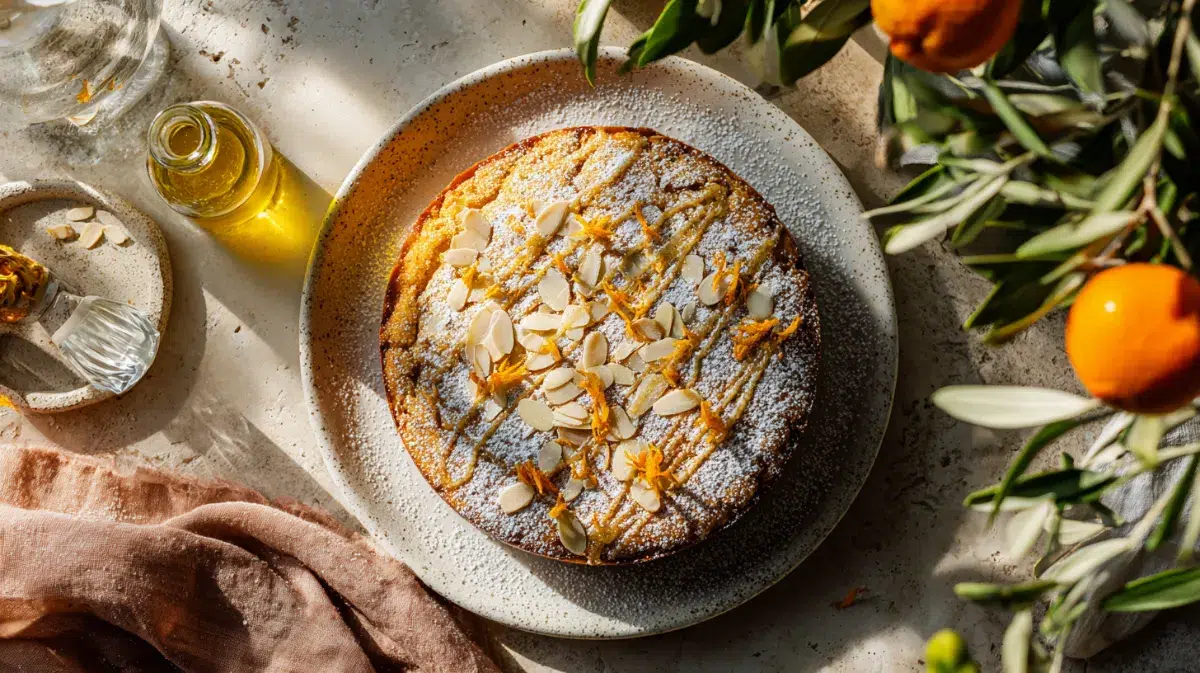
Clementine Almond Cake & Orange Blossom Drizzle
Ingredients
Method
- 1. Place whole clementines in a large saucepan, cover with cold water. Bring to a boil, reduce to a gentle simmer, cover partially, and cook 90 minutes to 2 hours until completely soft. Drain and cool 15 minutes.
- 2. Preheat oven to 340°F (170°C). Line the base of a 9-inch (23 cm) springform pan with parchment. Brush sides with olive oil.
- 3. Halve clementines, remove seeds. Transfer to food processor and pulse 8–10 times to a rough purée.
- 4. Whisk eggs and sugar 3 minutes until pale and doubled. Drizzle in olive oil and 2 tsp orange blossom water.
- 5. Fold in almond flour, baking powder, and salt in two additions. Fold in clementine purée until just combined.
- 6. Pour into prepared pan. Bake 50–60 minutes, tenting with foil at 35 min if browning too fast. Done when skewer comes out with moist crumbs.
- 7. While baking, make drizzle: simmer clementine juice and sugar until dissolved. Remove from heat, stir in 1 Tbsp orange blossom water.
- 8. Remove cake from oven. Poke 30–40 holes with a skewer. Spoon warm drizzle evenly over warm cake. Cool in pan 1–2 hours.
- 9. Unmold, dust with powdered sugar, garnish with toasted almonds and clementine zest strips.
Notes
Storage:
Room temperature 2–3 days airtight; fridge 5–7 days; freezer up to 3 months (double-wrap).Make-ahead:
Bake the day before for best flavor.Key substitutions:
Oranges, blood oranges, or satsumas can replace clementines (same weight, add 2 Tbsp extra sugar for oranges). Coconut sugar may replace granulated sugar. Hazelnut flour can replace almond flour.Dietary modifications:
Already gluten-free and dairy-free; see vegan flax-egg option in article.Serving suggestions:
Greek yogurt, thyme honey, or simply powdered sugar. Pairs with Greek mountain tea, mint lemonade, or chamomile tea. For more Mediterranean dessert inspiration, try our almond flour cake with spring berries for a fruity variation, our pistachio halva for a nut lover’s dream, and our Greek yogurt panna cotta for an elegant chilled dessert.Why This Clementine Almond Cake & Orange Blossom Is Special
The Whole-Fruit Technique That Changes Everything
Most citrus cakes ask you to zest, juice, and discard. This gluten-free almond cake does the opposite — you boil whole clementines until they collapse into a fragrant, jammy purée, then fold everything (peel, pith, flesh) directly into the batter. Why does this matter? The extended simmering breaks down the pectin in the pith and rind, transforming what would be bitter waste into a natural thickener and moisture trap. Harold McGee explains in On Food and Cooking that prolonged heat converts the bitter naringin compounds in citrus peel into gentler, sweeter molecules. The result is a cake with a depth of citrus flavor you simply cannot achieve with zest alone.
A Flavor Profile Worth Celebrating
Imagine biting into something that’s simultaneously bright and earthy, floral and nutty, with a tender crumb that practically dissolves on your tongue. The almond flour cake base provides richness and a faintly marzipan-like sweetness, while the boiled clementine purée delivers waves of sunny, concentrated citrus. Then the orange blossom syrup arrives — aromatic, barely sweet, with that unmistakable anthonero perfume that Greeks and Lebanese cooks have loved for centuries. I’ve baked this Mediterranean citrus dessert for holiday tables, casual brunches, and everything in between, and every single time someone asks for the recipe. You’ll love this one.
The Story Behind the Dish
Centuries of Mediterranean Citrus Baking
The tradition of using whole boiled citrus in cakes traces back through Sephardic, North African, and Eastern Mediterranean kitchens, where resourcefulness was a culinary virtue. Claudia Roden documented one of the most famous versions — a whole orange cake from the Jewish communities of Spain and the Levant — which eventually inspired Nigella Lawson’s beloved clementine adaptation. In Greece and Cyprus, orange blossom water (anthonero) has flavored Easter breads like tsoureki and festive syrups for as long as anyone can remember. This cake sits at the crossroads of all those traditions.
My Family’s Version
My yiayia’s original was a rough, rustic thing — she didn’t even own a food processor, just a heavy wooden pestle and a strong arm. My mother refined it during the years we spent in Athens, adding the orange blossom drizzle after tasting something similar at a Lebanese bakery near Omonia Square. And I’ve been tinkering with ratios in my own kitchen ever since, testing it at least 30 times until the balance felt exactly right. This is how we make it in Crete, with a little Athenian polish.
Essential Ingredients for Clementine Almond Cake
Core Ingredients Breakdown
Every ingredient in this flourless clementine cake earns its spot. Here’s what you need and why it matters:
| Ingredient | Amount | Why It Matters | Authentic Pick | Substitution |
| Whole clementines | 375 g (about 4–5) | Provides all citrus flavor, moisture, and natural pectin for structure | Cretan or Moroccan clementines | Mandarin oranges, satsumas, or thin-skinned navel oranges |
| Blanched almond flour | 250 g (2½ cups) | Replaces wheat flour entirely; adds richness, protein, and tender crumb | Greek or Sicilian almonds, finely ground | Hazelnut flour (slightly different flavor) |
| Large eggs | 6, room temp | Provide structure, lift, and emulsification — critical since there’s no gluten | Free-range, room temperature | Flax eggs for vegan (texture will differ) |
| Granulated sugar | 200 g (¾ cup + 2 Tbsp) | Sweetness and browning via Maillard reaction | Standard white or golden caster sugar | Coconut sugar (adds caramel notes) |
| Baking powder | 1 tsp (5 g) | Provides lift in a dense, flour-free batter | Gluten-free certified | Omit for denser, fudgier texture |
| Orange blossom water | 2 tsp + 1 Tbsp (drizzle) | The signature fragrance; connects cake to Mediterranean pastry tradition | Lebanese or Moroccan anthonero/mazaher | Rose water (different floral profile) |
| Extra virgin olive oil | 2 Tbsp | Moisture, fruity depth, and Cretan identity | Kolymvari or Sitia EVOO | Melted butter (loses Mediterranean character) |
| Fine sea salt | ½ tsp | Amplifies sweetness and citrus aroma | Cretan sea salt or fleur de sel | Kosher salt (use ¾ tsp) |
A note about the almonds — my grandfather used to crack wild almonds from the trees behind his taverna. Those had a slightly bitter edge that I loved, but commercial blanched almond flour gives you a cleaner, sweeter result. If you can find Aegina almonds, grab them. They’re smaller and more aromatic than anything you’ll get from California.
Dietary Substitutions & Pro Tips
| Dietary Need | Replace | With | Notes |
| Gluten-free | No change needed | Recipe is naturally gluten-free | Verify baking powder is GF certified |
| Dairy-free | No change needed | Olive oil replaces butter | Skip cream garnish; use coconut cream |
| Lower sugar | 200 g granulated sugar | 140 g coconut sugar + 1 Tbsp honey | Cake will be slightly less sweet; add extra pinch of salt |
| Egg-free / Vegan | 6 eggs | 6 flax eggs (6 Tbsp ground flax + 18 Tbsp water) | Texture will be denser; add extra ½ tsp baking powder |
| Nut-free | 250 g almond flour | 250 g sunflower seed flour | Flavor changes significantly; bake 5 min less |
| Refined sugar-free | Granulated sugar + drizzle sugar | Date syrup in batter; honey in drizzle | Reduce liquid slightly; cake browns faster |
⭐ Pro Tip: Bring your eggs to room temperature by soaking them in warm water for 10 minutes. Cold eggs cause the olive oil to seize slightly, giving you a grainy batter instead of a silky one. I learned this the hard way after three flat cakes in a row.
For an even more fragrant result, try adding ¼ teaspoon of ground cardamom — it’s a trick I picked up from a baker friend in Thessaloniki who grew up eating Moorish-influenced pastries. The warm spice plays beautifully against the bright clementine and floral orange blossom water recipe flavors. This cake also works wonderfully alongside our loukoumades (Greek honey donuts) for an all-Mediterranean dessert spread.
Equipment and Technique
What You’ll Need
| Traditional Tool | Modern Alternative | Why It Matters |
| Heavy copper pot (for boiling) | Any large saucepan with lid | Even heat distribution prevents scorching during the 90-minute simmer |
| Stone mortar & pestle | Food processor or immersion blender | Breaks down boiled clementines into smooth purée without overworking |
| Tapsi (round baking pan) | 9-inch / 23 cm springform pan | Springform makes unmolding effortless; line base with parchment |
| Wire cooling rack | Same | Allows air circulation so the drizzle soaks evenly without a soggy bottom |
| Small saucepan (syrup) | Same | For the orange blossom drizzle — nothing fancy needed |
Mise en Place and Workspace Setup
Before you start, set up your workspace: line the springform pan and grease the sides with a brush of olive oil (not butter — we’re keeping this dairy-free). Measure your almond flour, baking powder, and salt into one bowl. Set your eggs on the counter to come to room temperature. Have your orange blossom water within arm’s reach. And preheat your oven to 340°F (170°C) with a rack in the center position. As any chef worth their Maldon will tell you, mise en place isn’t fussy — it’s freedom.
Step-by-Step Instructions for Clementine Almond Cake with Orange Blossom Drizzle
Preparation (Steps 1–4)
Step 1: Boil the Whole Clementines. Place 375 g of whole, unpeeled clementines in a large saucepan and cover with cold water. Bring to a boil, then reduce to a gentle simmer. Cover partially and cook for 1 hour 30 minutes to 2 hours, until they’re completely soft and a knife slides through with zero resistance. (Why this matters: the long simmer breaks down bitter compounds and converts the rind into a jammy, spreadable consistency. If you cut corners here, you’ll taste bitterness.) Drain and let cool for 15 minutes.
Sensory cue: The clementines should look deflated, almost wrinkled, and smell intensely sweet-citrusy. When you press one gently, it should offer no resistance at all.
⭐ Yiayia’s Tip: My grandmother always said to taste the boiling water. If it still tastes bitter after an hour, drain it and add fresh water, then continue simmering. She was never wrong.
Step 2: Purée the Clementines. Halve the cooled clementines and flick out any seeds. Transfer the fruit — skin, pith, flesh, everything — into a food processor. Pulse 8–10 times until you have a rough but uniform purée. Don’t over-process; you want a little texture, not baby food. (Mistake to avoid: blending until completely smooth removes the subtle textural interest that makes this whole orange cake special.)
Step 3: Whisk the Wet Ingredients. In a large bowl, crack all 6 eggs and whisk with the sugar for about 3 minutes until the mixture is pale, frothy, and has roughly doubled in volume. Drizzle in the 2 tablespoons of olive oil and 2 teaspoons of orange blossom water while whisking. (The extended whisking incorporates air, which is your only leavening besides a teaspoon of baking powder.)
Step 4: Combine Wet and Dry. In a separate bowl, whisk together the almond flour, baking powder, and salt. Fold the dry ingredients into the egg mixture in two additions, using a large spatula and gentle figure-eight motions. Then fold in the clementine purée until just combined. Don’t skip this. Over-mixing at this stage deflates all those air bubbles you just worked to create.
Cooking, Assembly & Finishing (Steps 5–10)
Step 5: Bake the Cake. Pour the batter into your prepared springform pan and smooth the top gently. Bake at 340°F (170°C) for 50–60 minutes. At the 35-minute mark, check the surface — if it’s browning too quickly, tent loosely with foil. The cake is done when a skewer inserted into the center comes out with just a few moist crumbs (not wet batter). Internal temperature should read 200–205°F (93–96°C).
Sensory cue: The kitchen will smell extraordinary — warm almonds and candied citrus. The top should be deep golden, almost caramel-colored, and the edges will have pulled away from the pan by about 3 mm. Golden. Fragrant. Perfect.
Step 6: Make the Orange Blossom Drizzle. While the cake bakes, combine 80 ml (1/3 cup) fresh clementine juice with 60 g (1/4 cup) sugar in a small saucepan. Bring to a boil over medium heat, stirring to dissolve the sugar. Remove from heat immediately and stir in 1 tablespoon orange blossom water. (J. Kenji López-Alt notes in The Food Lab that adding delicate aromatics off-heat preserves their volatile flavor compounds, which evaporate rapidly above 170°F.)
⭐ Yiayia’s Tip: My mother always squeezed one extra clementine and added a tablespoon of its juice right at the end, off heat, so the drizzle had both cooked and raw citrus character. “One for the pot, one for the soul,” she’d say.
Step 7: Drizzle the Still-Warm Cake. The moment the cake comes out of the oven, poke 30–40 holes across the surface with a wooden skewer or toothpick. Slowly spoon the warm orange blossom syrup over the cake, letting it soak in between additions. Give it 2–3 minutes, then spoon any pooled syrup from the edges back over the top.
Step 8: Cool Completely. Let the cake cool in the pan on a wire rack for at least 1 hour, preferably 2. This clementine almond cake actually tastes better the next day as the flavors marry and the crumb firms up slightly. Resist the urge. (I know. It’s hard.)
Step 9: Unmold and Garnish. Run a thin knife around the edge, then release the springform ring. Transfer to a serving plate. Dust lightly with powdered sugar, scatter with toasted sliced almonds and a few strips of clementine zest.
Step 10: Slice and Serve. Use a sharp, thin-bladed knife dipped in hot water for clean slices. Serve at room temperature with a dollop of Greek yogurt, a drizzle of honey, or simply on its own. This spring dessert recipe needs very little embellishment. Pair it with a hot cup of Greek mountain tea (tsai tou vounou) for the full Mediterranean experience. This cake is also lovely served after our Mediterranean vegetable tagine as a fragrant finish to a North African-inspired dinner.
The Secret Touches
Insider Techniques from My Family’s Kitchen
1. The Double-Boil Drain. If your clementines taste very tart or the pith is thick, drain the boiling water after the first 45 minutes and start fresh with clean hot water. This flushes out excess naringin (the primary bitter glucoside in citrus pith) without losing the essential oils locked in the rind. My yiayia did this automatically; I had to learn why it worked from food science textbooks.
2. The Sugar Delay. When whisking eggs and sugar, I wait about 30 seconds before adding the sugar. Starting with plain eggs lets you build an initial foam structure with protein alone. Once the bubbles are established, the sugar stabilizes them through hygroscopic action — it binds water, slowing evaporation from the bubble walls. (McGee covers this beautifully in his chapter on egg foams.)
3. The Olive Oil Swirl. Rather than mixing olive oil into the batter, I also brush a thin layer over the parchment-lined base of the pan. As the cake bakes, the bottom develops a barely-there crisp edge that contrasts with the pillowy crumb above. It’s subtle, but people notice.
4. The Resting Rule. I bake this cake the evening before I plan to serve it. Overnight, the almond flour absorbs residual moisture from the syrup, the citrus oils mellow, and the crumb tightens just enough to slice cleanly. Day-two cake is genuinely a different (better) experience.
Common Mistakes and How to Fix Them
| Mistake | What Happens | How to Fix It |
| Under-boiling clementines | Bitter, chewy peel fragments throughout the cake | Boil for the full 90 min– 2 hrs; test with a knife — zero resistance means done |
| Over-processing the purée | Cake loses textural interest, becomes gummy | Pulse 8–10 times only; a few small peel pieces are desirable |
| Baking at too high a temp | Dark crust with raw center; cracked top | Use 340°F (170°C), not 350°F; tent with foil if browning too fast |
| Skipping the resting period | Cake crumbles when sliced; syrup pools at base | Cool in pan 1–2 hours; best served next day |
| Adding syrup to a cool cake | Syrup sits on surface, doesn’t absorb | Always drizzle the warm syrup onto the warm cake with skewer holes |
| Using cold eggs | Batter breaks; poor volume; dense result | Room-temp eggs, or warm in bowl of warm water for 10 min |
Variations and Serving Suggestions
Regional Variations and Modern Adaptations
In Crete, this cake would traditionally be baked in a tapsi and served plain with just a dusting of powdered sugar — no fuss, no garnish. On the islands, particularly in the Cyclades, bakers sometimes fold in a tablespoon of ground mastiha, which adds a piney, resinous note that I find intoxicating. Mainland Greek versions occasionally use oranges instead of clementines, increasing the sugar to compensate for the greater bitterness of standard orange pith.
For a modern adaptation, try stirring 2 tablespoons of tahini into the batter — it adds a savory depth that’s unexpectedly wonderful. If you need a weeknight shortcut, skip the full 2-hour boil: microwave the clementines in water on high for 10–12 minutes, then purée as directed. The flavor is 90% as good. Not as meditative as the slow simmer, but life happens. You can also make this as individual cupcakes (reduce bake time to 25–30 minutes), which are perfect for parties alongside our pistachio halva.
Accompaniments and Pairings
Serve this Mediterranean citrus dessert with a generous spoonful of thick Greek yogurt and a drizzle of thyme honey. A scattering of crushed pistachios adds color and crunch. For a brunch spread, pair it alongside our savory Mediterranean yogurt bowl and a platter of fresh seasonal fruit.
For beverages, skip the usual and go Mediterranean: freshly brewed Greek mountain tea (tsai tou vounou) is the traditional pairing, its herbaceous, slightly sweet profile complementing the floral cake perfectly. Alternatively, sparkling water with a sprig of fresh mint and a squeeze of lemon is refreshing and light. A glass of homemade lemonade with a touch of rose water makes another lovely match. For a warming option, try chamomile tea with honey — or if you’re feeling adventurous, brew a pot of Moroccan mint tea to echo the North African roots of this orange blossom water recipe.
Storage and Reheating
How to Store Your Cake
| Method | Container | Duration | Notes |
| Room temperature | Airtight cake dome or wrapped in cling film | 2–3 days | Best flavor on day 2; keep away from direct sunlight |
| Refrigerator | Airtight container, parchment between layers | 5–7 days | Bring to room temp 30 min before serving for best texture |
| Freezer (whole) | Double-wrapped in cling film + foil, then freezer bag | Up to 3 months | Freeze without garnish or powdered sugar; thaw overnight in fridge |
| Freezer (sliced) | Individual slices separated by parchment in freezer bag | Up to 3 months | Thaw individual slices in 20 min at room temp for quick dessert |
Reheating Methods
For the best results, warm slices in a 300°F (150°C) oven for 8–10 minutes on a parchment-lined tray. This gently restores the cake’s moisture without drying it out. Alternatively, 15–20 seconds in the microwave will do in a pinch, though you’ll lose some of the exterior’s delicate texture. I don’t recommend stovetop reheating for this particular cake — it’s too delicate.
To refresh the drizzle, brush a little extra warmed orange blossom syrup (1 tablespoon clementine juice + 1 teaspoon sugar + a few drops of orange blossom water, microwaved 20 seconds) over each slice before serving. Finish with a fresh scattering of powdered sugar and a few toasted almond slices. This naturally gluten-free cake pairs beautifully with our Greek yogurt panna cotta if you want a double-dessert spread.
Frequently Asked Questions
Substitution and Technique Questions
Can I use regular oranges instead of clementines?
Absolutely. Use the same weight (375 g) of thin-skinned oranges, but increase the sugar by 2 tablespoons to offset the greater bitterness of orange pith. Blood oranges create a stunning ruby-tinted crumb. I’ve tested this at least a dozen times with different citrus and it always works.
What’s the difference between almond flour and almond meal for this cake?
Almond flour is made from blanched, skinless almonds and produces a finer, lighter crumb. Almond meal includes the skins and gives a rustier color and slightly coarser texture. Both work, but for the prettiest result, go with almond flour. My yiayia would have laughed at the distinction — she ground whatever almonds she had.
Can I make this in a regular (non-springform) pan?
Yes, but grease and line it very well. The cake is delicate when warm and can stick. A well-greased 9-inch round cake pan with a parchment circle on the bottom works fine. Let it cool completely before inverting.
Do I really need to boil the clementines that long?
I know, 90 minutes to 2 hours sounds excessive. But under-boiled clementines leave bitter, tough peel fragments in your cake — I made this mistake the first three times I attempted the recipe on my own. The full boil is non-negotiable. Don’t skip this.
Can I add spices to this flourless clementine cake?
Definitely. A quarter teaspoon of ground cardamom or cinnamon integrates beautifully. Ground ginger (just a pinch) works too. I sometimes add all three during the winter holidays. The warming spices complement the citrus without masking it.
Dietary, Make-Ahead & Authenticity Questions
Is this clementine almond cake truly gluten-free?
Yes. The only leavener is a teaspoon of baking powder — confirm your brand is certified GF. There’s no wheat flour anywhere in the recipe. I always double-check for friends with celiac disease.
Can I make this cake ahead of time?
This is one of those rare desserts that actually improves with age. Bake it a day ahead, store at room temperature under a cake dome, and the flavors will deepen beautifully. It’s practically built for make-ahead entertaining.
Is orange blossom water the same as orange extract?
Not at all. Orange extract is alcohol-based and concentrated, with a sharp, punchy citrus flavor. Orange blossom water (anthonero in Greek, mazaher in Arabic) is a gentle hydrosol distilled from the blossoms of bitter orange trees. It’s far more delicate and floral. There’s no true substitute, but rose water comes closest in spirit.
How do I know when the cake is done?
Insert a thin skewer or toothpick into the center. It should come out with a few moist crumbs but no wet batter. The top will be deep golden and the edges will have slightly pulled from the pan. Internal temperature: 200–205°F (93–96°C).
Can I make mini versions or cupcakes?
Yes! Pour the batter into lined muffin tins (fill about 2/3 full) and bake at the same temperature for 25–30 minutes. Poke holes and drizzle the syrup over each one while warm. They’re fantastic for parties and gifting.
A Taste of the Mediterranean at Your Table
Bringing Greece to Your Kitchen
If there’s one thing my family taught me, it’s that the best recipes are never really about the food. They’re about the people around the table, the stories that get told between bites, and the way a single scent can pull you back decades to a kitchen in Chania with sunlight on the limestone walls. This clementine almond cake with orange blossom drizzle carries all of that for me.
I hope it creates new memories for you, too. Make it for someone you love. Let the house fill with that extraordinary citrus-and-almond perfume. And please, come back and tell me how it turned out — leave a comment below, share your photos on social media, and tag us so we can see your beautiful creations. Your version of this cake is now part of the story. (Did I mention it tastes even better on day two? Because it really, really does.)
More Mediterranean Desserts to Explore
If this cake stole your heart, you’ll adore our almond flour cake with spring berries, which uses a similar gluten-free base with seasonal fruit folded in. For something completely different but equally irresistible, try the Mediterranean rice pudding — it’s scented with orange blossom water too, and my mother’s version is legendary.
And if you’re building a full Mediterranean baking repertoire, our loukoumades (Greek honey donuts) are the perfect starting point. There’s something magical about frying dough and drenching it in honey syrup while your family watches with eager eyes.
Don’t forget to explore our ultimate Mediterranean mezze platter and classic tabbouleh for a savory course before this sweet finish. And our Moroccan harira soup makes a beautiful first course if you’re hosting a North African-inspired dinner. For a lighter weeknight option, our roasted red pepper hummus with warm pita is always a crowd-pleaser alongside slices of this cake.