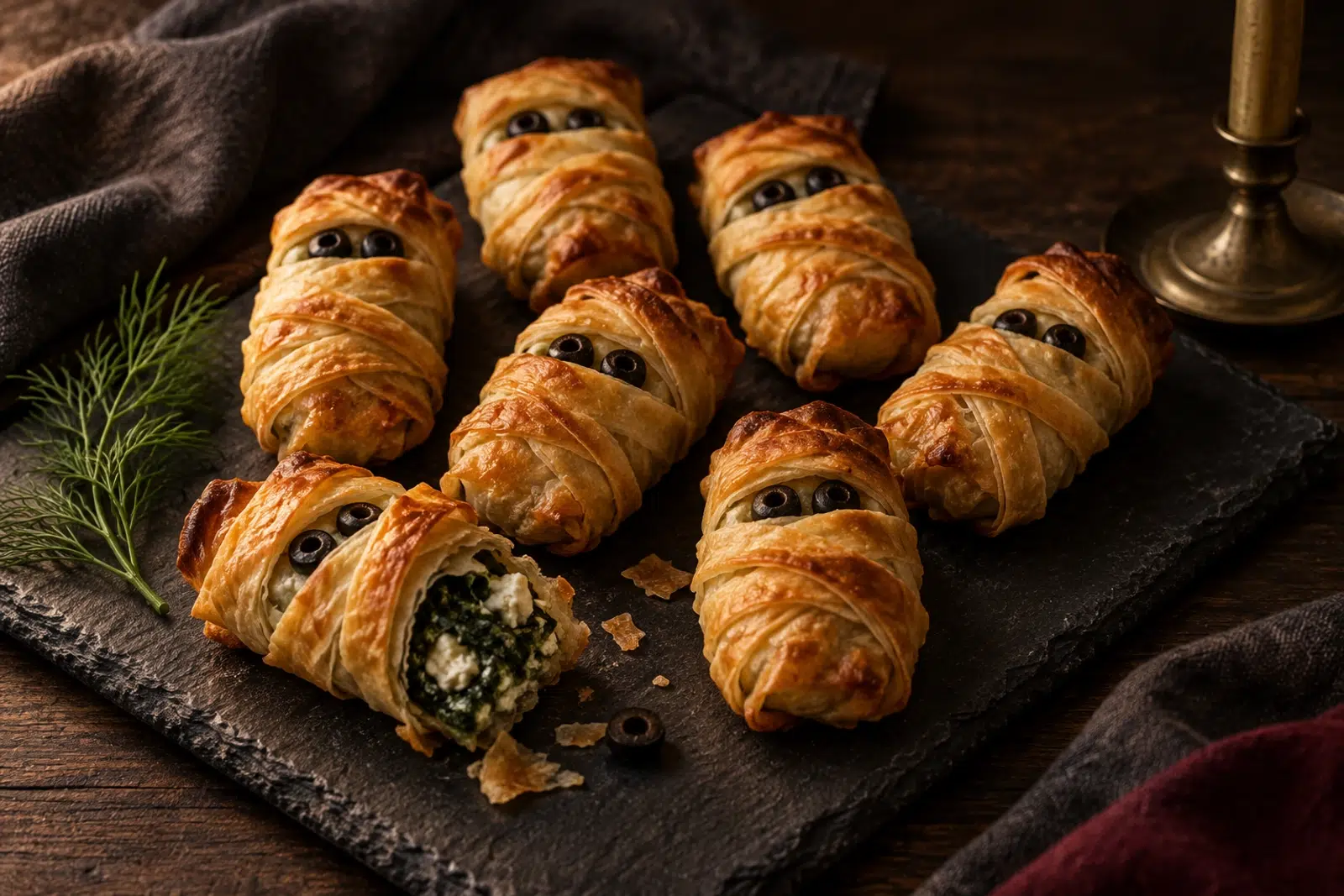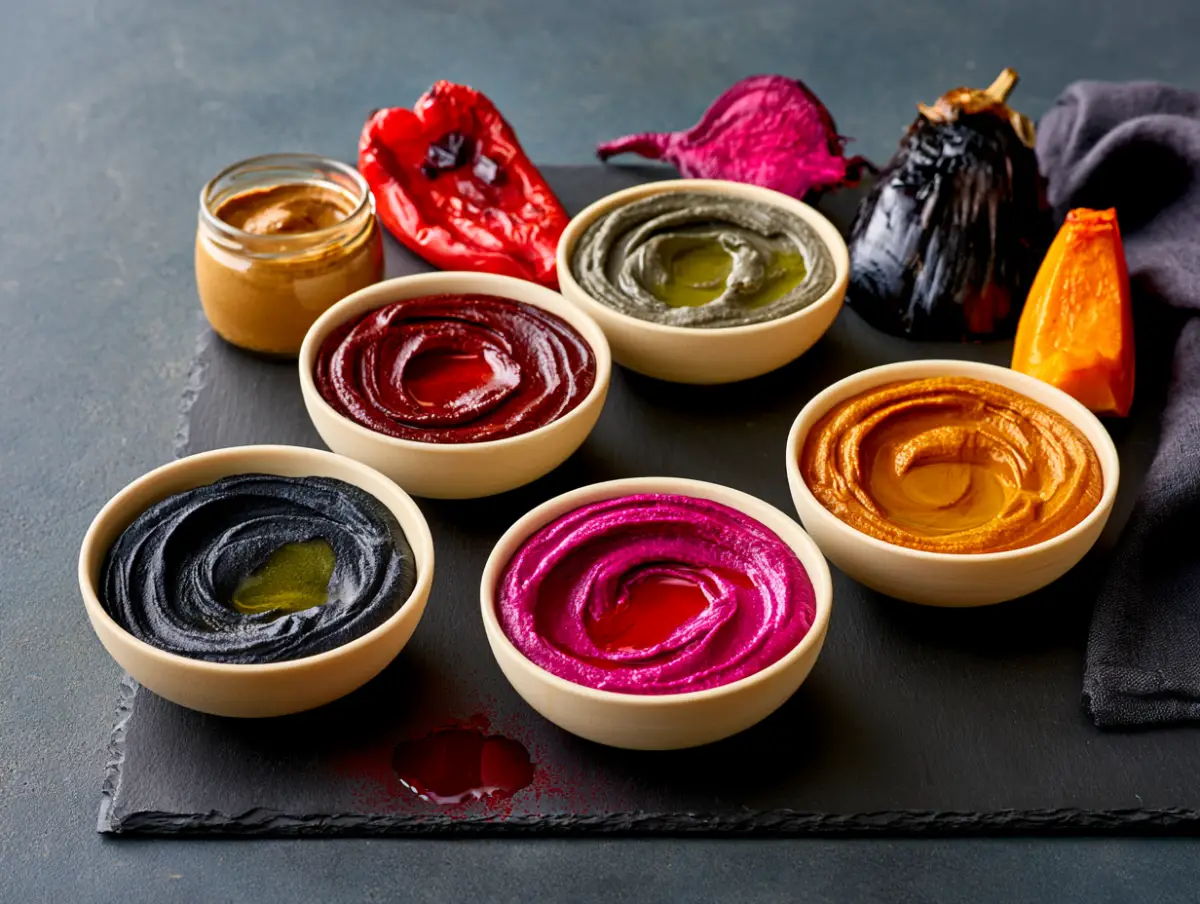
Natural Halloween food colouring is the goal here. Food colouring fails on camera, and it fails on the plate, and the second one is the reason I stopped using it.
On camera: dye is a single flat wavelength with no depth in it. Red gel photographs pink under warm kitchen light. Black gel photographs as a bruised purple-grey. Green reads like a highlighter. Put a dyed dish next to one coloured with actual food and the difference is immediate even to someone who could not tell you why.
On the plate: at the quantity needed to properly colour a dish, dye is genuinely bitter. Anyone who has scraped black frosting off a cupcake knows this.
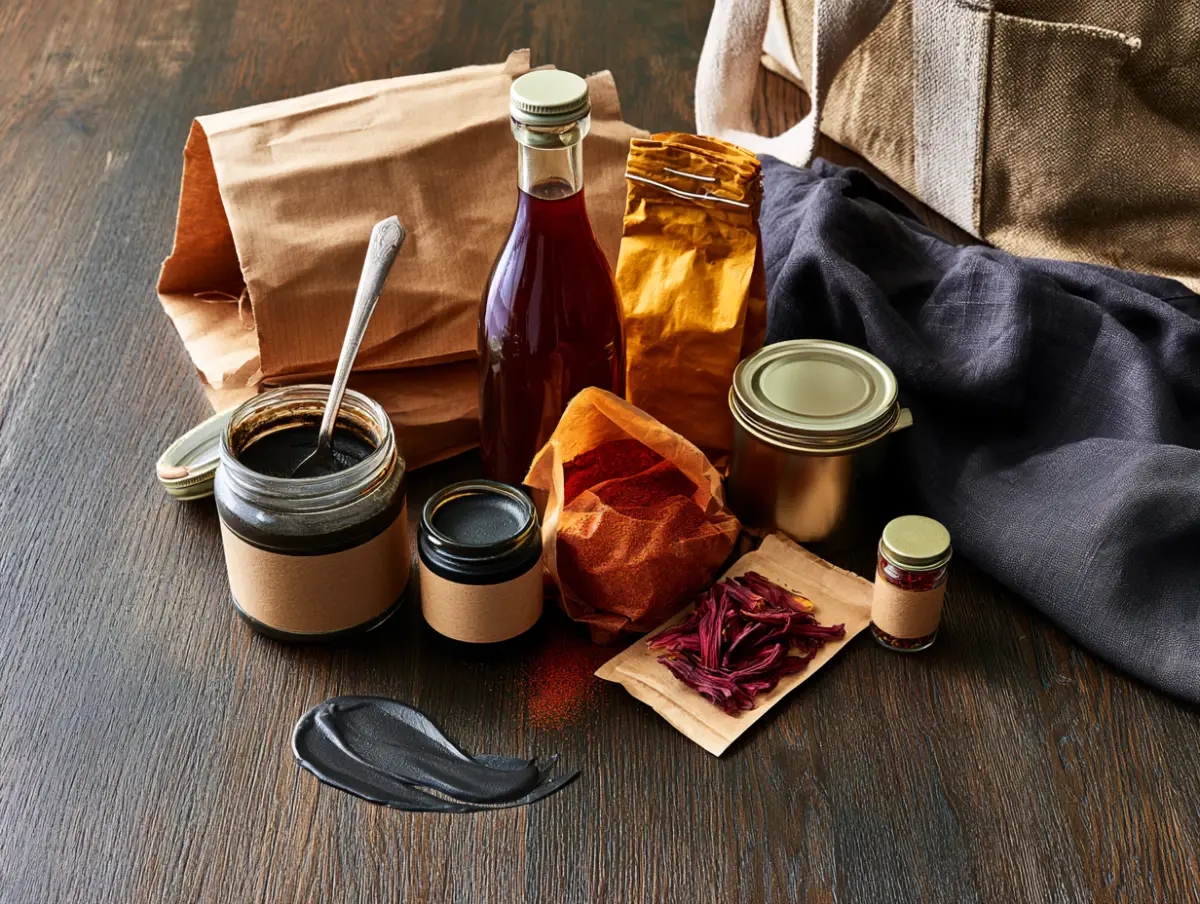
Everything below gets its colour from something you can eat on its own. It is more interesting, it tastes better, and it is a real differentiator — “no food colouring” is a claim almost no Halloween recipe site can make and mean.
Table of Contents
Table of Contents
The Complete Reference Table (Natural Halloween Food Colouring)
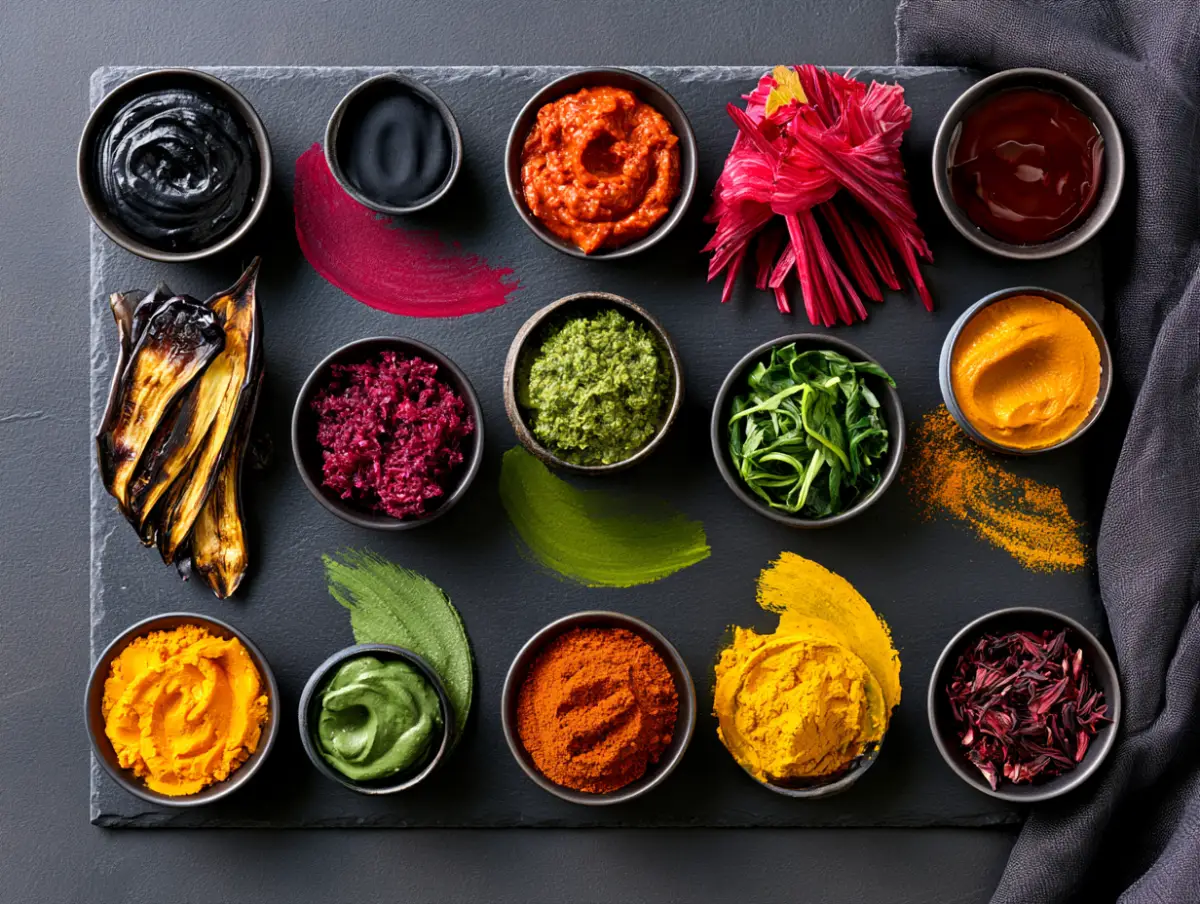
The page in one table. Amounts are per 500 g of the thing you are colouring.
| Colour you want | Use | How much per 500 g | Pigment | Flavour cost |
|---|---|---|---|---|
| True matte black | Black tahini | 60–80 g | Anthocyanin in the seed coat | Deeper, roasted, faintly bitter. An improvement. |
| Wet slate black | Squid ink | 1–2 tsp | Melanin | Briny and mineral, not fishy |
| Near-black (baking) | Dutch cocoa + dark dried fruit + cloves | 30 g cocoa | Mixed | Spiced and bitter — usually wanted |
| Oxblood red | Reduced roasted red pepper + pomegranate molasses + Aleppo | 200 g pepper, 1 tbsp molasses | Carotenoid + anthocyanin | Smoky, sweet-sour. Nothing lost. |
| Blood magenta | Roasted beetroot | 150–200 g | Betalain | Earthy. Needs acid to be edible. |
| Clear ruby (liquids) | Hibiscus, steeped strong | 15 g dried flowers | Anthocyanin | Tart and floral |
| Deep green | Blanched parsley + cilantro | 80–100 g | Chlorophyll | Grassy, fresh |
| Blue-green / colour-change | Simmered red cabbage liquid | As a third of the liquid | Anthocyanin | Faintly cabbage — must be sweetened and acidified |
| Burnt orange | Roasted pumpkin or hard-roasted carrot + smoked paprika | 200 g + 1 tsp | Carotenoid | Sweet. Needs extra salt and acid. |
Three rules apply across the whole table, and the first one is the one everybody gets wrong.
1. Acid does not do the same thing to every pigment
This is the single most repeated piece of wrong advice in natural-colour cooking — “add a squeeze of lemon to brighten it” — and it is only true of one pigment family. Worse, acid does two separable things: it can change a pigment’s hue, and it can change its stability. The four pigments on this page split differently on each:
| Pigment | Found in | Does acid change the hue? | Does acid protect it? | So what do you do |
|---|---|---|---|---|
| Anthocyanin | Red cabbage, purple carrot, hibiscus, black grape, pomegranate | Yes — red in acid, violet-blue near neutral, green then yellow as it goes alkaline | Yes — most stable at the acid end | Reach for lemon. This is the one that performs. |
| Betalain | Beetroot | No — it stays magenta | Yes — relatively stable in acid, degrades in alkaline | Keep it on the acid side and keep it cold, dark and covered |
| Carotenoid | Red pepper, pumpkin, carrot, paprika | No | No — pH-indifferent | Acid is purely for flavour. Deepen the colour by reducing instead. |
| Chlorophyll | Parsley, cilantro, basil, spinach | It destroys it — bright green to army drab | No, the opposite | Blanch and shock, and add the lemon last, off the heat |
So: reach for lemon to change a cabbage drink’s colour, keep a beet dip acidic to hold its colour, use lemon in a pepper drizzle purely for flavour, and keep it away from a herb sauce until the last second. Only one of the four rewards acid with a colour change — and it is the cabbage.
2. Heat dulls all four
This is the one rule that really is universal. Every pigment here goes browner and flatter the longer it is held hot, and with anthocyanin the pH-driven colour change is reversible while the heat damage is not. Cook as briefly as you can and cool things fast.
3. Fat carries some, water carries others
Carotenoids — pepper, pumpkin, paprika — dissolve in fat, so bloom them in oil. Anthocyanins and betalains — beetroot, cabbage, pomegranate — are water-soluble, so they go into the liquid phase and they will bleed. Solubility is not the same thing as pH-reactivity, which is where the confusion in the first rule comes from: beetroot and cabbage are both water-soluble, and only one of them changes colour with acid.
How to Get True Black
Ranked, honestly.
1. Black tahini — the right answer
Ground toasted black sesame seeds. Gives a genuine, dense, matte, light-absorbing black that is uniform through the whole dish rather than sitting on the surface.
It adds flavour rather than removing it: deeper, more roasted and slightly more bitter than white tahini, which suits savoury applications.
One nutrition note worth getting right. Black tahini is not simply “the same as tahini in a different colour.” Black sesame is normally ground with the hull on, and white tahini is usually made from hulled seed — and the calcium is concentrated in the hull. An unhulled paste therefore carries substantially more calcium than a standard hulled tahini, which is a real difference rather than a rounding error. If you see a calcium figure quoted for black sesame, do not transfer it to the hulled white tahini in your cupboard.
Downsides: costs roughly two to three times white tahini, and you almost certainly cannot buy it at a standard supermarket.
Best in: hummus, dips, sauces, savoury icings, halva. See it working in black tahini hummus →
2. Squid ink — the right answer for pasta and rice
A wet, slightly glossy slate-black, and it works in tiny quantities. One to two teaspoons blackens a whole batch of pasta.
It tastes briny and mineral rather than fishy, and that flavour is an asset in seafood pasta and a liability in a chickpea dip. Sold in small sachets or jars at Italian and Spanish delis and online, and it keeps for a long time refrigerated.
Best in: pasta, risotto, bread dough, white bean dips, aioli.
One allergen note: squid ink is a mollusc product and the allergenic protein is in the ink itself, not only in the body. It is not a colour, it is seafood — label it as such.
3. Activated charcoal — avoid it
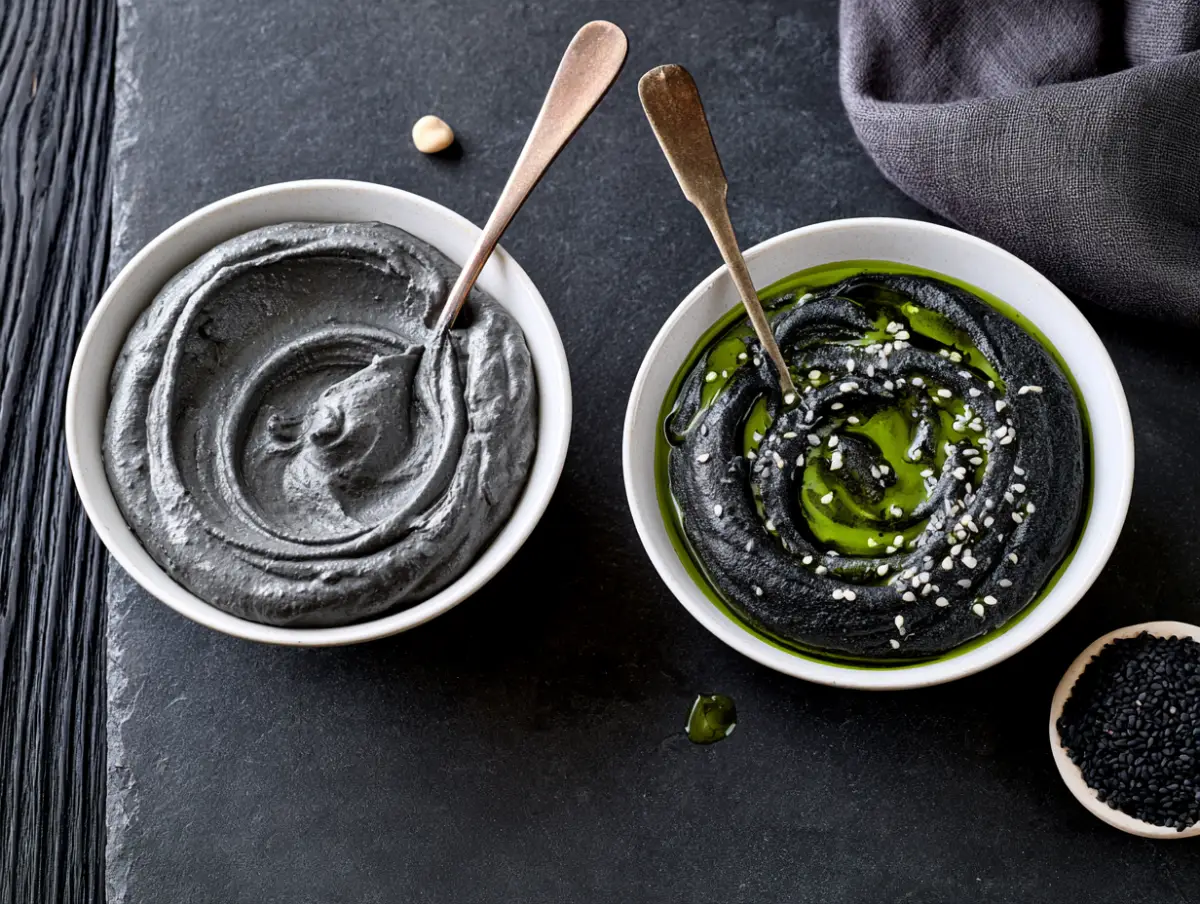
It does not produce black in a light-coloured base. It produces flat mid-grey, and getting anywhere near black requires so much that the texture noticeably suffers — it adds a dry, chalky, powdery mouthfeel that people describe without being able to name.
More importantly, there are two separate problems with it, and they get run together everywhere.
The first is regulatory, and it is not about your health. Activated charcoal is not an approved colour additive, which is what makes food containing it adulterated under US food law rather than any finding that it is harmful. New York City’s Health Department names activated charcoal in its guidance on adulterated foods as an example of a substance not approved to be added to food, and bars food service establishments from using it — that is the enforcement that emptied a lot of black ice cream cabinets in 2018. It is a rule for restaurants rather than for your kitchen, but it is worth knowing it exists and worth knowing what it is actually about.
The second is the reason I personally will not serve it. Activated charcoal is an adsorbent — that is its entire medical function — and it can bind to some medications in the gut and reduce their absorption, including oral contraceptives. This is not a dramatic risk at culinary quantities and I am not telling you it is dangerous. But a shared party dish goes to people whose medication I know nothing about, and there is a better ingredient that costs about the same and tastes of something.
Use black tahini instead.
4. Black food dye — the worst option
Commercial black gel is a high-concentration blend of several dyes. In a beige or cream base it does not read black, it reads bruised — a purplish charcoal that looks unmistakably like something with dye in it, and goes muddier under warm light. At the volume needed it is genuinely bitter.
Also worth knowing
Black sesame paste from an Asian grocery is chemically the same product as black tahini and works identically — but it is very frequently sweetened, sometimes heavily, because it is sold as a dessert filling. Read the label. If sugar is in the first three ingredients, keep looking.
Very dark cocoa plus dark dried fruit and spice gets you to near-black in baking without any dedicated colourant at all. This is how pan dei morti works.
How to Get Blood Red
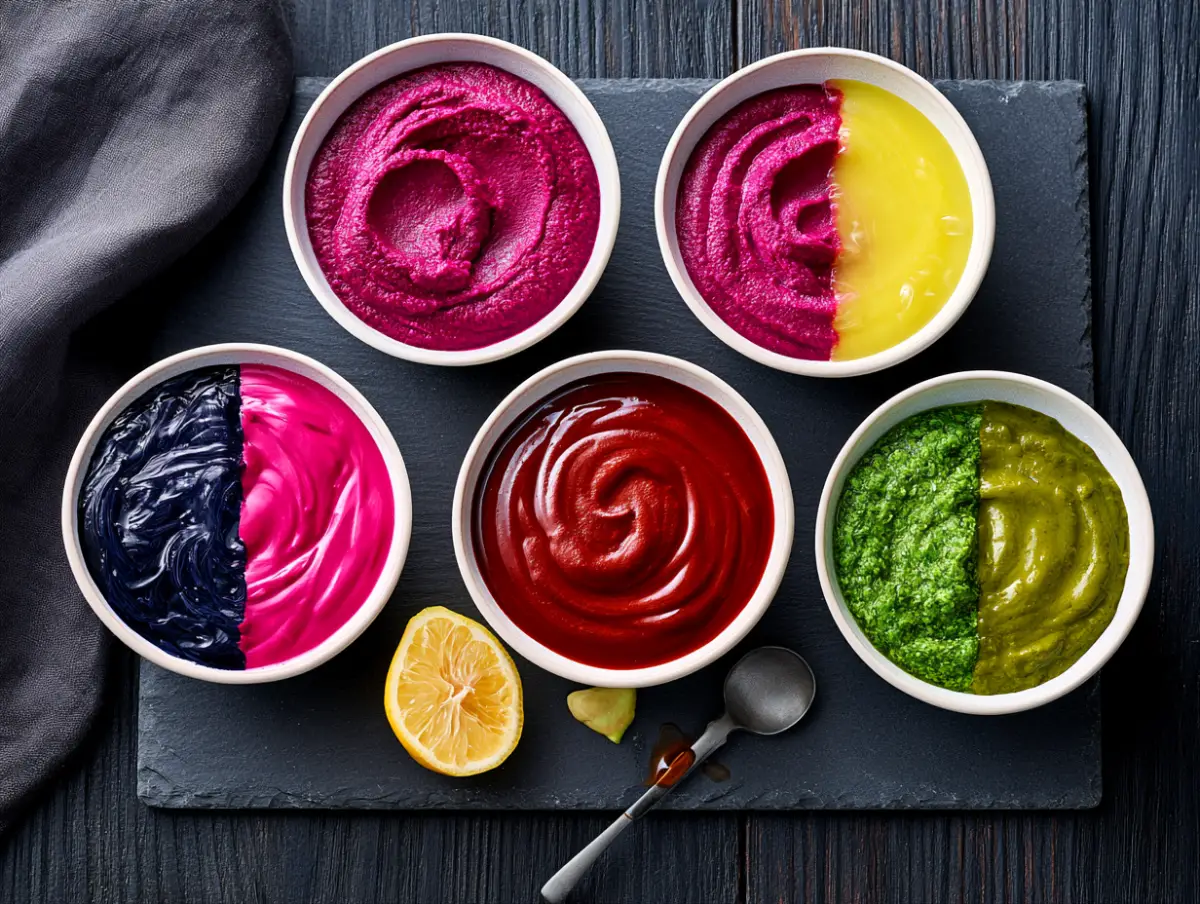
Getting true red right is where natural Halloween food colouring earns its keep. The trick with red is that no single ingredient gets you there. Dye is one flat red; real blood-red is layered, and you build it by stacking two or three pigments that sit at slightly different points on the spectrum.
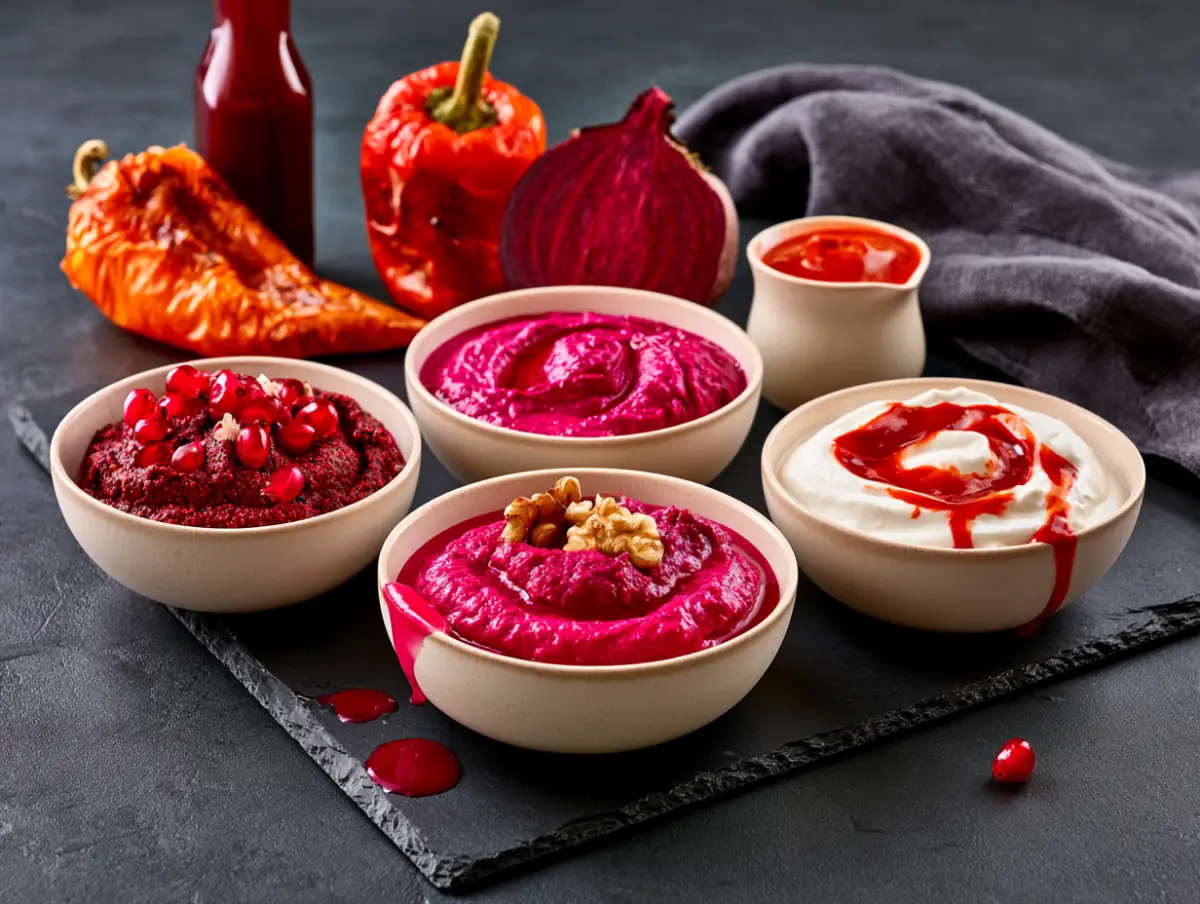
- Roasted red pepper is the base. Roasting concentrates the carotenoids as water cooks off, so roasted peppers are visibly deeper than raw. Reduce them further in a pan and the colour deepens again.
- Pomegranate molasses adds anthocyanins, which run red in acid conditions and push the mixture toward the purple end of brick. It also adds the sourness that makes red food taste like something rather than just look like it.
- Aleppo pepper brings a browner, drier red on top, and it is why muhammara reads as dried blood rather than as tomato.
- Beetroot is the other route entirely, and it goes somewhere different: a vivid magenta rather than a brick red. Roast it whole in its skin — boiling leaches the betalain straight into the water — and keep the finished dip on the acid side, which helps both the flavour and the pigment. What acid will not do is change the hue. A beet dip that has gone brown at the edges by nine o’clock was warm and lit, not under-acidified: betalain degrades with heat, light and oxygen. Keep it cold and covered and swap the bowl rather than topping it up.
- Tomato, reduced is the cheapest option and the least convincing. It goes orange-red and it is what everyone else uses.
- Hibiscus steeped in hot water gives a clear ruby that is beautiful in drinks and jellies and useless in anything opaque.
The consistency rule for drizzles. A red drizzle that sinks into a white base has to be reduced until it coats the back of a spoon and a finger-drawn line through that coating holds for two or three seconds. Too thin and it disappears into a pink haze; too thick and it sits on top like a lump. The bloody whipped feta page has the full method →
How to Get Deep Green
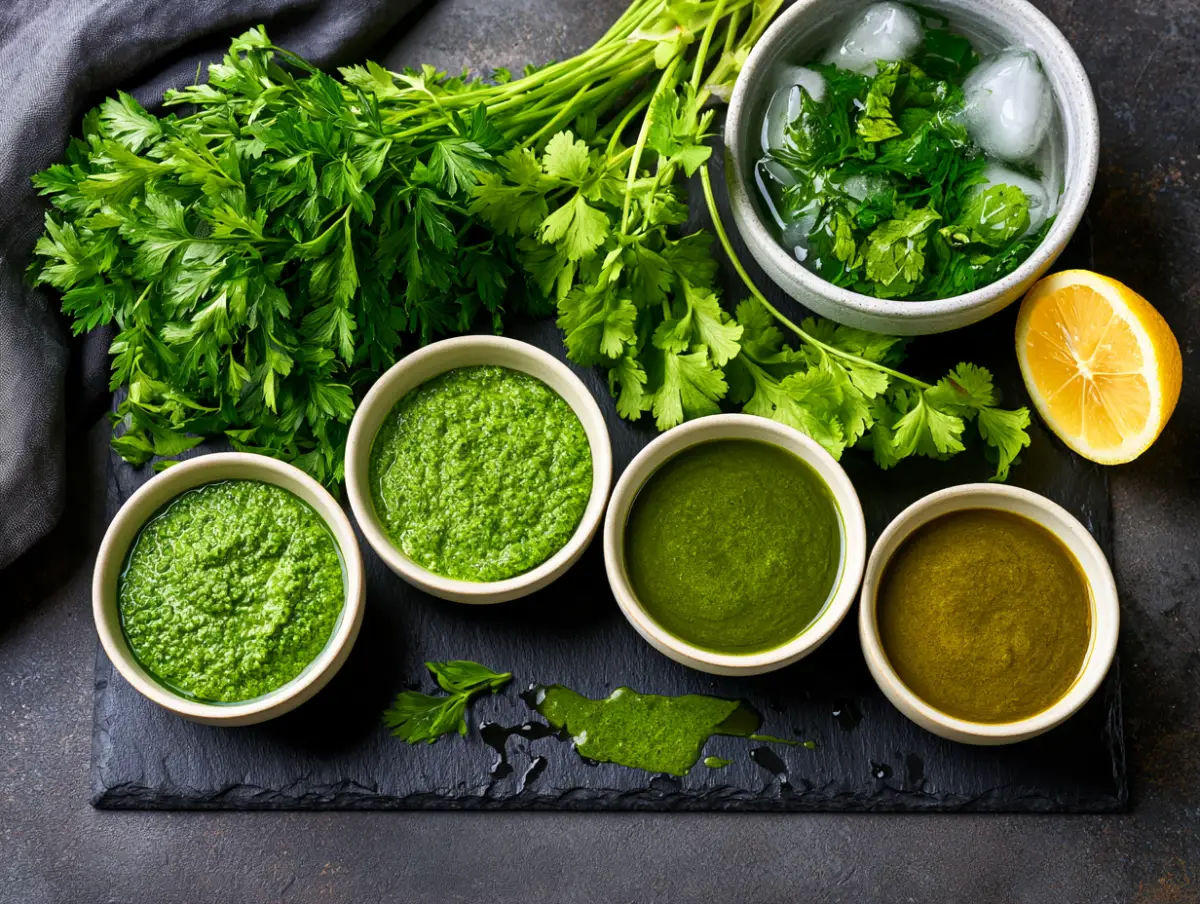
Green is the hardest of the four for natural Halloween food colouring, because chlorophyll is the least stable pigment in the kitchen. It degrades with heat, with acid and with time — acid strips the magnesium out of the molecule — going from bright green to army drab in about ninety seconds of the wrong treatment.
- Blanch and shock. Ten to fifteen seconds in boiling water, then straight into ice water. This deactivates the enzyme that breaks chlorophyll down and sets the colour for a day or two rather than an hour.
- Add acid last, off the heat. Lemon in a herb sauce is essential for flavour and fatal to the colour if it goes in early. Blend the herbs, then add the lemon at the end.
Sources, ranked by intensity: parsley and cilantro together give the strongest true green; spinach gives more colour per gram but a muddier tone; basil is beautiful and browns fastest; spirulina gives an intense blue-green in tiny amounts but tastes distinctly of pond; matcha gives a soft grey-green and works only in sweet applications.
For a genuinely unsettling green — which is what Halloween wants — blend blanched parsley and cilantro into tahini. It goes a flat, opaque, swamp-coloured green that looks considerably worse than it tastes, which is exactly right. Green tahini and zhoug are both in the dips roundup →
How to Get Orange Without Dye
The easy one.
Roasted pumpkin or butternut gives a deep burnt orange far darker than the raw vegetable, because roasting caramelises the sugars. Carrot roasted hard until the edges catch goes darker still. Sweet potato is the sweetest and the most orange.
Smoked paprika deepens any of them toward rust and adds smoke. Turmeric pushes toward yellow and turns medicinal fast — 2 to 4 g per 500 g is the ceiling.
The thing to avoid is bright orange. It is the generic Halloween colour, it is what a supermarket aisle looks like, and it fights every dark palette. Push orange toward rust and burnt terracotta and it sits beautifully on a dark board.
Red Cabbage: The One That Changes Colour in the Glass
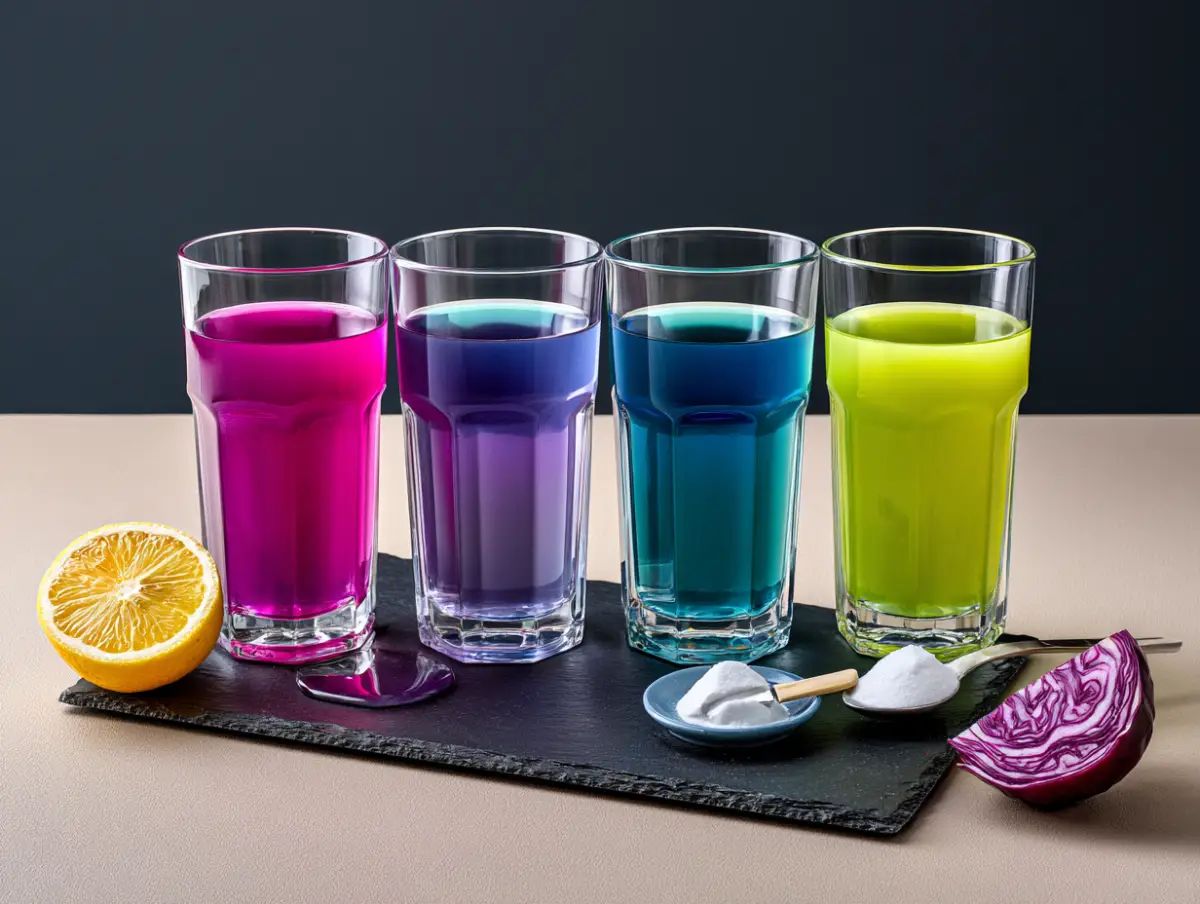
This is the best trick in natural Halloween food colouring and almost nobody in the food world uses it.
Red cabbage contains anthocyanins that are a genuine pH indicator. Not a styling trick, not an illusion — a real and reversible chemical reaction you can perform at a table. The anthocyanins sit in an equilibrium between several forms, and moving the pH moves which form dominates: red at the acid end, violet-blue around neutral, green and then yellow as it goes alkaline. Move the pH back and the colour comes back, which is what makes it a trick rather than a one-way reaction.
How to make the base. Roughly chop half a red cabbage, cover with water, simmer 15 minutes, strain and cool. You get a deep blue-purple liquid. It keeps a week in the fridge and freezes well in ice cube trays.
| Add | Direction | Colour you get | Holds? |
|---|---|---|---|
| Lemon or lime juice | Acid | Hot magenta-pink | Yes — anthocyanin is most stable at the acid end |
| Nothing | Near-neutral | Deep blue-purple | A few hours |
| A few grains of baking soda | Slightly alkaline | Blue-green, then teal | No — browns within minutes |
| More baking soda | Alkaline | Yellow-green | No — and it tastes soapy |
The party version. Put the blue-purple base in a glass. Add a squeeze of lemon at the table and it turns hot pink in front of the person holding it. That is the whole trick, it takes two seconds, and it is the most saveable single thing on this entire site.
Making it taste good is the actual work, because on its own the base tastes faintly of cabbage. Two approaches:
- Sweeten and acidify hard. A simple syrup with plenty of lemon covers it almost completely, and the acid is doing the colour work anyway.
- Blend it. Use the cabbage base as roughly a third of the liquid, with something assertive making up the rest — sparkling water and a strong fruit syrup, or a good lemonade. You still get the full colour range and none of the cabbage.
For the alkaline direction, use a genuinely tiny amount of baking soda — a few grains on the end of a knife. Too much tastes soapy and unpleasant.
And the green will not hold, which is the other reason it is a demonstration rather than a drink. Anthocyanins are at their most stable at the acid end and least stable at neutral and alkaline pH, so the blue-green you have just made starts degrading and browning almost immediately. Do the green direction in front of people and drink the pink one.
It also works outside drinks: in jelly or agar sets, in icing, and in a pasta dough (where the alkalinity of the dough itself will push it toward blue-green, which is genuinely strange and genuinely edible).
The Printable Reference Sheet
Natural Food Colour Reference
| Colourant | Colour produced | Per 500 g | Flavour impact | Best used in | Avoid in |
|---|---|---|---|---|---|
| Black tahini | True dense matte black | 60–80 g | Deeply roasted, nutty, faintly bitter | Hummus, dips, sauces, savoury icing | Anything delicate |
| Squid ink | Wet slate-black | 4–8 g (1–2 tsp) | Briny, mineral, marine | Pasta, rice, bean dips, bread | Sweet things, chickpea dips |
| Activated charcoal | Flat mid-grey | 5–10 g | Chalky, drying, no flavour | Nothing — see below | Everything |
| Roasted red pepper | Oxblood | 200 g, reduced | Smoky, sweet | Dips, sauces, drizzles | |
| Pomegranate molasses | Deepens red toward purple-brick | 20–30 g (1–1½ tbsp) | Sour-sweet, molasses-like | Dips, glazes, drinks | Delicate creams |
| Beetroot, roasted | Vivid magenta | 150–200 g | Earthy and sweet, needs acid | Dips, pasta dough, icing | Anything that boils long |
| Charred eggplant | Smoky grey-green | 300 g+ | Genuinely smoky, slightly bitter | Dips only | |
| Blanched herbs | Deep green | 80–100 g | Fresh, grassy, sharp | Sauces, tahini, doughs | Anything held hot |
| Spinach, blanched | Muted green | 100 g | Almost neutral | Doughs, pancakes, icing | |
| Roasted pumpkin | Burnt orange | 200 g | Sweet, earthy | Dips, soups, doughs | |
| Smoked paprika | Deepens orange to rust | 5–10 g | Smoky, warm | Dips, oils, rubs | Sweet things |
| Turmeric | Egg-yolk yellow | 2–4 g | Earthy, medicinal in quantity | Rice, doughs, drinks | Use sparingly |
| Hibiscus, steeped | Clear ruby | 15 g dried | Tart, cranberry-like | Drinks, syrups, jellies | |
| Red cabbage water | Blue-purple, and pH reactive | See below | Faintly cabbagey — use in drinks | Drinks, jellies, icing | Savoury dishes |
| Pigment | Where it is here | What acid does | What actually protects it |
|---|---|---|---|
| Anthocyanin | Red cabbage, pomegranate, hibiscus, purple carrot | Genuinely shifts the hue toward red and pink. A real, reversible reaction — and it protects the pigment too. | Cold, dark, and staying on the acid side |
| Betalain | Beetroot | Does not shift the hue — it stays magenta. But it does protect it: betalain is relatively stable in acid and degrades in alkali. | Cold, dark, and staying on the acid side. Roast whole in the skin, never boil |
| Carotenoid | Pepper, pumpkin, carrot, paprika | Nothing at all. Fat-soluble and not pH-reactive. | Reduction. Cooking the water off concentrates it |
| Chlorophyll | Parsley, cilantro, spinach, basil | Actively destroys it. Acid strips magnesium out of the molecule and it goes army-drab. | Blanch and shock, then add acid off the heat at the very end |
Where to Buy Everything
| Where | What | Notes |
|---|---|---|
| Middle Eastern and Turkish grocers | Black tahini, pomegranate molasses, Aleppo pepper, sumac, halva | Reliably the best prices and the best quality. Try here first for anything on this page. |
| Asian supermarkets | Black sesame paste, agar, matcha, a wider range of dried chiles | Check the sesame paste is unsweetened |
| Italian and Spanish delis | Squid ink, dried squid ink pasta, saffron, good smoked paprika | Ink keeps a long time refrigerated |
| Standard supermarkets | Beetroot, red cabbage, jarred roasted peppers, pumpkin, herbs, turmeric, hibiscus tea | Most of this page is available at any large grocery store |
| Online | Everything, at a premium | Worth it for black tahini and squid ink if you have no specialist shop nearby |
What to check on labels:
- Black tahini: ingredients should read “black sesame seeds,” possibly with salt. Sugar in the first three ingredients means it is a dessert paste.
- Pomegranate molasses: should be pomegranate juice concentrate, possibly with a little sugar or citric acid. Many supermarket bottles are mostly glucose syrup — those are sweet, pale and will not colour anything.
- Squid ink: cuttlefish or squid ink, salt, sometimes a little water. Small quantities are fine; you use very little.
Which Recipes Use What
A cross-reference, so you can see each technique working.
| Technique | Recipe | What to look at |
|---|---|---|
| Black tahini | Black Tahini Hummus | A true matte black in a pale base, and the three-minute blend that makes it silky |
| Reduced roasted pepper | Bloody Whipped Feta | The coat-the-back-of-a-spoon test for a drizzle that bleeds rather than sinks |
| Stacked red pigments | Muhammara Blood Dip | Carotenoid + anthocyanin + Aleppo, and why it darkens over two days |
| Cocoa, fruit and spice | Pan dei Morti | Near-black in baking with no dedicated colourant at all |
| Charred vegetable greys | The dips roundup | Baba ganoush, mutabal and the green tahini |
| The whole palette at once | Gothic Halloween Mezze Board | 80% dark, 20% cream and gold, assembled |
Frequently Asked Questions
How do I make food black without food colouring?
Black tahini — ground toasted black sesame — is the best option for dips, sauces and anything creamy. Squid ink is better for pasta, rice and bread. Very dark cocoa with dried fruit and spice gets you close in baking. Activated charcoal gives grey rather than black and adds a chalky texture.
Is activated charcoal safe to eat?
It is used in food and is not acutely harmful in small culinary quantities, but it is an adsorbent — that is its medical purpose — and it can bind to some medications in the gut and reduce their absorption, including oral contraceptives. It is also not an approved colour additive, and New York City lists it among the substances that make food adulterated. For a shared party dish where you cannot know what your guests take, black tahini is a better choice in every respect except price.
How do I make food blood red naturally?
Stack pigments rather than relying on one. Roasted red pepper reduced in a pan, plus pomegranate molasses, plus Aleppo pepper gives a layered oxblood that dye cannot reproduce. Roasted beetroot gives a brighter magenta instead. Add acid at the end — for flavour in every case, and for pigment stability in the beetroot and pomegranate ones. It will not change the hue of a pepper-based red at all.
Does squid ink taste fishy?
No. It tastes briny and mineral, like the smell of the sea rather than like fish. That flavour is an asset in pasta and seafood and a liability in a chickpea dip, so match it to the dish. It is a mollusc product, so it is a shellfish allergen — say so when you serve it.
Where can I buy black tahini?
Middle Eastern and Turkish grocers first, then Asian supermarkets where it is sold as black sesame paste — check it is unsweetened — then online. Expect to pay two to three times the price of white tahini.
Why does my beetroot dip go brown?
Heat, light and oxygen, in that order. Betalain is the least robust of the four pigments on this page. Roast the beets whole in their skins rather than boiling them, keep the cooking time as short as you can, keep the finished dip cold and covered, and keep it on the acid side — betalain is relatively stable in acid and degrades in alkaline conditions. A dip that browned during a party was warm and lit, not under-acidified.
Can I really change the colour of a drink with cabbage?
Yes, and it is a real chemical reaction rather than a trick. Red cabbage anthocyanins are a pH indicator — the simmered, strained liquid is blue-purple, turns hot magenta with lemon juice, and turns blue-green with a pinch of baking soda. Sweeten and acidify it well and it tastes considerably better than it sounds.
Sources and Further Reading
- Application of Red Cabbage Anthocyanins as pH-Sensitive Pigments in Smart Food Packaging and Sensors, Polymers (2022). On the reversible pH colour range this page is built around.
- Lukitasari, D. M., et al. (2024). pH-dependent stability of major betalains in encapsulated beetroot extracts. Journal of Food Science, 89(5).
- Red pepper (Capsicum annuum) carotenoids as a source of natural food colors, Journal of Food Science and Technology.
- NYC Department of Health and Mental Hygiene — Adulterated Foods (PDF).
- US Food and Drug Administration — The FASTER Act: Sesame Is the Ninth Major Food Allergen.