
The first time I bit into a sigara böreği was at a harbor-side café in Chania. I was nineteen, back from culinary school in Athens for the summer, and a Turkish fishing boat had docked near my grandfather’s taverna. The captain’s wife was frying something in a wide pan on the deck — thin pastry rolled into cigars, hitting hot oil with a hiss that cut through the sound of seagulls. She handed me one wrapped in a paper napkin. I burned the roof of my mouth. I didn’t care. Shatteringly crispy outside, molten salty cheese inside, a wisp of fresh mint somewhere in between. I stood there in the sun thinking: this is the greatest thing I’ve ever eaten.
Turkish sigara böreği with feta is exactly what it sounds like — cigar-shaped pastries filled with crumbled white cheese and herbs, rolled tight in thin yufka dough, and fried until golden. Across Turkey, they appear at breakfast tables, tea houses, and mezze spreads. In Greece, we have our own versions (my yiayia’s tiropitakia are close cousins), but there’s something about the simplicity of börek — that paper-thin dough, that clean salty filling — that I’ve never been able to improve on. Only honor.
I’ve made these well over a hundred times since that dock in Chania. Below is every technique, every trick, and the one mistake that will absolutely ruin them (so you can avoid it). Let’s fry.
Table of Contents
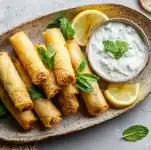
Turkish Sigara Böreği with Feta: 4 Stunningly Crispy Tips
- Total Time: 40 minutes
- Yield: 20–24 pieces (serves 6–8 as appetizer) 1x
Description
Golden, shatteringly crispy cigar-shaped pastries filled with crumbled feta, fresh parsley, and mint, rolled in yufka dough and shallow-fried. A classic Turkish appetizer perfected with a Cretan olive oil touch.
Ingredients
For the Filling:
250 g (9 oz / about 1½ cups) feta cheese, crumbled
½ cup (25 g) flat-leaf parsley, finely chopped
2 Tbsp (5 g) fresh mint, finely chopped
1 large egg
1 tsp Aleppo pepper flakes (optional)
¼ tsp freshly ground black pepper
For Assembly & Frying:
6 sheets yufka dough (or 12 sheets phyllo, stacked in pairs)
1 Tbsp all-purpose flour + 2 Tbsp water (sealing paste)
About 2 cups (480 ml) sunflower or avocado oil for frying
Flaky sea salt and Aleppo pepper for finishing
For Serving:
Lemon wedges, fresh mint sprigs, tzatziki sauce
Instructions
1. Mix filling: crumble feta by hand, fold in parsley, mint, Aleppo pepper, black pepper, and egg. Do not over-mix.
2. Prepare dough: cut yufka into quarters (or cut phyllo into 5” × 12” strips, stack two). Keep under a damp towel. Mix flour-water paste.
3. Roll: place 1–1.5 Tbsp filling along wide edge, fold bottom up, fold sides in, roll into tight cigar. Seal edge and ends with paste.
4. Chill: refrigerate assembled rolls 15 min (optional but recommended).
5. Heat oil to 340–350°F (170–175°C) in a heavy skillet (¾ inch / 2 cm deep).
6. Fry 4–5 at a time, seam-side down, 60–90 sec per side until deep golden (2–3 min total).
7. Drain on wire rack. Season with flaky salt and Aleppo pepper while hot.
8. Serve immediately with lemon wedges and tzatziki.
Notes
Storage:
Unfried rolls keep 24 hrs in fridge or 2 months in freezer. Fry from cold or frozen (add 1 min). Fried leftovers re-crisp at 350°F (175°C) for 5–7 min.
Make ahead:
Best make-ahead appetizer. Assemble, freeze on a tray, bag, and fry on demand.
Key substitutions:
Phyllo (doubled) for yufka; ricotta salata for feta; cornstarch slurry for egg; baked at 400°F (200°C) 15–18 min instead of fried.
Serving ideas:
Pair with authentic hummus, traditional Greek salad, and creamy labneh for a full mezze spread. Serve alongside warm pita bread and a drizzle of hot Aleppo oil.
- Prep Time: 25 minutes
- Cook Time: 15 minutes
- Category: Mediterranean Bread, Side Dishes & Appetizers (Easy Recipes)
- Method: Pan-frying
- Cuisine: Turkish / Mediterranean
Nutrition
- Serving Size: 3 pieces
- Calories: 245 kcal
- Sugar: 1 g
- Sodium: 380 mg
- Fat: 16 g
- Saturated Fat: 5 g
- Unsaturated Fat: 10 g
- Trans Fat: 0 g
- Carbohydrates: 17 g
- Fiber: 1 g
- Protein: 8 g
- Cholesterol: 40 mg
Why This Sigara Böreği Recipe Stands Out
The Double-Seal Technique That Prevents Bursting
The number-one failure with fried börek is blowouts — the pastry splits open in the oil, the cheese leaks out, and you’re left with a greasy, deflated disappointment. Most recipes tell you to “roll tightly.” That’s not enough. I use a double-seal method: a thin paste of flour and water brushed along the final edge and the tucked ends, creating a starch glue that bonds to itself when it hits the oil. Harold McGee notes in On Food and Cooking that wheat starch gelatinizes rapidly between 140–160°F (60–71°C), meaning your seal sets in the first seconds of frying, long before the cheese melts enough to push outward. The result? Zero blowouts. I haven’t lost a single börek to bursting in years.
Flavor Profile & Best Occasions
These crispy feta pastries deliver in layers: first the audible crunch of shattering yufka, then the creamy, salty rush of warm feta mixed with fresh herbs, and finally a gentle heat from Aleppo pepper flakes if you’ve added them. They’re absurdly addictive. Serve them as a Turkish appetizer alongside tea, as part of a Mediterranean mezze spread, or — honestly — standing at the stove eating the first three before anyone else knows they’re done. (I’m not proud of this. I’m also not going to stop.)
This crispy cheese börek is the kind of dish that earns you a reputation. Bring them to a gathering and people remember.
The Story Behind Sigara Böreği
From Ottoman Palace Kitchens to Street Food
Börek — the broad family of filled pastries that sigara böreği belongs to — traces back to the Central Asian Turkic peoples and was elevated to an art form in the kitchens of the Ottoman Empire. The word sigara means “cigarette” in Turkish, describing the slender rolled shape. In Turkey today, these savory Turkish pastries are everywhere: sold by street vendors in Istanbul’s Beyoğlu district, served at elaborate breakfast spreads (kahvaltı), and offered at every tea garden from Ankara to Antalya. They’re traditionally made with beyaz peynir (Turkish white cheese), which is remarkably similar to Greek feta.
How Börek Found a Home in My Greek Kitchen
Greek and Turkish cuisines share a pantry, a history, and a love for pastry-wrapped cheese. My yiayia would never have called her tiropitakia “börek,” but she’d have recognized the technique instantly. When I started experimenting with the thinner Turkish yufka dough instead of phyllo, she watched me with raised eyebrows and then tasted one. Long pause. “It’s different,” she said. Then she ate four more. In my Chania kitchen, these two traditions live side by side — and this recipe is where they meet.
Essential Ingredients for Sigara Böreği
Core Ingredients
The beauty of this Turkish cheese roll recipe is its short ingredient list. Every item matters, so quality is everything. When I was apprenticing at Varoulko, the chef drilled one idea into me: “With five ingredients, there’s nowhere to hide.” That applies perfectly here.
| Ingredient | Amount | Why It Matters | Authentic Pick | Substitution |
| Yufka dough (or phyllo) | 6 sheets (about 300 g / 10.5 oz) | Ultra-thin wrapper; shatters when fried | Turkish yufka rounds (frozen section) | Phyllo dough sheets, thawed |
| Feta cheese, crumbled | 250 g (9 oz / about 1½ cups) | Salty, tangy, creamy filling base | Turkish beyaz peynir or Greek barrel feta | Ricotta salata or halloumi (drier) |
| Fresh flat-leaf parsley | ½ cup (25 g), finely chopped | Freshness that cuts through the richness | Flat-leaf, not curly | Fresh dill or cilantro |
| Fresh mint leaves | 2 Tbsp (5 g), finely chopped | Aromatic lift; classic Turkish pairing | Spearmint | 1 tsp dried mint (less vibrant) |
| Egg (for filling binding) | 1 large | Binds crumbled cheese so it stays inside | Room temperature | 1 Tbsp cornstarch slurry (for egg-free) |
| Aleppo pepper flakes | 1 tsp (optional) | Fruity warmth, no harsh bite | Pul biber | ½ tsp sweet paprika + pinch cayenne |
| Neutral frying oil | About 2 cups (480 ml) for shallow fry | High smoke point; clean fry | Sunflower or avocado oil | Vegetable or canola oil |
| Flour-water paste | 1 Tbsp flour + 2 Tbsp water | The seal that prevents blowouts | All-purpose flour | GF flour works identically |
A note on the cheese: I buy sheep’s-milk feta in brine from the Mediterranean grocery near my Athens apartment. It’s tangier and creamier than cow’s-milk versions, and it crumbles beautifully without turning pasty. If your feta is very wet, drain it in a fine-mesh sieve for 10 minutes before crumbling. Excess moisture is the enemy of a crispy börek.
Dietary Substitutions & Pro Tips
| Dietary Need | Replace | With | Notes |
| Gluten-free | Yufka / phyllo dough | GF spring roll wrappers or rice paper (soaked 5 sec) | Slightly different texture; still delicious fried |
| Dairy-free / vegan | Feta cheese + egg | Firm tofu crumbled with nutritional yeast + lemon zest | Season well; add extra herbs |
| Egg-free | 1 egg in filling | 1 Tbsp cornstarch mixed with 2 Tbsp water | Binds filling nearly as well |
| Baked (not fried) | Shallow frying | Brush with olive oil, bake 400°F (200°C), 15–18 min | Less crispy but lighter; still good |
Pro Tip: If using phyllo instead of yufka, cut each sheet into thirds lengthwise and stack two strips together for each roll. Single-layer phyllo tears too easily; double-layer gives you that snappy crunch without being doughy. I tested single, double, and triple layers — double wins.
Equipment & Kitchen Setup
Tools for Perfect Börek
You don’t need specialty equipment, but a few things make the process smoother. My yiayia fried everything in a battered copper pan she’d had since before I was born. A good heavy skillet does the same job.
| Traditional Tool | Modern Alternative | Why It Matters |
| Wide copper frying pan | 12-inch (30 cm) cast-iron or stainless skillet | Even heat; fits 4–5 börek at a time without crowding |
| Spider skimmer | Slotted spoon or tongs | Lifts börek gently without piercing |
| Öklün (Turkish rolling pin) | Standard rolling pin or smooth dowel | For stretching yufka thinner if needed |
| Wire cooling rack over sheet pan | Paper towel–lined plate | Drains excess oil; keeps bottoms crisp |
Mise en Place & Workspace
Set up an assembly line before you start rolling — this is critical. Once the dough is out, it dries fast. Lay out: a damp kitchen towel (to cover unused dough), your filling bowl, the flour-water paste with a small brush, a clean dry surface for rolling, and your lined drain rack. Have the oil heating in the skillet while you roll the last batch. Temperature target: 340–350°F (170–175°C). Use a thermometer. Guessing oil temp is how you get börek that are either soggy (too cool) or burnt (too hot). I’ve learned this from painful experience.
Step-by-Step Sigara Böreği Instructions
Preparation (Steps 1–4)
Step 1: Make the filling. In a medium bowl, crumble the feta cheese by hand into small, uneven pieces — not powder, not chunks. You want texture. Add the chopped parsley, mint, Aleppo pepper flakes (if using), and a crack of black pepper. Crack in the egg and fold everything together with a fork until just combined. Do not overwork it. The mixture should look rough and rustic, not like a smooth paste.
Why it matters: Over-mixed filling becomes dense and gummy when heated. Leaving it textured means you get pockets of pure feta alongside herby bites.
Yiayia’s Tip: “Taste the cheese before you add salt. Good feta is already salty — if you salt again, you’ll regret it.” (She was right. I’ve over-salted exactly once, and nobody let me forget it.)
Step 2: Prepare the dough. If using yufka rounds, cut each into 4 equal triangular wedges. If using phyllo, cut sheets into strips about 5 inches (13 cm) wide and 12 inches (30 cm) long, then stack two strips together. Keep all prepared dough under a damp towel. Mix your flour-water paste in a small bowl until smooth — it should have the consistency of thin glue.
Why it matters: Yufka and phyllo dry out within minutes of being exposed to air. Dry dough cracks. Cracked dough leaks. The damp towel is non-negotiable.
Step 3: Roll the börek. Take one dough piece, lay it with the wide end toward you. Place about 1½ tablespoons of filling in a line along the wide bottom edge, leaving ¾ inch (2 cm) clear on each side. Fold the bottom edge up over the filling, then fold both sides inward (like wrapping a burrito). Now roll away from you into a tight cigar shape. Brush the final edge with flour-water paste and press gently to seal. Brush a thin line of paste over both tucked ends. Set seam-side down on a tray. Repeat.
This is where the double-seal technique matters. Don’t skip the end-sealing — that’s where blowouts happen.
Yiayia’s Tip: “Roll them tight like you’re wrapping a gift you care about. Loose rolls open in the pan.”
Step 4: Heat the oil. Pour oil into your skillet to a depth of about ¾ inch (2 cm). Heat over medium to 340–350°F (170–175°C). Drop in a tiny scrap of dough to test — it should sizzle immediately and turn golden in about 15 seconds. If it browns instantly, the oil is too hot; if it just sits there, too cool.
Frying & Assembly (Steps 5–10)
Step 5: Fry in batches. Carefully lay 4–5 rolled sigara böreği seam-side down into the hot oil. Don’t crowd the pan — crowding drops the oil temperature and produces soggy, greasy pastry instead of crispy feta pastry. Fry undisturbed for 60–90 seconds until the bottom is deep golden.
Step 6: Turn and finish. Using tongs or a spider, gently roll each börek to fry the other side, another 60–90 seconds. The total fry time is about 2–3 minutes. You’re looking for an even, deep golden-brown color all around. Golden. Crispy. Perfect.
Step 7: Drain properly. Transfer to a wire rack set over a sheet pan (not directly onto paper towels — the steam gets trapped underneath and softens the bottom). Let them rest for 2 minutes. The cheese inside is volcanic. I speak from scorched experience.
Step 8: Maintain oil temperature. Between batches, let the oil come back up to 340°F (170°C). This takes about 30–45 seconds. Skim any floating dough bits with your spider — burnt crumbs make the oil bitter and speckle your börek.
Step 9: Season immediately. While still hot, give the fried börek a whisper of flaky sea salt and a light sprinkle of Aleppo pepper. The residual oil on the surface grabs the seasoning beautifully. This is a technique I picked up during my Varoulko apprenticeship — season when the surface is still tacky.
Step 10: Plate and serve. Arrange on a warm platter with lemon wedges, a small bowl of tzatziki sauce for dipping, and sprigs of fresh mint. Serve immediately. Sigara böreği waits for no one — they’re best within 10 minutes of frying, when the contrast between the shattering crust and molten cheese is at its peak.
Pro Tip: Fry one test börek before committing the whole batch. Check the seal, the oil temp, the filling consistency. It takes 3 minutes and saves you from discovering a problem on börek number twenty. As J. Kenji López-Alt writes in The Food Lab: always run a pilot.
The Secret Touches
Insider Techniques for the Crispiest Börek
These are the refinements that separate a great sigara böreği from a merely good one.
1. The Dry-Cheese Rule. If your feta is swimming in brine, drain it for 10 minutes in a sieve, then pat dry with a paper towel. Excess moisture turns to steam inside the pastry, which pushes outward and causes blowouts or creates soggy pockets. Dry cheese = crispy börek. Every time.
2. The Cold-Fill, Hot-Oil Contrast. Keep your rolled, sealed börek in the refrigerator for 15 minutes before frying. The cold filling firms up, giving the outer dough a head start on crisping before the cheese melts. This is the same principle behind twice-fried French fries — temperature differential is your friend (The Food Lab, J. Kenji López-Alt).
3. The Gentle First Minute. When the börek first hit the oil, don’t touch them for a full 60 seconds. Let the seal set and the bottom layer crisp. Moving them too early risks tearing the soft, still-hydrated dough. Patience.
4. The Wire-Rack Drain. Never drain fried pastries flat on paper towels. The trapped steam softens the bottom crust. A wire rack lets air circulate on all sides, keeping every surface crisp. I learned this the hard way at my grandfather’s taverna, where a mountain of paper-towel-drained fritters went from crispy to chewy in about four minutes.
Common Mistakes to Avoid
| Mistake | What Happens | How to Fix It |
| Oil not hot enough (<320°F / 160°C) | Börek absorb oil; greasy and heavy | Use a thermometer; maintain 340–350°F (170–175°C) |
| Overfilling the rolls | Filling bursts out during frying | Use 1–1.5 Tbsp per roll; leave ¾ inch (2 cm) on sides |
| Skipping the flour-water seal | Pastry unrolls in oil; cheese escapes | Always brush the final edge and both ends |
| Crowding the pan | Temperature drops; börek steam instead of fry | Fry max 4–5 at a time; wait for oil to recover between batches |
| Not draining on a wire rack | Bottom gets soggy from trapped steam | Always use a rack over a tray; never flat on paper towels |
Variations & Serving Ideas
Regional Twists & Modern Adaptations
In Turkey, fillings vary wildly by region. In the Aegean, you’ll find sigara böreği with mashed potato and herbs. In southeastern Turkey, spiced ground lamb is popular (use beef if you prefer). Some cooks mix feta with ricotta for a creamier filling. My Cretan twist: I sometimes fold in a tablespoon of finely chopped horta (wild greens) that I’ve sautéed with garlic, which adds an earthy bitterness that plays beautifully against the salty cheese. It’s reminiscent of our spanakopita filling in cigar form.
For a weeknight shortcut, skip the frying entirely. Brush assembled börek with olive oil, arrange on a parchment-lined baking sheet, and bake at 400°F (200°C) for 15–18 minutes. Not as shatteringly crispy, but still golden and delicious — and much less cleanup.
Want to try air-frying? Spray lightly with oil and cook at 375°F (190°C) for 8–10 minutes, turning once. Surprisingly close to the real thing.
What to Serve Alongside
Build a full mezze table: these Turkish cheese rolls shine next to authentic hummus, baba ganoush, and a bright fattoush salad. The creamy dips contrast with the crunchy pastry perfectly. For a Greek-Turkish crossover spread, add a plate of stuffed grape leaves and a bowl of marinated olives.
Our tzatziki sauce is the natural dipping sauce — cool yogurt against warm, crispy börek is one of life’s great pairings. You could also offer a squeeze of lemon and a drizzle of hot Aleppo pepper oil.
For drinks, strong Turkish-style tea is traditional. I also love these with cold sparkling water infused with mint leaves, tsai tou vounou (Greek mountain tea) served iced in summer, or a tall glass of homemade lemonade. Ayran — that salted yogurt drink — is another excellent match.
Storage & Make-Ahead Tips
How to Store Sigara Böreği
| Method | Container | Duration | Notes |
| Refrigerator (unfried) | Single layer on tray, covered with plastic | Up to 24 hours | Best make-ahead method; fry from cold |
| Freezer (unfried) | Single layer on tray, freeze, then bag | Up to 2 months | Fry from frozen; add 1 min to cook time |
| Refrigerator (fried) | Airtight container, paper towel between layers | Up to 2 days | Re-crisp in oven 350°F (175°C) for 5–7 min |
| Room temp (serving) | Wire rack / open platter | 30–45 minutes max | Eat quickly; they lose crispness as they cool |
This is one of the best make-ahead appetizers I know. Assemble the sigara böreği with feta, freeze them on a tray, then transfer to a freezer bag. When guests arrive, fry directly from frozen — no thawing needed. Just add about one extra minute of fry time.
Reheating for Maximum Crispness
If you have leftover fried börek (a rare occurrence in my house), the best way to restore crispness is a 350°F (175°C) oven for 5–7 minutes on a wire rack. The oven’s dry heat drives out any residual moisture and re-crisps the exterior. Do not microwave them — microwaves turn crispy pastry into a sad, rubbery tube. (I’m being dramatic, but not wrong.) Before serving reheated börek, hit them with another squeeze of lemon juice and a pinch of flaky salt. Fresh herbs on top — a few torn mint leaves — makes them look and taste newly made.
Frequently Asked Questions
Substitutions & Technique
Can I use phyllo dough instead of yufka?
Absolutely. Cut phyllo sheets into strips about 5 inches (13 cm) wide and stack two strips together for each roll. Single-layer phyllo tears too easily in the oil; double-layer gives you that shatteringly crispy shell. Brush a tiny bit of olive oil between the two layers to help them bond. The result is very close to yufka-based Turkish cheese rolls.
Can I bake sigara böreği instead of frying?
Yes. Brush assembled rolls with olive oil, place on a parchment-lined tray, and bake at 400°F (200°C) for 15–18 minutes until golden. They won’t be quite as shattering-crispy as fried, but they’re lighter and still excellent. Turn them once halfway through for even browning.
How do I prevent the filling from leaking?
Three things: don’t overfill (1–1.5 tablespoons per roll), leave ¾ inch (2 cm) clear on the sides before folding, and use the flour-water paste to seal the edge and both ends. Then refrigerate for 15 minutes before frying. The cold sets the cheese so it doesn’t melt before the seal crisps.
What oil is best for frying börek?
Use a neutral, high-smoke-point oil: sunflower, avocado, or vegetable. Olive oil has too low a smoke point for deep frying and will impart a flavor that competes with the feta. Keep the temperature steady at 340–350°F (170–175°C). A thermometer is your best friend here.
Dietary, Make-Ahead & Authenticity
Is sigara böreği authentic Turkish?
Completely. Sigara böreği is a staple across Turkey — served at breakfast, with tea, and as a savory Turkish pastry at celebrations. My version uses Greek feta, which is essentially interchangeable with Turkish beyaz peynir. The technique (thin yufka, cigar roll, shallow fry) is entirely traditional.
Can I make sigara böreği ahead of time?
This is one of the best appetizers for advance prep. Assemble the rolls completely, arrange on a parchment-lined tray, cover, and refrigerate up to 24 hours or freeze up to 2 months. Fry directly from cold or frozen — add an extra minute for frozen rolls. The crispy feta pastry comes out just as good.
Are these the same as Greek tiropitakia?
They’re close cousins. Greek tiropitakia use phyllo dough and are sometimes triangle-shaped rather than cigar-shaped. The filling is similar — feta and herbs — though the Greek version sometimes adds egg and a touch of nutmeg. Both traditions share Ottoman roots, and honestly, they’re both delicious. See our tiropita recipe for the Greek take.
Can I make these vegan?
Yes. Replace the feta with firm tofu crumbled and seasoned with nutritional yeast, lemon zest, and salt. Use a cornstarch slurry instead of egg for binding. The rolling and frying technique stays exactly the same. Season the filling generously — tofu absorbs less flavor than cheese, so push the herbs and pepper.
How many börek does this recipe make?
About 20–24 cigar börek, depending on how large you roll them. With 6 sheets of yufka cut into quarters, you get 24 wrappers. I typically plan 3–4 per person as an appetizer, which means this batch comfortably serves 6–8.
A Taste of the Mediterranean at Home
Bringing the Mediterranean to Your Kitchen
Every time I drop a rolled börek into sizzling oil and hear that first sharp hiss, I’m back on that dock in Chania, nineteen years old, tasting one for the first time. That’s what food does — it collapses time. Turkish sigara böreği with feta is one of the simplest recipes I make, and one of the most powerful. A few ingredients, a little technique, and suddenly your kitchen smells like an Istanbul tea house and a Cretan taverna at the same time.
Make these. Share them. Take a photo of your platter and send it my way — I want to see your rolls, your spreads, your kitchen messes. And if your first few börek look crooked? Welcome to the club. My yiayia’s looked perfect. Mine still don’t. They taste the same.
More Recipes to Explore
If you loved these crispy feta rolls, our spanakopita takes the same cheese-and-pastry love story in a different direction — layers of buttery phyllo with spinach and feta. For a heartier spread, try our shakshuka alongside leftover börek for an incredible breakfast. Build the full mezze table with homemade falafel and a bowl of Mediterranean lentil soup on the side. And for another filled-and-wrapped favorite, don’t miss our stuffed grape leaves — grape leaves stuffed with herbed rice that pair beautifully with börek on the same platter.