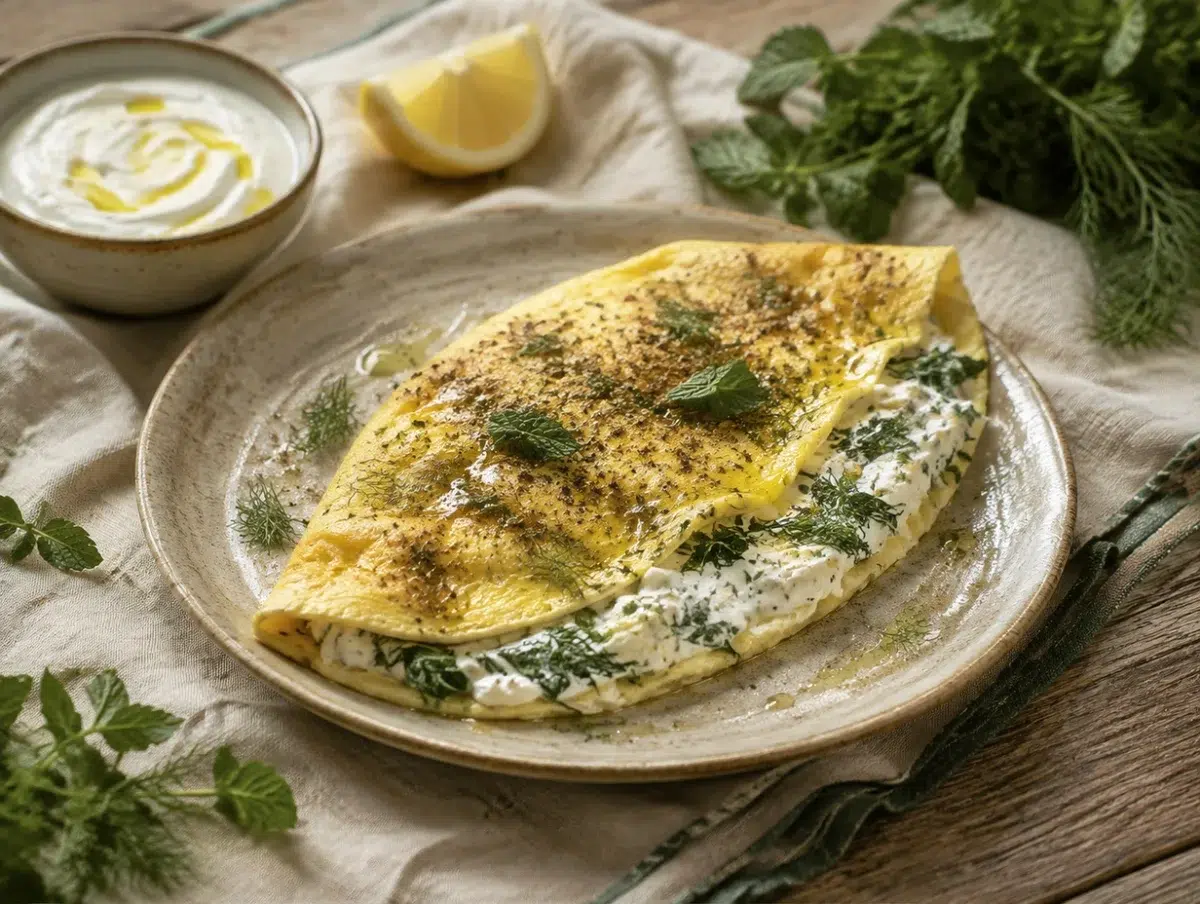
March 2023. Sunday brunch for eight. I’m standing in my kitchen with a pan full of what was supposed to be a labneh & herb omelette but instead looked like scrambled eggs had gotten into a fight with a jar of yogurt. My cousin Nadia — who, for the record, never misses an opportunity to roast me — took a photo and captioned it “Mediterranean crime scene.” She still has it saved.
Nine months and about twenty-three test batches later (okay, possibly twenty-four — I lost count somewhere around the za’atar-crusted version that stuck to the ceiling), I finally cracked the code. This labneh omelette recipe went from kitchen disaster to the dish I’m most proud of. Here are the seven secrets nobody told me.
Table of Contents
Labneh & Herb Omelette: 5-Star Breakfast Win
Ingredients
Method
- 1. Whisk eggs in a large bowl with salt, pepper, and baking powder until slightly foamy, about 30 seconds.
- 2. If using flour, sift it in and whisk until smooth with no lumps remaining.
- 3. Fold in chopped parsley, torn mint, and sliced scallions until evenly distributed. Batter should look very green.
- 4. Let batter rest for 10 minutes to allow baking powder to activate.
- 5. Heat 2 tablespoons olive oil in a 10-inch non-stick skillet over medium heat until shimmering.
- 6. Pour in egg-herb mixture and reduce heat to medium-low. Cook undisturbed for 3-4 minutes until edges are set and bottom is golden.
- 7. Either flip carefully or place under broiler for 2 minutes until top is set and lightly golden.
- 8. Slide onto a serving plate or cutting board.
- 9. Dollop 3-4 tablespoons of labneh on top while still hot.
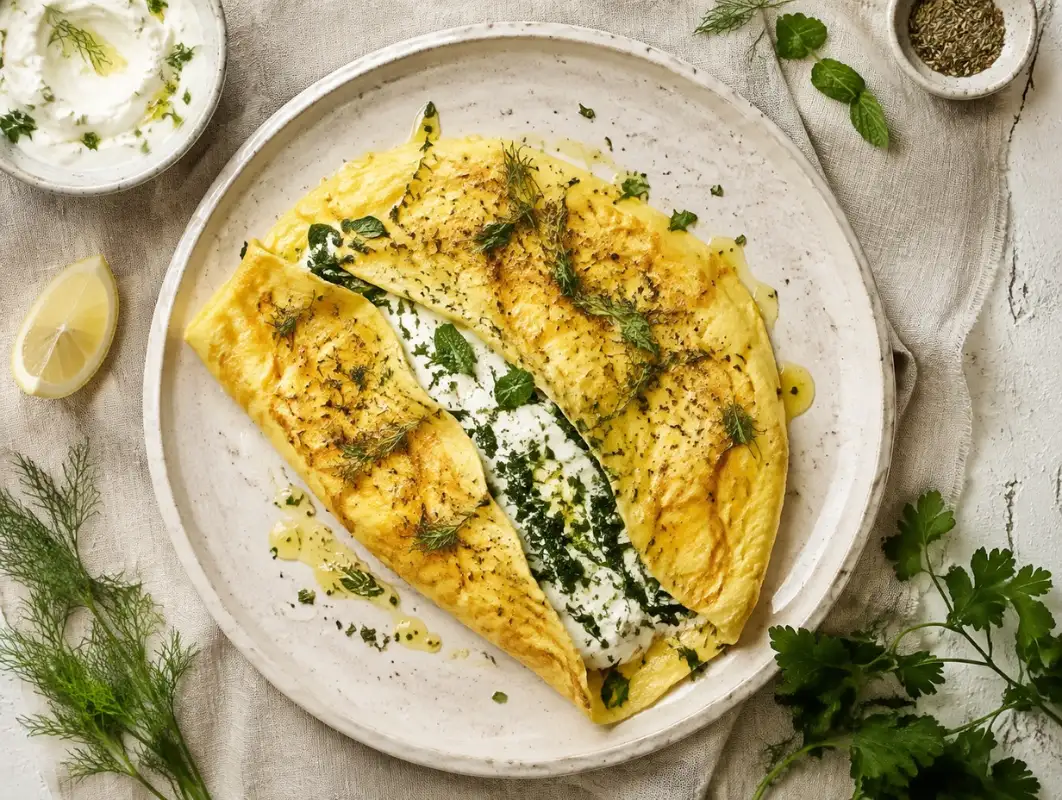
- 10. Sprinkle with za’atar, drizzle with olive oil, and add Aleppo pepper and flaky salt if desired.
- 11. Serve immediately with warm pita, sliced tomatoes, cucumbers, and olives.
Notes
Why This Labneh & Herb Omelette Hits Different
The Science of Creamy Eggs + Tangy Labneh
Here’s something I didn’t understand until embarrassingly late in my cooking life: labneh isn’t just a topping for this Mediterranean omelette — it fundamentally changes the egg’s protein structure. When you fold labneh into eggs, the casein proteins in the labneh interfere with the egg proteins’ ability to bond tightly. Harold McGee explains this in On Food and Cooking — dairy fats and proteins create a buffer that keeps eggs tender and custardy even if you slightly overcook them. Which, let’s be honest, most of us do.
The lactic acid in labneh also adds that characteristic tang that makes this herb omelette completely different from a French omelette with crème fraîche. It’s sharper, more complex, more… alive? (Is it weird to describe eggs as alive? Probably. Moving on.)
The Perfect Breakfast for Any Occasion
This Lebanese omelette works for lazy Saturday mornings, impressive brunch spreads, and even quick weeknight dinners. I’ve served it at baby showers and eaten it standing over the sink at 11 PM — zero judgment either way. Pair it with a fresh salad like our Mediterranean white bean salad and you’ve got a genuinely balanced Mediterranean meal in under 15 minutes.
Essential Ingredients for a Perfect Herb Omelette
The Ingredient Lineup (Don’t Skip Any)
I know it sounds dramatic, but the quality of your labneh will make or break this labneh & herb omelette. Full-fat, thick labneh is non-negotiable — the thin stuff will make your eggs watery and sad. Look for it in the deli section of Middle Eastern grocery stores, or honestly, just strain Greek yogurt overnight through cheesecloth. That DIY version is what I used for batches 1 through 15 before I discovered the good store-bought stuff.
For the herbs: you want fresh, fresh, fresh. Dried herbs in this herb egg recipe are like wearing socks with sandals — technically functional but deeply wrong. Flat-leaf parsley is your backbone, fresh mint adds brightness, and green onions (scallions) bring a gentle bite. My friend Marcus — he’s a line cook at a Lebanese restaurant downtown — taught me to tear the mint instead of chopping it, which releases more essential oils. I have no idea if that’s actual science or just restaurant lore, but my omelettes have been better since. The herb flavors also complement dishes like our crustless spinach and feta quiche which uses a similar fresh herb approach for its Mediterranean egg dish base.
The za’atar is optional but… is it really optional? No. It’s not. Use it. The combination of thyme, sumac, and sesame in za’atar creates a flavor that’s deeply connected to Levantine cooking and elevates this from “eggs with stuff” to something truly special. If you’re into exploring how cheese and herbs pair in Mediterranean cooking, our spinach and feta pairing guide dives deep into those flavor combinations.
Ingredient Comparison & Quality Guide
| Ingredient | Best Choice | Acceptable Sub | Avoid |
| Labneh | Full-fat, thick (Karoun, Arz) | Strained Greek yogurt (overnight) | Regular yogurt (too thin) |
| Eggs | Free-range, large, room temp | Conventional large eggs | Egg substitute (wrong texture) |
| Flat-Leaf Parsley | 1 cup fresh, finely chopped | Italian parsley blend | Dried parsley flakes |
| Fresh Mint | ½ cup torn leaves | Spearmint from garden | Dried mint (loses oils) |
| Scallions/Green Onions | 4-5, whites and greens, sliced | Spring onions, finely sliced | Yellow onion (too sharp) |
| Za’atar | Freshly blended Middle Eastern za’atar | Store-bought za’atar spice blend | Italian seasoning (wrong profile) |
The Game-Changing Secret: Baking Powder
Okay, this is the trick that turned everything around for me and it’s so stupidly simple that I’m almost embarrassed. Add ¼ teaspoon of baking powder to your egg mixture. That’s it. The baking powder creates tiny CO₂ bubbles that get trapped as the egg proteins set, giving you a fluffier, lighter texture — somewhere between an omelette and a cloud. This is traditional in ejjeh (the Lebanese herb omelette) and it’s genuinely a game-changer for any savory omelette.
USA substitutions: If you can’t find labneh, strain 2 cups of whole-milk Greek yogurt through cheesecloth for 12-24 hours. Not quite the same, but close. For za’atar, mix 2 parts dried thyme + 1 part ground sumac + 1 part toasted sesame seeds.
The Foolproof Method for Labneh & Herb Omelette
Preparation: Getting Your Mise en Place Right
Before you touch that stove, get everything prepped. I cannot stress this enough — this Mediterranean omelette comes together fast, and you don’t want to be chopping herbs while your eggs burn. Trust me, I’ve learned this lesson in the most expensive way possible. (RIP, three non-stick pans.)
Start by chopping your herbs. You want about 1 cup of flat-leaf parsley (finely chopped), ½ cup of torn fresh mint leaves, and 4-5 scallions sliced thin — use both the whites and the greens. Don’t waste those greens, people. Then crack 6 large eggs into a bowl, add ½ teaspoon kosher salt, ¼ teaspoon black pepper, and that magical ¼ teaspoon of baking powder. Whisk vigorously for about 30 seconds — you want it slightly foamy.
Now fold in all those herbs. The batter should look aggressively green. If it doesn’t, you didn’t use enough herbs. More herbs. Always more herbs. Let this batter rest for 10 minutes — this is actually important because the baking powder starts working and the flour (if you’re adding 2 tablespoons for extra body) hydrates. I use this resting time to prep my toppings and pour myself a coffee. Or two. For a different approach to morning Mediterranean flavors, our Mediterranean hummus breakfast bowl is another 15-minute wonder that uses the same fresh herb philosophy.
The Cooking Method (10 Minutes to Perfection)
Step 1 (1 minute): Heat 2 tablespoons of extra virgin olive oil in a 10-inch non-stick skillet over medium heat. Not medium-high. Not high. Medium. I will die on this hill — high heat and eggs are not friends.
Step 2 (3-4 minutes): Pour in the herbed egg mixture and immediately reduce to medium-low. Let it cook undisturbed until the edges are set and the bottom is golden — about 3-4 minutes. Resist the urge to poke at it. I know it’s hard. I’m a poker by nature and I’ve had to train myself out of it.
Step 3 (2 minutes): Here’s where it gets fun — you can either flip it (if you’re feeling brave and your pan-flipping confidence is high) or slide it under the broiler for 2 minutes to set the top. I flip about 60% of the time and succeed about… 80% of those attempts. Not bad odds, actually.
Step 4 (2 minutes): Slide the finished labneh & herb omelette onto a plate. Immediately — while it’s still hot — dollop 3-4 generous tablespoons of labneh on top. The residual heat slightly warms the labneh without melting it, creating this incredible creamy-meets-fluffy situation. Sprinkle with za’atar, a drizzle of good olive oil, and maybe some Aleppo pepper flakes if you like a gentle warmth. This Mediterranean egg dish pairs wonderfully as a main alongside something lighter, like our Mediterranean breakfast bowl for a complete spread.
Step 5 (serving): Serve with warm pita bread, sliced tomatoes, cucumber, and olives. Or eat it straight off the cutting board with your hands like I do when nobody’s watching. We all have our truths.
Creative Variations to Keep Things Exciting
Flavor Twist Variations
Once you’ve mastered the basic labneh omelette recipe, the real fun begins. I went through a phase in late 2023 where I made a different variation every weekend for six weeks straight. My partner started calling it “the omelette chronicles.” (He was less amused by week four.)
| Variation | Key Changes | Flavor Profile | Best For |
| Za’atar Crusted | Press za’atar into one side before serving | Nutty, earthy, toasty | Brunch entertaining |
| Aleppo & Tomato | Add diced tomatoes + Aleppo pepper flakes | Spicy-sweet, juicy, vibrant | Weekday breakfast |
| Feta & Dill | Crumble feta into batter, use dill instead of mint | Tangy, herbal, Greek-inspired | Greek mezze spread |
| Mushroom & Sumac | Sautéed mushrooms + sumac sprinkle | Earthy, tart, umami-rich | Cozy weekend brunch |
| Zucchini Ejjeh | Grate zucchini into batter (squeeze dry first!) | Fresh, vegetal, crispy edges | Summer brunch |
Dietary Modifications
Gluten-free: Omit the flour entirely or use chickpea flour — works beautifully. Vegan: Use chickpea flour batter (besan chilla-style) with cashew-based labneh. Different, but honestly still good. Paleo: Skip flour and labneh, use coconut cream with lemon juice as a tangy sub. Budget-friendly: Make your own labneh from store-brand Greek yogurt — costs about a dollar. Kid-friendly: Reduce herbs by half, add mild cheese, serve as little wedges with ketchup. My nephew dips them in ketchup and I’ve chosen peace over correctness. If you’re feeding little ones, our pasta primavera is another veggie-forward dish that sneaks in nutrients. For a heavier pairing, our grilled chicken Mediterranean bowl turns this into a full Mediterranean feast.
Storage & Meal Prep Strategies
How to Store Your Labneh Herb Omelette
Good news for meal-preppers: this herb omelette stores surprisingly well. Let it cool completely, then slice into wedges and stack between sheets of parchment paper in an airtight container.
Room temperature: 2 hours max. Refrigerator: Up to 3 days. Freezer: Up to 2 months — layer parchment between wedges before freezing. Reheat in a 350°F oven or air fryer for 8-10 minutes; don’t microwave unless you enjoy rubber. (I learned this the hard way during a particularly grim Tuesday lunch.)
Pro tip: Store the omelette and labneh separately. Add the labneh right before eating. If you’re doing weekly meal prep, this pairs gorgeously with our Mediterranean chickpea power bowl for a grab-and-go lunch rotation.
Smart Serving Strategies
For entertaining, make two or three large omelettes, cut into wedges, and arrange on a platter with labneh in the center for dipping. Scatter pomegranate seeds and za’atar on top and your guests will think you hired a caterer. (Nobody needs to know it took 12 minutes.) For a stunning dinner, serve alongside our Mediterranean sheet pan salmon — the herb-forward profiles of both dishes complement each other beautifully.
Meal Prep Pairing Guide
| Prep Day | Store | Reheat Method | Best Pairing |
| Sunday | Omelette wedges + separate labneh | Air fryer 350°F, 8 min | Pita + tomato-cucumber salad |
| Monday-Wed lunches | Stack in glass container, parchment between | Oven 350°F, 10 min | Hummus + olives |
| Frozen portions | Freezer bag, parchment layers, up to 2 months | Oven 375°F, 12-15 min from frozen | Warmed pita + labneh |
| Brunch spread | Make fresh morning-of | Serve room temp | Full mezze spread |
Nutritional Benefits of Labneh & Herb Omelette
I’m not a dietitian (important caveat!), but I’ve researched enough to know that this Mediterranean egg dish is a nutritional powerhouse hiding behind a gorgeous exterior. Eggs are one of the most nutrient-dense foods on the planet — complete protein, choline for brain health, and B12 for energy. Labneh adds probiotics from the fermentation process, plus calcium and additional protein.
The fresh herbs aren’t just for flavor, either. Parsley is loaded with vitamin K (critical for bone health and blood clotting), while mint contains rosmarinic acid, an antioxidant that Kenji López-Alt has noted contributes to the overall anti-inflammatory profile of Mediterranean cuisine. The glycemic impact of this labneh breakfast is low thanks to the high protein and fat content with minimal carbohydrates — making it excellent for blood sugar management. For another nutrient-dense Mediterranean meal, our Mediterranean shrimp white bean salad delivers similar protein-packed goodness.
Macronutrient Profile (Per Serving — 1/3 of Omelette)
| Nutrient | Amount | % Daily Value* |
| Calories | 245 kcal | 12% |
| Total Fat | 18g | 23% |
| Saturated Fat | 5g | 25% |
| Protein | 16g | 32% |
| Carbohydrates | 5g | 2% |
| Fiber | 1g | 4% |
| Sugar | 2g | — |
*Based on 2,000 calorie diet
Key Micronutrients (Per Serving)
| Micronutrient | Amount | Health Benefit |
| Vitamin K | 155mcg (from parsley) | Bone health, blood clotting |
| Choline | 190mg (from eggs) | Brain function, liver health |
| Calcium | 95mg (from labneh) | Bone density, muscle function |
| Vitamin B12 | 1.1mcg (from eggs) | Energy production, nerve health |
| Iron | 2.2mg (from herbs + eggs) | Oxygen transport, fatigue reduction |
| Probiotics | Active cultures (from labneh) | Gut health, immune support |
Frequently Asked Questions About Labneh & Herb Omelette
Can I use Greek yogurt instead of labneh in this omelette recipe?
Yes — Greek yogurt is the best substitute for labneh. For the closest match, strain whole-milk Greek yogurt through cheesecloth for 12-24 hours. Regular labneh is thicker and tangier than yogurt, so the strained version gets you closer to that creamy Mediterranean omelette experience.
What herbs work best in a Lebanese omelette?
Flat-leaf parsley and fresh mint are the traditional foundation for a herb omelette in Lebanese cooking. Cilantro, dill, and chives also work beautifully. The key is using generous amounts of fresh herbs — dried herbs won’t give you the same vibrant flavor in this labneh & herb omelette.
How do I prevent my labneh omelette from sticking to the pan?
Use a well-seasoned non-stick pan with 2 tablespoons of olive oil heated over medium (not high) heat. Wait until the oil shimmers before adding the egg mixture. Don’t rush the flip — wait until the edges are fully set and the bottom is golden, about 3-4 minutes.
Is labneh & herb omelette healthy for breakfast?
Absolutely. This Mediterranean egg dish is high in protein (16g per serving), rich in probiotics from the labneh, loaded with vitamin K from fresh herbs, and low in carbohydrates. The combination of protein and healthy fats helps maintain steady blood sugar and keeps you full longer.
Can I make this Middle Eastern breakfast recipe ahead of time?
Yes! Cook the omelette, let it cool, and store in the fridge for up to 3 days. Reheat in a 350°F oven or air fryer for 8-10 minutes. Keep the labneh separate and add it fresh when serving for the best texture.
What’s the difference between ejjeh and a regular omelette?
Ejjeh is the Lebanese herb omelette that uses much more herbs than a Western omelette, plus baking powder for lift and sometimes flour for structure. It’s often cooked in olive oil rather than butter, giving it a distinctly Mediterranean flavor. Labneh is served alongside as a creamy, tangy condiment rather than folded inside.
What is za’atar and why should I add it to my herb egg recipe?
Za’atar is a Levantine spice blend of dried thyme, ground sumac, toasted sesame seeds, and salt. It adds an earthy, tangy, nutty flavor to eggs and is a traditional companion to labneh. Sprinkling za’atar on your labneh omelette is a simple upgrade that adds authentic Middle Eastern breakfast flavor.
Pairing & Serving Ideas for a Complete Spread
Build a Mediterranean Breakfast Board
This labneh & herb omelette shines as the centerpiece of a Mediterranean breakfast board. Surround it with olives, sliced cucumber, tomato wedges, warm pita, and extra labneh drizzled with olive oil and za’atar. My absolute dream spread also includes some halloumi slices and pickled turnips — the pink ones that are simultaneously beautiful and divisive. For a heartier spread, add our gemista Greek stuffed peppers alongside for a complete brunch experience.
| Pairing Category | Options | Why It Works |
| Beverages (no alcohol) | Mint tea, Turkish coffee, fresh lemonade, pomegranate juice | Brightness complements herbal flavors |
| Bread & Carbs | Warm pita, manakish, saj bread, sourdough toast | Scooping, wrapping, dipping |
| Fresh Sides | Tomato-cucumber salad, fattoush, tabbouleh, pickled turnips | Acidity and crunch balance richness |
| Protein Additions | Halloumi, falafel, grilled beef kofta, white beans | Turns breakfast into a feast |
Occasion-Specific Suggestions
Ramadan suhoor: This creamy omelette with its protein and healthy fats provides sustained energy — ideal for pre-dawn meals. Weekend brunch: Make two or three, cut into wedges, arrange on a board with dips and salads. Weeknight dinner: Pair with a simple green salad and call it done — this savory omelette is substantial enough as a main. Finish the evening with our limoncello tiramisu or our Greek yogurt panna cotta for a Mediterranean dessert that won’t weigh you down.
Go Make This Your Own
Experiment and Personalize
The best thing about this labneh & herb omelette is that it’s endlessly adaptable. Add sumac-roasted cherry tomatoes. Throw in some leftover roasted vegetables. Mix harissa into the labneh for heat. Use whatever fresh herbs are growing on your windowsill or wilting in your crisper drawer — no judgment. The framework is simple: eggs + generous herbs + labneh + za’atar = magic. If you love this kind of improvisational cooking, our classic Greek lemon rice pilafi follows the same principle of elevating simple ingredients to something extraordinary.
Join the Conversation
If you make this labneh omelette recipe, I genuienly want to see it. Tag us, leave a comment, send a smoke signal — whatever your preferred communication method. I especially want to know if anyone actually manages the flip successfully on the first try, because I still celebrate when I do and I’ve made this proably fifty times. And if you’re hungry for more Mediterranean inspiration, explore our Italian chicken casserole for a cozy dinner or our easy tiramisu for the ultimate no-egg dessert.
Now go crack some eggs. Your best breakfast is waiting.