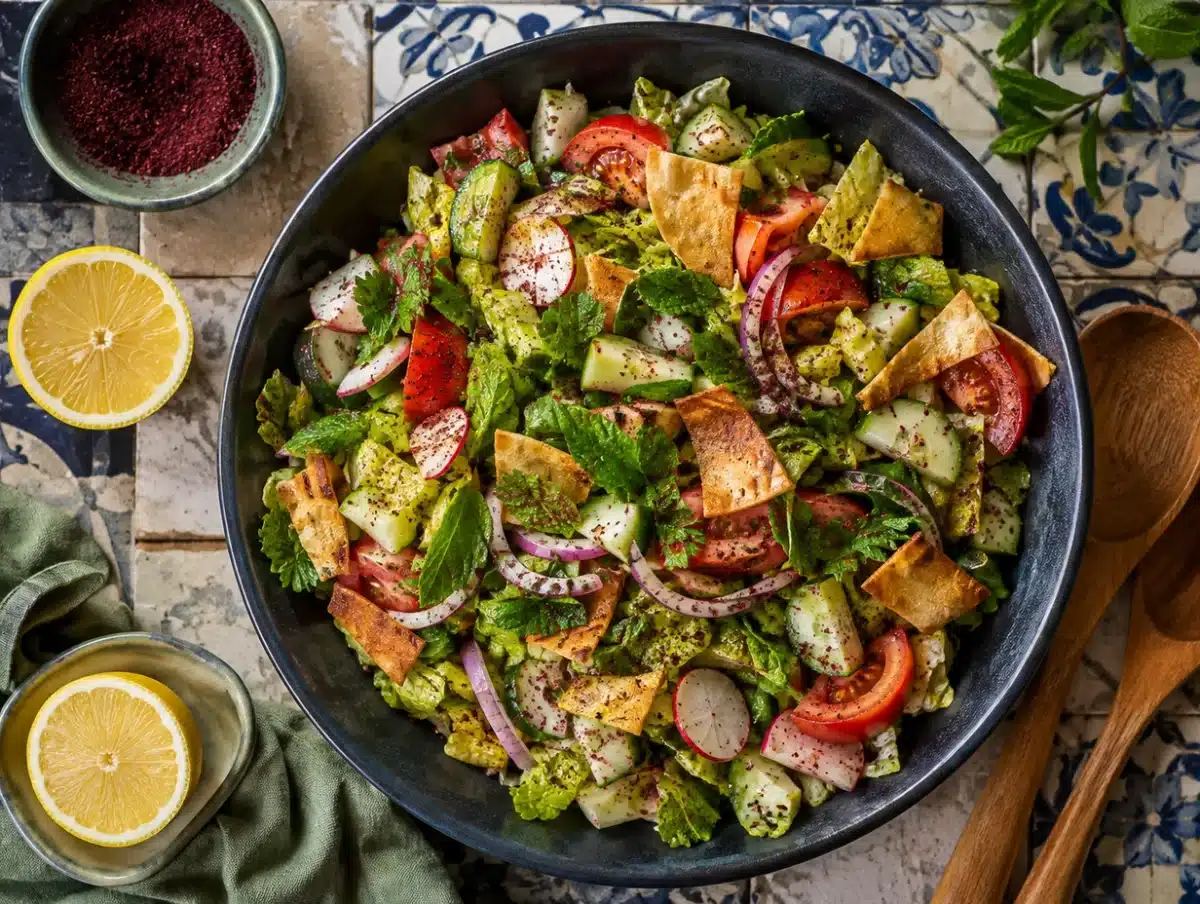
Can we talk about how underrated fattoush salad is outside of the Middle East? I’ve been making this vibrant, crunchy, tangy Lebanese bread salad for years, and every single time I serve it to someone who’s never tried it, the reaction is the same: eyes wide, fork going back in immediately, followed by “What IS that dressing?”
That dressing is sumac — a gorgeous, deep-red spice with a tart, citrusy punch that you’re about to fall in love with. This fattoush salad with crispy pita combines golden toasted pita chips with juicy tomatoes, cool cucumber, peppery radishes, fresh herbs, and a tangy sumac-lemon vinaigrette. It’s everything you want from a salad: multiple textures, bold flavors, and honestly beautiful to look at.
Here’s why this fattoush salad with crispy pita is about to become a regular in your kitchen:
- ⚡ Comes together in under 20 minutes, start to finish
- 💚 Packed with vitamins C and K, anti-inflammatory sumac, and gut-friendly herbs
- 🍱 Components prep ahead beautifully — keep pita separate for crunch all week
- 🌿 Deeply rooted in Levantine tradition and Mediterranean Diet principles
My first attempt at fattoush was honestly embarrassing — I used fresh pita (too soft, got soggy immediately) and skipped the sumac entirely (cardinal sin). After testing seven versions in my San Diego kitchen and consulting my Lebanese neighbor Rima, who grew up eating this at her grandmother’s table in Beirut, I finally nailed it. This is the version I’m proud to share. Let’s make it.
Table of Contents
Fattoush Salad with Crispy Pita
Ingredients
Method
- 1. Preheat oven to 375°F / 190°C. Spread torn pita pieces on a sheet pan, drizzle with 1 tablespoon olive oil, toss to coat, and season with a pinch of salt.
- 2. Toast pita for 10–12 minutes, flipping halfway, until golden and crispy. Watch after 8 minutes. Remove and let cool.
- 3. While pita toasts, whisk all dressing ingredients together in a small jar or bowl. Taste and adjust lemon or sumac.
- 4. Prep all vegetables: quarter tomatoes, slice cucumber, thinly slice radishes, cut green onions, tear lettuce, roughly chop parsley and mint.
- 5. Add lettuce to the base of a large salad bowl. Layer tomatoes, cucumber, radishes, and green onions on top.
- 6. Scatter fresh parsley and mint generously over the vegetables.
- 7. Drizzle ¾ of the sumac dressing over the salad. Toss gently to coat.
- 8. Add crispy pita just before serving. Drizzle remaining dressing on top. Finish with an extra sprinkle of sumac. Serve immediately.
Notes
Why You’ll Love This Recipe
Health & Nutrition Benefits
Fattoush salad is genuinely one of the most nutritionally intelligent dishes in the Levantine food tradition — and that’s saying something in a cuisine built around fresh vegetables and quality olive oil. The star ingredient, sumac, is extraordinarily high in antioxidants: research published in the journal Food Chemistry identified over 40 phenolic compounds in sumac, making it one of the most potent anti-inflammatory spices in the world. Combined with lycopene-rich tomatoes, vitamin C-packed radishes, and heart-healthy olive oil, this is the kind of dish my Barcelona nutrition professors used as a case study for anti-inflammatory eating.
- ⚡ Sumac — one of the highest antioxidant spice profiles in the Mediterranean pantry
- 💚 Tomatoes deliver lycopene; absorption increases with olive oil pairing
- 🌿 Fresh parsley is a surprisingly good source of vitamin K and folate
- 🥒 Cucumber provides silica and hydration — great for joints and skin
- 🍞 Toasted whole-wheat pita adds fiber and a lower glycemic response vs. white bread
- 🌱 Purslane (the traditional herb) is one of the richest plant sources of omega-3 fatty acids
Practical Benefits
Beyond all that nutrition science, this Lebanese fattoush recipe is just wonderfully practical. Twenty minutes. One bowl. A dressing you whisk in under 60 seconds. The ingredients are available at any grocery store (or Middle Eastern market if you want to level up), and the prep is mostly just chopping — satisfying, therapeutic chopping. Because the pita chips stay crunchy for days in an airtight container, you can batch-prep everything on Sunday and assemble fresh fattoush salad servings in under 3 minutes all week. Budget-friendly. Weeknight-friendly. Genuinely impressive.
The Mediterranean Diet Connection
How This Dish Fits Mediterranean Diet Principles
The PREDIMED study and Blue Zones research both point to the same dietary cornerstones: abundant fresh vegetables, quality olive oil, legumes, whole grains, and herbs and spices used generously. Fattoush salad with crispy pita hits almost every one. Whole-wheat pita provides whole grains and fiber. Olive oil is the fat base of the dressing. The sheer volume of fresh herbs — flat-leaf parsley, mint, sometimes purslane — provides concentrated phytonutrient density that you simply don’t get from a typical dressed salad. And sumac, the bright-red spice that defines this Levantine salad recipe, is the kind of functional spice that researchers get genuinely excited about.
Maya’s Personal Wellness Connection
I came to fattoush salad through a client, actually. I was working as a corporate wellness consultant in my late twenties, and a Lebanese colleague brought a huge bowl of this to a team lunch. I’d grown up eating panzanella — the Tuscan bread salad my nonna made from day-old ciabatta and summer tomatoes — so the concept felt instantly familiar. The Levantine version just had this extra layer of complexity from the sumac and the fresh herbs that I hadn’t encountered before. I went home and made it that same week. Then the week after. Now it’s as regular in my San Diego kitchen as any dish from my childhood. Food really is the most beautiful connector.
Essential Ingredients
Core Ingredients
The beauty of a great fattoush salad with crispy pita is ingredient quality over complexity. Here’s what you need and why each element matters:
| Ingredient | Amount | Why It’s Great | Best Pick | Substitution |
| Pita bread (day-old) | 2 large rounds (200g / 7 oz) | Crunch and texture; day-old toasts better and crisps faster | Whole-wheat pita for more fiber + nuttier flavor | Stale sourdough, gluten-free flatbread, or corn tortilla chips (GF) |
| Ripe tomatoes | 3 medium (450g / 16 oz) | Lycopene, natural sweetness, juiciness; core of the salad | Vine-ripened or heirloom; cherry tomatoes year-round | Sun-dried tomatoes in winter (soak first) |
| English cucumber | 1 large (300g / 10 oz) | Cool crunch, hydration, silica; contrasts the warm pita | English (thin-skinned, seedless) | Persian cucumbers or peeled standard |
| Radishes | 6–8 (120g / 4 oz) | Peppery bite, vitamin C, striking red color accent | French breakfast radishes (milder) or standard red | Thinly sliced fennel for a different crunch |
| Flat-leaf parsley | 1 cup (40g / 1.5 oz) | Vitamin K, folate, chlorophyll; herby backbone of the salad | Fresh only — dried parsley is not a substitute here | Add extra mint if parsley is unavailable |
| Fresh mint | ½ cup (20g / 0.7 oz) | Cooling contrast to tangy sumac; anti-inflammatory rosmarinic acid | Spearmint preferred over peppermint | Fresh cilantro or basil |
| Green onions / scallions | 4 stalks (40g / 1.5 oz) | Mild allium flavor without the harshness of raw onion | Fresh, bright green tips | Thinly sliced red onion (soak in cold water first) |
| Romaine or little gem lettuce | 2 cups (80g / 3 oz) | Light leafy base; adds volume | Little gem (crispier) or romaine heart | Iceberg (less nutritious but similar crunch) |
- 3 tablespoons (45ml) extra-virgin olive oil
- 2 tablespoons (30ml) fresh lemon juice (about 1 large lemon)
- 1 tablespoon (15ml) pomegranate molasses (the secret weapon — sweet-tart depth)
- 1.5 teaspoons (4g) ground sumac, plus more for garnish
- 1 small garlic clove, finely minced or grated
- ½ teaspoon (3g) sea salt | ¼ teaspoon (0.5g) black pepper
Maya’s Tip: Pomegranate molasses is the secret the internet doesn’t tell you about. It adds a sweet-sour depth to the fattoush dressing that makes people ask what the mystery ingredient is. Find it at any Middle Eastern market or on Amazon — a bottle costs under $6 and lasts forever. Worth every penny.
Dietary Modifications & Storage Prep
| Dietary Need | Replace | With | Notes |
| Gluten-Free | Regular pita | GF flatbread, rice crackers, or baked corn tortilla chips | Break into similar-sized pieces and toast the same way |
| Vegan | Already vegan! | No changes needed | The classic fattoush salad with crispy pita is naturally vegan |
| Add Protein | No protein currently | Top with chickpeas, sliced grilled chicken, or crumbled feta | Chickpeas keep it fully plant-based and add ~6g protein per ½ cup |
| Lower Sodium | Salted pita + full dressing | Use unsalted pita; reduce salt to ¼ tsp in dressing | The sumac still provides bold flavor at lower sodium |
| No Pomegranate Molasses | Pomegranate molasses | 1 tsp honey + ½ tsp balsamic vinegar | Mimics the sweet-tart profile well enough |
Equipment & Quick Prep
Equipment You’ll Need
| Tool | Why It Helps | Alternative |
| Sheet pan (18×13 inch) | Spreads pita pieces in single layer for even toasting — critical for crisp, not soggy | Any oven-safe flat pan |
| Large salad bowl (4 qt / 4L) | Enough room to toss freely without bruising herbs or crushing pita | Wide shallow platter for composed presentation |
| Small jar or bowl with whisk | Emulsifies the sumac dressing properly so it doesn’t separate | Any jar with tight lid — shake vigorously |
| Sharp chef’s or serrated knife | Clean cuts on tomatoes; serrated prevents tearing soft flesh | Any sharp knife |
| Microplane or garlic press | Finely grates garlic for a smooth, evenly distributed dressing | Mince garlic very finely by hand |
Prep-Ahead Checklist
Get this on the table in 20 minutes flat with a little organization (works perfectly for weeknight meal prep too):
- Tear or cut pita into 1.5-inch / 4cm pieces
- Wash and dry all vegetables and herbs thoroughly (wet herbs dilute the dressing)
- Halve or quarter tomatoes; slice cucumber into half-moons
- Thinly slice radishes and green onions
- Roughly tear parsley and mint leaves (keep whole for pretty presentation)
- Whisk dressing ingredients together in a jar — can be done up to 3 days ahead
Pro Tip: Tear the pita by hand rather than cutting it with a knife. Irregular edges create more surface area, which means more crunch per piece. My Lebanese neighbor Rima taught me this — she tears it while watching TV. Simple wisdom.
Step-by-Step Instructions
Prep & First Steps (1–4)
You’ve got this — fattoush salad with crispy pita is genuinely one of the most forgiving recipes I make. Let’s start with the pita, since that’s the component that takes the longest.
- Preheat your oven to 375°F / 190°C. Tear 2 pita rounds into rough 1.5-inch / 4cm pieces and spread them in a single layer on a sheet pan. Drizzle with 1 tablespoon of olive oil and toss to coat. Season with a pinch of salt. Time: 2 minutes. Visual cue: pieces should be well-coated, not drenched.
- Toast in the oven for 10–12 minutes, flipping halfway through, until golden brown, crisp, and fragrant. Watch them closely after the 8-minute mark — they go from perfect to burnt very quickly (ask me how I know — batch number three of this recipe was sacrificed to the oven gods). They should be the color of a light golden crouton, with slightly darker edges. Let cool on the pan.
- While the pita toasts, make the sumac dressing. In a small jar or bowl, whisk together 3 tablespoons olive oil, 2 tablespoons lemon juice, 1 tablespoon pomegranate molasses, 1.5 teaspoons sumac, minced garlic, salt, and pepper. Taste it — it should be tangy, slightly sweet, and faintly floral from the sumac. Adjust lemon or sumac to your preference. Time: 90 seconds.
- Prep all vegetables while the pita finishes. Quarter the tomatoes (or halve cherry tomatoes), slice the cucumber into thin half-moons (about ¼ inch / 0.6 cm), slice the radishes paper-thin, and cut the green onions into 1-inch / 2.5 cm lengths. Roughly tear the parsley and mint. Time: 5–6 minutes.
Assembly & Finishing (5–10)
- Add the lettuce to the bottom of your large salad bowl. This is the base layer that catches the dressing and prevents the pita from sitting in liquid. Scatter the tomatoes, cucumber, radishes, and green onions over the top.
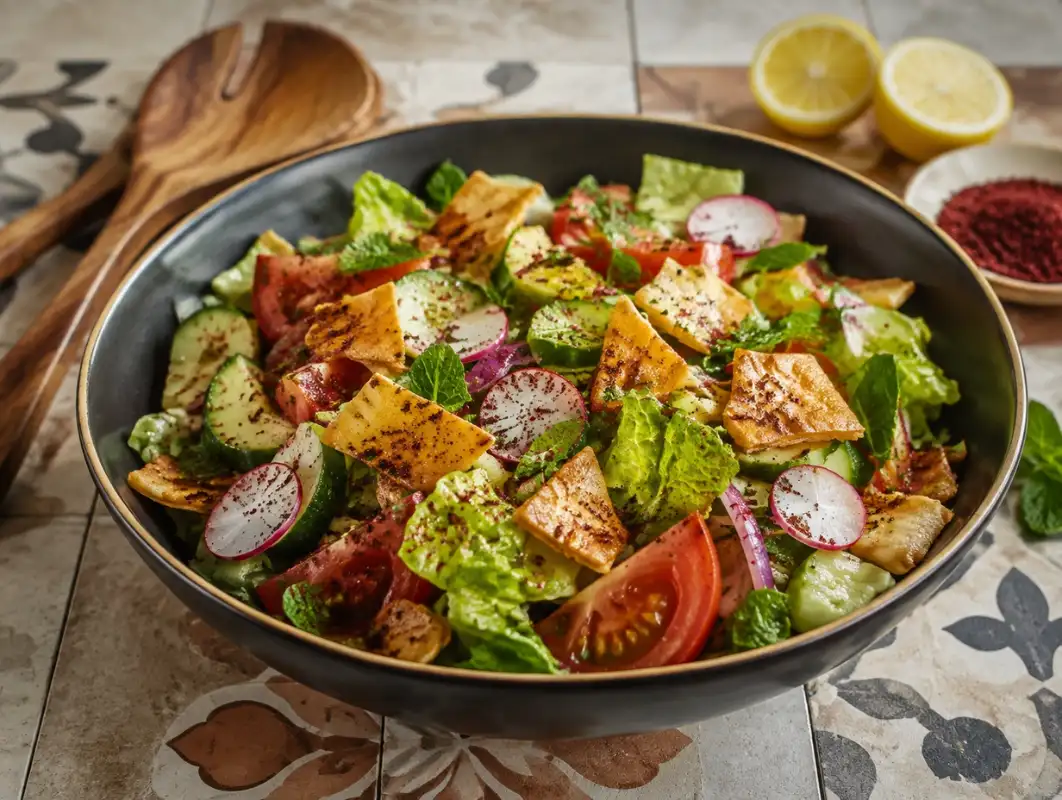
- Add fresh parsley and mint generously. Don’t be shy — in an authentic fattoush salad recipe, the herbs are a main event, not a garnish. That bright green against the red tomatoes and pale cucumber is part of what makes this salad so visually stunning.
- Pour about ¾ of the sumac dressing over the vegetables and toss gently to coat. Reserve the remaining dressing — you’ll add more after the pita goes in, to taste. The salad should be well-coated but not swimming.
- Add the toasted pita pieces just before serving. This is critical: always add pita last and serve immediately for maximum crunch. If you add it too early, the pita absorbs the dressing and loses its crispness. (Some people actually prefer the soft, soaked version — I’ll mention that in the variations — but the classic fattoush salad with crispy pita is about that contrast.)
- Drizzle the remaining dressing over the top, then finish with an additional sprinkle of ground sumac directly over the salad. That final dusting of deep red sumac against the green herbs is gorgeous and signals the bold flavors inside.
- Serve immediately. Pair with our
Tips, Tricks & Shortcuts
Success Tips
- Day-old pita is non-negotiable for the crispiest result — fresh pita has too much moisture and steams instead of crisping. Leave a round on your counter overnight, or slice and leave on a sheet pan for 2 hours
- Dry your vegetables completely before assembling — wet lettuce and herbs water down the dressing and turn the pita soggy faster
- Don’t dress too far ahead — assemble vegetables and dressing up to 30 minutes before serving, but hold the pita until the very last moment
- Use fresh lemon juice, not bottled — the brightness is completely different and the sumac dressing needs that fresh, volatile citrus aroma
- More sumac than you think — don’t be timid with it. Start with 1.5 teaspoons, taste, and add more. It’s the defining flavor of this Levantine salad recipe
- Serve at room temperature — cold fattoush salad dulls the flavors of sumac and fresh herbs. Refrigerate components separately and assemble at room temperature
Maya’s Tip: If you have access to a Middle Eastern market, look for za’atar (dried thyme-oregano-sumac blend) to toss with your pita before toasting instead of plain salt. It adds an herby, aromatic layer that takes the fattoush dressing and pita combination to a completely different level.
Common Mistakes to Avoid
| Mistake | Result | Fix |
| Using fresh (not day-old) pita | Pita steams instead of crisps; becomes soft and chewy within minutes | Always use day-old pita, or dry fresh pita in a low oven (325°F) for 5 min first |
| Adding pita too early | Pita absorbs dressing, loses all crunch before you even serve it | Add crispy pita within 5 minutes of serving — no earlier |
| Skipping pomegranate molasses | Dressing tastes flat and one-dimensional, missing the sweet-sour depth | Sub with 1 tsp honey + ½ tsp balsamic if needed — don’t just omit |
| Under-herbing the salad | Fattoush loses its distinctive freshness and identity | Parsley and mint should be visible throughout — use a full cup of parsley |
| Using dried parsley or mint | Completely flat, dull herb flavor; the fresh herbs are not decorative | Always fresh. Non-negotiable for a good fattoush salad recipe. |
Variations & Serving Ideas
Recipe Variations
Fattoush is beautifully adaptable. These are the variations I actually make and love:
- Purslane fattoush: Traditional Lebanese fattoush uses purslane (a slightly succulent, lemony herb) instead of lettuce. If you can find it at a farmers market or Middle Eastern grocery, use it — it’s one of the only plants with significant plant-based omega-3s, and it adds a unique textural element.
- Feta fattoush: Crumble 2 oz of authentic Greek feta over the finished salad. The salty, creamy cheese against the tangy sumac dressing is a flavor combination that makes absolutely no culinary sense and yet is completely incredible.
- Protein-forward: Add 1 cup chickpeas (roasted for extra crunch) or sliced smoked turkey strips for a heartier version that works as a complete meal.
- Grilled peach fattoush: In summer, add 1 cup sliced ripe peaches or nectarines to the salad. The sweetness plays beautifully against the tart sumac dressing. It sounds weird. It is wonderful.
- No-pita grain bowl: Replace toasted pita with cooked farro or bulgur wheat for a more substantial base that’s easier to meal prep ahead without worrying about texture.
- Winter version: Swap fresh tomatoes for roasted cherry tomatoes and add roasted beets — the sumac dressing is just as spectacular with roasted vegetables.
Serving Suggestions & Pairings
This fattoush salad with crispy pita shines as part of a mezze spread or as a standalone summer lunch. Serve it alongside our smoky baba ganoush and our fresh tabbouleh for an incredible Levantine spread that requires zero cooking beyond the pita toast. Pair it with our Turkish red lentil soup for a warming, complete weeknight dinner.
Beverage pairings that complement the tangy sumac flavors:
- Sparkling water with fresh mint and a squeeze of lemon — the simplest, most refreshing pairing
- Fresh pomegranate juice (mirrors the molasses in the dressing beautifully)
- Iced hibiscus tea with a honey and ginger splash — the florals match the sumac
- Homemade lemonade with a pinch of sumac mixed in — a revelation
Meal Prep & Storage
Storage Guide
| Method | Container | Duration | Notes |
| Assembled fattoush (undressed) | Airtight container | Up to 2 days refrigerated | Keep pita in separate airtight bag/container — crucial |
| Crispy pita chips (separated) | Airtight container or zip bag at room temp | Up to 5 days | Do not refrigerate pita — humidity destroys crunch |
| Sumac dressing | Jar with tight lid | Up to 1 week refrigerated | Shake or whisk before using — olive oil will solidify in cold |
| Vegetable components (without herbs) | Airtight glass container | 3–4 days refrigerated | Add fresh herbs day-of for best flavor and color |
| Fully assembled + dressed salad | Not recommended for storage | Serve within 30 minutes | Pita softens quickly; dress only what you’ll eat immediately |
Meal Prep Assembly Tips
This is one of my favorite lunches to batch prep on Sunday. Here’s the system I’ve refined over dozens of meal prep Sundays in San Diego:
- Make a double batch of pita chips and store in a large airtight container at room temp — they stay crispy all week
- Make a full jar of sumac dressing — it tastes even better on day 2 and 3 as the sumac hydrates fully
- Prep all vegetables Sunday and store in one large container (hold the herbs — add fresh daily)
- Each morning or at lunch: scoop vegetables into a bowl, add a handful of fresh parsley and mint, drizzle dressing, toss, top with pita chips
- Whole assembly takes under 3 minutes if your components are ready — faster than any café
Pro Tip: The sumac dressing actually improves after 24 hours in the fridge. The sumac fully hydrates and the flavors meld together beautifully. Make it a day ahead when you can — you’ll notice the difference.
Frequently Asked Questions
Substitutions & Technique Questions
Q: What is sumac and where do I find it? Sumac is a ground spice made from dried sumac berries — it has a gorgeous deep red color and a tart, citrusy, slightly fruity flavor that’s completely unique. It’s the essential flavor in authentic fattoush salad. Find it at any Middle Eastern grocery store, Whole Foods, Trader Joe’s spice section, or online. Once you have it, you’ll put it on everything — eggs, roasted vegetables, hummus. Trust me.
Q: Can I use store-bought pita chips instead of toasting my own? You can, but they’ll be thicker, saltier, and less fresh-tasting than homemade. If you’re going the store-bought route, look for plain or lightly seasoned thin pita chips — avoid flavored varieties that will fight with the sumac dressing. Homemade takes 12 minutes and is genuinely so much better. I promise it’s worth it for this fattoush salad recipe.
Q: What can I use instead of pomegranate molasses? The best substitute is 1 teaspoon honey mixed with ½ teaspoon balsamic vinegar — it approximates the sweet-tart depth. Tamarind paste (½ teaspoon) is another authentic option and perhaps even closer in character. A splash of apple cider vinegar with a drop of maple syrup also works in a pinch. What you shouldn’t do is just leave it out — the dressing will taste flat without that element.
Q: Is fattoush salad traditionally made with a specific lettuce? Traditionally, Lebanese fattoush uses purslane — a slightly succulent, tangy herb that’s native to the Mediterranean and Middle East. It’s rarely found in American grocery stores but is increasingly available at farmers markets. Outside Lebanon, romaine lettuce or little gem lettuce are the most common and delicious substitutes. Both hold their crunch well against the dressing.
Dietary, Nutrition & Meal Prep Questions
Q: Is fattoush salad healthy? Absolutely. One serving of this fattoush salad with crispy pita provides around 280 calories with a strong anti-inflammatory nutrient profile — sumac polyphenols, lycopene from tomatoes, and oleic acid from olive oil. The fresh herbs add meaningful vitamin K and folate. As someone with a B.S. in Nutrition Science, I genuinely consider this one of the most nutritionally impressive salads in the Levantine canon. (I’m a certified health coach, not a doctor — for medical dietary needs, always consult your healthcare provider.)
Q: Is this recipe naturally vegan? Yes! Classic fattoush salad with crispy pita is 100% vegan as written — no animal products anywhere in the recipe. The sumac dressing uses olive oil and lemon juice, not any dairy or egg-based emulsifiers. If you’re making this for a vegan guest, double-check your pita brand (most are vegan, but some contain dairy or honey in sweeter varieties).
Q: Can I make this salad gluten-free? Easily! Just swap the regular pita for gluten-free flatbread or corn tortillas, torn and toasted in exactly the same way. The rest of the salad — the vegetables, herbs, and sumac dressing — is naturally gluten-free. Baked GF tortilla chips also work really well and add a slightly different but equally delicious crunch.
Q: How do I keep the pita crispy in a packed lunch? The key is physical separation until you’re ready to eat. Pack the crispy pita in a separate small container or zip bag — not touching the dressed vegetables. At lunchtime, pour the pita over the salad, toss quickly, and eat immediately. If you can, keep the dressing separate too and add it all at once right before eating. Two minutes of logistics for a genuinely satisfying desk lunch.
Nutritional Highlights & Closing
Why This Recipe Is Good for You
Let me put on my nutrition hat for just a moment (Barcelona degree, Cornell plant-based certificate). This fattoush salad with crispy pita is one of the most genuinely nutritious salads you can make, and here’s the breakdown:
- Sumac is extraordinary from an antioxidant perspective. Research from the University of Arizona and others has documented its high gallic acid content — a phenolic compound associated with anti-cancer and cardiovascular protective properties. It’s also naturally antimicrobial, which is why it’s been used medicinally in Middle Eastern cultures for centuries.
- Flat-leaf parsley at 1 cup provides roughly 984 micrograms of vitamin K — that’s nearly 10 times the daily recommended intake in a single salad serving. It’s also a surprising source of vitamin C at 80mg per cup.
- Olive oil in the dressing enhances absorption of fat-soluble vitamins A, E, and K from all those fresh vegetables — a beautiful example of food synergy in action.
- The pita, especially when made from whole wheat, provides a satisfying crunch with about 3g of fiber per serving, which slows glucose absorption and keeps you full longer than croutons.
This is a 280-calorie bowl that will keep you genuinely satisfied for hours. That’s the Mediterranean magic — abundance over restriction, always.
Closing Thoughts & Your Next Steps
I want you to make this tonight. Or tomorrow. Or this Sunday as part of your meal prep batch — honestly any of those works. This fattoush salad is the kind of recipe that seems impressive but asks very little of you, which is my favorite kind.
When you make it, tag me on Instagram @MayaCastellanoKitchen — I want to see that sumac dusting on top, those pita chips, those gorgeous herbs. Drop a comment below: did you try purslane? Add feta? Go the grilled peach route? Every variation delights me.
For more vibrant Levantine and Mediterranean salad inspiration, explore our fresh tabbouleh with lemon and herbs, our stunning classic Greek salad (horiatiki), or the hearty and filling Mediterranean lentil salad for a higher-protein option. Happy cooking, amici!