Can we talk about how hard it is to find a salad that’s genuinely satisfying, takes almost zero effort, and tastes like something you’d eat on a sun-drenched terrace in the Aegean? I feel you. I spent years watching California salad bars pile on sad iceberg lettuce and calling it “Mediterranean” — and it drove me a little crazy. Because the real thing? Completely different universe.
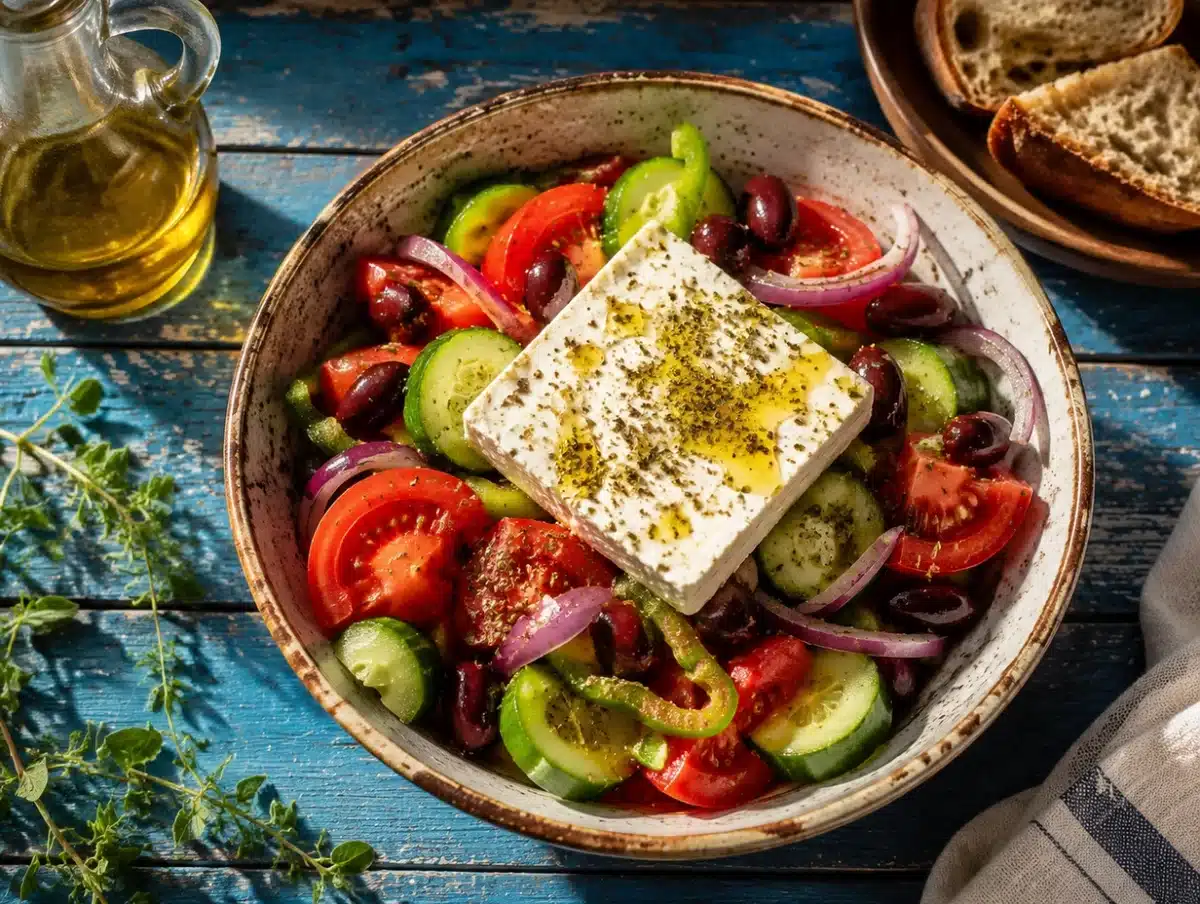
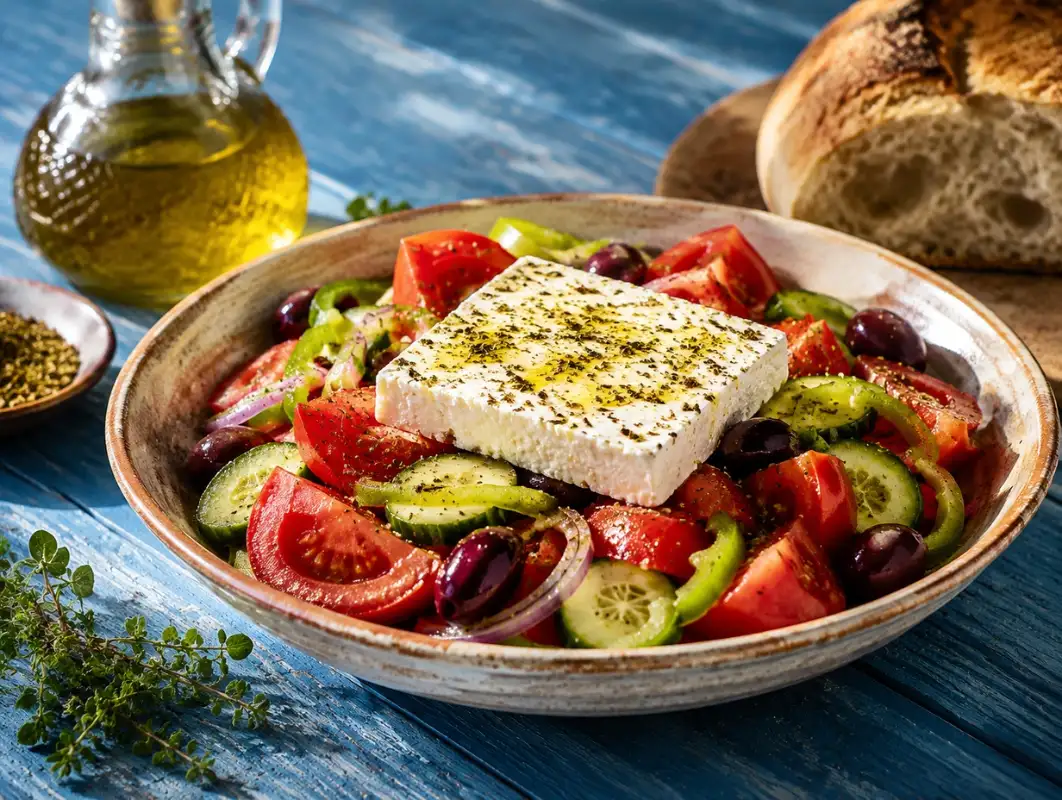
This Classic Greek Salad — Horiatiki in Greek, which literally means “village salad” — is as authentic as it gets, and it comes together in under 10 minutes. No cooking required. We’re talking chunky ripe tomatoes, cool cucumber, sweet red onion, briny Kalamata olives, and a thick slab of creamy feta, all dressed in the best quality extra-virgin olive oil you can find. That’s it. That’s the whole recipe.
Here’s why this classic Greek salad will become your weekly staple:
- ⚡ Ready in 10 minutes — seriously, that’s it
- 💚 Loaded with anti-inflammatory polyphenols, calcium, and heart-healthy fats
- 🍱 Perfect for meal prep — components last 3–4 days in the fridge
- 🌿 100% aligned with Mediterranean Diet principles — vegetables, olive oil, quality cheese
I grew up eating some version of this salad almost every summer weekend — my Tuscan grandmother made her own rustic version, and my mamá in Valencia used whatever was ripest at my father’s market stall. When I moved to San Diego, this became my anchor meal. A bowl of horiatiki and good bread is, honestly, one of the most complete things you can eat. Let me show you how to make it perfectly.
Table of Contents
Classic Greek Salad (Horiatiki)
Ingredients
Method
- 1. Cut tomatoes into 6–8 wedges. Season with a small pinch of salt and let sit 2 minutes to draw out juices.
- 2. Slice cucumber into thick half-moons (½ inch / 1.2 cm). Do not peel English cucumber.
- 3. Slice bell pepper into thin rings or strips. Thinly slice red onion (soak in cold water 5 min for milder flavor, then drain).
- 1. Combine tomatoes, cucumber, bell pepper, and red onion in a large bowl.
- 2. Add Kalamata olives. Drizzle with olive oil. Season with salt, pepper, and dried oregano (rub between fingers as you sprinkle).
- 3. Gently toss once or twice to combine without breaking up tomatoes.
- 4. Lay the feta block or thick slab on top of the salad. Sprinkle with a little extra oregano and a final drizzle of olive oil.
- 5. Serve immediately with crusty bread for dipping into the salad juices.
Notes
Why You’ll Love This Classic Greek Salad (Horiatiki)
Health & Nutrition Benefits
This traditional Greek salad isn’t just delicious — it’s a legitimately impressive nutritional package. Tomatoes are rich in lycopene, a powerful antioxidant that research published in the American Journal of Clinical Nutrition has linked to reduced cardiovascular risk. Olive oil delivers oleocanthal, a natural anti-inflammatory compound. And feta cheese, while rich and creamy, is surprisingly lower in calories and saturated fat than most hard cheeses, while delivering a solid hit of calcium and protein.
- ⚡ Heart-healthy fats from high-polyphenol extra-virgin olive oil
- 💚 Lycopene from ripe tomatoes — anti-inflammatory and cardioprotective
- 🧀 Calcium and protein from authentic feta — around 4g protein per ounce
- 🫒 Kalamata olives packed with oleic acid and vitamins E and K
- 🥒 Cucumber delivers silica and hydration — great for skin health
- 🌿 Red onion contains quercetin, one of the most studied anti-inflammatory flavonoids
Practical Benefits
Beyond the nutrition science, this authentic Greek salad recipe is just brilliantly practical. Ten minutes. No oven. No complicated technique. One bowl to wash. The ingredient list is short enough to memorize, and every single component is available year-round at any grocery store. It doubles effortlessly for a dinner party (I’ve made it for 20 people — just scale and don’t overdress). And if you do a quick prep on Sunday, the vegetables stay beautifully crisp for weekday lunches. Budget-friendly, weeknight-friendly, and honestly impressive to serve to guests. Game. Changer.
The Mediterranean Diet Connection
A. How This Dish Fits Mediterranean Diet Principles
The Blue Zones research and the landmark PREDIMED study both consistently identify the same core foods as pillars of Mediterranean eating: extra-virgin olive oil, tomatoes, cucumbers, onions, legumes, and quality cheese in moderation. The horiatiki salad contains nearly all of them in one bowl. The olive oil here isn’t a garnish — it’s the dressing, the fat source, and a main event in its own right. Using cold-pressed EVOO means you’re getting the full spectrum of polyphenols that nutritional researchers get excited about.
Maya’s Personal Wellness Connection
There’s a version of this salad in almost every coastal Mediterranean culture. My father’s market stall in Valencia always had the best tomatoes in the summer — deep red, so ripe they were almost falling apart — and my mother would slice them thick, add a splash of good oil, and call it a salad. In Tuscany, my grandmother added bread to hers (that’s a panzanella, but the spirit is the same: the best ingredients, barely touched). When I moved to California and started working in corporate wellness, I used this salad as my go-to example for clients: this is what Mediterranean eating actually looks like. Not complicated. Not expensive. Just real food at its best.
Essential Ingredients
Core Ingredients
You need very few ingredients for this horiatiki salad — which means every single one matters. Here’s what to look for:
| Ingredient | Amount | Why It’s Great | Best Pick | Substitution |
| Ripe tomatoes | 4 medium (600g / 21 oz) | Lycopene, vitamin C, natural sweetness; the star ingredient | Vine-ripened or heirloom — never refrigerated | Cherry tomatoes halved (year-round option) |
| English cucumber | 1 large (300g / 10 oz) | Hydration, crunch, silica; balances the briny elements | English (thin skin, fewer seeds) | Persian cucumbers or regular peeled |
| Green bell pepper | 1 medium (150g / 5 oz) | Vitamin C boost, fresh vegetal crunch, traditional in authentic horiatiki | Deep green, firm | Mini sweet peppers |
| Red onion | ½ medium (80g / 3 oz) | Quercetin flavonoids, sharp flavor that mellows against the cheese | Fresh, tight-skinned | Shallots (milder) or white onion |
| Kalamata olives | ½ cup (80g / 3 oz) | Oleic acid, vitamin E, deep brine — essential for authenticity | Unpitted, in brine — not canned | Castelvetrano or green olives (less traditional) |
| Authentic Greek feta (PDO) | 150g / 5 oz | Calcium, protein, tangy creaminess; the defining flavour | Block feta in brine — NEVER pre-crumbled | Bulgarian feta or plant-based feta for vegan |
| Extra-virgin olive oil | 3–4 tbsp (45–60ml) | Heart-healthy fats, carries all the other flavors; the dressing IS the dish | Greek EVOO (high polyphenol), cold-pressed | Avocado oil (less traditional but similar fats) |
| Dried Greek oregano | 1 tsp (1g) | Rosmarinic acid — powerfully anti-inflammatory; fragrant and essential | Dried Greek mountain oregano (from the stem, not powder) | Fresh oregano (use 1 tbsp) or dried Italian oregano |
Maya’s Tip: Please, please — use block feta in brine and slice it yourself. Pre-crumbled feta has been dried out and loses 90% of its creamy texture. It should be a luxurious thick slab on top, not a dusty garnish. This one swap transforms the whole salad.
Dietary Modifications & Storage Prep
| Dietary Need | Replace | With | Notes |
| Vegan | Feta cheese | Marinated firm tofu or plant-based feta | Marinate tofu in lemon juice, salt, and olive oil overnight |
| Lower Sodium | Kalamata olives + feta (both briny) | Rinse olives; use reduced-salt feta | Reduces sodium by ~25%; still flavorful |
| Extra Protein | Standard serving | Add a cup of chickpeas or quartered hard-boiled eggs | Chickpeas keep the Mediterranean profile; adds ~6g protein |
| Dairy-Free | Feta | Avocado cubes + nutritional yeast drizzle | Add avocado right before serving — it browns quickly |
| Meal Prep Ready | Dressing mixed in | Keep olive oil separate until serving | Dressed salad wilts within 2 hrs; undressed components last 3–4 days |
Equipment & Quick Prep
Equipment You’ll Need
Good news: this authentic Greek salad recipe requires minimal equipment. Here’s what actually helps:
| Tool | Why It Helps | Alternative |
| Large mixing bowl (3 qt / 3L) | Gives you room to toss without ingredients flying everywhere | Any wide bowl or shallow serving platter |
| Sharp chef’s knife | Clean cuts make the salad look professional; tomatoes especially need a sharp blade | Serrated knife for tomatoes |
| Cutting board (wooden or bamboo) | Stable surface; won’t dull your knife | Any clean cutting board |
| Salad serving spoons or tongs | Gentle tossing keeps feta intact if you add it last | Two large spoons |
| Citrus juicer (optional) | If adding a squeeze of lemon to the dressing | Fork to squeeze lemon |
Prep-Ahead Checklist
The fastest way to get this on the table: prep your vegetables up to 4 hours ahead and store them dry in a covered bowl. Then add olive oil, olives, feta, and oregano right before serving.
- Wash and dry tomatoes, cucumber, and bell pepper
- Cut tomatoes into wedges (6–8 per tomato, depending on size)
- Slice cucumber into thick half-moons (about ½ inch / 1.2cm thick — chunky is traditional)
- Slice bell pepper into rings or strips
- Thinly slice red onion (soak in cold water 5 min if you want a milder bite)
- Measure out olives and have block feta ready to slice
Pro Tip: Soaking red onion slices in cold water for 5 minutes removes the harsh sulfur compounds without losing flavor. The onion becomes sweeter and more pleasant — a small step with a big payoff.
Step-by-Step Instructions
Prep & First Steps (1–4)
You’ve got this — the entire classic Greek salad takes under 10 minutes once your vegetables are prepped. Let’s go.
- Prepare the tomatoes. Core them and cut each into 6–8 chunky wedges. Season lightly with a pinch of sea salt and let them sit for 2 minutes — this draws out just a touch of juice that becomes part of your natural dressing. Visual cue: the cut flesh should be deep red, juicy, and glossy. Time: 2 minutes.
- Slice the cucumber into thick half-moon rounds, about ½ inch / 1.2 cm. Don’t peel English cucumber — the skin adds color, texture, and nutrients. If using a regular cucumber, peel, halve lengthwise, and scoop the seeds with a spoon. Time: 1 minute.
- Slice the bell pepper into thin rings or strips. Add to the bowl with the tomatoes and cucumbers. This is the step a lot of American-style Greek salad recipes skip — but in authentic horiatiki, green pepper is non-negotiable. It adds a fresh, slightly bitter edge that balances the richness of feta and olive oil. Time: 1 minute.
- Add the red onion slices (drained if you soaked them). At this point, you should have a gorgeous, colorful bowl: red tomatoes, pale green cucumber, bright green pepper, and purple-pink onion. Doesn’t it already look beautiful? Time: 30 seconds.
Assembly & Finishing (5–10)
- Add the Kalamata olives directly to the bowl. No need to pit them first if using traditional whole olives — just give guests a heads-up. Kalamata olives have a deep, fruity brine that seasons the entire salad as they sit. If you can find them packed in olive oil rather than brine, use those — extra flavor.
- Drizzle 3–4 tablespoons of your best extra-virgin olive oil over everything. Don’t be shy here — olive oil IS the dressing for this classic Greek salad. There is no vinegar. No lemon. Just good oil. If you’re using a particularly robust, peppery EVOO, it will finish with a gorgeous catch in the back of your throat — that’s the polyphenols, and it means you’ve chosen well.
- Season with ½ teaspoon of sea salt and a good amount of freshly ground black pepper. Add dried Greek oregano — hold it between your fingers and rub it gently as you sprinkle, which releases the essential oils. Your kitchen should smell incredible right now.
- Gently toss the salad just once or twice — you want everything coated in oil without breaking up the tomatoes. Authentic horiatiki is not a tossed salad in the American sense; it’s more of a composed, gently combined one.
- Lay one thick, beautiful slab of feta (about 1 inch / 2.5 cm thick) on top of the salad. Do not crumble it. This is the traditional presentation — the cheese sits like a crown on top, and each person breaks off their portion as they serve themselves. Sprinkle a little extra oregano over the feta.
- Finish with a final drizzle of olive oil directly over the feta block. Serve immediately alongside good bread for dipping into those gorgeous juices at the bottom of the bowl. For a complete meal, pair this with our hearty and satisfying
Tips, Tricks & Shortcuts
Success Tips
- Use room-temperature tomatoes — refrigerating tomatoes destroys their texture and dulls their flavor. Always. Always. Store them on your counter.
- The olive oil is the dressing — invest in a good bottle. A peppery, high-polyphenol Greek EVOO makes this salad sing. This is not the moment for light or blended olive oil.
- Cut everything chunky — this is village food, not fine dining. Big pieces are traditional and actually taste better (more texture contrast in each bite).
- Add the feta last and keep it whole — it looks stunning and stays creamy instead of dissolving into the salad
- Use dried oregano, not fresh — traditional horiatiki always uses dried, specifically Greek mountain oregano. The dried version has a more concentrated, earthy flavor.
- Don’t add vinegar — authentic horiatiki has no vinegar, no lemon. The natural acidity of the tomatoes and the brine from the olives is all you need.
Maya’s Tip: I tested this salad with six different olive oils side by side — the difference was staggering. A high-quality Greek EVOO (look for “first cold press” and a harvest date on the label within the last 12 months) transformed it from good to extraordinary. Budget for it — it’s worth every cent.
Common Mistakes to Avoid
| Mistake | Result | Fix |
| Refrigerating tomatoes before use | Mealy, bland tomatoes with terrible texture | Store at room temperature always; use within 3 days of ripeness |
| Using pre-crumbled feta | Dry, dusty, flavorless cheese that disappears in the salad | Buy block feta in brine and slice it yourself |
| Adding the dressing too early | Soggy cucumbers and wilted vegetables by the time you serve | Add olive oil max 15 min before serving, not hours ahead |
| Cutting vegetables too small | Loses the rustic, chunky texture authentic to horiatiki | Cut tomatoes into 6–8 wedges; cucumber into thick half-moons |
| Using regular dried Italian oregano | Less aromatic, milder flavor profile — noticeable difference | Seek out dried Greek mountain oregano (tied in bundles at Greek markets) |
Variations & Serving Ideas
Recipe Variations
The beauty of this horiatiki salad is its versatility as a base. Here are some of my favorite adaptations:
- Protein-packed: Add a cup of cooked chickpeas or white beans — completely traditional in rural Greek cooking, and it turns this into a complete meal.
- With eggs: Top with 2 sliced hard-boiled eggs per serving for extra protein without disrupting the flavor profile. A very common taverna-style addition.
- Smoked turkey addition: A handful of thinly sliced smoked turkey strips adds a savory, satisfying element for bigger appetites — it works beautifully with the brine and feta.
- Bread bowl version: Serve over thick slices of toasted sourdough or pita bread — the bread soaks up the tomato juices and olive oil and becomes the best thing you’ve ever eaten.
- Winter version: When summer tomatoes are out of season, use halved cherry tomatoes (sweeter, more consistent) and add sliced Medjool dates for sweetness. Unusual but genuinely beautiful.
- Grain bowl: Add a base of farro or bulgur wheat for a Mediterranean grain bowl that meal preps beautifully.
Serving Suggestions & Pairings
This classic Greek salad shines as a starter, side, or light main. Serve it alongside our golden and crispy homemade falafel for a complete plant-based Mediterranean feast, or pair it with our fragrant chicken shawarma for a heartier dinner. It’s also a gorgeous companion to our creamy classic hummus and warm pita bread for an effortless spread.
Beverage pairings that complement the fresh, briny flavors:
- Sparkling water with cucumber ribbons and fresh mint — so refreshing alongside the salty feta
- Iced hibiscus tea — the tartness plays beautifully with the olive oil richness
- Fresh-squeezed lemonade with a pinch of sea salt — surprisingly perfect
- Chilled pomegranate juice — a stunning pairing with the Greek flavors
Meal Prep & Storage
Storage Guide
| Method | Container | Duration | Notes |
| Dressed salad | Airtight container | Up to 2 hours at room temp; up to 1 day fridge | Vegetables soften after dressing; best served fresh |
| Undressed components (no olive oil) | Airtight glass container | 3–4 days refrigerated | Keep feta separate in its brine; dress right before serving |
| Feta block in brine | Original container or small jar with brine | Up to 1 week refrigerated | Feta keeps best submerged in brine — don’t discard it! |
| Tomatoes (separately) | Room temperature, covered | 2–3 days | Never refrigerate tomatoes — cold ruins texture permanently |
| Meal-prepped portions | Individual airtight containers | 3 days (undressed) | Add olive oil, feta, and olives right before eating |
Meal Prep Assembly Tips
The Greek salad is one of the most meal-prep-friendly recipes in my rotation. Here’s how I batch it for the week:
- Prep vegetables Sunday evening: wash, cut, and store cucumber, bell pepper, and onion together in a large airtight container in the fridge
- Store tomatoes separately at room temperature — cutting them too far ahead causes them to weep and go mushy
- Keep olives and feta in their brine separately in the fridge
- When ready to eat: combine all components in a bowl, drizzle olive oil, add oregano and seasoning, top with feta — done in under 2 minutes
- For office lunches: layer cucumber, pepper, and onion at the bottom of a mason jar; place tomatoes on top; keep feta and olives in a small separate container; dress at your desk
Pro Tip: The biggest meal prep mistake with horiatiki? Mixing everything together and refrigerating it dressed. You end up with soggy, sad vegetables swimming in cold olive oil. Keep components dry and separate — dress it fresh every time. Takes 90 seconds. Completely worth it.
Frequently Asked Questions
Substitutions & Technique Questions
Q: Does authentic horiatiki have lettuce? Nope — and this is the most common misconception about traditional Greek salad! Horiatiki (village salad) has absolutely no lettuce in it. The base is always tomato, cucumber, pepper, and onion. If your favorite Greek restaurant serves it over romaine, that’s an Americanized adaptation. The original is better — trust the vegetables.
Q: Can I use any type of feta? Ideally, use authentic Greek PDO (Protected Designation of Origin) feta, which by EU law must be made in specific regions of Greece from sheep’s milk (or sheep and goat mixed). It has a creamier, tangier, more complex flavor than bulk feta. Look for it in the specialty cheese section. Bulgarian feta is a good second choice — creamier and slightly milder.
Q: Do I add lemon juice or vinegar to the dressing? Traditional horiatiki uses neither! The dressing is simply high-quality extra-virgin olive oil, sea salt, black pepper, and dried oregano. The natural acidity from the tomatoes and brine from the olives provide all the brightness needed. If you love extra tang, a tiny squeeze of lemon (half a teaspoon) is the most I’d add — and even then, it’s optional.
Q: What if my tomatoes aren’t ripe enough? This is a real problem in winter months! My solution: use halved cherry tomatoes year-round instead — they’re reliably sweet even in December. Another option: toss under-ripe tomatoes with a pinch of sugar and salt and let them macerate for 10 minutes. They’ll soften and sweeten significantly.
Dietary, Nutrition & Meal Prep Questions
Q: Is classic Greek salad healthy? Very much so — and I say this as someone with a B.S. in Nutrition Science. One serving provides around 250 calories with 8g of plant protein, anti-inflammatory olive oil, lycopene from tomatoes, and calcium from feta. It’s a genuinely nutrient-dense dish. As a certified health coach, I’d note: I’m not a doctor or registered dietitian — for specific health conditions, always consult your healthcare provider.
Q: How many calories in a serving of Greek salad? One generous serving of this authentic Greek salad is approximately 250 calories, with most of the caloric density coming from heart-healthy olive oil and feta. Full nutrition facts are in the recipe card below. The beautiful thing about this salad is how filling it is for its caloric value — the fat from olive oil and feta triggers satiety signals powerfully.
Q: Is horiatiki gluten-free? Yes! This classic Greek salad is naturally 100% gluten-free as written — no grains, no flour, no cross-contamination risk from any ingredient. Just vegetables, olive oil, olives, and cheese. It’s also naturally grain-free and low-carb, making it suitable for a wide range of dietary approaches.
Q: Can I make it ahead for a party? Absolutely — and I do it all the time. The trick is to prep all vegetables up to 4 hours ahead and store them dry (no dressing). When guests arrive, combine everything in a large bowl or serving platter, add olive oil and seasoning, and lay the feta on top. The whole assembly takes 3 minutes. Everyone thinks you just made it. (You kind of did!)
Nutritional Highlights & Closing
Why This Recipe Is Good for You
Let me put on my nutrition hat for just a moment (Barcelona nutrition degree, Cornell plant-based certificate — it genuinely informs everything I cook). This traditional Greek salad is one of the most nutritionally complete no-cook dishes in the Mediterranean canon, and here’s why:
- Tomatoes provide lycopene, which is more bioavailable when paired with fat — making olive oil the perfect companion. Research consistently links lycopene intake to reduced markers of cardiovascular inflammation.
- Extra-virgin olive oil contains oleocanthal, a compound whose anti-inflammatory mechanism has been compared to ibuprofen in peer-reviewed research. Using 3 tablespoons means you’re getting a meaningful therapeutic dose.
- Kalamata olives deliver a prebiotic fiber that feeds beneficial gut bacteria — they’re a quietly impressive gut-health food.
- Feta, despite its bold flavor, is lower in calories than most aged cheeses at around 75 calories per ounce, with strong calcium and a decent protein hit per serving.
Together, you get a dish that’s anti-inflammatory, gut-friendly, high in calcium, and packed with vitamins C, E, and K. And it tastes like a Greek summer. That’s the Mediterranean Diet magic.
Closing Thoughts & Your Next Steps
This is the recipe I make when I need to feel grounded. When work is crazy, when meal prep didn’t happen, when I need something beautiful and nourishing in under 10 minutes. A big bowl of horiatiki with good bread is one of the most complete meals I know.
I want to see your version! Tag me on Instagram @MayaCastellanoKitchen — show me those tomatoes, that feta slab, that gorgeous olive oil drizzle. Leave a comment below and tell me what variation you tried. Did you add chickpeas? Go the vegan route? Make it for a party? Every version makes me happy.
For more Mediterranean salad inspiration, try our tangy and satisfying Mediterranean pasta salad, the bright and herby orzo salad with roasted vegetables, or my ultra-refreshing watermelon feta salad for summer entertaining. Happy cooking, amici!