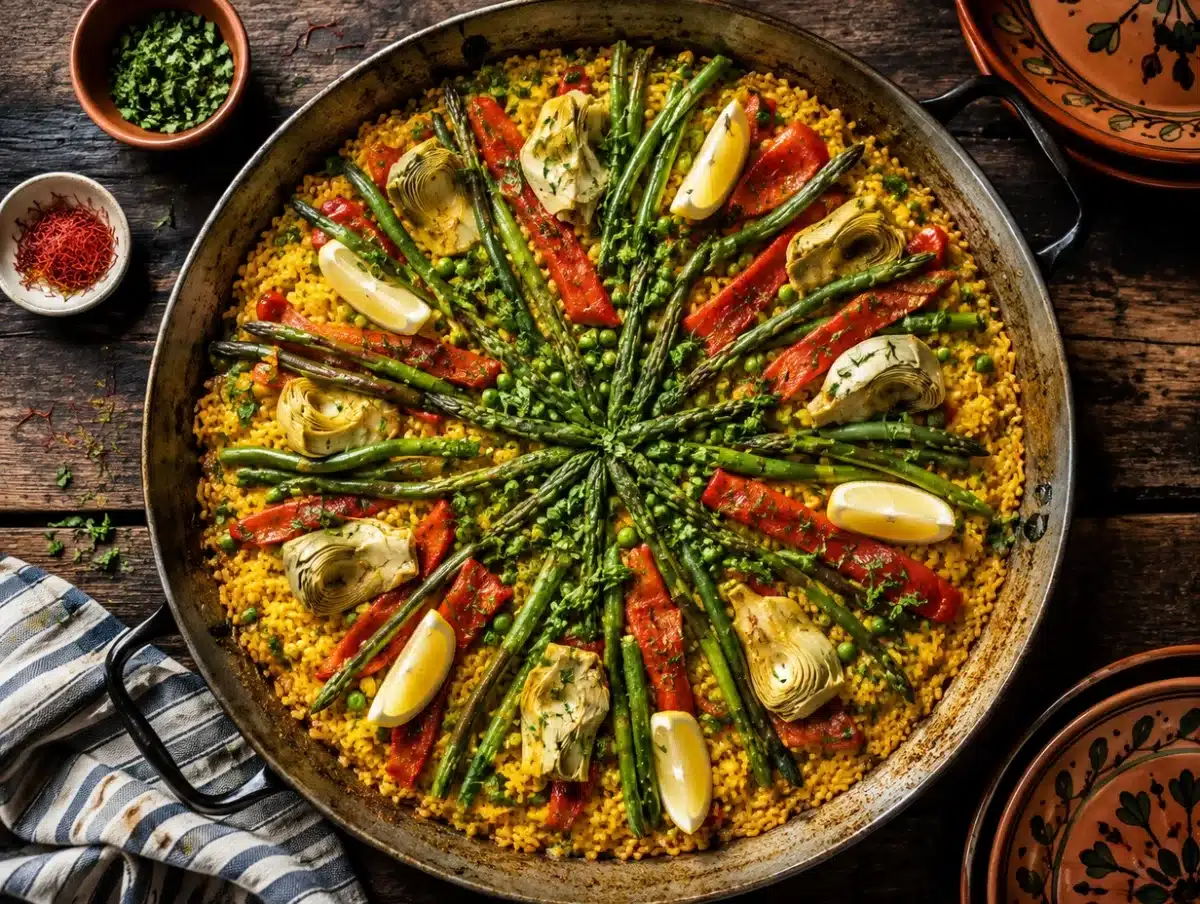
Can we talk about how the first warm weekend of spring makes you crave something bright, colorful, and bursting with fresh flavor? That’s exactly the energy behind this spring vegetable paella — a gorgeous one-pan Spanish rice dish that celebrates the season’s best produce.
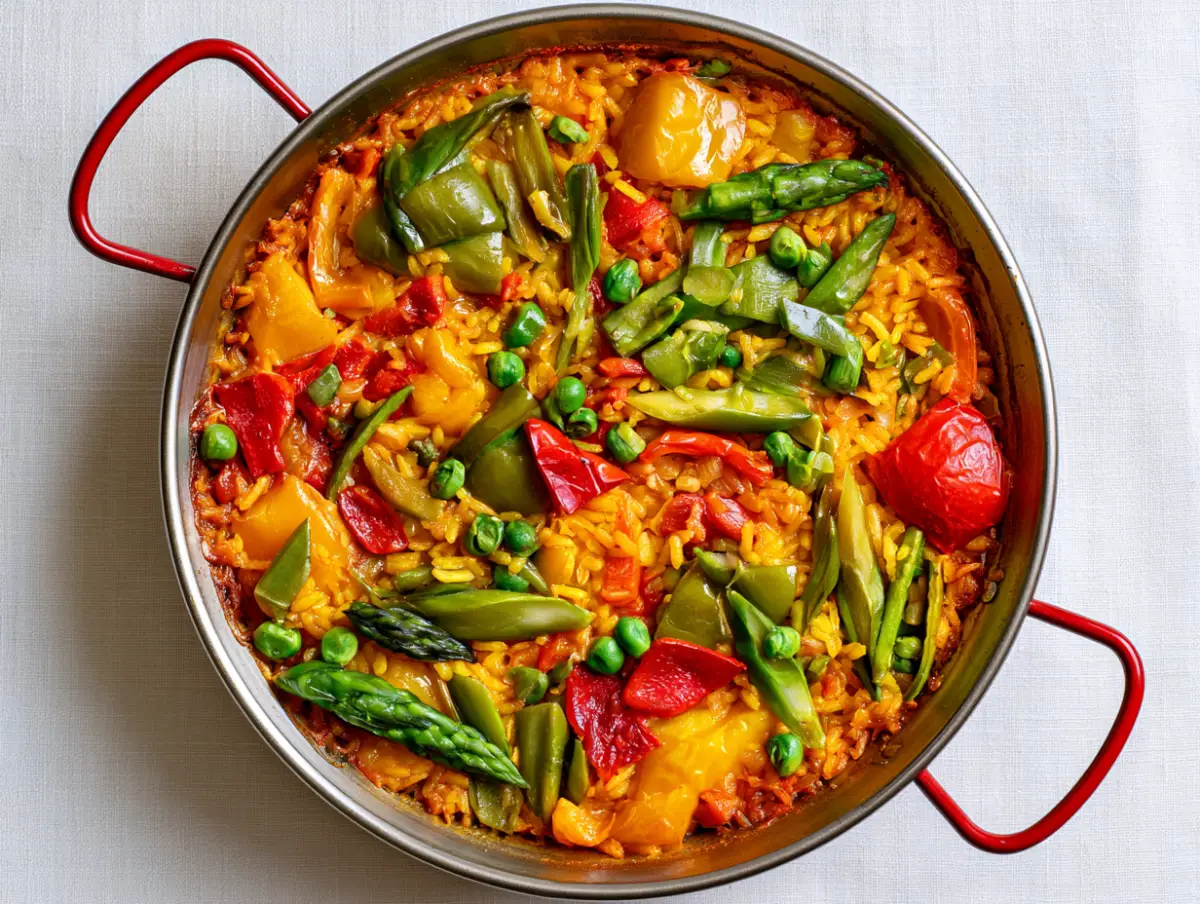
Picture this: golden saffron rice studded with tender asparagus, baby artichokes, sweet peas, and roasted red peppers, all crowned with that irresistible crispy bottom the Spanish call socarrat. It’s vibrant, satisfying, and smells absolutely intoxicating — the kind of dish that draws everyone into the kitchen before you even plate it.
I grew up watching my mama prep Sunday paella on our balcony overlooking Valencia’s beaches, and this vegetarian paella is my love letter to those memories. It’s packed with plant-based protein from chickpeas, heart-healthy fats from extra virgin olive oil, and anti-inflammatory benefits from saffron and smoked paprika. The best part? It comes together in about 45 minutes in a single pan.
Whether you’re meal prepping for the week, hosting a spring dinner party, or just want a weeknight-friendly Mediterranean dinner that looks way fancier than the effort involved — this one’s for you. Let’s bring a little Valencia sunshine into your kitchen.
Table of Contents
Spring Vegetable Paella
Ingredients
Method
- 1. Warm vegetable broth in a saucepan. Add saffron threads and smoked paprika. Remove from heat; steep at least 10 minutes.
- 2. Heat olive oil in a 15” paella pan or large skillet over medium heat. Sauté onion 5 min until soft. Add garlic, cook 30 sec. Stir in crushed tomatoes; cook 2–3 min until thickened.
- 3. Add rice to the sofritto. Stir to coat; toast 1–2 min until edges turn translucent.
- 4. Pour in saffron broth. Add artichoke hearts and chickpeas. Stir ONCE to distribute. Do not stir again.
- 5. Bring to a strong simmer. Cook uncovered 10 min at a steady bubble.
- 6. Nestle asparagus and red pepper strips into rice. Scatter peas on top. Do not stir.
- 7. Reduce heat to medium-low. Cook 8 min until rice absorbs nearly all liquid.
- 8. Optional socarrat: increase heat to medium-high for 1–2 min until you hear a gentle crackle.
- 9. Remove from heat. Cover with a clean kitchen towel; rest 5 min.
- 10. Squeeze lemon over the top, garnish with parsley and lemon wedges. Serve from the pan.
Notes
Why You’ll Love This Spring Vegetable Paella
Health & Nutrition Benefits Worth Celebrating
This isn’t just a pretty pan of rice (though the colors are stunning, I won’t lie). Every element of this vegetable paella recipe delivers real nutritional value. Saffron — the world’s most prized spice — contains crocin and safranal, compounds linked to improved mood and antioxidant activity in published research from the Journal of Integrative Medicine. Chickpeas provide 15g of plant protein and 12g of fiber per cup. Asparagus is loaded with folate and vitamin K, and artichokes rank among the highest-antioxidant vegetables on the ORAC scale.
⚡ Anti-inflammatory saffron + smoked paprika 💚 Heart-healthy olive oil as the only cooking fat 🍱 Naturally gluten-free, vegan, and halal
Practical Benefits for Real Life
Here’s the best part — this spring vegetable paella is a genuine one-pan meal. One pan, 45 minutes, 6 generous servings. The grocery list is short and budget-friendly (around $4 per serving), and every component stores beautifully for meal prep. I feed it to my corporate wellness clients during spring cooking demos and the reaction is always the same: “Wait, THIS is healthy?”
⚡ 45-minute one-pan meal 💚 Budget-friendly at ~$4/serving 🍱 Meal prep-friendly — stores 4 days, freezes 2 months
The Mediterranean Diet Connection
How Paella Embodies Mediterranean Eating
Paella is arguably THE dish of the Mediterranean diet. Originating in Valencia — my hometown — it was created by farmers and workers who used what the land provided: rice from the marshes, vegetables from the huerta (garden), olive oil, and saffron. This plant-based paella follows those exact principles: whole grains, abundant vegetables, legumes for protein, and olive oil as the primary fat. The PREDIMED study consistently shows that this eating pattern reduces cardiovascular risk by up to 30%.
My Personal Valencia Connection
Of all the recipes on this blog, this one is the most personal. My father would bring home saffron from his market stall — tiny threads that turned ordinary rice into liquid gold. My mama always said, “The secret to good paella is patience. Don’t touch the rice.” (Easier said than done when you’re eight and curious!) Now, standing in my San Diego kitchen with the windows open and a spring breeze coming in, every batch of this saffron rice transports me right back to our balcony in Valencia. That’s the magic of cooking with intention.
Essential Ingredients for Your Spring Vegetable Paella
Core Ingredients Breakdown
Here’s everything you need to bring this Spanish rice dish to life. I’ve organized by component to make your shopping trip a breeze.
| Ingredient | Amount | Why It’s Great | Best Pick | Substitution |
| Bomba or Calasparra Rice | 1.5 cups (300g) | Absorbs 3x its volume in broth; stays firm, never mushy | Spanish bomba rice | Arborio rice (stir less) |
| Saffron Threads | 1/2 tsp (large pinch) | Antioxidant-rich; iconic golden color + floral aroma | Spanish La Mancha saffron | 1/4 tsp turmeric + pinch paprika |
| Asparagus | 1 bunch (1 lb/450g) | Loaded with folate, vitamin K; quintessential spring flavor | Thin spears, bright green tips | Broccolini or green beans |
| Baby Artichokes | 6–8 (or 14 oz can) | One of highest-antioxidant vegetables; earthy, nutty | Fresh with tight leaves | Canned artichoke hearts, drained |
| Green Peas | 1 cup (150g) | Protein + fiber boost; vibrant color pop | Fresh in-season or frozen | Edamame (shelled) |
| Chickpeas | 1 can (15 oz/425g) | 15g protein + 12g fiber per cup; hearty, satisfying | Low-sodium, drained + rinsed | White beans (cannellini) |
| Smoked Paprika | 1 tsp | Signature smoky depth; anti-inflammatory capsaicin | Spanish pimerntón de la Vera | Sweet paprika + pinch cayenne |
| Extra Virgin Olive Oil | 3 tbsp (45 ml) | Heart-healthy monounsaturated fats; flavor backbone | Spanish Picual or Arbequina | Avocado oil |
For the sofritto base, you’ll also need 1 medium yellow onion, 4 cloves of garlic, 1 can (14 oz) crushed tomatoes, 1 roasted red pepper (jarred is fine!), 4 cups vegetable broth, 1 lemon, and fresh flat-leaf parsley. If you’re near a farmer’s market, grab the asparagus and artichokes there — the flavor difference is real.
Dietary Modifications & Prep Storage Tips
I tested every swap below at least twice (okay, the turmeric-for-saffron test happened five times because I’m particular). Here’s what actually works:
| Dietary Need | Replace | With | Notes |
| Nut-Free | Already nut-free! | — | Naturally nut-free as written |
| Soy-Free | Already soy-free! | — | Naturally soy-free as written |
| Low-Sodium | Regular broth + canned items | Low-sodium broth + no-salt chickpeas | Season at end to taste |
| Higher Protein | Peas alone | Peas + extra can chickpeas or white beans | Adds ~8g protein per serving |
| Brown Rice Version | Bomba/Arborio rice | Short-grain brown rice | Increase broth by 1 cup; cook 40 min total |
💡 Maya’s Tip: Store prepped vegetables in separate containers: blanched artichokes keep 3 days, trimmed asparagus in damp paper towel keeps 4 days, and the sofritto base can be made 2 days ahead and refrigerated.
Equipment & Quick Prep
Essential Kitchen Tools
You don’t need a wood-fired outdoor setup for incredible paella (though if you have one, I’m jealous!). Here’s what works in a modern kitchen:
| Tool | Why It Helps | Alternative |
| 15” Paella Pan (carbon steel) | Wide surface = thin rice layer = better socarrat | 12” cast iron skillet or large oven-safe skillet |
| Large Rimmed Sheet Pan | Roasting spring vegetables alongside | Any oven-safe tray |
| Fine-Mesh Sieve | Rinsing chickpeas; straining broth | Colander with small holes |
| Wooden Spoon (just one stir!) | Initial mixing without scratching pan | Silicone spatula |
| Kitchen Timer | Precise 18-min simmer = perfect rice | Phone timer works great |
Prep-Ahead Checklist (20 Minutes Active Prep)
My Meal Prep Sunday routine for this one is quick. Trim asparagus (snap off woody ends — they’ll break naturally at the right spot), prep artichokes (halve and remove tough outer leaves, or just drain the can), dice onion, mince garlic, drain and rinse chickpeas, measure saffron into broth and let it steep (this is key — saffron needs at least 10 minutes to bloom!). Total hands-on time: about 20 minutes.
Step-by-Step Instructions for Spring Vegetable Paella
Prep & Sofritto (Steps 1–4)
Step 1: Bloom the Saffron (10 min passive). Warm 4 cups of vegetable broth in a saucepan until it just starts to steam. Drop in saffron threads and smoked paprika. Remove from heat and let steep at least 10 minutes (longer is better!). The broth will turn a gorgeous deep gold — this is your liquid sunshine. Saffron’s flavor compounds are fat- and water-soluble, so steeping extracts maximum color and aroma. Such a game-changer.
Step 2: Build the Sofritto (8 min). Heat 3 tbsp olive oil in your paella pan or large skillet over medium heat. Sauté diced onion for 5 minutes until translucent and soft. Add minced garlic and cook 30 seconds — until fragrant but NOT brown. Stir in crushed tomatoes and cook 2–3 minutes until the mixture thickens and darkens slightly. This concentrated tomato base is the sofritto — the soul of every great paella. My mama would say, “If your sofritto is right, the paella takes care of itself.”
[IMAGE 6: Sofritto cooking – sofritto-base-spring-paella.jpg]
Step 3: Toast the Rice (2 min). Add bomba rice to the sofritto and stir to coat every grain with the tomato-oil mixture. Toast for 1–2 minutes until the grains turn slightly translucent at the edges. This step creates a light seal on the outside of each grain, which helps the rice absorb broth without becoming mushy. (Harold McGee explains this beautifully — the starch on the surface gelatinizes, forming a barrier.)
Step 4: Add the Saffron Broth + First Vegetables (1 min). Pour in the saffron-infused broth. Add halved artichoke hearts and chickpeas. Give ONE good stir to distribute everything evenly. Now — and this is critical — DO NOT STIR AGAIN. Seriously! I know it’s tempting. The rice needs to sit undisturbed to develop the socarrat, that legendary crispy bottom. You’ve got this!
💡 Maya’s Tip: The “no-stir” rule is what separates paella from risotto. Stirring releases starch and makes the rice creamy (great for risotto, disaster for paella). Set a timer and walk away!
Cooking & Assembly (Steps 5–10)
Step 5: Simmer on Medium (10 min). Bring the broth to a strong simmer. Cook uncovered for 10 minutes at a steady, moderate bubble. The liquid should reduce by about half. Resist the urge to stir! Rotate the pan occasionally if your burner heats unevenly.
Step 6: Add Spring Vegetables (1 min). Nestle asparagus pieces and roasted red pepper strips into the rice (tuck them in gently, don’t stir). Scatter peas over the top. These spring vegetables will steam as the rice finishes cooking, staying vibrant green and perfectly tender.
Step 7: Reduce Heat & Finish (8 min). Lower heat to medium-low. Continue cooking 8 minutes until the rice has absorbed almost all the liquid. You’ll hear a faint crackling sound from the bottom of the pan — that’s the socarrat forming! The aroma of saffron and smoky paprika rice will be absolutely incredible at this point.
Step 8: Create the Socarrat (2 min, optional but SO worth it). Increase heat to medium-high for the final 1–2 minutes. Listen for a gentle sizzle. After 90 seconds, carefully check the bottom with a spatula — you want golden, not burnt. The socarrat should be crispy and deeply flavored, like the best part of a pot of rice. Game. Changer.
Step 9: Rest & Garnish (5 min). Remove from heat and cover loosely with a clean kitchen towel (not foil — towel absorbs excess steam while keeping warmth). Rest 5 minutes. Then squeeze fresh lemon juice over the top and scatter with chopped parsley and lemon wedges.
Step 10: Serve Family-Style from the Pan. Bring the whole pan to the table — this is tradition! Spoon servings directly from the pan, making sure everyone gets a piece of that socarrat from the bottom. Pass extra lemon wedges.
The rice technique here is similar to what you’ll find in our classic Greek lemon rice pilafi — both rely on the no-stir method for perfectly separate grains.
Tips, Tricks & Shortcuts
7 Success Tips for Perfect Paella Every Time
After testing 6 versions of this spring vegetable paella in my San Diego kitchen (and one smoky outdoor version on my neighbor’s grill!), here are the non-negotiables:
1. Bloom your saffron at least 10 minutes — steeping unlocks 80% more flavor than adding it dry. 2. Use a wide, shallow pan. The rice should be no more than 1 inch deep for even cooking and proper socarrat. 3. Get the sofritto right — cook it down until it darkens; this concentrated base is the flavor engine. 4. ONE stir only, after adding the broth. Then hands off! 5. Keep the simmer steady — too high and the bottom burns before the top cooks; too low and you get mush. 6. Trust your ears: that faint crackle means socarrat is forming. 7. Rest with a towel, not foil. Foil traps steam and makes the rice soggy.
💡 Maya’s Tip: Make double the sofritto and freeze half in an ice cube tray. Next time you want paella, just pop out a few cubes and you’re halfway there. This is what I teach in my online Mediterranean meal prep courses!
For another one-pan Mediterranean approach, our lahanorizo (Greek cabbage rice) uses a similarly simple stovetop method with incredible results.
Common Mistakes to Avoid
| Mistake | Result | Fix |
| Stirring the rice after broth is added | Creamy, risotto-like mush instead of separate grains | Stir ONCE when adding broth, then hands off |
| Using long-grain rice | Dry, separated grains that don’t absorb flavor | Use bomba, calasparra, or arborio (short-grain) |
| Adding saffron dry to the pan | Uneven color, muted flavor | Steep in warm broth 10+ minutes first |
| Overcrowding vegetables on top | Steamed mush; rice can’t form socarrat | Nestle veggies lightly; don’t pile high |
| Covering the pan while cooking | Trapped steam prevents socarrat | Cook uncovered; only cover during 5-min rest |
Variations & Serving Suggestions
Protein Swaps & Seasonal Adaptations
This plant-based paella is a canvas for creativity. For extra protein, add white beans alongside the chickpeas (our Mediterranean white bean salad uses a similar bean base with beautiful results). Summer version: swap asparagus for zucchini and green beans; add cherry tomatoes. Fall/winter: use butternut squash, roasted cauliflower, and mushrooms. Want to go fully vegan paella? It already is! Just confirm your broth is plant-based. For non-vegetarian guests, you can cook shrimp or chicken separately and add on top.
Seasonal artichokes not available? Our gemista (Greek stuffed peppers and tomatoes) uses some of the same spring vegetables in a totally different (but equally delicious) format.
Serving Suggestions & Beverage Pairings
Paella is traditionally served family-style, straight from the pan. Start the meal with our whipped feta with hot honey on warm crusty bread, or a simple green salad dressed with lemon and olive oil.
For drinks, keep it festive and fresh: sparkling water with sliced oranges and fresh mint (the Valencian way!), homemade lemonade with a splash of pomegranate juice, iced hibiscus tea, or chilled chamomile tea with honey. On warm evenings, try watermelon agua fresca — it’s incredibly refreshing alongside the smoky paprika rice.
For a complete Mediterranean spread, our whipped feta garlic confit dip and some warm garlic Parmesan focaccia round things out beautifully.
Meal Prep & Storage
Storage Guide
| Method | Container | Duration | Notes |
| Refrigerator (cooked) | Airtight glass container | 3–4 days | Reheat with splash of broth to refresh |
| Freezer (cooked) | Freezer-safe container, pressed flat | Up to 2 months | Thaw overnight; reheat in skillet |
| Sofritto (prepped) | Small jar or ice cube tray | Fridge 5 days / Freezer 3 months | Frozen cubes = instant paella starter |
| Prepped vegetables | Separate airtight containers | 2–4 days fridge | Keep dry; blanched artichokes in water + lemon |
Meal Prep Assembly Tips
My favorite strategy for this spring vegetable paella: make the full batch Sunday evening. Portion into glass containers. The rice actually develops deeper saffron flavor overnight — something I discovered entirely by accident (happy accident!). Reheat in a skillet over medium heat with 2 tablespoons of broth per portion to bring the moisture back. Want to get fancy? Reheat in the skillet until the bottom crisps again for a fresh socarrat. Add a side of our Mediterranean chickpea power bowl for variety through the week. Meal prep-friendly!
Frequently Asked Questions
Substitution & Technique Q&As
What’s the best rice for spring vegetable paella? Spanish bomba rice is the gold standard — it absorbs up to three times its volume in liquid while staying perfectly firm. Calasparra rice is another excellent Spanish variety. In a pinch, arborio rice works (just reduce broth slightly). Avoid long-grain like basmati or jasmine; they won’t give you the right texture.
Can I skip the saffron? It’s expensive! I understand — quality saffron isn’t cheap! For a budget substitute, use 1/4 tsp turmeric plus a pinch of sweet paprika. You’ll get the golden color but miss some of saffron’s floral complexity. My honest take from my nutrition background: buy a small quantity of real saffron once — a little goes a very long way, and it lasts a year stored in a dark container.
How do I get good socarrat without burning the rice? Patience and trust! After the rice has absorbed most liquid, increase heat to medium-high for just 90 seconds to 2 minutes. Listen for a gentle crackle (not aggressive sizzling). Tilt the pan and peek at the bottom with a spatula. Golden and crispy = perfect. Dark brown = pull it off immediately.
Can I make paella in the oven? Yes! Build the sofritto on the stovetop through Step 4, then transfer to a preheated 375°F/190°C oven for 20–25 minutes. This gives more even heat distribution, which is great if your stovetop burners are smaller than your pan. You’ll sacrifice some socarrat, but the rice texture will be excellent.
For more tips on working with Mediterranean rice dishes, our creamy chicken orzo covers similar grain-cooking techniques.
Dietary, Nutrition & Meal Prep Q&As
Is this spring vegetable paella vegan? Yes! As written, this recipe is 100% vegan, gluten-free, and halal. Just verify your vegetable broth is plant-based (some brands sneak in chicken flavor). It’s one of my most-requested recipes for clients following plant-forward diets.
What are the macros per serving? Each serving provides approximately 340 calories, 10g protein, 8g fat, and 58g carbs with 9g fiber. The combination of chickpeas, rice, and vegetables delivers a complete amino acid profile. From my Cornell plant-based nutrition training, I always say: varied whole-food plant meals create nutritional completeness naturally.
Does paella reheat well? Beautifully! The saffron rice actually tastes even more developed the next day. Reheat in a skillet with a splash of broth over medium heat. Microwave works in a pinch (add 1 tbsp water, cover, 2–3 minutes). The skillet method can even recreate a second socarrat — double the crispy goodness!
Can I add cheese? Traditionally, paella never includes cheese (my mama would faint!). That said, a sprinkle of Manchego on individual portions is delicious if you want to experiment — just know it moves us away from the authentic paella de verduras tradition.
Is this kid-friendly? Absolutely! The mild saffron rice, sweet peas, and chickpeas are all kid favorites. If your little ones are picky about artichokes, just leave them out. I’ve served this to families during my wellness workshops and kids consistently go back for seconds.
Nutritional Highlights & Final Thoughts
Why This Recipe Is Good for You
Let me put on my nutrition coach hat (just for a moment — I’ll keep it light!). This spring vegetable paella delivers an impressive nutritional profile: 10g of plant protein per serving from chickpeas and peas, 9g of gut-friendly fiber, significant potassium from artichokes, and vitamin K from asparagus. The saffron provides crocin and safranal — compounds that research from the Blue Zones studies links to longevity in Mediterranean populations.
The olive oil base delivers heart-healthy oleic acid, and the smoked paprika contains capsaicin, which studies show supports metabolism and reduces inflammation. At 340 calories per generous serving, this is the kind of nutrient-dense meal that leaves you satisfied without feeling heavy. Balance over restriction — that’s always the goal.
For another antioxidant-rich Mediterranean meal, our Greek feta egg bake follows the same philosophy of nutrient-dense ingredients that taste incredible.
Let’s Connect!
I truly hope this spring vegetable paella becomes part of your cooking rotation the way it’s been part of my family’s for generations. Whether you’re serving it at a Saturday dinner party or portioning it into meal prep containers for the week, it’s one of those dishes that just makes people happy.
Made this recipe? I’d LOVE to see it! Tag me on Instagram and let me know in the comments how it turned out. Did you get the socarrat? (Tell me everything!)
For more Mediterranean spring cooking, explore our pasta primavera recipe, the satisfying lemon chickpea patties with yogurt sauce, and our gorgeous Mediterranean sheet pan salmon for a pescatarian feast.
Until next time — eat well, live well, and don’t forget: don’t stir the rice! 🥘✨ — Maya