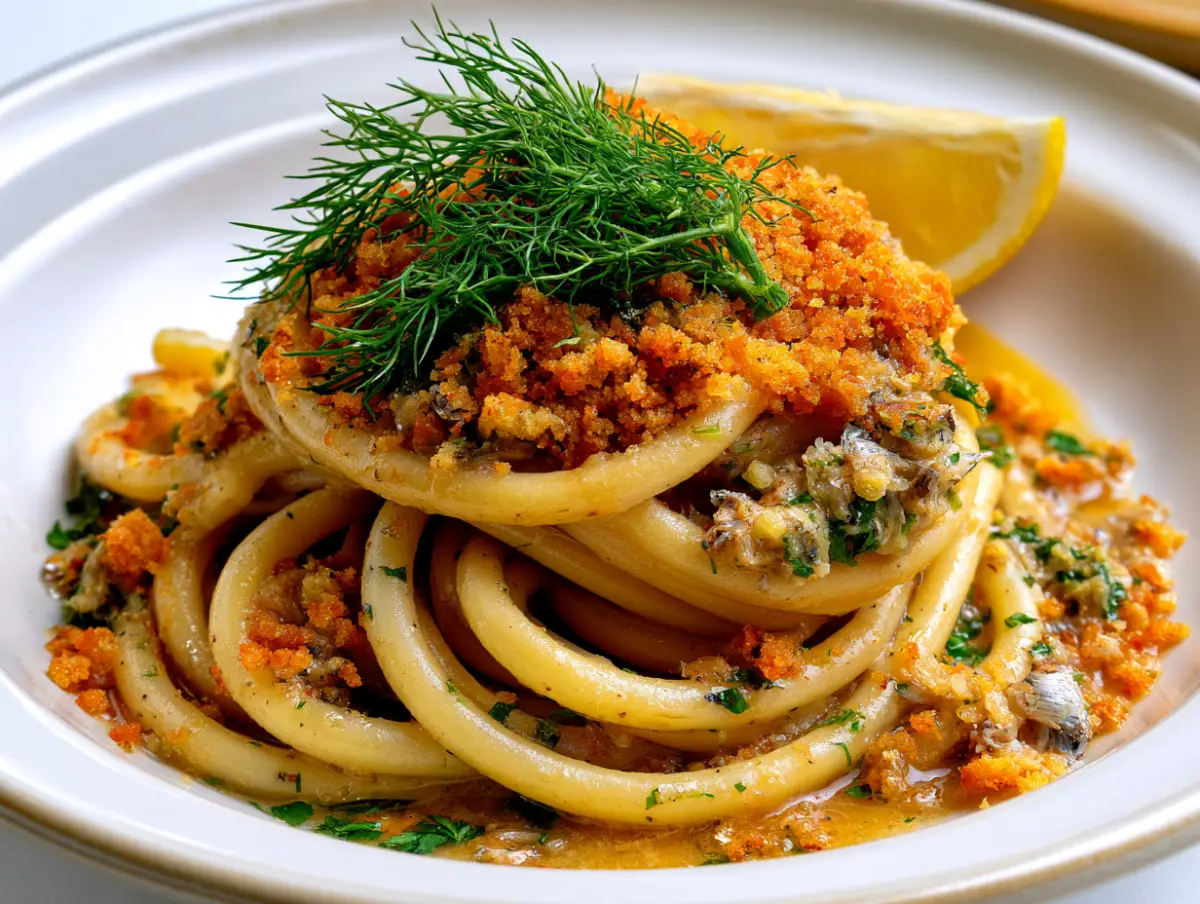
Can we talk about how one of the greatest pasta dishes in all of Italian cuisine lives entirely in your pantry, costs under $10, and comes together in 30 minutes? Because c — known in Sicily as pasta con le sarde — is exactly that. It’s the kind of dish that quietly converts sardine skeptics into sardine zealots. (I know. I was one of them. More on that in a moment.)
This is Sicily’s unofficial national dish: wide spaghetti or bucatini tossed with golden-olive-oil-packed sardines, fragrant fennel, plump golden raisins, toasted pine nuts, a pinch of warming saffron, and — the magical finishing touch — muddica, the golden, garlicky toasted breadcrumb that Sicilians have historically used in place of expensive Parmesan. The result is a bowl of staggeringly complex flavor: briny and rich from the sardines, anise-sweet from the fennel, gently exotic from the saffron, sweetly surprising from the raisins, and utterly crunchy-perfect from the toasted breadcrumbs. It sounds wild. It tastes transcendent.
From my Barcelona nutrition degree’s perspective: this Sicilian Sardine Pasta with Breadcrumbs is a nutritional powerhouse. Sardines are one of the single richest dietary sources of omega-3 fatty acids on the planet — more than salmon, gram for gram — plus calcium, vitamin D, B12, and selenium. Paired with whole grain pasta, olive oil, and fennel, this is Mediterranean Diet eating at its most authentic and nourishing. And it’s ready in 30 minutes from a fully stocked pantry. No special trip needed. Weeknight-friendly. Budget champion. Nutrient-dense. Spectacular. Let’s make it. 🐟
Table of Contents
Sicilian Sardine Pasta with Breadcrumbs
Ingredients
Method
- Boil a large pot of salted water. Bloom saffron in warm water and soak raisins in a separate bowl for 10-15 minutes.
- Pour sardine oil into a skillet with 1 tbsp olive oil. Toast breadcrumbs over medium heat 4-5 minutes; add 1 minced garlic clove for the last minute. Transfer and reserve.
- Sauté diced fennel in 2-3 tbsp olive oil for 7-8 minutes until soft and golden. Add crushed garlic and anchovies; cook 1-2 minutes.
- Drain raisins. Add raisins, pine nuts, fennel fronds, saffron water, and red pepper flakes. Fold in sardines and warm gently for 2-3 minutes.
- Cook pasta in the salted water until 1-2 minutes shy of al dente. Reserve 1 cup pasta water and drain.
- Add lemon juice and 2 tbsp pasta water to the sardine skillet; stir gently.
- Toss pasta into the skillet over medium-low heat for 2-3 minutes, adding pasta water as needed until coated.
- Remove from heat and toss in half the breadcrumbs. Taste and adjust lemon, salt, and olive oil.
- Plate pasta and top with remaining toasted breadcrumbs, fennel fronds, lemon wedges, and olive oil.
Why You’ll Love This Recipe
Health & Nutrition Benefits
Let me put on my Barcelona nutrition science hat because Sicilian Sardine Pasta with Breadcrumbs might be one of the most nutrient-dense pasta dishes in Mediterranean cuisine. Here’s the star of the show: canned sardines. A single 3.75-oz can provides over 2g of omega-3 fatty acids (DHA + EPA combined), which exceeds the American Heart Association’s weekly recommendation for heart-protective omega-3s.
A meta-analysis published in the Journal of the American Heart Association (2019) found regular DHA/EPA intake associated with significantly reduced risk of fatal cardiovascular events. And unlike fresh fish, canned sardines also deliver calcium from their tiny soft bones — about 35% of daily value per can, rivaling dairy sources — plus vitamin D (17% DV), vitamin B12 (over 100% DV), and selenium. This is the tinned fish that does everything.
Saffron brings crocin, a carotenoid antioxidant studied for mood-supporting properties in clinical trials. Fennel provides anti-inflammatory anethole. Pine nuts add vitamin E and zinc. Raisins contribute iron and polyphenols. This pasta con le sarde is literally a Mediterranean Diet supplement in pasta form. My Cornell Plant-Based Nutrition certificate loves every bite of it.
- ⚡ 30 minutes start-to-plate — from pantry to table faster than takeout
- 💚 Outstanding omega-3s, calcium, vitamin D & B12 from canned sardines
- 🍱 Ragu-style sardine sauce keeps 3 days refrigerated — great for meal prep
- 🐟 Under $10 for 4 servings — one of the best value-to-nutrition ratios in Mediterranean cooking
- ❄️ Pantry-based — no fresh fish required; canned sardines are equally excellent
Practical Benefits
Here’s what makes this sardine pasta recipe a weekly staple rather than an occasional novelty: it lives entirely in your pantry. Canned sardines in olive oil, dried pasta, breadcrumbs, garlic, fennel seeds (or a fresh fennel bulb), raisins, pine nuts — most of these items can sit in your pantry for months.
That means this extraordinary Sicilian pasta recipe is available to you literally anytime, in under 30 minutes, at pantry-raid cost. I keep two or three tins of quality sardines in my San Diego pantry at all times specifically for this reason. The toasted muddica (breadcrumbs) also replaces expensive Parmigiano in this recipe — a beautiful example of the Mediterranean cucina povera tradition where resourceful cooking produces extraordinary flavor. Budget-friendly, globally. Nutritionally outstanding. Done in 30 minutes.
The Mediterranean Diet Connection
How This Dish Fits Mediterranean Diet Principles
Pasta con le sarde is perhaps the purest expression of the Mediterranean Diet’s founding principles: abundance of plant foods and quality seafood, healthy olive oil as the primary fat, minimal processing, and maximum nutritional return per ingredient dollar. Sardines and small fatty fish like them are explicitly highlighted in PREDIMED study nutritional guidelines as ideal Mediterranean protein sources — high in omega-3s, low in mercury (unlike larger fish), and extraordinarily affordable. The sweet-savory-herbal complexity of this dish — built on ancient Arab-Sicilian trade routes that brought raisins, pine nuts, and saffron to Sicily around 900 A.D. — is also a masterclass in Mediterranean flavor philosophy: balance, contrast, and complexity from simple pantry staples.
Maya’s Personal Wellness Connection
My first real encounter with Sicilian sardine pasta was embarrassing. I was 22, visiting a Sicilian colleague’s grandmother in Palermo during a university field trip, and she set this in front of me. Sardines and raisins together? In pasta? I almost excused myself. Then I took one bite.
The briny sardine against the sweet raisin, the crunch of the golden muddica, the gentle anise of fennel threading through it all — I genuinely didn’t speak for about four minutes. Just ate. My colleague later told me this was the most respectful response I could have offered. In San Diego now, I make this at least twice a month and serve it regularly at wellness dinner events — it reliably converts sardine skeptics. Every. Single. Time. Trust the recipe and trust the history: this dish has been perfecting itself for over a thousand years.
Essential Ingredients
Core Ingredients
The ingredients in Sicilian Sardine Pasta with Breadcrumbs look unusual at first glance — but every element is precisely placed, carrying centuries of culinary evolution. Here’s the complete breakdown:
| Ingredient | Amount | Why It’s Great | Best Pick | Substitution |
| Canned sardines in olive oil | 2 tins (about 7.5 oz / 210g total) | Omega-3 powerhouse (DHA + EPA); calcium from soft bones; vitamin D & B12; rich umami depth in the sauce; the sardine oil itself is the cooking fat | Wild Planet or Matiz Gallego sardines in EVOO — boneless/skinless for ease, or bone-in (bones are soft and edible) | Fresh sardines (pan-fried and boned — equally excellent but more effort); high-quality canned mackerel as last resort |
| Pasta — spaghetti or bucatini | 12 oz / 340g dry | Bucatini’s hollow tubes capture the sardine sauce beautifully; spaghetti is slightly more elegant; both are traditional in Sicily | De Cecco bucatini or spaghetti; fresh bucatini from an Italian deli for a special occasion | Linguine; rigatoni or paccheri (short pasta works too but is less traditional) |
| Fresh fennel bulb + fronds (or wild fennel) | 1 large fennel bulb + all fronds | Anise-sweet, anti-inflammatory anethole; classic Sicilian pairing with sardines; both bulb (texture) and fronds (herbal flavor) are used | Fennel with abundant fronds still attached — farmer’s market fennel in spring/fall is extraordinary | 2 cups wild fennel if you can find it (parks, roadsides in California!); ¼ tsp fennel seeds + 1 celery heart as substitute |
| Golden raisins | ⅓ cup / 50g | Arab-influenced sweet contrast to the briny sardines; iron and polyphenols; plumped in warm water they burst with sweetness in the sauce | Plump golden raisins (sultanas) — soak 10 min in warm water before using; they should be tender and juicy | Dark raisins (slightly more intense); currants; finely chopped Medjool dates for extra caramel sweetness |
| Toasted pine nuts | 3 tablespoons / 25g | Buttery, mild nuttiness that balances the briny sardines; vitamin E and zinc; traditional Arab-Sicilian pantry ingredient | Raw pine nuts toasted in a dry pan — watch carefully, they burn in seconds; quality matters | Toasted slivered almonds (equally traditional in some Sicilian versions); toasted walnuts |
| Saffron threads | Small pinch (about 20 threads) | Crocin antioxidants studied for mood support; distinctive warm golden color; subtle floral-metallic flavor that defines authentic pasta alle sarde | Spanish or Iranian saffron — a tiny amount goes an enormous way; steep in 3 tbsp warm water 15 min before using | ¼ teaspoon ground turmeric (for color only — flavor is different; considered acceptable in home versions) |
| Bread for muddica (toasted breadcrumbs) | 2–3 thick slices stale country bread, or ¾ cup / 60g coarse fresh breadcrumbs | Muddica is the Sicilian pantry substitute for Parmigiano — golden, garlicky, crunchy; historically used by the poor; adds extraordinary texture contrast | Day-old sourdough or ciabatta — pulse briefly in food processor to coarse crumbs; NOT fine dry breadcrumbs (texture is completely different) | Good-quality panko breadcrumbs as a shortcut; dry GF breadcrumbs for gluten-free adaptation |
| Anchovy fillets in oil (optional but traditional) | 3–4 fillets | Amplify umami depth without adding fish flavor; they dissolve completely into the olive oil, adding invisible savory complexity | Ortiz or Agostino Recca anchovy fillets in olive oil — highest quality makes a real difference | Omit entirely for a milder flavor; 1 tsp soy sauce as umami substitute for the anchovy |
🐟 Maya’s Tip: Don’t drain the sardine oil — it IS your cooking fat for the sauce. That golden, intensely flavored olive oil from the tin is packed with omega-3s and sardine essence. Pour it straight into the pan first, then add more EVOO only if you need it. This is the kind of resourceful Mediterranean cooking wisdom that makes this dish so extraordinary: nothing wasted, everything contributing.
Dietary Modifications
This easy sardine pasta is naturally very accessible — here’s how to adapt it for every dietary need:
| Dietary Need | Replace | With | Notes |
| Gluten-Free | Regular pasta + regular breadcrumbs | GF bucatini or spaghetti (Jovial) + GF panko breadcrumbs | GF pasta absorbs sauce more aggressively — reserve extra pasta water; rest of recipe is naturally GF |
| Vegan / Plant-Based | Sardines + anchovy fillets | 1 can (15 oz) chickpeas + 3 tbsp capers + 2 tbsp nori flakes (for oceanic briny note) — this is the traditional ‘pasta chi sardi a mari’ variation! | The fennel, raisins, pine nuts, saffron, and muddica remain unchanged; this is a genuinely excellent plant-based version with Sicilian historical precedent |
| Nut-Free | Pine nuts | Toasted pumpkin seeds (pepitas) — similar mild flavor and crunch | Toasted breadcrumbs provide sufficient texture; pine nuts can simply be omitted |
| Lower Sodium | Canned sardines (standard) + anchovy fillets | Rinse sardines briefly under water; omit anchovies; reduce salt in pasta water | The muddica breadcrumbs can be unsalted; season with lemon zest and herbs instead |
| Higher Protein | Standard recipe | Double the sardine tins (3–4 tins) for 40+ grams protein per serving | More sardines only improve the nutritional profile; the sauce handles them beautifully |
| Dairy-Free | Already dairy-free | No changes needed — muddica breadcrumbs replace cheese | The entire recipe is naturally dairy-free; the muddica IS the Sicilian cheese substitute |
Equipment & Quick Prep
Equipment Overview
| Tool | Why It Helps | Alternative |
| Large skillet or wide sauté pan (12-inch) | Wide surface for toasting muddica evenly and sautéing fennel without crowding; also big enough to finish pasta in the sauce | Any wide shallow pan; a large cast-iron skillet is excellent here |
| Large pot (6–8 qt) for pasta | Sardine pasta needs generously salted, abundant water — the pasta is the main event | Any large pot; always size up rather than down for pasta |
| Food processor or box grater | For making coarse fresh breadcrumbs from day-old bread — 3–4 pulses is all you need | Rough chopping with a sharp knife; purchasing good-quality panko as a shortcut |
| Small bowl | For soaking saffron threads in warm water and raisins — 15 min of patience transforms both | Any small heatproof cup; an espresso cup works perfectly |
| Tongs or pasta fork | For transferring pasta from the pot to the sardine sauce with some pasta water — the gentle handling preserves the delicate fish | A slotted spoon; a spider strainer |
Prep-Ahead Checklist
The prep for pasta con sarde is beautifully minimal — about 10 minutes. Here’s everything before you touch the stove: Steep saffron threads in 3 tablespoons of warm water (this can be done the night before — saffron steeps even more beautifully overnight). Soak golden raisins in warm water for 10 minutes to plump them.
Make coarse breadcrumbs from day-old bread if not using panko: 3–4 pulses in a food processor. Trim fennel bulb, dice it into ½-inch pieces, and coarsely chop the fronds separately. Open sardine tins and pour the oil into the pan — don’t discard it! Set pasta water on to boil immediately — it’s the longest step. That’s all the active prep. The entire breadcrumb pasta dish then builds beautifully in one pan in about 20 minutes.
🐟 Pro Tip: The saffron blooms even more beautifully if steeped overnight in water in the refrigerator. When you’re ready to cook, simply bring the saffron water to room temperature. This one-minute night-before step makes the saffron more golden, more fragrant, and more evenly distributed throughout the sauce. Worth it.
Step-by-Step Instructions
Prep & First Steps (Steps 1–4)
You’ve got this — and once you’ve made Sicilian Sardine Pasta with Breadcrumbs once, it goes from memory every time after. Here’s the sequence:
- Start pasta water and bloom the saffron (10 min — parallel tasks): Set your large pot of water over high heat. Add 1 tablespoon fine sea salt once it boils. Meanwhile: steep a small pinch of saffron threads in 3 tablespoons of warm water in a small bowl. Soak the golden raisins in a separate small bowl of warm water. These 10–15 minutes of prep time are parallel, not sequential — both happen while your water heats, so nothing is wasted. By the time the water boils, your saffron is bloomed and gorgeous — a deep amber-gold liquid that smells faintly of honey, hay, and sea air.
- Toast the muddica breadcrumbs (5–6 min): Pour the sardine oil from both tins into a dry, cold large skillet. Add 1 extra tablespoon of extra-virgin olive oil. Set over medium heat until the oil shimmers. Add the coarse breadcrumbs and stir continuously with a wooden spoon for 4–5 minutes until deeply golden, fragrant, and crisp. The Maillard reaction happening here — proteins and starches browning in the sardine-infused oil — creates the extraordinary nutty, savory flavor that defines muddica. Add 1 minced garlic clove in the last 60 seconds, stir, and immediately transfer to a bowl. Reserve. Wipe the pan clean.
- Sauté the fennel and aromatics (10 min): Return the skillet to medium heat with 2–3 more tablespoons of extra-virgin olive oil. Add the diced fennel bulb and cook, stirring occasionally, for 7–8 minutes until deeply softened, slightly golden, and intensely aromatic — like the anise-perfumed air of the Sicilian countryside. (Trust me, your kitchen will smell extraordinary.) Add 3–4 crushed garlic cloves and the anchovy fillets if using, stirring for 1–2 minutes until the anchovies melt completely into the oil. They’ll vanish, leaving invisible depth behind.
- Add the sweet-savory components and sardines (3–4 min): Drain the plumped raisins and add to the pan. Add the pine nuts and the chopped fennel fronds. Pour in the bloomed saffron water — it sizzles and turns the oil a gorgeous warm gold. Add a pinch of crushed red pepper flakes. Now gently fold in the sardines, breaking them into rough pieces (not too small — you want some substantial flakes of fish in each bite). Cook over medium heat for 2–3 minutes only — sardines are already cooked and need just warming through. Overcooked sardines lose their texture and become grainy. Be gentle.
Cooking & Assembly (Steps 5–10)
- Cook the pasta (9–11 min for bucatini, 8–9 min for spaghetti): Add the pasta to the boiling salted water. Cook until 1–2 minutes shy of al dente — it will finish briefly in the sardine sauce. Reserve 1 cup of pasta water before draining — place your measuring cup next to the pot right now as a physical reminder. The starchy pasta water is essential for bringing the sauce together without making it greasy or dry. Bucatini takes a minute or two longer than spaghetti, so time accordingly.
- Deglaze the pan with lemon juice (1 min): While the pasta cooks, add a generous squeeze of ½ lemon (about 2 tablespoons of juice) and 2 tablespoons of pasta water to the sardine pan over medium-low heat. This brightens and lifts the sauce, adding the citrus acidity that classic recipes achieve with white wine. The lemon and saffron together create a gorgeous, bright-golden sauce that smells like the Mediterranean itself. Stir gently, careful not to break up the sardine pieces further.
- Finish pasta in the sardine sauce (2–3 min): Transfer just-shy-of-al-dente pasta to the sardine skillet using tongs or a spider strainer — bringing a generous splash of pasta water with it. Toss gently over medium-low heat for 2–3 minutes, adding pasta water as needed, until the pasta finishes cooking and the sardine pasta sauce coats every strand. This technique — finishing pasta in the sauce — turns “pasta with sauce on top” into a cohesive, integrated dish where every component speaks to every other. The starchy pasta water emulsifies the olive oil and sardine juices into a light, silky coating.
- Add half the muddica and finish: Remove the pan from heat. Toss half the reserved muddica through the Sicilian Sardine Pasta with Breadcrumbs — it absorbs a little of the sauce and adds crunch throughout every forkful. Taste and adjust: more lemon? More salt? A drizzle of your best olive oil? The flavor at this stage should be complex and balanced — briny and rich from the sardines, sweet from the raisins, anise-herbal from the fennel, golden from the saffron, and crunchy from the breadcrumbs. That’s the dish.
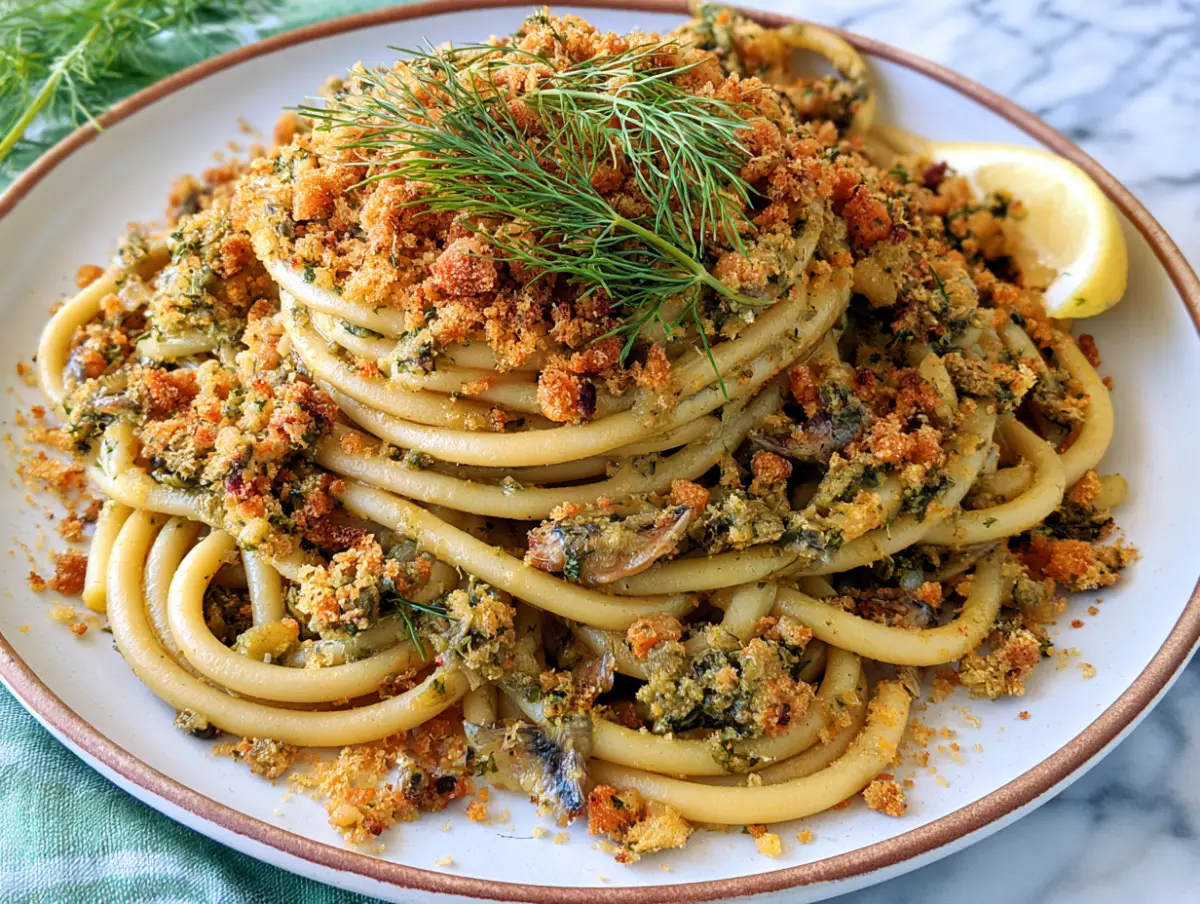
- Plate with the remaining muddica on top: Twirl generous portions into warm bowls or onto wide plates (the traditional Sicilian presentation uses a flat plate — the pasta is mounded elegantly with visible sardine pieces on top). Spoon extra sardine sauce over each serving. Top generously with the remaining golden muddica — the contrast between the soft, sauced pasta and the crunchy breadcrumbs on top is the defining textural experience of this dish. Add a wedge of lemon alongside, a sprig of fennel frond, and an extra drizzle of EVOO. Magnifico. 🐟
🐟 Maya’s Tip: This dish does not reheat as well as most pasta — the muddica softens quickly and loses its crunch. For meal prep, store the sardine sauce separately and toast fresh breadcrumbs each time. Cook fresh pasta for each serving. The sauce genuinely improves overnight in the fridge, so this two-component approach gives you both excellent flavor and perfect texture every time.
Tips, Tricks & Shortcuts
Success Tips for Perfect Results
- Use the sardine oil from the tin as your primary cooking fat — it’s flavor-packed and rich in omega-3s. This is a key distinguishing step that elevates the sauce.
- Toast the muddica breadcrumbs separately and keep them completely crisp until the last moment. Soggy breadcrumbs are the only failure mode in this recipe.
- Bloom the saffron in warm water for at least 15 minutes (or overnight) — dried saffron added directly to the pan loses most of its color and fragrance without this step.
- Plump your raisins in warm water for 10 minutes — dried raisins in the sauce taste like mere sweetness; plumped raisins burst with juice in the mouth and provide the sweet-savory counterpoint the dish is famous for.
- Be gentle with the sardines — fold them in with a spoon, not a spatula, and cook only 2–3 minutes. Over-stirring creates a mushy fish paste rather than beautiful flakes of sardine.
- Store the sardine sauce and breadcrumbs separately for meal prep — the muddica is the one component that doesn’t hold, so toast it fresh each time (takes 5 minutes).
Common Mistakes
| Mistake | Result | The Fix |
| Discarding the sardine tin oil | Loses the most flavorful, omega-3-rich cooking fat in the recipe; sauce tastes flat and requires more EVOO to compensate | Pour sardine oil directly into the cold pan first; it IS the primary cooking fat |
| Using fine dry breadcrumbs instead of coarse fresh muddica | Powdery, granular texture that dissolves immediately into the sauce; no crunch; no textural contrast | Day-old coarse bread pulsed in a processor, or quality panko — fine dry breadcrumbs are not muddica |
| Not blooming the saffron in water | Pale yellow color; little aroma; saffron’s crocin compounds don’t properly release into dry heat | Steep in 3 tbsp warm water for 15+ min before adding — the liquid should be deep amber-gold |
| Overcooking the sardines | Grainy, dry, crumbly texture that loses the silky fresh fish quality | Sardines need only 2–3 minutes of gentle warming — they’re already cooked in the can |
| Using dry raisins without soaking | Hard, chewy raisins that don’t integrate into the sauce; no burst of sweetness in each bite | Soak in warm water 10 min; drain before adding — they should be plump, tender, and juicy |
| Adding muddica too early (while still warm and wet) | Breadcrumbs absorb sauce and lose all crunch immediately | Keep muddica completely separate until the absolute last second; add half to the toss, half on top at plating |
Variations & Serving Ideas
Dietary Adaptations & Variations
The base pasta con le sarde formula is endlessly riffable. Here are the variations I love most:
- Pasta con le sarde ‘in rosso’ (red version): Add 2 tablespoons of tomato paste to the fennel while sautéing, then ½ cup of crushed San Marzano tomatoes. This is the Agrigento and eastern Sicily variation — slightly less elegant than the ‘in bianco’ version but deeply comforting and warming. Excellent in winter.
- Pasta chi sardi a mari (sardines at sea — vegan!): Replace sardines with 1 can of drained chickpeas + 3 tablespoons of capers + 2 tablespoons of crumbled nori. Keep all other ingredients identical. This is an utter genius of a plant-based dish with 700 years of Sicilian culinary history behind it.
- Baked version: Assemble the finished pasta in a baking dish, top generously with extra muddica and a drizzle of EVOO, and bake at 400°F (200°C) for 10–12 minutes until the top is golden and slightly crunchy throughout. A magnificent dinner party presentation.
- Sardine pasta frittata: Press leftover sardine pasta into a greased skillet, pour beaten eggs over it, cover and cook on low for 8 minutes. Slide onto a plate and serve at room temperature. A legendary Sicilian leftover technique — absolutely extraordinary.
- Fresh sardine version (premium): Use fresh sardines (cleaned, butterflied, and briefly pan-fried in olive oil). The flavor is more delicate and fresh vs. canned — magical in peak summer.
Serving Suggestions & Beverage Pairings
This intensely flavored Sicilian pasta recipe is best as a standalone main — its bold flavors don’t need competition. A simple arugula salad with lemon dressing alongside is the classic Sicilian accompaniment, providing bitter freshness against the rich fish.
For Mediterranean table spreads, our Mediterranean White Bean Salad is a natural companion — the mild creaminess of white beans calms the palate between bites of the sardine pasta.
For a Sicilian-themed dinner, begin with our Mediterranean Hummus Breakfast Bowl as a Middle Eastern-Mediterranean mezze nod — the chickpea-olive oil combination echoes the same culinary tradition that produced pasta con le sarde. And if you’re serving a crowd that includes non-sardine-eaters, pair it with our mild, crowd-pleasing Caprese Pasta as a second pasta option.
Non-alcoholic beverage pairings that genuinely shine alongside this pasta with sardines: sparkling water with a generous squeeze of lemon and a fennel frond — the lemon-anise combination is a pure Sicilian flavor echo and one of my favorite non-alcoholic food pairings ever. Fresh-squeezed blood orange juice is gorgeous (blood oranges are native to Sicily and their tartness cuts the briny richness perfectly). Hibiscus tea over ice is striking in both flavor and color — deep ruby against the golden saffron pasta. A ginger-lemon kombucha adds bright effervescence that refreshes between bites of this rich, complex dish.
Meal Prep & Storage
Storage Guide
| Method | Container | Duration | Notes |
| Refrigerator — sardine sauce only (no pasta) | Glass airtight container | 3–4 days | BEST approach — sauce flavors meld and improve overnight; store muddica separately at room temp |
| Refrigerator — assembled pasta + sauce | Airtight container | 1–2 days | Pasta absorbs sauce; muddica loses crunch immediately; add fresh breadcrumbs when reheating |
| Freezer — sardine sauce only | Freezer bag or glass container | Up to 2 months | Freeze in portion-sized bags; thaw overnight in fridge; the fish sauce freezes better than expected |
| Freezer — assembled pasta | Not recommended | — | Pasta texture degrades significantly; the muddica component cannot be frozen |
| Muddica / breadcrumbs | Room temperature airtight jar | Up to 3 days at room temp; 1 week refrigerated | Toast fresh for best crunch; store unheated at room temp in a jar; re-crisp 2 min in a dry pan if needed |
| Reheat (sauce) | Saucepan over low heat | 5–6 minutes | Add splash of water or broth to loosen; heat gently without boiling; cook fresh pasta separately |
Meal Prep Assembly Tips
The smartest canned sardine pasta meal prep strategy: make the sardine-fennel-raisin sauce on Sunday (takes 20 minutes). Divide into 3–4 sealed glass jars. Make a double batch of muddica and store separately in a jar at room temperature. Each weeknight: cook fresh bucatini or spaghetti (9–10 min), reheat the sardine sauce gently in the pasta pot with a splash of pasta water, toss together. Top with room-temperature muddica for instant crunch. Full Sicilian Sardine Pasta with Breadcrumbs in under 15 minutes. This is weeknight Mediterranean cooking at its best: real flavor, zero stress, extraordinary nutrition, from your pantry.
Sicilian Sardine Pasta with Breadcrumbs
Ingredients
Method
- Start the pasta water and bloom the saffron. Set a large pot of water over high heat and add the sea salt once it boils. Meanwhile steep the saffron threads in 3 tablespoons of warm water and soak the golden raisins in a separate bowl of warm water. Both happen while the water heats, so no time is lost.
- Toast the muddica breadcrumbs. Pour the oil from both sardine tins into a dry, cold large skillet, add 1 tablespoon extra-virgin olive oil, and set over medium heat until it shimmers. Add the breadcrumbs and stir continuously for 4–5 minutes until deeply golden, fragrant and crisp. Add the minced garlic clove in the last 60 seconds, stir, then transfer immediately to a bowl and wipe the pan clean.
- Sauté the fennel. Return the skillet to medium heat with 2–3 tablespoons olive oil. Add the diced fennel bulb and cook, stirring occasionally, for 7–8 minutes until deeply softened, slightly golden and intensely aromatic. Add the crushed garlic and the anchovy fillets if using and stir 1–2 minutes until the anchovies melt completely into the oil.
- Add the sweet-savoury components and the sardines. Drain the plumped raisins and add them with the pine nuts and chopped fennel fronds. Pour in the bloomed saffron water and add the red pepper flakes. Gently fold in the sardines, breaking them into rough pieces — you want substantial flakes, not paste. Warm through over medium heat for 2–3 minutes only.
- Cook the pasta until 1–2 minutes shy of al dente (9–11 minutes for bucatini, 8–9 for spaghetti). Reserve 1 cup of pasta water before draining.
- Deglaze the sardine pan with the juice of half a lemon and 2 tablespoons of pasta water over medium-low heat, stirring gently so the sardine pieces stay intact.
- Transfer the pasta straight into the skillet with tongs, bringing a generous splash of pasta water with it. Toss gently over medium-low heat for 2–3 minutes, adding more pasta water as needed, until the pasta finishes cooking and the sauce coats every strand.
- Off the heat, toss half the reserved muddica through the pasta so it absorbs a little sauce and adds crunch throughout. Taste and adjust with more lemon, salt, or a drizzle of your best olive oil.
- Twirl into warm bowls, spoon over the extra sauce, and top generously with the remaining golden muddica. Finish with a lemon wedge, a sprig of fennel frond and another thread of olive oil, and serve immediately.
Notes
Frequently Asked Questions
Substitution & Technique Questions
Q: Can I use canned sardines instead of fresh sardines?
Absolutely — and for a weeknight sardine pasta recipe, canned sardines are the better choice for 99% of home cooks. Quality canned sardines in extra-virgin olive oil (Wild Planet, Matiz, King Oscar) are sardines caught at peak freshness and packed immediately — they’re genuinely excellent. The bonus: the sardine oil in the tin becomes your primary cooking fat, infusing the sauce with omega-3-rich flavor from the very first step. The one difference from fresh: fresh sardines have a slightly more delicate, clean flavor; canned sardines are richer and more savory. Both are authentic in Sicilian home cooking.
Q: What if I can’t find fennel? Can I substitute it?
Yes — fresh fennel has three potential substitutes ranked by authenticity: (1) Wild fennel grows prolifically in California’s grasslands and hillsides if you’re foraging-curious! It has a much more intense, more anise-forward flavor than cultivated fennel. (2) Use the fronds from 1–2 fennels if your store carries them attached. (3) Use 1 small celery heart + ¼ teaspoon fennel seeds, adding the ground seeds to the muddica at the end. Any of these adaptations preserves the essential character of pasta alle sarde beautifully. The fennel is non-negotiable in spirit — its flavor is the backbone — even if the form varies.
Q: My family doesn’t like the taste of fish. Will they like this?
Honest answer from someone who was once a sardine skeptic myself: maybe! The sardine flavor in a well-made pasta con le sarde is rich and savory rather than fishily overpowering — it integrates into the sauce rather than announcing itself. The sweet raisins, golden saffron, and crunchy muddica create so many competing flavors that the sardine becomes one note in a complex chord rather than a solo. My suggestion: make it once for skeptical family members without announcing the ingredient list. Serve it, let them love it, then reveal the sardines. This approach has a roughly 80% conversion rate in my experience.
Q: Can I make this without saffron?
Yes — saffron is technically optional, though I encourage you to try it at least once with saffron first. It contributes a subtle floral-golden quality that elevates the dish from very good to extraordinary. If saffron is unavailable or cost-prohibitive, ¼ teaspoon of ground turmeric adds similar golden color (though not the same flavor). Alternatively, just omit it — the breadcrumb pasta is still excellent without saffron. It’s the difference between a beautiful Thursday dinner and a restaurant-quality Sicilian experience. But both are worth making.
Dietary, Nutrition & Meal Prep Questions
Q: How is Sicilian Sardine Pasta with Breadcrumbs healthy?
Let me count the ways (nutrition-nerd moment!). Sardines provide DHA + EPA omega-3s exceeding the AHA’s weekly recommendation in a single serving, plus calcium rivaling dairy, over 100% daily B12, and selenium. Olive oil provides anti-inflammatory oleocanthal. Fennel has anti-inflammatory anethole. Pine nuts provide vitamin E and zinc. Saffron’s crocin shows mood-supporting effects in clinical studies. Raisins add iron and polyphenols. This pasta con sarde is a Mediterranean Diet blue chip. As a certified health coach — not your doctor — I’d say eat this regularly and happily.
Q: How do I keep the breadcrumbs crunchy for meal prep?
This is the key meal prep question for Sicilian sardine pasta. Store the toasted muddica at room temperature in a sealed jar — not in the refrigerator. Refrigerator humidity softens breadcrumbs immediately. They stay beautifully crunchy for 3 days at room temp, and you can re-crisp them in a dry pan for 2–3 minutes if they soften slightly. Always add them at the last second — never mix them into warm sauce ahead of time.
Q: Is this recipe kid-friendly?
Surprisingly often, yes! My wellness event experience shows that children generally love the sweet raisins and crunchy breadcrumbs — and the sardine flavor, integrated into a complex sauce, is less fishy to them than a piece of grilled fish would be. The saffron is entirely invisible in flavor (adults notice it; kids typically don’t). For a kid-friendlier version, use boneless/skinless sardines and break them into smaller pieces so the fish is less visually identifiable. And always serve the muddica — kids universally love crunchy pasta toppings.
Q: Can I make this pasta with another fish?
Yes — and there’s Sicilian tradition behind several options. Mackerel in olive oil (canned) is an excellent substitute with similar flavor intensity and omega-3 content. Fresh anchovies (not the salt-packed fillets) create a more delicate, lighter version. For a milder fish pasta, canned wild-caught tuna in olive oil works beautifully — less traditional but genuinely delicious with all the same Sicilian flavor components. Our Mediterranean Sheet Pan Salmon is another excellent omega-3-rich Mediterranean fish option if you’d like to explore a related recipe direction.
Nutritional Highlights & Closing Thoughts
Why This Recipe Is Good for You
The nutritional story of Sicilian Sardine Pasta with Breadcrumbs starts and ends with sardines — one of the most nutrient-complete and sustainable seafood options available. Two tins of quality sardines in olive oil provide approximately 4g of combined DHA + EPA omega-3 fatty acids for the entire recipe — roughly 1g per serving. The 2019 JAHA meta-analysis of 13 RCTs found DHA/EPA supplementation significantly associated with reduced cardiovascular mortality. These are the same nutrients you’d spend $40/month on in supplement form, available here for $4 in a tin.
Beyond omega-3s: sardines are one of very few non-dairy, non-fortified food sources of vitamin D (17% DV per serving) and deliver over 100% daily B12 — a nutrient many adults are deficient in, critical for neurological function and energy metabolism. The saffron’s crocin is among the most studied natural mood-supporting compounds (double-blind trials, Journal of Integrative Medicine, 2020). And the olive oil throughout provides oleocanthal — the COX-inhibiting anti-inflammatory compound first isolated by Dr. Gary Beauchamp at the Monell Chemical Senses Center. This dish punches well above its weight on every nutritional metric.
Closing & Call to Action
I’ll say it plainly: Sicilian Sardine Pasta with Breadcrumbs is the dish I wish every sardine skeptic in the world would make before forming their final opinion about tinned fish. It’s the dish that changed my opinion in four silent, stunned bites in a Palermo kitchen. It’s the dish that’s traveled from Arab spice traders in 900 A.D. Sicily to my San Diego weeknight dinner table — and arrived unchanged because it’s already perfect.
Did you make it? Who in your family needed convincing — and did the muddica win them over? Tell me in the comments! Tag me @MayaCastellanoKitchen so I can see your gorgeous golden bowls. 🐟✨
For more Mediterranean pasta inspiration, our Fresh Tomato Basil Spaghetti (Pomodoro) is the classic simple Italian pasta to follow this Sicilian feast with next week. Our Caprese Pasta is a summer-fresh counterpoint to this winter-warming dish. If this Sicilian sardine pasta sparked your interest in bold Mediterranean fish cooking, our Mediterranean Sheet Pan Salmon takes that same omega-3 passion to a sheet pan dinner. And for a Sicilian-adjacent flavor adventure, our Harissa Chickpea Roasted Cauliflower shares the same Arab-Mediterranean spice lineage that makes pasta con le sarde so singular. Buon appetito! 🐟