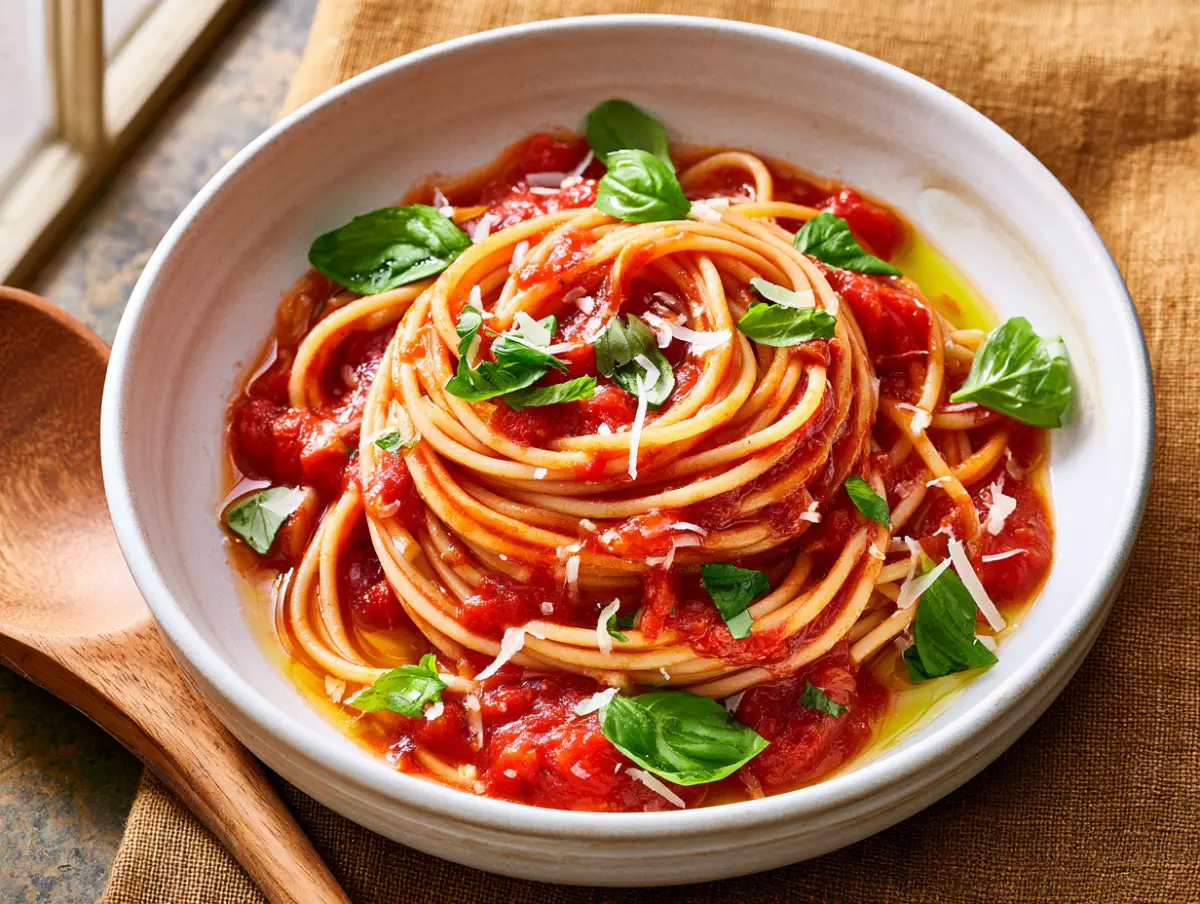
Can we talk about how rare it is to find a pasta recipe that genuinely tastes like Italy — not like something you reheated from a jar? You know what I mean: that bright, sun-kissed, this-is-actually-a-tomato flavor that makes your whole kitchen smell like a Tuscan trattoria on a summer evening. Enter Fresh Tomato Basil Spaghetti (Pomodoro) — the dish Italians call their national treasure, and for good reason.
I grew up watching my nonno in Tuscany crush San Marzano tomatoes against the side of a hot skillet, barely a handful of ingredients, pure confidence. No jar, no measuring cups, no fuss. And that’s exactly the spirit of spaghetti pomodoro — it asks almost nothing of you and gives you everything back. In my San Diego kitchen, I’ve tested this recipe seven times across summer and winter tomato seasons to nail the technique that works year-round: ripe fresh tomatoes in peak season, quality canned whole tomatoes the rest of the year. Both? Absolute perfection.
Here’s what you’re getting in one stunning bowl: a 35-minute authentic Italian pasta made almost entirely from pantry and produce section staples. It’s naturally vegetarian, loaded with lycopene-rich tomatoes, heart-healthy olive oil, and anti-inflammatory basil. It costs under $10 for four generous servings, reheats beautifully for meal prep, and yes — it will absolutely impress dinner guests who assume you spent hours on it. (You don’t have to tell them.)
Table of Contents
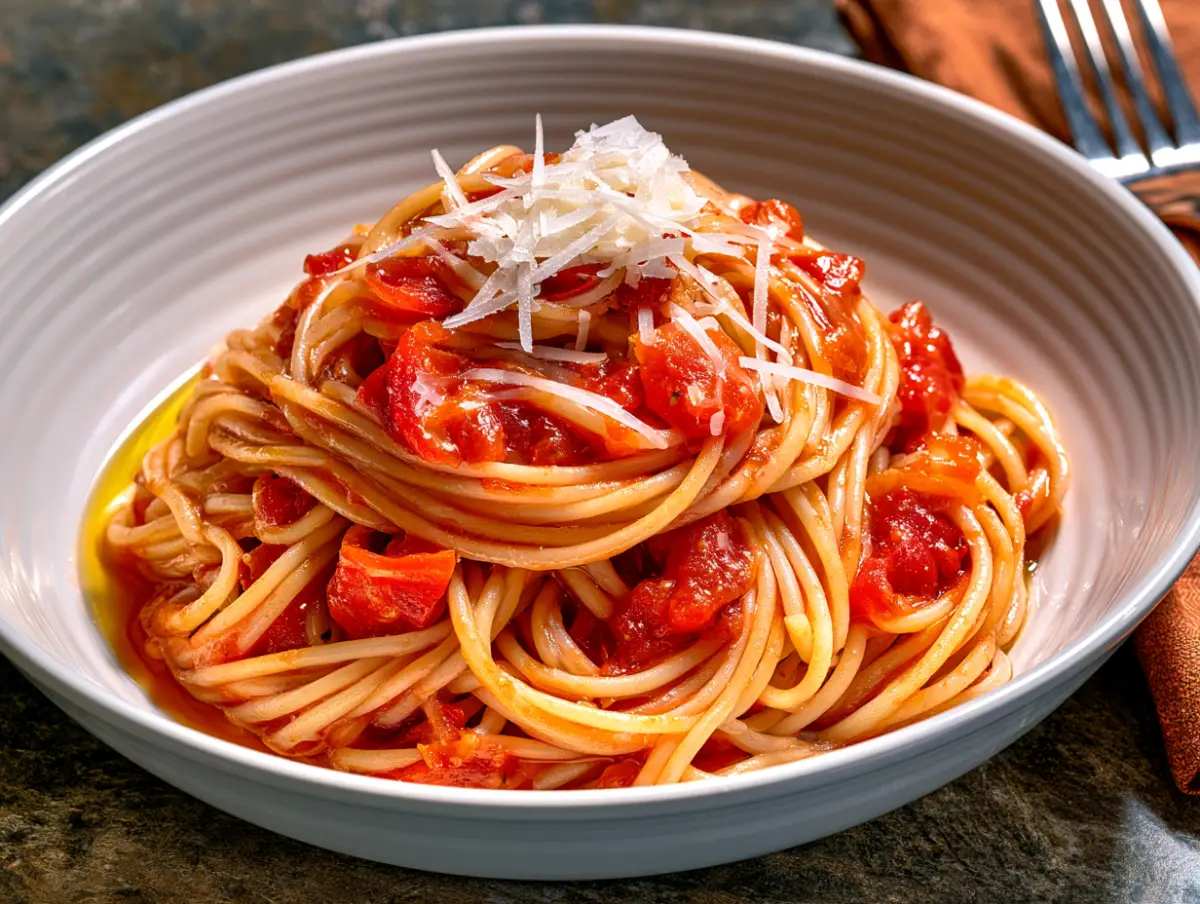
Fresh Tomato Basil Spaghetti Pomodoro
Ingredients
Method
- 1. Prep tomatoes: If using fresh, score an X on the bottom, blanch in boiling water 30–60 seconds, ice bath, peel, and roughly chop. If using canned, crush by hand over the pan.
- 2. Heat pasta water: Fill a large pot with water and bring to a rolling boil over high heat. Add 1 tablespoon salt.
- 3. Bloom garlic: Add olive oil and sliced garlic to a cold large skillet. Set over medium heat. Cook 2–3 minutes until garlic is fragrant and just-golden at the edges.
- 4. Build the sauce: Add prepared tomatoes to the skillet carefully. Stir to combine. Season with ½ tsp salt and optional pinch of sugar. Bring to a simmer.
- 5. Simmer sauce: Reduce heat to medium-low. Cook uncovered 20–25 minutes, crushing tomatoes against the pan every 5 minutes, until sauce is thickened and deeply flavored.
- 6. Cook spaghetti: Add pasta to boiling water. Cook until 1–2 minutes shy of al dente per package instructions. Reserve 1 cup pasta water before draining.
- 7. Add basil to sauce: Remove sauce from heat briefly. Tear in most of the fresh basil. Stir to wilt.
- 8. Finish pasta in sauce: Use tongs to transfer pasta directly to sauce skillet. Add ¼ cup pasta water. Toss over medium heat 2–3 minutes until pasta is al dente and sauce coats each strand. Add more pasta water as needed for glossy consistency.
- 9. Plate and serve: Twirl into warm bowls. Top with remaining basil, Parmesan (if using), and a drizzle of EVOO. Serve immediately.
Notes
Why You’ll Love This Fresh Tomato Basil Spaghetti (Pomodoro) Recipe
Health & Nutrition Benefits
Let’s start with something nobody ever says about pasta: it’s actually a stellar Mediterranean Diet food when prepared the right way. And this pasta pomodoro is the proof. Fresh tomatoes are one of the richest dietary sources of lycopene — a powerful antioxidant that’s been linked in research from the American Journal of Clinical Nutrition to reduced risk of cardiovascular disease and certain cancers. Even better? Lycopene’s bioavailability increases when tomatoes are cooked with a fat source (hello, extra-virgin olive oil). So every bite of this Italian tomato pasta is literally supercharging your antioxidant absorption. Science is delicious.
Fresh basil, meanwhile, brings volatile oils like eugenol and linalool — compounds with documented anti-inflammatory and antimicrobial properties. And whole-grain spaghetti (which I’ll mention as an easy swap) pushes the fiber content even higher for better digestive health. My Barcelona nutrition degree confirms it: this isn’t cheating. This is the diet.
- ⚡ Ready in 35 minutes — faster than any Italian takeout
- 💚 Loaded with lycopene, antioxidants & heart-healthy EVOO
- 🍱 Meal prep-friendly — sauce keeps 5 days refrigerated or 2 months frozen
- 🍽️ Budget superstar — under $10 for four servings
Practical Benefits
Beyond the nutrition story, this easy tomato pasta earns its spot in your weeknight rotation on sheer logistics alone. One large skillet for the sauce, one pot for the pasta — and the sauce is done in the time it takes the water to boil and the pasta to cook. That’s true multitasking magic. It’s also infinitely scalable: double the sauce batch and freeze half for a future Friday night rescue. The clean simplicity of this garlic tomato spaghetti also makes it ideal for feeding picky eaters, kids, and guests with varied dietary restrictions. Vegan? Check. Dairy-free? Just skip the Parmesan finish. It’s the universal crowd-pleaser your dinner table deserves.
The Mediterranean Diet Connection
How This Dish Fits Mediterranean Diet Principles
The Mediterranean Diet isn’t just a trending eating pattern — it’s the most studied dietary framework in modern nutritional science. And spaghetti al pomodoro sits right at its heart. Extra-virgin olive oil as the primary fat source? Check. Abundant plant foods (tomatoes, garlic, fresh herbs) at the center of the plate? Check. High-quality whole-grain pasta providing complex carbohydrates? Check. The landmark PREDIMED study, which followed over 7,000 participants, demonstrated that adherence to this style of eating reduced major cardiovascular events by approximately 30%. One gorgeous bowl of tomato basil pasta at a time, we’re eating toward better health.
Maya’s Personal Wellness Connection
Every summer in Tuscany, my nonna would press freshly picked tomatoes through a food mill onto piles of pasta with nothing but olive oil, torn basil, and sea salt. I spent years trying to recreate that sauce in my apartment in Barcelona during my nutrition degree and failing spectacularly. (My first attempt was watery, acidic, and completely missing the soul.) It wasn’t until I understood the why behind the technique — why you finish the pasta in the sauce, why you use starchy pasta water to bind it — that everything clicked. Now this fresh tomato pasta sauce is my California happy place: a dish that connects me to my roots every single time I make it.
Essential Ingredients
Core Ingredients
The beauty of authentic pasta pomodoro is in its radical simplicity. Every single ingredient matters — this is one dish where quality truly cannot be faked. Here’s your lineup:
| Ingredient | Amount | Why It’s Great | Best Pick | Substitution |
| Fresh ripe tomatoes | 2 lbs (900g) | High lycopene content; natural sweetness when ripe; fresh flavor no jar can replicate | Campari, Roma, or San Marzano fresh tomatoes in peak season | 28 oz (794g) quality canned whole peeled tomatoes (San Marzano brand) in off-season |
| Extra-virgin olive oil | 3 tbsp (45ml) | Monounsaturated fats; enhances lycopene absorption; authentic Italian flavor base | Cold-pressed Italian EVOO (DeLallo or Frantoio brands) | Avocado oil — though flavor differs |
| Garlic cloves, thinly sliced | 4–5 cloves | Allicin = anti-inflammatory & immune-supporting; aromatic backbone of the sauce | Fresh whole cloves only — no jarred garlic | ½ tsp garlic powder as absolute last resort |
| Spaghetti | 12 oz (340g) | Complex carbs; al dente spaghetti holds the sauce perfectly | Italian-made spaghetti (Barilla, De Cecco, or Rummo) | Linguine, bucatini, rigatoni; gluten-free Jovial brand |
| Fresh basil leaves | 1 large bunch (about 1 cup loosely packed) | Eugenol + linalool = anti-inflammatory oils; adds brightness and floral aroma | Sweet Italian basil — avoid dried in this recipe | Fresh parsley for a different but still good finish |
| Pasta cooking water | ½–1 cup (120–240ml) reserved | Starchy water emulsifies sauce and pasta together — the secret weapon! | Save before draining — don’t forget! | No substitute; this step is non-negotiable |
| Pinch of sugar (optional) | ½ tsp | Balances acidity if tomatoes aren’t peak-ripe | Granulated white sugar | A pinch of baking soda (also neutralizes acidity) |
| Salt (fine sea salt) | To taste + pasta water | Crucial for building flavor at every layer; properly salted pasta water = better pasta | Fine sea salt or kosher salt | Regular table salt (use 25% less) |
🍅 Maya’s Tip: Tear your basil by hand rather than slicing with a knife. Cutting basil causes the edges to oxidize and turn black, releasing bitter compounds. Tearing preserves those gorgeous volatile aromatic oils. It’s a tiny move that makes a real difference!
Dietary Modifications
This fresh tomato basil spaghetti is already naturally vegetarian and can easily meet nearly any dietary need. Here’s your complete modification guide:
| Dietary Need | Replace | With | Notes |
| Vegan | Parmesan garnish | Nutritional yeast (2 tbsp) or simply omit | The pasta and sauce are already fully plant-based |
| Gluten-Free | Regular spaghetti | Jovial brown rice spaghetti or Rummo GF | Cook 1–2 minutes less than package says; check for doneness early |
| Lower Carb | Spaghetti (full portion) | Half regular pasta + half zucchini noodles | Spiralize zucchini, toss into sauce last 1 min to warm through |
| Higher Protein | Plain pasta | Add 1 can drained chickpeas OR 4 oz diced grilled chicken | Stir in chickpeas with sauce; add chicken at the very end |
| Dairy-Free | Parmesan topping | Nutritional yeast, dairy-free Parmesan (Violife), or extra EVOO drizzle | Already dairy-free without the Parm garnish |
| Whole Grain Boost | Regular spaghetti | Whole wheat spaghetti (De Cecco brand is best) | Adds 3–4g extra fiber per serving; slightly nuttier flavor |
Equipment & Quick Prep
Equipment Overview
| Tool | Why It Helps | Alternative |
| Large skillet or wide sauté pan (12-inch) | Wide surface = faster evaporation = sauce reduces and concentrates beautifully | Any wide shallow pan; a Dutch oven also works well |
| Large pot (6-8 qt) for pasta | Gives pasta room to cook without sticking; needs to hold enough water for proper salting | Any large pot — but go bigger rather than smaller |
| Wooden spoon or silicone spatula | For crushing tomatoes against the pan and stirring without scratching | Any heatproof utensil |
| Tongs or pasta fork | For transferring pasta directly from pot to sauce — you want some pasta water to come along! | A ladle to scoop + a slotted spoon |
| Measuring cup (liquid) | For reserving pasta water at the right moment — it’s easy to forget to do this before draining | Any heatproof cup or ladle positioned near the pot |
Prep-Ahead Checklist
Real talk: this simple pasta recipe has almost zero prep work. But if you want to be razor-efficient, here’s your 5-minute setup:
- Score and peel tomatoes if using fresh (30 seconds in boiling water, then plunge into ice water — skins slip right off)
- Thinly slice or rough-chop the garlic — you want it to melt into the sauce, not stay in chunks
- Pick your basil leaves from stems and set aside; tear just before using
- Have your pasta water pot already heating on a back burner before you start the sauce
🍅 Pro Tip: Set up your pasta pot to boil while you prep the sauce ingredients. The pasta and sauce will finish at almost exactly the same time — this is the magic timing of spaghetti pomodoro.
Step-by-Step Instructions
Prep & First Steps (Steps 1–4)
You’ve got this! The technique here is all about patience with the tomatoes and confidence with the salt. Let’s go:
- Prepare the tomatoes (5–8 min if fresh): If using fresh tomatoes, score an X in the bottom of each tomato and dip into boiling water for 30–60 seconds until the skin loosens. Transfer to a bowl of ice water, then slip the skins off and roughly chop. (Using canned whole tomatoes? Drain, then crush them by hand over the pan as you add them — deeply satisfying.) Either way, you want about 2 lbs (900g) of prepared tomatoes ready to go.
- Bring your pasta water to a boil (15 min — start this now!): Fill your large pot with water and set it over high heat. This takes time! The secret many home cooks miss: your pasta water should taste like the sea — genuinely salty, not just a pinch. I use about 1 tablespoon of fine sea salt per gallon of water. Start the water now so it’s ready when your sauce is.
- Bloom the garlic (2–3 min): Add 3 tablespoons of extra-virgin olive oil to your cold skillet, then add the sliced garlic. Turn heat to medium. (Note: cold pan, cold oil — this is the Italian method for coaxing out garlic’s sweetness without any bitterness.) As the oil heats, the garlic will sizzle gently and turn fragrant and just-golden at the edges, about 2–3 minutes. Watch it like a hawk — garlic goes from golden to burnt in about 15 seconds, and burnt garlic means starting over.
- Add the tomatoes (1 min): Carefully add your prepared tomatoes to the garlic oil — they’ll spit and sizzle, so stand back for a second. Stir immediately to coat everything in the gorgeous garlic-infused oil. The kitchen will smell incredible right now. Trust me, this is the moment your pomodoro sauce truly begins.
Cooking & Assembly (Steps 5–10)
- Simmer and reduce the sauce (20–25 min at medium-low): Season the tomatoes with ½ teaspoon fine sea salt and (optionally) a pinch of sugar. Bring to a gentle simmer over medium heat, then reduce to medium-low. Cook uncovered for 20–25 minutes, using the back of your wooden spoon to crush the tomatoes against the side of the pan every 5 minutes or so. You’re looking for a sauce that’s noticeably thickened, deeply red, and fragrant — not watery, not too thick. It should coat the back of a spoon.
- Cook the spaghetti (8–10 min): Once your water is at a rolling boil, add the spaghetti. Cook according to package directions until just shy of al dente — about 1–2 minutes less than the package says, because you’ll finish it in the sauce. The pasta should still have the faintest white dot in the center when you bite into a strand. Set your timer and don’t wander off! Before draining, reserve 1 full cup of pasta water — this is your secret weapon.
- Tear in the basil (1 min): Remove the sauce from heat for just a moment and tear in most of the fresh basil with your hands, stirring to wilt it. (Save some beautiful leaves for garnish.) The basil will turn bright emerald green immediately and fill your kitchen with that unmistakable summer in Italy fragrance. This is why we cook.
- Finish the pasta in the sauce (2–3 min): Use tongs to transfer the just-shy-of-al-dente spaghetti directly from the pot into the tomato sauce skillet — dragging along some pasta water with the tongs is intentional! Turn the heat to medium, add a ladleful of pasta water (about ¼ cup to start), and toss everything together vigorously for 2–3 minutes. The starchy water will emulsify into the sauce, coating each strand of pasta in a silky, deeply flavored tomato glaze. This technique — finishing pasta in the sauce — is what separates restaurant-quality spaghetti pomodoro from every sad plate of pasta you’ve ever had with sauce dumped on top. Add more pasta water as needed until the sauce is glossy, not dry.
- Plate and finish: Twirl portions into warm bowls using tongs and a large spoon to create elegant pasta nests. Spoon any remaining sauce over the top. Garnish with fresh basil leaves, a generous grating of Parmesan (if using), and a drizzle of your finest EVOO. Serve immediately while the pasta is hot and the sauce is shining. This fresh tomato basil spaghetti is best the moment it hits the bowl.
🍅 Maya’s Tip: Never rinse your cooked pasta! Rinsing strips away the starch that helps the sauce cling to every strand. Drain and transfer directly to the sauce while everything is hot.
Tips, Tricks & Shortcuts
Success Tips for Perfect Pomodoro
- Use the best tomatoes you can find — this is a dish that exposes ingredient quality with nowhere to hide. In winter, quality canned San Marzano tomatoes consistently outperform mediocre fresh ones.
- Don’t rush the simmer — 20–25 minutes of gentle cooking is what transforms raw tomatoes into a sauce with genuine depth. Set a timer and resist the urge to crank the heat.
- Salt the pasta water generously — this isn’t optional. Improperly salted pasta tastes flat no matter how good the sauce is. Your water should genuinely taste salty.
- Finish pasta in sauce — always. This single technique is the biggest jump in quality you can make. It takes 2 extra minutes and transforms the dish entirely.
- Use pasta water strategically — start with ¼ cup and add more as needed. It’s incredibly easy to over-thin the sauce, so go gradually.
- Serve immediately — this authentic Italian pasta is at its absolute peak the moment it’s plated. Have your bowls warm, your garnishes ready, and your guests at the table.
Common Mistakes
| Mistake | Result | The Fix |
| Burning the garlic | Bitter, acrid sauce that can’t be saved | Start garlic in cold oil over medium heat; watch for just-golden edges |
| Not salting pasta water enough | Flat-tasting pasta that undercuts even a great sauce | 1 tbsp fine sea salt per gallon — water should taste like mild sea water |
| Draining pasta too early (fully al dente before sauce) | Pasta overcooks during the finish, becomes mushy | Pull pasta 1–2 minutes before package al dente time; it finishes in the sauce |
| Forgetting to save pasta water | Dry, gluey sauce that won’t coat the pasta | Set a measuring cup next to the pot as a reminder — save before draining |
| Using dried basil instead of fresh | Earthy, flat flavor instead of bright herbal freshness | Fresh basil only; if unavailable, use fresh parsley as the closest substitute |
| Watery sauce (simmering on too-high heat with lid) | Sauce boils rather than reduces; acidic, thin texture | Keep lid off during simmering and maintain a gentle bubble, not a vigorous boil |
Variations & Serving Ideas
Dietary Adaptations & Variations
Once you’ve mastered the base pomodoro sauce, the possibilities are genuinely endless. Here are my favorites:
- Arrabbiata version: Add ½–1 teaspoon of crushed red pepper flakes to the garlic oil before the tomatoes. The Italian name literally means “angry” and the heat is beautifully balanced by the sweet tomatoes.
- Burrata upgrade: Serve each bowl with a whole burrata nestled in the center — it melts into the hot pasta creating pockets of creamy richness. A special-occasion move that looks stunning and takes zero extra effort.
- Vegetable boost: Stir in a handful of baby spinach with the basil (it wilts instantly), or add roasted cherry tomatoes alongside the fresh sauce for intense tomato flavor layering — similar to the technique in our
- Protein addition: Fold in 1 can of drained white beans or chickpeas for a plant-based protein boost, or top with pan-seared shrimp, grilled chicken strips, or flaked salmon.
- Puttanesca spin: Add 2 tablespoons of capers, ¼ cup Kalamata olives, and a few anchovy fillets to the sauce for a briny, complex variation that’s absolutely addictive.
Serving Suggestions & Beverage Pairings
This fresh tomato basil spaghetti shines as a standalone main — simple, complete, absolutely satisfying. For a fuller spread, pair it with a crisp Mediterranean White Bean Salad on the side for extra plant-based protein, or start with our Mediterranean Hummus Breakfast Bowl as an antipasto. For a hearty protein partner, our Mediterranean Sheet Pan Salmon makes a beautiful accompaniment — the Mediterranean flavors are perfectly complementary.
Non-alcoholic pairings that work beautifully: ice-cold sparkling water with a twist of lemon is the Italian way and my personal go-to. Homemade tomato juice (very meta, very delicious) with basil and lemon is brilliant with this dish. Iced hibiscus tea with a touch of honey provides lovely floral contrast to the savory pasta. Fresh watermelon or pomegranate juice also cuts through the richness beautifully on a warm California evening.
Meal Prep & Storage
Storage Guide
| Method | Container | Duration | Notes |
| Refrigerator (sauce only) | Glass airtight container | 5 days | Best approach — store sauce and pasta separately |
| Refrigerator (assembled pasta) | Airtight container | 3–4 days | Pasta will absorb sauce; add splash of water when reheating |
| Freezer (sauce only) | Freezer-safe zip bags or glass containers | 2–3 months | Freeze in individual portions; thaw overnight in fridge |
| Freezer (assembled pasta) | Not recommended | — | Pasta texture suffers; freeze sauce only and cook fresh pasta |
| Reheating stovetop | Saucepan over medium-low | 5–8 min | Add 2–3 tbsp water or broth and stir until creamy and hot |
| Reheating microwave | Microwave-safe bowl | 2–3 min | Cover loosely; add splash of water; stir halfway through |
Meal Prep Assembly Tips
Here’s how I do spaghetti pomodoro meal prep like a pro: On Sunday, I make a double batch of the pomodoro sauce (it scales up perfectly — just use a bigger pot). I freeze half in 1-cup portions using silicone muffin molds (then transfer the frozen pucks to a zip bag). Each weeknight, I pull out a frozen sauce puck, thaw it in a bowl of warm water for 10 minutes while the pasta cooks, then finish the pasta in the sauce as usual. Dinner in 15 minutes flat. Absolute meal prep magic. You can also prep this sauce for potlucks and dinner parties — make it 2 days ahead and reheat gently while the pasta cooks.
🍅 Meal Prep Tip: Freeze sauce in ice cube trays for smaller portions — perfect for single servings or adding to other dishes like soups, shakshuka, or as a pizza base. Mediterranean kitchen efficiency at its finest!
Frequently Asked Questions
Substitution & Technique Questions
Q: Can I use canned tomatoes instead of fresh?
Absolutely — and in many cases, you should! High-quality San Marzano canned tomatoes (look for the DOP certification on the label) are actually often superior to out-of-season fresh tomatoes. Use one 28-oz (794g) can of whole peeled tomatoes, crush them by hand directly into the pan, and proceed with the recipe exactly as written. The sauce may need slightly less simmering time, around 15–18 minutes. This is my winter go-to for authentic Italian pasta that tastes like summer year-round.
Q: What pasta shape can I use instead of spaghetti?
Spaghetti is traditional for spaghetti al pomodoro, but this versatile sauce works beautifully with linguine, bucatini (hollow spaghetti — holds even more sauce!), rigatoni, penne, or even gnocchi. The rule of thumb: smooth, light sauces like pomodoro pair best with long, thin pasta because the sauce wraps around each strand. Chunkier sauces tend to work better with ridged or tubular shapes that catch the pieces.
Q: How do I make the sauce less acidic?
Two tricks: first, add a tiny pinch of sugar (½ teaspoon) while the sauce is simmering — it rounds out the sharpness without making the sauce taste sweet. Alternatively, a small pinch of baking soda achieves the same effect by neutralizing the acid. A final drizzle of good olive oil at the end also softens perceived acidity. And of course, the best long-term solution is using truly ripe, in-season tomatoes — acidity is almost always a sign of underripe tomatoes.
Q: Can I make the sauce ahead of time?
Yes — and it actually gets better after sitting overnight! The fresh tomato pasta sauce can be made up to 3 days ahead and refrigerated in a glass container. Reheat gently over medium-low heat with a splash of water, then cook fresh pasta when ready to serve. The sauce can also be frozen for up to 3 months. This is my absolute favorite meal prep strategy — batch-cook the sauce on the weekend and have effortless weeknight pasta on demand.
Dietary, Nutrition & Meal Prep Questions
Q: Is this Fresh Tomato Basil Spaghetti actually a healthy dinner?
Yes — and this is something I love explaining as a certified nutrition coach! This fresh tomato basil spaghetti delivers lycopene-rich tomatoes (cooked in olive oil = maximized absorption), anti-inflammatory basil, and heart-healthy monounsaturated fats. The PREDIMED study, plus extensive Blue Zones research, both point to exactly this style of eating — simple, plant-forward, olive oil-based — as foundational to longevity. It’s also genuinely satisfying: complex carbs from pasta provide sustained energy without blood sugar spikes. Balance over restriction, always.
Q: Can I make this gluten-free?
Easily! Use your preferred gluten-free spaghetti — I personally love Jovial brown rice spaghetti and Rummo gluten-free for this dish. The key with GF pasta: cook it al dente and don’t over-toss in the sauce, as gluten-free pasta can break down more readily than wheat pasta. The sauce itself is naturally 100% gluten-free. Check that your vegetable or chicken broth (if used) is also certified GF.
Q: How many calories per serving?
Each serving of this healthy pasta dinner is approximately 420 calories with 14g protein, 65g carbohydrates, and 13g healthy fat. It’s a balanced, nourishing meal — not something to fear. That said, I’m a certified health coach, not a doctor or registered dietitian — always consult your healthcare provider for personalized nutritional guidance. Nutrition values are estimated and can vary based on specific ingredients and portion sizes.
Q: Can I serve this cold as a pasta salad?
You can, though it’s quite different from its hot version! Chill the assembled pasta, then refresh with extra olive oil, fresh lemon juice, torn basil, and optionally some diced fresh tomatoes before serving. It becomes a beautiful room-temperature tomato basil pasta salad — perfect for picnics or potlucks. This pairs wonderfully alongside our Mediterranean White Bean Salad for a full Mediterranean spread.
Nutritional Highlights & Closing Thoughts
Why This Recipe Is Good for You
Let’s be real: pasta sometimes gets an undeserved reputation in diet culture. But here’s the nutritional truth about this fresh tomato basil spaghetti. The tomato sauce is one of the most lycopene-dense foods you can eat — and research from Harvard’s School of Public Health has linked regular lycopene consumption to reduced risk of prostate cancer, cardiovascular disease, and age-related macular degeneration. Cooking the tomatoes with olive oil increases lycopene bioavailability significantly compared to eating raw tomatoes — so this sauce is genuinely more nutritious than a raw tomato salad.
Garlic adds prebiotic compounds that feed beneficial gut bacteria, supporting microbiome diversity. Fresh basil brings eugenol, a natural COX-2 inhibitor with anti-inflammatory effects similar in mechanism to ibuprofen (as studied by the Phytotherapy Research journal). And the spaghetti itself? When cooked al dente, it has a lower glycemic index than fully cooked pasta — meaning slower glucose release and better sustained energy. This is Mediterranean eating at its most nourishing and most delicious.
Closing & Call to Action
I truly believe pasta pomodoro is one of the most important recipes you can have in your repertoire — not because it’s fancy, but because it’s foundational. Once you understand how to build a genuine pomodoro sauce, how to finish pasta properly in the sauce, how to let simple ingredients speak — you’ve unlocked Italian cooking’s most important secret. And the best part? It only takes 35 minutes.
If you make this fresh tomato basil spaghetti, please drop a comment below and let me know which tomato variety you used! I especially love hearing from people who make it in peak summer tomato season for the first time — the reactions are always priceless. Tag me on Instagram @MayaCastellanoKitchen so I can see your gorgeous bowls.
For more Mediterranean pasta inspiration, our Pasta Primavera is a beautiful fresh vegetable celebration, and our Pesto Pasta with Grilled Chicken brings another Italian classic to the table in under 30 minutes. If you love the tomato-forward flavors here, the Creamy Tomato Basil Chicken takes those same pomodoro flavors into a stunning chicken dinner. And for a completely different grain-forward Mediterranean dish to round out your week, our Classic Greek Lemon Rice Pilafi is a gorgeous, simple side that pairs with almost anything. Bon profit!