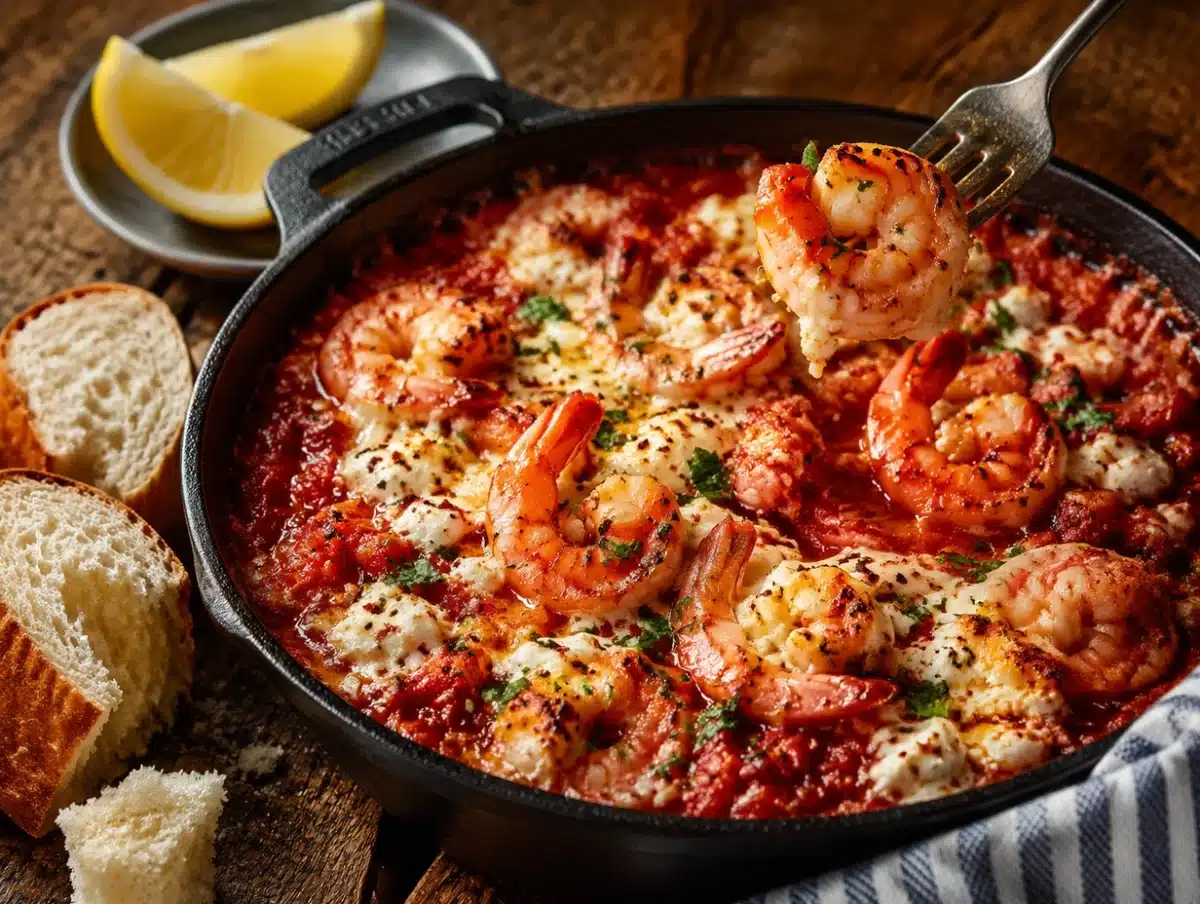
My friend Nadia — who grew up in Thessaloniki and has opinions about shrimp so strong they border on religious — watched me make shrimp saganaki for the first time in September 2023 and said, and I quote: “You killed them.” She was talking about the shrimp, not anyone in the room, though the distinction felt thin at that moment. The shrimp were rubbery little erasers floating in watery tomato soup. The feta had not browned. It was… bad.
But here’s the thing: I kept going. Five more batches over three weeks, with a notebook, a lot of overcooked shrimp, and exactly one breakthrough (batch four, Thursday evening, when the feta turned gloriously golden under the broiler and the sauce was thick and jammy and smelled like a taverna in the Plaka district of Athens). I figured out the five secrets. This is that recipe.
Table of Contents
Shrimp Saganaki (Greek Tomato Shrimp)
Ingredients
Method
- 1. Preheat oven to 400°F (204°C). Position one rack in the upper third of the oven (near the broiler).
- 2. Pat shrimp very dry with paper towels. Season with ¼ tsp salt, pepper, and smoked paprika. Set aside.
- 3. Heat 2 tbsp olive oil in a 12-inch cast iron skillet over medium-high heat until shimmering. Add shrimp in a single layer. Sear 60 seconds per side until just starting to turn pink but not cooked through. Transfer to a plate.
- 4. Reduce heat to medium. Add remaining 1 tbsp olive oil to the same skillet. Add onion and cook 5 minutes until soft and translucent. Add garlic, red pepper flakes, and anise seeds (if using). Cook 60 seconds. Add tomato paste; stir constantly for 2 minutes until paste turns brick-red.
- 5. Add broth and scrape up any browned bits. Add crushed tomatoes with all liquid, oregano, honey, remaining ½ tsp salt. Simmer uncovered 10 minutes, stirring occasionally, until sauce thickens. Add olives. Taste and adjust seasoning.
- 6. Arrange seared shrimp over the tomato sauce. Place feta chunks over and around shrimp (don’t press down; irregular pieces brown better).
- 7. Bake 10–12 minutes until shrimp are fully opaque and cooked through.
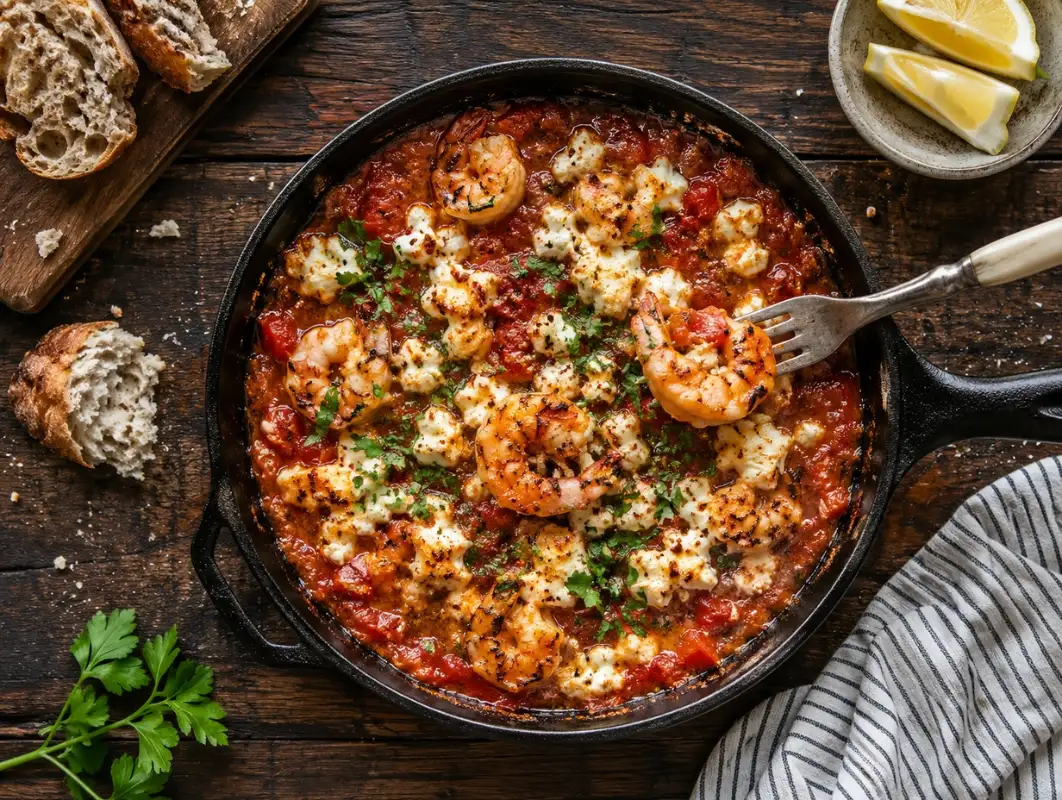
- 8. Switch oven to BROIL (high). Move pan to upper rack. Broil 2–3 minutes until feta is golden-brown in spots and sauce bubbles at edges. Watch carefully — browns fast.
- 9. Rest 3 minutes. Scatter fresh parsley and mint over top. Serve immediately from the cast iron pan with bread alongside.
Notes
Why This Shrimp Saganaki Recipe Actually Works
What ‘Saganaki’ Really Means — and Why It Matters for Technique
Okay, quick history lesson — I promise it’s relevant. The word “saganaki” (σαγανάκι) actually refers to the pan, not the dish. It’s a small, heavy, two-handled frying pan, typically cast iron or copper, traditionally used in Greek cooking. The diminutive suffix (-aki) means “little,” so saganaki literally means “little frying pan.” This matters for technique because the original concept is: cook in a small, hot, heavy pan that retains heat evenly and can go directly to the table.
Which means: use a cast iron skillet. Not a thin stainless pan. Not a non-stick skillet. The heat retention of cast iron is what gives you the caramelized tomato sauce and the blistered feta. This is not negotiable. (I have strong feelings about this. Almost as strong as I have about people who refrigerate tomatoes, but that’s a different rant for a different day.)
The dish itself — shrimp saganaki, or garides saganaki in Greek (garides = shrimp) — has roots in the taverna culture of coastal Greek cities like Thessaloniki and Athens. It started as a mezze (shared appetizer) in the late 20th century, building on the older tradition of feta saganaki. The same bold, heat-retaining technique is at work in our Mediterranean shrimp and white bean salad — simplicity and quality ingredients, full stop.
Why This Recipe Is Both a Weeknight Dinner AND a Party Showstopper
This is one of those extremely rare recipes that genuinely covers both scenarios. On a Tuesday night after work, it’s 30 minutes start to finish, one pan to clean, and dinner is done. But serve it at a dinner party in a cast iron skillet with crusty bread and a bowl of olives on the side, and — I’m not exaggerating here — people will think you cooked for hours. The visual of golden-blistered feta over red tomato sauce with pink shrimp peeking through is legitimately restaurant-worthy. I made this for my cousin Omar’s birthday dinner in February, told him it took 30 minutes, and he genuinely didn’t believe me. He still doesn’t.
Essential Ingredients for Shrimp Saganaki (Greek Tomato Shrimp)
The Ingredient List (With Quality Specs That Matter)
For 4 servings. Small details in quality here make a large difference in the final dish:
- 1.5 lbs (680g) large shrimp or jumbo shrimp, peeled and deveined — U16/20 or 21/25 count. This is secret #1 (see below). Large shrimp stay plump during the oven finish; small shrimp overcook in about 45 seconds and become chewy.
- 1 can (28 oz / 800g) whole San Marzano tomatoes — or good-quality crushed tomatoes. San Marzanos have lower acidity and more natural sweetness. Do not use diced tomatoes; they don’t break down the same way.
- 6 oz (170g) block Greek feta — not pre-crumbled. Buy feta packed in brine (Dodoni, Valbreso, or store-brand PDO Greek feta). Pre-crumbled feta has dried coatings that prevent proper melting and browning.
- ½ cup kalamata olives, pitted (optional but highly recommended)
- 1 medium yellow onion, finely diced
- 4 cloves garlic, thinly sliced
- 3 tbsp extra-virgin olive oil
- 2 tbsp tomato paste
- ¼ cup vegetable broth or chicken broth (replaces ouzo/wine — more on this below)
- 1 tsp dried Greek oregano
- ½ tsp sweet smoked paprika
- ¼ tsp red pepper flakes
- 1 tsp honey
- Salt and black pepper
- Fresh flat-leaf parsley + fresh mint, for serving
- Crusty bread, pita, or orzo, for serving
Ingredient Comparison: Best Choices vs. Pantry Subs
| Ingredient | Best Choice | Pantry Substitute | What Changes |
| Shrimp | Fresh U16/20 jumbo, peeled | Frozen large shrimp, thawed + dried | Frozen works great; pat very dry |
| Tomatoes | San Marzano whole, crushed by hand | Good-quality crushed tomatoes | Avoid diced (texture differs) |
| Feta (block, brine-packed) | PDO Greek feta — Dodoni or Valbreso | Bulgarian feta (slightly saltier) | Don’t use pre-crumbled; won’t brown |
| Ouzo/wine (original recipe) | Vegetable broth + pinch anise seeds | Chicken broth + lemon juice | Broth adds depth without alcohol |
| Fresh mint | Spearmint (more authentic Greek) | Dried mint, ¼ tsp | Fresh is measurably better |
| Cast iron skillet | 10–12″ cast iron, oven-safe | Oven-safe stainless steel | Avoid non-stick — no browning capacity |
The game-changing secret about shrimp size: large or jumbo shrimp (21/25 count or bigger) are essential not just for texture, but because they give you a window of about 3–4 extra minutes of cook time compared to small shrimp. With small shrimp, the margin between raw and overcooked is roughly 60 seconds. With large shrimp, you have time to let the feta blister under the broiler without turning the shrimp to rubber.
This is the single most important thing you’ll learn from this article. Shrimp sizes are connected to the proteins in the same way our Mediterranean sheet pan salmon benefits from thick fillets — thicker = more forgiving cooking window. And if you want to make a full Greek table spread, the flavors here pair perfectly with our Greek feta egg bake for a brunch situation.
The Foolproof Method for Shrimp Saganaki
Preparation (10–12 minutes)
- Pat the shrimp bone-dry with paper towels (Secret #2). Wet shrimp steam instead of sear. Moisture on the surface of shrimp drops the pan temperature and prevents the Maillard reaction — the browning reaction that creates complex flavor. Dry = sear. Wet = steam. Non-negotiable.
- Season shrimp: toss with a pinch of salt, black pepper, and smoked paprika. Set aside at room temperature for 5–10 minutes (don’t skip this — tempering shrimp slightly reduces the cold shock when they hit the pan, giving you more even cooking).
- Prep vegetables: finely dice onion, thinly slice garlic, crush tomatoes by hand directly from the can into a bowl (Secret #3 — hand-crushed tomatoes keep irregular texture and release juice more gradually than machine-crushed, creating a more complex, slower-developing sauce). Reserve the tomato liquid in the can.
- Preheat oven to 400°F (204°C) and position a rack in the upper third (close to broiler element). Also preheat the broiler — you’ll need it at the end.
The Main Method: Stovetop to Oven (20–22 minutes)
- Sear the shrimp (Secret #4: sear first, finish in oven). Heat 2 tbsp olive oil in a 12-inch cast iron skillet over medium-high heat until shimmering. Add shrimp in a single layer — don’t crowd. Sear for exactly 60 seconds per side (the shrimp will be just starting to turn pink but NOT cooked through). Remove to a plate. The shrimp will finish in the oven. This sear adds a layer of caramelization that boiling shrimp directly in sauce never achieves.
- Build the tomato sauce: in the same skillet over medium heat, add remaining 1 tbsp olive oil. Add onion and cook 5 minutes, stirring, until translucent and soft — but not browned. Add garlic and red pepper flakes, cook 60 seconds until fragrant. Add tomato paste and stir 2 minutes until it deepens to a brick-red color (this is ‘pinching’ the paste — cooking off raw flavors and developing sweetness).
- Deglaze: add the broth (or broth + anise seeds if you want that ouzo-adjacent flavor). Scrape up any browned bits from the shrimp sear — that’s flavor. Add crushed tomatoes + reserved can liquid, oregano, honey, salt, and pepper. Simmer uncovered over medium heat for 10 minutes, stirring occasionally, until the sauce thickens and reduces slightly. Taste and adjust seasoning. Add kalamata olives.
- Nestle shrimp into sauce: arrange seared shrimp in an even layer over the tomato sauce. Crumble feta in large chunks over the top. Don’t press the feta down — you want irregular pieces that will brown unevenly (the dark spots and melty spots are the best parts).
- Bake 10–12 minutes at 400°F until shrimp are fully opaque and cooked through (internal temp of 120°F — shrimp are safe from 145°F but this internal temp during baking accounts for carryover).
- Broil 2–3 minutes (Secret #5: the broiler is not optional). Move the pan to the upper rack. Broil until feta turns golden-brown in spots and the tomato sauce bubbles aggressively around the edges. Watch like a hawk — this goes from golden to burnt in under a minute. The browning of feta under the broiler is a Maillard reaction on the proteins and sugars in the cheese. It creates nutty, toasty notes that raw crumbled feta completely lacks.
- Rest 3 minutes. Scatter fresh parsley and mint leaves over top. Serve immediately from the cast iron pan with bread alongside.
Pro tip: if you don’t have an oven-safe cast iron, build the sauce in any skillet, then transfer everything to a broiler-safe 9×13 baking dish before adding the shrimp and feta. Works perfectly. For a complete Greek dinner spread, our classic Greek lemon rice pilaf is the best base to serve this over — the rice soaks up the tomato sauce in a way that’s almost embarrassingly good. And our garlic parmesan focaccia is the bread vehicle this sauce was born to be eaten with.
Creative Variations of Shrimp Saganaki
Four Ways to Remix This Greek Classic
| Variation | Key Changes | Dietary Notes | Flavor Profile |
| Spicy Harissa Saganaki | Add 1 tbsp harissa paste to sauce with tomatoes | GF, dairy-free option (omit feta) | Bold, smoky, North African-Greek fusion |
| Seafood Mix Saganaki | Replace ½ shrimp with scallops + mussels | GF, pescatarian | Briny, oceanic, impressive for guests |
| Vegetarian Saganaki | Replace shrimp with white beans + roasted eggplant | Vegan (omit feta or use vegan feta) | Hearty, earthy, satisfying |
| Quick Stovetop-Only Version | Skip oven/broiler; cook shrimp fully in sauce 4–5 min, cover for feta | All dietary types | Slightly less browning but just as flavorful |
Dietary Modifications
Gluten-free: already fully GF as written — just verify your canned tomatoes and broth.
Dairy-free/vegan: skip the feta entirely or crumble dairy-free feta (Violife is the best option currently on US shelves). Replace shrimp with chickpeas + eggplant for a fully vegan version.
Paleo: the recipe is already compliant; skip the honey or replace with a small date blended into the sauce.
Kid-friendly: omit red pepper flakes and olives; serve over orzo pasta (kids usually destroy orzo). Add a small pinch of sugar instead of honey to balance the tomato acidity for younger palates.
Want to make this into a full mezze spread? Our lemon chickpea patties with yogurt sauce are the perfect vegetarian companion to this dish. For a bowl-style variation, serve the shrimp saganaki over our Mediterranean chickpea power bowl base — unorthodox but genuinely spectacular.
Storage & Serving for Shrimp Saganaki (Greek Tomato Shrimp)
Storage Techniques and Timeframes
Refrigerator: Leftovers keep in an airtight container for up to 2 days. The tomato sauce improves overnight (as always with tomato-based dishes — the flavors meld and deepen). The shrimp, however, don’t improve. They get slightly firmer with refrigeration. Not bad, just not as pristine as fresh.
Reheating: warm the tomato sauce in a small saucepan over medium heat until bubbling, then add shrimp and heat for 2–3 minutes only. Do not microwave shrimp — the uneven heating makes them rubbery.
Freezer: the tomato sauce freezes beautifully for up to 3 months. The shrimp do not. Freeze sauce only; add fresh shrimp when ready to serve.
Meal Prep Strategies and Serving Pairings
Meal prep: make the tomato sauce 3–4 days ahead and refrigerate. When ready to serve, heat the sauce in your cast iron, sear shrimp, nestle in sauce, add feta, oven-finish. Total time with pre-made sauce: 15 minutes. This is honestly the best weeknight-prep strategy for this dish.
| Pairing | Why It Works | Prep Time |
| Crusty bread / pita | Essential for sauce-scooping; provides textural contrast | 5 min (store-bought) |
| Lemon rice pilaf | Soaks up tomato sauce; neutral base lets shrimp shine | 20 min |
| Orzo pasta | Traditional pairing; sauce coats the pasta beautifully | 10 min |
| Simple green salad | Balances richness; the acid cuts through the olive oil | 5 min |
| Roasted pita chips | For crunch and scooping as a mezze-style starter | 8 min |
For the full Greek mezze experience, start with our whipped feta with garlic confit and follow the shrimp saganaki with our Greek yogurt panna cotta for dessert — it’s a Mediterranean dinner party that requires almost zero effort per course.
Nutritional Benefits of Shrimp Saganaki
(Quick disclaimer: I’m not a dietitian and these are estimates based on standard nutritional databases. Numbers vary ±10% based on exact ingredients used.)
Macronutrient Profile (per serving, approximately ¼ of the pan)
| Macronutrient | Amount | % Daily Value |
| Calories | ~340 kcal | ~17% |
| Protein | 36g | 72% |
| Total Fat | 15g | 19% |
| Saturated Fat | 5g | 25% |
| Carbohydrates | 10g | 4% |
| Dietary Fiber | 2g | 7% |
| Sugar | 5g | — |
Key Micronutrients and Health Highlights
| Nutrient / Benefit | Detail |
| Iodine | Shrimp is one of the richest dietary sources of iodine — critical for thyroid function. One serving provides ~30–35% DV. |
| Selenium | ~60% DV per serving. Selenium is a potent antioxidant; shrimp is consistently one of its best food sources. |
| Astaxanthin (from shrimp) | The carotenoid that makes shrimp pink. Research in Nutrients (2018) suggests anti-inflammatory and skin-protective properties. |
| Lycopene (from tomatoes) | Lycopene from cooked tomatoes is 2–4× more bioavailable than from raw tomatoes. The olive oil here increases absorption further. |
| Calcium (from feta) | ~200mg per serving (~20% DV). Greek feta made from sheep’s milk has a distinct calcium and phosphorus profile. |
| Cholesterol note | Shrimp is high in dietary cholesterol (~190mg per serving) but research since 2015 has consistently shown it does not meaningfully raise LDL in most people. Current AHA guidelines do not flag seafood cholesterol as a concern. |
| Glycemic Index | Extremely low (~10 GI). This is an excellent blood-sugar-stable meal with virtually no impact on glucose. |
Shrimp saganaki is genuinely one of the most protein-dense 30-minute dinners you can make — 36g of protein with only 340 calories is exceptional. For another high-protein Mediterranean option, our grilled chicken Mediterranean bowl offers a similar nutritional profile with chicken as the base.
Frequently Asked Questions About Shrimp Saganaki
What does saganaki mean in Greek cooking?
Saganaki (σαγανάκι) literally means ‘little frying pan’ in Greek — referring to the small, heavy, two-handled skillet traditionally used to prepare and serve the dish. Saganaki refers to the cooking vessel, not a single recipe. There are many saganaki dishes: cheese saganaki, shrimp saganaki (garides saganaki), mussel saganaki, and more. Any dish cooked and served in that little two-handled pan is technically a saganaki.
Do I need ouzo for shrimp saganaki?
No. Traditional recipes include ouzo (a Greek anise-flavored spirit) for its aromatic, slightly sweet character. In this recipe, we substitute vegetable or chicken broth. For a closer-to-traditional flavor without alcohol, add ¼ tsp of anise seeds to the onions when building the sauce — you get the anise undertone without ouzo. The dish is genuinely excellent without it.
What size shrimp is best for shrimp saganaki?
Large or jumbo shrimp (21/25 count or larger — meaning 21 to 25 shrimp per pound) is essential. Small shrimp overcook in the oven finish and become rubbery. Aim for U16/20 (under 16 per pound) for maximum plumpness, or 21/25 as the minimum size. Avoid 31/35 count or smaller for this preparation.
Can I make shrimp saganaki ahead of time?
Partially, yes. Make the tomato sauce up to 4 days ahead and refrigerate. When ready to serve, heat the sauce in your cast iron, sear the shrimp fresh, nestle them in, add feta, and oven-finish. Total cook time with pre-made sauce: about 15 minutes. Don’t bake the complete assembled dish ahead — reheated shrimp loses its texture.
Is shrimp saganaki served as an appetizer or main dish?
Both! In Greece, garides saganaki is traditionally a mezze (shared appetizer) served with bread for dipping, as part of a larger spread. In an American-style dinner, it works beautifully as a main course served over rice, orzo, or couscous. The recipe here makes 4 portions as a main, or 6–8 as an appetizer
How do I know when shrimp saganaki is done?
Three cues: (1) Shrimp are fully opaque and pink throughout — no grey translucent center. (2) The tomato sauce is bubbling vigorously around the edges. (3) The feta is golden-brown in spots (after broiling). If you want precision: shrimp are done at 120°F internal temp during oven cooking (safe temp is 145°F, but carryover heat brings it there as you rest the pan).
What’s the difference between Greek shrimp saganaki and regular shrimp in tomato sauce?
Three key differences: (1) The feta — not just a topping but an ingredient that melts into the sauce and adds a salty, tangy, creamy layer you don’t get with other cheeses. (2) The Greek spice profile — oregano, smoked paprika, and honey give it a very specific Mediterranean character. (3) The cast iron / oven method — building the tomato sauce in a heavy pan, then finishing under the broiler, creates blistered, jammy tomatoes and browned feta that stovetop-only cooking can’t achieve.
Pairing & Serving Ideas for Shrimp Saganaki (Greek Tomato Shrimp)
Complete Meal Combinations by Occasion
| Occasion | Starter | Main | Side | Beverage |
| Weeknight dinner | Quick salad | Shrimp Saganaki over orzo | Warm pita | Sparkling water + lemon |
| Dinner party mezze | Whipped feta dip + olives | Shrimp Saganaki (as shared pan) | Crusty bread + lemon rice | Iced mint tea |
| Summer gathering | Cucumber tomato salad | Shrimp Saganaki as centerpiece | Grilled pita | Cold sparkling lemonade |
| Date night | Garlic focaccia | Shrimp Saganaki in cast iron skillet | Greek salad | Pomegranate spritzer |
Beverage Pairings (Alcohol-Free)
The spiced tomato sauce in shrimp saganaki (Greek tomato shrimp) is bold, slightly sweet, and briny from the feta and olives. You want a drink that’s either neutral-to-bright or has some tartness. Sparkling water with a squeeze of lemon and a sprig of fresh mint is genuinely the best pairing here — the carbonation cuts through the olive oil and the lemon echoes the dish. Iced mint tea is deeply traditional alongside Greek seafood — spearmint tea (as made in Greece) is slightly sweeter than peppermint and doesn’t fight the tomato. A homemade lemonade or pomegranate juice cut 1:3 with sparkling water is beautiful on a warm evening. Skip anything sweet or creamy — they clash with the briny feta.
For a full dinner party experience, our whipped feta with hot honey as a starter is an absolutely perfect opener before shrimp saganaki. Both dishes feature feta prominently, but in completely different ways. And for the non-seafood eaters at the table, our creamy tomato basil chicken uses the same tomato-forward flavor profile — serve both and cover all your bases.
Now Make This Shrimp Saganaki Your Own
A Dish Worth Personalizing
Look — Nadia (the Thessaloniki friend who witnessed my initial disaster) now requests this shrimp saganaki recipe when she comes over, which I consider one of my greatest personal achievements in the kitchen, honestly. And the version I make now isn’t exactly the recipe above, because I’ve started adding a small pinch of cinnamon to the tomato sauce, which sounds absolutely insane but is actually traditional in some northern Greek preparations and adds this almost imperceptible warmth that ties everything together.
The point is: once you’ve made this three times and internalized the five secrets, start messing with it. Add roasted red peppers. Use smoked feta if you can find it. Throw a handful of baby spinach into the sauce in the last 2 minutes. This recipe is a framework, not a rule.
Share Your Version With Us
The Greek tomato shrimp cooking tradition is thousands of years old in its bones and remarkably modern in its restaurant presentation. It’s also refreshingly unpretentious — this is taverna food, made for sharing with friends over a long, unhurried dinner. When you make it, leave a comment below with what you changed, what worked, what blew your mind. Did you try the cast iron approach for the first time? Did the broiler moment give you the golden feta you dreamed of? We genuinely want to know.
Looking to build a full Mediterranean table around this dish? Our Gemista Greek stuffed peppers and tomatoes is a showstopping companion dish that shares the same tomato-forward soul. And for a next-day use of your leftovers, the tomato sauce reheated and tossed with orzo transforms into something very close to our creamy chicken orzo — different protein, same comforting spirit.