Italy has its own days for the dead, and they are not Halloween.
Ognissanti — All Saints’ Day — falls on 1 November and is a public holiday across the country. Il Giorno dei Morti, the Day of the Dead, follows on 2 November. Together they make a two-day observance that is older than the American Halloween most of us grew up with, quieter, considerably more domestic, and much more about food than costume.
What Italy bakes for those two days is a whole category of regional sweets that barely exists in English. Bone-shaped cookies that crack themselves open. Almond sweets named after beans, because beans belonged to the dead long before Christianity got here. Near-black spiced biscuits made from whatever was stale in the cupboard. Sugar figures for children in Sicily. A chocolate torrone in Naples.
Three of them are below with full recipes, and the rest are described because they are worth knowing about even where I do not have a recipe for you.
Table of Contents
Table of Contents
The Traditions Behind the Food (Italian Day of the Dead Recipes)
The thread running through almost all of it is the same: the dead come back, and you leave food out for them.
In many regions, families baked sweets on the evening of 1 November and left them out overnight — often with a jug of water, because the journey was understood to be a thirsty one — for the dead returning to the house. In the morning the sweets were eaten by the living. It is a small, domestic, entirely unspooky custom and it is the direct ancestor of every recipe on this page.
Sicily has the most elaborate version. Children traditionally wake on the morning of 2 November to find sweets and small gifts left by i morti, the dead — their own grandparents and relatives, arriving in the night with presents. The gifts include frutta martorana, marzipan modelled and painted to look like real fruit, and pupi di zucchero, brightly painted sugar figures often shaped as paladins, knights and saints. Functionally it occupies the same position in a Sicilian childhood that Santa Claus does elsewhere, and it is considerably more atmospheric.
- Lombardy and Milan give us pan dei morti, sold by weight in bakery windows from late October.
- Piedmont has its own ossi dei morti, often with hazelnut in place of some of the almond.
- Umbria bakes stinchetti dei morti — literally “little shinbones of the dead” — another almond bone.
- Venice and the Veneto make fave dei morti in three colours: plain, pink and cocoa brown, served together on one plate.
- Naples and Campania have torrone dei morti, which despite the name is not the hard nougat torrone but a soft chocolate block, often filled with hazelnuts, coffee or candied fruit, made specifically for the second of November.
Across the whole country, 1 and 2 November are cemetery days. Families visit, clean graves and leave flowers — overwhelmingly chrysanthemums, which in Italy are so strongly associated with the dead that giving them to a living person is a serious social error. If you take one thing from this section that will save you embarrassment in Italy, make it that one. Gambero Rosso, one of Italy’s main food publications, runs through the regional products of 2 November every year and is a good place to see how wide the range actually is.
I should say plainly that I am not Italian, that these traditions vary enormously between regions and even between towns, and that Italian food history is a field where confident single-sentence explanations are usually a sign that someone has stopped checking. Where I am unsure below, I have said so.
Five Things to Know About the Italian Days of the Dead
- 1 November, Ognissanti, is a national public holiday in Italy. Schools and most businesses close and families travel.
- 2 November, Il Giorno dei Morti, is not a public holiday but it carries most of the customs and almost all of the food.
- Sweets were traditionally left out overnight on the evening of 1 November, often with a jug of water, for the dead returning to the house.
- Chrysanthemums are the flower of the dead in Italy — strongly enough that giving them to a living person is a real social error.
- Nearly every regional sweet for these two days is almond-led, keeps one to two weeks, and requires no decorating at all.
Ossi dei Morti — Bones of the Dead
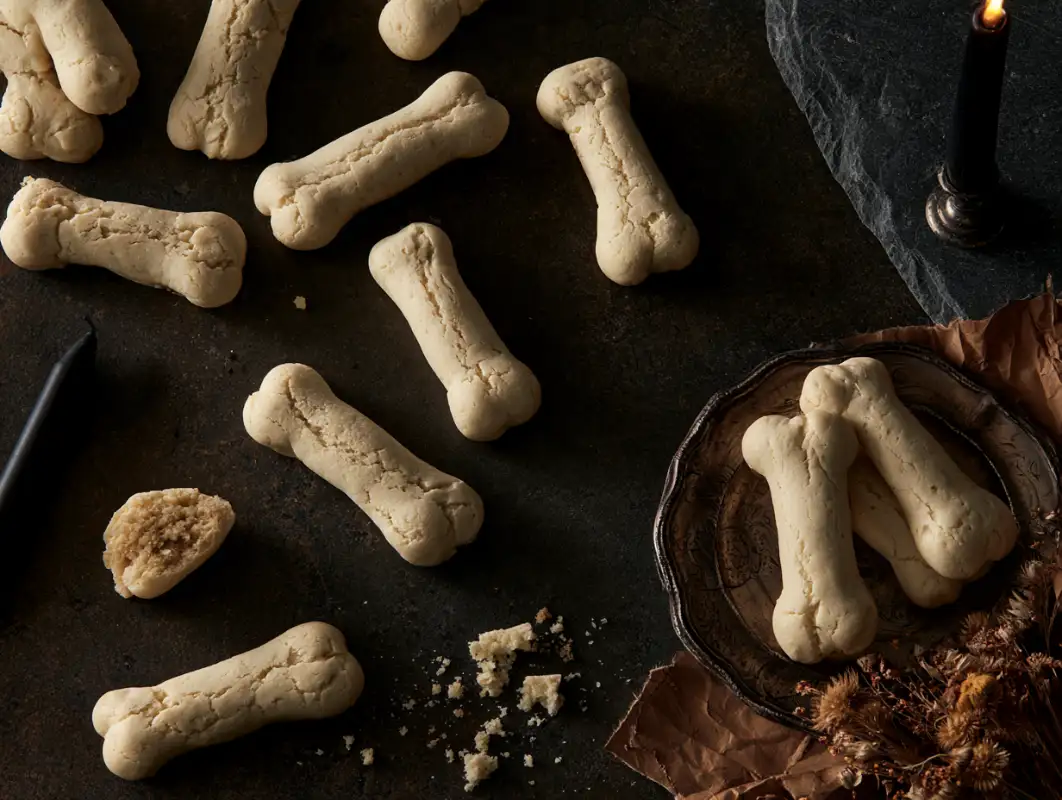
Four ingredients — almonds, sugar, egg white, flour — shaped into rough logs and then left out uncovered overnight. The surface dries into a brittle skin; in the oven the inside expands and splits it open, and what comes out looks unmistakably skeletal. No decorating, no piping, no dye. They snap when you break them and go chewy at the centre, which is why some regions call them ossi da mordere, bones to bite.
The overnight rest is the entire recipe. Skip it and you get smooth, pale, perfectly pleasant almond cookies that look like nothing at all.
Make them: 10 days ahead. They keep two weeks.
Get the full ossi dei morti recipe →
Fave dei Morti — Beans of the Dead
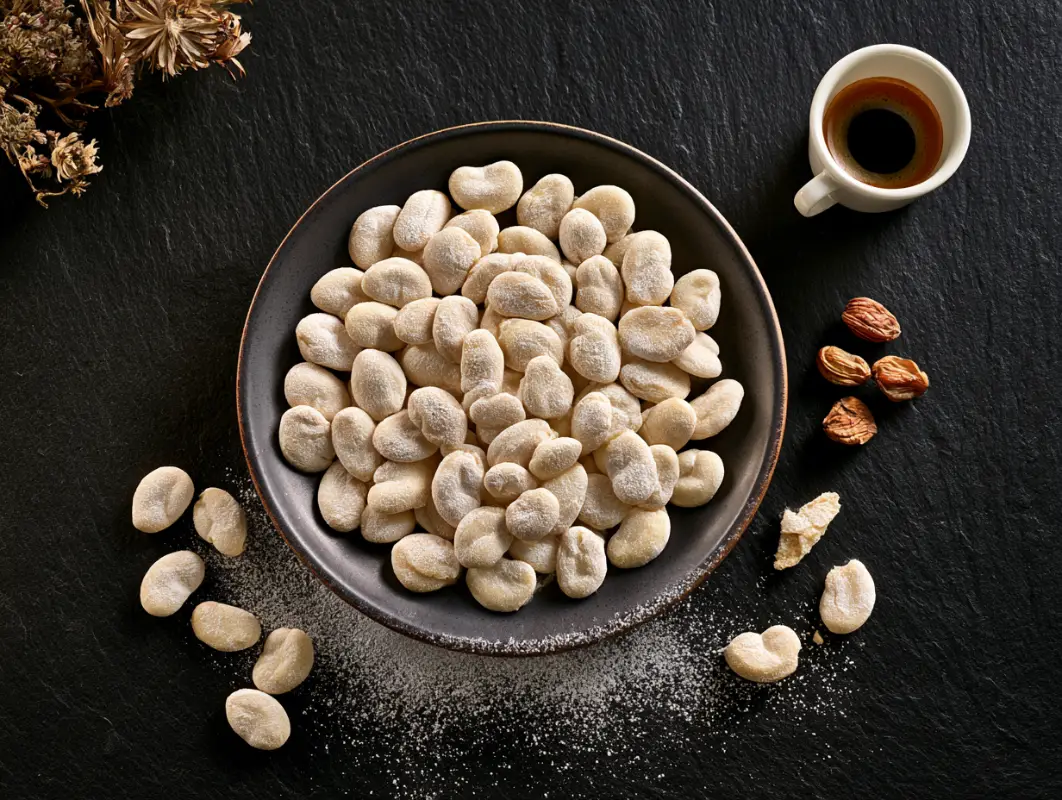
Small soft almond cookies shaped like broad beans, dusted with icing sugar, made in one bowl with no mixer. Chewy where the ossi are crisp, which is why the two belong on the same plate.
The name goes back to an association between broad beans and the dead that predates Christianity in Italy — beans featured in Roman rites concerning the dead, and the link survived into medieval All Souls’ custom where beans were distributed as alms. At some point the bean itself was replaced by a sweet shaped like one.
The Venetian version comes in three colours and is the best-looking thing in this whole collection.
Make them: mid-October. They keep two weeks and they post well.
Get the full fave dei morti recipe →
Pan dei Morti — Bread of the Dead
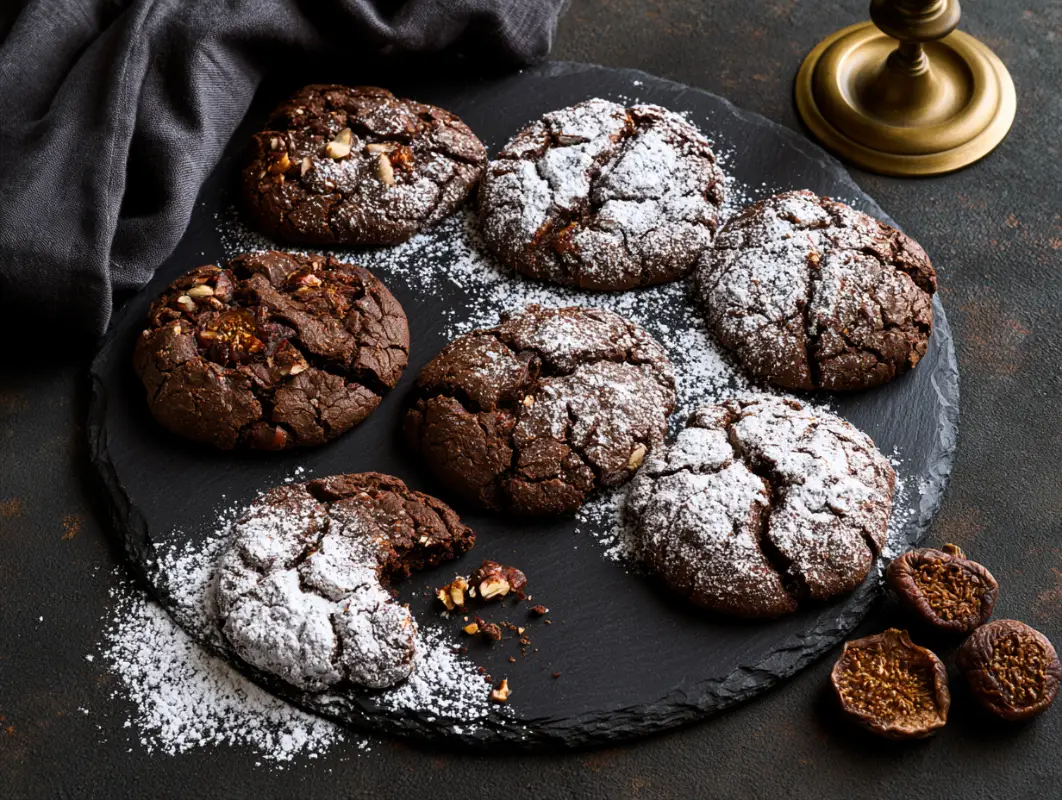
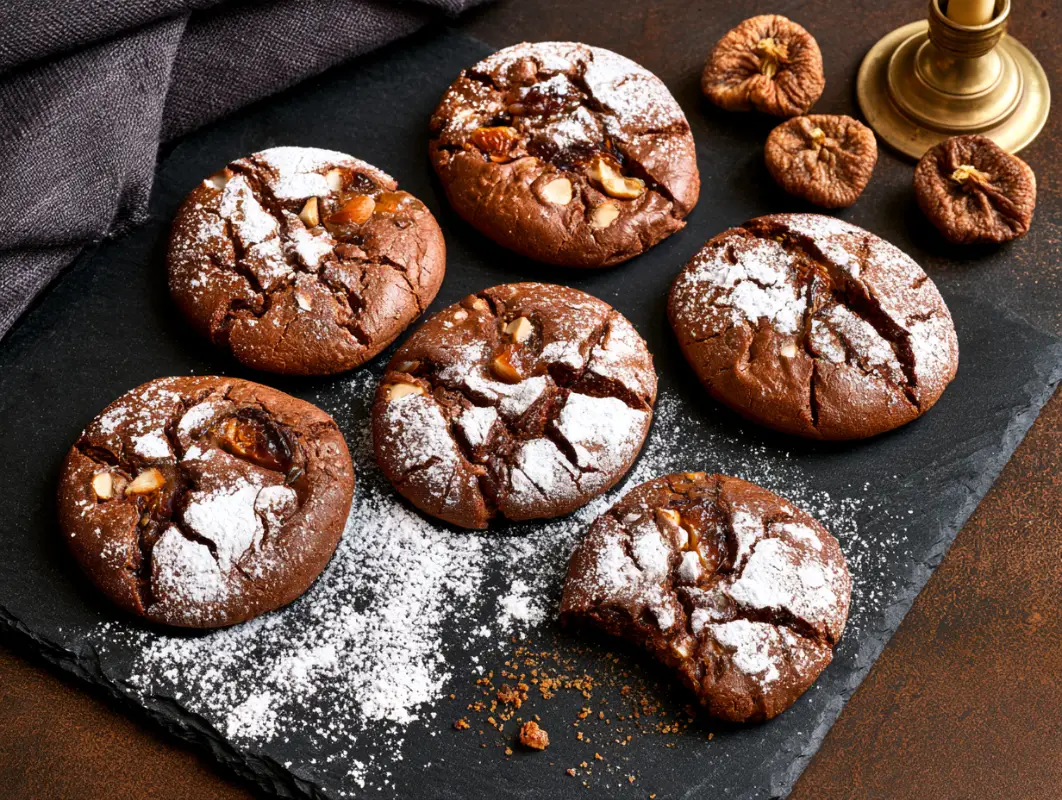
Flat, craggy, almost-black biscuits packed with dried figs, raisins, cocoa, warm spice and crushed amaretti, then dusted heavily with icing sugar so the white settles into every crack.
They are Milanese, they are not bread despite the name, and their origin is the most likeable in the group: this is a using-up recipe, built on the crumbs of biscuits that were already stale. Every traditional version rests on that principle, which is also why every bakery’s looks slightly different and why yours does not need to match a photograph.
Make them: a week ahead. They improve by day three.
Get the full pan dei morti recipe →
Regional Variations Across Italy
Worth knowing about even where I am not giving you a recipe, because the range is the point.
- Frutta martorana (Sicily). Marzipan modelled and hand-painted into astonishingly realistic fruit — figs, prickly pears, peaches, chestnuts. Named for a Palermo convent. Left for children on 2 November alongside other gifts.
- Pupi di zucchero (Sicily). Hollow moulded sugar figures, brightly painted, traditionally shaped as paladins from the Sicilian puppet tradition, knights and saints. Genuinely striking objects, and one of the very few sweets in Europe made to look like a person and given to children in connection with the dead.
- Stinchetti dei morti (Umbria). Almond paste shaped as small bones, closer to marzipan than to a biscuit.
- Ossi dei morti, Piedmontese (Piedmont). Hazelnut in place of some of the almond, a slightly different crack, and often a firmer base.
- Torrone dei morti (Naples and Campania). Soft chocolate rather than the hard nut nougat the name suggests. Made in a block and sliced, with fillings ranging from hazelnut to coffee to candied fruit. Sold everywhere in Naples in the days around 2 November.
- Colva or grano dei morti (Puglia). A dish of cooked wheat berries with pomegranate seeds, walnuts, chocolate and vincotto — which despite the name is grape must cooked down to a syrup rather than a wine, and carries no alcohol. Eaten on 2 November.
- Fave dei morti, Perugia and Marche versions. Similar to the Venetian but often spiced differently and sometimes made with pine nuts.
Wheat-and-pomegranate dishes for the dead recur right across the eastern Mediterranean, and Greek kollyva is a close relative of the Pugliese one. That recurrence points at something considerably older than any of the national traditions built on top of it — a shared Mediterranean funerary food culture that long predates the November dates the church later fixed.
Day of the Dead vs Halloween: What’s the Difference?
This gets answered badly more often than almost any question in food writing, usually by collapsing three separate things into one. They are distinct.
| Halloween | Ognissanti & Giorno dei Morti | Día de los Muertos | |
|---|---|---|---|
| Where | US, Ireland, UK and beyond | Italy | Mexico |
| When | 31 October | 1 and 2 November | 1 and 2 November |
| Roots | Celtic Samhain by way of All Hallows’ Eve, reshaped by Irish and Scottish emigration to North America and 20th-century American commerce | Catholic feast of All Saints, followed by commemoration of all the faithful departed | Indigenous Mesoamerican traditions fused with the same Catholic calendar dates |
| Register | Performative, public, costumed | Domestic and quiet | Celebratory, public and family-centred |
| What people do | Costumes, trick-or-treating, parties | Cemetery visits, grave cleaning, regional baking | Ofrendas, gravesite vigils, marigold paths |
| Flowers | None traditionally | Chrysanthemums | Marigolds (cempasúchil) |
| The food | Candy, and dishes built to look frightening | Ossi, fave and pan dei morti; marzipan fruit; sugar figures; torrone dei morti | Pan de muerto, sugar skulls, mole, atole |
| Public holiday? | No | 1 November is, across Italy | 1 and 2 November are observed nationally |
Día de los Muertos is not a Spanish import and it is not Italian, and treating the three as interchangeable is both inaccurate and a little rude. UNESCO inscribed the Mexican observance on its Representative List of the Intangible Cultural Heritage of Humanity precisely because of its distinct Indigenous roots.
The genuinely shared thread is the calendar. All three cluster around the same few days at the end of the harvest and the start of winter, and all three involve the dead, food and the living eating together. What each culture built on that shared frame is completely different.
The practical upshot for a home cook: if you want a Halloween bake with meaning behind it, the Italian tradition is the one you can borrow from without appropriating anything, because All Saints’ Day is a Catholic feast observed across most of Europe and Latin America and the recipes belong to a shared European baking canon.
Baking for 1 November: A Simple Plan
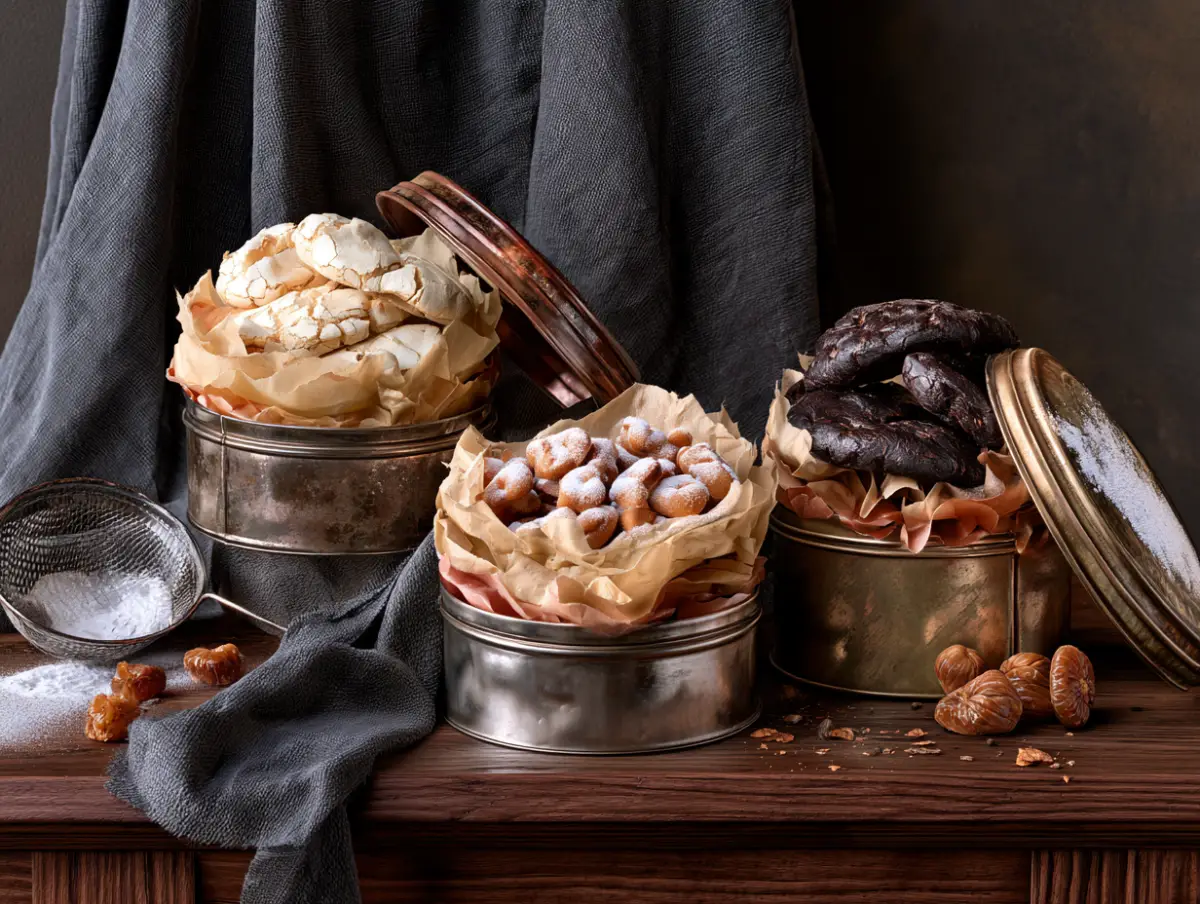
All three keep, which means this is one of the least stressful bakes in the calendar.
- One tin each, parchment between layers, room temperature, never the fridge.
- If you are making only one: ossi dei morti, because the self-cracking is the most impressive thing any of them does and it requires no skill whatsoever.
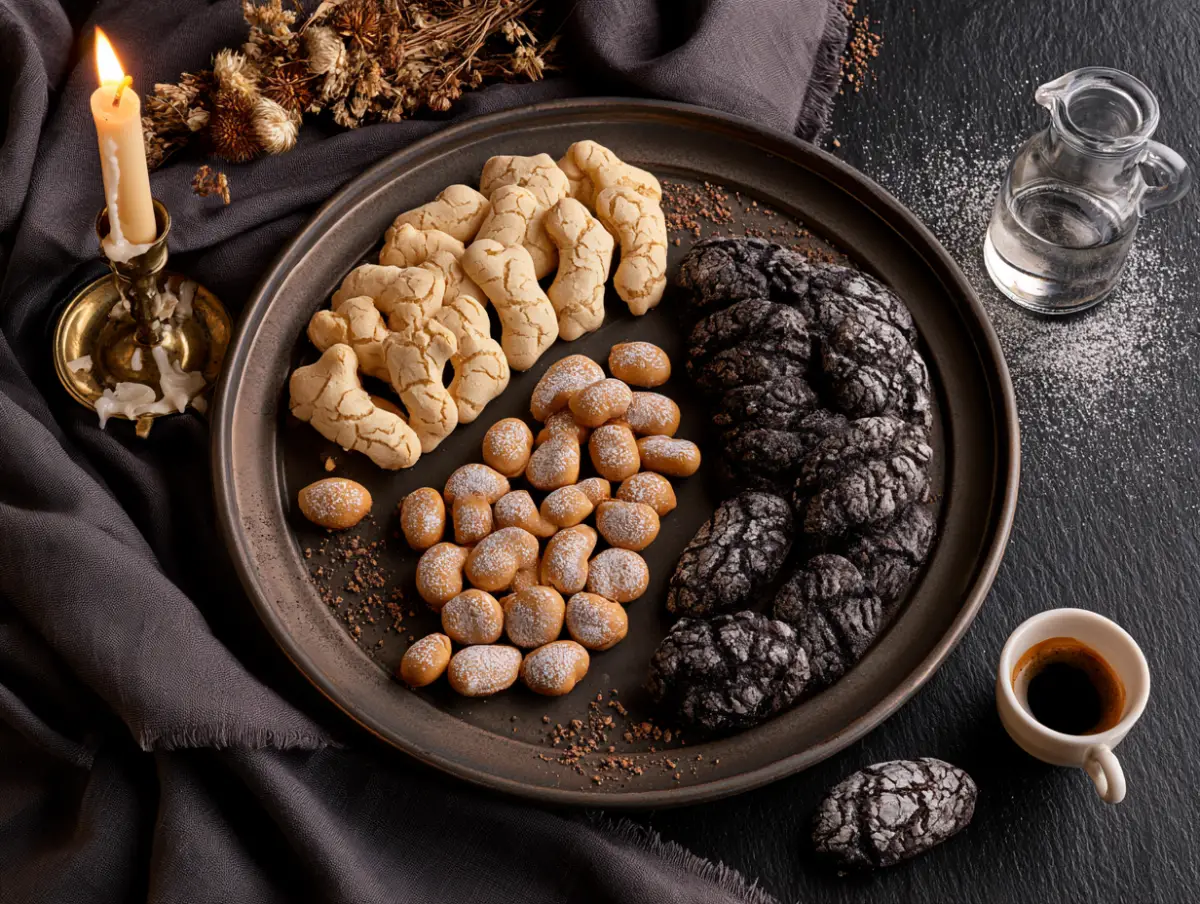
- If you are making all three: put them on a dark platter with one candle and nothing else. Two pale, one near-black, three textures. That plate is the entire payoff of this page.
And if you want to do the traditional thing: leave a couple out overnight on the first of November, with a glass of water beside them. It costs nothing and it is a nice thing to do.
The Three Bakes Compared
The single most useful thing if you are deciding between them:
| Ossi dei Morti | Fave dei Morti | Pan dei Morti | |
|---|---|---|---|
| Region | Across Italy; Sicily, Piedmont, Lombardy | Rome, Venice, Umbria, Marche | Milan and Lombardy |
| Texture | Crisp, cracked, brittle — it snaps | Soft, chewy, sandy almond crumb | Craggy outside, dense and soft inside |
| Colour | Bone-white | Pale, dusted white (or pink and cocoa) | Near-black under heavy icing sugar |
| Hands-on time | 20 minutes | 25 minutes | 25 minutes |
| The catch | 8 to 12 hour uncovered rest — no shortcut | Must be pulled from the oven looking underdone | The crumbs must be dry, and dust it twice |
| Keeps | 2 weeks | 2 weeks | 10 days, better from day three |
| Posts well? | Yes, in a rigid tin | Best of the three | Yes, but re-dust on arrival |
| Best for | The showpiece — it decorates itself | Gifting | The photograph |
Which One to Bake First
Ossi dei morti, if you are only making one. The self-cracking is the most impressive thing any of them does and it requires no skill whatsoever — the overnight rest does the work while you are asleep.
Fave dei morti, if you are giving them away. Small, sturdy, no fragile edges, and they arrive intact in a rigid tin. Of the three, these are the ones to post.
Pan dei morti, if you want the photograph. Near-black with white icing sugar in every crack is the only one of the three that survives being shrunk to a thumbnail, and it is the one to lead a dessert pin with.
Frequently Asked Questions
What do Italians eat on All Saints’ Day?
Regional sweets made specifically for 1 and 2 November. The best known are ossi dei morti (bone-shaped almond cookies), fave dei morti (bean-shaped almond cookies) and pan dei morti (dark spiced biscuits from Milan). Sicily has marzipan fruit and painted sugar figures, Naples has a soft chocolate torrone, and Puglia has a wheat and pomegranate dish.
What is the difference between Halloween and Day of the Dead?
Halloween is 31 October and descends from Celtic Samhain by way of All Hallows’ Eve, heavily shaped by North American commerce. Italy’s Ognissanti and Giorno dei Morti are 1 and 2 November — a Catholic feast and commemoration marked by cemetery visits and regional baking. Mexico’s Día de los Muertos shares those dates but is a distinct tradition with Indigenous Mesoamerican roots. Three different things on adjacent days.
Do Italians celebrate Halloween?
Increasingly, especially younger people in cities, though it arrived commercially and remains contested. The older and much more widely observed occasion is Ognissanti on 1 November, which is a national public holiday. There is a fuller answer here.
What are the traditional Italian Day of the Dead cookies?
Ossi dei morti, fave dei morti and pan dei morti are the three most widespread, with stinchetti dei morti in Umbria and regional variants of each elsewhere. All three are almond-led, all three keep for one to two weeks, and none of them requires decorating.
When is All Souls’ Day?
2 November. All Saints’ Day (Ognissanti) is 1 November and is a public holiday in Italy; All Souls’ Day, Il Giorno dei Morti, follows the next day and is the day most closely associated with the food and the cemetery visits.
Can I make these ahead?
All three are designed to be. Fave dei morti and ossi dei morti keep two weeks, pan dei morti ten days. Bake them across the third and fourth weeks of October and re-dust with icing sugar before serving.