 Written by Ines Zahraoui — Tunisian home cook and co-founder of The Mediterranean Recipe, developing and testing recipes in her own kitchen since 2020. More about Ines →
Do Italians celebrate Halloween? Some of them, some of the time, and a lot of them have complicated feelings about it.
That is the honest short answer, and it is more interesting than a yes or a no, because the reason it is complicated is that Italy already had two days for the dead and did not particularly need a third.
Ognissanti falls on 1 November and is a national public holiday. Il Giorno dei Morti follows on 2 November. Between them they carry cemetery visits, chrysanthemums, a nationwide body of regional baking, and in Sicily a gift-giving custom for children that predates Halloween by centuries and looks strikingly like it. Halloween arrived in Italy on top of all of that, from America, fairly recently, and it landed as a commercial import rather than a tradition — which is exactly how a good many Italians still see it.
This page is the long answer. What Italy actually observes, what people do, what they eat, why some regions had door-to-door treat collecting long before Halloween got there, and how the three November traditions people constantly confuse — Halloween, Ognissanti and Día de los Muertos — are genuinely three different things.
Table of Contents
Table of Contents
The Short Answer
Halloween is observed in Italy but it is not an Italian tradition. It arrived through American film and television and through retail, gained real traction from roughly the late 1990s onward, and is now genuinely popular with children and with young adults in cities — costume parties, themed club nights, decorations in shop windows from early October, pumpkins in supermarkets.
Ognissanti on 1 November is the actual national occasion. It is a public holiday. Schools and most businesses close. Families travel, often significant distances, to visit graves.
Il Giorno dei Morti on 2 November is the day most closely tied to the food and the customs. It is not a public holiday but it carries most of the tradition.
So: an Italian teenager may well go to a Halloween party on the 31st, and then go to a cemetery with their family on the 1st. Both things are true at once, and the second one is much older.
What Italy Actually Observes: 1 and 2 November
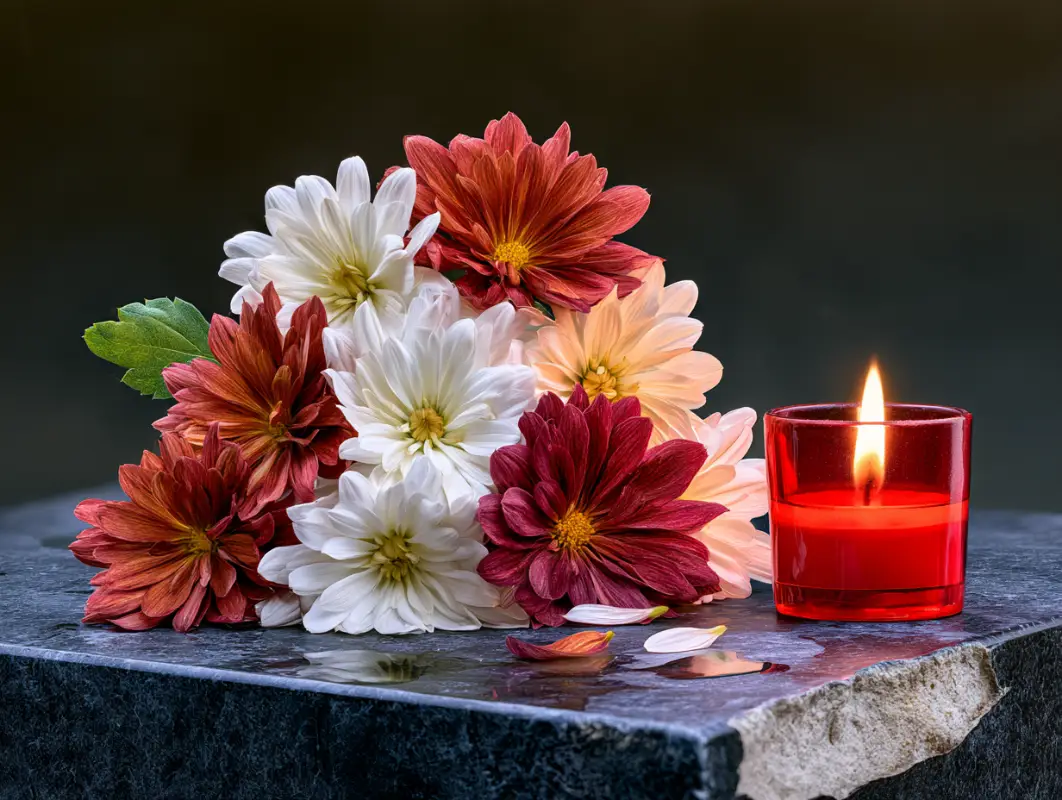
Ognissanti, All Saints’ Day, 1 November. A Catholic feast honouring all the saints, and a national public holiday in Italy. In practice for most families it is the start of a two-day observance rather than a distinct occasion of its own.
Il Giorno dei Morti — also called the Commemorazione dei Defunti — 2 November. The commemoration of all the faithful departed. Not a public holiday, but this is the day of the cemetery visit, the day the sweets are eaten, and the day the customs cluster around.
What actually happens:
- Cemetery visits. This is the central act. Families travel, sometimes across the country, to clean and tend graves. Cemeteries are busy in a way that is genuinely striking if you have not seen it — full of people, flowers and candles, and social rather than sombre.
- Chrysanthemums. Overwhelmingly the flower, to the point that in Italy chrysanthemums are so firmly associated with the dead that bringing a bunch to a dinner party is a real social misstep. If you take one practical thing from this page, take that.
- Votive candles, lit at graves and sometimes at home.
- Baking. A large regional repertoire made specifically for these two days, and almost all of it almond-led. Full detail below.
- Leaving food out. In many regions, sweets were traditionally left out on the evening of 1 November — frequently with a jug of water, the journey being understood as a thirsty one — for the dead returning to the house overnight. Eaten by the living in the morning. This is the custom nearly all of the baking descends from.
It is worth saying what this is not. It is not frightening, it is not performative, and there are no costumes. It is closer in feeling to a family Sunday with a graveyard in it than to anything Halloween does.
The four days, in one place:
| When | What it is | What happens | Food |
|---|---|---|---|
| 31 October | Halloween — imported, not traditional | Costume parties, club nights, some door-to-door in cities. Largely absent in small towns. | Candy, and party food borrowed from American Halloween |
| 1 November | Ognissanti — All Saints’ Day, national public holiday | Shops, schools and offices closed. Families travel. Cemetery visits begin. Chrysanthemums and votive candles. | The regional bakes appear in pasticcerie from late October |
| Evening of 1 November | The night the dead were understood to return | Sweets left out on the table, often with a jug of water. Doors sometimes left unlocked. | Ossi dei morti, fave dei morti, pan dei morti — left out, eaten by the living in the morning |
| 2 November | Il Giorno dei Morti — All Souls’ Day, not a public holiday | The main cemetery day. In Sicily, children wake to gifts left by i morti. In Sardinia, children go door to door. | Frutta martorana and pupi di zucchero in Sicily; torrone dei morti in Naples; colva in Puglia |
Parts of Italy Had Trick-or-Treating First
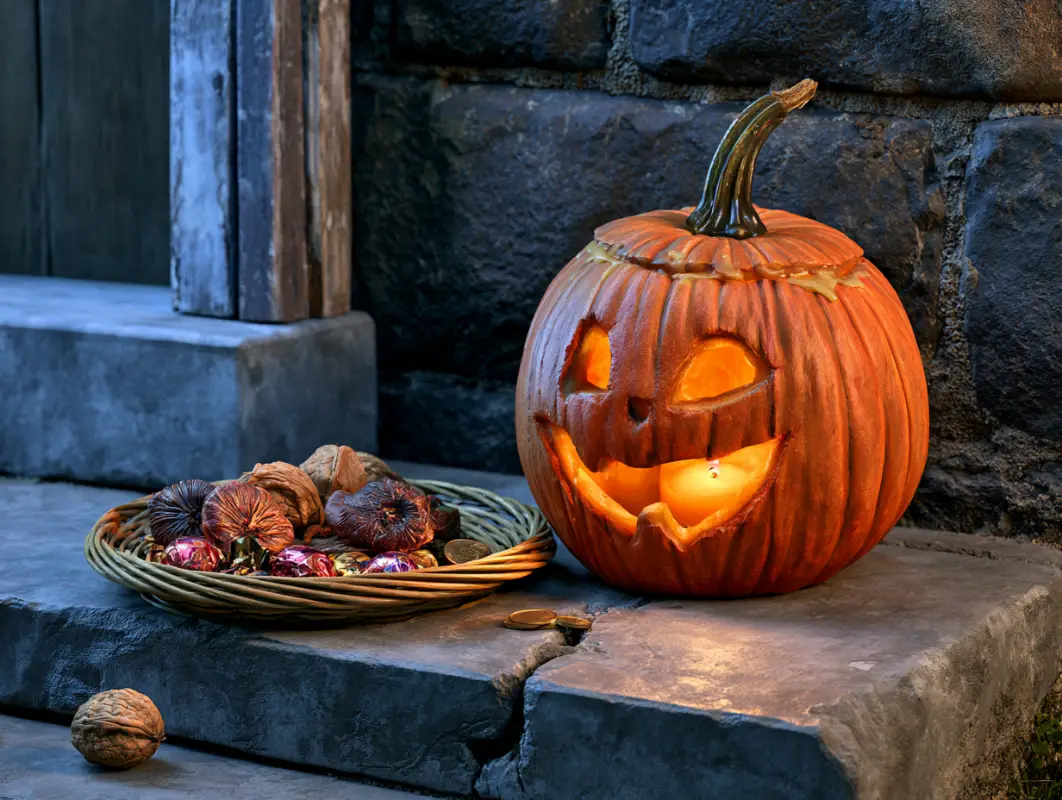
This is the part that surprises people, and it is well documented.
In Sardinia, children traditionally went door to door on the evening of 1 November or the morning of 2 November asking for offerings for the souls of the dead, and were given sweets, dried fruit, nuts and small coins. The custom has different names in different parts of the island, and the official tourism board of the Regione Autonoma della Sardegna lists several of them: is animeddas (“the little souls”) in the south, su mortu mortu and is panixeddas in the Marghine, Goceano and Barbagia, su peti coccone in the Baronia, and a pedire a sos moltos in the Logudoro. The request being made is, at least in origin, on behalf of the dead rather than the child.
What the children received was traditionally food rather than sweets: pane ’e sapa — bread made with cooked grape must — oranges, pomegranates, almonds, chestnuts, and regional biscuits including papassinos and, tellingly, ossus de mortu. In some villages they were given small shaped loaves: dolls for the girls, birds for the boys. Modern versions hand over sweets and chocolate.
Structurally that is trick-or-treating: children, doorsteps, a set formula, sweets handed over. It is tied to the same corner of the calendar. And it was happening in Sardinia long before Halloween arrived in Italy.
Related customs are recorded elsewhere in the south. In parts of Abruzzo and Molise, hollowed-out pumpkins carved and lit with candles are a documented traditional practice associated with the days of the dead — sometimes called cocce de morte, heads of the dead — which is a jack-o’-lantern by another name and another route.
What that does and does not prove. It does not mean Halloween came from Sardinia. It means that door-to-door soliciting for the dead, carved and lit vegetables, and food left out for returning souls are recurring European folk practices around this point in the calendar, and Italy had its own versions independently of the Irish and Scottish customs that fed into the American holiday. The Anglophone route to Halloween — Samhain, All Hallows’ Eve, souling and guising, then Irish and Scottish emigration to North America — is separate.
Which makes the modern situation faintly ironic. A commercially imported American holiday is now displacing regional Italian customs that were doing something very similar, and doing it several centuries earlier.
Where Halloween Fits In, and Why It Is Contested
Halloween’s arrival in Italy is recent. It began appearing meaningfully in the 1990s through American film and television, and retail did the rest — decorations, costumes and pumpkins in supermarkets from early October.
It is now genuinely established among children and young adults, particularly in cities and the north. Costume parties, club nights, school events, some door-to-door in residential areas.
And it is contested, for two overlapping reasons.
The cultural objection, which is the more widespread: that it is an American commercial import displacing something Italy already had. This shows up as grumbling about americanizzazione and it is a familiar argument in a country with strong regional food and festival identities.
The religious objection, which is narrower but has been publicly voiced: some Catholic clergy have criticised Halloween as trivialising or obscuring All Saints’ Day, and in some years parishes have organised alternative events on 31 October. This is not a uniform position of the Italian church and it is not universally held, but it is a real and reported strand of opinion.
The practical reality for most Italian families is that these coexist without much drama. The children go out on the 31st and the family goes to the cemetery on the 1st. The tension is more visible in newspaper columns than at kitchen tables.
What Italians Actually Eat
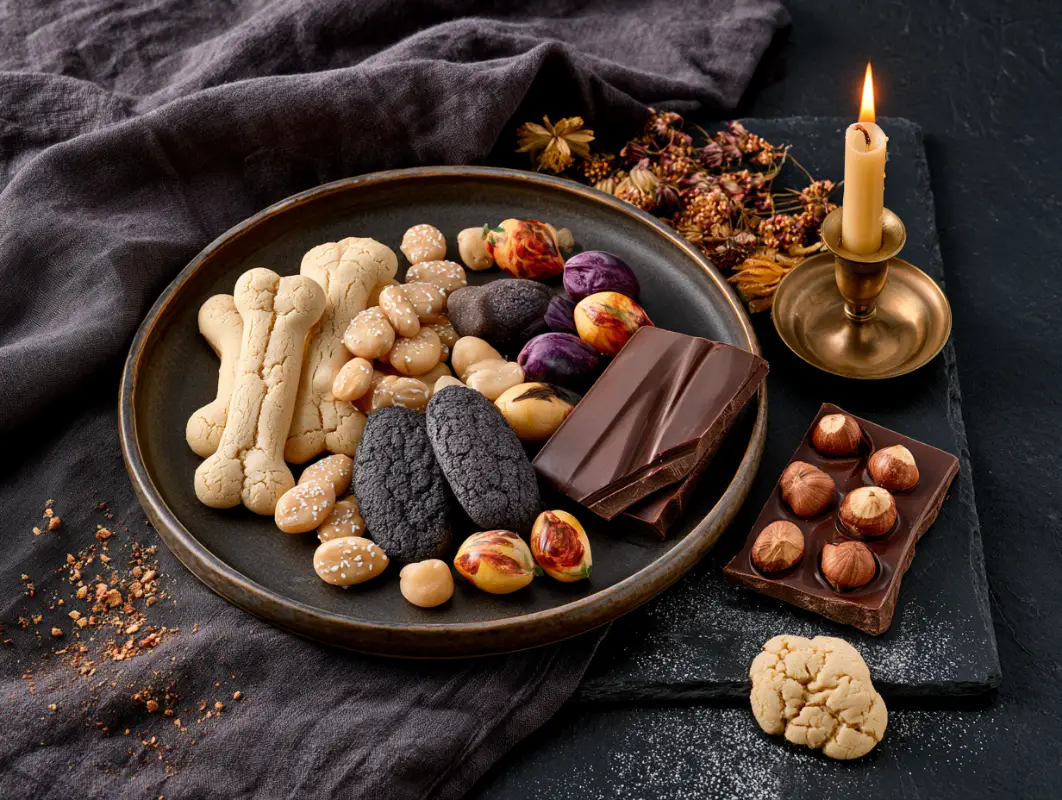
Almost every region has a specific sweet for these two days, and nearly all of them are almond-based, keep for one to two weeks, and require no decorating. Gambero Rosso runs through the regional products of 2 November each year, and the range is wider than most English-language writing suggests.
- Ossi dei morti — bones of the dead. Almonds, sugar, egg white and flour, rested overnight so the surface dries, then baked so it splits open into bone shapes. Widespread, with regional variations.
- Fave dei morti — beans of the dead. Small chewy almond cookies shaped like broad beans, referencing an association between beans and the dead that runs back to Roman funerary custom. In the Veneto they are made in three colours.
- Pan dei morti — bread of the dead. Milanese, near-black from cocoa and dark fruit, built on the crumbs of stale biscuits, dusted heavily with icing sugar.
- Frutta martorana (Sicily) — marzipan modelled and painted into extremely realistic fruit, left for children on 2 November.
- Pupi di zucchero (Sicily) — hollow painted sugar figures, traditionally paladins and knights, given as gifts on the same morning.
- Torrone dei morti (Naples) — a soft chocolate block despite the nougat name, sliced and eaten around 2 November.
- Colva or grano dei morti (Puglia) — cooked wheat berries with pomegranate, walnuts, chocolate and vincotto — grape must cooked to a syrup before it can ferment, so despite the name it is not a wine and carries no alcohol. Its close resemblance to Greek kollyva suggests a shared Mediterranean funerary food much older than either national tradition.
- Stinchetti dei morti (Umbria) — almond paste shaped as small bones.
The full collection, with recipes →
Halloween vs Ognissanti vs Día de los Muertos
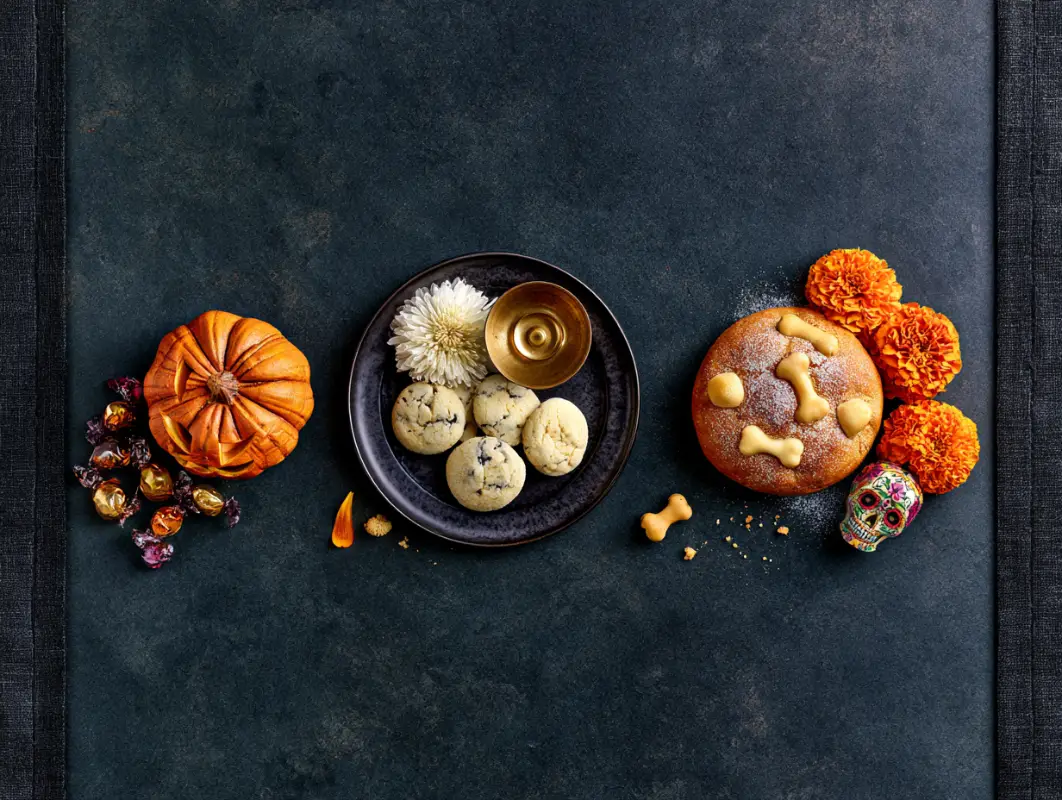
These three get collapsed constantly and they are genuinely distinct.
| Halloween | Ognissanti & Il Giorno dei Morti | Día de los Muertos | |
|---|---|---|---|
| Where | US and Ireland, exported widely | Italy (and the Catholic world, in its own forms) | Mexico |
| When | 31 October | 1 and 2 November | 1 and 2 November |
| Origin | Celtic Samhain via All Hallows’ Eve; shaped by Irish and Scottish emigration to North America, then by American commerce | Catholic feast of All Saints and the commemoration of all the faithful departed | Indigenous Mesoamerican traditions fused with the Catholic calendar |
| Mood | Playful, frightening, public | Domestic and quiet | Celebratory, familial, public |
| Central act | Costumes and trick-or-treating | Cleaning and visiting the grave | Building the ofrenda |
| Flower | — | Chrysanthemum | Marigold (cempasúchil) |
| Signature food | Candy | Ossi, fave and pan dei morti; martorana; torrone dei morti | Pan de muerto, sugar skulls |
| The dead are… | A costume | Visited, and fed overnight | Welcomed home and hosted |
What they actually share is the calendar slot — the end of harvest, the start of winter, the point at which a great many cultures independently decided the boundary between living and dead was thin. What each built there is entirely its own.
One thing worth stating plainly: Día de los Muertos is not “Mexican Halloween” and it is not a Spanish import. It has its own roots and its own meaning — UNESCO inscribed it on the Representative List of the Intangible Cultural Heritage of Humanity specifically as an Indigenous festivity — and borrowing its imagery, sugar-skull make-up and marigolds, as generic Halloween decoration is a live and reasonable complaint. The Italian tradition on this page is a different case: All Saints’ Day is a Catholic feast observed across most of Europe, and the bakes belong to a shared European canon that anyone can cook from.
Visiting Italy Around 1 November
Practical, if you are travelling.
- 1 November is a public holiday. Many shops, offices and some restaurants are closed. Museums vary. Public transport runs a holiday timetable.
- Cemeteries are busy and worth seeing, respectfully. Italian monumental cemeteries on these days are extraordinary — full of flowers, candles and families. Go quietly, do not photograph people, keep out of the way.
- Do not give anyone chrysanthemums. Genuinely. It is the funeral flower.
- Bakery windows are the best part. From roughly the last week of October, pasticcerie fill with whichever regional sweet belongs to that town. Buy some. It is the single easiest way to encounter this tradition and it costs almost nothing.
- Halloween on the 31st will be visible in cities and largely absent in small towns.
Frequently Asked Questions
Do Italians celebrate Halloween?
Some do, particularly children and young adults in cities, and it has grown steadily since the 1990s. It is an American import rather than an Italian tradition, and it remains contested on both cultural and religious grounds. The far more widely observed occasions are Ognissanti on 1 November, a national public holiday, and Il Giorno dei Morti on 2 November.
What is Ognissanti?
All Saints’ Day, 1 November, a Catholic feast and a public holiday in Italy. In practice it opens a two-day observance with Il Giorno dei Morti on 2 November, marked by cemetery visits, chrysanthemums, votive candles and a large body of regional baking.
Is 1 November a holiday in Italy?
Yes. Ognissanti is a national public holiday and most shops, offices and schools close. 2 November, Il Giorno dei Morti, is not a public holiday but carries most of the customs and the food.
Did Italy have trick-or-treating before Halloween?
Something structurally very similar, yes. In Sardinia children traditionally went door to door around 1 and 2 November asking for offerings for the souls of the dead and receiving sweets, nuts and small coins — known as is animeddas, su mortu mortu, is panixeddas, su peti coccone or a pedire a sos moltos depending on the area. Parts of Abruzzo and Molise also have a documented tradition of carving and lighting hollowed pumpkins for these days.
What flowers do Italians use for the Day of the Dead?
Chrysanthemums, almost exclusively. The association is strong enough that giving chrysanthemums to a living person in Italy is a significant social error — they read unambiguously as funeral flowers.
Do Italians eat pan de muerto?
No — that is Mexican, made for Día de los Muertos. Italy’s equivalent bakes are pan dei morti from Milan, ossi dei morti, fave dei morti and a range of regional sweets. The names translate similarly, which causes a great deal of confusion, but the traditions are unrelated.
Is Day of the Dead the same as All Souls’ Day?
They fall on the same date and share the Catholic calendar, but they are not the same thing. All Souls’ Day, 2 November, is the Catholic commemoration of the departed observed across the Catholic world including Italy. Día de los Muertos is a specifically Mexican tradition with Indigenous Mesoamerican roots that developed alongside it.
A Note on Sources and My Own Limits
I am not Italian. I have cooked from this tradition for years, read what I can in English and in translation, and asked Italian friends about their own regions — which is a decent basis for a food page and not a substitute for scholarship.
Two things I would ask you to hold lightly. Italian regional tradition varies enormously, not just between north and south but between neighbouring towns, and any sentence beginning “in Italy they…” is doing violence to that. Where I could attribute a custom to a region I have. And folk-origin explanations are frequently later rationalisations. The bean symbolism, the stale-bread origin of pan dei morti, the naming of individual sweets — these are the accounts commonly given, they are plausible, and in several cases the documentary trail is thinner than the confidence with which they are usually repeated.
If you are Italian and I have got something wrong about your region, I would genuinely like to hear it. That is the kind of correction that makes a page like this better.