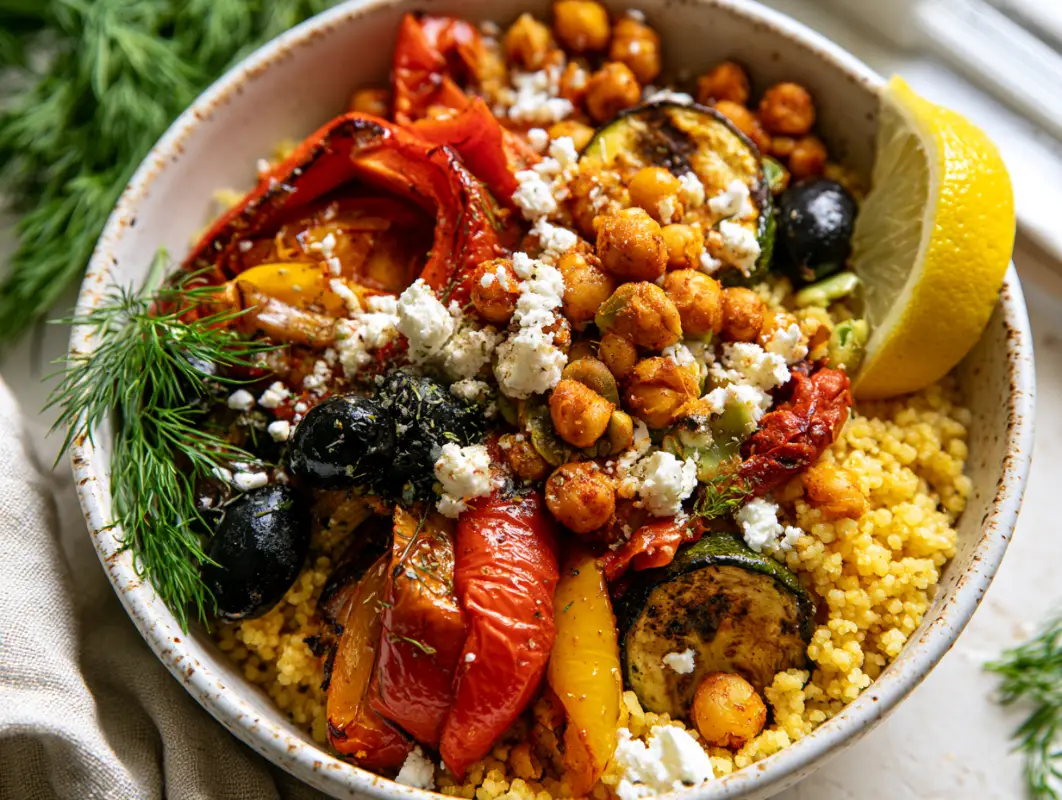
March 12, 2025. Meal prep Sunday. My ninth attempt at Greek couscous bowl with harissa vegetables. The previous eight? Gummy couscous pancake (attempt one—didn’t fluff it), bland veggies that tasted like cardboard (two), burnt zucchini that set off my smoke alarm at 7 AM (three), soggy mess by Tuesday (four through six), and harissa paste so spicy my roommate Marco thought I was trying to kill him (seven and eight—I used way too much). I kept notes in my phone titled ‘Bowl Failures’ with timestamps. It’s… extensive.
Attempt nine? Perfect. Fluffy couscous. Caramelized harissa vegetables with that perfect char. Still good on day four (Marco confirmed). That’s when I finally understood: Greek couscous bowl with harissa vegetables isn’t complicated—it just requires seven specific techniques that separate meal-prep success from gummy disappointment.
I’m sharing those seven secrets below, plus the exact mistakes I made so you skip straight to perfect bowls. After nine attempts and one very patient roommate, I’ve got this down.
Why Greek Couscous Bowl with Harissa Vegetables Works
The Science of Perfect Grain Bowls
Mediterranean couscous bowl success depends on moisture balance. Couscous is actually pre-cooked pasta, not a grain—it just needs rehydration, not cooking. The secret? Use 1:1 ratio liquid to couscous (not more), bring liquid to boil, pour over couscous, cover immediately, let sit 5 minutes, then fluff with fork. Attempt one’s gummy pancake? I didn’t fluff. The couscous compressed into a dense disc. (Genuinely wondered if I’d invented a new building material.)
Harissa roasted vegetables get char without burning at 425°F with proper spacing. Harissa paste contains oil, spices, and dried chiles—it caramelizes beautifully at high heat. But crowd the pan (attempt three) and vegetables steam instead of roast, then suddenly burn when moisture evaporates. Similar roasting principles appear in our Mediterranean chickpea power bowl where proper spacing is crucial.
Perfect Occasions for This Vibrant Bowl
Greek couscous bowl with harissa vegetables is meal prep gold. Make Sunday, eat Monday through Thursday (stays good 4 days). It’s also accidentally vegan if you skip feta, which makes it perfect for mixed-diet gatherings. Serve for lunch, dinner, potluck contributions, or that thing where someone says “just bring something healthy.” Pairs beautifully after Mediterranean breakfast bowl for complete Mediterranean day. The harissa adds just enough heat without overwhelming (learned this after Marco’s trauma from attempts seven and eight).
Essential Ingredients for Greek Couscous Bowl
What You Need and Why Quality Matters
For the Couscous Base:
- 1½ cups whole wheat couscous (NOT Israeli/pearl—that’s different)
- 1½ cups vegetable broth (low-sodium, or water works)
- 1 tablespoon extra virgin olive oil
- ½ teaspoon sea salt
- Fresh lemon juice (1 lemon)
For the Harissa Vegetables:
- 1 medium red onion, cut into wedges
- 2 bell peppers (red + yellow), 1-inch pieces
- 1 large zucchini, half-moons
- 1 cup cherry tomatoes, halved
- 2-3 tablespoons harissa paste (start with 2!)
- 3 tablespoons olive oil
- 1 can (15 oz) chickpeas, drained and patted dry
For Assembly:
- ½ cup crumbled feta cheese (optional, omit for vegan)
- ¼ cup Kalamata olives, pitted
- Fresh dill or parsley
- Lemon wedges
The game-changer ingredient? Patting chickpeas dry. Wet chickpeas steam. Dry chickpeas get crispy edges that are absurdly good. This technique transforms them from bland protein to crunchy snackable gems.
Ingredient Quality Comparison:
| Ingredient | Premium Choice | Budget Alternative |
| Couscous | Organic whole wheat couscous | Regular whole wheat couscous |
| Harissa Paste | Fresh homemade or Mina brand | Store brand in tube |
| Olive Oil | Extra virgin, first cold press | Regular olive oil (not extra virgin) |
| Vegetables | Farmers market seasonal | Standard grocery produce |
USA substitutions: Can’t find harissa? Mix 2 tbsp tomato paste + 1 tbsp smoked paprika + ½ tsp cayenne + ½ tsp cumin. It’s not exactly the same but gets close. If you love spiced vegetables, check out our vegetable spaghetti recipe which uses similar flavor profiles.
The Secret Ingredient That Changes Everything
Here it is: lemon juice added AFTER cooking, never before. Adding acid (lemon) before roasting causes vegetables to release water and get mushy (this was attempt two’s downfall—bland, soggy veggies). Add lemon after roasting preserves that bright citrus flavor without compromising texture. Squeeze fresh lemon over the assembled bowl right before serving. It’s transformative. The citrus cuts through harissa spice and makes the whole Greek bowl pop. Works similarly in our Mediterranean white bean salad where lemon timing is crucial.
The Foolproof Method for Greek Couscous Bowl
Preparation Steps (10 Minutes)
Step 1: Prep All Vegetables
Cut everything into similar sizes—this is mandatory for even roasting. Red onion in wedges (not thin slices—they’ll burn), bell peppers in 1-inch pieces, zucchini in half-moons about ½-inch thick, cherry tomatoes halved. Put chickpeas in separate bowl, pat dry with paper towels. Like, really dry them. This takes 30 seconds and prevents soggy chickpeas.
Step 2: Make Harissa Marinade
In large mixing bowl, whisk 2 tablespoons harissa paste + 3 tablespoons olive oil + ½ teaspoon salt + ¼ teaspoon black pepper. Taste it (with a spoon, not your finger—it’s spicy). Too mild? Add another tablespoon harissa. But remember: you can always add more heat, never remove it. (Marco still brings up attempts seven and eight when he wants sympathy.)
Step 3: Coat Vegetables
Add all vegetables except cherry tomatoes and chickpeas to harissa mixture. Toss with hands (wear gloves if you have them—harissa under fingernails is… unpleasant) until every piece is coated. The vegetables should look like they’re wearing a rust-colored jacket.
Main Cooking Method (25 Minutes)
Step 4: Roast First Wave
Preheat oven to 425°F (this is non-negotiable—lower temp means steamed veggies, higher means burnt). Line large sheet pan with parchment paper. Spread coated vegetables in single layer with space between pieces. Attempt three failed because I crammed everything together. They steamed, then burnt. Use two pans if needed. Roast 15 minutes.
Step 5: Add Delicate Ingredients
After 15 minutes, remove pan. Add cherry tomatoes and dry chickpeas, toss gently. Return to oven for 10 more minutes. Tomatoes added at the start turn to mush. Chickpeas added now get crispy edges but stay tender inside. This timing is crucial. Similar technique to Mediterranean plant protein power bowl which layers cooking times for perfect texture.
Step 6: Fluff the Couscous
While vegetables roast their final 10 minutes, make couscous. Bring 1½ cups vegetable broth to rolling boil. Remove from heat. Immediately add 1½ cups couscous, 1 tablespoon olive oil, and ½ teaspoon salt. Stir once, cover pot with lid, let sit exactly 5 minutes. Set a timer! Attempt four sat 8 minutes and got mushy. After 5 minutes, remove lid, fluff with fork by scraping bottom and breaking up clumps. This creates light, fluffy texture instead of gummy pancake.
Pro tip from nine attempts: Use fork to fluff, not spoon. Fork separates grains. Spoon smashes them. Also, fluff immediately when timer goes off. Letting it sit makes couscous compact. Our enlightened Mediterranean chicken bowl uses similar grain techniques for perfect texture every time.
Step 7: Assemble (The Fun Part)
Divide fluffy couscous between bowls. Top with roasted harissa vegetables and crispy chickpeas. Add crumbled feta, Kalamata olives, fresh herbs. Squeeze fresh lemon over everything. Drizzle extra olive oil if you’re feeling fancy (I always do). Serve immediately or pack for meal prep.
Creative Variations on Greek Couscous Bowl
Flavor Twists That Actually Work
Four Tested Variations:
| Variation | Changes | Best For |
| Protein Power | Add grilled chicken or lamb, reduce chickpeas | Post-workout meals |
| Extra Spicy | Double harissa, add jalapeño slices | Heat lovers (Marco level) |
| Cooling Twist | Add tzatziki sauce on side, cucumber ribbons | Balancing the heat |
| Fall Harvest | Sub butternut squash for zucchini, add pomegranate | Seasonal autumn bowl |
The protein power variation works beautifully with BJ’s Mediterranean chicken bowl technique for marinated grilled chicken. Just slice and add on top.
Dietary Modifications
Vegan: Skip feta, use nutritional yeast for cheesy flavor, or our Mediterranean shrimp bowl has excellent vegan alternatives. Already naturally vegan without feta!
Gluten-Free: Swap couscous for quinoa (use same 1:1 ratio but cook 15 minutes). Texture changes slightly—quinoa is nuttier, less fluffy. Still delicious.
Low-Carb/Paleo: Replace couscous with cauliflower rice. Not authentic to Greek couscous bowl but works for dietary restrictions.
Kid-Friendly: Reduce harissa to 1 tablespoon, add honey to vegetables for slight sweetness, serve feta on side. My niece Zara (age 6) approves the mild version.
Budget-Friendly: Use frozen bell peppers (thaw and pat dry), regular couscous instead of whole wheat, skip feta or use less. Honestly still tastes great.
Storage and Serving Guide
How to Store for Maximum Freshness
Storage Guidelines:
| Storage Method | Duration | Best Practices |
| Refrigerator (separated) | 4-5 days | Store couscous and veggies in separate containers |
| Refrigerator (assembled) | 3-4 days | Add feta and lemon only when serving |
| Freezer (not recommended) | N/A | Couscous texture suffers when frozen |
The meal prep strategy that saved attempts five and six from sogginess: Store components separately. Couscous in one container, roasted vegetables in another, toppings (feta, olives, herbs) in third. Assemble each morning. Takes 2 minutes, stays fresh 4 days. Same technique used for our Mediterranean chicken bowl recipe which Marco meal preps every Sunday without complaints (high praise from him).
Reheating and Meal Prep Strategy
Best reheating method: Microwave vegetables and couscous separately. Couscous needs 45 seconds, vegetables need 1 minute 30 seconds. Combine, add cold toppings (feta, herbs, lemon). The temperature contrast is actually great—warm bowl, cool toppings.
What to Serve Alongside:
| Pairing | Why It Works |
| Tzatziki sauce | Cooling yogurt balances harissa heat |
| Warm pita bread | Scoops up vegetables, adds comfort |
| Side of hummus | Extra protein, creamy texture contrast |
If making multiple Mediterranean bowls, prep similar to Mediterranean lunch recipes collection—batch cook grains, rotate vegetable roasts, mix and match throughout week.
Nutritional Benefits of Greek Couscous Bowl
Macronutrient Profile (Per Serving):
| Nutrient | Amount |
| Calories | 385 calories |
| Protein | 13g |
| Carbohydrates | 54g |
| Fiber | 9g |
| Sugar | 7g |
| Fat | 13g |
| Saturated Fat | 3g |
| Sodium | 420mg |
Key Micronutrients (% Daily Value):
| Vitamin/Mineral | % DV |
| Vitamin C | 85% |
| Vitamin A | 45% |
| Iron | 20% |
| Magnesium | 18% |
| Potassium | 15% |
| Folate | 22% |
Greek couscous bowl with harissa vegetables delivers complete plant-based protein when chickpeas combine with whole wheat couscous. The fiber content (9g) supports digestive health and keeps you full for hours. (This is why meal prep works—stays satisfying through Thursday.)
The Mediterranean couscous bowl has low glycemic load due to high fiber and fat from olive oil, preventing blood sugar spikes. Harissa paste contains capsaicin which may boost metabolism slightly (I’m not a nutritionist, just reporting research). The vegetables provide 85% daily vitamin C—more than an orange. Compare nutrition to our Mediterranean dinner recipes for balanced weekly planning.
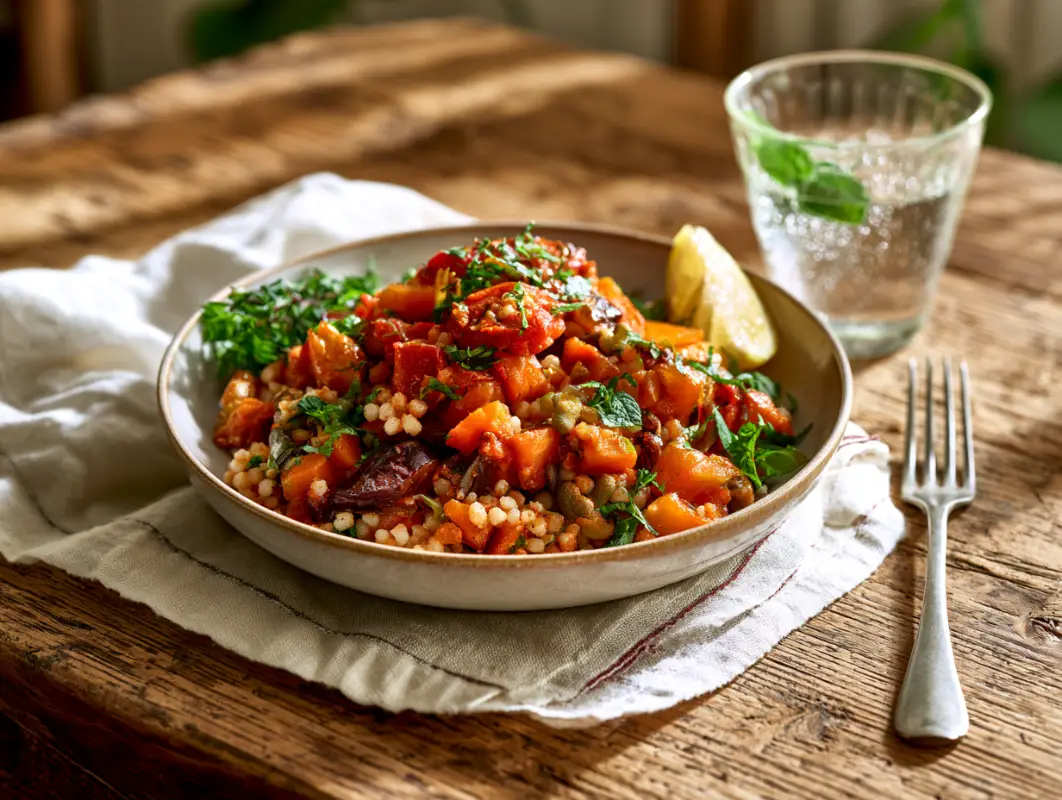
Greek Couscous Bowl with Harissa Vegetables
Ingredients
Method
- Cut all the vegetables to similar sizes so they roast evenly: red onion in wedges, bell peppers in 1-inch pieces, zucchini in ½-inch half-moons, cherry tomatoes halved. Pat the chickpeas thoroughly dry in a separate bowl.
- Whisk the harissa paste with 3 tablespoons olive oil, ½ teaspoon salt and ¼ teaspoon black pepper in a large mixing bowl. Taste and add more harissa if you want more heat.
- Add all the vegetables except the cherry tomatoes and chickpeas to the harissa mixture and toss until every piece is evenly coated.
- Preheat the oven to 425°F (220°C). Spread the coated vegetables on a parchment-lined sheet pan in a single layer with space between the pieces — use two pans if needed — and roast for 15 minutes.
- Remove the pan, add the cherry tomatoes and dried chickpeas, toss gently and return to the oven for 10 more minutes.
- While the vegetables finish, bring the broth to a rolling boil, remove from the heat and immediately stir in the couscous, 1 tablespoon olive oil and ½ teaspoon salt. Cover and let sit for exactly 5 minutes, then fluff with a fork.
- Divide the couscous between bowls, top with the roasted vegetables and crispy chickpeas, then add the feta, olives and fresh herbs. Squeeze lemon over everything and serve.
Notes
Frequently Asked Questions
Why is my couscous gummy and clumpy instead of fluffy?
You either used too much liquid (must be exactly 1:1 ratio), forgot to fluff with a fork immediately after steaming, or let it sit too long before fluffing. Couscous compacts as it cools. Fluff while still hot for light texture.
Can I make Greek couscous bowl ahead for meal prep?
Yes! Store components separately in airtight containers. Couscous and roasted vegetables keep 4-5 days refrigerated. Add fresh toppings (feta, herbs, lemon) when assembling each bowl. Do not freeze—couscous texture suffers.
How do I prevent harissa vegetables from burning?
Proper spacing on sheet pan is crucial. Vegetables need room to roast, not steam. Use two pans if necessary. Also ensure oven is fully preheated to 425°F before adding vegetables. Burnt edges with raw centers? Your oven wasn’t hot enough yet.
What if my harissa paste is too spicy or too mild?
Harissa brands vary wildly in heat level. Start with 2 tablespoons, taste the marinade, adjust. Too spicy? Add extra olive oil and squeeze of honey to mellow. Too mild? Add more harissa paste or pinch of cayenne. Always easier to add heat than remove it (Marco learned this).
Can I use Israeli couscous instead of regular couscous?
Israeli couscous (pearl couscous) requires different cooking method—it simmers 10 minutes like pasta, not steams. If using Israeli couscous, follow package directions. Texture will be chewier, more pasta-like. Still delicious but different from traditional Greek couscous bowl.
Why did my vegetables turn out soggy instead of roasted?
Three common causes: oven temp too low (must be 425°F), vegetables crowded on pan (they steam), or vegetables cut too small (they release too much moisture). Cut in 1-inch pieces minimum, space apart, high heat. Also pat zucchini dry if it seems wet.
How do I make chickpeas crispy in this Greek bowl?
Pat chickpeas completely dry with paper towels after draining. Water is the enemy of crispy. Add them to the roasting pan for the last 10 minutes only—longer and they dry out, shorter and they stay soft. They won’t be crunchy like roasted chickpea snacks, but they’ll have nice crispy edges.
Is Greek couscous bowl with harissa vegetables gluten-free?
No, couscous is wheat-based pasta. For gluten-free version, substitute quinoa, brown rice, or cauliflower rice. Cook quinoa in same 1:1 ratio but simmer 15 minutes instead of steaming. Vegetables and harissa are naturally gluten-free.
Pairing and Serving Ideas
Perfect Combinations
Flavor Combinations That Elevate This Bowl:
| Addition | Flavor Impact |
| Tzatziki drizzle | Cooling yogurt balances harissa spice perfectly |
| Toasted pine nuts | Nutty crunch adds textural contrast |
| Pickled red onions | Tangy acid cuts through rich olive oil |
| Crumbled goat cheese | Creamier alternative to feta with tang |
The tzatziki combination works beautifully—get the technique from our Mediterranean salads recipes where we detail proper yogurt straining for thick sauce.
Occasion Suggestions and Beverages
Best occasions: Weeknight dinners (ready in 35 minutes), Sunday meal prep for the week, potluck contributions (always gets compliments), lunch for work (reheats well), casual dinner parties (let guests build their own bowls).
Beverage pairings: Sparkling water with lemon and mint (refreshing against harissa heat), iced hibiscus tea (floral notes complement Greek flavors), fresh lemonade with a touch of rose water (absurdly good with this), cold mint tea (traditional Mediterranean pairing). For more pairing ideas, check our Mediterranean breakfast recipes which has beverage suggestions that work across meals.
Conclusion
Make It Your Own
Greek couscous bowl with harissa vegetables is endlessly customizable. Don’t like zucchini? Use eggplant. Want more protein? Add grilled chicken. Prefer mild? Cut harissa in half. The seven secrets—proper fluffing, high-heat roasting, component separation, exact ratios, timing additions, dry chickpeas, lemon after cooking—those stay constant. Everything else? Your call.
After nine attempts (and Marco’s patient suffering through attempts seven and eight), I learned this Mediterranean couscous bowl isn’t about following rigid rules. It’s about understanding why techniques work, then adapting to your taste. Browse our full Mediterranean recipes collection for more adaptable dishes.
Join Our Community
Try this Greek bowl and tell us how it goes! Did you nail it first attempt (showing me up) or join me in the multiple-tries club? What vegetables did you use? How’s your harissa heat level? Drop a comment below with your experience. And if you discover a combination that’s better than mine… honestly, I want to know.
Share photos of your bowls! We love seeing how this recipe works in your kitchen. Different vegetables, creative additions, your personal tweaks—it’s all gold. Plus, seeing your success helps other readers troubleshoot. We’re building a community of healthy grain bowl enthusiasts here. Join our Mediterranean lunch recipes section for more weekday meal inspiration.
Now go fluff that couscous properly. (Marco will thank you.)