The first time I charred cabbage on purpose, I was twenty-three and working my second year at Varoulko in Athens. Chef Lazarou handed me half a head of green cabbage, told me to cut it thick, oil it, and put it directly on the plancha until it was nearly black on the outside. I thought he was punishing me. Who burns cabbage on purpose? But when I flipped those slabs and saw the deep mahogany char, smelled that sweet-smoky caramelization rising off the flat-top, and tasted the tender, almost buttery interior hiding beneath that crust — I understood. The Maillard reaction had turned a cheap, ordinary vegetable into something extraordinary. That lesson changed how I cook vegetables forever.
These charred cabbage steaks with Mediterranean toppings are my tribute to that moment, filtered through everything my yiayia taught me in her Chania kitchen. Thick slabs of green cabbage, roasted at high heat until the edges are deeply caramelized and the centers are meltingly tender, then piled with everything I love about Greek Mediterranean flavors: crumbled feta, Kalamata olives, a drizzle of tahini, toasted pine nuts, fresh herbs, and a generous squeeze of lemon.
It’s a Mediterranean vegetable side dish that steals the show from whatever main course you’ve planned, a vegetarian cabbage steaks dinner that’s hearty enough to stand alone, and it takes about 35 minutes from cutting board to table. Trust me on this one — cabbage has never looked this good.
Table of Contents

Charred Cabbage Steaks Mediterranean Toppings
Ingredients
Method
- 1. Preheat oven to 425°F (220°C). Optionally preheat a heavy sheet pan for 5 minutes.
- 2. Remove loose outer leaves from cabbage. Slice from top to bottom into 1-inch thick steaks, keeping core intact.
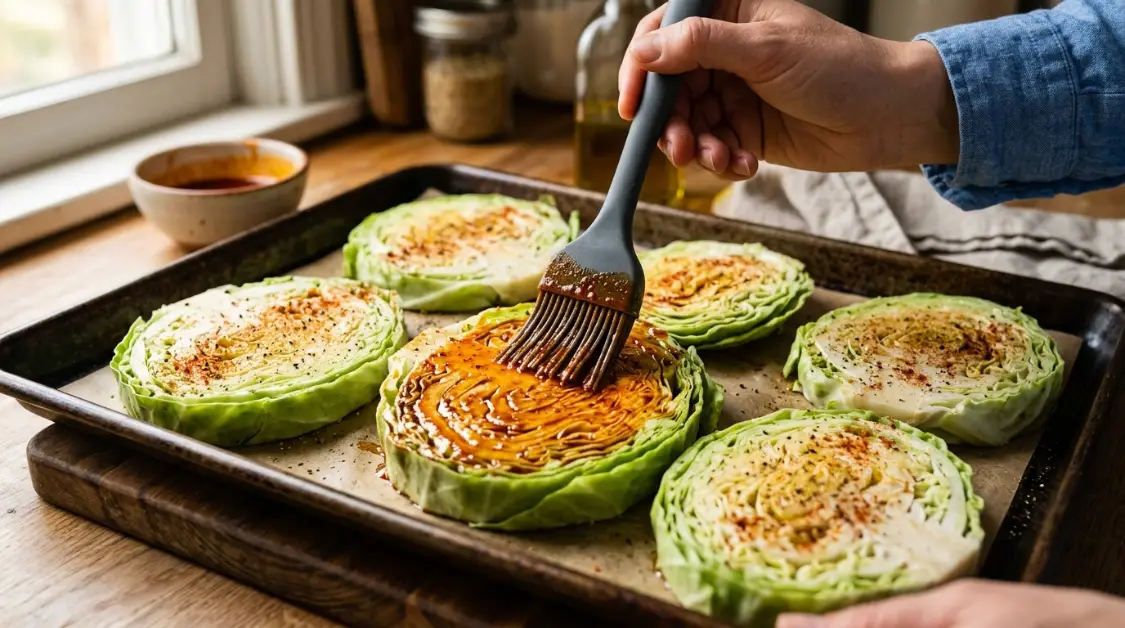
- 3. Whisk olive oil with smoked paprika, garlic powder, salt, and pepper. Brush both sides of each steak generously.
- 4. Place steaks on sheet pan (preheated or lined with parchment). Roast 15 minutes.
- 5. Flip carefully with a wide spatula. Roast another 10–12 minutes until deeply charred and fork-tender.
- 6. While cabbage roasts, whisk tahini, lemon juice, water, garlic, and salt until smooth and pourable.
- 7. Remove cabbage from oven. Immediately top with crumbled feta, olive halves, and toasted pine nuts.
- 8. Drizzle tahini sauce in a zigzag pattern. Finish with torn herbs, lemon zest, a squeeze of fresh lemon, and a final drizzle of raw EVOO. Serve immediately with lemon wedges.
Notes
Why This Recipe Is Special
The Science Behind the Char
Most people boil or steam cabbage into submission. That’s the wrong approach. When you roast cabbage steaks in oven at 425°F (220°C), something remarkable happens. The natural sugars in the cabbage (mainly glucose and fructose) undergo caramelization, while the amino acids and sugars together trigger the Maillard reaction — the same chemistry responsible for the crust on a seared steak. Harold McGee explains in On Food and Cooking that Brassica vegetables like cabbage contain sulfur compounds that, when heated above 300°F (150°C), convert from bitter and sharp to sweet and nutty. The high-heat roasting is what transforms a humble cabbage into something you’ll actually crave. Don’t skip this.
Flavor Profile and When to Serve
The flavor here is a controlled collision: sweet-smoky charred cabbage, salty-tangy feta, briny olives, nutty tahini, and bright lemon. Every bite hits a different note. I serve these crispy cabbage steaks as a side dish alongside our Mediterranean sheet pan salmon, as a stand-alone plant-based cabbage dish for Meatless Monday, or (honestly) as a 10 PM snack straight off the sheet pan when nobody’s watching. The toppings are infinitely customizable, but this combination — rooted in the flavors of Crete — is my favorite. You’ll love this.
The Story Behind the Dish
Cabbage in the Greek Kitchen
Cabbage has been part of Greek cooking since antiquity. Hippocrates prescribed it for digestive ailments, and my yiayia used it in everything from lahanodolmades (stuffed cabbage rolls) to winter soups. But roasting cabbage as steaks is a more modern technique that draws on the traditional Greek instinct for high-heat cooking — the same impulse behind charring peppers over open flame and blistering tomatoes in a wood-fired oven. The Mediterranean cabbage recipe tradition is about letting fire do the work.
How This Became a Family Favorite
After that revelation at Varoulko, I started making charred cabbage at home in my Athens apartment every week. My mother was skeptical (“Why are you burning perfectly good lahano?”). Then she tried it. Then she asked for the recipe. Then she started making it for Sunday dinner in Chania and told the neighbors it was her idea. (She denies this.) In Crete, we pile the toppings high — feta, olives, wild horta (greens), and our best olive oil from Kolymvari. On the mainland, I’ve seen it with yogurt and walnuts. Both are fantastic.
Essential Ingredients for Charred Cabbage Steaks
Complete Ingredients List
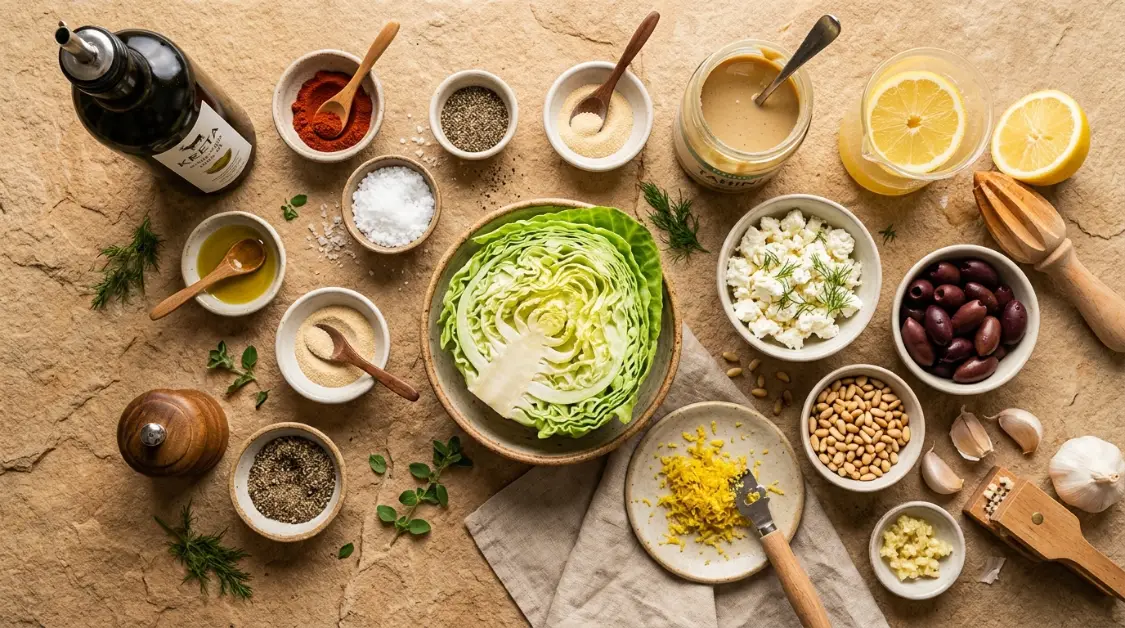
For the Cabbage Steaks:
1 large head green cabbage (~2 lb / 900g)
3 tablespoons (45 ml) extra virgin olive oil
1 teaspoon smoked paprika
1/2 teaspoon garlic powder
1 teaspoon flaky sea salt
1/2 teaspoon freshly cracked black pepper
For the Tahini Drizzle:
3 tablespoons (45 ml) tahini
Juice of 1/2 large lemon (about 1.5 tbsp)
1 tablespoon water (more to thin)
1 small garlic clove, finely grated
Pinch of salt
For the Mediterranean Toppings:
1/2 cup (75g) crumbled feta cheese (PDO)
1/4 cup (40g) Kalamata olives, pitted and halved
2 tablespoons pine nuts, toasted
Fresh flat-leaf parsley and mint, roughly torn
Zest of 1 lemon
Best-quality EVOO, for finishing drizzle
Lemon wedges, for serving
Core Ingredients
Every component here is deliberate. I’ve made these roasted cabbage steaks at least 60 times over the past four years, testing different cabbages, oils, temps, and toppings until the combination was locked in.
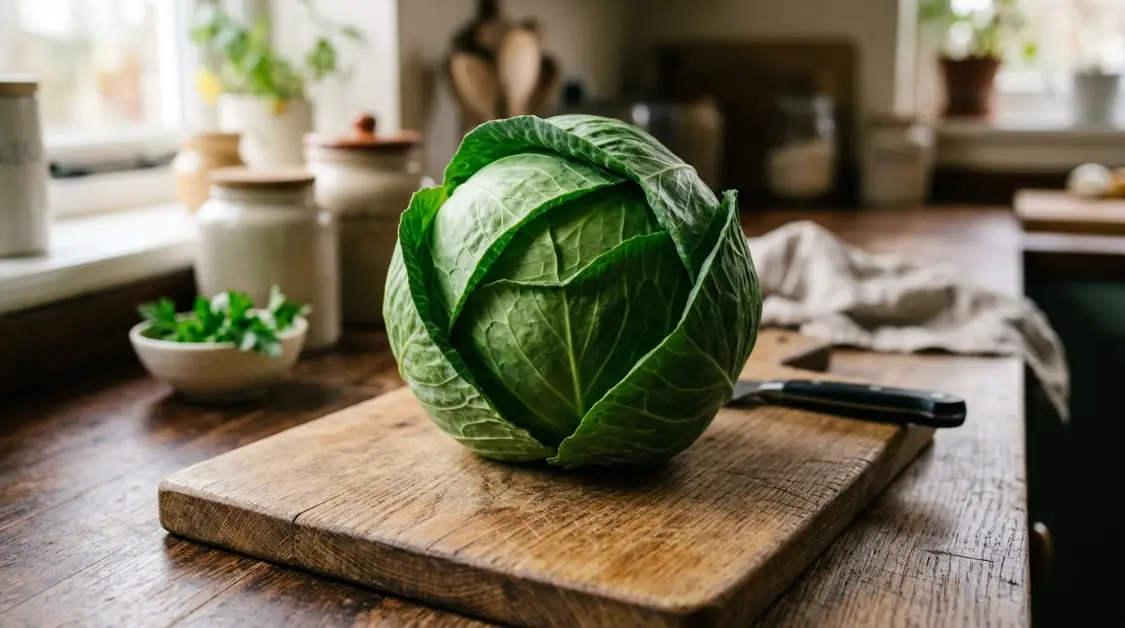
The cabbage itself matters — you want a tight, heavy green cabbage (not loose-leaf savoy, which chars too quickly). The feta should be real Greek PDO feta, and the tahini should be runny and well-stirred, not the dry paste at the bottom of the jar.
| Ingredient | Amount | Why It Matters | Authentic Pick | Substitution |
| Green cabbage | 1 large head (~2 lb / 900g) | Dense structure holds together when sliced; caramelizes beautifully | Tight, heavy head with firm leaves | Savoy (chars faster, reduce temp to 400°F) |
| Extra virgin olive oil | 3 tbsp (45 ml) | High-quality fat for roasting; contributes fruity flavor | Kolymvari or Sitia EVOO | Avocado oil for higher smoke point |
| Feta cheese (PDO) | 1/2 cup (75g), crumbled | Salty, tangy contrast to sweet cabbage | Greek sheep/goat milk feta | Vegan feta or ricotta salata |
| Kalamata olives | 1/4 cup (40g), halved | Briny depth; classic Greek accent | Pitted Kalamata from Messinia | Black Gaeta or green Castelvetrano |
| Tahini | 3 tbsp (45 ml) | Nutty, creamy drizzle; binds toppings | Well-stirred, runny tahini | Greek yogurt or hummus |
| Pine nuts | 2 tbsp, toasted | Buttery crunch; textural contrast | Mediterranean stone pine nuts | Toasted walnuts or sunflower seeds |
| Lemon | 1 large, juiced + zest | Brightness; cuts richness of tahini and feta | Fresh, never bottled | Lime juice in a pinch |
| Smoked paprika | 1 tsp | Warm, smoky depth that enhances the char | Spanish pimentón de la Vera | Sweet paprika + pinch of cumin |
The olive oil here is doing double duty: it facilitates the Maillard browning during roasting and it contributes its own fruity, peppery flavor to the finished dish. My yiayia would never roast a vegetable without oil from our family grove in Kolymvari, and I carry that habit everywhere.
Dietary Substitutions and Pro Tips
| Dietary Need | Replace | With | Notes |
| Dairy-Free / Vegan | Feta cheese | Vegan feta crumbles or avocado chunks | Drizzle extra tahini for creaminess |
| Nut-Free | Pine nuts | Toasted sunflower or pumpkin seeds | Same crunch, no allergen risk |
| Sesame-Free | Tahini drizzle | Greek yogurt + lemon juice thinned | Similar texture, tangy flavor |
| Low-Sodium | Feta + olives | Reduce both by half; add lemon zest | Brightness replaces salty punch |
| Keto / Low-Carb | Already low-carb | N/A | ~7g net carbs per serving as written |
Pro Tip: Don’t wash or wet your cabbage before slicing — surface moisture is the enemy of a good char. Wipe any dirt off with a dry cloth. Water creates steam, and steam prevents browning. I learned this the hard way during a workshop I taught in 2022 — soggy cabbage, 14 disappointed students.
Equipment and Technique
Tools You Will Need
| Traditional Tool | Modern Alternative | Why It Matters |
| Greek plancha / flat-top grill | Heavy-duty rimmed sheet pan | Direct contact with hot metal = better char |
| Wood-fired oven | Standard oven at 425°F (220°C) | High heat is non-negotiable for caramelization |
| Olive wood cutting board + sharp cleaver | Any large cutting board + chef’s knife | Thick, even slices require a sharp blade and stable surface |
| Pastry brush | Silicone basting brush | For even oil distribution on both sides |
Mise en Place and Workspace Setup
Before you touch the cabbage, get organized. Preheat your oven to 425°F (220°C) with a rack in the center position. If you want maximum char, preheat the sheet pan inside the oven for 5 minutes — when the cold cabbage hits the hot metal, you get an immediate sear. (This trick comes from J. Kenji López-Alt’s approach to roasted vegetables in The Food Lab.) Mix your spice oil: combine olive oil, smoked paprika, garlic powder, salt, and pepper in a small bowl. Crumble the feta, halve the olives, toast the pine nuts, stir the tahini with lemon juice and a splash of water until pourable, and chop your herbs. When everything is prepped, the cooking takes barely 25 minutes.
Step-by-Step Instructions
Preparation (Steps 1–4)
Step 1: Slice the Cabbage. Remove any loose or damaged outer leaves but keep the core intact — the core is what holds each steak together. Stand the cabbage on its base and slice from top to bottom into 1-inch (2.5 cm) thick slabs. You should get 4–5 good steaks from a large head. The outer pieces will fall apart into individual leaves (save those — they char beautifully as chips). Why 1 inch? Thinner steaks burn before the center softens; thicker ones stay raw in the middle.
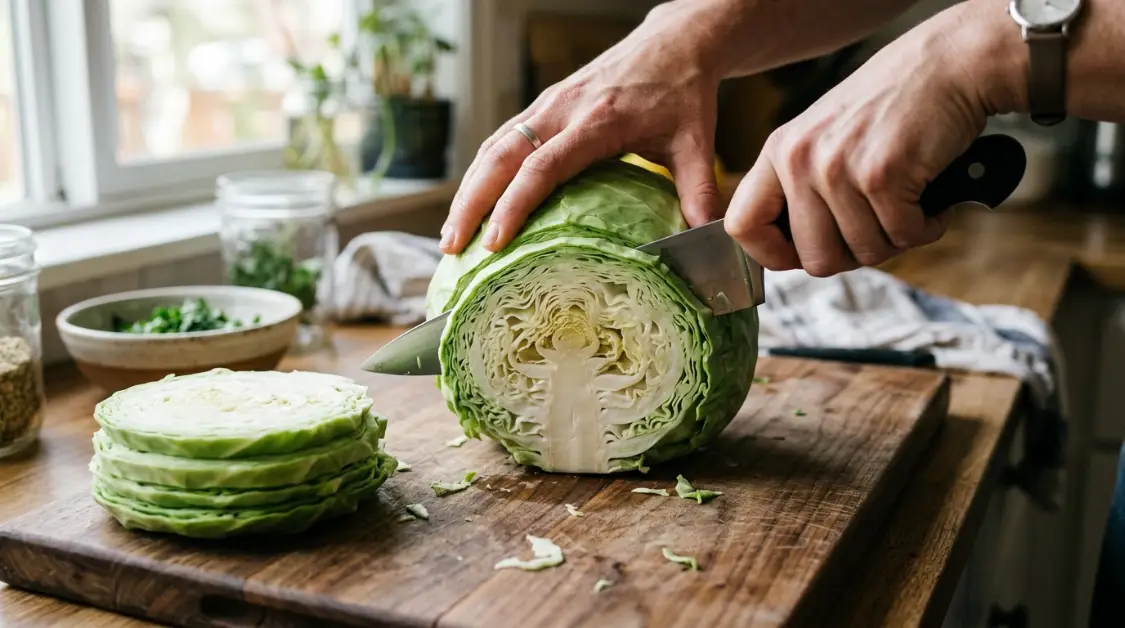
Yiayia’s Tip: My yiayia would say, “Cut the lahano like you’re cutting bread — confident, one stroke, no sawing.” A sharp knife and a decisive motion give you cleaner edges, which char more evenly than ragged, torn surfaces.
Step 2: Season Generously. Lay the steaks on your sheet pan. Brush both sides with the spiced olive oil — every surface, including the edges. Don’t be timid with the oil; it’s what enables browning. Sprinkle both sides with flaky sea salt and a crack of black pepper. The salt draws out moisture from the surface (another browning accelerator) while seasoning the cabbage from the outside in.
Step 3: Prepare the Toppings. While the oven preheats, make your tahini drizzle: whisk 3 tablespoons tahini with the juice of half a lemon, 1 tablespoon water, a pinch of salt, and a small grated garlic clove until smooth and pourable. If it’s too thick, add water a teaspoon at a time. Crumble the feta. Halve the olives. Toast the pine nuts in a dry skillet over medium heat for 2–3 minutes, shaking constantly until golden. (Watch them like a hawk — pine nuts go from toasted to burned in about 8 seconds. I speak from painful experience.)
Step 4: Par-Bake the Bottom. If you preheated your sheet pan, carefully place the oiled cabbage steaks onto the hot surface — you should hear a satisfying sizzle. If not, just place them on a room-temp pan. Either way, slide the pan into the oven.
Cooking and Assembly (Steps 5–10)
Step 5: Roast, First Side. Bake at 425°F (220°C) for 15 minutes. The bottom should develop deep golden-brown char marks while the top begins to soften and wilt slightly.
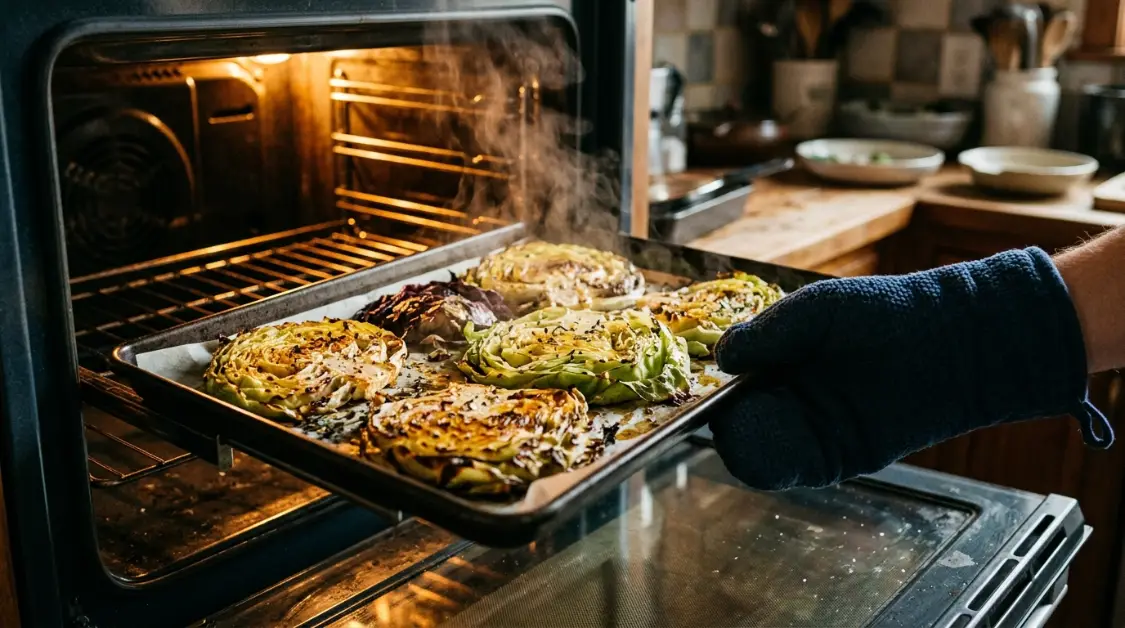
Step 6: Flip Carefully. Using a wide spatula (or two), carefully flip each steak. Some outer leaves may separate — that’s fine, leave them on the pan. They’ll become the crispy chips everyone fights over. Brush the now-exposed top with any remaining spiced oil.
Step 7: Roast, Second Side. Return to the oven for another 10–12 minutes until the cabbage is tender when pierced with a knife and both sides have that gorgeous deep caramelization. The edges should be nearly black in spots and crispy. Charred. Tender. Smoky. That’s your target with charred cabbage steaks with Mediterranean toppings.
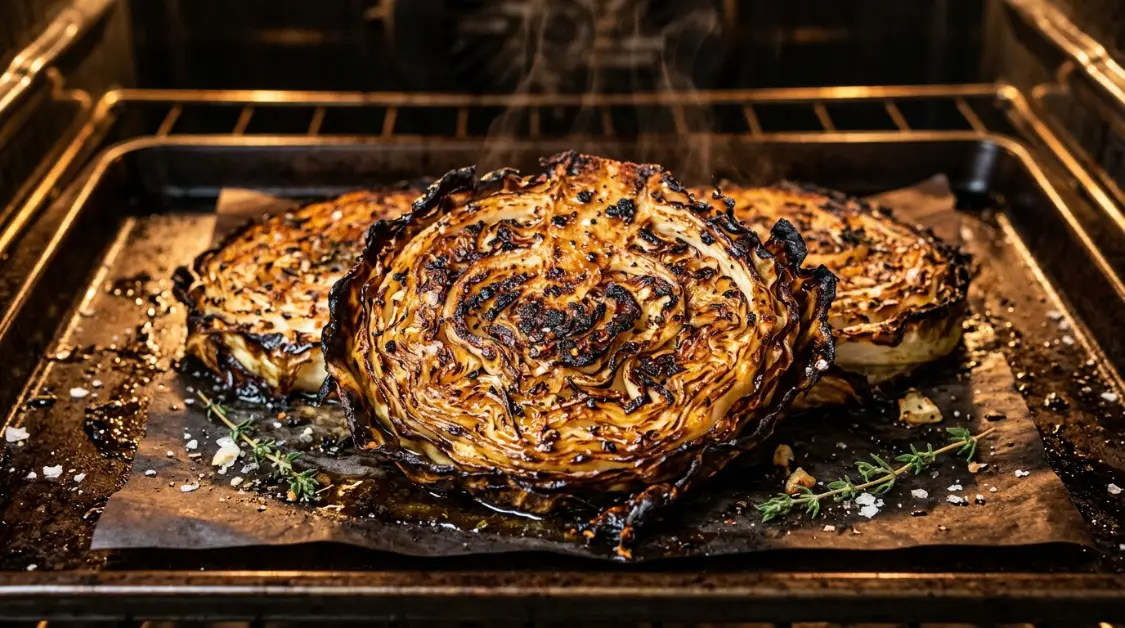
Step 8: Add Toppings While Hot. Remove the pan from the oven. While the steaks are still sizzling, immediately crumble feta over each one (the residual heat will soften it slightly), scatter the Kalamata olive halves, and sprinkle the toasted pine nuts.
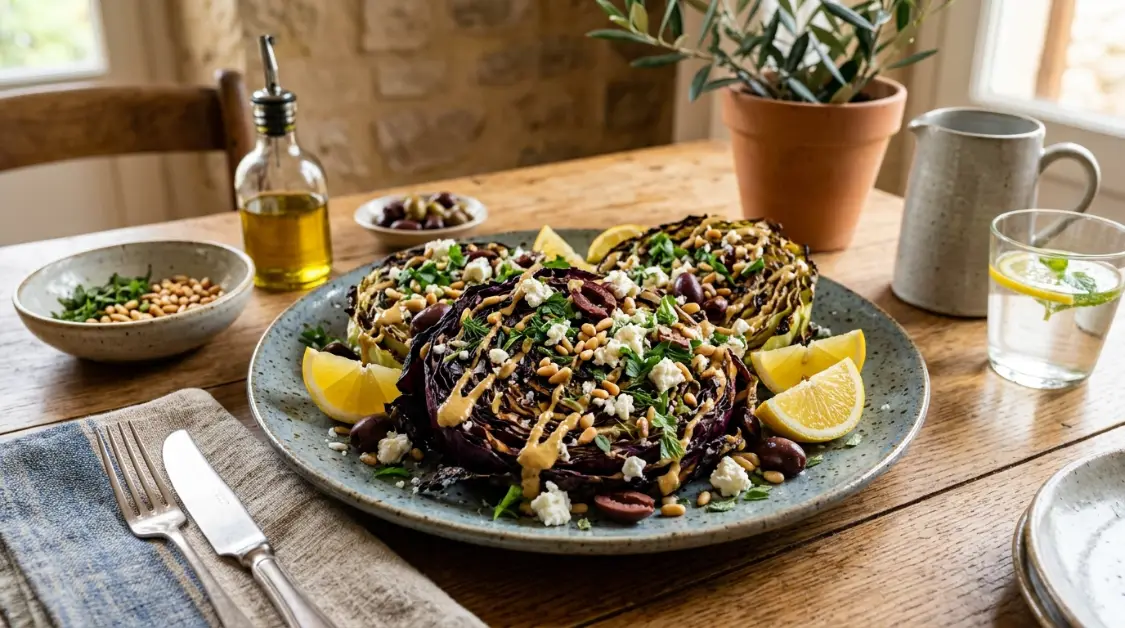
Step 9: Drizzle and Finish. Drizzle the tahini-lemon sauce over each steak in a zigzag pattern. Finish with a handful of roughly torn fresh herbs (parsley and mint are my favorites), the remaining lemon juice, a shower of lemon zest, and a final drizzle of your best raw EVOO. This finishing layer of fat and acid is the ladolemono principle of Greek cooking — oil and lemon, always together, always at the end.
Yiayia’s Tip: My yiayia would say, “The oil you cook with feeds the body. The oil you finish with feeds the soul.” Always use your best, most expensive olive oil as a raw finishing drizzle, never for cooking.
Step 10: Serve Immediately. Transfer the roasted cabbage steaks to a warm platter or serve straight from the sheet pan. These are best eaten hot, when the contrast between the crispy charred exterior and the meltingly soft interior is at its peak. Serve with lemon wedges and extra tahini on the side.
The Secret Touches
Insider Techniques from a Greek Kitchen
The Hot-Pan Sear. Preheating the sheet pan before placing the cabbage on it mimics the effect of a restaurant plancha. The instant contact with scorching metal jump-starts caramelization on the bottom surface, giving you an extra 30% more char than a cold-pan start. I’ve tested this side by side at least a dozen times.
The Spice-Oil Brush. Mixing the spices into the oil before brushing ensures even, consistent seasoning. If you sprinkle dry spices directly onto the cabbage, they clump, burn in spots, and leave other areas bland. The oil carries the flavor uniformly across every surface.
The Acid Finish. Lemon juice and zest go on after roasting, never before. Heat destroys the volatile compounds that make citrus smell and taste bright. My father, the fisherman, taught me this with grilled fish on the beach in Chania: “The lemon is always last.”
The Textural Stack. Creamy (tahini, feta), crunchy (pine nuts, charred edges), briny (olives), bright (lemon, herbs) — great cabbage steak toppings hit every texture and flavor note in one bite. This is how mezze works in Greek cooking: contrast is king.
Common Mistakes to Avoid
| Mistake | What Happens | How to Fix It |
| Slicing too thin (<3/4 inch) | Cabbage burns before the center softens | Cut 1-inch steaks minimum; keep the core attached |
| Oven temperature too low | Cabbage steams instead of chars; no Maillard reaction | Use 425°F (220°C) or higher; preheat the pan |
| Wet cabbage surface | Steam prevents browning; soggy results | Wipe cabbage dry before oiling; never rinse right before roasting |
| Overcrowding the pan | Steaks steam instead of roasting; uneven char | Leave 1–2 inches between steaks; use two pans if needed |
| Adding toppings before roasting | Feta burns, pine nuts blacken, herbs turn bitter | Roast cabbage naked; add all toppings after removing from oven |
Variations and Serving Suggestions
Regional Twists and Modern Adaptations
In Crete, we keep the toppings olive-oil-forward: EVOO, feta, dried oregano, and that’s it. On the mainland, I’ve seen roasted cabbage with feta finished with a thick yogurt sauce and crushed walnuts — richer, tangier, winter-friendly. The Ionian islands add capers and a squeeze of orange instead of lemon (the Venetian influence strikes again). For a modern weeknight shortcut, skip the pine nuts and tahini and just hit the hot cabbage with a generous spoonful of store-bought hummus and a handful of cherry tomatoes — dinner in 30 minutes.
You can also grill these on an outdoor grill over medium-high heat (about 425°F / 220°C) for 5–6 minutes per side. The smoke flavor takes things to another level. And for a different brassica experience, try this same technique with thick-cut cauliflower steaks or radicchio halves.
Accompaniments and Pairing Ideas
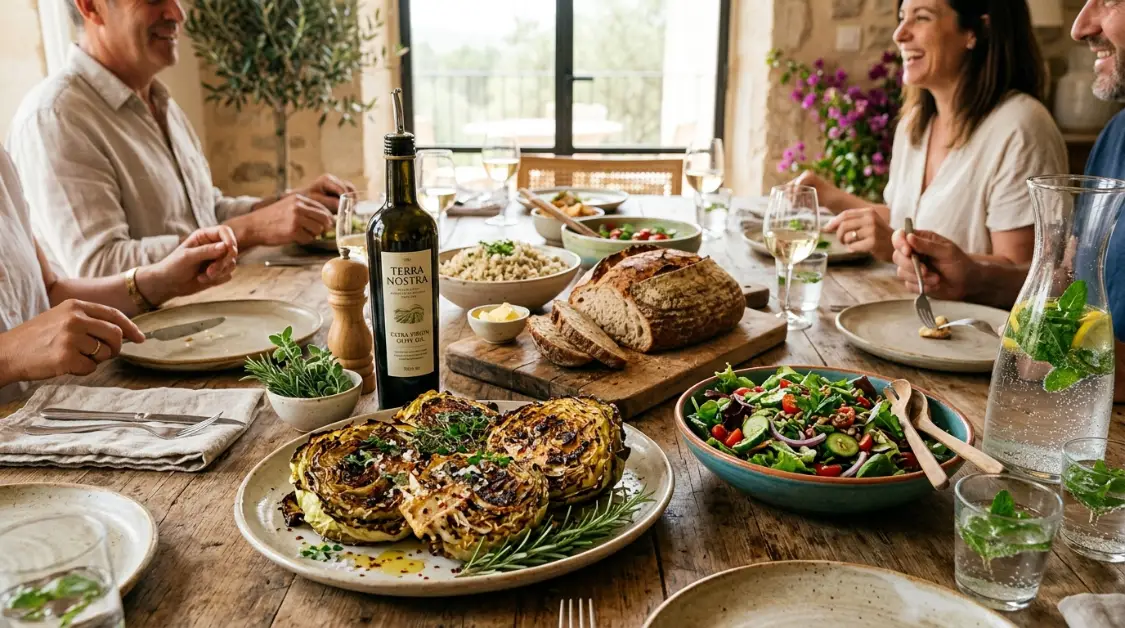
These charred cabbage steaks with Mediterranean toppings pair brilliantly alongside our grilled chicken Mediterranean bowl for a complete meal, or with our classic Greek lemon rice pilafi for a stunning vegetarian spread. For a protein boost, add our Mediterranean chickpea power bowl on the side.
For drinks, skip the alcohol and think Greek: tsai tou vounou (mountain tea) served warm with honey is my go-to in cooler months. For summer, try sparkling water with cucumber and fresh mint, or a tall glass of homemade lemonade with a sprig of rosemary. Hibiscus tea, chilled and lightly sweetened, is another gorgeous option — the tartness mirrors the lemon in the tahini drizzle.
Storage and Reheating
How to Store Charred Cabbage Steaks
| Method | Container | Duration | Notes |
| Refrigerator (steaks only) | Airtight container, single layer | Up to 4 days | Store toppings separately for best texture |
| Refrigerator (with toppings) | Covered plate or container | Up to 2 days | Tahini and feta soften; still tasty but less contrast |
| Freezer | Freezer bag, steaks only | Up to 2 months | Thaw and re-crisp in oven at 400°F for 8 min |
| Room temperature | Covered plate | Up to 2 hours | Fine for a dinner party spread; don’t leave longer |
Reheating Methods and Freshening Tips
To reheat charred cabbage steaks with Mediterranean toppings, the oven is your best friend: 400°F (200°C) for 8–10 minutes on a sheet pan to re-crisp the exterior. Stovetop works too — place in a hot skillet, cover, and heat for 4–5 minutes. Microwave is my last resort (45 seconds), but it gets the job done.
The critical move? Always add fresh toppings after reheating. A fresh drizzle of tahini, new lemon juice, raw herbs, and a crack of pepper will revive even day-old steaks. Leftover charred cabbage (without toppings) is also excellent chopped into a grain bowl or tossed with pasta, olive oil, and pecorino for a quick lunch that feels like eating in Athens.
Frequently Asked Questions
Substitution and Technique Questions
Can I use red cabbage instead of green?
Yes, red cabbage works beautifully and adds a gorgeous purple color, though it’s slightly sweeter and denser. Increase roasting time by 3—5 minutes. The color will deepen to a stunning burgundy. I’ve used red cabbage for dinner parties and it’s a real showstopper.
Can I grill these instead of using the oven?
Absolutely. Grill over medium-high heat (about 425°F / 220°C) for 5–6 minutes per side. Use a grill basket or place them directly on oiled grates. The smoke flavor adds an incredible dimension. My father grilled everything on the beach in Chania, and charred cabbage over open flame is spectacular.
Why does my cabbage fall apart when I slice it?
The core is the key. Always leave the core intact when slicing — it’s the structural backbone that holds each steak together. Slice from top to bottom through the center of the core, keeping about 1/4 inch of core on each steak. If a steak falls apart, just scatter the loose leaves on the pan — they’ll become addictive crispy chips.
How do I prevent the steaks from steaming?
Three things: dry cabbage (never wet), hot oven (425°F minimum), and space between steaks on the pan (at least 1 inch). Crowded, wet cabbage in a lukewarm oven is a recipe for soggy disappointment. Preheating the pan helps enormously for achieving those crispy cabbage steaks everyone wants.
What other toppings work well?
Almost anything Mediterranean: romesco sauce, za’atar and yogurt, dukkah with pistachios, roasted red peppers and capers, or simply a generous drizzle of our best olive oil with dried oregano. The cabbage steak toppings possibilities are truly endless. If my yiayia wouldn’t recognize it, I don’t use it — but that still leaves a lot of options.
Dietary, Make-Ahead, and Authenticity Questions
Is this recipe vegan?
The base cabbage steaks with tahini drizzle are completely vegan. The feta makes it vegetarian. For a fully vegan version, swap the feta for vegan feta crumbles or simply omit it and add extra tahini and toasted seeds. The healthy cabbage recipe works beautifully either way.
Can I prep this ahead of time?
You can slice the cabbage and mix the spiced oil up to 24 hours in advance. Store the cut steaks in the fridge wrapped in a dry towel. Make the tahini sauce and prep all toppings ahead too. When ready, just brush, roast, and assemble. It’s perfect for entertaining.
Is this actually a traditional Greek dish?
Roasting cabbage is deeply traditional in Greek cooking, but the “steak” presentation is a modern adaptation. The toppings — feta, olives, tahini, lemon, olive oil — are as Greek as it gets. My yiayia would raise an eyebrow at the word “steak” but she’d clean her plate.
How many calories per serving?
Each charred cabbage steak with Mediterranean toppings runs approximately 195 calories with all toppings. It’s naturally low-carb cabbage steaks territory (about 7g net carbs), high in fiber, and packed with vitamins C and K. I’m not a dietitian, but this is one of the most nutrient-dense sides I know.
Can kids enjoy this?
My nieces in Chania devour these. Kids tend to love the crispy charred edges (they’re basically cabbage chips). If they’re not into olives or tahini, just serve with melted mozzarella and a squeeze of lemon instead. Start simple and let them discover the toppings over time
Cultural Closing
Bringing Greece to Your Table
Here’s what I love about these charred cabbage steaks with Mediterranean toppings: they prove that extraordinary food doesn’t require extraordinary ingredients. A head of cabbage costs next to nothing. A little olive oil, some heat, a handful of toppings, and you’ve got something that would feel at home on the table at my grandfather’s taverna in Chania, where the fishermen ate simple food that tasted like the whole Mediterranean. That’s the philosophy behind everything I cook — honest ingredients, proper technique, and the willingness to let a humble vegetable be the star.
Make this recipe. Send me photos. Tell me if your family fought over the crispy charred edges the way mine does. The comments section is always open, and so is my table.
More Mediterranean Recipes to Explore
If you loved these cabbage steaks, our gemista (Greek stuffed peppers and tomatoes) is another beautiful vegetable-forward Cretan classic. For a warming companion, try the lahanorizo (Greek cabbage rice) — a completely different way to celebrate cabbage. Craving a protein-packed breakfast? Our Mediterranean hummus breakfast bowl shares the same tahini-forward flavor profile. And for a sweet end to your Mediterranean dinner, the Greek yogurt panna cotta is a light, creamy dessert that pairs beautifully.