Okay — the first time I tried to make a Blood Orange & Rosemary Polenta Cake, it was February 2023, and my friend Celeste had just come back from a trip to Sicily waving a bag of blood oranges at me. “Make me a cake,” she said. “Something beautiful.” Reader, I made her a cake that was the color of a slightly embarrassed salmon. It fell in the middle. The rosemary tasted like pine sap. Truly regrettable.
After 8 test rounds (my rosemary bush is permanently diminished), I finally cracked it. The secrets? Supreme the oranges, infuse the syrup properly, two-stage rosemary. Let me walk you through it.
Table of Contents
Blood Orange & Rosemary Polenta Cake

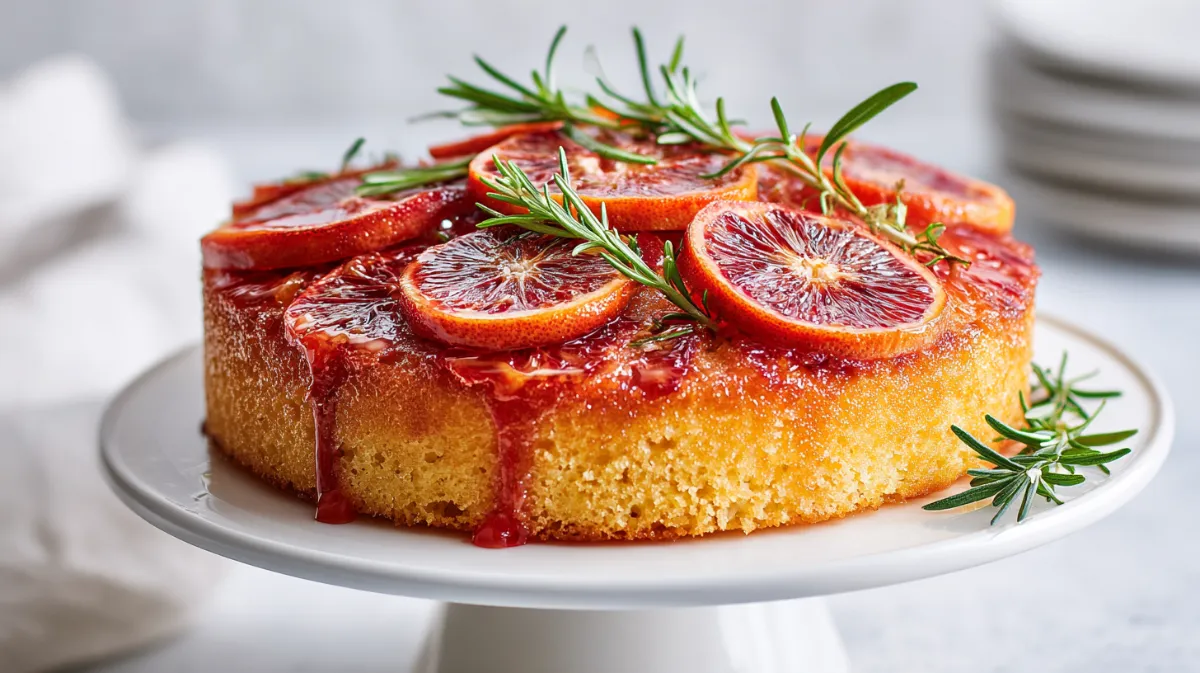
A stunning, ruby-syrup-soaked Blood Orange & Rosemary Polenta Cake — Italian-inspired, naturally gluten-free, aromatic with fresh rosemary and fragrant blood orange.
- 1 cup 160g fine or medium polenta (NOT instant)
- 1 cup 100g blanched almond flour
- 1½ tsp baking powder
- ¼ tsp fine sea salt
- ¾ cup 150g granulated sugar, plus 2 tbsp for topping
- Zest of 2 blood oranges
- ¾ cup fresh blood orange juice (about 3 oranges)
- 3 large eggs (at room temperature)
- ½ cup fruity extra-virgin olive oil (mild, not peppery)
- ⅓ cup whole milk Greek yogurt
- 1 tbsp finely chopped fresh rosemary (plus 2 whole sprigs for syrup)
- 1 tsp vanilla extract
- 1 extra blood orange (thinly sliced, for garnish)
- Syrup: ½ cup blood orange juice + ⅓ cup sugar + 1 rosemary sprig (granulated sugar,)
- 1. Preheat oven to 350°F. Grease a 9-inch springform pan and line the bottom with parchment.
- 2. In a large bowl, rub orange zest into sugar with fingertips for 30-45 sec until sand-like and fragrant.
- 3. Add eggs; whisk 2-3 min until pale and thickened. Slowly drizzle in olive oil while whisking. Whisk in yogurt, blood orange juice, vanilla, and chopped rosemary.
- 4. In a separate bowl, whisk polenta, almond flour, baking powder, and salt.
- 5. Fold dry into wet in two additions until just combined.
- 6. Pour into prepared pan. Top with blood orange slices arranged in a rosette. Sprinkle with 2 tbsp sugar.
- 7. Bake 40-45 min until golden and a toothpick in the center has moist crumbs.
- 8. While baking, simmer syrup ingredients (juice + sugar + rosemary sprig) 5-7 min until slightly thickened. Remove sprig.
- 9. Out of the oven, poke 15-20 holes across the warm cake. Pour warm syrup over the top slowly. Rest 15 min before unmolding.
Storage:
Room temp covered 3 days; refrigerator up to 5 days; freezer up to 2 months wrapped in plastic + foil.
Make-ahead:
Cake is actually better on day 2 after the syrup deepens. Bake the day before serving for best results.
Substitutions:
Cara Cara + pomegranate juice for blood oranges; stone-ground yellow cornmeal for polenta; thyme or orange blossom water for rosemary; labneh or sour cream for Greek yogurt.
Dietary Modifications:
Vegan — 3 flax eggs + coconut yogurt.
Paleo — all almond flour (1½ cups), honey or maple for sugar.
Kid-friendly — halve rosemary.
Serving Suggestions:
Serve warm or room temp with a dollop of labneh, mascarpone, crème fraîche, or Greek yogurt. Great with espresso or Earl Grey tea.
Why This Recipe Works
The Science of a Tender, Moist Crumb
Here’s what makes a Blood Orange & Rosemary Polenta Cake work structurally: polenta + almond flour is a partnership, not a substitute for wheat flour. Polenta’s coarse grain creates a bite and a golden color. Almond flour keeps the crumb of any moist blood orange cake tender because almonds are about 50% fat — Harold McGee describes this fat-in-grain matrix as “self-basting” — the cake stays moist for days without drying out. The rosemary adds a piney volatile oil (cineole, specifically) that activates dormant flavor receptors and makes every other ingredient in the rosemary polenta cake recipe taste more vivid. Food science, in a cake.
Italian-Mediterranean Roots for Any Occasion
A Blood Orange & Rosemary Polenta Cake pulls from a few Italian traditions at once — particularly amor polenta from Varese near Milan, and the olive oil cakes of Liguria. It’s equally at home at a dinner party with espresso or on a Tuesday afternoon with a cup of tea. Same “dress it up or down” energy as my almond flour cake with spring berries — one cake, many occasions. If you love this Mediterranean blood orange dessert genre, the Mediterranean rice pudding shares a similar “humble ingredients, spectacular result” philosophy.
Essential Ingredients
What Goes Into This Italian Citrus Polenta Cake
The ingredient list for a proper Blood Orange & Rosemary Polenta Cake is short but every component has a specific job. For a polished Italian citrus polenta cake, nothing is negotiable on quality — and the good news is the list is genuinely simple.
- 1 cup (160g) fine or medium polenta (NOT instant)
- 1 cup (100g) almond flour (blanched, finely ground)
- 1½ tsp baking powder
- ¼ tsp fine sea salt
- ¾ cup (150g) granulated sugar, plus 2 tbsp for topping
- Zest of 2 blood oranges + juice of 3 blood oranges (about ¾ cup juice)
- 3 large eggs, room temperature
- ½ cup fruity extra-virgin olive oil (mild, not peppery)
- ⅓ cup whole milk Greek yogurt
- 1 tbsp fresh rosemary, finely chopped + 2 whole sprigs for syrup
- 1 tsp vanilla extract
- For the syrup: ½ cup blood orange juice + ⅓ cup sugar + 1 rosemary sprig
- For garnish: thin blood orange slices (from 1 extra orange)
Quality Showdown — Where It Matters
| Ingredient | Budget Pick | Splurge Pick | My Pick |
| Blood oranges | Grocery store Moro (Jan-April) | Sicilian Tarocco from specialty importer | Moro from the grocery store — Sicilian Tarocco if a specialty grocer has them |
| Polenta | Bob’s Red Mill medium polenta | Mulino Marino Bramata polenta (Italian import) | Bob’s Red Mill is honest and affordable; Mulino Marino is next-level |
| Almond flour | Trader Joe’s almond meal | Blue Diamond blanched, finely ground | Blue Diamond blanched for fine crumb; TJ’s if you want more texture |
| Olive oil | California Olive Ranch Everyday | Frantoia Sicilian EVOO | Frantoia — the fruit notes echo the orange |
| Rosemary | Supermarket plastic clamshell | Fresh sprig from a living plant | Living plant if you can keep one alive (I can, barely) |
Here’s my game-changing secret for a truly special blood orange polenta cake: infuse the olive oil with rosemary 24 hours ahead. Warm ½ cup olive oil gently with 2 rosemary sprigs, cool, strain, use. The oil picks up the pine notes in a way that chopped rosemary alone can’t reach. Same slow-infusion principle as my aglio e olio Mediterranean pasta where the oil does 90% of the flavor work. And if you’re working through a citrus glut, the almond flour cake with spring berries is a cousin recipe that uses the same almond-forward crumb structure.
USA Substitutions
- No blood oranges? Cara Cara or navel oranges + a splash of pomegranate juice for color
- No polenta? Stone-ground yellow cornmeal (medium grind) — NOT instant grits, which are processed differently
- No Greek yogurt? Full-fat sour cream or labneh
- No fresh rosemary? Thyme or orange blossom water — a completely different vibe but equally beautiful
The Foolproof Method
Preparation — The 20 Minutes Before You Mix
Before anything else for any Blood Orange & Rosemary Polenta Cake batch — this is true for any proper olive oil polenta cake: (1) Pull eggs, yogurt, and (if using) butter out of the fridge 30 min ahead. (2) Zest 2 oranges directly over the sugar in your mixing bowl. (3) Juice 3 oranges — you need ¾ cup for the batter + ½ cup for the syrup. (4) Finely chop 1 tbsp rosemary leaves (from about one 3-inch sprig). (5) Grease a 9-inch springform pan and line the bottom with parchment. (6) Preheat oven to 350°F. (7) Slice the remaining blood orange into thin wheels for garnish. Mise en place is not optional here.
The Main Method — Step by Step
- Rub the zest into the sugar. Massage the orange zest into the sugar with your fingertips for 30-45 seconds. The sugar should look like wet coral sand and smell like a bergamot perfume counter. This is your flavor anchor. Don’t skip it.
- Whisk the wet. Add eggs to the zest-sugar mix. Whisk vigorously (by hand or with a mixer) for 2-3 minutes until pale and thickened. Slowly drizzle in olive oil while continuing to whisk — this emulsification step keeps the cake tender, not greasy. Stir in yogurt, blood orange juice, vanilla, and chopped rosemary.
- Combine the dry. In a separate bowl, whisk polenta, almond flour, baking powder, and salt until evenly combined. Breaking up almond-flour clumps matters — those become dense pockets in the baked cake.
- Gentle fold. Add dry to wet in two additions, folding gently with a spatula. Stop when there are just a few streaks of polenta visible. This batter is thicker than a typical cake batter — don’t panic.
- Pour and top. Pour the batter into the springform, smooth the top gently, arrange 4-5 thin blood orange slices in a rosette pattern on top, sprinkle with 2 tbsp sugar. This top-sugar creates the crackly sparkling crust that makes this cake unforgettable.
- Bake. Bake 40-45 min at 350°F until the top is deeply golden, edges are pulling away from the pan slightly, and a toothpick in the center comes out with moist crumbs (not wet batter). Start checking at 38 min — every oven is different. Don’t go past 50.
- Make the syrup while baking. In a small saucepan, combine ½ cup blood orange juice + ⅓ cup sugar + 1 rosemary sprig. Simmer gently 5-7 min until slightly thickened. Remove the sprig. The syrup should coat the back of a spoon. Set aside to cool.
- Soak the warm cake. Out of the oven, poke 15-20 holes all over the warm cake with a skewer. Slowly pour the warm syrup over the top, letting it soak in. Rest 15 min in the pan before unmolding. This is the step that transforms a good cake into an incredible one.
Pro tip from 8 test rounds: do not over-bake this cake. Polenta + almond flour without gluten means there’s very little forgiveness on the back end — at 50 minutes the cake is perfect, at 55 it’s dry. Set a timer. Trust the skewer test. And for the syrup step, warm cake + warm syrup is non-negotiable — cold syrup on warm cake just slides off and pools on your counter. I learned that the hard way. Three separate times. If you want to pair this dessert with a proper mezze evening, my ultimate Mediterranean mezze platter is the perfect savory lead-in.
Creative Variations
Dietary Modifications and Twists
I’ve tested each of these Blood Orange & Rosemary Polenta Cake variations in my own kitchen — every one is still a legitimate gluten-free polenta cake. The dairy-free version surprised me — not a compromise. My niece Lila (7 years old, extremely concerned about anything “herby”) only approves of the kid-friendly Blood Orange & Rosemary Polenta Cake, which is a real endorsement around here.
| Variation | How to Do It | Best For | Flavor Notes |
| Vegan Version | Replace 3 eggs with 3 flax eggs (3 tbsp ground flax + 7 tbsp water, rest 10 min); swap yogurt for thick coconut yogurt | Plant-based guests | Slightly denser, still bright with citrus |
| Gluten-Free (as written) | Already gluten-free — just ensure your polenta and almond flour are GF-certified if cross-contamination is a concern | Celiac diners | Identical to original — zero compromises |
| Paleo-Friendly | Increase almond flour to 1½ cups, omit polenta; swap sugar for ½ cup honey or maple syrup (reduce juice by 2 tbsp) | Grain-free eaters | Softer, more pudding-like texture, deeply caramel-orange |
| Budget-Friendly | Use navel oranges + 2 tbsp pomegranate juice for color; swap almond flour for ground oats | Feeding a crowd | Different texture, 70% of the flavor, half the cost |
| Kid-Friendly | Halve the rosemary; skip the pine-y sprigs for syrup; add ½ tsp almond extract | Picky tiny eaters | Rosemary fades, orange dominates, gentler on little palates |
For celiac-friendly entertaining ideas, my 10 gluten-free Mediterranean recipes collection pairs beautifully with this gluten-free blood orange cake. And if you’re looking for another Mediterranean dessert to round out a menu, the pistachio halva is my go-to companion — shares the “nuts + sugar + ancient grain” DNA of this cake.
Storage & Serving
Keeping Your Cake Actually Good
A Blood Orange & Rosemary Polenta Cake is a rare dessert — this particular blood orange syrup cake genuinely tastes BETTER on day 2 than day 1. The syrup continues to permeate the crumb overnight. Here’s my tested timeline for a rustic polenta cake like this:
- Room temp: Covered on the counter 3 days; the syrup keeps it moist beautifully
- Refrigerator: Up to 5 days, but bring to room temp 30 min before serving for best flavor
- Freezer: Up to 2 months, wrapped in plastic + foil. Thaw overnight in the fridge
- Revival trick: Warm a slice in a 300°F oven for 5 min to refresh the crumb and the rosemary oils
Meal Prep and Entertaining Strategy
This Blood Orange & Rosemary Polenta Cake is an entertainer’s dream. Bake the day before the party — the overnight rest deepens the flavor AND takes all the stress off the day of. Same winter citrus cake make-ahead logic works for my Greek yogurt panna cotta which also improves over 24 hours. This is the ideal dessert workflow for any Italian citrus polenta cake — bake ahead, plate fresh.
| Pairing Type | Specific Ideas | Best Occasion |
| Coffee / Espresso | Strong dark espresso, cortado, cappuccino, Turkish coffee | Italian-style after-dinner service |
| Tea | Earl Grey with bergamot, Moroccan mint, rooibos | Afternoon tea, rainy Sunday |
| Toppings | Dollop of labneh, mascarpone cream, Greek yogurt with honey, crème fraîche | Dessert plating, dinner party |
| Fresh Fruit | Pomegranate arils, extra blood orange supremes, fresh figs when in season | Holiday table, brunch spread |
Nutritional Benefits
Disclaimer first: I’m not a registered dietitian. These numbers are estimates based on USDA data and the ingredients in my testing. Your version will vary. If you have dietary concerns, talk to a professional.
Macronutrients (Per Serving, Makes 10)
| Macronutrient | Amount | % Daily Value |
| Calories | 298 kcal | 15% |
| Carbohydrates | 32g | 12% |
| Dietary Fiber | 2.5g | 9% |
| Protein | 6g | 12% |
| Total Fat | 17g | 22% |
| Saturated Fat | 2g | 10% |
Micronutrients
| Micronutrient | Amount | Why It Matters |
| Vitamin C | 18 mg | Immune support — from blood oranges + zest |
| Vitamin E | 4.2 mg | Antioxidant — from almonds |
| Anthocyanins | ~40 mg | Antioxidants — what makes blood oranges red (not found in regular oranges) |
| Magnesium | 48 mg | Muscle + nerve function — from almonds |
| Folate | 30 mcg | Cell production — from oranges + almonds |
The glycemic load of a Blood Orange & Rosemary Polenta Cake is moderate — around 14 — but the protein and monounsaturated fats from almond flour in this almond polenta cake blood orange slow absorption considerably, avoiding sharp blood sugar spikes typical of conventional flour-based cakes. Blood oranges are genuinely special — they contain anthocyanins (the same antioxidant family as blueberries), which regular oranges don’t have. A 2009 study in the Journal of Agricultural and Food Chemistry showed that blood orange anthocyanin content can be up to 10x higher than other orange varieties. For another naturally-sweetened Mediterranean option to pair with this flourless blood orange cake, my tahini and date energy balls are the perfect small bite.
Frequently Asked Questions
What’s the difference between polenta and cornmeal?
Technically polenta IS a type of cornmeal — specifically, medium-to-coarse ground yellow corn, traditionally Italian. American “cornmeal” is often more finely ground, and “instant polenta” is pre-cooked (never use that for this rustic polenta cake). For a proper Blood Orange & Rosemary Polenta Cake, use stone-ground yellow cornmeal (medium grind) or actual Italian polenta — both work. Fine cornmeal works in a pinch but gives you less texture.
Can I make this moist blood orange cake without rosemary?
Absolutely — and it’s still delicious. Substitute with lemon thyme, a tablespoon of orange blossom water, or just add extra orange zest. The rosemary adds that piney-fresh edge but the cake works beautifully without it.
Why did my cake sink in the middle?
Three likely culprits: (1) you opened the oven too early (always wait at least 30 min), (2) the batter was overmixed (gluten-free-ish batters collapse with too much agitation), (3) your baking powder is old (replace every 6 months). Fix any one and you’re on track.
Can I use a different pan?
A 9-inch springform is the gold standard. An 8-inch works but increase bake time by 5-10 min. A 9×5 loaf pan works but bake 50-60 min. Bundt pans are tricky — the polenta batter doesn’t release cleanly. Springform, always, if you have one.
Is this a flourless blood orange cake?
Mostly yes — there’s no wheat flour. Polenta is ground corn; almond flour is ground almonds. So it’s technically a flourless blood orange cake by most definitions. Which is why it’s naturally gluten-free.
Can I use bottled blood orange juice?
In a pinch, yes. Fresh is dramatically better. Bottled blood orange juice (if you can find it — it’s usually specialty) tastes cooked. If you must use bottled, use regular fresh orange juice + 1 tbsp pomegranate juice instead.
How far in advance can I make this cake?
Unfrosted and syrup-soaked: up to 2 days ahead at room temp, covered. The flavor actually deepens. Any topping like labneh or mascarpone should go on right before serving.
Pairing & Serving Ideas
Pairing Matrix
| Category | What to Serve With | Why It Works |
| Beverages | Strong espresso, Earl Grey tea, Moroccan mint tea, cold brew, sparkling water with lime | Bitter or bright beverages cut the sweetness beautifully |
| Toppings | Labneh with honey, mascarpone whipped cream, Greek yogurt + orange blossom honey, crème fraîche | Creamy tangy counterpoint to the citrus sweetness |
| Fresh Fruit | Extra blood orange supremes, fresh figs (when in season), pomegranate arils, candied orange peel | Doubles the citrus theme elegantly |
| Savory Pair | Olive tapenade on crostini, whipped feta with hot honey, labneh with za’atar | Sweet-savory progression for dinner-party menus |
Occasion Ideas
For a winter dinner party, I serve this Blood Orange & Rosemary Polenta Cake as the finale after a Moroccan main like slow cooker beef and olive tagine. It’s the ultimate rosemary citrus dessert for the season. For afternoon tea, slice this winter citrus cake thin and plate it with a dollop of labneh with za’atar and olive oil + a drizzle of honey (yes, savory labneh with sweet cake — trust me). For Valentine’s Day or anniversary dessert, the ruby-pink syrup and fresh rosemary sprigs make the Blood Orange & Rosemary Polenta Cake absurdly romantic without any effort. Celeste (she of the Sicily blood oranges) swears by it for dinner parties now.
Conclusion
Make It Yours
The version of Blood Orange & Rosemary Polenta Cake you’ll keep making is the one you tweak to your own taste. Add cardamom. Swap rosemary for bay leaf. Drizzle with honey instead of syrup. Top with mascarpone. The only rules for a showstopping herb-infused polenta cake: real blood oranges (or a good alternative), proper polenta (not instant), soak the warm cake with warm syrup, and don’t overbake. Everything else is yours to play with. For another Mediterranean dessert that welcomes tinkering, try the pistachio halva — same rustic-sophisticated energy.
Tell Me How It Turned Out
If you make this Blood Orange & Rosemary Polenta Cake — or even a rough first attempt — please drop a comment. Did the crumb crackle on top? Did the syrup soak through? Did the rosemary stay subtle or push into pine-cleaner territory? I love hearing the stories. Tag me on Instagram with your Blood Orange & Rosemary Polenta Cake and I’ll repost favorites. While you’re here, the Greek yogurt panna cotta is my other citrus-adjacent dessert crush, and the Mediterranean hummus breakfast bowl is a perfect brunch pairing if you’re serving this at a late-morning spread.