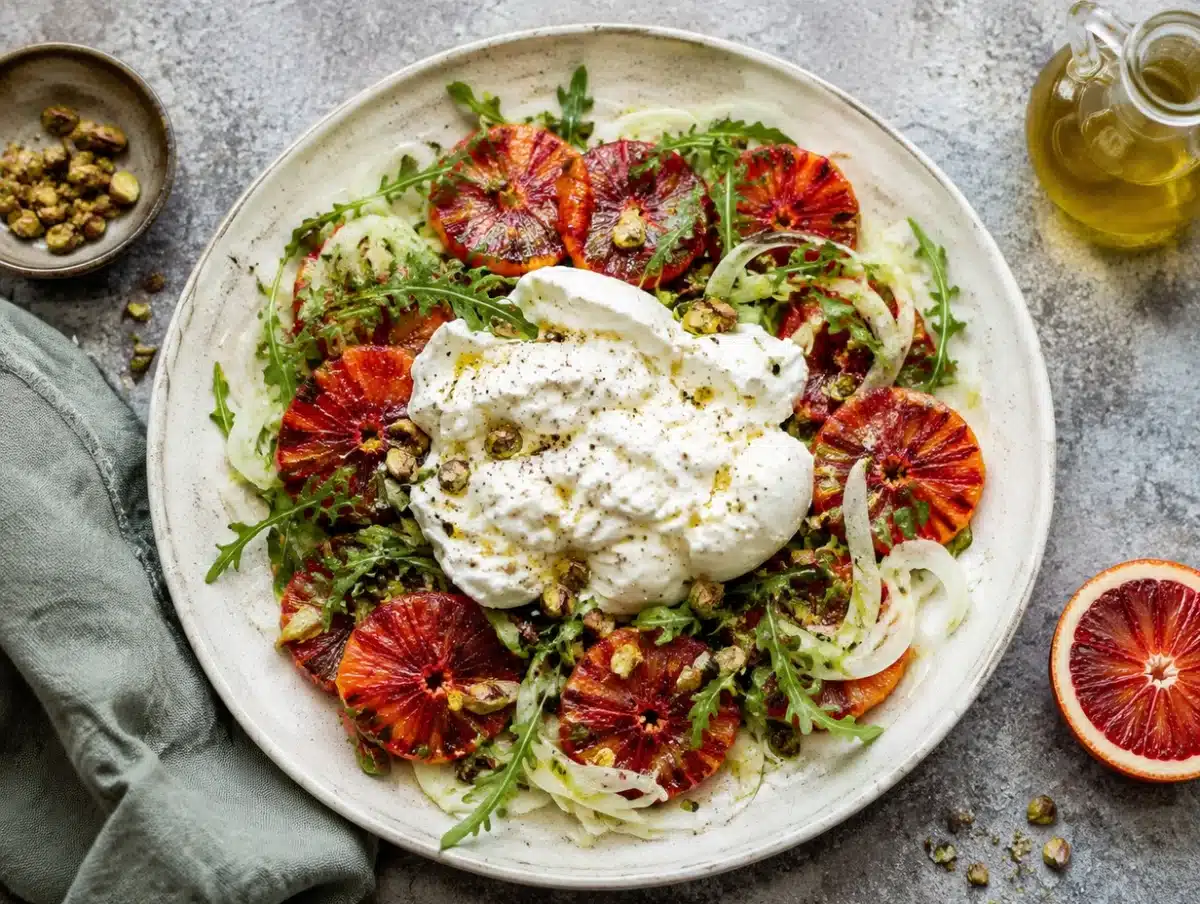
Okay, so here’s the thing — I completely bombed this salad the first time I made it for my sister Laura’s engagement dinner back in January 2024. Like, catastrophically bad. The burrata was basically soup (I didn’t drain it properly, who knew?), the blood oranges were bitter because I grabbed the wrong variety at Whole Foods, and honestly? The pistachios were… stale. Her fiancé Marco, bless him, still ate two servings but I knew. Fast forward to attempt #47 (yes, FORTY-SEVEN), and I’ve finally cracked the code. This blood orange burrata salad isn’t just pretty — it’s the kind of dish that makes people stop mid-conversation. I’m talking Instagram-worthy, dinner-party-hero level stuff. Ready for the secrets that actually work?
Why This Blood Orange Burrata Salad Actually Works
The Science Behind Citrus & Creamy Cheese
Look, I’m not Harold McGee (though I wish I had his kitchen), but here’s what’s happening: blood oranges contain anthocyanins — the same compounds that make them gorgeously crimson — which create this incredible sweet-tart flavor profile that cuts through burrata’s richness like a hot knife through… well, butter. The high-fat content in burrata (we’re talking 60%+ butterfat in that creamy center) needs acid to balance it out, and blood orange juice is literally perfect for this. It’s food science magic, people.
The pistachio crumble? That’s all about textural contrast. When you bite into this salad, you get creamy, crunchy, soft, and juicy all at once — it’s what chefs call mouthfeel diversity. Plus pistachios have natural oils that complement (not compete with) the olive oil in the dressing. The texture layering is similar to our caprese pasta salad orzo where multiple textures keep every bite interesting.
Perfect for Winter Entertaining & Special Occasions
Blood oranges are at their peak from December through March (yeah, they’re a winter citrus — who knew?), which makes this the ultimate holiday party or Valentine’s Day showstopper. I served this at a Super Bowl party once (weird choice, I know) and it was gone before the nachos. Before the nachos. That never happens.
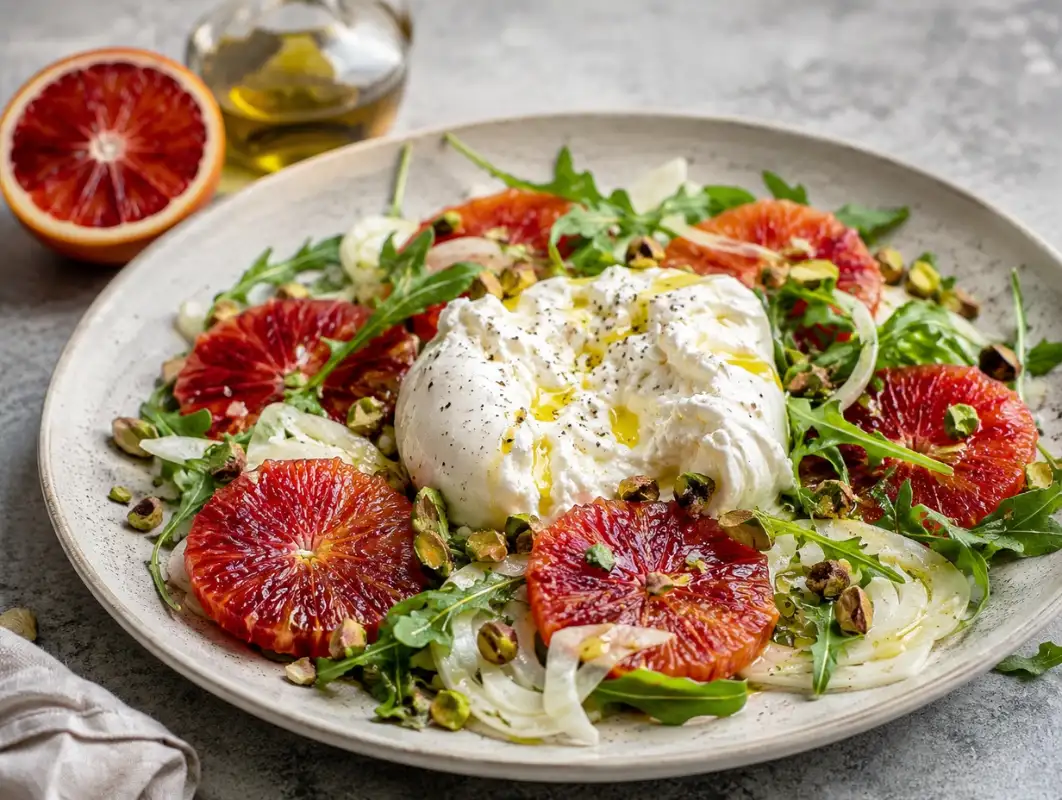
The color contrast alone — deep ruby oranges against snow-white burrata with bright green arugula — makes it ridiculously photogenic. It’s fancy enough for date night but easy enough for a Tuesday. Plus, the prep time is honestly about 15 minutes if you’re not dawdling like I do. This pairs beautifully with our Greek chicken with lemon and feta for an elegant Mediterranean dinner party spread.
Essential Ingredients for Blood Orange Burrata Salad
The Perfect Ingredient List with Quality Specifications
Here’s what you actually need (and trust me, quality matters here):
| Ingredient | Amount | Quality Specs |
| Blood Oranges (Moro or Tarocco) | 4-5 medium | Deep red flesh, firm but slightly yielding, aromatic |
| Fresh Burrata | 2 balls (8 oz each) | Room temp, imported Italian if possible, use within 48 hours |
| Baby Arugula | 4 cups | Peppery, fresh, no wilting |
| Raw Pistachios (shelled) | ½ cup | Unsalted, vibrant green, not brown |
| Extra Virgin Olive Oil | ⅓ cup | Fruity, high-quality (Californian or Italian) |
| Fresh Lemon Juice | 2 tablespoons | Freshly squeezed, never bottled |
| Honey | 1 tablespoon | Raw, local if available |
| Flaky Sea Salt | 1 teaspoon | Maldon or similar large flakes |
| Fresh Mint Leaves | ¼ cup | Bright green, aromatic, torn not chopped |
Game-changing secret: Let the burrata sit at room temperature for 30 minutes before serving. Cold burrata is basically… sad. Room temp burrata is life-changing. My friend Rachel (who’s a caterer) taught me this and it’s the single best tip I ever received. If you’re looking for more ways to showcase fresh cheese, try our Taziki’s whipped feta recipe for another creamy Mediterranean appetizer.
Smart Substitutions & USA Alternatives
Can’t find blood oranges? (Happens to the best of us.) Use Cara Cara oranges or even regular navel oranges — you’ll lose the dramatic color but the flavor still works. I’ve also done this with ruby red grapefruit and people actually preferred it (don’t tell my Italian nonna).
| Original Ingredient | USA Substitute | Why It Works |
| Italian Burrata | BelGioioso brand (USA) | Made in Wisconsin, actually really good quality |
| Blood Oranges | Cara Cara or Ruby Grapefruit | Similar sweetness, color varies |
| Raw Pistachios | Wonderful brand shelled | Grown in California, consistently fresh |
| Fresh Mint | Basil or Baby Arugula | Different flavor but equally fresh and herbal |
For those avoiding dairy, this is tricky but not impossible. Kite Hill makes a decent plant-based fresh mozzarella that you could use, though honestly? It’s not the same. The creamy center is the whole point of burrata. Maybe just make our Mediterranean white bean salad instead if dairy’s not your thing. Another great cheese-forward option is our whipped feta garlic confit dip which brings similar Mediterranean elegance to your table.
The Foolproof Method for Perfect Blood Orange Burrata Salad
Preparation Steps (The Stuff That Actually Matters)
Step 1: Supreme the blood oranges (fancy chef term for removing all the white pith). Here’s the thing nobody tells you: use a serrated knife, not a chef’s knife. Serrated grips the peel better. Cut off both ends, stand it up, and slice down following the curve. Then cut between the membranes to release perfect segments. Save all the juice that drips out — you’ll need it for the dressing. This technique is also essential for our Italian lemon cake recipe where citrus prep is everything.
Step 2: Make the pistachio crumble. Roughly chop the pistachios (I use a knife, not a food processor — you want chunks, not powder). Toast them in a dry skillet over medium heat for 3-4 minutes until fragrant. Watch them like a hawk — they go from perfect to burnt in like 10 seconds. (I learned this the hard way. Twice.)
Step 3: Drain and prep the burrata by removing it from the brine and letting it sit on paper towels for 5-10 minutes. Seriously, this step is critical. Wet burrata = watery salad = sad times. Also, bring it to room temperature. Cold burrata is a crime against food.
Pro tip from attempt #23: Wash and dry your arugula completely. Any moisture will make the dressing slide right off. Use a salad spinner or pat dry with paper towels. I know it seems fussy but trust me on this one.
Assembly & Main Method (Timing Is Everything)
Step 4: Make the honey-citrus dressing. In a small bowl, whisk together ⅓ cup olive oil, 2 tablespoons lemon juice, 1 tablespoon honey, and all that reserved blood orange juice. Season with salt and pepper. The dressing should taste slightly too acidic on its own — the burrata’s richness will balance it out. This is the same principle we use in our tuna and white bean salad where bold dressing cuts through rich ingredients.
Step 5: Build the salad on a large platter (not individual plates — this is a showpiece, people). Start with the arugula as your base. Drizzle with about half the dressing and toss gently. Arrange the blood orange segments on top in a pretty pattern (or don’t, I’m not your boss). Tear the burrata into large chunks — don’t slice it neatly, the ragged edges are part of the charm — and distribute across the salad.
Step 6: Finish with flair. Sprinkle the toasted pistachios over everything. Tear (not chop) the mint leaves and scatter. Drizzle the remaining dressing. Finish with flaky sea salt and freshly cracked black pepper. Total time from start to finish: 15 minutes if you’re efficient, 25 if you’re like me and keep stopping to taste-test the pistachios.
Critical timing note: Assemble this salad right before serving. The arugula will wilt, the burrata will weep, and the whole thing gets sad after about 20 minutes. You can prep all the components ahead (I do this for dinner parties), but the final assembly needs to happen at the last minute. Similar to our green goddess chicken salad where fresh assembly preserves the perfect textures.
Creative Variations to Transform Your Blood Orange Burrata Salad
Four Amazing Flavor Combinations
| Variation Name | Key Changes | Best For |
| Pomegranate Jewel | Add ½ cup pomegranate arils, swap mint for basil, add balsamic glaze drizzle | Holiday dinners, romantic occasions |
| Spicy Citrus | Add red pepper flakes, use grapefruit instead of orange, add thinly sliced jalapeño | Adventurous eaters, summer BBQs |
| Autumn Harvest | Add roasted beets, candied walnuts instead of pistachios, maple-citrus dressing | Thanksgiving, fall gatherings |
| Mediterranean Classic | Add kalamata olives, red onion, feta crumbles alongside burrata, oregano | Casual dinners, potlucks |
My personal favorite? The Pomegranate Jewel version. I made it for New Year’s Eve 2025 and people literally gasped when I brought it out. The jewel tones are insane. Plus the pop of the pomegranate seeds adds this fun textural element. If you love jewel-toned dishes, you’ll also adore our couscous and quinoa salad which brings similar visual drama to the table.
Dietary Modifications That Actually Work
Vegan: Replace burrata with thick slices of avocado and add nutritional yeast for that umami kick. It’s… different, not gonna lie, but still delicious. My vegan friend Sophie approved (though she did say it’s really more of an avocado salad at that point, and, um, she’s not wrong).
Gluten-free: Already naturally GF! Just make sure your honey is pure (some brands add fillers). Serve with GF crackers or skip the carbs entirely. This is perfect alongside our chickpea stuffed sweet potatoes for a complete gluten-free Mediterranean feast.
Paleo: Omit the burrata (I know, I know), double the pistachios, and add sliced prosciutto for protein. It becomes more of a citrus and nut salad but it’s actually really good. My CrossFit-obsessed cousin Ben makes this version and brings it to every family gathering.
Budget-friendly: Use fresh mozzarella instead of burrata (save like $8), regular oranges instead of blood oranges, and sunflower seeds instead of pistachios. Total cost drops from $25 to about $12 and it’s still legitimately delicious. For more budget-friendly Mediterranean options, check our Mediterranean chickpea power bowl which feeds a crowd for under $15.
Storage & Serving Secrets for Blood Orange Burrata Salad
How to Store Components & Keep Everything Fresh
Real talk: You cannot store this salad once assembled. It’s a serve-immediately situation. But here’s how to prep ahead like a pro:
| Component | Storage Method | Max Time |
| Blood Orange Segments | Airtight container, refrigerated, cover with juice | 24 hours |
| Burrata | Keep in original brine, refrigerated | 2 days (best within 48 hours) |
| Washed Arugula | Salad spinner or wrapped in paper towels, refrigerated | 3 days |
| Pistachio Crumble | Airtight container, room temperature | 1 week |
| Honey-Citrus Dressing | Sealed jar, room temperature, shake before using | 3 days |
The burrata thing is crucial. Fresh burrata has a shelf life of like… a minute (okay, 2-3 days but it’s noticeably less creamy after day one). Buy it the day you plan to serve. I once bought burrata on Tuesday for a Saturday party and it was… regrettable. Learn from my mistakes, people.
Meal Prep Strategy & Make-Ahead Timeline
Here’s my dinner party timeline (tested successfully at least 15 times):
Morning of: Supreme the blood oranges, store in juice. Toast and chop pistachios. Make dressing. Wash and dry arugula.
2 hours before: Remove burrata from fridge, let come to room temp (set a timer so you don’t forget like I did at Easter 2024).
15 minutes before: Drain burrata on paper towels. Get your platter ready.
5 minutes before: Assemble everything. Boom, you look like a kitchen genius.
This prep strategy works brilliantly for entertaining. Use similar timing for our enlightened Mediterranean chicken bowl when you want multiple impressive dishes ready simultaneously. Or serve this alongside our creamy pesto chicken pasta bake for an unforgettable Mediterranean dinner spread.
| Meal Type | Pair With | Beverage Suggestion |
| Appetizer | Crusty sourdough bread, olive oil for dipping | Sparkling lemonade, mint iced tea |
| Light Lunch | Quinoa or farro on the side, extra protein option | Fresh-squeezed orange juice, herbal tea |
| Elegant Dinner | Grilled fish or chicken, roasted vegetables | Sparkling water with blood orange slice |
| Brunch Spread | Frittata, fresh fruit, pastries | Pomegranate juice, citrus spritzer |
Nutritional Benefits of Blood Orange Burrata Salad
Look, I’m not a registered dietitian (so, you know, don’t take this as medical advice or whatever), but this salad is actually surprisingly nutritious considering how indulgent it tastes. The blood oranges bring serious vitamin C, the pistachios add protein and healthy fats, and even the burrata contributes calcium and protein (yes, really).
| Macronutrient | Per Serving (¼ of recipe) | Why It Matters |
| Calories | 385 | Satisfying without being heavy |
| Protein | 14g | From burrata and pistachios |
| Total Fat | 28g | Mostly healthy monounsaturated fats |
| Saturated Fat | 9g | From burrata cheese |
| Carbohydrates | 22g | Natural sugars from fruit, fiber from greens |
| Vitamin/Mineral | Amount | Health Benefit |
| Vitamin C | 78mg (87% DV) | Immune support, antioxidants from blood oranges |
| Vitamin A | 950 IU | From anthocyanins in blood oranges |
| Calcium | 240mg (24% DV) | Bone health from burrata cheese |
| Iron | 2.1mg | From arugula and pistachios |
| Fiber | 5g | Digestive health from greens and nuts |
| Potassium | 520mg | Heart health from citrus and greens |
Glycemic Index note: Blood oranges have a GI of around 40-45 (low), which means they won’t spike your blood sugar like other fruits might. The fat from the burrata and pistachios further slows glucose absorption. So this is actually a blood-sugar-friendly dessert-salad hybrid. (My diabetic uncle Jim literally asks me to make this for every holiday because it doesn’t mess with his levels.)
The anthocyanins in blood oranges (those compounds that make them red) are the same antioxidants found in blueberries and red wine — they’re linked to heart health and reduced inflammation according to actual science (not just wellness influencer nonsense). For more nutrient-dense Mediterranean dishes, explore our Mediterranean plant protein power bowl which maximizes nutrition per bite.
Blood Orange Burrata Salad
Ingredients
Method
- Supreme the blood oranges: cut off both ends, stand each orange up and slice down following the curve with a serrated knife, then cut between the membranes to release the segments. Save every drop of juice for the dressing.
- Roughly chop the pistachios with a knife so you get chunks rather than powder, then toast them in a dry skillet over medium heat for 3–4 minutes until fragrant. Watch them closely — they burn fast.
- Remove the burrata from its brine and let it sit on paper towels for 5–10 minutes, then bring it to room temperature for about 30 minutes.
- Whisk the olive oil, lemon juice, honey and all the reserved blood orange juice together, and season with salt and pepper. It should taste slightly too acidic on its own — the burrata balances it.
- Build the salad on a large platter: start with the arugula, drizzle with about half the dressing and toss gently, then arrange the blood orange segments on top and tear the burrata into large chunks across the salad.
- Scatter the toasted pistachios and torn mint over everything, drizzle with the remaining dressing and finish with flaky sea salt and cracked black pepper.
Notes
Frequently Asked Questions About Blood Orange Burrata Salad
Can you make blood orange burrata salad ahead of time?
Honestly? Not really. The assembled salad will get soggy and sad within 20 minutes. However, you can prep all the components separately up to 24 hours ahead — segment the oranges, toast the pistachios, make the dressing, wash the arugula — then assemble right before serving. This is actually how restaurants do it (I asked a chef friend named Marcus and he confirmed this is the pro move).
What type of blood oranges are best for this salad?
Moro blood oranges are the gold standard — they have the deepest red flesh and the most intense flavor. Tarocco varieties are a close second with a milder, sweeter taste. Sanguinello works too but they’re harder to find in the USA. If you can only find regular blood oranges without a variety name, just squeeze them gently — they should yield slightly and smell sweet and citrusy. Avoid any with brown spots or that feel rock-hard.
How do you keep burrata from being watery in salads?
This is THE question, and I learned this the hard way. Remove burrata from the brine and let it drain on paper towels for at least 10 minutes before adding to the salad. Pat it dry if needed. Also — and this is key — don’t slice the burrata until immediately before serving. Once you tear it open, that creamy center starts weeping. If it’s already weeping when you put it on the salad, you’ve got a swamp situation.
Can I substitute regular oranges for blood oranges?
Yes, but you’ll lose the dramatic color contrast (which, let’s be honest, is half the appeal). Cara Cara oranges are the best substitute — they’re pink-ish and have a similar sweet-tart flavor. Regular navel oranges work fine flavor-wise but the salad won’t be as visually stunning. I’ve also used a mix of grapefruit and regular oranges which adds nice complexity.
What can I serve with blood orange burrata salad for a complete meal?
This salad is rich enough to be a light main course, but it pairs beautifully with grilled fish, roasted chicken, or even our pasta alla Sorrentina for a full Italian feast. For brunch, serve it alongside a frittata. As an appetizer, pair with crusty bread and maybe our easy cowboy caviar for variety. The citrus cuts through rich main courses really well.
How long does blood orange season last?
Blood oranges are at their peak from December through March in most of the USA (they’re imported from California and sometimes Spain). You might find them into April but they get expensive and less flavorful. Stock up in January and February when they’re everywhere and cheap. I once paid $8 for three blood oranges in May and they were… not worth it.
Is this salad gluten-free and keto-friendly?
It’s naturally 100% gluten-free (assuming your honey is pure). As for keto… eh, it’s borderline. One serving has about 22g net carbs (mostly from the blood oranges and honey), which might fit your macros if you’re doing a more liberal keto approach. For strict keto, you could reduce the oranges and skip the honey, but then you’re missing the whole point of the dish, honestly.
Pairing & Serving Ideas for Blood Orange Burrata Salad
Perfect Flavor Combinations & Occasion Suggestions
This salad is wildly versatile — I’ve served it at everything from casual Sunday brunches to my friend Elena’s wedding rehearsal dinner (true story, she specifically requested it). Here’s what works:
| Occasion | Serve Alongside | Why It Works |
| Valentine’s Day Dinner | Grilled salmon, roasted asparagus, crusty bread | Romantic red colors, elegant presentation |
| Holiday Brunch | Frittata, fresh fruit platter, pastries | Festive colors, makes impressive spread |
| Summer BBQ | Grilled chicken, corn salad, garlic bread | Refreshing contrast to heavy grilled items |
| Casual Weeknight | Rotisserie chicken, simple pasta, steamed veggies | Elevates basic dinner to something special |
The key to pairing this salad is understanding it’s both rich (from the burrata) and bright (from the citrus), so it can handle equally bold flavors. I’ve served it with everything from our pesto pasta with grilled chicken to simple grilled fish, and it works every time. The citrus is your secret weapon.
Beverage Pairings & Serving Temperature
Beverage pairings (no booze because we’re classy like that):
Sparkling lemonade with fresh mint — the bubbles and acidity complement the citrus without overpowering. I make a big batch with 1 cup lemon juice, ½ cup honey, 4 cups water, and 2 cups sparkling water. Add mint sprigs. Chef’s kiss.
Blood orange spritzer — juice 2-3 blood oranges, mix with sparkling water and a touch of honey. It’s like drinking the salad (but in a good way, not a weird way).
Moroccan mint tea served cold — the mint echoes the mint in the salad, and the slight sweetness works with the honey dressing. This is my go-to for summer evening entertaining.
Fresh-squeezed orange juice with a splash of pomegranate juice — simple but effective, especially for brunch.
Temperature matters: Serve this salad cool but not cold. The burrata should be room temp, the oranges slightly chilled, the arugula cold. It sounds fussy but the temperature contrast is part of the experience. When everything’s room temp it tastes muted. When everything’s too cold the burrata gets hard and weird.
For more Mediterranean beverage inspiration to pair with this gorgeous salad, browse our collection of recipes like the Greek feta egg bake which also benefits from fresh citrus spritzers, or serve alongside our dill pickle pasta salad for a unique flavor combination that guests will remember.
Make This Blood Orange Burrata Salad Your Own
Embrace Experimentation & Personalization
Look, I’ve given you the framework — the technique that works after 47 attempts (yes, I’m still bitter about those first 46). But here’s the secret nobody talks about: the best version of this salad is the one you make with your own tweaks.
Maybe you hate pistachios (weird, but okay) and prefer hazelnuts. Maybe you’re obsessed with fennel and want to add shaved fennel slices (actually brilliant, try it). Maybe you live somewhere blood oranges cost $47 each and you need to use regular oranges. All of this is fine. The core principles stay the same: creamy + citrus + crunchy + fresh. How you get there is up to you.
My sister Laura — remember her engagement dinner disaster? — now makes this salad her way with pomegranate molasses drizzled on top and toasted pine nuts instead of pistachios. And honestly? It might be better than mine (don’t tell her I said that). The point is: make it yours.
Join Our Mediterranean Recipe Community
I really want to see your versions of this blood orange burrata salad. Did you try the spicy variation? Did you serve it at a dinner party? Did your picky eater kid actually eat it? (That would be a miracle worth documenting.)
Drop a comment below with your tweaks, your disasters (we all have them), your triumphs. Share your photos — especially if you nailed that gorgeous platter presentation. And if you have questions, ask them. I’m here for it. I’ve made this salad so many times I dream about supreming oranges.
For more Mediterranean inspiration, explore our collection including our Giada’s braciole for an impressive main course, or our BJ’s Mediterranean chicken bowl for weeknight dinners. Each recipe brings the same attention to technique and flavor that makes this salad special.
And remember: cooking is supposed to be fun. Yes, technique matters. Yes, quality ingredients make a difference. But if you’re not enjoying the process? What’s the point? So put on your favorite music, pour yourself some of that blood orange spritzer, and make this salad. You’ve got this. Trust me. If I can nail it after 47 tries, you can definitely do it in one.