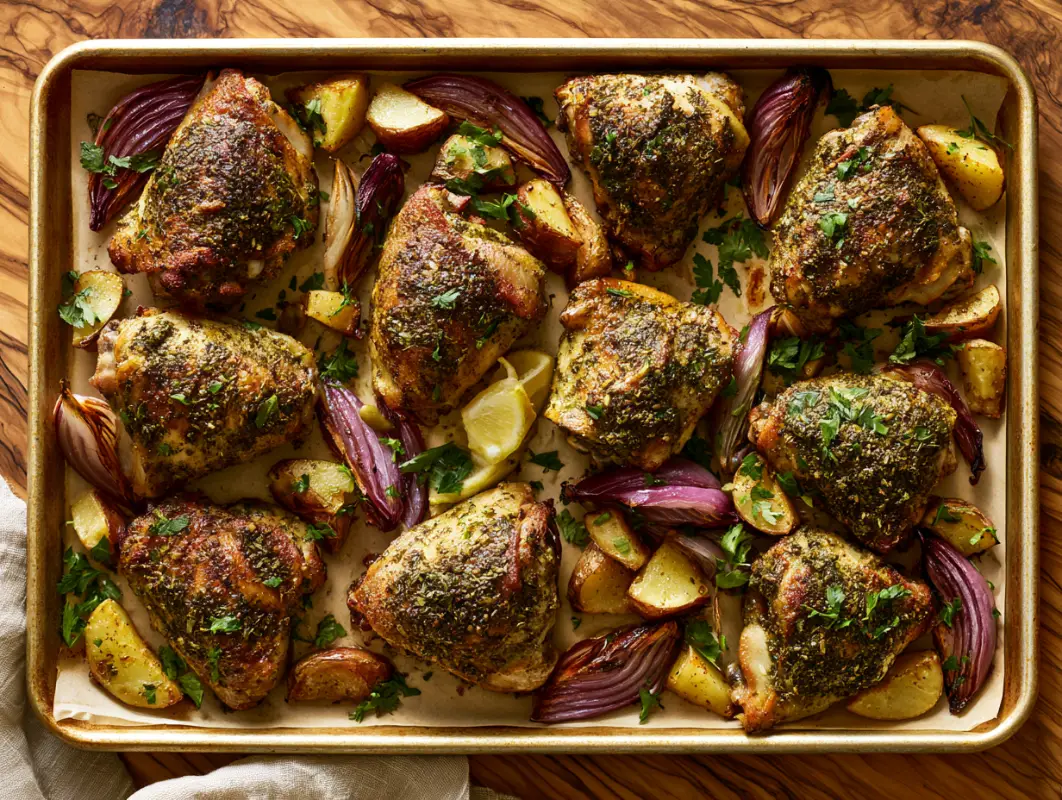
October 2022. My friend Layla brought a container of za’atar spice back from Amman and handed it to me like it was contraband. “Just put it on everything,” she said. So I did. First attempt at sheet pan za’atar chicken with potatoes & onions? The chicken was gorgeous— the potatoes were raw in the middle. Like, crunchy raw. My husband Abdel Ali politely ate around them and asked if we had cereal.
Sixteen batches later— yes, I keep a tally in a sticky note on my fridge and no I don’t think that’s weird— I’ve cracked the code on getting crispy za’atar chicken thighs and perfectly golden potatoes from the same pan, at the same time. Here’s everything I learned.
Table of Contents
Sheet Pan Za’atar Chicken With Potatoes & Onions
Ingredients
Method
- 1. Preheat oven to 425°F (220°C). Line a large rimmed sheet pan with parchment paper.
- 2. Whisk together za’atar, olive oil, lemon juice, garlic, sumac, smoked paprika, salt, and pepper into a thick paste. Reserve 2 tablespoons.
- 3. Pat chicken thighs very dry. Loosen the skin and spread half the za’atar paste under the skin directly onto the meat. Spread remaining paste over the top of the skin.
- 4. Toss cut potatoes and onion wedges with 2 tablespoons olive oil, salt, pepper, and a spoonful of the za’atar paste. Spread on sheet pan, potatoes cut-side down.
- 5. Roast potatoes and onions ALONE for 15 minutes at 425°F.
- 6. Remove pan, nestle chicken thighs skin-side up among the par-roasted vegetables. Return to oven and roast 25-30 minutes until chicken reaches 165°F internally (175-180°F preferred for thighs) and skin is deeply golden and crispy.
- 7. Rest 5 minutes on the pan. Drizzle with reserved za’atar paste, fresh lemon juice, and scatter with chopped parsley.
Notes
Why This Sheet Pan Za’atar Chicken With Potatoes & Onions Recipe Actually Works
The Science of Za’atar + High Heat + Chicken Skin
Za’atar isn’t just another spice blend— it’s a flavor system. The wild thyme (or oregano, depending on the regional blend) delivers volatile aromatics that intensify under high heat. The sesame seeds toast in the oven, releasing nutty oils. And the sumac? That’s your secret weapon: it provides tartness that mimics citric acid, which means it’s doing double duty as both flavor and surface tenderizer.
Harold McGee notes in On Food and Cooking that acidic compounds on protein surfaces encourage faster Maillard browning at lower temperatures, which explains why za’atar chicken develops that deep golden crust at 425°F while plain roasted chicken at the same temp still looks anemic. Combined with olive oil (which conducts heat across the skin’s surface evenly), you get a crispy za’atar chicken thigh situation that’s— honestly— almost unreasonably good. The same aromatic intensity powers our lamb shakshuka where warming spices meet high heat for maximum impact.
When to Make This Middle Eastern Chicken Recipe
I’ve made this Mediterranean chicken dinner on Tuesday nights when I’d rather be watching Netflix than cooking, for Shabbat dinners where I needed something impressive but couldn’t deal with fussy prep, and for meal prep Sundays where I was trying to pretend I have my life together. The hands-on time is about 15 minutes. Then you walk away. The oven does its thing. You come back to a pan of crispy, herbaceous, golden perfection. That’s it. That’s the pitch.
Essential Ingredients for Sheet Pan Za’atar Chicken With Potatoes & Onions
Complete Ingredients List
For the Za’atar Paste:
3 tablespoons za’atar spice blend (high-quality preferred)
¼ cup extra virgin olive oil
Juice of 1½ lemons (about 3 tablespoons)
5 cloves garlic, minced
1 teaspoon ground sumac
1 teaspoon smoked paprika
¾ teaspoon fine sea salt
½ teaspoon black pepper
For the Chicken:
8 bone-in, skin-on chicken thighs (about 3 lbs)
Extra pinch of fine sea salt for the skin
For the Vegetables:
2 lbs Yukon Gold potatoes, cut into 1-inch pieces
2 large red onions, cut into thick wedges through root
2 tablespoons extra virgin olive oil
Salt and pepper to taste
For Finishing:
Fresh lemon juice (from remaining ½ lemon)
Fresh flat-leaf parsley, chopped (or cilantro)
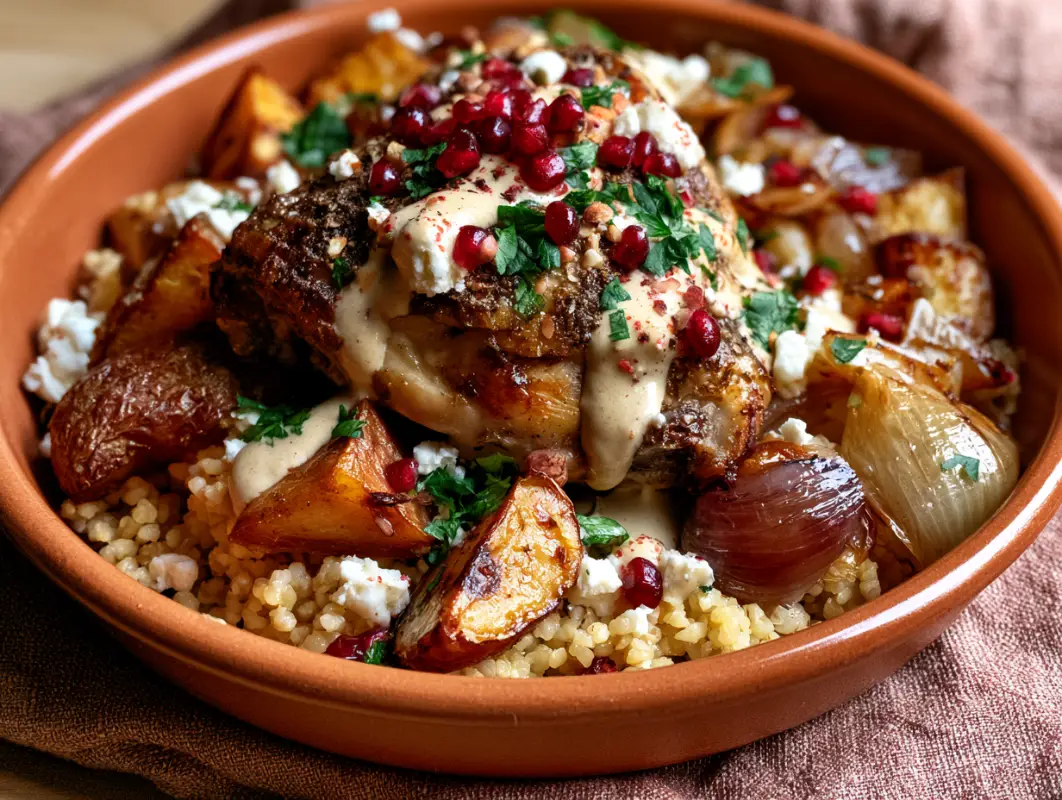
Optional: crumbled feta, pomegranate seeds, toasted pine nuts
Za’atar: The Spice Blend That Changes Everything
Okay, I have to talk about za’atar quality because this is the hill I will die on. Not all za’atar is created equal. The stuff in the tiny McCormick jar at the supermarket is… fine. It’s fine. But it’s like comparing instant coffee to a proper pour-over. Real za’atar— the kind from Middle Eastern grocery stores or specialty spice shops— has this fragrant, almost floral quality with visible chunks of hyssop leaf and fat sesame seeds. The color should be deep green, not brown. Brown za’atar is old za’atar, and old za’atar tastes like disappointment.
You’ll need about 3 tablespoons for this recipe, so invest in the good stuff. (Keep it in the freezer once opened— it stays potent for months.) The same “quality of spice matters more than quantity” principle applies to our spinach and feta pairing guide where ingredient sourcing makes or breaks the dish.
My game-changing discovery (batch 9, if we’re counting): mix the za’atar into a paste with olive oil, lemon juice, and minced garlic before applying it. Dry za’atar sprinkled on top just falls off during roasting. But a za’atar paste? It clings. It penetrates under the chicken skin. It coats the potatoes in a way that caramelizes into these incredible crispy edges. My friend Layla (the za’atar smuggler) actually gasped the first time she tasted the paste version versus the sprinkled version. A similar technique of building flavor pastes shows up in our garlic butter mushrooms recipe.
Za’atar Spice Blend Comparison
| Za’atar Type | Where to Buy | Flavor Profile | Best For |
| Palestinian/Levantine (hyssop-based) | Middle Eastern grocers, specialty spice shops | Intensely herbal, slightly bitter, complex | This recipe — the most authentic flavor |
| Lebanese (heavy on sumac) | Online retailers, Whole Foods | Tart, citrusy, lighter herbal notes | Great alternative; extra bright flavor |
| Generic supermarket blend | Any grocery store spice aisle | Milder, more oregano-forward, less nuanced | Works in a pinch — double the amount |
| Homemade (thyme + sumac + sesame + salt) | DIY from bulk spices | Customizable — as bold as you want it | When you can’t find pre-made |
| Turkish (with cumin, coriander added) | Specialty importers | Warmer, earthier, slightly smoky | A fun variation — different but delicious |
Choosing the Right Potatoes (This Matters More Than You Think)
I’m going to say something that might be controversial in the potato community (is there a potato community? there’s probably a subreddit): Yukon Golds are the only correct choice here. Hear me out. Russets have too much starch and they crumble apart during the long roast. Red potatoes hold their shape but don’t develop those crispy golden edges. Yukon Golds hit the sweet spot— creamy interior, golden exterior, and they caramelize beautifully with the za’atar oil.
Cut them into 1-inch pieces (I know, I know, you want to do big wedges, but trust me on the size— Kenji Lopez-Alt’s extensive testing shows smaller cuts develop more surface area for browning). The onions should be red, cut into thick wedges so they hold together and get jammy, not disintegrated.
The Foolproof Method for Sheet Pan Za’atar Chicken With Potatoes & Onions
Preparation: Building the Za’atar Paste
Step 1 (2 minutes): Preheat oven to 425°F. Line a large rimmed 18×13-inch sheet pan with parchment paper. (I used to skip the parchment and I’d spend 20 minutes scraping baked-on za’atar-potato cement off the pan. Learn from my mistakes.)
Step 2 (5 minutes): Make the za’atar paste. In a medium bowl: 3 tablespoons za’atar, ¼ cup extra virgin olive oil, juice of 1½ lemons, 5 cloves minced garlic, 1 teaspoon sumac (extra, beyond what’s in the za’atar— this is the move), 1 teaspoon smoked paprika, ¾ teaspoon salt, ½ teaspoon black pepper. Whisk it into a thick, fragrant paste. It should smell like a spice market in the best possible way. Reserve about 2 tablespoons for drizzling after baking.
Step 3 (5 minutes): Pat 8 bone-in, skin-on chicken thighs aggressively dry with paper towels. This is the step people skip and then wonder why their skin isn’t crispy. As Lopez-Alt’s food science work demonstrates, surface moisture creates steam that prevents browning— you’re literally fighting physics if you skip this. Now here’s the part that feels weird: loosen the chicken skin by sliding your finger under it, then smear about half the za’atar paste directly onto the meat, under the skin. The rest goes on top. This gives you flavor inside AND that gorgeous za’atar crust outside. The high-heat roasting technique mirrors what makes our chicken salad with tzatziki sauce chicken so flavorful.
Step 4 (3 minutes): Cut 2 lbs Yukon Gold potatoes into 1-inch pieces. Cut 2 large red onions into thick wedges (through the root so they hold together). Toss the potatoes and onions with 2 tablespoons olive oil, the remaining paste (minus the reserved drizzle), and an extra pinch of salt. Spread them on the sheet pan first— potatoes cut-side down for maximum browning contact.
Main Method: The Two-Stage Roast That Changes Everything
Here’s where I diverge from every other za’atar chicken recipe online, and this is the thing that fixed my raw-potato problem from batch 1. You’re not putting the chicken and potatoes in at the same time.
Step 5 (15 minutes): Roast the potatoes and onions ALONE at 425°F for 15 minutes. Yes, just the vegetables. This head start is the entire secret to this baked chicken with potatoes recipe. Potatoes need longer than chicken thighs to get properly tender and golden. If you put them in together (as I did, oh, eight times before figuring this out), the chicken hits 165°F while the potatoes are still basically raw in the center. Nobody tells you this. Well, I’m telling you this.
Step 6 (25-30 minutes): Remove pan, nestle the za’atar-coated chicken thighs skin-side up among the par-roasted potatoes and onions. Return to oven for 25-30 minutes. At the 15-minute mark of this second phase, check: chicken skin should be deeply golden and starting to crisp, potatoes should have caramelized edges, onions should be jammy and slightly charred. If the skin isn’t crispy enough, bump temp to 450°F for the final 5 minutes. Internal temp: 165°F minimum, but honestly I go to 175-180°F for thighs because the extra rendered fat means juicier meat, not drier. That same “let-the-oven-do-the-work” philosophy is what makes our spicy rigatoni such a weeknight hero.
Step 7 (2 minutes): Rest 5 minutes. Drizzle with the reserved za’atar paste, a squeeze of fresh lemon, and scattered fresh parsley (or cilantro if you’re not one of those people who think it tastes like soap— um, which is a real genetic thing, by the way, not just pickiness). The pan juices that have pooled? Those are not optional to serve. Spoon them over everything.
Creative Variations for Sheet Pan Za’atar Chicken With Potatoes & Onions
Dietary Modifications That Actually Deliver
The beautiful thing about this roasted za’atar chicken is that it’s already naturally gluten-free and dairy-free, which means you’re starting from a really accommodating place. I’ve tested these modifications on actual humans with actual dietary needs (my cousin’s Whole30 phase, my neighbor’s keto obsession, my own kids who reject anything with “green specks”). For another endlessly customizable Mediterranean meal, our Mediterranean plant protein power bowl follows the same flexible framework.
Recipe Variation Guide
| Variation | Key Swaps | Flavor Notes | Best For |
| Whole30/Paleo | Sweet potato instead of Yukon Gold, check za’atar for additives | Slightly sweeter, still excellent with za’atar | Strict elimination diets |
| Keto/Low-Carb | Cauliflower florets replace potatoes, extra olive oil | Lighter; cauliflower gets incredible crispy edges | Under 8g net carbs per serving |
| Kid-Friendly | Omit sumac + red pepper, add cherry tomatoes | Milder, slightly sweeter, less intimidating green specks | Picky eaters age 4-10 |
| Budget (under $8) | Drumsticks, regular potatoes, homemade za’atar | Same core flavors, dramatically lower cost | Feeding a family on a budget |
| Vegan | Chickpeas + extra potatoes replace chicken, double za’atar | Hearty, crispy chickpeas absorb za’atar beautifully | Plant-based eaters |
| Date Night | Add halved figs, crumbled feta, pine nuts after roasting | Sweet-savory elegance with minimal extra effort | Impressing someone specific |
Vegetable Swaps for Every Season
Spring: asparagus spears and baby artichokes (add in the last 15 minutes). Summer: zucchini rounds and cherry tomatoes (they burst into a za’atar-scented sauce). Fall: butternut squash cubes and brussels sprouts (the caramelization is INSANE). Winter: parsnips, carrots, and fennel wedges— they turn sweet and jammy. Our crispy zucchini fritters uses a similar approach to Mediterranean roasted vegetables if you want more veggie inspiration.
Storage & Serving for Za’atar Chicken
Smart Storage for Maximum Freshness
Room temperature: 2 hours max (FDA rules, not suggestions).
Refrigerator: Store za’atar chicken and roasted potatoes in an airtight container for up to 4-5 days. The za’atar-olive oil coating actually helps preserve the chicken— olive oil creates a mild barrier, and the herbs have natural antimicrobial compounds (not that you should push it past day five; I’m not a doctor and this is not medical advice).
Freezer: Cooked chicken freezes beautifully for 2-3 months.
Potatoes are a bit less ideal frozen— they get slightly mealy— but in a pinch, they reheat okay at 400°F.
Reheat everything in the oven, never the microwave. The microwave turns crispy za’atar skin into a rubbery nightmare and I will not apologize for how many times I repeat this. Our enlightened Mediterranean chicken bowl follows the same reheating philosophy.
Leftovers also shred beautifully into pita wraps with pickled turnips and tahini— basically the best lunch you’ll eat all week. The approach to storing and repurposing is similar to our caprese pasta salad with orzo which also transforms into entirely new meals the next day.
Meal Prep Game Plan
Weekly Meal Prep Pairing Ideas
| Day | Base | Add-On | Sauce/Finish |
| Monday | Za’atar chicken + potatoes over arugula | Pickled red onion, cherry tomatoes | Tahini-lemon drizzle |
| Tuesday | Warm pita wrap with shredded chicken | Cucumber, red cabbage, potato chunks | Garlic yogurt sauce |
| Wednesday | Za’atar chicken grain bowl (bulgur) | Roasted onions, chickpeas, feta crumbles | Za’atar olive oil + sumac |
| Thursday | Leftover chicken + potato hash | Fried egg on top, fresh herbs | Hot sauce or harissa |
| Friday | Mediterranean salad plate | Sliced chicken, hummus, potatoes, olives | Lemon vinaigrette |
Nutritional Benefits of This Mediterranean Roasted Chicken
I’m not a registered dietitian— I’m a person who obsessively Googles nutrition data and then pretends to sound authoritative, so take this accordingly. But the nutritional profile of this healthy sheet pan chicken is genuinely impressive. Bone-in chicken thighs provide complete protein and heme iron. Potatoes are one of the most satiating foods tested in research (they score higher than brown rice, oatmeal, and even whole wheat bread on the satiety index). Za’atar contributes antioxidants from thyme and sumac, and the olive oil delivers monounsaturated fats that the Mediterranean diet is famous for. For another nutrient-powerhouse bowl, check out our Mediterranean chickpea power bowl.
Macronutrient Breakdown (Per Serving — 2 thighs + ¾ cup potatoes/onions)
| Nutrient | Amount | % Daily Value | Notes |
| Calories | 420 kcal | 21% | Moderate; most from protein and healthy fats |
| Protein | 35g | 70% | Complete protein from bone-in chicken thighs |
| Total Fat | 24g | 31% | Primarily monounsaturated from olive oil |
| Saturated Fat | 5.5g | 28% | From rendered chicken skin |
| Carbohydrates | 20g | 7% | Primarily from potatoes and onions |
| Fiber | 3g | 11% | From potato skins + onion |
| Sugar | 3g | N/A | Natural sugars from caramelized onions |
| Sodium | 490mg | 21% | Adjustable based on za’atar salt content |
| Cholesterol | 155mg | 52% | Standard for skin-on thighs |
Key Micronutrients per Serving
| Micronutrient | Amount | % Daily Value | Primary Source |
| Vitamin B6 | 0.65mg | 38% | Chicken thighs + potatoes |
| Vitamin C | 22mg | 24% | Lemon juice, potatoes, onions |
| Selenium | 34mcg | 62% | Chicken thighs |
| Iron | 2.5mg | 14% | Chicken (heme iron), sesame seeds in za’atar |
| Potassium | 680mg | 14% | Potatoes, chicken thighs |
| Vitamin E | 3.2mg | 21% | Extra virgin olive oil |
| Manganese | 0.4mg | 17% | Sesame seeds in za’atar, potatoes |
| Zinc | 3.8mg | 35% | Chicken thighs |
Estimated glycemic load of the complete meal is moderate (GL ~18) despite the potatoes, because the protein and fat from the chicken significantly slow glucose absorption. Za’atar’s sumac component has been studied for its potential to lower post-meal blood sugar spikes— research published in the Journal of Medicinal Food found sumac extract may help moderate glycemic response.
Frequently Asked Questions About Sheet Pan Za’atar Chicken With Potatoes & Onions
What is za’atar and where can I buy it for this chicken recipe?
Za’atar is a Middle Eastern spice blend combining wild thyme (or oregano), sumac, sesame seeds, and salt. You can find it at Middle Eastern grocery stores, Whole Foods, Amazon, or spice shops. For the best za’atar chicken, look for blends with vibrant green color and visible sesame seeds.
What temperature should I bake sheet pan za’atar chicken with potatoes & onions?
425°F is the ideal temperature. It’s hot enough for Maillard browning on the chicken skin and crispy potato edges, but not so hot that the za’atar spices burn. If the skin needs extra crisping in the final minutes, bump to 450°F briefly.
Can I use boneless chicken breasts instead of bone-in thighs?
You can, but results differ. Pound boneless breasts to ¾-inch thickness and reduce the second-phase bake time to 18-20 minutes. The za’atar paste still creates great flavor. However, bone-in thighs deliver juicier, more flavorful results because the bone insulates the meat and the skin crisps beautifully.
How do I get crispy skin on za’atar chicken thighs?
Three keys: pat the skin completely dry before seasoning, roast at 425°F (not lower), and don’t crowd the pan. Also, loosening the skin and applying paste underneath helps the top skin stay direct and dry, promoting crispiness while infusing flavor into the meat.
Can I make this baked chicken with potatoes ahead of time?
Absolutely. Mix the za’atar paste up to 3 days in advance. You can also season the chicken with the paste and refrigerate for 2-8 hours— this deepens the flavor dramatically. Cut and store potatoes/onions in water in the fridge for up to 2 days (drain and dry thoroughly before roasting).
What vegetables can I add to za’atar chicken with potatoes?
Carrots, cauliflower, bell peppers, zucchini, cherry tomatoes, and fennel all work well. Add faster-cooking vegetables (zucchini, tomatoes) in the second phase with the chicken so they don’t overcook during the potato head-start.
How long does leftover sheet pan za’atar chicken last in the fridge?
Properly stored in an airtight container, za’atar chicken keeps 4-5 days refrigerated. Potatoes and onions store alongside the chicken just fine. Reheat at 400°F for 10-12 minutes to restore crispiness.
Pairing & Serving Ideas for Mediterranean Chicken Dinner
Complete Meal Combinations
This one pan za’atar chicken is basically a complete meal already— protein plus starch plus aromatic vegetables. But if you want to round it out (and honestly, you should), the move is something fresh and creamy to contrast all that roasted richness. Our sweet potato puree makes a surprisingly perfect side that catches the za’atar pan juices beautifully.
Pairing Combinations
| Pairing Category | Options | Why It Works |
| Fresh Sides | Cucumber-tomato salad, tabbouleh, shaved fennel, fattoush | Cool crunch contrasts warm, roasted za’atar richness |
| Sauces & Dips | Tahini sauce, garlic yogurt, hummus, zhug (spicy herb sauce) | Creamy/tangy elements that complement za’atar’s herbal profile |
| Grains & Breads | Warm pita, couscous, bulgur, flatbread | Perfect for soaking up za’atar-scented pan juices |
| Beverages (No Alcohol) | Fresh mint tea, pomegranate lemonade, sparkling water with lemon, iced hibiscus tea | Herbal and citrus notes echo the Middle Eastern flavor profile |
| Pickled & Fermented | Pickled turnips, quick-pickled red onions, fermented beet relish | Acidity and crunch cut through the richness of roasted chicken skin |
Occasion-Based Serving Suggestions
Weeknight: straight off the sheet pan, everyone grabs a plate. Dinner party: transfer to a warm platter, scatter with fresh herbs and pomegranate seeds (this photographs so well it’s almost unfair), and serve with warm pita and a tahini bowl. Meal prep: portion into containers and pair each one with a different sauce throughout the week to keep things interesting. For a Mediterranean appetizer spread before serving, our spinach and feta pizza cuts into perfect small squares alongside a hummus platter, and you can finish the meal with our pistachio tiramisu for something unexpectedly wonderful.
Make Za’atar Chicken with Potatoes Your Own
Personalize This Middle Eastern Chicken Recipe
If I’ve learned anything from my sixteen-batch journey with this sheet pan za’atar chicken with potatoes & onions (besides the fact that parchment paper is not optional and my husband Abdel Ali has the patience of a literal saint), it’s that za’atar is the most forgiving spice blend I’ve ever cooked with. Add more sumac— great. Throw in some lemon zest— brilliant. Swap the potatoes for cauliflower— still incredible. The framework holds up because the za’atar paste + high heat + bone-in chicken formula is basically unbreakable. For another recipe with the same “easy base, endless riffs” approach, our red quinoa tabbouleh invites the same kind of creative freedom.
Join the Conversation
I genuinely want to know what you do with this recipe. Did you use homemade za’atar? Add a vegetable I haven’t thought of? Figure out a better sauce pairing? (That garlic yogurt suggestion from my neighbor changed my life— maybe yours will change mine.) Leave a comment below, rate the recipe, tag us when you make it. And if your first batch has crunchy-raw potatoes like mine did— welcome to the club. The two-stage roast will save you. Promise. For a completely different but equally satisfying weeknight dinner, our Mediterranean breakfast bowl is worth bookmarking for mornings when last night’s za’atar chicken leftovers aren’t cutting it.