The first time I smelled ras el hanout was not in Morocco— it was in my yiayia’s kitchen in Chania. She had a neighbor, Fatima, a Moroccan woman who’d married a Greek fisherman and settled in Crete in the 1970s. On winter Sundays, Fatima would bring over a small clay bowl of her homemade spice blend— warming, floral, faintly sweet— and my yiayia would work it into chicken legs with olive oil and lemon while the two of them argued about whose country made better stuffed grape leaves. (The answer, diplomatically, is both. The real answer is Crete.)
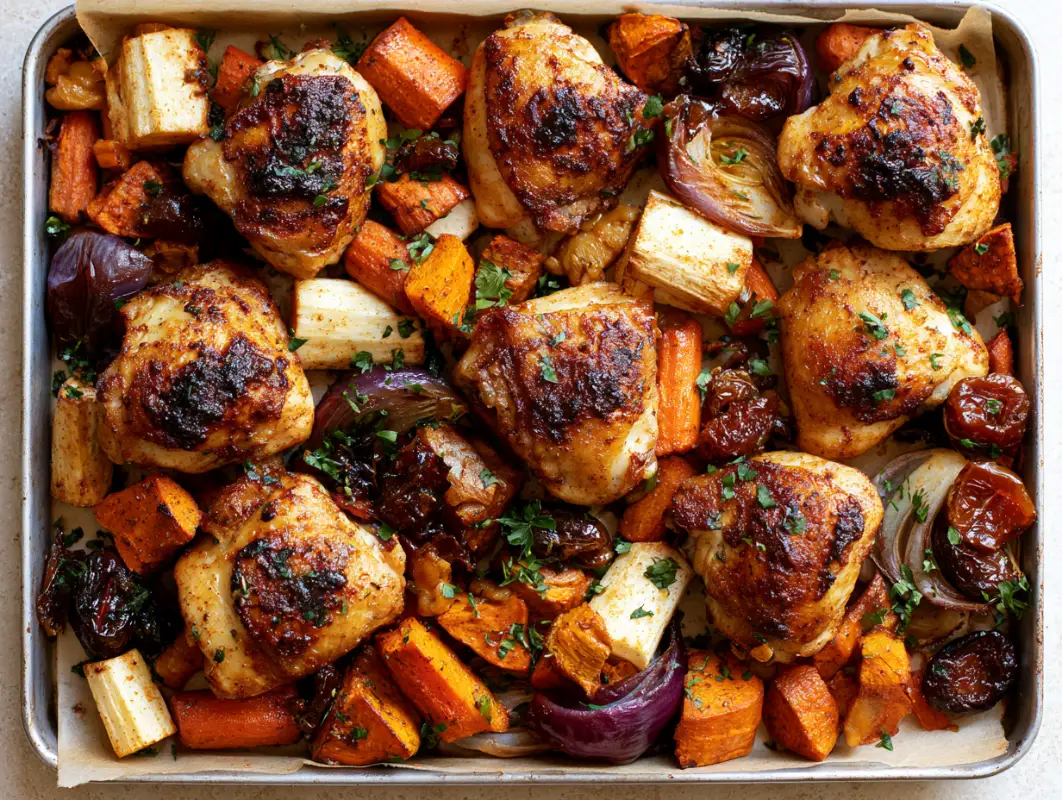
That smell— cumin and cinnamon and ginger and something I couldn’t name until years later (it was rosebuds)— is what this sheet pan Moroccan spiced chicken with root vegetables tastes like. I’ve been chasing that flavor for twenty years, and after twenty-eight batches in my Athens apartment, I’ve finally nailed it. Golden, crispy-skinned chicken thighs rubbed with a homemade Moroccan spice blend, nestled among caramelized carrots, parsnips, sweet potatoes, and red onion that go tender and jammy in the oven heat.
The secret? High heat, a two-stage roast (root vegetables get a head start), and a spice paste— not a dry rub— that clings to the chicken and blooms in the oven. No tagine pot required. No all-day cooking. Just one pan, 45 minutes, and the kind of dinner that makes your whole building smell like a Marrakech riad. Let me show you how my family has been making this for two decades.
Table of Contents
Why This Moroccan Chicken Recipe Is Special
The Spice Paste Technique: Science Meets Tradition
Most Moroccan chicken sheet pan recipes tell you to sprinkle dry spices over raw chicken and hope for the best. Here’s the problem: dry spices on wet chicken skin don’t bloom— they sit on the surface and either burn or wash off in the rendered fat. My method mixes the Moroccan spice blend into a paste with olive oil, lemon juice, and garlic before rubbing it onto the chicken.
Harold McGee explains in On Food and Cooking that fat-soluble flavor compounds in cumin, coriander, and cinnamon require a lipid carrier to fully activate. The olive oil dissolves these compounds, the lemon juice helps them penetrate the meat through acid marinading, and the garlic provides allicin— the enzyme that creates that deep, savory backbone. This is exactly what Fatima did for my yiayia, and it’s the technique that turns ordinary roasted chicken root vegetables into something extraordinary.
Warming Flavors for Every Occasion
What I love about this Moroccan spiced chicken is the depth. You get warmth from cumin and cinnamon, earthiness from coriander and turmeric, gentle heat from ginger and cayenne, and a floral sweetness from a pinch of dried rosebuds (or allspice, if rosebuds sound too adventurous). It’s the kind of sheet pan chicken dinner that works equally well on a cold Tuesday when you need comfort and on Saturday when friends arrive unannounced. The warming spice profile echoes the bold flavors in our lamb shakshuka where cumin and coriander do similarly beautiful work.
The Story Behind This Moroccan Roasted Chicken
Where Morocco Meets the Mediterranean
Moroccan cuisine and Greek cuisine are Mediterranean siblings— they share olive oil, lemons, cumin, coriander, and the belief that feeding people is an act of love. The traditional Moroccan tagine— a slow-cooked stew of meat, vegetables, and spices in a conical clay pot— dates back centuries to the Berber communities of North Africa. Trade routes carried these flavors across the sea to Crete, the Peloponnese, and the Greek islands, where they blended with local traditions. This recipe honors that exchange.
Fatima and Yiayia: The Sunday Spice Sessions
Every Sunday for nearly fifteen years, Fatima brought her ras el hanout to my yiayia’s kitchen. In return, my yiayia taught Fatima how to make kalitsounia (Cretan cheese pastries). They never wrote recipes down— everything was by feel, by smell, by the color of the spice in the oil. When Fatima passed in 2009, my mother found a tin of her spice blend in our pantry, carefully labeled in Arabic and Greek. I keep a photo of that tin on my kitchen wall. This recipe is as close as I’ve gotten to recreating what came out of those Sunday sessions.
Essential Ingredients for Moroccan Spiced Chicken
Ingredients Lists
Moroccan Spice Paste:
2 tsp ground cumin
1½ tsp ground coriander
1 tsp ground turmeric
1 tsp ground cinnamon
1 tsp smoked paprika
½ tsp ground ginger
¼ tsp cayenne pepper
1 tsp fine sea salt
3 Tbsp (45ml) extra virgin olive oil
Juice of 1 lemon
4 garlic cloves, minced
Chicken:
8 bone-in, skin-on chicken thighs (3 lbs / 1.4kg)
Root Vegetables:
4 large carrots, cut into 2-inch chunks
3 medium parsnips, cut into 2-inch chunks
2 medium sweet potatoes, cut into 2-inch cubes
2 large red onions, cut into thick wedges
4 garlic cloves, smashed
6 Medjool dates, halved and pitted
1 Tbsp (15ml) extra virgin olive oil
Salt and pepper to taste
Finishing:
Reserved spice paste (1 Tbsp)
Juice of ½ lemon
Fresh cilantro or flat-leaf parsley, chopped
Core Ingredients for a Perfect One Pan Moroccan Chicken
Every ingredient here serves a purpose. I’ve tested this easy Moroccan chicken recipe twenty-eight times, and the combination below strikes the right balance between authenticity and accessibility. You’ll find most of these in any well-stocked supermarket.
| Ingredient | Amount | Why It Matters | Authentic Pick | Substitution |
| Chicken Thighs (bone-in, skin-on) | 8 pieces (3 lbs / 1.4kg) | Stay juicy during roasting; crispy skin absorbs spice paste | Organic, free-range thighs | Drumsticks (same time) or boneless thighs (reduce cook time 10 min) |
| Carrots | 4 large, cut into 2-inch chunks | Caramelize beautifully; natural sweetness pairs with spices | Fresh, thick carrots with tops | Parsnips or butternut squash |
| Parsnips | 3 medium, cut into 2-inch chunks | Earthy sweetness deepens when roasted; classic root vegetable | Fresh, firm parsnips | Turnips or extra sweet potato |
| Sweet Potato | 2 medium, cubed | Creamy interior, caramelized edges; absorbs spice blend | Orange-fleshed sweet potato | Regular potato (less sweet) or butternut squash |
| Red Onion | 2 large, thick wedges | Goes jammy and sweet; provides base flavor | Fresh red onion | Yellow onion or shallots |
| Garlic | 8 cloves, smashed | Roasts into mellow, sweet paste; backbone of the spice paste | Fresh, never jarred | 2 tsp garlic powder (inferior) |
| Extra Virgin Olive Oil | 4 Tbsp (60ml) | Carries fat-soluble spice flavors; promotes browning | Cretan Kolymvari EVOO | Good quality EVOO; avocado oil |
| Medjool Dates | 6, halved and pitted | Traditional Moroccan sweetness; caramelize on the pan | Plump, soft Medjool dates | Dried apricots or golden raisins |
The olive oil comes from the same Kolymvari farm my yiayia used— fruity, peppery, and worth every cent. I’ve tried this with neutral oils and the flavor simply isn’t the same; the olive oil becomes part of the spice paste’s character. The dates are Fatima’s influence— she insisted that any Moroccan chicken without dates was “not serious cooking.” She was right. They caramelize into sticky-sweet jewels that contrast beautifully against the spiced chicken. A similar sweet-savory interplay makes our sweet potato puree such a versatile side.
Dietary Substitutions & Pro Tips
| Need | Replace | With | Notes |
| Dairy-Free | No changes needed | N/A | Recipe is naturally dairy-free |
| Gluten-Free | No changes needed | N/A | Naturally GF; check store-bought ras el hanout for fillers |
| Whole30/Paleo | Dates (contain sugar) | Omit or use unsweetened dried apricots | Also verify spice blend has no sugar |
| Low-Carb/Keto | Sweet potato + carrots + parsnips | Cauliflower, turnips, and radishes | Still delicious; different texture but same spice magic |
| Nut-Free | No changes needed | N/A | Recipe is naturally nut-free |
| Vegetarian | Chicken thighs | Cauliflower steaks or chickpeas (two 15-oz cans) | Reduce roast time to 30 min for cauliflower; chickpeas 25 min |
Yiayia’s Tip: “Always pat the chicken completely dry before you rub it with anything. Wet skin steams. Dry skin crisps. This is not a suggestion.” She’d say this while tearing off paper towels with the intensity of a woman who’d watched too many soggy chickens in her lifetime. For more plant-based approaches to Mediterranean roasting, our Mediterranean plant protein power bowl uses the same warming spices with chickpeas and grains.
Equipment & Technique for Moroccan Chicken Thighs
Essential Equipment
| Traditional Tool | Modern Alternative | Why It Matters |
| Clay tagine pot | Heavy-duty rimmed half-sheet pan (18×13″) | Sheet pan gives you crispy skin; tagine gives you braised texture— different dishes, both excellent |
| Mortar and pestle (for ras el hanout) | Spice grinder or pre-ground spices | Freshly ground whole spices are noticeably more aromatic; worth the 2-minute effort |
| Charcoal brazier (traditional) | Standard oven at 425°F | Consistent, even heat for caramelization and crispy skin |
| Ceramic serving platter | Serve directly from pan | Family-style from the sheet pan is how we do it in Crete— honest and beautiful |
Setting Up Your Workspace
Mise en place before anything else: preheat your oven to 425°F (220°C), line the sheet pan with parchment paper, prepare the spice paste, cut all root vegetables into even 2-inch pieces (even cuts = even cooking), and pat the chicken thighs very dry. This healthy sheet pan chicken comes together in under 15 minutes of hands-on work once everything is prepped. During my three years at Varoulko, we’d have everything measured and ready before the stove was even lit. It’s a habit that makes cooking feel effortless instead of chaotic.
Step-by-Step: Sheet Pan Moroccan Spiced Chicken with Root Vegetables
Preparation (Steps 1–4)
Step 1 — Build the Spice Paste (3 min): In a small bowl, combine 2 teaspoons cumin, 1½ teaspoons coriander, 1 teaspoon turmeric, 1 teaspoon cinnamon, 1 teaspoon smoked paprika, ½ teaspoon ground ginger, ¼ teaspoon cayenne, and 1 teaspoon salt. Add 3 tablespoons olive oil, the juice of 1 lemon, and 4 cloves of minced garlic. Stir into a fragrant paste. You should smell the cumin and cinnamon blooming immediately— that’s the fat-soluble aromatics dissolving into the oil, what Kenji López-Alt describes as “blooming in fat” in The Food Lab. Reserve 1 tablespoon of paste for finishing.
Step 2 — Prepare the Chicken (5 min): Pat 8 bone-in, skin-on chicken thighs aggressively dry with paper towels. (I cannot stress this enough— J. Kenji López-Alt’s testing shows that surface moisture is the single biggest obstacle to crispy skin.) Rub three-quarters of the spice paste all over the chicken, working it under the skin where possible. Let the chicken sit at room temperature while you prepare the vegetables— even 10 minutes of marinating helps the spices penetrate.
Step 3 — Prepare the Root Vegetables (5 min): Cut 4 carrots, 3 parsnips, and 2 sweet potatoes into 2-inch chunks. Cut 2 red onions into thick wedges through the root. Smash 4 remaining garlic cloves. Toss everything with 1 tablespoon olive oil and a good pinch of salt and pepper. Add the halved dates.
Step 4 — Preheat & Prep Pan (1 min): Ensure oven is at 425°F (220°C). Line your largest rimmed sheet pan with parchment paper. (Learned the hard way: date sugars + spice paste without parchment = a pan you’ll be scrubbing until next Tuesday.)
Yiayia’s Tip: “Cut your vegetables the same size, Niko. The carrots shouldn’t finish before the potatoes start.” Even cuts ensure everything reaches the perfect caramelized tenderness at the same time. The same principle makes our garlic butter mushrooms so consistently good.
Cooking & Assembly (Steps 5–10)
Step 5 — First Stage: Root Vegetables Alone (15 min): Spread the seasoned root vegetables, onion wedges, garlic, and dates on the sheet pan in a single layer. Roast at 425°F for 15 minutes. This head start is critical— root vegetables are denser than chicken and need more time to soften and caramelize. When you open the oven, the edges should be starting to turn golden and the dates beginning to bubble.
Step 6 — Add Chicken (25-30 min): Remove the pan. Nestle the spice-rubbed Moroccan chicken thighs among the par-roasted vegetables, skin-side up. Skin-side up is non-negotiable— the exposed skin crisps in the dry oven heat while the bottom of the thigh bastes in rendered fat and spiced vegetable juices. Return to the oven for 25-30 minutes.
Step 7 — Check at 20 Minutes: Open the oven and check progress. The skin should be deeply golden. If it’s pale, bump the temperature to 450°F for the final 10 minutes. The roots should be fork-tender and starting to char at the edges. Golden. Fragrant. Irresistible.
Step 8 — Verify Doneness: Insert an instant-read thermometer into the thickest part of the largest thigh: 165°F (74°C) minimum, 175-180°F (79-82°C) preferred for thighs (they stay juicy at higher temps because of the higher fat content, unlike breasts). Roots: fork-tender with caramelized edges.
Step 9 — Rest & Finish (5 min): Remove the pan. Let it rest 5 minutes— the juices redistribute and the carry-over heat finishes the cooking. Drizzle the reserved spice paste (thinned with a squeeze of lemon) over everything. Scatter fresh cilantro (or parsley if cilantro tastes like soap to you— I understand, it’s genetic). Squeeze the roasted lemon wedges over the top.
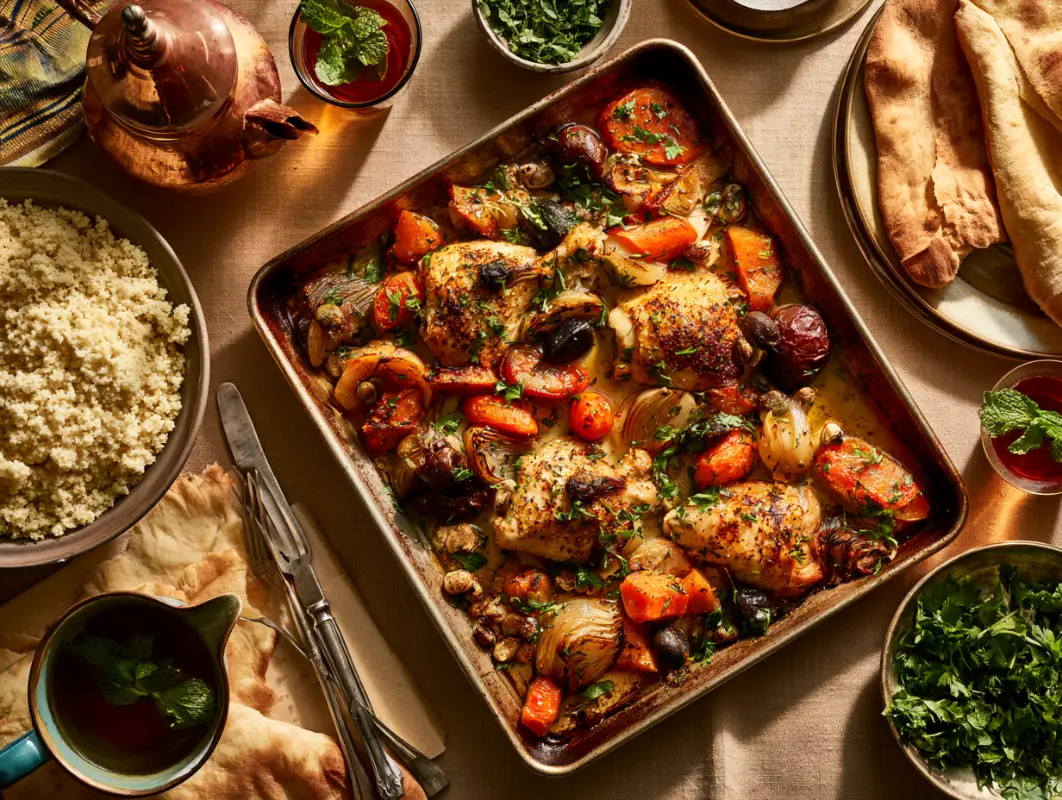
Step 10 — Serve: Bring the whole pan to the table. In Crete, we never plate in the kitchen when family is eating— the pan IS the presentation. Serve with couscous, warm flatbread, or alongside our red quinoa tabbouleh for a complete Mediterranean feast.
Pro Tip: The pan juices are concentrated liquid gold— spiced, sweet, savory. Don’t let them go to waste. Spoon them over couscous or rice, or mop them up with bread. Every drop matters.
The Secret Touches That Elevate This Dish
Insider Techniques from Two Kitchens
1. Spice Paste, Not Dry Rub: I’ve mentioned this already because it’s the single most important technique. Mixing spices into oil + acid creates a paste that clings, penetrates, and blooms during roasting. Dry spices simply sit on the surface and can burn. This is how Fatima taught my yiayia, and how I teach it in every workshop.
2. The Two-Stage Roast: Root vegetables need 15 minutes more than chicken thighs to reach caramelized perfection. Putting everything on at once means either undercooked roots or overcooked chicken. The head start solves this completely. My mother used the same technique with her Cretan kleftiko (slow-roasted lamb)— potatoes went in before the meat.
3. Dates on the Pan: Medjool dates caramelize in the oven heat, their sugars breaking down into deep, toffee-like notes that mingle with the spiced pan juices. Harold McGee notes that fructose (the primary sugar in dates) undergoes caramelization at lower temperatures than sucrose— so they develop complex sweetness without burning.
4. The Reserved Spice Paste Finish: Reserving 1 tablespoon of the raw spice paste to drizzle over the finished dish adds a layer of bright, uncooked spice flavor on top of the deep roasted flavor. It’s the same philosophy as our Greek ladolemono— a raw finishing element that lifts everything.
Common Mistakes to Avoid
| Mistake | What Happens | How to Fix It |
| Using dry spices without oil | Spices burn at high heat; flavor stays on the surface | Always make a spice paste with olive oil and acid (lemon juice) |
| Skipping the vegetable head start | Root vegetables are hard and underdone while chicken overcooks | Roast vegetables 15 min alone before adding chicken |
| Not drying the chicken skin | Skin steams instead of crisping; rubbery, pale texture | Pat very dry with paper towels; let air-dry 10 min uncovered |
| Crowding the pan | Everything steams; no caramelization on vegetables or chicken | Use the largest pan available; split between two if needed |
| Cutting root vegetables too small | They overcook and turn mushy; lose their caramelized edges | Keep cuts at 2-inch chunks for ideal texture |
Variations & Serving Ideas for Moroccan Chicken
Regional Twists & Adaptations
Cretan-Moroccan Fusion: Add Kalamata olives and preserved lemon in the last 10 minutes. Replace cilantro with fresh oregano. This is closest to what Fatima and my yiayia created together— the crossroads of their two kitchens. The salty olives against the sweet dates is remarkable.
Traditional Tagine-Style: Add 1 cup chicken broth to the pan before the second roast, creating a braised sauce. The skin won’t be as crispy, but you’ll get a rich, stew-like sauce that’s extraordinary over couscous. For a different braised approach, our spicy rigatoni uses the same building-block method of layering bold flavors.
Weeknight Express: Skip the two-stage roast. Use pre-cut root vegetable medley from the supermarket. Toss everything together, add chicken on top, roast 35 minutes at 425°F. Not as perfectly caramelized, but honestly still delicious and ready in under an hour.
Accompaniments & Beverages
This sheet pan Moroccan spiced chicken with root vegetables is a complete meal on its own, but it sings with accompaniments. Fluffy couscous or bulgur absorbs the pan juices beautifully. Warm pita or naan is essential for scooping. A crisp arugula salad with lemon dressing cuts through the richness— or pair with our caprese pasta salad with orzo for something more substantial. For a lighter grain option, our enlightened Mediterranean chicken bowl works perfectly with the leftover Moroccan chicken shredded on top.
Non-alcoholic beverages: Traditional Moroccan mint tea (hot or iced), Greek mountain tea (tsai tou vounou), pomegranate juice with sparkling water, homemade lemonade with orange blossom water, ayran (salted yogurt drink), or hibiscus tea. I serve this dish with mint tea every single time— the warm mint complements the cumin and cinnamon in a way that feels inevitable.
Storage & Reheating for Moroccan Roasted Chicken
How to Store Leftovers
| Method | Container | Duration | Notes |
| Room Temperature | Covered on pan | 2 hours max | FDA guideline; refrigerate promptly |
| Refrigerator | Airtight glass container | 4-5 days | Store chicken and vegetables together; flavors deepen overnight |
| Freezer (chicken) | Freezer-safe bag or container | Up to 3 months | Shred or keep whole; thaw overnight in fridge |
| Freezer (root vegetables) | Freezer-safe container | Up to 2 months | Texture softens slightly; best used in grain bowls or wraps |
The Moroccan spiced chicken actually improves on day two— the spices continue to meld and the flavors deepen overnight. I routinely make a double batch on Sunday for weekday lunches. Shred the leftover chicken into pita wraps with pickled onions and tahini, or layer it over the components from our chicken salad with tzatziki for an effortless lunch.
Reheating for Best Results
Oven (best): 375°F for 12-15 minutes on a sheet pan. The skin will re-crisp and the root vegetables will warm through without drying out. Add a squeeze of lemon and a drizzle of olive oil after reheating.
Stovetop: Medium heat in a skillet with a splash of broth or water. Cover loosely. 5-6 minutes. Particularly good for shredded chicken.
Microwave: It works, but the skin loses all crispiness. If you must: 2 minutes on medium, covered. I won’t pretend my yiayia would approve.
Sheet Pan Moroccan Spiced Chicken with Root Vegetables
Ingredients
Method
- Build the spice paste: combine the cumin, coriander, turmeric, cinnamon, smoked paprika, ginger, cayenne and salt in a small bowl. Stir in 3 tablespoons olive oil, the juice of 1 lemon and 4 cloves minced garlic to make a fragrant paste. Reserve 1 tablespoon of the paste for finishing.
- Pat the chicken thighs aggressively dry with paper towels, then rub three-quarters of the spice paste all over them, working it under the skin where you can. Let the chicken sit at room temperature while you prep the vegetables.
- Cut the carrots, parsnips and sweet potatoes into 2-inch chunks and the red onions into thick wedges through the root. Smash the 4 remaining garlic cloves. Toss everything with 1 tablespoon olive oil, salt and pepper, then add the halved dates.
- Heat the oven to 425°F (220°C) and line your largest rimmed sheet pan with parchment paper — the date sugars and spice paste will weld themselves to a bare pan.
- Stage one: spread the seasoned root vegetables, onion wedges, garlic and dates on the pan in a single layer and roast for 15 minutes. The roots are denser than the chicken and need the head start.
- Stage two: nestle the spice-rubbed chicken thighs among the par-roasted vegetables, skin-side up, and return to the oven for 25–30 minutes. Skin-side up lets the skin crisp while the underside bastes in the spiced pan juices.
- Check at 20 minutes. The skin should be deeply golden; if it is still pale, raise the oven to 450°F for the final 10 minutes. The roots should be fork-tender and charring at the edges.
- Verify doneness with an instant-read thermometer in the thickest thigh: 165°F (74°C) minimum, though 175–180°F (79–82°C) gives juicier thighs.
- Rest the pan 5 minutes. Thin the reserved spice paste with a squeeze of lemon and drizzle it over everything, then scatter the chopped cilantro or parsley.
- Bring the whole pan to the table and serve with couscous, warm flatbread or a herby grain salad.
Notes
Frequently Asked Questions
Substitution & Technique Questions
Can I use chicken breasts instead of thighs for this Moroccan chicken sheet pan recipe?
You can, but I’d advise against it for this dish. Breasts dry out faster at 425°F and won’t give you crispy skin. If you must: use bone-in, skin-on breasts and reduce the chicken cooking time by 8-10 minutes. Check internal temperature at 160°F— breasts overcook quickly.
What is ras el hanout and can I buy it pre-made?
Ras el hanout means “head of the shop” in Arabic— it’s the spice merchant’s best blend. Yes, you can buy it pre-made (look for it at Middle Eastern markets or well-stocked supermarkets). Just check the label for unwanted fillers. I prefer making my own because I can control the heat and sweetness.
Can I use different root vegetables?
Absolutely. Turnips, rutabaga, celery root, beets (they’ll stain everything pink— fair warning), and butternut squash all work beautifully. The key is cutting them into even 2-inch pieces so they cook at the same rate. I’ve tested all of these, and turnips are my second-favorite after parsnips.
Why do the root vegetables go in first?
Dense root vegetables like carrots, parsnips, and sweet potatoes need more time to reach fork-tender, caramelized perfection than chicken thighs. The 15-minute head start ensures everything finishes at the same time. Without it, you get perfectly cooked chicken sitting on top of crunchy, underdone roots.
Dietary, Make-Ahead & Authenticity Questions
Is this Moroccan spiced chicken recipe halal?
Yes— as written, this recipe uses chicken, vegetables, olive oil, and spices. There is no pork or alcohol. If you require halal-certified chicken, simply source your chicken accordingly. The entire recipe is naturally halal-compliant.
Can I marinate the chicken overnight?
Yes, and I recommend it when possible. The spice paste penetrates deeper with time. Rub the chicken with the paste, cover, and refrigerate up to 24 hours. Bring to room temperature for 20 minutes before roasting. The flavor difference between 10 minutes and overnight is significant.
What makes this Mediterranean rather than purely Moroccan?
The Greek olive oil, the lemon juice in the spice paste, and the finishing technique (raw olive oil + acid drizzle, our ladolemono tradition). Pure Moroccan tagine uses preserved lemon and often butter or smen (aged butter). This recipe sits at the crossroads— Moroccan spices, Greek technique, Mediterranean soul.
Can I make this entirely ahead of time?
You can prep everything up to 24 hours ahead: make the spice paste, rub the chicken, cut the vegetables, and store separately in the fridge. When ready, arrange on the pan and roast. The actual cooking must happen fresh— reheated crispy skin is never as good as fresh-from-the-oven.
What’s the best side dish for this roasted chicken root vegetables dinner?
Fluffy couscous is traditional and catches the pan juices perfectly. Warm flatbread or naan is my second choice. For something lighter, try our crispy zucchini fritters alongside, or our Mediterranean chickpea power bowl for a plant-forward complement.
Bringing Morocco and Crete to Your Table
More Than a Weeknight Dinner
Every time I make this sheet pan Moroccan spiced chicken with root vegetables, I think of two women in a small kitchen in Chania— one Greek, one Moroccan— arguing about stuffed grape leaves while the most incredible smell filled the house. Food crosses every border that humans draw. This dish is proof.
Make it. Share it. Bring the whole pan to the table. And if you find a tin of spice blend that smells like home to someone you love, hold onto it.
More Mediterranean Recipes to Explore
If this Moroccan chicken dinner has you craving more warming Mediterranean flavors, explore our lamb shakshuka for a bold, spiced braise. For something lighter, our Mediterranean breakfast bowl uses many of the same warming spice principles in a grain-based format. Try our spinach and feta pizza when you want a completely different canvas, or finish the evening with our pistachio tiramisu— a dessert my yiayia would have fought Fatima over.