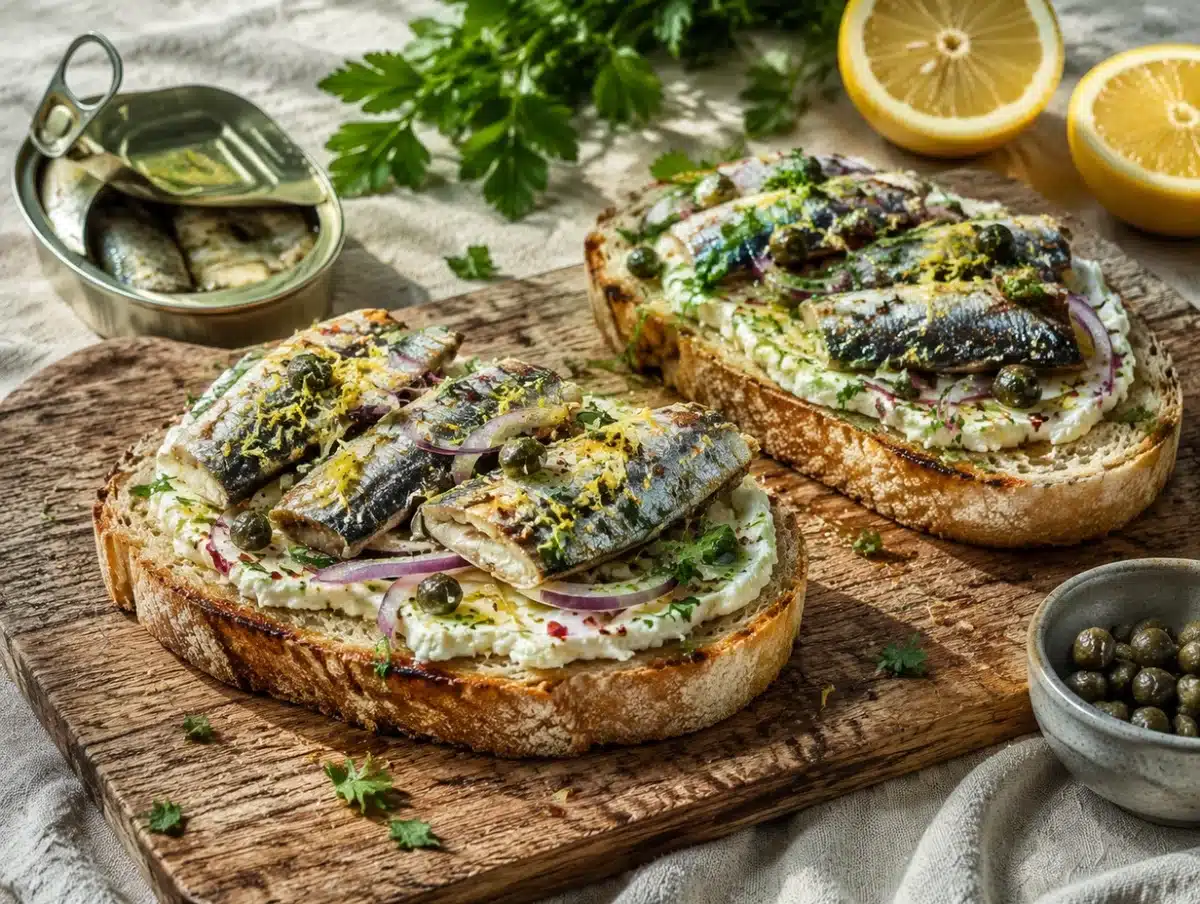
I served sardine toast with lemon & herbs at a dinner party in April 2024 and watched my neighbor Petra — a person who had, on multiple previous occasions, described sardines as “aquarium smell in a can” — eat four pieces and then quietly ask for the recipe. This was peak vindication.
Not because I’m smug about it (okay, slightly), but because sardine toast done right is genuinely one of the most satisfying, impressive, and delicious things you can produce in under 10 minutes. My first attempt, back in 2022, was… less triumphant. I used the wrong sardines (too salty, packed in soybean oil), put them on limp untoasted bread, and forgot acid entirely. It tasted like a mistake. Six rounds of testing later, I have six actual secrets that transform this from “strange snack” into the thing everyone asks about. Here they are.
Table of Contents
Sardine Toast with Lemon &Herbs
Ingredients
Method
- 1. In a small bowl, combine finely minced red onion (or shallot) with juice of half the lemon. Let soak 5 minutes while you prep everything else. This removes sharpness while keeping the flavor.
- 2. Drain sardines, pouring the oil into a small bowl. Set sardines aside. Gently break into large pieces — don’t mash.
- 3. Zest the entire lemon into the herb bowl. Add chopped parsley and dill/chives. Mix to combine.
- 4. If using labneh or crème fraîche base: mix it with a pinch of salt, black pepper, and a few drops of lemon juice.
- 5. Brush both sides of each bread slice with olive oil. Broil under high heat for 2 minutes per side until deep golden with some charred edges. Watch constantly.
- 6. While bread is warm, rub one side of each slice with the cut side of the halved garlic clove. One pass is enough — light garlic flavor only.
- 7. Spread a thin layer of labneh (if using) over the garlic-rubbed surface of each slice.
- 8. Arrange sardine pieces over the top. Scatter drained lemon-soaked onion and capers over the sardines.
- 9. Squeeze a small amount of fresh lemon juice over each piece. Scatter the herb-zest mixture generously. Drizzle with reserved sardine oil (or fresh EVOO). Finish with flaky sea salt and cracked black pepper.
- 10. Serve immediately. Do not assemble more than 5–10 minutes ahead.
Notes
Why Sardine Toast with Lemon & Herbs Works So Well
The Food Science of Why Acid, Fat, and Crunch Create Magic
Here’s what’s happening on your tongue when sardine toast with lemon & herbs hits right. Sardines packed in olive oil are already a complete flavor vehicle — they’re rich in glutamates (the naturally occurring source of umami) and high in omega-3 fatty acids that carry fat-soluble flavor compounds across the palate in ways lean proteins simply can’t.
The lemon does two things: the citric acid brightens and cuts through the richness of both the sardine oil and any fat you add (butter, cream cheese, aioli), and the lemon zest adds volatile aromatic limonene that you smell before you taste. The fresh herbs — parsley, dill, or chives depending on your mood and what’s not dead in your herb garden (no judgment, mine is perpetually struggling) — add chlorophyll-green freshness that your brain registers as clean and vibrant.
Then there’s the bread. Harold McGee’s work on the Maillard reaction explains it better than I can, but the key point is: properly toasted bread undergoes hundreds of new flavor compounds that raw bread doesn’t have. The crunch also triggers something called ‘oral referral’ — when food has audible crunch, the brain perceives it as fresher and higher quality. So the toast element isn’t just textural. It’s genuinely making everything taste better. Which is why limp, untoasted bread under sardines is not sardine toast. It’s sad.
The umami-plus-acid-plus-crunch principle is the same architecture behind our Mediterranean hummus breakfast bowl — layering fat, acid, and texture is a signature move of Mediterranean cooking across all meal types.
When This Actually Makes Sense to Serve (Be Honest With Yourself)
Okay so — sardine toast with lemon & herbs lives in a few distinct contexts and I want to be real about this. It’s a 10-minute appetizer that looks deliberate and tastes complex. It works as a fast weeknight snack when you want something with actual nutritional substance rather than crackers and mild anxiety. It’s excellent for a mezze-style spread where you want something briny and bold alongside hummus and olives.
And — underrated — it’s a genuinely brilliant solution to the “I haven’t been grocery shopping and have nothing in the house” scenario, because a good can of sardines, a lemon, and some bread are almost always available. What it is NOT: a subtle, crowd-pleasing safe choice. If you’re cooking for people who have never knowingly eaten a sardine, warn them. Or don’t. Petra came around. Most people do.
Essential Ingredients for Sardine Toast with Lemon & Herbs
The Ingredient List (With Quality Notes That Will Change Your Life, Probably)
For 4 servings (2–3 pieces per person as an appetizer, or 4–5 as a main snack):
- 2 cans (4.25 oz / 120g each) sardines packed in extra-virgin olive oil — Secret #1: oil matters enormously. Sardines packed in EVOO taste dramatically better than those in soybean or “vegetable” oil. King Oscar, Matiz, or Scout are excellent US-available brands. Avoid “in tomato sauce” for this recipe — you want the clean olive oil flavor.
- 4–6 thick slices good bread — sourdough, country loaf, or a rustic baguette cut on the bias. Minimum ¾” thick (Secret #2: thick bread holds up under the weight of sardines and topping; thin sandwich bread collapses immediately into regret).
- 1 large lemon — zest AND juice. Both are used, at different moments.
- 2–3 tbsp fresh flat-leaf parsley, finely chopped
- 2 tbsp fresh dill OR chives (or a mix of both), finely chopped
- 2 tbsp capers, roughly chopped
- ¼ small red onion or 2 shallots, very finely minced
- 2–3 tbsp extra-virgin olive oil, for drizzling
- Flaky sea salt (Maldon or fleur de sel) — do not skip this
- Freshly cracked black pepper
- Optional: ¼ cup crème fraîche, labneh, or Greek yogurt (for the creamy base version)
- Optional: ½ tsp harissa paste or red pepper flakes for heat
- Optional: 1 tbsp dijon mustard — mixed into the sardines for a French-inflected version
Sardine Brand Comparison: What You’re Actually Buying
| Brand | Packed In | Flavor Profile | Best For | Availability |
| King Oscar | EVOO | Mild, clean, slightly briny | Classic sardine toast; widely available | Most US grocery stores |
| Matiz Gallego | EVOO | Rich, complex, Portuguese-style | Elevated presentations, dinner parties | Specialty/online |
| Scout | EVOO or lemon-infused | Bright, modern, slightly firm texture | When lemon flavor is already in the can | Whole Foods, online |
| Wild Planet | EVOO | Strong, wild-caught flavor, soft texture | When you want intense sardine character | Natural/health stores |
| Generic / store brand in soy oil | Soybean oil | Flat, sometimes metallic | Not recommended for this recipe | Everywhere |
The secret nobody tells you about canned sardines: drain them but reserve the olive oil. That oil is INCREDIBLE — flavored with sardine umami and already emulsified — and makes the single best finishing drizzle for the toast. I pour it over the finished slices instead of adding fresh olive oil. It’s a completely different (better) result. This same principle of using every drop of flavor is behind our Mediterranean white bean salad which uses the brine from olives as part of the dressing. And speaking of briny, punchy flavors — our whipped feta with garlic confit makes a phenomenal creamy base for the sardine toast instead of plain labneh.
The Foolproof Method for Sardine Toast with Lemon & Herbs
Preparation: Setting Up for Success (5 minutes)
- Prep the herbs and aromatics first: finely mince the red onion or shallot (Secret #3: soak minced raw onion in the lemon juice for 5 minutes before assembling — it removes the harsh sulfur bite while keeping the flavor and a slight crunch. This is the difference between “wow this is amazing” and “wow this is sharp and kind of aggressive”). Chop all herbs and set aside.
- Drain the sardines (keep the oil in a small bowl — you’ll use it). Lay them on a small plate. If they’re whole, use a fork to gently press them open or break into large-ish pieces. Don’t mash. You want visible, recognizable sardine sections that look intentional rather than paste-adjacent.
- Zest the lemon before you cut it — you can’t zest a halved lemon, a fact I have re-learned twice, which is how I know I am not always operating at full capacity. Add the zest to the herbs bowl.
- If using a creamy base (labneh, crème fraîche, Greek yogurt), mix it with a small pinch of salt, black pepper, and a few drops of lemon juice. Set aside.
The Assembly Method: Toast, Layer, Finish (5 minutes)
- Toast the bread (Secret #4: use the broiler, not the toaster). Brush each slice with olive oil on BOTH SIDES, then broil 2 minutes per side — watching carefully — until deep golden with irregular dark spots. Broiled bread has more surface caramelization and a crunchier exterior than toaster toast, and it holds up better under moist toppings. A cast iron griddle pan works even better if you have one — press the bread down with a spatula and you get beautiful grill marks and a deeply crispy surface.
- While bread is warm (not hot — if it’s too hot it will wilt the herbs), immediately rub one side of each slice with a raw, halved garlic clove (Secret #5: garlic rub on warm toast is a technique straight from Spanish pan con tomate tradition and it adds a whisper of garlic flavor without any raw garlic pungency. You get the allium note without the breath situation. One clove rubbed on 4–6 slices is plenty; don’t go overboard or it overpowers the sardines).
- Spread the creamy base (if using): a thin, even layer of labneh or crème fraîche over the garlic-rubbed surface. About 1 tbsp per slice.
- Arrange sardine pieces: place 2–3 sardine pieces per slice, arranged in a way that is either artfully casual or carefully deliberate, both of which look great. This is one of those recipes where your plating personality can come through.
- Add the sharp elements: scatter the lemon-soaked minced onion over the sardines. Add capers. Squeeze a small amount of lemon juice over each slice (Secret #6: add fresh acid at the very end, not mixed into anything — it stays bright and punchy rather than absorbed into the other components).
- Finish: scatter fresh herbs generously over each slice. Drizzle with the reserved sardine oil (or fresh EVOO if you prefer). Add a pinch of flaky sea salt on each piece and a good crack of black pepper. Serve within 5 minutes of assembly — the bread starts to soften after that.
Pro tip for the dinner party version: prep all components ahead (herbs chopped, onion soaking, sardines drained) and do the toast-and-assemble in real time right before serving. It takes 5 minutes and the result is dramatically fresher than anything assembled an hour early. For other small bites with Mediterranean character, our lemon chickpea patties with yogurt sauce are excellent alongside this on a mezze board. And if you want to extend the toast theme into something more substantial, our Greek feta egg bake served on toast rounds is basically the same spirit at brunch scale.
Creative Variations on Sardine Toast with Lemon & Herbs
Six Ways to Take This in a Different Direction
| Variation | Key Changes | Dietary Notes | Flavor Profile |
| Classic Provençal | Add dijon mustard mixed into sardines, use tarragon instead of dill | GF with GF bread, dairy-free | Mustardy, anise-herbal, French southern |
| Harissa Spiced | Mix ½ tsp harissa into labneh base; add preserved lemon rind | GF, dairy-free option | Spicy, smoky, North African-Mediterranean |
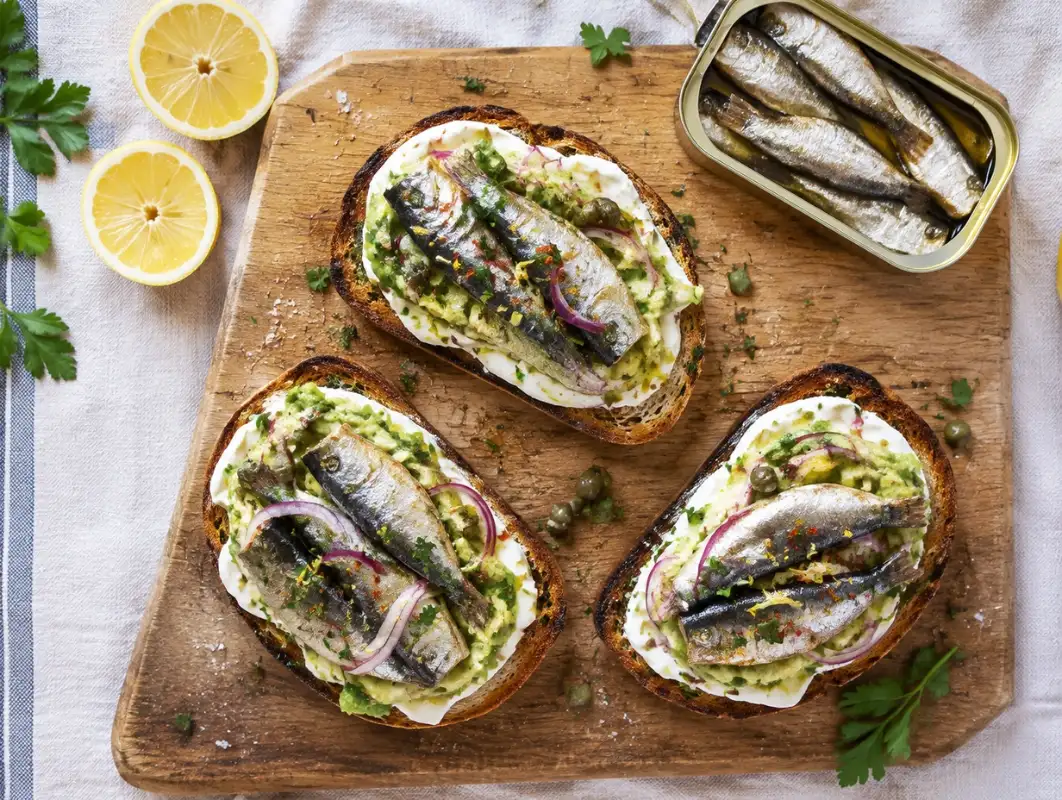
| Avocado & Sardine | Smashed avocado as base (lemon + salt); sardines on top | GF, dairy-free, paleo | Creamy, rich, California-meets-Mediterranean |
| Egg & Sardine Bruschetta | Soft-boiled egg sliced over sardines; chives + paprika | GF with GF bread | Protein-rich, hearty, satisfying |
| Kid-Friendly Version | Mild sardines (Scout brand), cream cheese base, no capers, no onion, lemon zest only (no juice) | All dietary types | Mild, creamy, very approachable |
| Budget Pantry Version | Any canned sardines + store bread + dried herbs + bottled lemon juice | All dietary types | Completely valid; prioritize quality sardines above everything else |
Dietary Modifications
Gluten-free: any sturdy GF bread works — the toasting technique still applies. Rice cakes work too (and are oddly excellent with sardines). Dairy-free: skip the creamy base entirely or use a cashew-based cream cheese. The toast is great with just olive oil as the base, honestly. Vegan: sardines are obviously not vegan, but the technique and flavor principles work beautifully with smoked paprika-marinated white beans spread on toast as an alternative — same umami-rich + herb + acid structure. Paleo: avocado base, GF grain-free bread or large lettuce leaves, olive oil. The whole sardine element is perfectly paleo-friendly.
For a fuller mezze-style spread where sardine toast is one of several things on the table, our Mediterranean shrimp and white bean salad contributes the same briny, herb-forward character at a different scale. And if you’re building a snack board, our sweet potato zucchini fritters offer a warm, crispy counterpoint to the cold, briny toast pieces.
Storage & Serving for Sardine Toast with Lemon & Herbs
What Stores, What Doesn’t, and Being Honest About It
Let’s be direct: assembled sardine toast with lemon & herbs does not store well. The bread softens within 20–30 minutes. The herbs wilt. This is a make-and-serve situation, full stop. However — and this is the good news — every component stores separately with no issues. Drained sardines keep in a covered container in the fridge for 2 days. The herb-lemon mixture keeps for 3 days, refrigerated. The lemon-soaked onion keeps for 5 days and is actually better on day 2 as the flavors meld. Toasted bread is obviously best fresh, but can be re-crisped in a 375°F oven for 3 minutes if needed.
Meal Prep Strategy and Serving Combinations
The smart meal prep approach: make a big batch of the onion-lemon mixture on Sunday. Chop herbs and store in a damp paper towel in the fridge. Keep a few cans of quality sardines in the pantry (obviously). When you want sardine toast at 7pm on a Wednesday, everything is already prepped and you’re doing a 5-minute assembly, not starting from scratch. This is genuinely how I keep this in rotation.
| Serving Context | Bread Type | Base | Scale | Timing |
| Dinner party appetizer | Baguette slices, bias-cut | Labneh or crème fraîche | 2–3 pieces/person | Make 30 min before; assemble at last minute |
| Weeknight snack | Sourdough, thick-sliced | Olive oil rub only | 4–5 pieces/person | 10 minutes, fully on demand |
| Mezze board piece | Crostini (thin, super-crispy) | Whipped feta or hummus | 2 pieces/person | Part of larger spread |
| Lunch main | Country loaf, ¾” thick | Avocado smash | Full 2 slices/person | 10 minutes; very satisfying as a meal |
When sardine toast is part of a bigger spread, it shines alongside our Mediterranean hummus breakfast bowl elements — use the hummus as a base for the toast instead of labneh for a completely different but equally excellent result. For a complete Mediterranean table, our classic Greek lemon rice pilaf turns this snack into a full meal alongside a simple green salad.
Nutritional Benefits of Sardine Toast with Lemon & Herbs
(Disclaimer: I’m not a dietitian. These estimates are based on standard nutritional databases and assume 2 slices of sourdough per serving with labneh base. Actual values vary based on bread and sardine brand.)
Macronutrient Profile (per serving: 2 pieces with labneh base)
| Macronutrient | Amount | % Daily Value |
| Calories | ~310 kcal | ~16% |
| Protein | 22g | 44% |
| Total Fat | 16g | 21% |
| Saturated Fat | 3.5g | 18% |
| Carbohydrates | 22g | 8% |
| Dietary Fiber | 2g | 7% |
| Sugar | 2g | — |
Why Sardines Are Basically a Nutritional Superstar (Sorry, I’m Enthusiastic About This)
| Nutrient / Benefit | Detail |
| Omega-3 Fatty Acids (EPA + DHA) | ~1,400–2,000mg per serving — one of the highest per-calorie sources of omega-3s available. Associated with cardiovascular, cognitive, and anti-inflammatory benefits. |
| Vitamin D | ~70% DV per serving. Sardines are among very few food sources of vitamin D3 (the bioavailable form). Most people in northern climates are deficient year-round. |
| Vitamin B12 | ~130–150% DV per serving. Essential for neurological function, DNA synthesis, and energy metabolism. |
| Calcium (from edible bones) | ~35% DV — the soft, edible bones in canned sardines are a surprisingly excellent calcium source, comparable to dairy. |
| Selenium | ~45% DV. Antioxidant micronutrient; sardines are consistently among the top food sources. |
| Sustainability note | Sardines are rated ‘Best Choice’ by Seafood Watch (Monterey Bay Aquarium) — one of the most sustainable fish you can eat due to fast reproduction rates and low position in the food chain. |
| Glycemic Index | Low overall meal GI (~35–45 depending on bread type). Sourdough bread specifically has a lower GI than regular bread due to fermentation-produced lactic acid slowing starch digestion. |
Sardine toast with lemon & herbs is honestly one of the most nutritionally dense quick meals in existence — the omega-3 content alone justifies keeping a sardine pantry. For another omega-3-rich meal that’s equally fast, our Mediterranean sheet pan salmon delivers the same fatty-acid profile with a different preparation entirely.
Frequently Asked Questions About Sardine Toast
What kind of sardines are best for sardine toast with lemon and herbs?
Sardines packed in extra-virgin olive oil (EVOO) are essential. They have a cleaner, more rounded flavor than sardines packed in soybean or “vegetable” oil, which can taste flat or slightly metallic. For sardine toast specifically, King Oscar or Matiz are excellent and widely available in the US. Wild Planet is excellent for quality but has a stronger, more intense flavor that not everyone loves immediately. Avoid sardines in tomato sauce or mustard sauce for this recipe — the base flavor is too assertive for the herb-lemon profile.
Do sardine toasts smell bad to cook?
Honestly? Opening the can releases some aroma, yes. But this is not a cooked recipe — you’re not heating the sardines, so there’s no heat-amplified fish smell filling your kitchen. The lemon, herbs, and good olive oil dominate once assembled. The finished toast smells like a seaside Mediterranean snack bar, which is a compliment. If you’re nervous about it, make this in a well-ventilated kitchen the first time, and I promise you’ll be less nervous by the second time.
Can I make sardine toast ahead of time?
No — at least not fully assembled. The bread softens quickly once it meets the sardine oil and any moist ingredients. However, all components prep 2–5 days ahead (sardines drained and refrigerated, herbs chopped, onion soaking in lemon). The actual assembly is 5 minutes max with prepped ingredients. This is a last-minute assembly, not a make-ahead situation.
What does sardine toast taste like?
When made correctly, sardine toast with lemon & herbs tastes: briny and savory from the sardines (umami-forward), bright and clean from the lemon zest and juice, fresh and green from the herbs, and satisfyingly crunchy from the properly toasted bread. It does not taste “fishy” in the pungent way people fear. Quality sardines in EVOO have a richness more similar to anchovies on a great pizza than to anything offensive. The lemon and herbs are essential to this perception — they neutralize and balance.
Is sardine toast actually healthy?
Extremely. Sardines are among the most nutritionally complete foods available — high in protein, omega-3 fatty acids, vitamin D, B12, calcium, and selenium, with very low mercury content (unlike larger fish like tuna). The olive oil adds heart-healthy monounsaturated fat. The sourdough bread, while a carbohydrate, has a lower glycemic index than regular bread due to fermentation. Two pieces of sardine toast with labneh is approximately 310 calories and 22g of protein.
What bread is best for sardine toast?
Thick, sturdy sourdough is the gold standard — it has the structural integrity to hold moist toppings without becoming a sardine-flavored mush disk, and the fermented tang complements the sardine flavor beautifully. Rustic country bread, baguette slices (cut thick, on the bias), or a ciabatta are all excellent. The non-negotiable: toast it properly, with olive oil, under the broiler. Thin sandwich bread is the wrong answer for sardine toast.
How do I make sardine toast less fishy for people who are skeptical?
Four moves: (1) Use Scout Lemon brand or King Oscar — milder flavored. (2) Use a creamy base (labneh, cream cheese) between bread and sardines — it creates a buffer layer. (3) Load up the capers, lemon zest, and fresh herbs — they dominate the aromatic perception. (4) Serve immediately after assembly while the bread is still warm and crispy — texture confidence is real. Oh, and have people eat it outside if possible; something about natural light and air makes every food taste bolder and better.
Pairing & Serving Ideas for Sardine Toast with Lemon & Herbs
Complete Meal and Occasion Combinations
| Occasion | Alongside | Format | Beverage |
| Aperitivo / cocktail hour | Olives, shaved fennel, nuts | 2–3 pieces, crostini size | Sparkling lemon water, iced mint tea |
| Casual weekend lunch | Simple green salad, sliced tomatoes | 4 pieces, sourdough slices | Still water with lemon, iced herbal tea |
| Mediterranean mezze board | Hummus, labneh, olives, cherry tomatoes | 2 pieces, baguette-cut | Sparkling pomegranate juice |
| Quick weeknight dinner | Lemon rice, green salad | Full 2 thick slices as main | Cold sparkling water, mint lemonade |
Beverage Pairings (Alcohol-Free)
Sardine toast with lemon & herbs is a briny, acidic, herbal bite. You want a drink that matches or contrasts that energy cleanly. Sparkling water with lemon is the obvious, correct choice — the CO2 and acid echo the food without competing. Iced spearmint tea is a traditional Mediterranean pairing that works beautifully with fishy, briny flavors. A homemade lemonade — not overly sweet, more tart-forward — is genuinely excellent. What doesn’t work: anything sweet (the sugar fights the brine), anything with a strong flavor of its own (it competes), anything warm except certain herbal teas. Cold, bright, and either neutral or mildly acidic — that’s your beverage direction.
For a complete mezze-style spread, sardine toast is brilliant alongside our whipped feta with hot honey (sweet/spicy contrast to the briny toast) and our zucchini chickpea fritters for something warm and textured on the same board. Different temperatures, different textures, unified flavor palette.
Make Sardine Toast with Lemon & Herbs Your Own
This Recipe Is a Starting Framework, Not a Fixed Rule
I want to be clear about something: Petra, the neighbor who famously hated sardines and ate four pieces at that dinner party, now makes this herself. Her version uses avocado as the base, swaps the dill for cilantro (controversial but she’s committed), and adds a thin smear of harissa under the sardines. It’s objectively different from my recipe. It’s also genuinely delicious.
The six secrets I’ve shared above are about understanding what makes sardine toast work — the fat source, the acid, the crunch, the temperature contrast, the restraint with garlic, the timing of the lemon — and once you understand those principles, you can take it anywhere. Miso butter on the toast. Tonnato sauce as the base. Preserved lemon instead of fresh. This is a recipe in the truest Mediterranean sense: technique plus good ingredients plus improvisation.
Tell Us What You Did With It
If you’ve made sardine toast with lemon & herbs and done something interesting with it, genuinely — tell us below. Did you find a sardine brand we haven’t tried? (Um, the Patagonia Provisions tinned fish range is worth investigating if you haven’t seen it, by the way — not sponsoring, just saying.) Did you serve it at a party and have a skeptic convert? Did it become a Wednesday night non-negotiable in your house the way it has in mine? The comment section exists for exactly this kind of thing.
For more Mediterranean small bites and snacks in this spirit, our Mediterranean chickpea power bowl uses the same herb-and-acid architecture in a more substantial format. And if you’re specifically looking for more ways to use your pantry-tin collection, our pasta amatriciana recipe is another pantry-hero situation that punches way above its ingredient weight class.