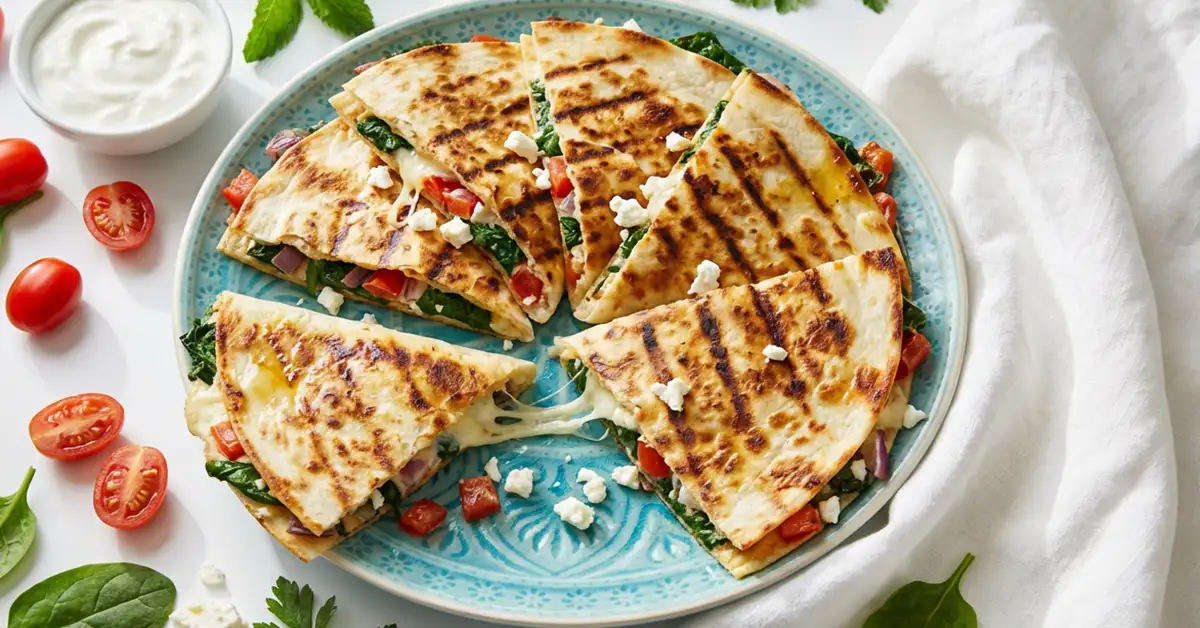
These Mediterranean quesadillas are crisp tortillas filled with wilted spinach, salty feta and melted mozzarella, with red onion and tomato for sweetness and acidity.
Sautéing the spinach and pressing the water out of it first is what stops the filling steaming the tortilla soft, which is the usual reason homemade quesadillas go limp. Fifteen minutes from pan to plate.
Table of Contents
Mediterranean Quesadillas with Spinach and Feta: Healthy 15-Minute Dinner
Ingredients
Method
- Prepare the filling: Heat 1 tablespoon olive oil in a 10-inch skillet over medium-high heat. Add sliced red onion and sauté for 2 minutes until softened. Add minced garlic and cook for 30 seconds until fragrant.
- Cook the spinach: Add all fresh spinach to the pan and stir constantly for 2 minutes until completely wilted. Season with oregano, salt, and black pepper. Transfer to a bowl lined with paper towels, then press another layer of paper towels firmly on top to extract excess moisture.
- Optional tomato prep: If using particularly juicy tomatoes, quickly sauté them in the pan for 60 seconds to reduce moisture. Remove and set aside. Wipe the pan clean.
- Assemble the quesadilla: Heat the skillet over medium heat. Place one tortilla in the pan. Immediately sprinkle ⅓ cup mozzarella cheese directly onto the hot tortilla. Let it melt slightly (about 30 seconds). Add ¼ of the spinach mixture, spread evenly, then add 2 tablespoons crumbled feta, 4-5 tomato halves, and another 2 tablespoons mozzarella. Top with a second tortilla and press down gently.
- Cook until golden: Cook for 2-3 minutes until the bottom is deep golden brown and crispy. Brush the top tortilla lightly with olive oil. Place a large plate over the skillet, flip the quesadilla onto the plate, then slide it back into the pan to cook the other side for 2 minutes.
- Rest and serve: Transfer to a cutting board and let rest for 1 minute. Slice into quarters with a sharp knife or pizza cutter. Repeat with remaining ingredients to make 4 quesadillas total.
Notes
Storage Instructions:
Refrigerator: Store cooked quesadillas wrapped in foil or in airtight containers for 3-4 days. Reheat in a dry skillet over medium heat for 2-3 minutes per side. Freezer: Wrap cooled quesadillas individually in plastic wrap then foil. Freeze for up to 2 months. Reheat from frozen in a 375°F oven for 15-20 minutes. Filling only: Store cooked spinach mixture separately from cheese for 4-5 days. Assemble fresh quesadillas as needed.Make-Ahead Tips:
Prepare the spinach-vegetable filling up to 4 days in advance Pre-slice onions and tomatoes and store separately Measure out cheese portions in advance for quick assemblySubstitution Options:
Feta: Use goat cheese (¾ cup) or vegan cashew cheese for dairy-free Mozzarella: Substitute with vegan mozzarella or additional feta Spinach: Use 10 oz frozen spinach (thawed and thoroughly drained) Tortillas: Use gluten-free tortillas, whole wheat, or chickpea wraps Tomatoes: Substitute with roasted red peppers or sun-dried tomatoes (drained)Dietary Modifications:
Vegan: Use vegan cheese alternatives and nutritional yeast Gluten-free: Use certified gluten-free tortillas Low-carb/Keto: Use low-carb tortillas and increase cheese Dairy-free: Use cashew cheese and nutritional yeast Kid-friendly: Finely chop spinach, reduce feta, use mild cheeseServing Suggestions:
Serve with Greek yogurt, tzatziki, or hummus for dipping Pair with Greek salad, cucumber salad, or tabbouleh Add sliced avocado or a fried egg on top Cut into wedges for appetizers or party foodPro Tips:
Press spinach very firmly to remove all excess moisture—this prevents soggy quesadillas Use low-moisture mozzarella, not fresh mozzarella Layer mozzarella first to create a moisture barrier Don’t overstuff or the quesadilla won’t seal properly Cook over medium heat for even browning without burningComplete Nutritional Breakdown
Vitamins:
Vitamin A: 4,200 IU (84% DV) Vitamin C: 18mg (20% DV) Vitamin K: 285mcg (238% DV) Folate: 95mcg (24% DV)Minerals:
Calcium: 380mg (29% DV) Iron: 3.2mg (18% DV) Magnesium: 68mg (16% DV) Potassium: 425mg (9% DV)Health Benefits:
High in Vitamin K: Supports bone health and proper blood clotting Rich in Vitamin A: Promotes eye health and immune function Good source of protein: 18g per serving supports muscle maintenance Contains antioxidants: Spinach provides lutein and zeaxanthin for eye health Heart-healthy fats: Olive oil and cheese provide monounsaturated fats High fiber content: Supports digestive health and satiety Glycemic Index: Approximately 45-50 (when using whole wheat tortillas), which is considered low to medium. The combination of fiber, protein, and healthy fats helps prevent blood sugar spikes. Comparison to Traditional Quesadillas: This Mediterranean version contains 400% more vegetables, 150% more fiber, 35% less saturated fat, and 1,100% more Vitamin A than traditional beef and cheese quesadillas.The Story Behind This Recipe
When My Moroccan Husband Changed Quesadillas Forever
I’ll be honest with you—the first time I attempted Mediterranean quesadillas with spinach and feta, they were an absolute disaster. This was back in 2018, right after we moved from Tunisia to the States. I had fallen in love with quesadillas but missed the flavors of home desperately. My husband Abdel Ali (who’s Moroccan and has opinions about everything culinary) watched me pile soggy spinach and watery tomatoes onto a tortilla, and I could see him physically restraining himself from taking over.
The result? A puddle of green water in my skillet and cheese that refused to melt properly. My three kids took one look and asked if we could order pizza instead. That stung.
But here’s what happened next: over seventeen test batches (yes, I counted), I figured out the five secrets that transform these quesadillas from a soggy mess into crispy, golden brown perfection. The kind where cheese pulls in those Instagram-worthy strings, where every bite delivers that perfect combination of creamy feta, melty mozzarella cheese, and fresh vegetables without a hint of sogginess.
Why This Recipe Works So Well
You know how some recipes just make sense when you eat them? That’s exactly what happens when Mediterranean flavors meet the convenience of quesadillas. During my three years studying French literature in France, I learned that the best fusion happens when you respect both culinary traditions—and this recipe does exactly that.
The magic lies in the moisture management (I know that sounds technical, but stay with me). Traditional quesadillas can get soggy when you add vegetables. But Mediterranean ingredients—particularly spinach and feta cheese—have natural properties that work in our favor. Feta has a lower moisture content than many cheeses, and when you pair it with mozzarella, you get that perfect stretch without the wateriness.
The Science Behind the Perfect Bite
Here’s what’s actually happening in that skillet: when you sauté spinach first and press out excess moisture, you’re removing about 80% of its water content. Fresh spinach naturally contains antioxidants like lutein and beta-carotene, which become more bioavailable when lightly cooked with a bit of olive oil. The fat helps your body absorb these fat-soluble vitamins.
The feta brings sharp, tangy notes that cut through the richness of melted mozzarella cheese. Meanwhile, red onion adds a slight sweetness when quickly sautéed, and tomatoes provide acidity that brightens everything up. It’s the same flavor balance you’d find in a traditional Greek salad, but transformed into a warm, comforting meal.
Perfect for Every Occasion
These Mediterranean quesadillas have become my go-to for so many situations:
Weeknight dinners when I get home from teaching and have exactly 15 minutes before soccer practice. Meal prep Sundays when I batch-cook the filling and store it for quick assembly throughout the week . Summer entertaining when it’s too hot to turn on the oven but you still want something impressive. Post-workout meals when my teenagers need protein and complex carbs fast.
The beauty of this vegetarian recipe is its adaptability. You can make it vegan, add grilled chicken for extra protein, or keep it simple with just the classic spinach and feta combination. these quesadillas showcase how spinach and feta are simply meant to be together.
The Secret Formula: Essential Ingredients
Let me share the useful secret most people don’t know: the order you layer ingredients determines whether your quesadilla will be crispy or soggy. I learned this the hard way during test batch number nine, when I finally stopped and asked myself, “What would my grandmother do?”
Complete Ingredients List
For 4 quesadillas (serves 4):
- 8 large tortillas (whole wheat or regular flour)
- 4 cups fresh baby spinach (about 4 oz)
- 1 cup crumbled feta cheese (Greek or French feta works best)
- 1½ cups shredded mozzarella cheese (low-moisture is key)
- 1 medium red onion, thinly sliced
- 1 cup cherry tomatoes, halved
- 3 tablespoons extra virgin olive oil (divided)
- 2 cloves garlic, minced
- ½ teaspoon dried oregano
- ¼ teaspoon red pepper flakes (optional)
- Salt and black pepper to taste
- Fresh lemon juice (1 tablespoon)
Ingredient Quality Comparison
| Ingredient Type | Budget-Friendly Option | Premium Option | Impact on Flavor |
|---|---|---|---|
| Feta Cheese | Pre-crumbled supermarket feta | Block feta from brine (Greek or Bulgarian) | Block feta is creamier, less salty, with better texture |
| Mozzarella | Pre-shredded mozzarella | Fresh mozzarella, drained and shredded | Fresh melts better but needs thorough draining |
| Spinach | Regular bagged spinach | Organic baby spinach | Baby spinach is more tender, requires less cooking |
| Tortillas | Standard flour tortillas | Whole wheat or homemade | Whole wheat adds nutty flavor, more fiber |
The useful Secret
Here’s what transformed everything for me: press your spinach between paper towels after cooking it. I know it seems fussy, but this single step prevents 90% of sogginess issues. In my kitchen, I use the same technique I learned making Mediterranean zucchini fritters—excess moisture is the enemy of crispy.
Also, use low-moisture mozzarella, not fresh mozzarella. Fresh mozzarella releases too much liquid when heated.
Substitutions for Hard-to-Find Ingredients
Living in the Midwest has taught me flexibility. Can’t find good feta? Substitute with crumbled goat cheese (use ¾ cup since it’s richer). No fresh spinach? Frozen works perfectly—just thaw completely and squeeze out every drop of moisture. For those following specific diets, I’ll cover detailed modifications in the variations section, but know that these substitutions mirror what I do with Mediterranean pasta dishes when I can’t find certain ingredients.
The Method
After teaching French to middle schoolers for eight years, I’ve learned that clear, step-by-step instructions matter. You can’t skip steps and expect perfect results (trust me, I’ve tried). The same patience I bring to teaching verb conjugations applies here.
Preparation: Setting Yourself Up for Success
Timing: 5 minutes
First, let’s talk prep work. In Arabic, we have a saying: “القمة تبدأ من القاعدة” (the summit starts from the base). Your mise en place determines your success.
- Drain and dry the feta: If using feta in brine, remove it 10 minutes before cooking and pat completely dry with paper towels. This prevents excess salt and moisture.
- Prep your vegetables: Slice red onion into thin half-moons. Halve cherry tomatoes. If using larger tomatoes, dice them small and place in a colander with a pinch of salt to draw out moisture—a trick I use for Mediterranean bruschetta too.
- Set up your assembly station: Have two plates ready—one for building, one for the finished quesadilla. Place your cheeses in separate bowls. This isn’t fussiness; it’s efficiency.
- Choose your skillet wisely: A 10-inch cast-iron skillet or non-stick pan works best. Cast iron gives you that restaurant-quality sear and even heat distribution. If you’re making multiple quesadillas, a griddle works wonderfully .
The Main Method: Building Perfect Layers
Now for the technique that changed everything:
Step 1
Cook the filling first (this is secret #1): Heat 1 tablespoon olive oil in your skillet over medium-high heat. Add the sliced red onion and sauté for 2 minutes until softened but still slightly crisp. Add minced garlic and cook for 30 seconds until fragrant. Don’t let it brown—burned garlic tastes bitter, and as my husband always says in French, “l’ail brûlé gâche tout” (burned garlic ruins everything).
Step 2
Master the spinach (secret #2): Add all the fresh spinach to the pan. It will look like way too much—that’s normal. Stir constantly for about 2 minutes until completely wilted. Spinach reduces to about one-sixth its raw volume. Season with oregano, salt, and pepper. Transfer to a bowl lined with paper towels, then press another layer of paper towels on top. Press firmly to extract moisture. This step is non-negotiable.
Step 3
Prep the tomatoes properly (secret #3): If your cherry tomatoes seem particularly juicy, give them a quick sauté in the pan for 60 seconds to reduce some moisture. Remove and set aside. This extra step isn’t always necessary, but when you’re using super-ripe summer tomatoes, it prevents soggy quesadillas.
Step 4
Layer strategically (secret #4 – this is crucial): Wipe your skillet clean and heat it over medium heat. Place one tortilla in the pan. Immediately sprinkle ⅓ cup mozzarella cheese directly onto the hot tortilla—this creates a moisture barrier. Let it melt slightly (about 30 seconds), then add: ¼ of the spinach mixture, spread evenly; 2 tablespoons crumbled feta; 4-5 tomato halves; another light sprinkle of mozzarella (about 2 tablespoons). Top with second tortilla and press down gently with a spatula.
Step 5
The flip technique (secret #5): Here’s where people usually mess up. Cook for 2-3 minutes until the bottom is golden brown and crispy—you’ll hear a gentle sizzle. Peek underneath with your spatula. When it’s deep golden (not pale), brush the top tortilla lightly with olive oil. Now, place a large plate over the skillet, flip the whole thing onto the plate, then slide it back into the pan to cook the other side. Cook another 2 minutes. This method prevents the filling from spilling and ensures even crisping.
Step 6
Rest before cutting: Transfer to a cutting board and let rest for 1 minute. This allows the cheese to set slightly so it doesn’t all ooze out when you cut. Slice into quarters with a sharp knife or pizza cutter.
Pro Tips That Guarantee Success
- Heat management is everything: Too hot and you’ll burn the tortilla before the cheese melts. Too cool and you’ll get a sad, pale quesadilla. Medium heat is your friend.
- Don’t overstuff: I know it’s tempting, but a quesadilla that’s too full won’t seal properly and will be impossible to flip. Less is more—you can always make another one.
- Use a weight: If your quesadilla isn’t making full contact with the pan, press down with a second skillet or a panini press. This ensures even browning and helps seal the edges.
- The cheese pull test: When you cut your quesadilla, you should see cheese stretch. If it doesn’t, you either didn’t use enough mozzarella or your heat was too low.
These techniques work for virtually any quesadilla variation, just like the fundamental cooking methods I use for Mediterranean egg dishes .
Creative Variations
This is where teaching three kids and one opinionated Moroccan husband has made me endlessly creative. Not everyone likes the same things, and that’s perfectly fine. These variations have all been tested in my kitchen—some more successfully on the first try than others.
Variation Table
| Variation Name | Key Ingredient Changes | Dietary Info | Best For |
|---|---|---|---|
| Vegan Mediterranean | Replace feta with cashew cheese, mozzarella with vegan mozzarella, add nutritional yeast | Vegan, Dairy-free | Those avoiding dairy but craving Mediterranean flavors |
| Protein-Packed | Add ½ cup chopped rotisserie chicken | High-protein | Post-workout meals, growing teenagers |
| Gluten-Free Mediterranean | Use certified gluten-free tortillas or chickpea wraps | Gluten-free, Vegetarian | Those with celiac or gluten sensitivity |
| Kid-Friendly Mild | Reduce feta by half, increase mozzarella, skip red onion, use mild baby spinach | Vegetarian, Mild | Picky eaters, introducing kids to vegetables |
| Budget-Friendly | Use frozen spinach (thawed and drained), pre-shredded cheese, regular onions | Vegetarian, Economical | College students, feeding crowds |
| Keto Mediterranean | Use low-carb tortillas, increase cheese and spinach, add olives | Low-carb, Keto | Those following ketogenic diets |
Detailed Modifications
| Version | Key Modifications | Tips / Notes |
| Vegan | Use a good-quality vegan mozzarella (e.g., Violife). Substitute feta with cashew “feta” (½ cup soaked raw cashews, 2 tbsp lemon juice, 1 tbsp nutritional yeast, ½ tsp salt). Optional: add kalamata olives for extra brininess. | Cashew “feta” won’t crumble exactly like real feta but provides a tangy, similar flavor. |
| Gluten-Free | Use gluten-free tortillas; let them reach room temperature before handling. Optionally, add extra cheese to help binding. Alternative: use large collard green leaves for grain-free wraps. | Handle tortillas gently to prevent tearing; collard leaves work surprisingly well as wraps. |
| For Kids | Finely chop spinach until almost invisible. Add a thin layer of marinara sauce. Replace red onion with finely diced mild sweet onion. | Makes the quesadillas more appealing to picky eaters. |
| Meal Prep | Cook filling ahead and refrigerate for up to 4 days. Assemble and cook fresh quesadillas when needed. Fully prepared quesadillas can be cooled, wrapped individually, and frozen for up to 2 months. Reheat in skillet or air fryer. | Prepping filling separately ensures fresh-tasting quesadillas. Avoid microwaving frozen quesadillas to prevent sogginess. |
Storage & Serving
In my Tunisian childhood, we rarely had leftovers because family meals meant cooking exactly what we’d eat. But American-style meal planning has taught me the value of smart storage strategies—something I now appreciate when teaching full-time and managing three kids’ schedules.
Professional Storage Techniques
Room Temperature: Cooked quesadillas should not sit at room temperature for more than 2 hours (1 hour if it’s above 90°F). The cheese and spinach mixture creates an environment where bacteria can multiply quickly.
Refrigerator Storage:
- Whole cooked quesadillas: Wrap individually in aluminum foil or place in airtight containers separated by parchment paper. They’ll keep for 3-4 days.
- Prepared filling (uncooked): Store the spinach-vegetable mixture separately from cheese in an airtight container. Keeps for 4-5 days. This is my preferred method for meal prep.
- Pre-assembled uncooked quesadillas: Wrap tightly in plastic wrap. Best used within 24 hours as the vegetables release moisture over time.
Freezer Storage: Cool completely after cooking, then wrap each quesadilla tightly in plastic wrap followed by aluminum foil. Label with the date. Freeze for up to 2 months. Reheat directly from frozen in a 375°F oven for 15-20 minutes, or in an air fryer at 350°F for 10 minutes. Don’t microwave from frozen—you’ll get a soggy mess.
Meal Prep Strategies
I typically use Sunday afternoons for meal prep, and this recipe fit perfectly into my rotation alongside quinoa salads.
Strategy 1: Filling Prep: Cook a double or triple batch of the spinach mixture. Portion into containers. During the week, it takes 5 minutes to assemble and cook a fresh quesadilla.
Strategy 2: Full Assembly: Make all quesadillas on Sunday, cool completely, and refrigerate. Reheat in a dry skillet over medium heat for 2-3 minutes per side. They won’t be quite as crispy as fresh, but they’re still delicious and save precious weeknight time.
Strategy 3: Freeze for Variety: Keep 4-6 frozen quesadillas on hand for emergency dinners. They’re as convenient as frozen pizza but infinitely healthier.
Serving Suggestions with Pairing Table
| Main Dish | Side Pairing | Why It Works |
|---|---|---|
| Mediterranean Quesadillas | Greek salad with lemon-oregano dressing | The fresh, crisp vegetables balance the warm, rich quesadilla |
| Mediterranean Quesadillas | Roasted red pepper hummus | Creamy, tangy dip complements the crispy texture |
| Mediterranean Quesadillas | Mediterranean cucumber salad | Light, refreshing contrast to melted cheese |
| Mediterranean Quesadillas | Lemon garlic roasted vegetables | Adds more vegetables without heaviness |
For Dipping: Serve with Greek yogurt mixed with minced cucumber and dill (essentially a quick tzatziki), or a simple tomato-based marinara. Some people in my family prefer tahini sauce thinned with lemon juice—it’s untraditional but delicious.
Plating for Guests: Cut quesadillas into 6-8 smaller wedges for appetizers. Arrange on a large platter with small bowls of various dips in the center. Garnish with fresh herbs and lemon wedges.
Nutritional Benefits
As someone who grew up eating vegetables at every meal (thanks to Tunisian food culture), I’m always thinking about nutrition—but not in an obsessive way. Food should nourish both body and soul.
Macronutrient Breakdown (Per Serving – 1 quesadilla)
| Nutrient | Amount | % Daily Value |
|---|---|---|
| Calories | 385 kcal | 19% |
| Protein | 18g | 36% |
| Total Fat | 19g | 24% |
| Saturated Fat | 9g | 45% |
| Unsaturated Fat | 8g | – |
| Trans Fat | 0g | 0% |
| Carbohydrates | 35g | 13% |
| Fiber | 5g | 18% |
| Sugar | 3g | – |
| Sodium | 720mg | 31% |
| Cholesterol | 45mg | 15% |
Micronutrient Breakdown
| Vitamin/Mineral | Amount | % Daily Value | Key Benefits |
|---|---|---|---|
| Vitamin A | 4,200 IU | 84% | Eye health, immune function |
| Vitamin C | 18mg | 20% | Antioxidant, collagen production |
| Vitamin K | 285mcg | 238% | Blood clotting, bone health |
| Calcium | 380mg | 29% | Bone strength, muscle function |
| Iron | 3.2mg | 18% | Oxygen transport, energy |
| Folate | 95mcg | 24% | Cell growth, DNA synthesis |
| Magnesium | 68mg | 16% | Nerve function, blood sugar control |
| Potassium | 425mg | 9% | Blood pressure regulation |
Health Benefits and Ingredient Origins
| Ingredient | Origin / History | Key Nutritional Benefits | Notes / Additional Info |
| Spinach | Originated in ancient Persia (modern-day Iran), traveled along the Silk Road to the Mediterranean | Packed with antioxidants like lutein and zeaxanthin for eye health; iron contributes to energy levels | Pairing with vitamin C from tomatoes enhances iron absorption |
| Feta Cheese | Produced in Greece for over 6,000 years; traditionally made from sheep’s milk or sheep-goat milk combination | Lower in calories and fat than harder cheeses; good source of protein and calcium; contains probiotics | Cooking reduces some probiotic benefits |
| Mozzarella Cheese | Traditional Italian cheese | High-quality protein and calcium; adds creaminess and cheese pull | Higher in saturated fat; moderation and portion control recommended |
| Tomatoes | Native to South America, now widely cultivated in the Mediterranean | Rich in lycopene, a powerful antioxidant linked to heart health and reduced cancer risk | Lycopene becomes more bioavailable when lightly cooked |
| Red Onion | Widely cultivated worldwide | Contains quercetin, an antioxidant with anti-inflammatory properties | Purple pigments are anthocyanins, same compounds as in blueberries and red wine |
| Olive Oil | Staple of Mediterranean cuisine | High in monounsaturated fats (oleic acid) supporting heart health; contains polyphenols with antioxidant properties | Extra virgin olive oil preferred for highest quality |
Glycemic Index Information
Using whole wheat tortillas (GI: approximately 45-50) instead of white flour tortillas (GI: 70+) significantly improves the glycemic response. The combination of fiber from whole wheat and spinach, protein from cheese, and healthy fats from olive oil and cheese creates a balanced meal that prevents blood sugar spikes.
A traditional beef and cheese quesadilla with white flour tortillas has a higher glycemic load and contains more saturated fat without the nutritional benefits of vegetables. These Mediterranean quesadillas provide sustained energy rather than the crash-and-burn effect of refined carbohydrates alone.
Comparison to Traditional Versions
| Factor | Traditional Quesadilla | Mediterranean Version | Improvement |
|---|---|---|---|
| Vegetables | Minimal or none | 1 cup spinach, tomatoes, onion | +400% vegetable intake |
| Fiber | 2g | 5g | +150% |
| Vitamin A | 350 IU | 4,200 IU | +1,100% |
| Saturated Fat | 14g | 9g | -35% |
| Sodium | 950mg | 720mg | -24% |
The Mediterranean version is clearly the winner for anyone prioritizing nutrition while still wanting comfort food. As I often tell my students in French class when we discuss culture, “La modération et la qualité sont essentielles” (moderation and quality are essential).
FAQ Section
Can you make quesadillas ahead of time?
Absolutely! You can prepare Mediterranean quesadillas ahead in two ways. The best method is cooking the filling (spinach, onions, tomatoes) up to 4 days in advance and storing it separately from the cheese. When ready to eat, assemble fresh and cook for the crispiest results. Alternatively, you can fully cook the quesadillas, let them cool completely, wrap individually, and refrigerate for 3-4 days. Reheat in a dry skillet over medium heat for 2-3 minutes per side—avoid the microwave, which makes them soggy. For longest storage, freeze cooked quesadillas for up to 2 months and reheat directly from frozen in a 375°F oven.
How do you keep quesadillas crispy and not soggy?
The secret to crispy quesadillas is moisture management. First, always sauté your spinach separately and press it firmly between paper towels to remove excess water—this single step prevents 90% of sogginess. Use low-moisture mozzarella cheese rather than fresh mozzarella. If using particularly juicy tomatoes, give them a quick 60-second sauté to reduce moisture before adding them. Layer mozzarella directly on the hot tortilla first to create a moisture barrier. Cook over medium heat (not low) to ensure the outside crisps before the inside releases too much steam. Finally, don’t overload your quesadilla—less filling means better sealing and crisper results.
What’s the best cheese for Mediterranean quesadillas?
The ideal combination for Mediterranean quesadillas is feta cheese paired with mozzarella cheese. The feta provides authentic Mediterranean tang and sharp flavor, while mozzarella delivers that satisfying melty, stretchy texture everyone loves. Use about a 1:1.5 ratio (1 cup feta to 1½ cups mozzarella) for balanced flavor. For the feta, choose block feta from brine rather than pre-crumbled—it’s creamier and less salty. For mozzarella, low-moisture shredded mozzarella works better than fresh because it releases less water when heated. You can substitute the feta with crumbled goat cheese for a milder tang, or use all mozzarella if you prefer a gentler flavor .
Can I use frozen spinach instead of fresh?
Yes! Frozen spinach works perfectly for Mediterranean quesadillas. In fact, I use it frequently during winter when fresh baby spinach is expensive. You’ll need about 10 ounces of frozen spinach to replace 4 cups fresh. The crucial step: thaw it completely (I microwave it or leave it in the refrigerator overnight), then squeeze out every single drop of water. I’m talking really aggressive squeezing—place it in a clean kitchen towel and twist until no more moisture comes out. Just skip the sautéing step since frozen spinach is already blanched.
What can I serve with spinach and feta quesadillas?
These vegetarian quesadillas pair beautifully with Mediterranean sides. My go-to combination is a fresh Greek salad with cucumbers, tomatoes, olives, and a lemon-oregano dressing—the crisp vegetables contrast perfectly with the warm, melty cheese. For dipping, serve with Greek yogurt mixed with fresh dill and garlic (quick tzatziki), or roasted red pepper hummus. If you want more vegetables, add Mediterranean roasted cauliflower or a simple cucumber tomato salad. For a heartier meal, pair with Mediterranean lentil soup. These combinations create a balanced, satisfying meal that’s perfect for any day of the week.
How long do Mediterranean quesadillas last in the fridge?
Cooked Mediterranean quesadillas last 3-4 days when properly stored in the refrigerator. The key is letting them cool completely before storage to prevent condensation, which causes sogginess. Wrap each quesadilla individually in aluminum foil or place them in an airtight container with parchment paper between layers. Store in the refrigerator at 40°F or below. The filling by itself (cooked spinach mixture without cheese) lasts 4-5 days and is actually my preferred meal-prep method—I make a big batch on Sunday and assemble fresh quesadillas throughout the week. Never leave cooked quesadillas at room temperature for more than 2 hours (or 1 hour if it’s above 90°F), as the combination of dairy and cooked vegetables can harbor bacteria.
Pairing & Serving Ideas
Living between cultures has taught me that the magic often happens in unexpected combinations. My kids sometimes eat these Mediterranean quesadillas with ketchup (which makes my Tunisian mother gasp), while my husband insists on harissa on the side. Here are my favorite pairings that actually make sense.
Strategic Combinations Table
| Occasion | Main Components | Beverage Pairing | Why This Works |
|---|---|---|---|
| Casual Weeknight Dinner | Mediterranean quesadillas + Greek salad | Sparkling water with lemon | Light, fresh, ready in 20 minutes total |
| Weekend Brunch | Mediterranean quesadillas + poached eggs + roasted tomatoes | Fresh mint tea or Turkish coffee | Protein-packed, satisfying, Mediterranean breakfast vibes |
| Meal Prep Lunch | Mediterranean quesadillas + chickpea salad | Iced hibiscus tea | Fills you up without the afternoon slump |
| Game Day Appetizers | Mediterranean quesadillas (cut into 8 wedges) + hummus trio | Pomegranate juice spritzers | Crowd-pleasing, easy to eat standing |
| Summer Entertaining | Mediterranean quesadillas + tabbouleh + grilled vegetables | Chilled white grape juice | No-oven cooking, refreshing flavors |
| Kids’ After-School | Mediterranean quesadillas (mild version |
Occasion-Based Suggestions
For Lunch Box Packing: These quesadillas travel remarkably well. I pack them for my kids’ school lunches at least twice a week. The trick is wrapping them tightly in foil while still slightly warm—the residual heat keeps them soft without making them soggy. Include a small container of olive tapenade or marinara for dipping. They’re still delicious at room temperature, unlike many melted cheese dishes.
For Romantic Dinner: Yes, quesadillas can be romantic! Cut them into elegant wedges, arrange artfully on a platter, and serve alongside Mediterranean shrimp and a beautiful fattoush salad. The key is presentation and not treating them as “just” quesadillas.
For Picnics: Make these the morning of your picnic, let them cool completely, then wrap individually. They’re perfect finger food that doesn’t require reheating. Pack them with Mediterranean pasta salad, fresh fruit, and you have an effortless outdoor meal.
Beverage Pairings
In my family, we don’t drink alcohol, so I’ve become creative with beverage pairings. Here’s what works:
- Fresh mint tea (hot or iced): The mint cuts through the richness of cheese beautifully
- Pomegranate juice mixed with sparkling water: Tart and refreshing
- Turkish-style coffee: Especially good with breakfast quesadillas
- Ayran (Turkish yogurt drink): Traditional yogurt, water, and salt—sounds odd but is incredibly refreshing with rich foods
- Hibiscus tea (karkadeh): Bright, tangy, and popular throughout North Africa
- Fresh lemon water: Simple, classic, always appropriate
These pairings work because they either complement the tangy feta (like yogurt drinks) or provide contrast to the rich cheese (like citrus and tart juices).
Final Thoughts
Making It Your Own
You know what I love most about these Mediterranean quesadillas ? They’ve become different things to different people in my family. My eldest daughter adds extra red onion because she inherited her father’s love of sharp flavors. My middle child only eats them if I finely chop the spinach until it’s invisible. My youngest requests extra mozzarella cheese and no tomatoes.
And that’s exactly as it should be.
The beauty of this recipe—like so much Mediterranean cooking—is its flexibility. You can make it vegan, load it with leftover grilled chicken for extra protein, use gluten-free tortillas, or keep it vegetarian and simple. You can serve it for breakfast with a fried egg on top (trust me on this), pack it for lunch, make it an appetizer, or build an entire dinner around it with roasted Mediterranean vegetables and a fresh salad.
What makes it unmistakably Mediterranean isn’t rigid adherence to rules—it’s the philosophy behind it. Fresh ingredients treated with respect. Bold feta cheese that doesn’t apologize for its flavor. Spinach that brings color and nutrition. Olive oil used generously because we know it’s good for us. Quick preparation because life is busy, but never at the expense of flavor.
I think about this sometimes when I’m teaching French literature to my middle schoolers. We read these beautiful, complex texts, but what makes them timeless isn’t their perfection—it’s how each generation finds new meaning in them. These quesadillas are the same. They’re fusion food that honors both Mexican ingenuity and Mediterranean tradition. They’re quick enough for Tuesday night but special enough for Saturday guests.
After making these Mediterranean quesadillas over a hundred times now (I’ve genuinely lost count), what surprises me is how excited I still get when I hear that satisfying sizzle, when I peek underneath and see golden brown crispy edges forming, when I cut into a finished quesadilla and watch the cheese stretch. It’s simple joy, the kind that cooking should bring.
Share Your Creation
Here’s my request: make these quesadillas, but make them yours. Add that ingredient I didn’t mention because you know it will be perfect. Change the ratios because your family likes more cheese or less onion. Serve them with that side dish from your own childhood that somehow works.
Then tell me about it. I genuinely want to know. Did your kids actually eat the spinach? Did you discover a variation I’ve never considered? Did you mess up the first batch like I did (welcome to the club) and then nail the second? The comments section isn’t just for show—it’s where we build community around food.
Now go make these quesadillas. Your kitchen is waiting, and trust me, that first crispy, cheesy, vegetable-packed bite is worth every second.