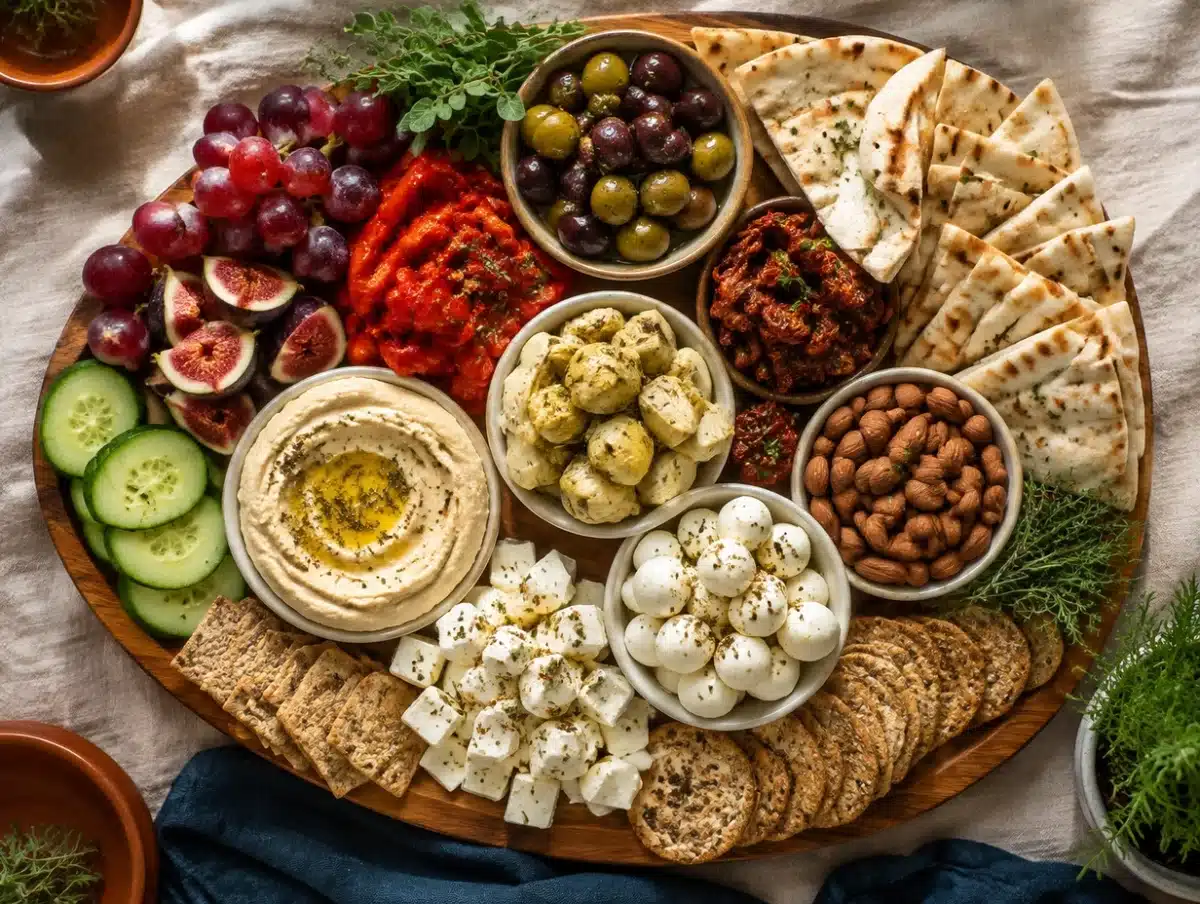
I’ll be honest—the first Mediterranean antipasto platter I ever made was, um, an absolute disaster. Thanksgiving 2019, my cousin Rania’s engagement party, forty-something guests staring at a board that looked like a grocery store clearance bin exploded on a cutting board. The mozzarella was sweating. The olives rolled off the edge onto my aunt’s white rug. (She still brings it up, by the way.) But honestly? That catastrophe sent me down a rabbit hole. I’ve since built over 80 antipasto platters—testing arrangements, ingredient combos, timing strategies—and I finally cracked the code. Today I’m sharing every secret that took my Mediterranean antipasto platter from Pinterest-fail to the thing people literally photograph before eating. Let’s get into it.
Table of Contents
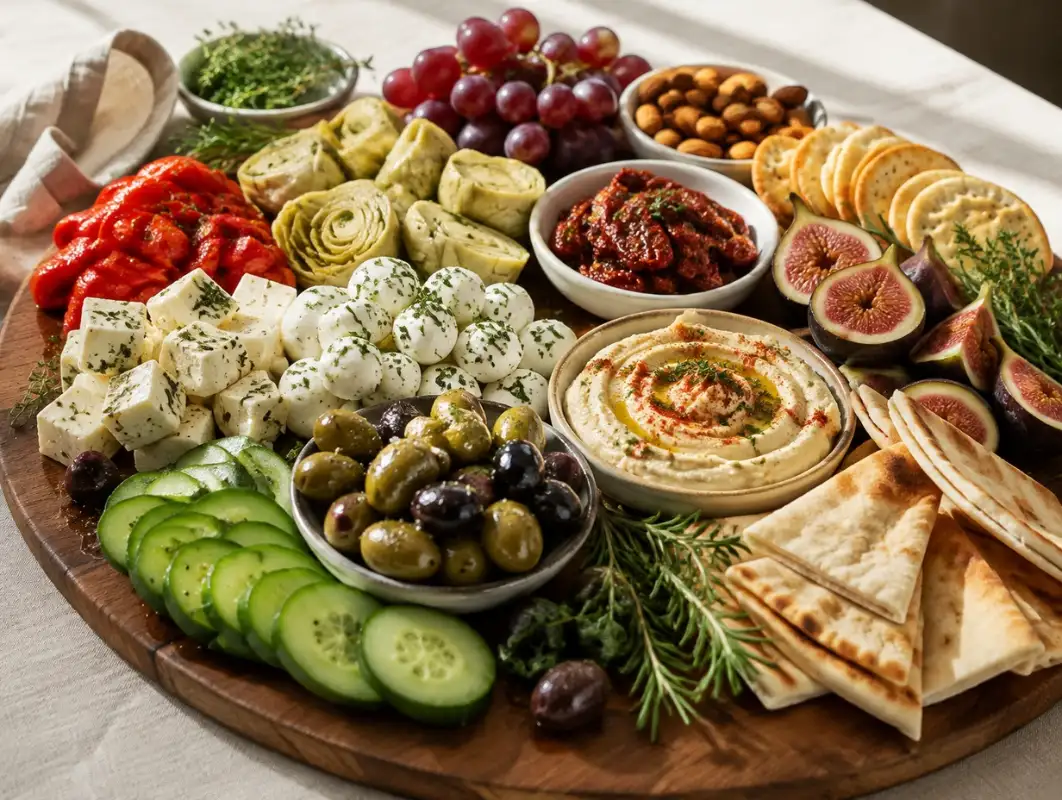
Mediterranean Antipasto Platter
Ingredients
Method
- 1. Bring cheeses to room temperature by removing from refrigerator 30 minutes before assembly.
- 2. Drain marinated artichoke hearts and roasted red peppers, reserving the oil for drizzling.
- 3. Toast almonds in a dry skillet over medium heat for 3–4 minutes, stirring frequently, until fragrant and lightly golden. Set aside to cool.
- 4. Prepare fresh vegetables: halve cherry tomatoes, slice cucumber on the bias, and wash grapes and herbs.
- 5. Slice harder cheeses into chunks or wedges. Leave mozzarella balls whole.
- 6. ZONE 1: Place your largest bowl in the center of the board. Fill with artichoke hearts or burrata.
- 7. ZONE 2: Distribute cheese varieties around the board at equal intervals, creating distinct clusters.
- 8. ZONE 3: Fold bresaola and salami into roses or ribbons. Drape in flowing lines between cheese clusters.
- 9. ZONE 4: Fill gaps with cherry tomatoes, roasted peppers, grapes, figs, and cucumber slices.
- 10. ZONE 5: Scatter toasted almonds over the board. Place small bowls of olives in remaining spaces. Tuck fresh basil and rosemary into gaps.
- 11. Drizzle hot honey over pecorino. Finish with a light drizzle of olive oil and flaky sea salt.
- 12. Serve with crackers and bread arranged alongside or around the board.
Notes
Why This Mediterranean Antipasto Platter Works Every Single Time
The Science of Flavor Contrast on a Platter
Here’s what most people get wrong about building an antipasto board: they think it’s just throwing stuff on wood. Nope. There’s actual food science happening here, and once you understand it, you’ll never build a boring platter again. The magic comes from what food scientists call flavor contrast pairing—salty against creamy, acidic against rich, crunchy against soft. Harold McGee talks about this in On Food and Cooking: our taste receptors literally fire more intensely when you alternate between contrasting flavors. That’s why a bite of sharp pecorino followed by a honey-drizzled fig feels almost electric on your palate. The Mediterranean antipasto platter is basically a masterclass in this principle, and it’s why guests can’t stop grazing.
The Perfect Occasion (Spoiler: It’s All of Them)
I’ve served this at everything from Tuesday-night-I’m-too-tired-to-cook dinners to my friend Dalia’s baby shower last March. The beauty of an Italian antipasto board is that it scales effortlessly. Two people? Small board, four cheeses, done. Twenty people? Grab a big wooden board and go absolutely wild. The flavors you get from quality marinated vegetables, a good whipped feta dip, and carefully selected cheeses will make even a casual weeknight feel special. No oven required, no stress, no standing over a hot stove while your guests have fun without you.
Essential Ingredients for Your Mediterranean Antipasto Platter
The Core Ingredient Lineup
Okay, let me walk you through what you actually need. And I want to be clear—I’m a little obsessive about ingredient quality here (my partner says I’m “unhinged” about olive oil specifically, but that’s a discussion for therapy). For a Mediterranean antipasto platter that actually impresses, you want: three types of cheese covering soft, semi-hard, and hard textures. I go with fresh mozzarella (ciliegine size—the little balls), a good aged Manchego or pecorino, and something creamy like a whipped feta or burrata. For charcuterie, think bresaola, beef salami, and turkey pepperoni—all delivering that savory punch without any pork. Then you’ve got your marinated vegetables: artichoke hearts (the ones in the jar from Trader Joe’s are honestly phenomenal), roasted red peppers, and at least two types of olives. Round it out with nuts, fresh fruits, honey, and some serious bread—like our garlic parmesan focaccia which is, not to be dramatic, life-changing.
Cheese Selection Guide for Your Antipasto Board
| Cheese Type | Texture | Flavor Profile | Best Pairing |
| Fresh Mozzarella (Ciliegine) | Soft, milky | Mild, creamy, delicate | Cherry tomatoes, basil, olive oil |
| Aged Pecorino Romano | Hard, crumbly | Sharp, nutty, salty | Raw honey, dried figs, walnuts |
| Manchego (6-month) | Semi-hard, firm | Buttery, slightly tangy | Membrillo (quince paste), almonds |
| Burrata | Ultra-soft, creamy center | Rich, buttery, fresh | Roasted peppers, balsamic reduction |
| Marinated Feta | Semi-soft, crumbly | Tangy, herby, briny | Kalamata olives, sun-dried tomatoes |
The Game-Changing Secret Ingredient
Ready for this? Hot honey. I know, I know, you’re skeptical. I was too until I drizzled it over aged pecorino at my neighbor’s cookout in July 2023 and literally had someone ask me for “the recipe” for… honey. (It’s honey. With chili flakes. Come on, Derek.) But that sweet-heat combo with salty cheese is what Kenji López-Alt would call a “flavor amplifier”—the capsaicin actually makes your taste buds more sensitive to the other flavors. If you want to take it up another notch, pair it with our whipped feta garlic confit dip and watch people lose their minds. For USA substitutions: if you can’t find Manchego, a sharp white cheddar works surprisingly well. No burrata? Double up on the fresh mozzarella and add a drizzle of really good olive oil.
The Foolproof Method for Building Your Mediterranean Antipasto Platter
Preparation: The 15-Minute Mise en Place
Before you start arranging anything—and I cannot stress this enough—you need to get your mise en place right. I know that sounds cheffy and pretentious but it literally just means “get your stuff out of the fridge first.” Here’s my tested sequence: Start by pulling your cheeses out 30 minutes before serving. Cold cheese = muted flavor, and we are not doing muted anything here. While those temper, drain your marinated artichokes and roasted peppers (reserve the oil—we’ll use it for drizzling). Slice your harder cheeses into wedges or cubes. I like pecorino in rustic chunks because they look more… I don’t know, intentional? Toast your almonds in a dry skillet for about 3-4 minutes until fragrant—honestly this single step makes them taste like an entirely different food. Wash and prep your fresh elements: grape tomatoes halved, cucumber sliced on the bias (fancy diagonal cuts take zero extra effort but look 100% more sophisticated), and fresh herbs for garnishing.
One more thing on prep—and I’m going on a slight tangent here but it’s important—make sure you have separate serving utensils for everything. I once made the mistake of just putting everything out with no tongs or small forks, and my guests were double-dipping with their bare hands like animals at a feeding trough. It was… not the vibe. Small tongs for the meats, tiny forks for the olives, a cheese knife for each cheese. Trust me. Also, if you’re serving alongside heartier dishes, our Mediterranean chickpea power bowl makes a brilliant follow-up to the lighter antipasto.
The 5-Zone Arrangement Method
Alright, this is where it gets fun. After testing literally dozens of arrangements (I have a Google Photos album titled “platter experiments” with 200+ photos and yes my family thinks I need a hobby), I’ve landed on what I call the 5-Zone Method. It works every single time.
Zone 1 – The Anchor (center): Place your largest bowl in the center. Fill it with your star item—marinated artichoke hearts, a whipped dip, or that gorgeous burrata. This anchors everything visually.
Zone 2 – The Cheese Clusters (3-4 spots): Distribute your cheeses around the board at roughly equal intervals. Don’t clump them together. Each cheese should have its own little neighborhood.
Zone 3 – The Charcuterie Rivers: Fold your bresaola and salami into roses or loose ribbons and drape them in flowing lines between the cheese clusters. This creates visual movement. The folding technique—and this is the part that took me embarrassingly long to figure out—is just: fold the slice in half, then in half again, then fan it open slightly. That’s it. That’s the whole technique.
Zone 4 – The Color Pops: Fill gaps with your brightest ingredients: cherry tomatoes, roasted red peppers, bright green cornichons, purple grapes. These items do the heavy visual lifting.
Zone 5 – The Finishing Touches: Scatter toasted almonds, drizzle hot honey, tuck fresh basil leaves into gaps, add small bowls of olives in empty spaces. This is like accessorizing an outfit—the details that take it from good to wow. For a similar approach to bold Mediterranean flavors, our Mediterranean hummus breakfast bowl uses the same layering philosophy for morning meals.
Creative Variations for Your Mediterranean Antipasto Platter
Theme-Based Variations
Look, I get it—variety is the spice of life and also the spice of not boring your friends with the same antipasto board every time they come over. Here are my tested variations, all using the same 5-Zone Method. I’ve made each of these at least three times (the Greek variation has been to like, six parties at this point because people keep requesting it).
| Variation | Key Ingredients | Best For | Difficulty |
| Classic Italian | Bresaola, pecorino, artichokes, sun-dried tomatoes | Dinner parties, holidays | Easy |
| Greek Mediterranean | Marinated feta, dolmas, cucumber, tzatziki | Summer gatherings | Easy |
| Spanish Tapas Fusion | Manchego, marcona almonds, piquillo peppers, membrillo | Date night, wine alternatives evening | Medium |
| Middle Eastern Mezze | Hummus, baba ganoush, za’atar flatbread, labneh | Casual get-togethers | Easy |
| Seafood Mediterranean | Smoked salmon, shrimp, capers, lemon, dill cream cheese | Brunch, elegant events | Medium |
Dietary Modifications & Budget-Friendly Swaps
Vegan: Swap cheeses for marinated tofu, cashew-based cheese spreads, and roasted chickpeas. Hummus becomes your anchor. Honestly, some of my vegan platters have been the most colorful ones—because you lean harder into the vegetables and fruits. Our Mediterranean white bean salad makes a gorgeous addition to vegan boards. Gluten-free: Replace bread and crackers with rice crackers, seed crackers, or just more vegetables—endive leaves make beautiful little edible scoops. Paleo: Focus on the meats, nuts, olives, and fresh produce while skipping dairy and grains. Kid-friendly: Add mild cheddar cubes, turkey pepperoni rolled into little tubes, grape tomatoes, cucumber rounds, and honey for dipping. My niece Layla (she’s 6) calls this the “picky board” and she demolishes it every time. Budget-friendly: You don’t need imported Italian everything. Domestic fresh mozzarella, store-brand olives, in-season fruits, and homemade hummus (like our chickpea stuffed sweet potatoes use a great hummus base) will give you 90% of the wow factor at 40% of the cost.
Storage & Serving Secrets
How to Store Your Mediterranean Antipasto Platter
Okay, so here’s the thing nobody tells you about antipasto platters: you can absolutely make them ahead. Like, that’s kind of the whole point? I build mine up to 4 hours before serving, cover tightly with plastic wrap, and refrigerate. Just remember to pull it out 20-25 minutes before your guests arrive so everything comes to room temperature. Storage breakdown: assembled platter keeps 24 hours refrigerated (though the bread/crackers should be added fresh right before serving). Individual components last much longer—marinated vegetables and olives keep 2 weeks in the fridge, hard cheeses last 3-4 weeks properly wrapped, and cured meats stay good 5-7 days after opening. For meal prep warriors, you can portion leftover antipasto ingredients into containers and use them throughout the week in salads (chop everything up and toss it over greens—instant lunch), sandwiches, or alongside something like our grilled chicken Mediterranean bowl.
Perfect Pairing Combinations
| Combination | Why It Works | Pro Tip |
| Pecorino + Hot Honey + Walnuts | Sweet-salty-crunchy trifecta | Drizzle honey at the last minute to prevent sogginess |
| Fresh Mozzarella + Tomato + Basil | Classic caprese—acid cuts the cream | Use heirloom tomatoes when in season |
| Bresaola + Arugula + Lemon | Peppery greens brighten the beef | A squeeze of lemon right before serving |
| Manchego + Membrillo + Almonds | Spanish classic—fruit paste elevates the cheese | Slice membrillo thin for easier bites |
| Feta + Kalamata Olives + Cucumber | Greek trio—briny, tangy, refreshing | Marinate feta in olive oil and herbs overnight |
If you’re looking for something warm to serve alongside your platter, our creamy tomato basil chicken transitions beautifully from appetizer hour to the main event.
Nutritional Benefits of a Mediterranean Antipasto Platter
Macronutrient Breakdown (Per Serving, Approx. 200g)
I’m not a dietitian—let me just put that out there—but the nutritional profile of a Mediterranean antipasto platter is actually pretty impressive. The Mediterranean diet has been studied extensively and consistently ranks among the healthiest eating patterns globally. The combination of healthy fats from olive oil and nuts, protein from cheese and charcuterie, and fiber from vegetables creates a balanced snacking experience. Here’s a rough breakdown:
| Macronutrient | Amount (per serving) | % Daily Value | Primary Sources |
| Calories | 280–350 kcal | 14–18% | Cheese, cured meats, nuts |
| Protein | 14–18g | 28–36% | Cheese, bresaola, mozzarella |
| Total Fat | 18–22g | 23–28% | Olive oil, cheese, nuts |
| Carbohydrates | 12–16g | 4–5% | Crackers, fruits, vegetables |
| Dietary Fiber | 3–5g | 11–18% | Vegetables, olives, nuts |
Key Micronutrients
| Micronutrient | Amount | Key Benefits | Top Sources on Platter |
| Calcium | 220–280mg | Bone health, muscle function | Pecorino, mozzarella, feta |
| Vitamin A | 15–20% DV | Vision, immune function | Roasted peppers, tomatoes |
| Iron | 2.5–3.5mg | Oxygen transport, energy | Bresaola, olives, artichokes |
| Vitamin K | 25–35µg | Blood clotting, bone metabolism | Fresh basil, arugula |
| Potassium | 300–400mg | Heart health, blood pressure | Artichokes, tomatoes, olives |
The glycemic index of a Mediterranean antipasto platter is generally low to moderate (GI: 35–45), since the high fat and protein content slows glucose absorption. This makes it a surprisingly sensible choice for blood sugar management. For another nutritionally powerful Mediterranean recipe, check out our Mediterranean sheet pan salmon which shares many of the same heart-healthy benefits.
Frequently Asked Questions About Mediterranean Antipasto Platters
What is the difference between antipasto and charcuterie?
Antipasto (literally “before the meal” in Italian) traditionally includes a broader range of items—marinated vegetables, cheeses, olives, and cured meats—while charcuterie specifically refers to prepared meat products. A Mediterranean antipasto platter typically features more vegetable-forward elements alongside the meats, giving it a lighter, more colorful feel than a traditional meat-heavy charcuterie board.
How far in advance can I make a Mediterranean antipasto platter?
You can assemble most of the platter up to 4 hours ahead and refrigerate it covered. Add crackers, bread, and any fresh herbs right before serving to prevent sogginess. Individual components like marinated vegetables and olives can be prepared up to 2 weeks in advance.
How much antipasto do I need per person for a party?
Plan for approximately 3–4 ounces of cheese and 2–3 ounces of charcuterie per person if the antipasto board is served as an appetizer. If it’s the main event (an antipasto dinner, essentially), double those amounts. For a party of 10, I’d recommend about 2 pounds total of cheese and 1.5 pounds of cured meats.
What vegetables are best for an Italian antipasto board?
The best vegetables for an antipasto platter include marinated artichoke hearts, roasted red peppers, sun-dried tomatoes, kalamata and castelvetrano olives, pepperoncini, cornichons, cherry tomatoes, and fresh cucumber slices. Marinated options add more flavor depth while fresh items provide crunch and brightness.
Can I make a Mediterranean antipasto platter without meat?
Absolutely. A vegetarian antipasto platter can be just as impressive by doubling your cheese varieties, adding hummus and white bean dip, including marinated tofu or tempeh, and loading up on grilled and marinated vegetables. Add roasted nuts and stuffed peppers for extra protein and substance.
What are the best crackers and bread for an antipasto platter?
Classic options include thinly sliced baguette (toasted or grilled), focaccia cut into strips, water crackers, seeded crisps, and breadsticks (grissini). For gluten-free guests, rice crackers and seed-based crackers work beautifully. I personally love mixing two or three bread options for variety.
How do I keep my antipasto platter from looking messy?
Follow the 5-Zone Method: anchor with a center bowl, cluster cheeses at intervals, create charcuterie “rivers” between them, fill gaps with colorful produce, then finish with scattered nuts and herb garnishes. The key is working in layers and leaving small intentional gaps rather than cramming everything on at once.
Pairing & Serving Ideas for Your Antipasto Platter
Winning Combination Platter Themes
| Occasion | Antipasto Style | Suggested Main Course | Non-Alcoholic Beverage |
| Summer BBQ | Greek Mediterranean variation | Grilled chicken kebabs | Sparkling lemonade with mint |
| Holiday Gathering | Classic Italian with seasonal figs | Classic Italian meatballs | Pomegranate sparkling water |
| Game Day | Hearty board with extra meats | Chicken shawarma bowls | Iced hibiscus tea |
| Brunch | Lighter board with smoked salmon | Greek feta egg bake | Fresh-squeezed orange juice |
| Date Night | Elegant with burrata and honey | Pasta primavera | Rose-infused sparkling water |
For the holiday gathering, you really can’t go wrong pairing your Mediterranean antipasto platter with our classic Italian meatballs as the main—the flavors just melt into each other. And for brunch, our Greek feta egg bake is essentially the hot version of everything you love about the platter.
Beverage Pairings (All Non-Alcoholic)
I’m weirdly passionate about beverage pairings for antipasto. (Like, embarrassingly passionate. I once spent an entire Saturday testing sparkling water brands with different cheeses. My partner left the room.) Here are my top picks: a classic sparkling lemonade with fresh mint cuts through the richness of the cheeses beautifully. Iced hibiscus tea brings a tart, floral note that plays amazingly well with salty olives. And for something unexpected, try a sparkling pomegranate water—the slight bitterness mirrors what you’d normally get from a traditional aperitivo without any alcohol. Warm mint tea is also wonderful, especially in cooler months, and honestly just feels very Mediterranean.
Make It Yours: The Best Antipasto Platter Is the One You Love
Personalize Like a Pro
If there’s one thing I want you to take away from this (besides the hot honey thing—seriously, try it), it’s that your Mediterranean antipasto platter should reflect you. My boards always have an unreasonable amount of olives because I’m basically a human olive. My friend Tomas loads his with three kinds of mustard because he’s… well, he’s Tomas. The point is: use this guide as a framework, then make it weird and personal and delicious. Swap in your favorite cheeses. Raid your fridge. Try adding components from our chicken shawarma crispy rice salad for a Middle Eastern twist, or use the leftover marinated vegetables in our pasta primavera the next day.
Join the Platter Community
I’d genuinely love to see what you create. Tag your platters, share your weird-but-genius combinations, tell me if the hot honey thing changed your life the way it changed mine. And if your first attempt looks like a grocery store explosion? That’s fine. Mine did too. You’ll get there. The Mediterranean antipasto platter is forgiving like that—even the “ugly” ones taste incredible. Now go forth and build something beaituful.