Okay so there I was on November 3rd, 2023, standing in my kitchen at 7:14 PM (why do I remember the exact time? Because I took a photo, obviously), staring at what could only be described as falafel carnage. My cousin Sarah had challenged me to make a falafel bowl with tahini that was “actually good” (her words, not mine—still a little offended), and I’d somehow created what looked like green crumbles held together by hope and prayers.
Twenty-three batches later (yes, I counted, yes, I have a problem), I’ve figured out the secret to making a Mediterranean falafel bowl that doesn’t fall apart, tastes incredible, and costs about $4.50 to make versus the $14 I was spending at that place downtown. Also, it takes 20 minutes if you use dried chickpeas you’ve already soaked, which—just trust me on this.
Here’s how you’re about to become the falafel bowl person in your friend group.
Table of Contents

Falafel Bowl with Tahini
Ingredients
Method
- Night Before: Soak Chickpeas (2 minutes)
- Place dried chickpeas in a large bowl. Cover with at least 3 inches of cold water (they will double in size). Soak for 8-12 hours or overnight at room temperature. Drain and rinse well before using.
- Make the Falafel Mixture (5 minutes)2. Drain soaked chickpeas and pat completely dry with a kitchen towel or paper towels. This step is crucial—excess moisture will make falafel fall apart.
- Add dried chickpeas, chopped onion, minced garlic, parsley, cilantro, cumin, coriander, salt, pepper, and cayenne (if using) to a food processor.
- Pulse in 1-2 second bursts about 20-25 times, scraping down sides as needed. The mixture should resemble coarse breadcrumbs or couscous, NOT a smooth paste. It should hold together when squeezed but still have visible texture.
- Test consistency: squeeze a small handful of mixture. If it holds together well, you’re good. If too dry and crumbly, add 1-2 tablespoons water. If too wet and pasty, add 1-2 tablespoons flour.
- Transfer mixture to a bowl and stir in baking powder. Cover and refrigerate for at least 15 minutes (or up to 24 hours). This helps the mixture firm up.
- Make the Tahini Sauce (3 minutes)7. In a medium bowl, whisk together tahini and lemon juice. The mixture will seize up and become thick—this is normal! Keep whisking for 30 seconds until smooth.
- Add minced garlic and salt. Slowly whisk in cold water, a little at a time, until sauce reaches the consistency of heavy cream. It should be pourable but not watery. Taste and adjust salt/lemon as needed. Set aside. (Sauce will thicken as it sits—just whisk in more water to loosen.)
- Cook the Falafel (12-25 minutes depending on method)
- Fried Method (Crispiest – 12 minutes):9. Heat 2 inches of neutral oil in a deep, heavy-bottomed pot or deep skillet to 350°F (use a thermometer for best results).
- Form chilled mixture into 12 patties using about 2 tablespoons mixture each, or roll into balls. Wet your hands slightly to prevent sticking.
- Carefully add 3-4 falafel to hot oil. Fry for 3-4 minutes per side until deep golden brown. Don’t overcrowd the pan.
- Remove with a slotted spoon and drain on paper towels. Season with salt immediately. Repeat with remaining falafel.
- Baked Method (Easier, Less Mess – 25 minutes):9. Preheat oven to 375°F. Line a baking sheet with parchment paper and grease lightly with oil.
- Form mixture into 12 patties (about 2 tablespoons each). Place on prepared baking sheet, spacing them about 2 inches apart.
- Brush tops generously with olive oil. Bake for 15 minutes, then flip carefully, brush other side with oil, and bake for another 10 minutes until golden brown and crisp on the edges.
- Air Fryer Method (Compromise – 20 minutes):9. Preheat air fryer to 400°F. Lightly spray basket with oil.
- Form mixture into patties and place in a single layer in basket (work in batches if needed).
- Spray tops with oil. Air fry for 12 minutes, carefully flip, spray again, and cook for another 8 minutes until golden and crisp.
- Assemble the Bowls (5 minutes)13. While falafel cook, prepare your bowl components: cook grain according to package directions if not already cooked, wash and chop vegetables, and slice onion thinly.
- Divide cooked grain among 4 bowls. Top each with a handful of greens.
- Arrange cucumber, tomatoes, and red onion around the bowl. Add 3-4 falafel per bowl.
- Drizzle generously with tahini sauce. Add any optional toppings like hummus, olives, pickled vegetables, or crumbled feta.
- Serve immediately with extra tahini sauce on the side and warm pita bread if desired.
Notes
- Room temperature: Do not leave assembled bowls or cooked falafel at room temp for more than 2 hours (food safety risk)
- Refrigerator: Store components separately. Cooked falafel keeps 3-4 days in airtight container. Tahini sauce keeps 1 week (whisk in water to thin if it thickens). Uncooked falafel mixture keeps 24 hours max. Store chopped vegetables separately for up to 4 days.
- Freezer: Formed uncooked falafel patties freeze excellently for up to 3 months. Freeze on baking sheet, then transfer to freezer bag. Cook from frozen, adding 5 minutes to cooking time. Cooked falafel can also be frozen for up to 2 months; reheat in 350°F oven for 15 minutes.
- For best results: Soak chickpeas and make mixture the day before. Form into patties and refrigerate or freeze. Make tahini sauce up to a week ahead.
- For meal prep: Cook all falafel on Sunday, store in fridge for 4 days or freeze half. Prep and portion vegetables into containers. Cook grain in batches. Assemble fresh bowls throughout the week.
- Time-saving: The mixture MUST chill for at least 15 minutes, but you can make it up to 24 hours ahead for better texture.
- Chickpeas: MUST use dried chickpeas that have been soaked (not cooked). Canned chickpeas will not work—they’re too soft and contain too much moisture, resulting in falafel that falls apart.
- Herbs: Fresh parsley and cilantro are essential. In a pinch, you can use frozen herbs (thawed and squeezed dry) but dried herbs will not work.
- Flour: Use chickpea flour for gluten-free version. You may not need flour at all if mixture has right consistency.
- Tahini: If allergic to sesame, substitute sunflower seed butter thinned with lemon juice, though flavor will be different.
- Grain: Use quinoa, brown rice, white rice, couscous, farro, or bulgur. Or skip grain entirely for a lower-carb salad bowl.
- Greens: Any leafy greens work—spinach, romaine, mixed greens, arugula, or kale.
- Vegan: Already vegan as written (skip feta topping)
- Gluten-Free: Omit flour or use chickpea flour instead of all-purpose flour
- Nut-Free: Tahini is sesame-based (seed, not nut), so safe for nut allergies
- Oil-Free: Bake falafel on parchment without oil (texture will be drier). Thin tahini with water or aquafaba instead of oil.
- Low-Carb: Serve over greens only, skip the grain
- Kid-Friendly: Reduce garlic, omit cayenne, make smaller “falafel bites,” serve tahini as dipping sauce
- DO NOT use canned chickpeas – they’re too soft and wet. Only dried chickpeas that have been soaked will work.
- Dry the chickpeas thoroughly after soaking – excess moisture = falling apart
- Don’t over-process – you want texture, not paste
- Refrigerate the mixture – this step is not optional, it helps bind
- Don’t skip the baking powder – it creates lighter, fluffier falafel
- Oil temperature matters – too cold = greasy falafel, too hot = burnt outside/raw inside
- For baking, use plenty of oil – this creates the crispy exterior
Why This Recipe Works
The Science Behind Perfect Falafel Bowls
Here’s something nobody tells you about falafel: they’re basically held together by chickpea starch and sheer determination. When you use soaked raw chickpeas (NOT canned—we’ll get to why in a second), the starches haven’t gelatinized yet, so they act like natural glue when ground up. It’s food science magic.
The tahini sauce? That’s an emulsion waiting to happen. When you whisk tahini with lemon juice and water, you’re forcing fat and water to play nice together, creating this creamy, silky situation that coats every vegetable in your healthy falafel bowl without being greasy. (Harold McGee explains this better than I can in On Food and Cooking, but honestly, you just need to know it works.)
When to Serve This Plant-Based Powerhouse
I make this vegan falafel bowl for literally everything: Monday meal prep, casual Friday dinners, that potluck where you want people to stop asking if you “get enough protein” (spoiler: 18g per serving, Karen). It’s fancy enough for when your date comes over but simple enough for when you’re eating over the sink at 9 PM.
Pro tip: Make extra falafel and freeze them. Future you will be grateful when you can throw together a falafel salad bowl in the time it takes to microwave a sad frozen dinner. Speaking of quick Mediterranean meals, I use similar time-saving tricks with my Mediterranean Chicken Bowl when I want something equally fast but with different flavors.
Essential Ingredients
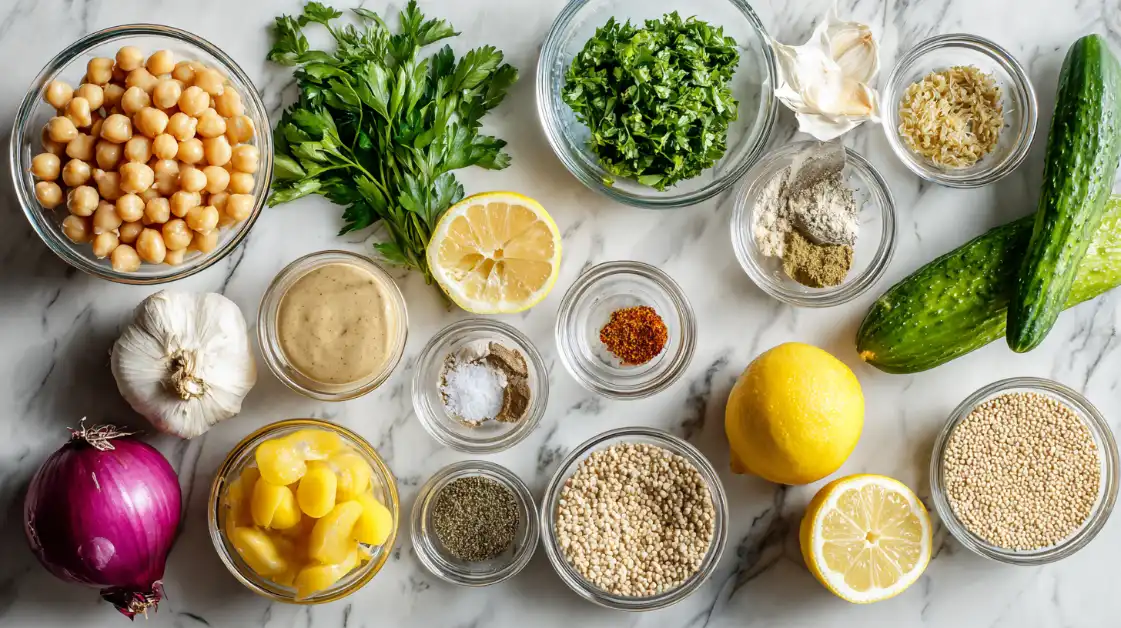
The Non-Negotiable Falafel Ingredients
Listen, I’ve tried every shortcut known to humanity, and here’s what you actually need for a proper chickpea falafel bowl that won’t crumble:
For the Falafel:
- 1 cup dried chickpeas, soaked 8-12 hours (canned = mushy disaster)
- 1 small onion, roughly chopped
- 4 garlic cloves, minced
- 1 cup fresh parsley (not dried, please don’t)
- ½ cup fresh cilantro
- 1 tsp cumin
- 1 tsp coriander
- ½ tsp baking powder (for fluffiness)
- Salt, pepper, cayenne to taste
- 2-3 tbsp flour (only if mixture is too wet)
For the Tahini Sauce:
- ½ cup tahini (Soom or Seed + Mill brands are clutch)
- ¼ cup fresh lemon juice
- 2 garlic cloves, minced
- ¼-½ cup cold water
- Salt to taste
For the Bowl Assembly:
- 2 cups cooked quinoa or rice
- Mixed greens or spinach
- 1 cucumber, diced
- 2 tomatoes, diced
- ½ red onion, thinly sliced
- Optional: hummus, olives, pickled vegetables, feta
Why Soaked Chickpeas Matter (A Lot)
The NUMBER ONE mistake people make with homemade falafel bowl recipes? Using canned chickpeas. I know it seems convenient (I tried it six times because I’m stubborn), but canned chickpeas are already cooked, so they’re too soft and have too much moisture. You end up with falafel paste, not falafel patties.
Soaked dried chickpeas are firm enough to grind into a coarse mixture that holds its shape when fried or baked. The texture is somewhere between couscous and hummus—you should be able to squeeze a handful and have it stick together without being mushy.
This is similar to how we handle chickpeas in our Lemon Chickpea Patties recipe—texture is everything when you’re working with legumes.
Ingredient Quality Comparison
| Ingredient Type | What You Get | Worth It? | USA Substitution |
|---|---|---|---|
| Soaked dried chickpeas | Perfect texture, holds together | YES – only option | None – must use these |
| Canned chickpeas | Mushy, falls apart, sad | NO – don’t even try | Seriously, don’t |
| Fresh herbs | Bright flavor, authentic taste | YES – game changer | Frozen works if desperate |
| Quality tahini | Creamy, nutty, perfect | YES – it’s the sauce | Store brand okay |
The secret weapon? That tahini sauce recipe is basically liquid gold for your bowl, and making it properly means understanding that initial seize-up when you add lemon juice (don’t panic, keep whisking, it’ll smooth out). This same technique works for making sauces in our Greek Chicken Gyros recipe too.
The Foolproof Method
Preparation Phase (The Night Before + 10 Minutes Day-Of)
The Night Before (Takes 2 minutes):
Put 1 cup dried chickpeas in a large bowl. Cover with at least 3 inches of cold water. Go to bed. That’s it. The chickpeas will double in size overnight, which is why you need all that water (learned that the hard way when I woke up to chickpeas all over my counter at 6 AM).
Day-Of Prep (10 minutes):
Drain and rinse your chickpeas really well. Pat them dry with a towel—this is important because excess water = falafel that won’t stick together. Roughly chop your onion, mince your garlic, and wash your herbs. Have everything measured and ready. This is not the time to be hunting for cumin in the back of your spice cabinet.
Main Cooking Method (20 Minutes Total)
Step 1: Make the Falafel Mixture (5 minutes)
Add drained chickpeas to food processor with onion, garlic, parsley, cilantro, and all spices. Pulse in 1-2 second bursts about 20-25 times. You’re looking for a coarse, grainy texture—NOT a smooth paste. It should look like coarse breadcrumbs, not hummus.
Test it: squeeze a small handful. If it sticks together without being mushy, you’re golden. If it’s too dry and crumbly, add 1 tablespoon of water. If it’s too wet and pasty, add 1-2 tablespoons flour. Transfer to a bowl and stir in baking powder. Refrigerate for 15 minutes while you make the sauce and prep vegetables.
Step 2: Whip Up the Tahini Sauce (3 minutes)
Here’s where things get weird for a second. In a bowl, whisk together tahini and lemon juice. The mixture will seize up and get thick—this is normal! Don’t add water yet. Keep whisking for about 30 seconds until it’s smooth (if slightly thick).
Now add minced garlic and salt, then slowly drizzle in cold water while whisking. The mixture will magically transform into a smooth, pourable sauce. Add water until it reaches the consistency of heavy cream. Taste and adjust salt/lemon. Set aside.
(This emulsification process is why I love my Spinach and Feta Pasta—same science, different application.)
Step 3: Cook the Falafel (12 minutes)
Baked version (easier): Preheat oven to 375°F. Form mixture into 12 patties (about 2 tablespoons each). Place on greased baking sheet. Brush tops with olive oil. Bake 25 minutes, flip, brush again, bake 10 more minutes until golden.
Fried version (crispier): Heat 2 inches of oil in a deep pan to 350°F. Form patties. Fry 3-4 at a time for 3-4 minutes per side until deep golden brown. Drain on paper towels.
Air fryer version (compromise): 400°F for 12 minutes, flip, another 8 minutes. Spray with oil halfway through.
Step 4: Prep Your Bowl Ingredients (5 minutes, can overlap with falafel cooking)
Cook your grain (quinoa, rice, or I sometimes use Mediterranean Sweet Potatoes as a base). Wash and chop all vegetables. Slice that red onion super thin (nobody wants huge onion chunks).
Pro tips from my twenty-three attempts:
- Don’t overcrowd the pan when frying—they’ll steam instead of crisp
- If baking, don’t skip the oil brush—it makes ALL the difference
- Falafel are best within 2 hours of cooking, but they reheat okay in a toaster oven
- Make a double batch of tahini sauce; you’ll want to put it on everything
- The falafel mixture can sit in the fridge for up to 24 hours before cooking
Creative Variations
Flavor Variations That Actually Work
I’ve tested a LOT of variations (because apparently I have too much time), and these are the ones worth making:
| Variation Name | Key Changes | Best For |
|---|---|---|
| Spicy Harissa Bowl | Add 2 tbsp harissa to tahini sauce, top with jalapeños | Heat lovers, winter meals |
| Green Goddess | Extra herbs in falafel, add avocado and cucumber to sauce | Summer, fresh flavors |
| Mediterranean Mezze | Serve with hummus, baba ganoush, and tabbouleh instead of greens | Entertaining, snack dinner |
| Pickled Everything | Add pickled onions, turnips, and cucumbers | Tangy lovers, meal prep |
Dietary Modifications for Your Falafel Meal Prep
Gluten-Free: Skip the flour entirely or use chickpea flour. The mixture might be slightly more delicate but still works. Most plant based bowl recipes are naturally gluten-free anyway.
Nut-Free: Tahini is sesame, not nuts, so you’re good! If someone has a sesame allergy, substitute sunflower seed butter mixed with lemon juice.
Oil-Free: Bake falafel on parchment paper without oil. They’ll be drier but still edible. Use aquafaba (chickpea liquid) to thin tahini instead of adding oil.
Kid-Friendly: Reduce garlic to 2 cloves, skip cayenne entirely, make smaller “falafel bites” that are less intimidating. Serve tahini sauce on the side for dipping—kids love dipping things.
Budget Version: Already super cheap at $4.50 per serving! But you can skip the fancy tahini brand and use store-brand. Replace quinoa with rice. Use whatever vegetables are on sale.
Extra Protein: Add a fried egg on top (not vegan anymore but delicious) or serve with extra hummus. Each falafel already has about 3g protein, so you’re getting 18g total with 6 falafel.
Similar to how I modify Greek Sheet Pan Chicken Dinner, these bowls are super adaptable to what you have on hand.
Storage & Serving
Real Talk About Falafel Storage
Room Temperature: Don’t. Just don’t. Cooked falafel sitting out at room temp is asking for food safety issues after 2 hours. Get them in the fridge.
Refrigerator (3-4 days):
- Uncooked falafel mixture: Keeps for 24 hours max in an airtight container. The baking powder will lose effectiveness if you wait longer.
- Cooked falafel: Store in an airtight container for up to 4 days. They’ll lose crispiness but are still tasty.
- Tahini sauce: Lasts a full week! It’ll thicken in the fridge—just whisk in a bit of water to loosen it up.
- Assembled bowls: Store components separately for best results. The vegetables will get soggy if everything’s mixed together.
Freezer (Up to 3 months):
- Uncooked falafel: Form into patties, freeze on a baking sheet in a single layer, then transfer to a freezer bag. Cook from frozen (add 5 minutes to cooking time).
- Cooked falafel: Same method. Reheat in oven at 350°F for 15 minutes.
- Tahini sauce: Technically freezes but the texture gets weird. Just make it fresh—it takes 3 minutes.
Smart Meal Prep Strategies for Your Vegetarian Falafel Bowl
Sunday Prep for the Week:
- Soak chickpeas Sunday morning
- Make falafel mixture Sunday afternoon, portion into 12 patties, refrigerate or freeze
- Cook 6 falafel Sunday night, freeze the other 6 uncooked
- Make a big batch of tahini sauce (doubles or triples easily)
- Prep and store vegetables in separate containers
- Cook your grain in batches
This is similar to how I approach meal prepping with Mediterranean Chicken Meatballs—cook once, eat all week.
Reheating Tips:
Best method is toaster oven at 350°F for 8-10 minutes. Air fryer works too (380°F for 5 minutes). Microwave makes them rubbery (but if you’re desperate, 30 seconds covered with a damp paper towel).
Perfect Pairings for Your Middle Eastern Bowl
| Meal Type | Base | Sides | Beverage |
|---|---|---|---|
| Casual Lunch | Quinoa or greens | Falafel, veggies, tahini | Sparkling water with lemon |
| Dinner Party | Rice pilaf | Falafel, hummus, tabbouleh, pita | Fresh mint lemonade |
| Meal Prep | Mixed grains | Falafel, roasted vegetables | Cold brew iced tea |
| Light Summer | All greens | Falafel, cucumbers, tomatoes | Hibiscus tea, iced |
Nutritional Benefits (194 words)
Disclaimer: I’m not a registered dietitian, just someone who’s made this 23 times and likes to read nutrition labels obsessively while standing in grocery store aisles.
Macronutrient Breakdown (Per Serving, serves 4)
| Nutrient | Amount | % Daily Value |
|---|---|---|
| Calories | 385 | – |
| Total Fat | 14g | 18% |
| Saturated Fat | 2g | 10% |
| Carbohydrates | 52g | 19% |
| Fiber | 11g | 39% |
| Protein | 18g | 36% |
Key Micronutrients
| Vitamin/Mineral | Amount | % Daily Value |
|---|---|---|
| Iron | 4.2mg | 23% |
| Folate | 240mcg | 60% |
| Magnesium | 98mg | 23% |
| Vitamin C | 28mg | 31% |
| Calcium | 148mg | 11% |
Why This Falafel Buddha Bowl Is Actually Good for You
Chickpeas are plant protein powerhouses with all nine essential amino acids (take that, complete protein skeptics). The falafel Buddha bowl gives you 18g protein per serving—more than two eggs.
Glycemic Impact: Medium-low glycemic index around 28-35 thanks to all that fiber and protein. Your blood sugar won’t spike like it would with a regular rice bowl. The complex carbs from chickpeas release energy slowly, which is why I can eat this for lunch and not crash at 3 PM.
Heart Health: The monounsaturated fats in tahini (and olive oil if you’re drizzling extra) are the good kind that support cardiovascular health. Plus, chickpeas contain soluble fiber that helps lower cholesterol.
Compared to a typical takeout falafel sandwich: About 200 fewer calories, 3x the vegetables, and you actually know what’s in the tahini sauce (no sketchy preservatives).
Similar to what makes Chickpea Stuffed Sweet Potatoes so nutritious—chickpeas are just really good for you, okay?
FAQ
Can I make falafel without a food processor?
Technically yes, but it’s going to be a workout. You’d need to mince everything super finely by hand and mash it together. I tried this once during a power outage and my arm hurt for two days. A blender sort of works but tends to make the mixture too smooth. If you’re making falafel meal prep regularly, just get a cheap food processor. Your future self will thank you.
Why does my falafel fall apart?
Three main reasons: (1) You used canned chickpeas instead of soaked dried ones, (2) Your mixture is too wet—you need to drain those chickpeas REALLY well, or (3) You didn’t refrigerate the mixture before forming patties. The chilling time helps everything bind together. This is crucial for getting that crispy exterior on your crispy falafel recipe.
Can I freeze uncooked falafel?
YES. This is actually the best meal prep hack. Form them into patties, freeze on a baking sheet, then store in a freezer bag. You can cook them straight from frozen—just add 5 minutes to whatever cooking method you’re using. I always have a batch in my freezer for emergency plant based bowl cravings.
What if I don’t like tahini?
First, we need to have a serious talk. But okay, you can substitute with: (1) Hummus thinned with lemon juice and water, (2) Greek yogurt with lemon and garlic (not vegan), or (3) Cashew cream. The tahini dressing is traditional for a reason though—it’s got that nutty richness that just works.
How do I make tahini sauce less bitter?
Quality matters—cheap tahini can be bitter. Also, make sure you’re using enough lemon juice (acid balances bitterness) and a pinch of salt. If it’s still bitter, add a tiny bit of maple syrup or agave (like ¼ teaspoon) to round out the flavor. My Spinach and Feta Pasta uses a similar technique to balance flavors.
Can I bake falafel instead of frying?
Absolutely! Baked falafel are slightly less crispy but way less messy and still delicious. Brush them with oil before and during baking for the best texture. They’re perfect for a healthy falafel bowl when you want to keep things lighter.
How long do I need to soak chickpeas?
Minimum 8 hours, maximum 24 hours. They’ll double in size. If you forget and need to speed it up, you can quick-soak by covering with boiling water for 1 hour, but the texture isn’t quite as good. Similar to how Lemon Chickpea Patties need properly prepared chickpeas, this step really matters.
Pairing & Serving Ideas
Complete Meal Combinations for Your Vegetarian Falafel Bowl
| Serving Style | Components | Occasion | Beverage |
|---|---|---|---|
| Simple Weeknight | Falafel, greens, tahini, pita | Busy Monday | Sparkling water |
| Mediterranean Feast | Falafel, hummus, tabbouleh, pickles, pita | Weekend hosting | Fresh mint lemonade |
| Meal Prep Power | Falafel, quinoa, roasted veggies, tahini | Sunday prep for week | Unsweetened iced tea |
| Summer Picnic | Cold falafel salad bowl, veggies, tahini | Outdoor gathering | Hibiscus iced tea |
Occasion-Specific Serving Suggestions
Weeknight Dinner: Keep it simple with falafel, greens, and tahini. Maybe grab some store-bought hummus if you’re really exhausted. Serve with toasted pita triangles for scooping.
Brunch Vibes: Top your falafel salad bowl with a fried egg and serve with Garlic Parmesan Focaccia on the side. It sounds weird but trust me—runny yolk + tahini is magical.
Packed Lunch: Keep components separate in a bento-style container. Pack tahini sauce in a small container to drizzle right before eating. Falafel stays crispy when stored separately from wet ingredients.
Dinner Party: Build a Mediterranean mezze spread with falafel as the centerpiece. Add hummus, baba ganoush, tabbouleh, olives, and warm pita. Let guests build their own bowls.
Game Day: Make falafel sliders on small pita rounds with tahini drizzle and quick pickled vegetables. Way better than the usual chips and dip situation.
Conclusion
Make This Falafel Bowl with Tahini Your Own
Here’s the beautiful truth about Mediterranean falafel bowl recipes: they’re basically a template for whatever you’re craving. I’ve given you the classic version (the one that finally made cousin Sarah admit I can cook), but honestly? Add roasted red peppers if you want. Sub kale for spinach. Make the tahini spicy with harissa. Go wild.
The non-negotiables are: soaked dried chickpeas, fresh herbs, and that magical tahini sauce. Everything else is flexible.
Join the Falafel Bowl Revolution
After making this 23 times (24 now, made another batch while writing this), I’m convinced everyone needs a solid chickpea falafel bowl recipe in their rotation. It’s cheap, it’s healthy(ish), it’s vegan, and most importantly—it’s actually delicious.
Make it this week. Take a photo. Tell me which vegetables you added. Did your falafel hold together on the first try? (If so, you’re better than I was.) And seriously, make a double batch and freeze half. Future you deserves easy homemade falafel whenever the craving hits.
If you loved this plant-based approach to Mediterranean food, you’ll probably also love our Kale and Sweet Potato Salad—same energy, different flavors.