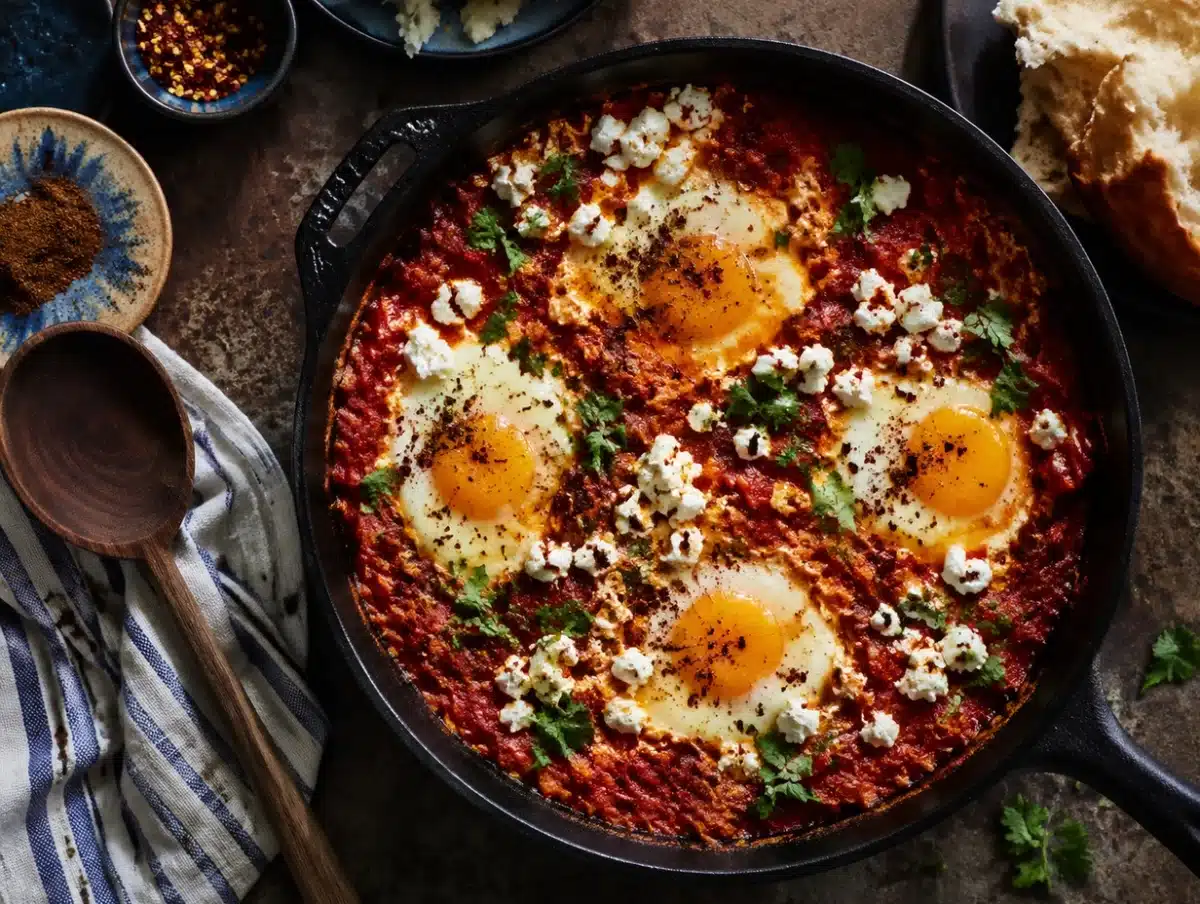
I can still hear the clatter of my yiayia’s copper tapsi on the stovetop in Chania, the morning sun streaming through linen curtains while she cracked eggs into a bubbling pool of red. She called it her “avga me ntomata,” her own Cretan riff on the North African classic, and the whole kitchen filled with the perfume of cumin, sweet paprika, and simmering tomatoes. My father would walk in from the harbor smelling of salt and diesel, and she would slide that skillet right onto the wooden table — no plates, just crusty bread and a block of sharp feta from the village dairy. That, my friends, is where my love for classic shakshuka with feta was born.
This is not just another eggs-in-tomato-sauce situation. This is a one skillet meal that has traveled across the Mediterranean — from the souks of North Africa through the breakfast tables of Tel Aviv and straight into my yiayia’s kitchen in Crete. The spiced tomato sauce simmers low and slow until it thickens into something almost jam-like, then you nestle eggs into those little craters and scatter crumbled feta over everything. The cheese softens, the yolks stay gloriously runny, and what you get is a dish that feels like a warm hug from someone who really loves you.
I’ve made this classic shakshuka with feta well over a hundred times in the last eight years — for lazy Sunday brunches in my Athens apartment, for Tuesday dinners when the fridge is nearly empty, for cooking workshops where students gasp at how something so simple can taste so extraordinary. Today, I’m passing every secret I’ve learned along the way directly to you. Trust me on this one.
Table of Contents
Classic Shakshuka with Feta
Ingredients
Method
- 1. Heat olive oil in a 12-inch cast iron skillet over medium heat. Add onion with a pinch of salt; cook 5–7 minutes until golden.
- 2. Add bell pepper; cook 4–5 minutes until softened.
- 3. Add garlic, cumin, paprika, cayenne, and tomato paste (if using). Stir 60 seconds until fragrant.
- 4. Add tomatoes, crushing by hand. Season with salt and pepper. Simmer 12–15 minutes until thick.
- 5. Stir half the feta into sauce. Make 6 wells with a spoon.
- 6. Crack one egg into each well. Season eggs with salt.
- 7. Cover, reduce to low. Cook 5–8 minutes (5 for runny yolks, 8 for medium).
- 8. Remove from heat. Top with remaining feta, herbs, olive oil drizzle, and black pepper. Serve immediately with bread.
Notes
Why This Classic Shakshuka with Feta Is Special
What Makes This Version Different
Most shakshuka recipes you’ll find online rush the sauce. They give you ten minutes of simmer time and call it done. Not here. The secret is building layers of flavor — the Maillard reaction on the onions (that’s the browning that Harold McGee describes in On Food and Cooking as the most important flavor-building technique in the kitchen) creates a sweet, caramelized base that gives the spiced tomato sauce its depth. I bloom my cumin and paprika in the rendered fat before adding the tomatoes, which releases the volatile oils and intensifies every bite. The result is a shakshuka spices profile that’s miles ahead of what you’d get by simply dumping everything in at once.
Flavor Profile and When to Serve It
Smoky. Tangy. Creamy. Gently spicy with a hum of warmth that settles right in your chest. The feta cheese crumbled on top melts into the sauce just enough to create pockets of salty richness between the poached eggs. This is the Mediterranean breakfast my family has been making for generations — the kind of dish that works beautifully for a weekend brunch recipe, a quick weeknight eggs for dinner moment, or even a holiday spread. You’ll love this. I guarantee it.
The Story Behind the Dish
Origins and Cultural Significance
The word “shakshuka” comes from the Arabic for “a mixture,” and the North African dish has roots stretching back centuries through Tunisia, Libya, and Morocco. It migrated across the Mediterranean with Tunisian Jews arriving in Israel during the 1950s, where it became a beloved breakfast staple. From there, it spread to every corner of the Middle Eastern table and beyond. Think of it as a culinary passport that tells the story of migration and shared meals.
My Family’s Connection
In my yiayia’s kitchen in Chania, this dish never had a fancy name. She simply called it eggs in sauce, and she made it every Friday morning without fail. My grandfather would bring home the freshest feta from a cheesemaker friend in the village, and my mother taught me how to crack eggs with one hand so you don’t break the yolks. The Cretan version leans heavier on the olive oil (because everything in Crete does) and a touch of dried oregano that you won’t find in the mainland version. This is how we make it in Crete, and I wouldn’t have it any other way.
Essential Ingredients for Classic Shakshuka with Feta
Core Ingredients
Everything starts at the market. My yiayia used to say, “If the ingredients aren’t singing, the dish won’t dance.” Here’s every ingredient you need for this classic shakshuka with feta, along with why each one matters. I always use extra-virgin olive oil from Kolymvari — the fruity, peppery Cretan variety that my family has pressed for three generations.
| Ingredient | Amount | Why It Matters | Authentic Pick | Substitution |
| Extra-virgin olive oil | 3 tbsp (45 ml) | Base fat; fruity flavor | Kolymvari EVOO | Any quality EVOO |
| Yellow onion | 1 large, diced | Caramelization builds sweetness | Fresh, firm | White or red onion |
| Red bell pepper | 1 large, diced | Color and natural sugar | Thick-walled | Orange or yellow pepper |
| Garlic | 4 cloves, minced | Aromatic backbone | Fresh, plump cloves | 1 tsp garlic paste |
| Canned whole tomatoes | 1 can (28 oz / 800g) | Sauce body and acidity | San Marzano DOP | Crushed tomatoes |
| Large eggs | 6 | The star of the dish | Free-range, golden yolks | Duck eggs for richness |
| Feta cheese | 100 g (3.5 oz), crumbled | Salty, creamy, tangy contrast | Greek sheep’s milk feta | Goat cheese or halloumi |
| Fresh cilantro or parsley | Small bunch, chopped | Brightness and color | Flat-leaf parsley | Cilantro or dill |
My father used to say the tomatoes are the soul of the shakshuka. He was right. I’ve tested this recipe with at least seven brands of canned tomatoes, and San Marzano consistently delivers the brightest flavor with the lowest acidity. When I can’t find them, I reach for Mutti or any whole peeled variety and crush them by hand — never the food processor, which makes the texture too uniform. You want rustic. You want chunks.
Dietary Substitutions and Pro Tips
| Dietary Need | Replace | With | Notes |
| Dairy-free | Feta cheese | Nutritional yeast + olives | Add olives for the salty tang |
| Vegan | Eggs | Firm tofu (cubed) or chickpeas | Press tofu first; add chickpeas with sauce |
| Low-sodium | Canned tomatoes | No-salt-added canned tomatoes | Season with lemon juice |
| Egg-free (vegetarian) | Eggs | Chickpeas + avocado | Hearty and protein-rich |
| Nightshade-free | Tomatoes + peppers | Beets + carrots | Different color, still delicious |
Pro Tip: If you’re using block feta, crumble it yourself. Pre-crumbled feta is coated in anti-caking starch that prevents it from melting properly into the sauce. Trust me — the 30 seconds of crumbling makes all the difference.
For a similar protein-packed Mediterranean breakfast, check out our Mediterranean hummus breakfast bowl which uses the same warming spice philosophy. And if you love the eggs-and-feta combination, our Greek feta egg bake takes it in a completely different (and equally addictive) direction.
Equipment and Technique
Traditional vs. Modern Tools
My yiayia used a shallow copper pan that had been in the family since my great-grandfather’s taverna days. You don’t need one (though if you find a vintage Greek copper tapsi, grab it). Here’s what works for this one skillet meal:
| Traditional Tool | Modern Alternative | Why It Matters |
| Copper tapsi / cast iron skillet | 12-inch cast iron skillet or oven-safe skillet | Even heat distribution; goes from stovetop to oven |
| Wooden spoon (hand-carved) | Silicone spatula or wooden spoon | Won’t scratch the pan surface |
| Mortar and pestle (for spices) | Spice grinder or pre-ground spices | Freshly ground spices have 3x the volatile oils |
| Clay pot lid | Tight-fitting lid or aluminum foil | Traps steam to set the egg whites evenly |
Mise en Place and Workspace Setup
Before you even turn on the stove, get everything prepped and within arm’s reach. In my Varoulko apprenticeship days, Chef Nikolaou drilled one lesson into us: mise en place isn’t optional, it’s survival. Dice your onion and pepper, mince your garlic, measure your shakshuka spices (cumin, paprika, cayenne), open and crush your tomatoes, crumble your feta, and crack each egg into its own small bowl. That last step — cracking into separate bowls — ensures no shell fragments end up in the sauce and gives you perfect control when nestling them into the tomato wells.
Yiayia’s Tip: Warm your cast iron skillet slowly over medium-low heat for 3 minutes before adding oil. A properly preheated pan means the onions start sizzling immediately and caramelize rather than steam. My yiayia would hold her palm six inches above the pan — when she felt steady warmth, it was ready.
If you enjoy one-pan cooking, you’ll also love our Mediterranean keto ground chicken skillet which uses a similar technique of building a sauce in a single skillet.
Step-by-Step Instructions for Classic Shakshuka with Feta
Preparation (Steps 1–4)
Step 1: Build Your Aromatic Base
Heat 3 tablespoons of extra-virgin olive oil in your cast iron skillet over medium heat until it shimmers (about 2 minutes, or 325°F / 165°C surface temperature). Add the diced onion and a generous pinch of salt. Cook, stirring occasionally, for 5 to 7 minutes until the onion turns golden and translucent. You’ll hear the sizzle mellow into a gentle hiss — that’s the water evaporating and the sugars concentrating. Don’t rush this. As J. Kenji López-Alt explains in The Food Lab, patient caramelization of alliums builds a foundation of sweetness that no amount of added sugar can replicate.
Yiayia’s Tip: If the onions start to stick, add a splash of water — never more oil. My yiayia called this “feeding the pan.” The steam lifts the fond from the bottom and folds it back into the onions.
Step 2: Add the Bell Pepper
Add the diced red bell pepper and stir to combine. Cook for another 4 to 5 minutes until the pepper softens and its edges start to blister. The pepper contributes natural sweetness and a subtle smokiness that pairs beautifully with the cumin paprika blend you’ll add next. If your pieces start browning too fast, reduce heat to medium-low.
Step 3: Bloom the Spices
Add the minced garlic, 1½ teaspoons ground cumin, 1½ teaspoons smoked paprika, and ¼ teaspoon cayenne pepper. Stir constantly for 60 seconds — no more, no less. You’ll know it’s working when the kitchen fills with a warm, toasted fragrance that smells like a spice market in Heraklion. This step is called blooming, and it’s where the magic lives. The fat-soluble flavor compounds in the spices dissolve into the oil, distributing them evenly throughout the spiced tomato sauce. Burn the garlic and you’ll need to start over. Don’t skip this.
Step 4: Add the Tomatoes
Pour in the can of whole tomatoes with their juices. Use your wooden spoon to crush the tomatoes into rough chunks directly in the pan — you want some pieces the size of a walnut, some smaller. Season with ¾ teaspoon salt and ¼ teaspoon black pepper. Stir well and bring to a gentle simmer. This is your eggs poached in tomato sauce base, and it needs to reduce and thicken for 12 to 15 minutes over medium-low heat, stirring every 3 to 4 minutes. The sauce is ready when you can drag your spoon across the bottom and the trail holds for 2 seconds before filling back in.
Cooking and Assembly (Steps 5–10)
Step 5: Stir in the Feta
Scatter about half the crumbled feta cheese (50 g) into the simmering sauce and stir gently. The feta will begin to soften and create creamy streaks through the tomato. Reserve the other half for topping. (I learned this two-stage feta technique from a chef in Thessaloniki, and it changed my shakshuka forever.)
Step 6: Create the Egg Wells
Using the back of a spoon, make 6 evenly spaced wells (or “nests”) in the sauce. Each well should be about 3 inches across and deep enough to cradle an egg. Think of it like building little nests in a field of red. If the sauce is too thick, add 2 tablespoons of water. Too thin? Let it simmer another 3 minutes.
Step 7: Nestle the Eggs
One at a time, carefully tip each pre-cracked egg from its bowl into a well. Work quickly but gently. Season the tops of the eggs with a tiny pinch of flaky salt. The eggs should sit slightly below the surface of the sauce with the yolks peeking out like little golden suns.
Step 8: Cover and Cook the Eggs
Reduce heat to low, cover the skillet tightly, and cook for 5 to 8 minutes. At 5 minutes, the whites will be just set and the yolks will be beautifully runny (my preferred doneness at exactly 145°F / 63°C internally). At 8 minutes, you’ll have medium-set yolks. At 10 minutes, they’ll be fully firm. Start checking at 5 minutes by gently jiggling the pan — the whites should be opaque while the yolks still wobble. Golden. Runny. Perfect.
Yiayia’s Tip: Never lift the lid before 5 minutes. Every time you peek, you release steam and add 90 seconds to the cooking time. My yiayia used to say, “Patience is the best spice.” She was right (about cooking and most things).
Step 9: Finish and Garnish
Remove from heat. Scatter the remaining feta cheese crumbled across the top, along with the chopped fresh cilantro or parsley. A drizzle of your best extra-virgin olive oil and a few cracks of black pepper finish the dish. If you like heat, a spoonful of harissa on the side is magnificent.
Step 10: Serve Immediately
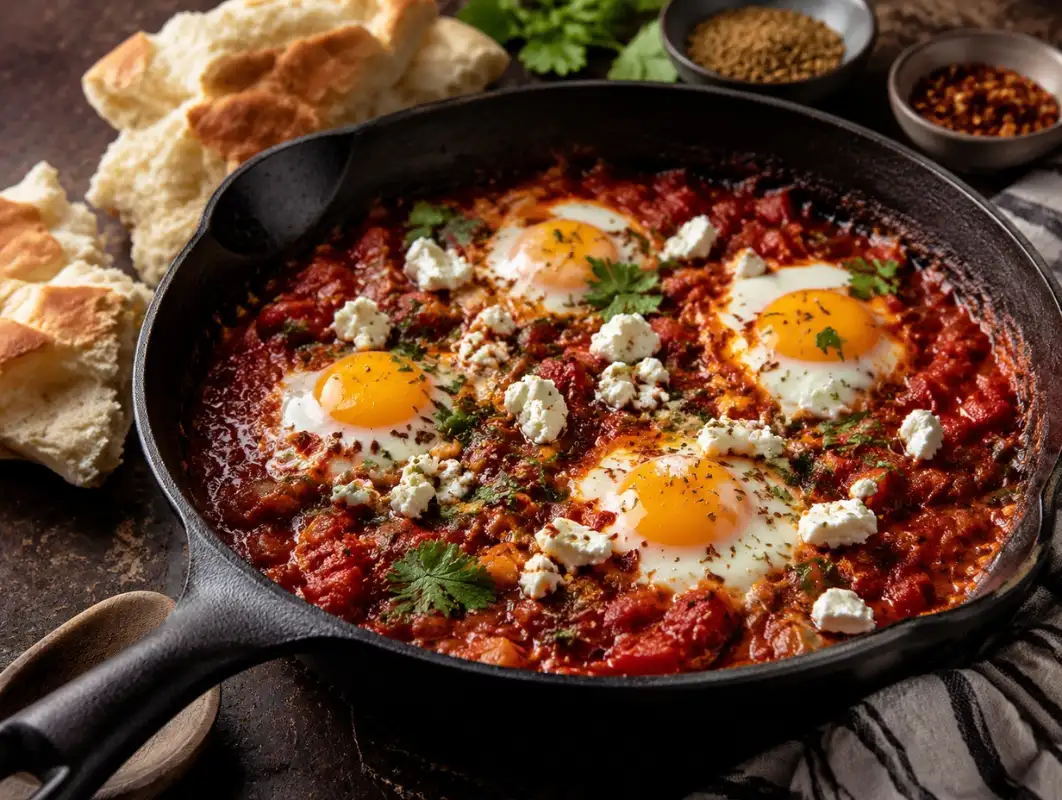
Bring the skillet straight to the table — that’s the drama this dish deserves. Serve with warm crusty bread (our garlic Parmesan focaccia is spectacular for dipping), pita, or sourdough. Let everyone scoop directly from the pan. This is a communal dish, a sharing dish, and that’s exactly how my family has always eaten it in Crete.
The Secret Touches
Insider Techniques from My Family Kitchen
The Two-Stage Feta Method:
Stirring half the feta into the sauce infuses every spoonful with creamy, salty richness, while the second addition on top provides those beautiful white pockets that melt in the residual heat. This technique mirrors the way my mother layers cheese in our family’s spinach and feta recipe — building flavor in two waves rather than one.
The Tomato Paste Shortcut:
If your sauce isn’t thickening fast enough, stir in 1 tablespoon of tomato paste during the spice bloom (Step 3). The concentrated sugars caramelize instantly and add a deep, almost umami backbone to the sauce. I discovered this trick accidentally when I was running late for a cooking workshop — now I use it every time.
The Steam Baste:
For perfectly set whites with runny yolks, spoon a small amount of the hot sauce over the egg whites (but not the yolks) before covering the pan. This gives the whites a head start and ensures they set before the yolks overcook. It’s a technique that Kenji López-Alt calls “basting,” and it works like a charm every single time.
Common Mistakes and How to Fix Them
| Mistake | What Happens | How to Fix It |
| Sauce too watery | Eggs slide around; whites spread thin | Simmer 5 more minutes before adding eggs; sauce should coat a spoon |
| Burning the spices | Bitter, acrid taste ruins the dish | Bloom for exactly 60 seconds over medium heat; add tomatoes immediately if smoking |
| Cracking eggs from too high | Broken yolks, messy presentation | Crack into small bowls first, then gently tip into wells |
| Lifting the lid too early | Steam escapes; whites stay raw on top | Trust the process — minimum 5 minutes, no peeking |
| Using pre-shredded feta | Dry, chalky texture that won’t melt | Always buy block feta and crumble it yourself |
Variations and Serving Suggestions
Regional Variations and Modern Twists
In Crete, we add a handful of wild horta (greens) and a squeeze of lemon at the end. On the Greek mainland, they sometimes fold in roasted eggplant for a smoky depth. The island versions from Santorini incorporate capers and cherry tomatoes from the volcanic soil. For a modern weeknight shortcut, use a good-quality jarred marinara as your base and just add the shakshuka spices — it shaves 10 minutes off the prep without sacrificing much flavor. I’ve also seen beautiful green shakshuka variations using spinach and herbs, which is closer to the way they make it in parts of Israel.
For a heartier version, add chickpeas to the sauce during the last 5 minutes of simmering — it turns this vegetarian breakfast into a protein-packed powerhouse, much like our Mediterranean chickpea power bowl. You can also swap in smoked turkey sausage (sliced and seared) for those who want a meatier meal.
Accompaniments and Beverage Pairings
This classic shakshuka with feta begs for bread. Warm pita, our garlic Parmesan focaccia, crusty sourdough, or even flatbread straight from a hot pan — you need something to soak up that magnificent sauce. On the side, a simple Mediterranean white bean salad adds freshness, or try our kolokithokeftedes zucchini fritters for a truly Greek spread.
For drinks, skip the alcohol. Instead, brew a pot of tsai tou vounou (Greek mountain tea) — its herbal, slightly floral character is the perfect counterpoint to the rich, spicy sauce. Sparkling water with fresh mint and lemon is another favorite in my house. For something more substantial, try a glass of fresh pomegranate juice or a cold ayran (salted yogurt drink), which cuts through the richness beautifully.
Storage and Reheating
How to Store Classic Shakshuka with Feta
Leftover shakshuka stores surprisingly well, though I’ll be honest — in my house, there are rarely leftovers. Here’s what I’ve found works best after years of meal prepping this dish:
| Method | Container | Duration | Notes |
| Refrigerator | Airtight glass container | Up to 3 days | Store sauce and eggs together; feta on top |
| Freezer (sauce only) | Freezer-safe container or bag | Up to 3 months | Freeze sauce without eggs; add fresh eggs when reheating |
| Freezer (with eggs) | Not recommended | N/A | Eggs become rubbery; texture suffers significantly |
| Room temperature | Covered skillet | Up to 2 hours | Per food safety guidelines; reheat or refrigerate after |
Reheating Methods
For the best results, reheat gently on the stovetop over medium-low heat for 5 to 7 minutes, adding a splash of water if the sauce has thickened overnight. The microwave works in a pinch (90 seconds at 70% power), but the stovetop preserves the texture of the eggs far better. If you’ve frozen just the sauce, thaw overnight in the fridge, then reheat in a skillet and crack fresh eggs into it — it’s just as good as making it from scratch, and the sauce actually gets more flavorful as the spices marry. Add fresh feta and herbs right before serving to restore that just-made vibrancy.
Frequently Asked Questions
Substitution and Technique Questions
Can I use fresh tomatoes instead of canned?
Absolutely. Use about 8 to 10 medium ripe tomatoes — blanch them for 30 seconds in boiling water, peel, and chop roughly. You’ll need to simmer the sauce longer (20 to 25 minutes) to reduce the extra moisture. I prefer canned San Marzano for this shakshuka recipe easy and fast, but fresh summer tomatoes from a farmers market? That’s next level.
What can I use instead of feta?
Fresh goat cheese is my top alternative — it crumbles similarly and melts into beautiful streaks. Ricotta salata works if you want something milder, and for a vegan option, cashew-based feta crumbles are surprisingly convincing. Our whipped feta with hot honey could even be dolloped on top for an indulgent twist.
How do I make my shakshuka spicier?
Increase the cayenne to ½ teaspoon, add 1 tablespoon of harissa paste during the spice bloom, or stir in a finely diced fresh chili with the garlic. I sometimes add Aleppo pepper flakes at the table — they bring fruity heat without the burn of cayenne. Start small and taste as you go.
Can I make shakshuka in the oven instead of on the stovetop?
Yes, and it’s a great approach for feeding a crowd. Build the sauce on the stovetop through Step 4, then transfer to a 375°F (190°C) oven. Add the eggs, scatter feta, and bake uncovered for 7 to 10 minutes. The oven gives you more even heat, which is especially helpful when making a double batch for brunch.
My sauce is too acidic. How do I fix it?
A pinch of sugar (just ¼ teaspoon) balances acidity without making the sauce sweet. Alternatively, simmer longer to let the natural sugars in the onion and pepper concentrate. My yiayia never added sugar — she just cooked the onions for 12 full minutes until they were deeply caramelized, which did the work naturally.
Dietary, Make-Ahead, and Authenticity Questions
Is shakshuka gluten-free?
The classic shakshuka with feta itself is naturally gluten-free. The sauce, eggs, and cheese contain no gluten whatsoever. Just be mindful of what you serve alongside it — choose a gluten-free bread or serve it over rice. Our classic Greek lemon rice pilafi is an excellent gluten-free companion.
Can I make the sauce ahead of time?
This is one of the best Middle Eastern eggs hacks I know. Make the sauce up to 3 days ahead, store it in the fridge, and when you’re ready to serve, reheat it in the skillet, add the eggs, and cook as directed. The sauce actually improves overnight as the shakshuka spices deepen. It’s my go-to brunch recipe strategy for stress-free entertaining.
Is shakshuka traditionally a breakfast or dinner dish?
Both! In Israel, it’s primarily a breakfast and brunch staple. In North Africa and across the Mediterranean, it’s often served as a light dinner. In my family, we eat it whenever the mood strikes. Honestly, I’ve had it at midnight after long shifts at the restaurant. Good food doesn’t follow a clock.
Can I add meat to shakshuka?
Absolutely. Lamb kofta or spiced ground beef make wonderful additions — brown them first, set aside, then build the sauce in the same pan (all that fond is flavor gold). For something lighter, try our chicken shawarma crispy rice salad spice blend on shredded chicken stirred into the sauce. The warming spices complement each other beautifully.
How many people does this recipe serve?
This recipe makes 6 eggs in one skillet, which comfortably serves 3 people (2 eggs each) as a main or 6 people as part of a larger brunch spread. If I’m feeding more than four, I make two skillets and set them both on the table. More is more when it comes to shakshuka.
Bringing Greece to Your Table
A Reflection and Invitation
Every time I crack an egg into a skillet of simmering tomato sauce, I’m right back in my yiayia’s kitchen in Chania, watching her weathered hands work with a confidence that came from decades of feeding people she loved. This classic shakshuka with feta is more than a recipe — it’s a bridge between cultures, between generations, between a grandmother who never wrote anything down and a grandson who can’t stop writing about it.
Make this dish. Make it your own. And when you do, I’d love to hear about it. Leave a comment below, share your photos (tag us!), and tell me what you changed. That’s how recipes stay alive — not locked in a book, but passed from hand to hand, kitchen to kitchen, heart to heart.
Related Recipes to Explore
If this recipe sparked something in you, keep the Mediterranean table going. Our grilled chicken Mediterranean bowl makes a stunning lunch that uses the same spice family, and for another egg-centric dish, the Greek feta egg bake is a make-ahead wonder for holiday mornings. Craving something green? The gemista (Greek stuffed peppers and tomatoes) from my family’s recipe collection brings rice-stuffed vegetables to the table in the most satisfying way. And for an easy weeknight dinner, our creamy tomato basil chicken delivers that same tomato-rich comfort in under 40 minutes.