
Let me tell you about the worst cake I’ve ever baked. It was January 2022, I was trying to make a citrus olive oil cake for my friend Dave’s birthday brunch, and the thing came out of the oven looking like a deflated frisbee. Dense, oily, somehow both dry AND greasy — honestly, I didn’t even know that was physically possible. Dave, being Dave, ate two slices anyway and said it was “interesting.” Bless that man.
Forty-one batches later (my neighbors thought I was running an underground bakery), I finally cracked the code on this moist olive oil cake that’s become the most requested recipe in my circle. This Mediterranean brunch cake is tender, fragrant with fresh citrus, and stays unbelievably moist for days. Here’s everything I learned.
Table of Contents
Why This Citrus Olive Oil Cake is a Brunch Superstar
The Science of Why Olive Oil Makes Better Cake
Here’s the thing about butter in cake that nobody talks about: butter is only about 80% fat. The rest? Water. Which means when your cake cools down, those butter fats solidify and your cake goes from tender to dense and crumbly on the counter by day two. Extra virgin olive oil, on the other hand, is 100% liquid fat. It stays fluid at room temperature, which is why this olive oil cake recipe is still ridiculously moist three days later. Harold McGee’s On Food and Cooking goes deep on this — liquid fats coat flour proteins more effectively than solid fats, inhibiting gluten development and creating that plush, velvety crumb we’re chasing.
The citrus component isn’t just for flavor either. The acid from fresh lemon and orange juice reacts with baking soda to produce extra lift, while the zest oils add aromatic compounds that literally cannot be replicated with extracts. Kenji López-Alt has written about how citrus oils are volatile and heat-sensitive, which is why we fold zest in gently at the end rather than beating it early.
When to Serve This Mediterranean Brunch Cake
I’ll be honest, this easy brunch cake has become my go-to for basically every occasion: weekend brunches, baby showers, hostess gifts (wrap a loaf in parchment and tie it with twine — people lose their minds), Tuesday afternoons when I just want cake.
The flavors complement a full Mediterranean spread beautifully, especially alongside something savory like our Greek feta egg bake. The sweet-tangy-herbal quality of the cake plays off salty, savory brunch dishes like nothing else.
Essential Ingredients for the Best Citrus Olive Oil Cake
Your Ingredient Breakdown (Every Detail Matters)
Let’s talk olive oil, because this is where I see people go wrong more than anything else. You absolutely do NOT need your fanciest, most expensive finishing oil for this cake. In fact, those intensely peppery Tuscan oils can actually make your cake taste bitter.
What you want is a mild, fruity extra virgin olive oil — something you’d happily drizzle on bread. Spanish Arbequina or a good California EVOO works beautifully. (I’m perpetually confused by why some olive oils at my grocery store cost $7 and others cost $28 and they look identical. Like, what is the DIFFERENCE?) For USA readers, California Olive Ranch or Pompeian Robust are both excellent and affordable choices.
For citrus: you need both lemons and oranges. Using just one citrus makes the cake taste flat — the lemon brings tartness and brightness while the orange brings sweetness and floral depth. Together they create this incredible layered citrus flavor that you can’t get any other way.
If you can find Meyer lemons? Oh my god. The cake becomes transcendent. Blood oranges in winter are also spectacular and give the batter this gorgeous pink tinge. The Mediterranean approach to citrus in baking mirrors the philosophy behind our Greek yogurt panna cotta — fresh, seasonal fruit does the heavy lifting. Our classic Greek lemon rice uses a similar double-citrus technique for maximum brightness.
Complete Ingredients List:
¾ cup (180 ml) mild extra virgin olive oil, plus extra for pan
1½ cups (190 g) all-purpose flour
2 teaspoons baking powder
½ teaspoon fine sea salt
¾ cup (150 g) granulated sugar
Zest of 1 large lemon
Zest of 1 large orange
3 large eggs, room temperature
Juice of 1 lemon (~3 tablespoons)
Juice of 1 orange (~¼ cup)
½ cup (120 ml) whole milk (or oat milk for dairy-free)
2 tablespoons plain Greek yogurt (or coconut yogurt)
1 teaspoon vanilla extract
For the Citrus Glaze:
1 cup (120 g) powdered sugar
2-3 tablespoons fresh lemon or orange juice
Olive Oil Comparison: Choosing the Right One for Baking
| Oil Type | Flavor Profile | Cost Range | Best For This Cake? |
| Mild EVOO (Arbequina) | Buttery, fruity, smooth | $8-15 | ✅ Top pick |
| Regular/Pure olive oil | Very neutral, light | $5-10 | ✅ Budget-friendly |
| Robust EVOO (Tuscan) | Peppery, grassy, bold | $12-30 | ❌ Too bitter |
| Light olive oil | Almost flavorless | $6-10 | ⚠️ Works but no character |
| Finishing EVOO (Greek PDO) | Complex, intense | $18-40 | ❌ Save for salads |
The game-changing secret that transformed my baking: adding 2 tablespoons of Greek yogurt to the batter. I stumbled onto this when I was trying to make a dairy-free version and accidentally grabbed the yogurt container (yes, again — I really need to organize my fridge). The yogurt adds a subtle tang that amplifies the citrus flavor AND makes the crumb even more tender thanks to the extra acid. If you’re going fully dairy-free, substitute with coconut yogurt — it works almost as well.
The Foolproof Method: Citrus Olive Oil Cake
Preparation: Setting Yourself Up for Success
Okay, real talk: this is a one-bowl cake. ONE BOWL. That’s it. If you’ve ever been intimidated by baking, this is your gateway recipe. No stand mixer, no creaming butter (because there is no butter — ha!), no sifting into a separate bowl and slowly incorporating. Just a big bowl, a whisk, and about 10 minutes of active work.
Start by preheating your oven to 350°F (175°C) and preparing a 9-inch round cake pan or a standard loaf pan. Brush with olive oil (use a pastry brush, not spray — the spray kind leaves a weird film) and line the bottom with parchment.
Zest both your lemon and orange directly over a large mixing bowl so those fragrant oils fall right into the sugar. Here’s a nerdy detail I love: use your fingers to actually massage the zest into the sugar for about 30 seconds. This ruptures the oil cells in the zest and infuses the sugar with citrus essence. It’s a technique pastry chefs call oleo saccharum and it makes a noticeable difference. The same citrus-forward approach guides our Mediterranean shrimp white bean salad where lemon zest transforms simple beans.
The Baking Method: One Bowl, Pure Magic
Step 1 : Add 3 large eggs (room temperature, please — cold eggs create a lumpy batter) to your citrus sugar and whisk vigorously for about 2 full minutes until the mixture is pale, thick, and slightly frothy. This aeration step is crucial — it’s what gives the citrus cake recipe its lift since we’re not using creamed butter.
Step 2: Now slowly drizzle in ¾ cup of mild EVOO while whisking constantly. Then add ½ cup whole milk (or oat milk for dairy-free), the juice of your lemon and orange, 2 tablespoons of yogurt, and 1 teaspoon vanilla extract.
Step 3: In the same bowl — wait, sorry. Actually, let me backtrack. Some people will tell you to mix the dry ingredients separately. And listen, if you’re the kind of person who irons their pajamas, go ahead and do that. But after 41 test batches, I can tell you that simply whisking your dry ingredients directly into the wet works perfectly fine as long as you don’t overmix.
So: add 1½ cups all-purpose flour, 2 teaspoons baking powder, and ½ teaspoon fine salt. Whisk just until no dry streaks remain. Like, the second you stop seeing flour, STOP WHISKING. Overmixing develops gluten and your cake goes from tender to tough. This is the single most common mistake with Italian olive oil cake recipes. The gentle approach echoes how we handle batter in delicate recipes like our kolokithokeftedes zucchini fritters.
Step 4: Pour the batter into your prepared pan and bake for 40-45 minutes until the top is golden and a toothpick comes out with just a few moist crumbs. Not wet batter, not bone dry — you want those slightly sticky crumbs clinging to the toothpick.
Pro tip: Don’t open the oven door for the first 30 minutes. I know it’s tempting. I KNOW. But the cake is building its structure during this time, and a rush of cool air can cause it to collapse in the center. (This is literally what happened to my disastrous batch #1 — I checked it at 20 minutes and the whole middle just… surrendered.) Let the cake cool in the pan for 15 minutes, then turn out onto a wire rack to cool completely. For the citrus glaze: whisk 1 cup powdered sugar with 2-3 tablespoons of fresh citrus juice until smooth. Drizzle it over the cooled cake and let it set for 10 minutes. Done.
Creative Variations: Make It Your Own
Flavor Twists That Actually Work
I’ve tested like, an embarrassing number of variations on this cake. Some were revelations. Others were crimes against baking. Here are the winners:
| Variation | Key Changes | Difficulty | Best For |
| Blood Orange | Swap orange for blood orange, add 1 tsp cardamom | Easy | Winter brunch |
| Lemon Poppy Seed | All lemon, add 2 tbsp poppy seeds, skip orange | Easy | Classic crowd-pleaser |
| Meyer Lemon Lavender | Meyer lemon + 1 tsp dried lavender in sugar | Easy | Spring occasions |
| Almond Citrus (GF) | Replace flour with almond flour (by weight!) | Moderate | Gluten-free guests |
| Orange Rosemary | Add 1 tbsp fresh rosemary to sugar | Easy | Savory-sweet lovers |
| Kid-Friendly Simple | Extra vanilla, skip glaze, dust with powdered sugar | Easy | Picky eaters, lunchboxes |
Dietary Modifications for Every Table
Gluten-free: Replace all-purpose flour with almond flour (measure by weight: 170g) or a 1:1 GF blend. The almond version is actually incredible — denser but richer. Dairy-free: Use oat milk or almond milk and coconut yogurt. Skip any whipped cream topping. Vegan: Replace eggs with 3 flax eggs (1 tbsp ground flax + 3 tbsp water each, rest 10 min). The cake will be slightly denser but still lovely. Lower sugar: Reduce sugar by ¼ cup and increase citrus juice by 1 tablespoon — the tartness compensates. For more Mediterranean-inspired plant-based ideas, our Mediterranean chickpea power bowl and sweet potato zucchini fritters both embrace the same whole-food philosophy.
Storage & Serving: Make It Last
How to Store Your Citrus Olive Oil Cake
This is honestly one of the best things about an olive oil cake recipe compared to butter cakes: they actually get better with time. Day two is the sweet spot — the flavors meld, the crumb tightens up just slightly, and the citrus becomes more pronounced. It’s like the cake equivalent of leftovers that taste better reheated. At room temperature, wrapped tightly in plastic wrap or under a cake dome, this moist olive oil cake keeps for 4-5 days. I’ve pushed it to 6 and it was still good, but I’m also the kind of person who eats questionable leftovers, so maybe don’t take that as gospel.
Refrigerator: Up to 7 days, but bring to room temp before serving (cold dulls the citrus flavor). Freezer: Wrap unglazed slices individually in plastic wrap then foil. Freezes beautifully for up to 3 months. Thaw at room temp and add glaze fresh. The make-ahead quality mirrors the prepare-in-advance philosophy behind our pasta primavera and our Mediterranean white bean salad — both are better the next day.
Perfect Pairing Suggestions
| Pairing Category | Options | Why It Works |
| Hot beverages | Espresso, Turkish coffee, earl grey tea | Bitter notes contrast sweet citrus |
| Cold beverages | Fresh lemonade, sparkling water, iced mint tea | Refreshing citrus echo |
| Toppings | Whipped cream, mascarpone, Greek yogurt + honey | Creamy richness vs. tangy cake |
| Fresh fruit | Berries, sliced figs, stone fruit | Seasonal color and freshness |
Nutritional Benefits of Citrus Olive Oil Cake
Macronutrient Breakdown (Per Slice – Serves 10)
(Disclaimer: I’m not a dietitian — these are estimates based on USDA data and standard recipe calculators. For personalized advice, please talk to a nutrition professional.)
| Macronutrient | Amount (per slice) |
| Calories | 285 kcal |
| Protein | 4.5 g |
| Total Fat | 16 g |
| Carbohydrates | 32 g |
| Dietary Fiber | 0.5 g |
| Sugar | 20 g |
Key Micronutrients and Health Notes
| Micronutrient | Amount | % Daily Value |
| Vitamin C | 12 mg | 13% |
| Vitamin E | 2.8 mg | 19% |
| Iron | 1.2 mg | 7% |
| Monounsaturated Fat | 11 g | Heart-healthy fats |
| Polyphenols | Present (from EVOO) | Antioxidant benefits |
| Selenium | 8 mcg | 15% |
What makes this a healthy olive oil cake option compared to traditional butter cake? The monounsaturated fats from EVOO are associated with heart health and reduced inflammation — it’s literally one of the pillars of the Mediterranean diet. This cake is also naturally dairy-free if you skip the yogurt and use plant milk, and has a moderate glycemic index (GI around 55-60) compared to heavily frosted cakes. For more dishes that balance indulgence with Mediterranean nutrition, try our Mediterranean shrimp white bean salad.
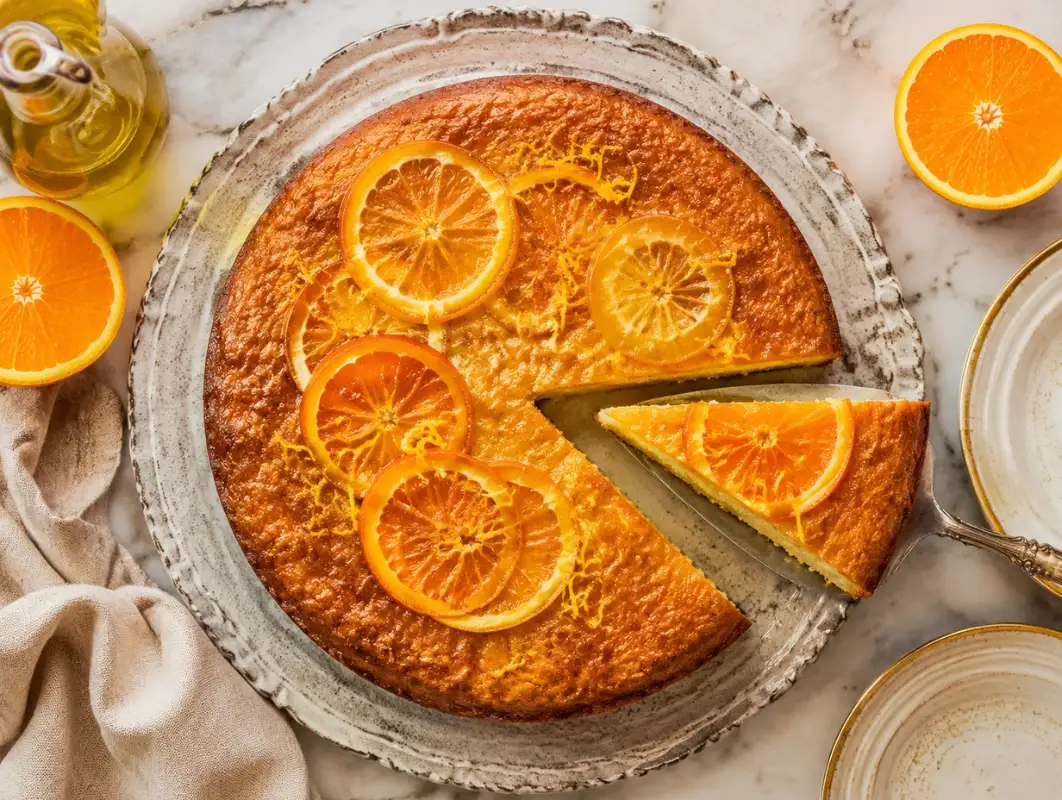
Citrus Olive Oil Cake
Ingredients
Method
- Preheat the oven to 350°F (175°C). Brush a 9-inch round cake pan or standard loaf pan with olive oil using a pastry brush — not spray, which leaves a film — and line the bottom with parchment.
- Zest the lemon and orange directly over a large mixing bowl into the sugar, then massage the zest into the sugar with your fingers for about 30 seconds. This ruptures the oil cells and infuses the sugar with citrus essence, a technique known as oleo saccharum.
- Add the eggs to the citrus sugar and whisk vigorously for a full 2 minutes, until the mixture is pale, thick and slightly frothy. This aeration is what gives the cake its lift, since there is no creamed butter here.
- Slowly drizzle in the olive oil while whisking constantly, then add the milk, the lemon and orange juice, the yogurt and the vanilla, whisking to combine.
- Add the flour, baking powder and salt directly to the same bowl and whisk just until no dry streaks remain. The second you stop seeing flour, stop whisking — overmixing develops gluten and turns the cake tough.
- Pour the batter into the prepared pan and bake 40–45 minutes, until the top is golden and a toothpick comes out with a few moist crumbs clinging to it — not wet batter, not bone dry. Do not open the oven door for the first 30 minutes while the cake builds its structure.
- Cool the cake in the pan for 15 minutes, then turn out onto a wire rack to cool completely.
- Make the glaze: whisk the powdered sugar with 2–3 tablespoons of fresh citrus juice until smooth. Drizzle over the cooled cake and let it set for 10 minutes before slicing.
Notes
Frequently Asked Questions About Citrus Olive Oil Cake
Can you taste the olive oil in olive oil cake?
With a mild EVOO, you’ll get a subtle fruity richness rather than an overpowering olive flavor. The citrus and sugar balance it perfectly. If you use a robust or peppery oil, however, the olive taste can be too strong — stick with mild, fruity varieties.
Why is my olive oil cake dense or heavy?
The two most common causes are overmixing the batter (which develops too much gluten) and using cold eggs. Whisk the eggs and sugar vigorously for 2 full minutes to incorporate air, and always use room-temperature eggs.
How do you make citrus olive oil cake moist for days?
Olive oil is liquid at room temperature, so unlike butter it won’t solidify and dry out your cake. This moist olive oil cake stays tender for 4-5 days at room temp when tightly wrapped. The yogurt in the batter adds extra insurance.
Is olive oil cake healthier than regular cake?
It replaces saturated butter fat with monounsaturated olive oil fat, which is considered heart-healthy. It’s still cake — it has sugar and flour — but the fat profile is meaningfully better from a Mediterranean diet perspective.
Can you make olive oil cake gluten-free?
Yes! Replace all-purpose flour with almond flour (by weight: 170g) or a 1:1 gluten-free blend. The almond flour version creates a richer, slightly denser crumb that many people actually prefer.
What is the best citrus to use in olive oil cake?
A combination of lemon and orange gives the most complex flavor. Meyer lemons are exceptional if available. Blood oranges add beautiful color in winter. Grapefruit is too bitter and lime can overwhelm the delicate olive oil flavor.
Pairing & Serving Ideas for Brunch and Beyond
Complete Brunch Combinations
| Occasion | Serve With | Non-Alcoholic Drink |
| Weekend brunch | Frittata + fruit platter + cheese board | Sparkling lemonade |
| Baby shower | Mini sandwiches + Greek yogurt parfaits | Hibiscus iced tea |
| Afternoon tea | Scones + clotted cream + finger sandwiches | Earl grey or chamomile |
| Dinner party dessert | Whipped mascarpone + fresh berries | Turkish coffee or espresso |
| Hostess gift | Wrapped in parchment with recipe card | N/A (just the cake!) |
Building a Mediterranean Brunch Around This Cake
For the ultimate Mediterranean brunch table, this brunch dessert recipe pairs perfectly with savory anchors. Start with our whipped feta garlic confit dip served alongside warm pita and olives as a nibble while guests arrive. For the main, set out our gemista Greek stuffed peppers and tomatoes or a simple frittata. Then bring out the cake for the grand finale. The sweet citrus notes will be the perfect counterpoint to all that salty, savory goodness.
Make This Citrus Olive Oil Cake Your Signature Bake
Personalize It, Own It
The thing I love most about this Mediterranean olive oil cake is that it’s endlessly adaptable. Swap the citrus. Add herbs. Throw in poppy seeds or pistachios. Drizzle with honey instead of glaze. Once you understand the ratio — the balance between olive oil, citrus, eggs, and flour — you can riff on it forvever. (Yep, that’s a typo. Leaving it.) Try slicing it thick and serving alongside our grilled chicken Mediterranean bowl for a surf-and-turf brunch that covers sweet AND savory in one meal.
Share Your Version With Us
Did you try the blood orange version? The lavender one? Did your kids eat it? (Mine did, reluctantly, then asked for seconds — a parenting win I’m still riding high on.) Drop a comment, tag us, send a carrier pigeon. And when you’re done with cake, explore more of our Mediterranean kitchen — our creamy tomato basil chicken is the dinner follow-up your brunch guests will beg for, and the lahanorizo Greek cabbage rice is the comfort side you didn’t know you needed. Happy baking!