Written by Ines Zahraoui — Tunisian home cook and co-founder of The Mediterranean Recipe, developing and testing recipes in her own kitchen since 2020. More about Ines →
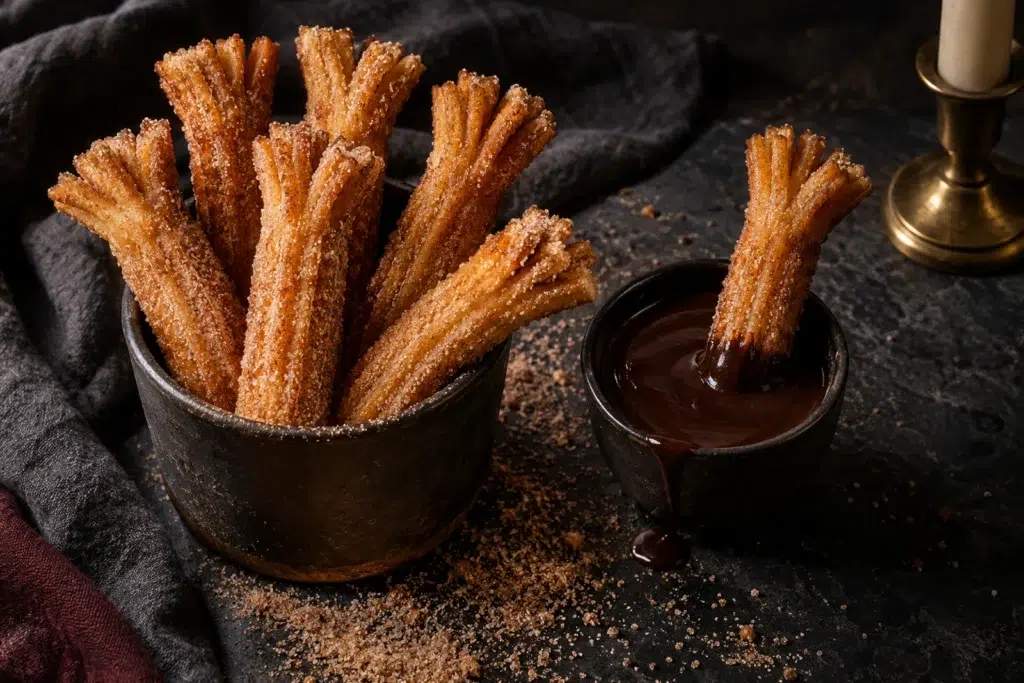
Churros are ridged for a reason, and it is not decoration.
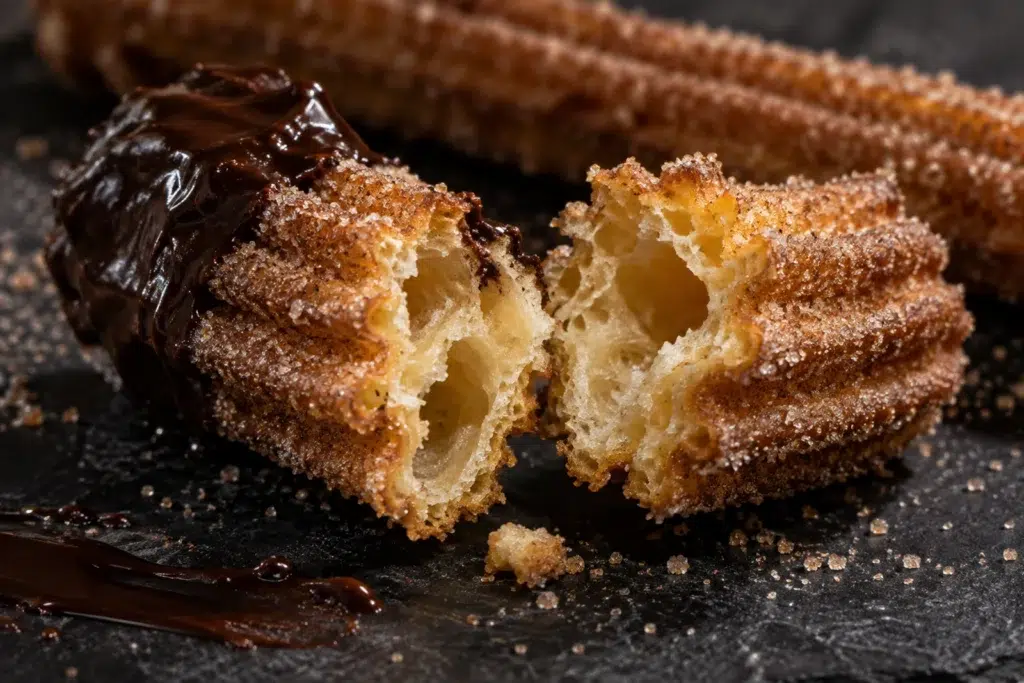
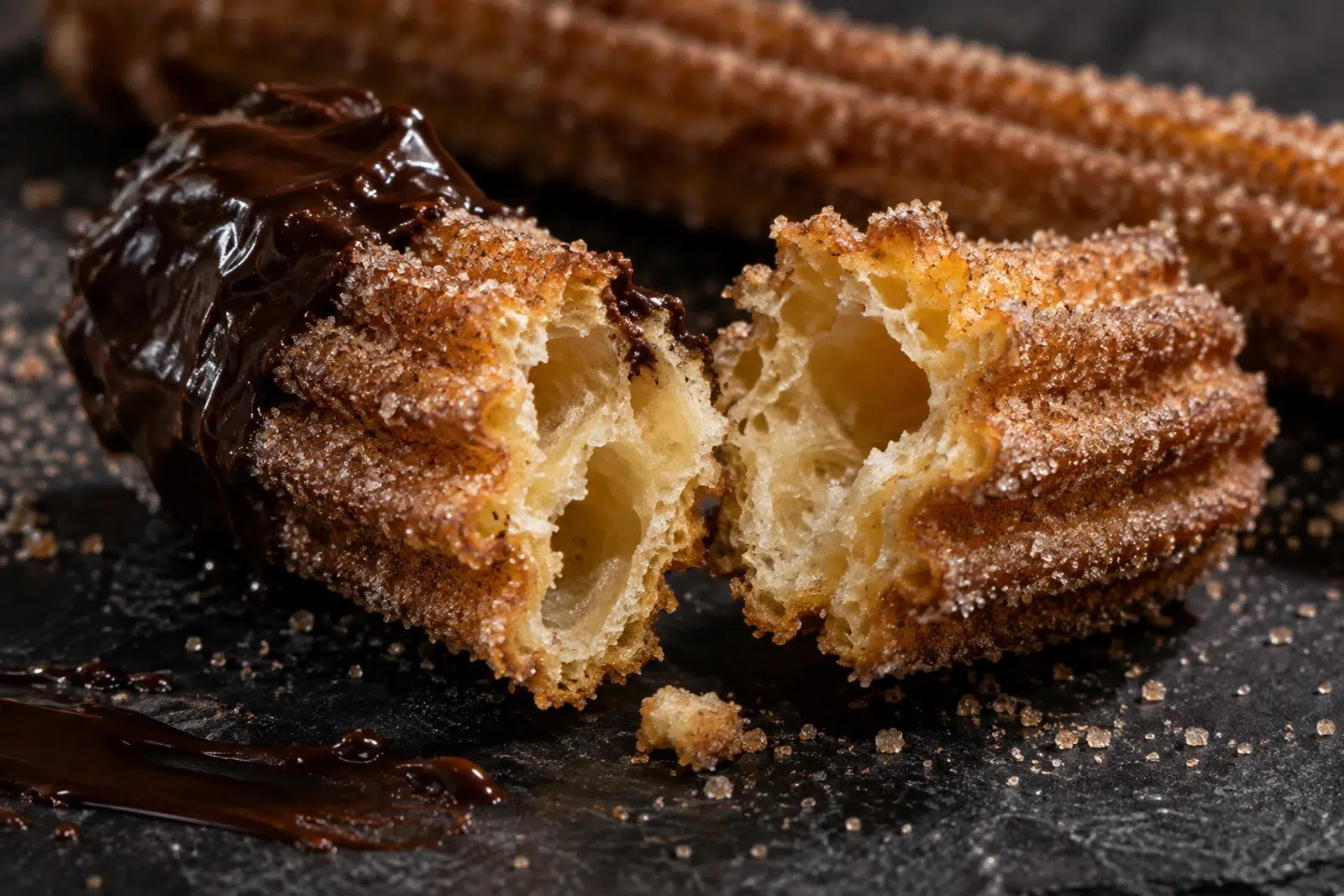
Those grooves increase the surface area exposed to oil, which creates more crisp edges. They may also give expanding steam more routes out of the dough. A smooth-sided piece can split during frying and throw hot oil, so a sturdy star tip is a sensible risk-reduction step—not a guarantee—and normal deep-frying precautions still apply.
So the first instruction on this page is about equipment: a closed star nozzle, never a round one, and never a plain zip bag with the corner cut off.
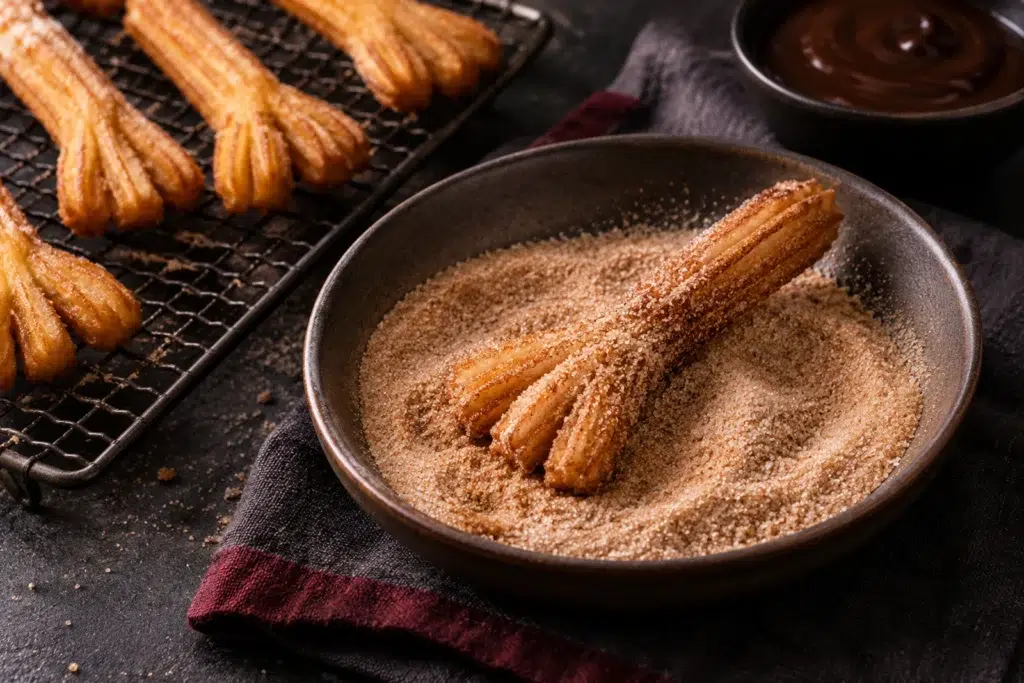
Past that, they are twenty minutes and four ingredients. The witch broom is a shaping decision — pipe them short, snip three slits into one end, and the slits fan open in the oil into something convincingly bristly. Rolled in cinnamon sugar, with a cup of chocolate thick enough to stand a churro up in.
Like the loukoumades, these Halloween churros are made to order and the page is honest about it.
Table of Contents
Table of Contents
Witch Broom Churros Recipe Card
Witch Broom Churros with Thick Chocolate
Ingredients
Method
- Chocolate first, so it can thicken while you fry. Whisk the cornstarch into 2 tablespoons of the cold milk. Heat the rest of the milk with the chocolate, sugar and salt until melted and smooth, whisk in the cornstarch slurry and cook 2 minutes until it thickens noticeably. Keep warm.
- Bring the water, butter, sugar and salt to a rolling boil in a saucepan.
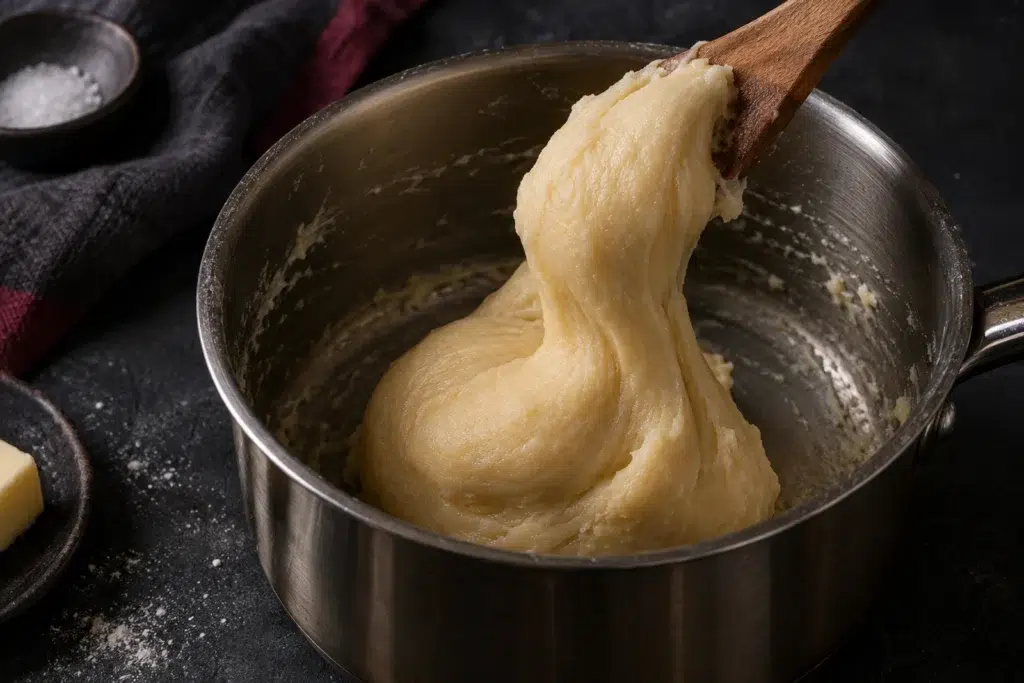
- Take it off the heat, tip in all the flour at once, and beat hard with a wooden spoon until it forms a smooth ball that pulls away from the sides. Return to low heat for 1 minute, stirring, to dry it slightly.
- Cool for 5 minutes, then beat in the egg until glossy and smooth. The dough should be pipeable but stiff.
- Load a piping bag fitted with a closed star nozzle, about half an inch across.
- Heat 3 inches of oil in a deep heavy pan to 355°F (180°C), checked with a thermometer.
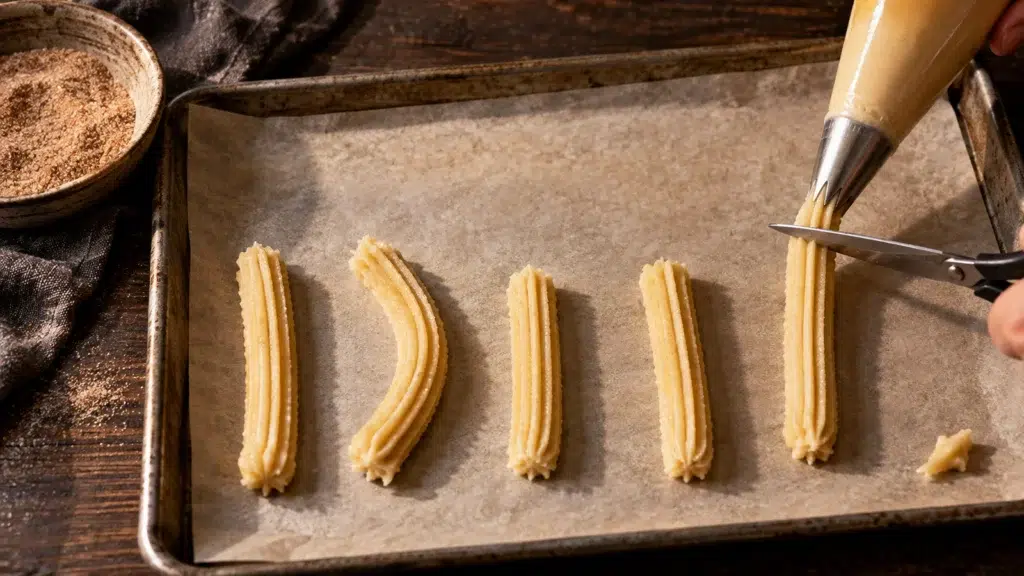
- Pipe 4-inch lengths onto parchment, cutting each with scissors. Snip three slits about an inch deep into one end of each.
- Lower them into the oil in batches of five, slit-end first. Fry 2 to 3 minutes a side until deep golden and firm.
- Lift onto a rack, rest 30 seconds, then roll in the cinnamon sugar while still hot.
- Serve immediately, bristle-end up, with the warm chocolate.
Notes
Why This Recipe Actually Works
- The nozzle rule is stated first, because it is both a quality and a safety instruction.
- Four ingredients in the dough, all of them cupboard staples.
- The broom shape comes from scissors, not from skill.
- The chocolate is thickened with cornstarch, a practical home method that makes it cling to the churros.
- Twenty minutes total, and the frying is ten of them.
Why Short Rather Than Long
Traditional churros are long loops or straight lengths eaten in a paper cone. Short ones are better for a party for three practical reasons: they fry faster and more evenly, they can be eaten in two bites while holding a drink, and a four-inch length with a fanned end reads as a broom in a way a twelve-inch one does not.
Essential Ingredients
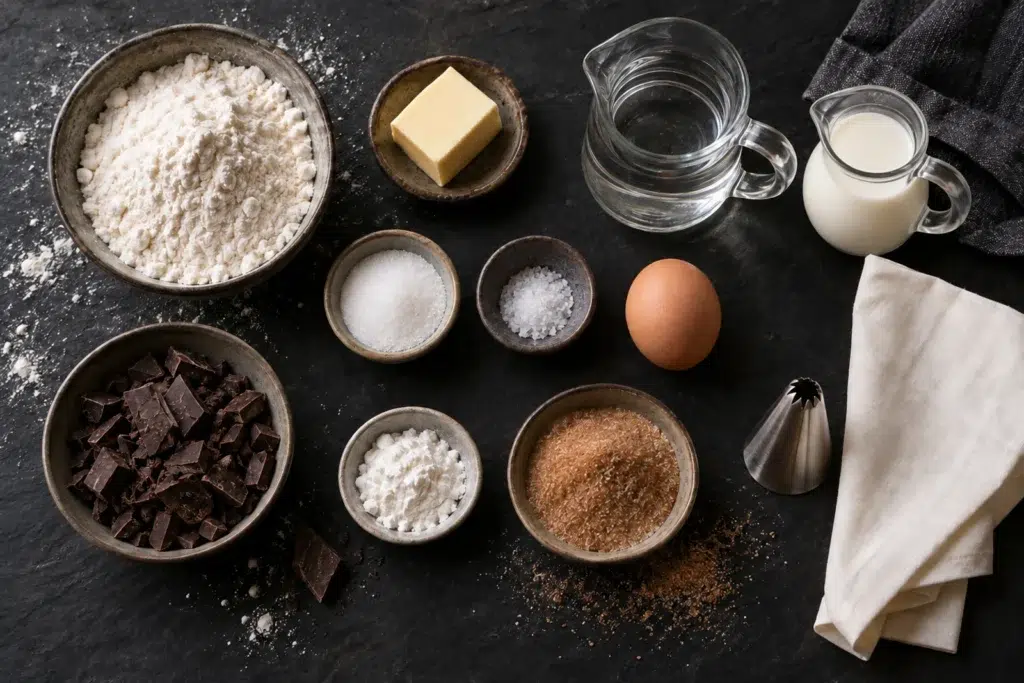
Flour, water, butter, salt. A choux-style paste, cooked on the stove. That is genuinely the whole dough.
The egg. Optional and I recommend it. Many traditional formulas use none — a plain flour-and-water paste gives a crisper, chewier, more robust churro. The egg gives a lighter, more tender one that browns better. For a Halloween party the egg version is easier to get right.
Dark chocolate, 60–70%. Not milk chocolate, which makes the dipping sauce cloying against sugared dough.
Cornstarch. Two teaspoons, and it gives this home-style chocolate its coating consistency — thick enough to coat rather than run.
Cinnamon. Generously, in the sugar. Roll them hot so it clings.
A closed star nozzle. Not optional. See below.
The Foolproof Method
- Make the chocolate first and keep it warm.
- Boil water, butter, sugar, salt.
- Flour in all at once, beat to a ball, dry it 1 minute on low heat.
- Cool 5 minutes, beat in the egg.
- Closed star nozzle. Pipe 4-inch lengths onto parchment.
- Snip three slits in one end.
- 355°F, batches of five, 2–3 minutes a side.
- Rack, 30 seconds, then roll hot in cinnamon sugar.
The Closed Star Nozzle Rule
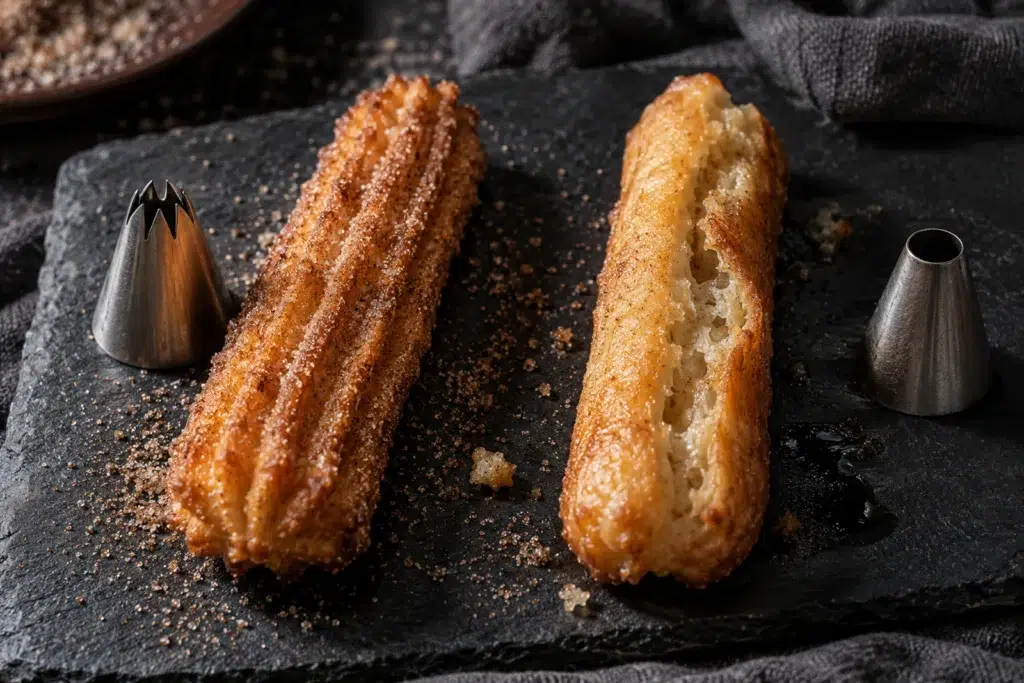
This is the claim and it is the one instruction here with a safety component.
Use a sturdy star nozzle—closed is preferred here for deep ridges—not a round tip, and never a zip bag with the corner snipped off.
Why it matters for quality. The ridges dramatically increase the surface area exposed to the oil. More surface means more crust, and crust is what a churro is. A smooth-sided one fries into something closer to a fried breadstick — softer, paler, greasier, because less of it is in direct contact with the hot oil.
Why it matters for safety. A churro is essentially a tube of wet paste dropped into oil at 355°F. The water inside turns to steam almost instantly, and that steam needs a route out. The grooves of a ridged churro create thin points along its whole length where steam has more routes to escape; this reduces risk but does not remove it.
A smooth-sided piece can split as steam expands behind the setting crust and may throw hot oil. The precise behavior depends on dough, temperature and shape, so do not treat ridges as a safety guarantee; use the correct tip together with a thermometer, small batches and careful lowering.
Closed star versus open star: a closed star has its points curled inward, which produces deeper, sharper grooves. An open star gives shallower ones. Both can produce ridges; this recipe prefers a sturdy closed star for deeper definition.
If you do not own a sturdy star nozzle, buy one before making these rather than improvising. The tool is inexpensive, and a smooth opening is not a suitable substitute.
Two supporting details: pipe with steady even pressure so the ridges stay consistent along the length, and do not let the dough cool completely before piping — cold stiff dough loses ridge definition as it is forced through.
Frying Safely, Briefly
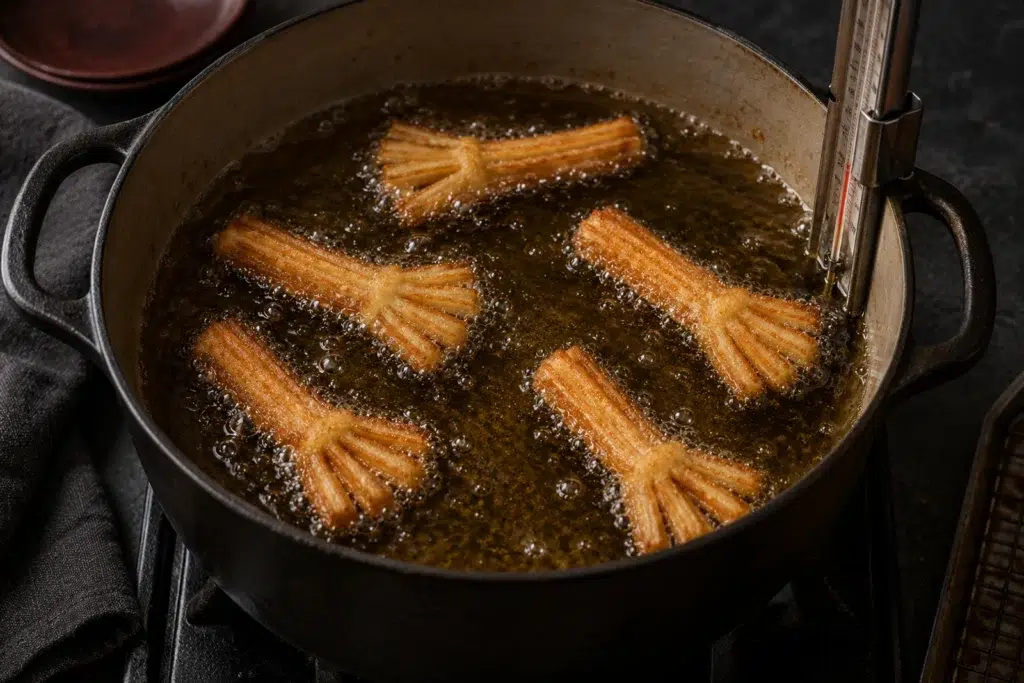
Same rules as the loukoumades, and they matter slightly more here because the dough is stiffer and the oil is hotter.
Deep heavy pan, filled no more than a third.
Thermometer, always. 355°F. Ten degrees under and they absorb oil; ten over and the outside darkens before the inside sets.
Closed star nozzle, for the reason above.
Lower them in gently, slit-end first, using tongs or a slotted spoon. Do not drop them from a height.
Batches of five. Crowding drops the temperature.
Never leave the pan unattended. Handle turned inward.
If oil catches fire: never water. If it is safe, turn off the heat and slide a metal lid over the pan. If it is not immediately controlled, evacuate and call emergency services.
Cool the oil fully before moving it.
Shaping the Brooms
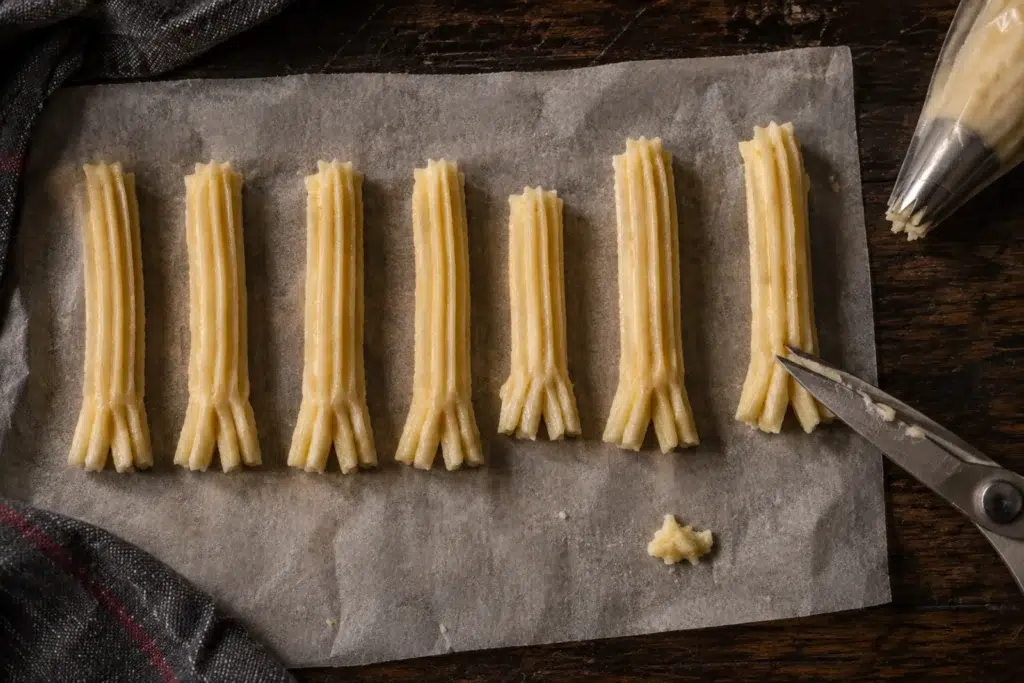
The shaping takes about four seconds per churro and needs no skill at all.
Pipe 4-inch lengths onto a parchment-lined tray, cutting each cleanly with scissors at the nozzle. Piping onto parchment rather than straight into the oil means you can shape them properly and lower them in calmly.
Snip three slits into one end, about an inch deep, using clean kitchen scissors. Three is right — two looks accidental, four or more and the strands are too thin and burn.
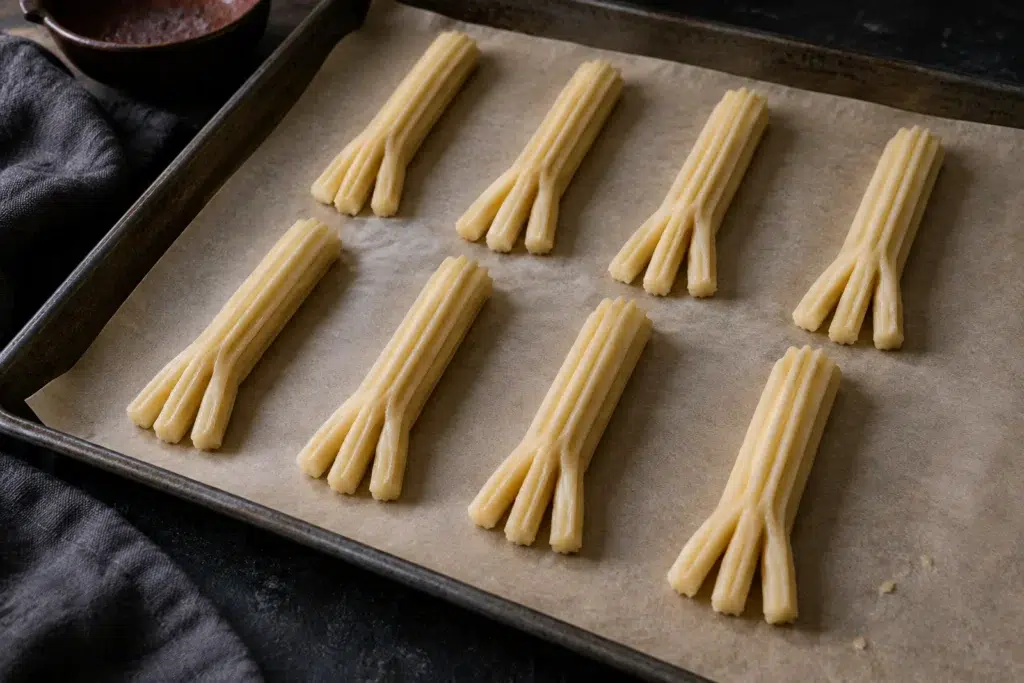
Do not fan them open by hand. They open by themselves in the oil as the cut strands puff and separate, and the result is more natural than anything you can arrange.
Optional but effective: chill the piped tray for fifteen minutes before frying. Firmer dough holds the ridges and the slits more sharply.
A binding detail, if you want one: after sugaring, tie a very thin strip of orange peel or a chive around the churro just above the bristles. It reads as the twine on a broom handle. Entirely optional and it does look good.
Lower them slit-end first so the bristles get the longest exposure and splay properly.
The Chocolate Should Be Thick Enough to Stand a Churro In
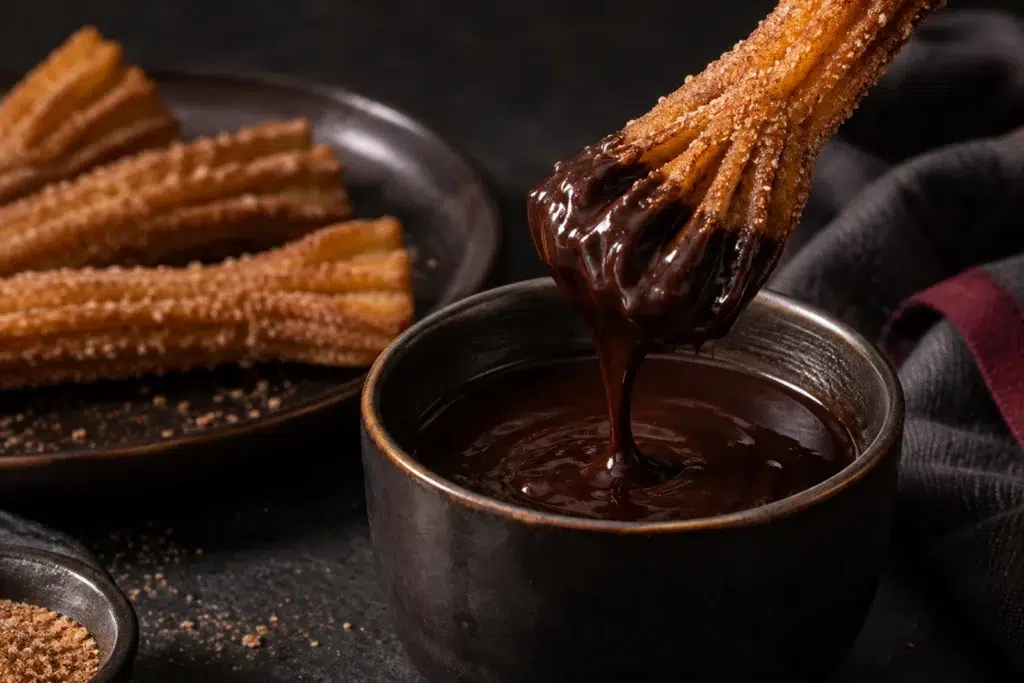
Spanish chocolate a la taza is not a sauce and not hot chocolate. It is a thick, almost pudding-like drinking chocolate, and the difference is cornstarch.
Two teaspoons whisked into a little cold milk, then stirred into the melted chocolate and milk and cooked for two minutes. It thickens as it heats and thickens further as it stands.
The test: dip a churro and lift it. The chocolate should cling in a thick even coat that does not run straight back off. If it runs, cook it another minute; if it sets too solid, whisk in a splash more milk.
Keep it warm, not hot. Over direct heat it can split. A pan set over another pan of hot water off the heat holds it perfectly for an hour.
Serve in small cups, one per two or three people, so nobody is reaching across a table.
Dark chocolate, 60–70%. Milk chocolate against cinnamon-sugared fried dough is too much sweetness in one mouthful.
Creative Variations
Orange and dark chocolate. Orange zest in the cinnamon sugar. Genuinely the best version.
Filled churros. Pipe thicker lengths, and inject with dulce de leche or thick chocolate after frying using a bottle tip. More work, considerable payoff.
Anise. A quarter teaspoon of ground anise in the dough. Traditional in parts of Spain and it makes them taste older.
Savoury, with za’atar. No sugar in the dough, rolled in za’atar and salt instead of cinnamon sugar, served with labneh. [LIVE — /witch-finger-breadsticks-zaatar/]
Churro bites. Pipe one-inch lengths and skip the slits. Faster, easier to hand round, and better for children.
Storage and Reheating
They do not keep. Churros are crisp for about ten minutes and chewy within thirty. This is the shortest window of anything in this batch.
The chocolate keeps 3 days in the fridge and reheats gently with a splash of milk. That is the make-ahead component.
The dough can be piped onto parchment and refrigerated for 2 hours before frying, which is genuinely useful — it means the messy part is done before guests arrive.
Do not freeze fried churros. They thaw soft and reheating gives you something dry rather than crisp.
If you have leftovers, split them and toast them the next morning with coffee. They are decent that way and nothing like what they were.
Nutritional Benefits
Not much, honestly, and I will not stretch for it. Fried dough rolled in sugar with chocolate to dip.
What is true: at around 130 calories each including the sugar coating, a short churro is a modest portion, and the dark chocolate dip brings flavanols and less sugar than a milk chocolate one would. Two churros and a small cup of chocolate is a reasonable dessert.
Five Rules to Keep Beside the Recipe
Use a sturdy star tip, never a smooth round opening
Keep the pan no more than one-third full
Hold oil near 355°F
Lower pieces gently in small batches
Smother a pan fire only if safe; otherwise evacuate
Scaling line: 10 churros: half batch · 20 churros: standard batch · 40 churros: make two dough batches and fry sequentially
Frequently Asked Questions
Why do churros need a star nozzle?
The ridges increase surface area and create the crisp edges associated with churros. They may also give steam more routes out of the dough, so a sturdy star tip is a sensible risk-reduction choice. It does not replace normal deep-frying precautions, and a smooth round opening is not recommended for this recipe.
What temperature should the oil be for churros?
355°F (180°C), checked with a thermometer. Below that they absorb oil and go greasy; above it the outside darkens before the inside has set, leaving them raw in the middle.
Why did my churros come out soggy?
Either the oil was too cool, the pan was overcrowded so the temperature dropped, or they were drained on paper towel instead of a rack. Fry five at a time and rest them on a wire rack so air circulates underneath.
Can I make churros ahead of time?
Not the churros themselves — they are crisp for about ten minutes. You can make the chocolate up to three days ahead and pipe the dough onto parchment up to two hours ahead and refrigerate it, which does most of the work in advance.
Do churros need egg?
No. Many traditional churro formulas are leaner than this enriched party version. Adding one egg makes them lighter, more tender and better browned, which is a little more forgiving for a first attempt. Both are correct.
How do I make the broom shape?
Pipe four-inch lengths onto parchment, then snip three slits about an inch deep into one end with kitchen scissors. Do not fan them by hand — the strands separate on their own in the oil, and lowering them slit-end first gives the best splay.
Pairing and Serving Ideas
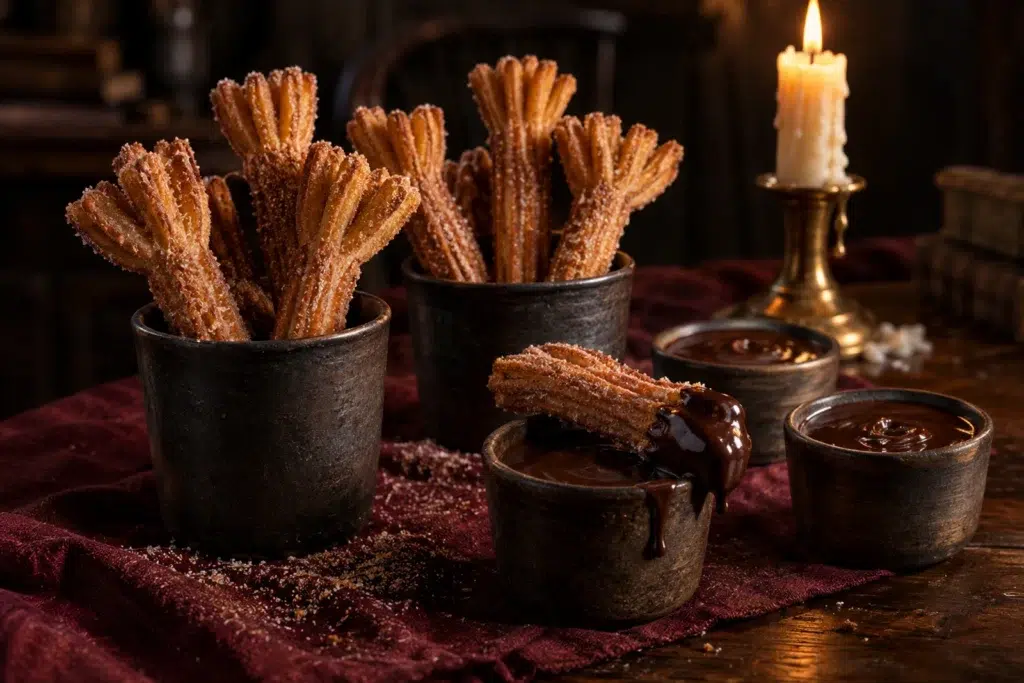
Standing bristle-end up in a short heavy cup or jar, with the chocolate in small cups beside them. Standing them up is most of the effect.
One fried dessert per party. If you are making these, do not also make loukoumades — two frying stations is one too many and both suffer. [Article 34 of this batch — /halloween-loukoumades-eyeballs/, due 7 Oct]
Late, as the last thing. Same logic as the loukoumades: a hot sweet thing at ten o’clock is a moment.
With something that keeps beside them, so dessert continues after you stop frying. Baklava or halva bark. [Article 33 of this batch — /halloween-baklava-spider-web/, due 5 Oct] · [LIVE — /halloween-halva-bark/]
For children, pipe one-inch bites and skip the slits. Easier to eat, faster to fry, and there is no shape to be disappointed by. [LIVE — /kid-friendly-halloween-recipes-mediterranean/]
To drink: strong coffee, or nothing. The chocolate is the drink.
Piped, Snipped, Fried, Dipped
[VIDEO EMBED — 18 seconds, vertical 9:16]
Flour beaten into boiling water into a smooth ball, the dough piped in short ridged lengths through a star nozzle and cut with scissors, three slits snipped into one end, the lengths lowered slit-first into hot oil and puffing open, lifted golden onto a rack, rolled in cinnamon sugar, then dipped into thick dark chocolate.
Ready to Fry Twenty Brooms in Ten Minutes?
Buy a closed star nozzle before you start. Make the chocolate first. Keep the oil at 355°F and fry five at a time.
Then roll them hot, stand them bristle-up, and hand them over before anyone has time to sit down.