 Written by Ines Zahraoui — Tunisian home cook and co-founder of The Mediterranean Recipe, developing and testing recipes in her own kitchen since 2020. More about Ines →
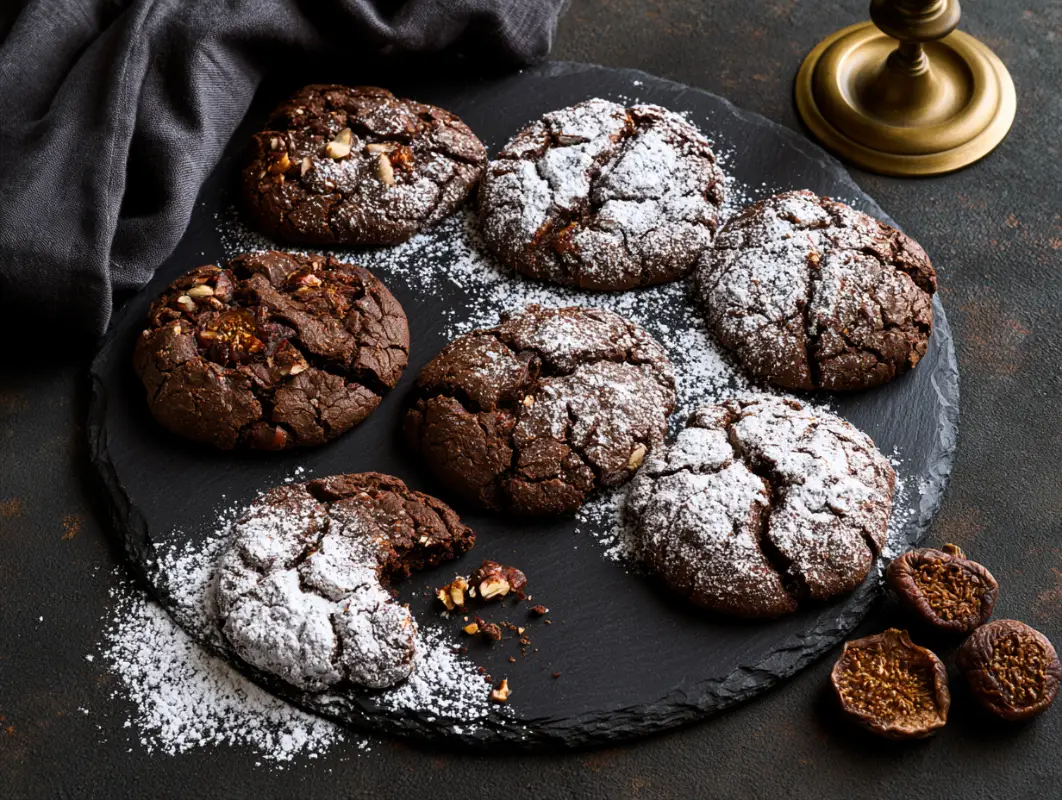
These Pan dei Morti cookies come out of the oven almost black, and there is not a gram of dye or charcoal in them.
Cocoa, dark dried fruit, warm spice and a short hot bake do all of it. What you get is a flat, craggy, deeply fissured biscuit the colour of wet bark, and then you dust it heavily with icing sugar so the white settles into every crack and the whole thing looks like something that has been dug up. They are, by a distance, the moodiest bake in this entire Halloween cluster, and they are entirely traditional.
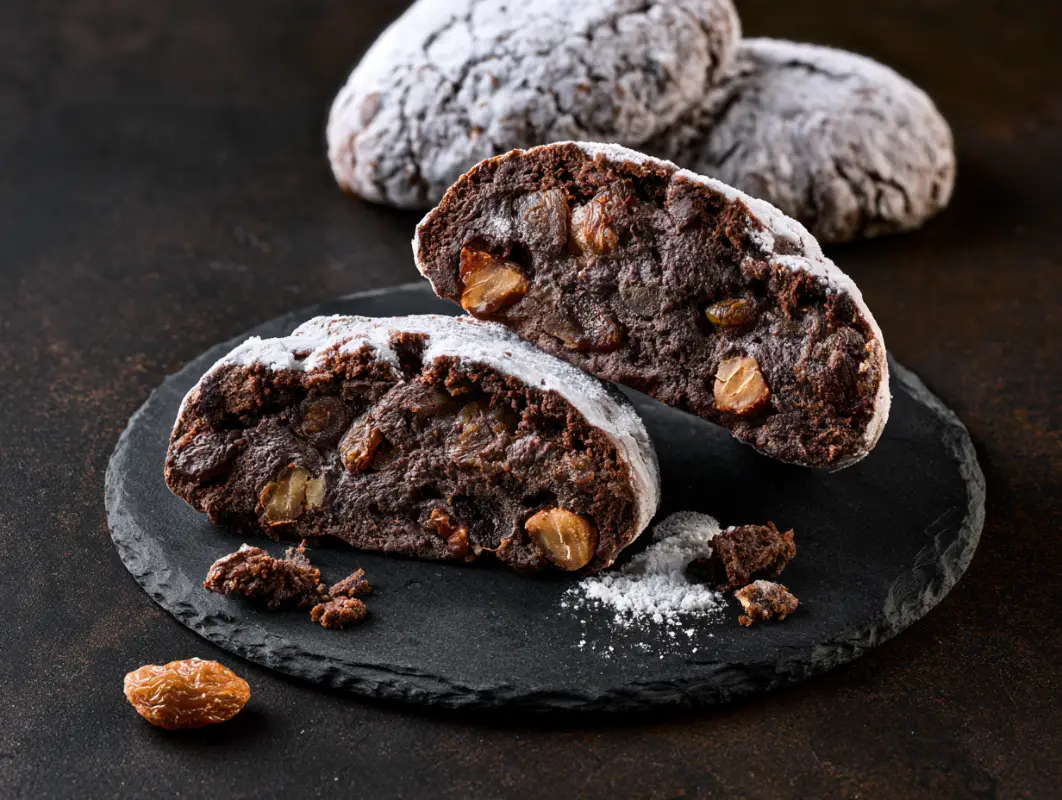
The texture is unusual and it is why people go back for a third. The outside is craggy and slightly crisp, the inside is dense and soft and studded with figs and raisins that have gone jammy in the oven, and there are crushed amaretti through it giving little pockets of sandy crunch. Three textures in one small biscuit.
They are Milanese, they are made for the first of November, and their origin is one of the more likeable stories in Italian baking: this is a using-up recipe.
They are also the one to lead your photographs with. Ossi dei morti and fave dei morti are both pale and both need careful lighting to read at thumbnail size; these are near-black with white icing sugar packed into the cracks, which is the highest-contrast object in the whole set and the only one that survives being shrunk to 236 pixels wide.
Table of Contents
Table of Contents
Pan dei Morti Recipe Card
Pan dei Morti (Milanese Bread of the Dead)
Ingredients
Method
- Heat the oven to 350°F (175°C). Line two trays with parchment.
- Crush the amaretti and dry biscuits to fine crumbs, not chunks. A bag and a rolling pin is enough. Chunks stop the dough binding.
- Combine all the dry ingredients in a large bowl: both crumbs, flour, sugar, cocoa, spices, baking powder and salt.
- Stir in the chopped figs, raisins and almonds and toss until every piece is coated in the dry mix.
- Add the egg whites, coffee and honey. Work with a spatula then your hands into a stiff, dark, slightly tacky dough. It looks alarmingly dry for a minute. Keep going. Add a tablespoon more coffee only if it genuinely will not come together.
- Take pieces about the size of a golf ball and shape into flat ovals roughly 3 inches long and 1/2 inch thick. Do not smooth them. Leave the surface rough and the edges ragged.
- Space 1 1/2 inches apart. Bake 18 to 20 minutes, until set at the edges and still slightly soft in the middle.
- Cool completely on the tray.
- Dust with icing sugar heavily, then dust again. The white in the cracks against the near-black biscuit is the entire look.
Notes
Why This Pan dei Morti Recipe Actually Works
- The colour is free. Cocoa, dark fruit and spice, no additives.
- One bowl, no mixer, no chilling.
- It is genuinely forgiving — the shaping is deliberately rough and the ingredient list is a set of suggestions.
- Three textures in a small biscuit: craggy outside, dense soft middle, sandy amaretti pockets.
- It tastes like autumn rather than like a novelty, so people eat several.
The One That Photographs Best
Of the three Italian bakes in this cluster, this is the one to lead your dessert pins with. Ossi dei morti are pale, fave dei morti are pale, and both need careful lighting to read at Pinterest thumbnail size. Pan dei morti are near-black with white icing sugar packed into the cracks — the highest-contrast object in the whole set, and it survives being shrunk to 236 pixels wide, which is the actual test.
Essential Ingredients
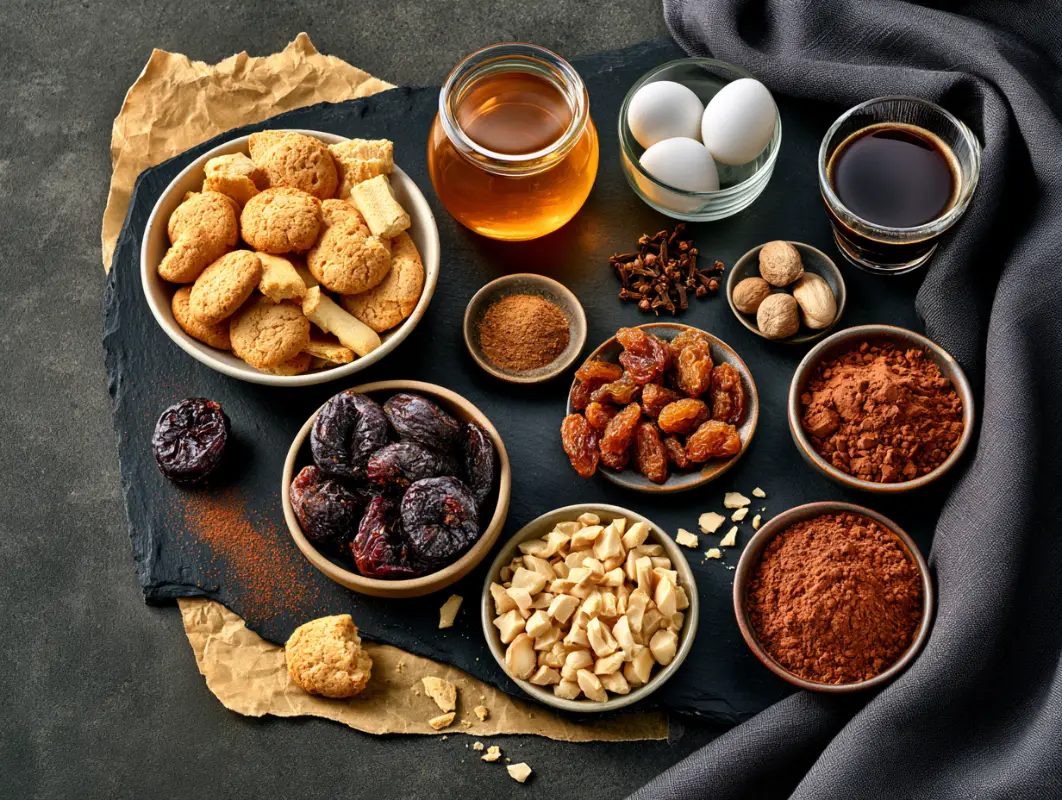
Amaretti. Crisp Italian almond macaroons, crushed fine. They bring almond flavour, a little structure, and small sandy pockets through the finished biscuit. Buy the hard crunchy kind, not the soft chewy ones. Traditional hard amaretti are apricot kernels, sugar and egg white and carry no alcohol — but check the ingredients anyway, because a few soft and flavoured versions contain amaretto liqueur.
Dry biscuits. Anything stale and plain. Savoiardi, digestives, butter biscuits, leftover panettone dried in a low oven. This component is where the recipe came from and it is where you should feel free.
Cocoa. Unsweetened, natural or Dutch-process. Dutch-process goes darker and is what I use for this.
Dried figs. The most important fruit here. They go jammy and sticky in the oven in a way raisins alone do not. Chop them small so no single bite is all fig.
Spices. Cinnamon, nutmeg, cloves. Cloves in particular are what make this taste old rather than merely spiced. Do not skip them.
Egg whites and strong coffee. The only liquids, and there is barely any. This is a very dry dough by design. Coffee is the better of the two liquids this recipe is traditionally made with — it sits with the cocoa and the figs, and it darkens the dough very slightly, which this biscuit wants.
Honey. Two tablespoons. Adds a little chew and helps the surface catch.
The Foolproof Method
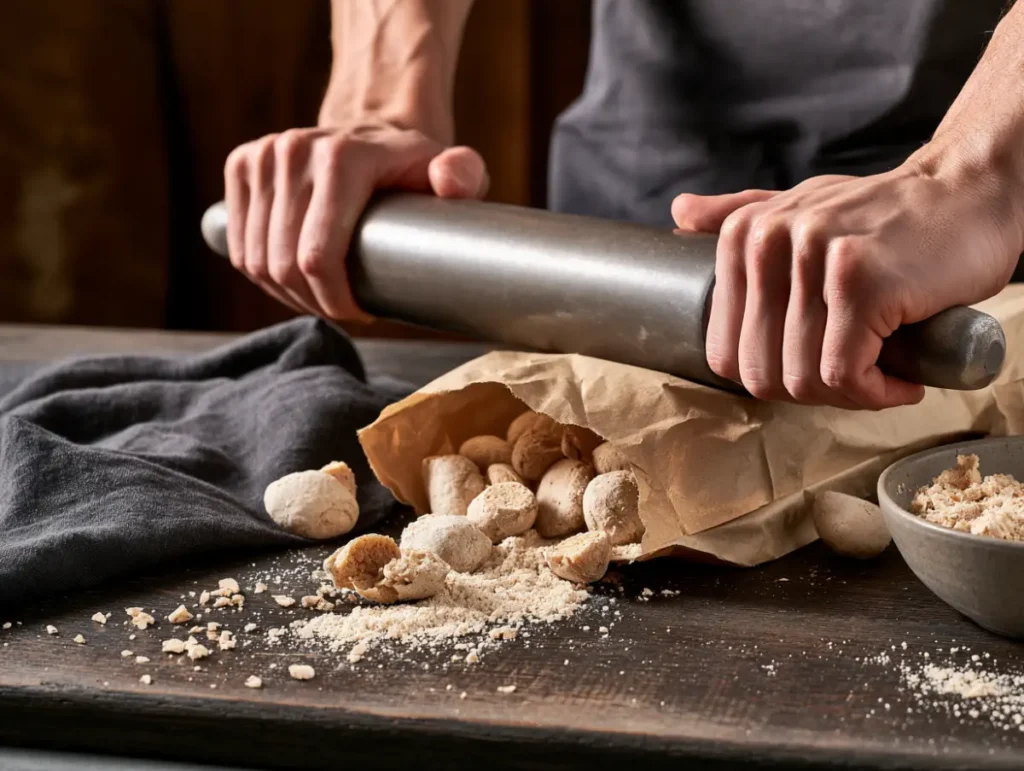
- Crush both biscuits to fine crumbs. Fine, not chunky.
- Combine all dry ingredients, then toss the fruit and nuts through them.
- Add egg whites, coffee and honey. Work with your hands. Be patient with it.
- Shape rough flat ovals. Do not smooth.
- Bake 18 to 20 minutes, still slightly soft in the middle.
- Cool completely, then dust heavily. Twice.
A Lombard Tradition for Ognissanti
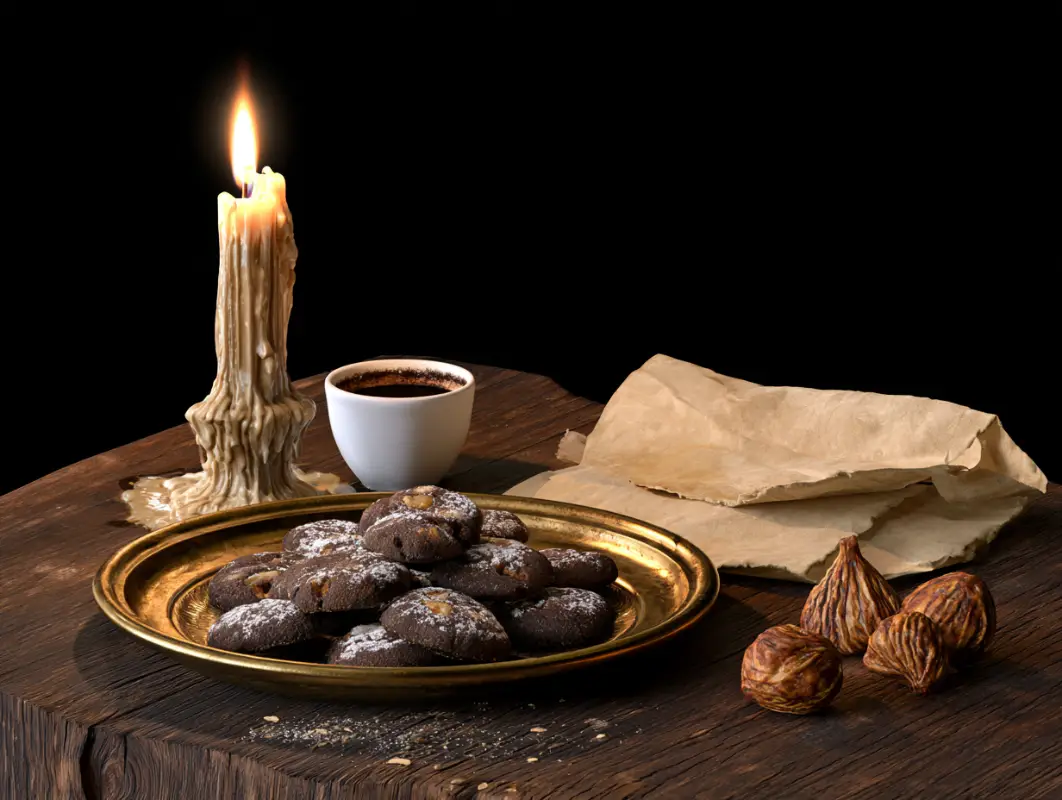
Pan dei morti are Milanese, and more broadly Lombard, and they are baked around Ognissanti on 1 November and Il Giorno dei Morti on 2 November.
The name means bread of the dead, which is an odd name for something that is not bread and does not contain yeast, and the most commonly given explanation — the one La Cucina Italiana gives in its own history of the biscuit — is that the earliest versions were made with stale bread rather than flour, a genuine bread dough repurposed. Whether that is the true origin or a later rationalisation of the name, I cannot tell you with confidence, and I would be suspicious of anyone who claims to. What is clear is that every traditional version of this recipe is built on crumbs of something that was already baked.
In Milan they appear in bakery windows from late October, sold by weight, in slightly different shapes and shades depending on the bakery. They are one of a large family of Italian regional bakes made specifically for the first two days of November, alongside ossi dei morti, fave dei morti, Sicilian sugar figures and a Neapolitan chocolate torrone also called torrone dei morti.
This Is a Leftovers Recipe, and That Is the Key to It
Here is the thing that changes how you cook this, and almost nobody says it out loud.
Pan dei morti is not a recipe in the modern sense. It is a method for using up whatever dry baked goods you already have, dressed in cocoa and spice until it becomes something worth eating on its own terms. That is cucina povera working exactly as designed: the crumbs of last week’s biscuits, the end of the panettone, the amaretti nobody finished, the raisins in the back of the cupboard.
Once you know that, three things follow.
Stop buying ingredients specially. The second crumb component in the list — the plain dry biscuits — is explicitly whatever you have. Stale savoiardi, broken digestives, the last of a box of butter biscuits, dried-out panettone or pandoro, even leftover plain cake dried in a low oven. All correct. All traditional.
The fruit is a suggestion too. Figs and raisins are the classic pairing and I would keep the figs if you can. Beyond that: dates, prunes, dried apricots, dried cherries, chopped candied peel. Use what is in the cupboard.
Nothing here is precious. This is why the dough is so forgiving, why the shaping is deliberately rough, and why every Milanese bakery’s version looks slightly different. There is no single correct pan dei morti, and a recipe that tells you there is has misunderstood what it is.
The one thing I would not substitute is the amaretti. They are doing a specific job — almond flavour and those sandy pockets — that ordinary biscuits cannot. Everything else is genuinely open — with one limit. The crumbs must be dry. Fresh cake or soft biscuits carry moisture into a dough that is deliberately very dry, and the result is cakey and pale rather than craggy and near-black. “Whatever is stale” is the instruction; “whatever is soft” is not.
I find this the most likeable fact about the recipe. A biscuit made for the dead, invented to avoid wasting food, that happens to be the best-looking thing on an October table.
Why They Come Out Almost Black
Four things stack.
- Cocoa is the base, and Dutch-process cocoa is noticeably darker than natural.
- Dark dried fruit — figs and raisins — caramelises at the surface where it is exposed, going nearly black at the edges.
- Spice contributes more colour than people expect. Cloves, nutmeg and cinnamon are all brown pigments in quantity.
- A hot, short bake at 350°F sets the surface fast and lets the exposed fruit catch without drying the interior.
There is no charcoal, no black cocoa, no dye. Which matters practically as well as ethically: black food colouring at the volume needed to darken a whole dough turns bitter and reads purple, and activated charcoal gives grey and a chalky mouthfeel — and has never been approved by the FDA as a food or colour additive. Neither would improve on what cocoa and figs do for free.
The finished effect only works if you dust properly. Near-black biscuit with white icing sugar packed into every crack is the entire visual, and a light dusting reads as a mistake. Dust once, let it absorb for ten minutes, then dust again.
Crushing the Amaretti Properly
Small section, real consequences.
Fine crumbs, not chunks. A bag and a rolling pin, or a few short pulses in a processor. You want something close to coarse sand with a few slightly larger pieces, not broken shards.
The reason is structural. This dough has very little liquid — two egg whites and a quarter cup of coffee for the whole batch — and the crumbs are what absorb what there is and bind everything together. Large chunks have a poor surface-area-to-volume ratio, absorb almost nothing, and sit in the dough as inert lumps that stop it holding together. You end up adding more liquid to compensate, which makes the biscuits cakey and pale.
Fine crumbs also distribute the almond flavour evenly instead of leaving you with two bites of amaretti and eighteen of cocoa.
Do not over-process into powder, though. Some texture is what gives you the sandy pockets. A handful of pieces the size of a lentil among the fine crumb is exactly right.
Texture: Soft Inside, Craggy Outside
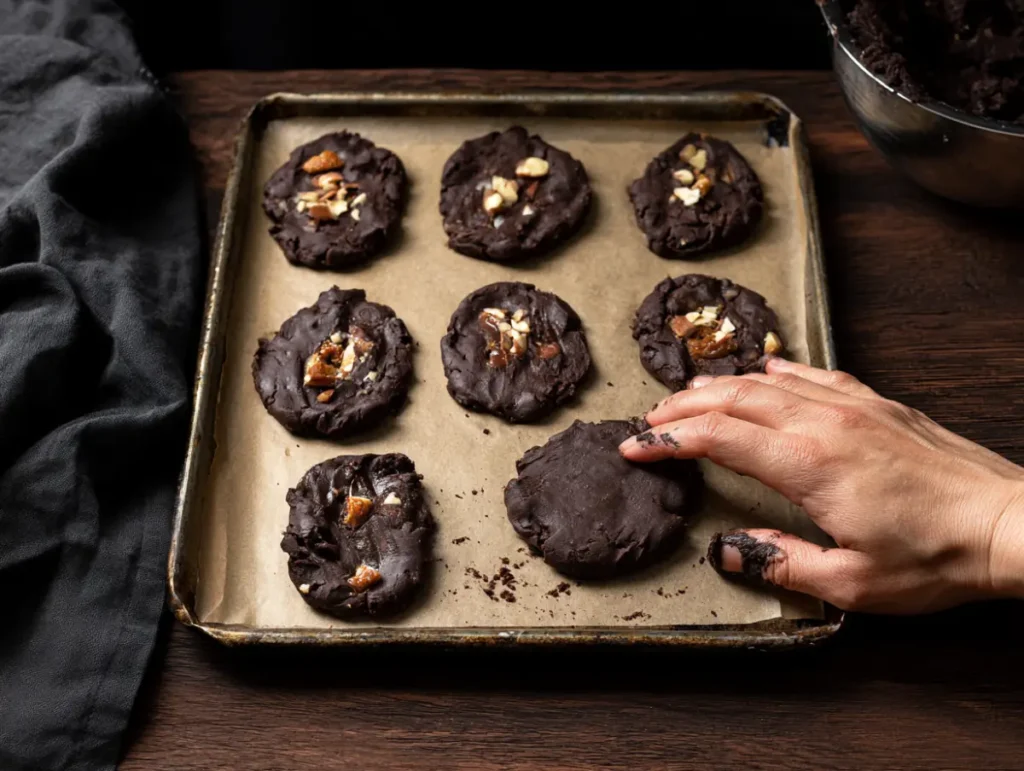
Shape them flat and oval, about 3 inches by 2 and half an inch thick. Thicker and the centre stays raw while the edges dry.
Do not smooth the surface. This is the instruction people ignore and it is the one that decides how the finished biscuit looks. Every ridge, tear and ragged edge you leave in the raw dough becomes a crack the icing sugar collects in. Smooth them and you get neat brown ovals with a light dusting; leave them rough and you get something that looks excavated.
Press a couple of chopped almonds or a piece of fig into the top of each one before baking so the surface is not uniform.
Pull them slightly soft. Eighteen to twenty minutes. The edges should be set and the middle should still give when pressed. They firm as they cool and continue to soften over the following days as the fruit’s moisture redistributes — which is why they are better on day three than day one.
Cool completely before dusting. Icing sugar on a warm biscuit dissolves into a thin translucent glaze instead of sitting white on the surface.
The Five Rules, In Order
- Crush the biscuits to sand, not chunks. Chunks absorb nothing and sit in the dough as inert lumps.
- Keep the dough dry. Add a tablespoon more coffee only if it genuinely will not come together.
- Do not smooth them. Every ridge and ragged edge you leave becomes a crack the icing sugar collects in.
- Pull them soft. Edges set, middle still giving. They firm as they cool.
- Dust twice, and only when they are stone cold. Once, ten minutes to absorb, then again.
Storage and Serving
Tin, room temperature, 10 days. They soften over the first few days and that is correct — this is not a biscuit that should snap.
Re-dust before serving. The first coat of icing sugar gets partly absorbed within a day. A fresh dusting an hour before they go on the table restores the contrast completely.
Do not refrigerate.
Freezing: baked biscuits freeze for 2 months, undusted. Thaw at room temperature and dust fresh.
Bake a week before 1 November and you are covered for both Halloween and the days after.
Nutritional Benefits
Dried figs bring fibre, potassium and calcium in a genuinely meaningful amount — they are among the more nutrient-dense dried fruits, and the full profile is in the USDA’s FoodData Central. Almonds add vitamin E and monounsaturated fat, and cocoa contributes flavanols. There is no butter in the recipe at all and the sugar is moderate for an Italian biscuit, with a lot of the sweetness coming from the fruit itself.
None of which makes it a health food. It does make it a more substantial and more satisfying thing than most of what will be on a Halloween table, and one biscuit is genuinely enough.
Frequently Asked Questions
What are pan dei morti?
Flat, dark, spiced Italian biscuits made in Milan and across Lombardy for All Saints’ Day on 1 November and All Souls’ Day on 2 November. They are built on crushed amaretti and other dry biscuits with cocoa, warm spices, dried figs and raisins, and dusted heavily with icing sugar.
Are pan dei morti a bread or a biscuit?
A biscuit, despite the name. There is no yeast and no proving. The name is usually explained by the earliest versions having been made with stale bread rather than flour, though every traditional version is built on the crumbs of something already baked.
Can I make pan dei morti without amaretti?
You can substitute other dry biscuits, but the result is noticeably less interesting — amaretti bring the almond flavour and the sandy pockets that define the texture. If you cannot find them, use plain biscuits plus 1/2 teaspoon of alcohol-free almond flavouring — sold as flavour rather than extract, since almond extract is alcohol-based — and a handful of extra chopped almonds.
How long do they keep?
Ten days in an airtight tin, and they are better from day three as the fruit’s moisture redistributes and the interior softens. Re-dust with icing sugar before serving.
Can I use different dried fruit?
Yes, and you should use what you have — this is a using-up recipe by origin. Dates, prunes, dried apricots, dried cherries and candied peel all work. Keep the figs if you can; they go jammy in a way the others do not.
Why are mine pale rather than dark?
Either not enough cocoa, natural cocoa rather than Dutch-process, or too much added liquid making a paler cakey dough. Also check you dusted after they were completely cold — icing sugar on a warm biscuit dissolves and disappears rather than sitting white.
Pairing and Serving Ideas
A small cup of strong black coffee, which is what most Lombard households actually reach for. If you are avoiding caffeine, chilled mosto cotto stirred into sparkling water sits with the cocoa and the figs just as well.
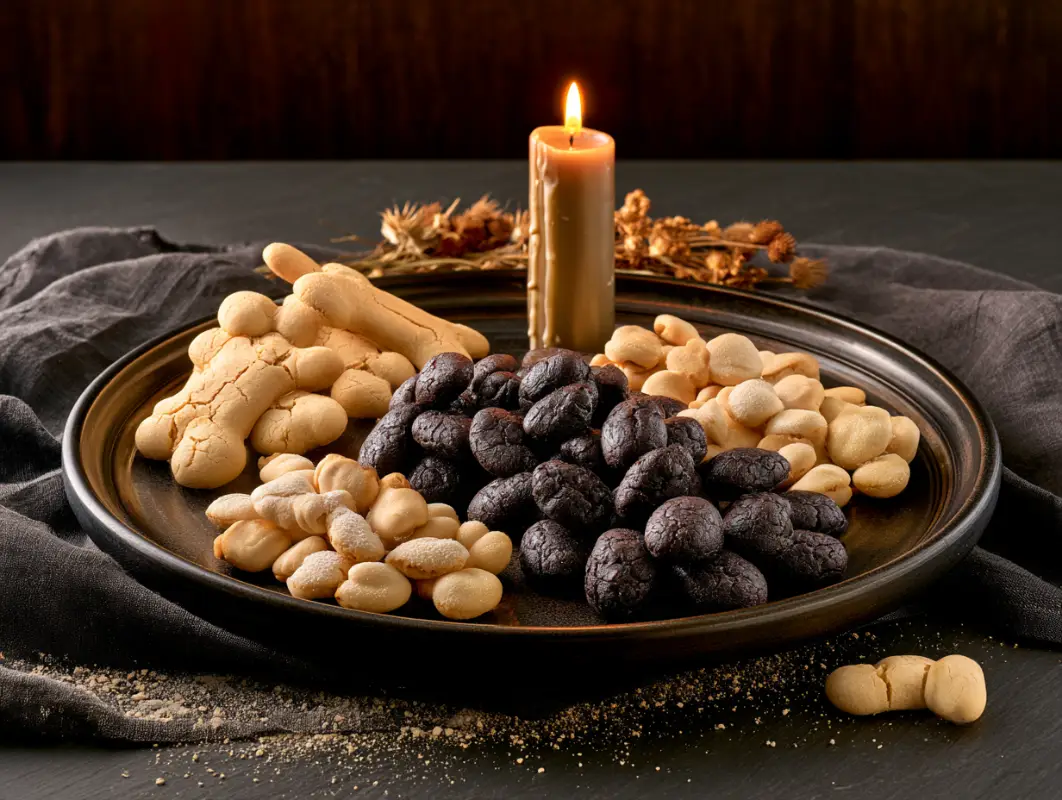
The plate of three. This is the one to build if you make more than one:
- Ossi dei morti — pale, crisp, cracked, bone-shaped
- Fave dei morti — pale, small, soft and chewy
- Pan dei morti — near-black, craggy, dense — this one
Two pale and one near-black, three textures, one tradition. On a dark platter with a single candle it is the best-looking dessert plate in the entire Halloween plan and it needs no props whatsoever.
On a Halloween dessert table rather than a November one, these sit well next to anything honeyed — baklava or loukoumades — because their spice and bitterness cuts sweetness rather than competing with it.
Watch: Almost Black to Dusted White
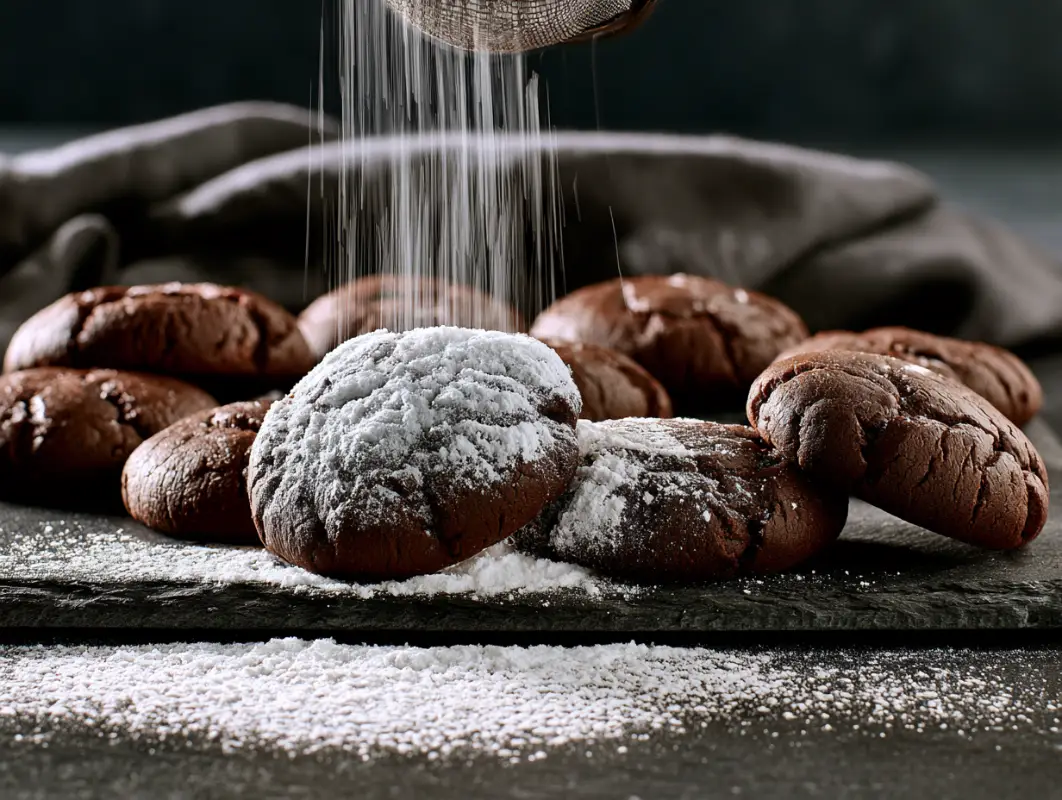
Amaretti crushed in a bag, the dark dry mix coming together with figs and raisins tossed through, rough ovals shaped by hand and deliberately not smoothed, then the cooled near-black biscuits disappearing under a heavy fall of icing sugar.
Ready to Make Something That Looks Excavated?
Crush what you have, keep the dough dry, shape them rough, pull them soft, and dust them twice.
Bake a batch in late October, put them on a dark plate with the other two, and you have the only dessert on the internet that is still relevant on the second of November.