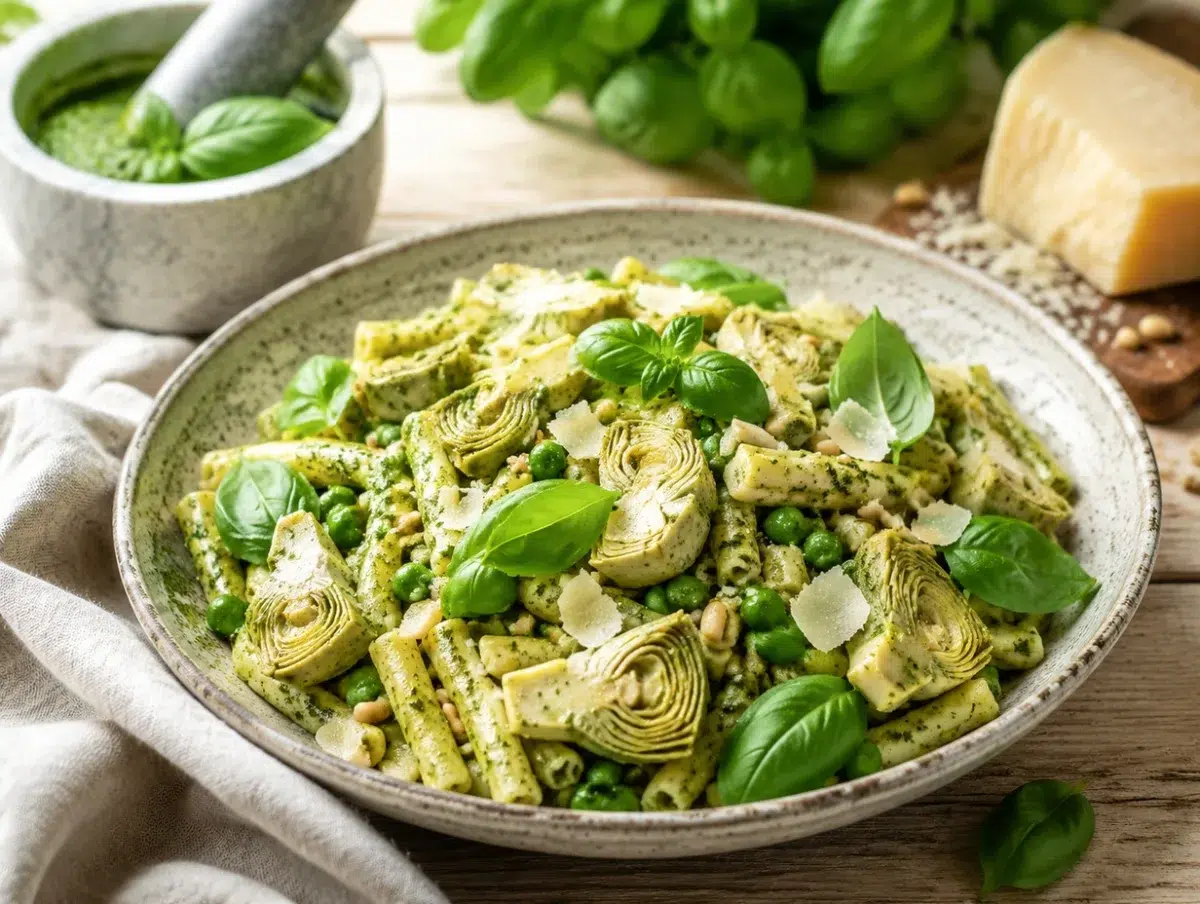
Pesto pasta with spring artichokes is a bright, herby bowl where the sauce clings to the pasta instead of sliding off it.
The difference is emulsification: a splash of the starchy pasta cooking water worked into the pesto off the heat binds the oil and water so the sauce coats every strand. Twenty-five minutes from start to finish.
Table of Contents
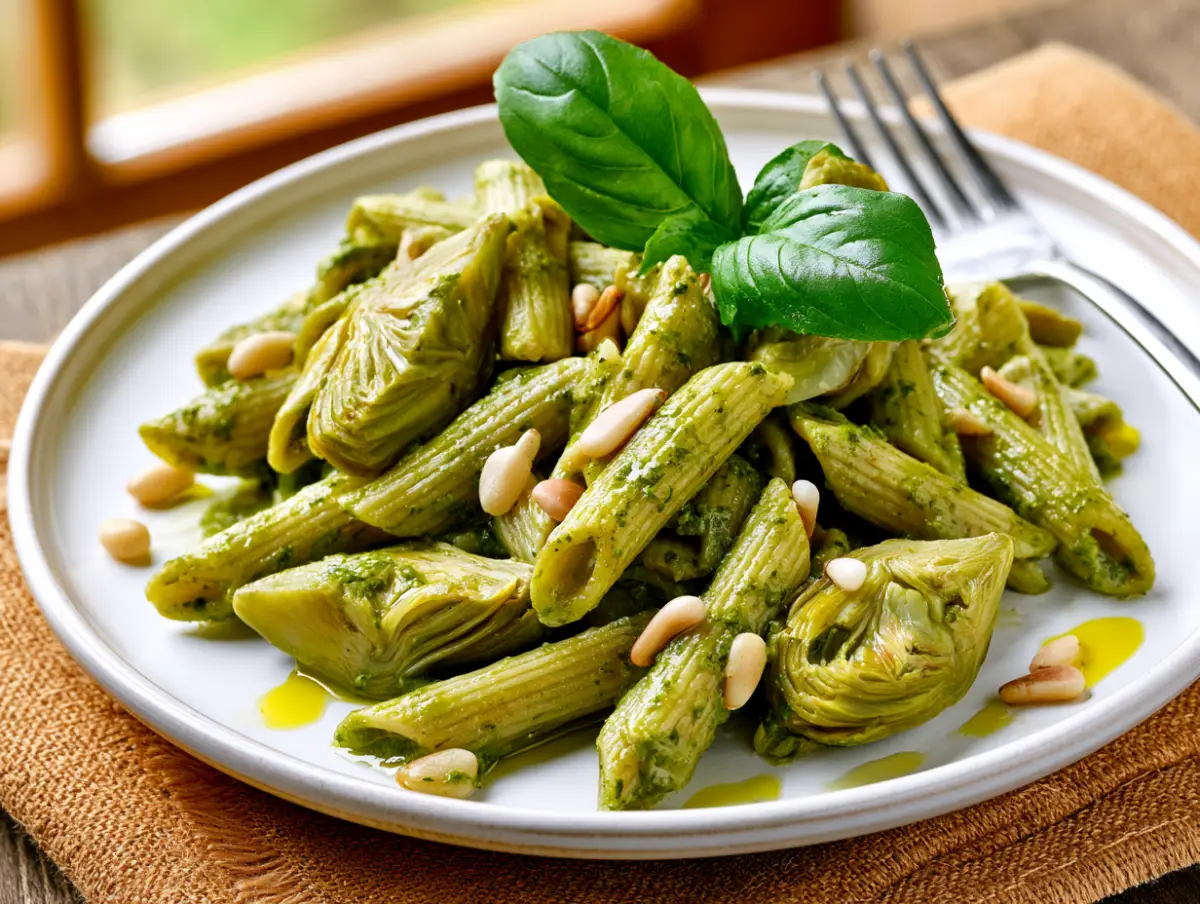
Pesto Pasta with Spring Artichokes
Ingredients
Method
- 1. Toast pine nuts in a dry skillet over medium-low heat for 3-4 minutes until golden. Transfer to a plate.
- 2. In a food processor, combine basil, toasted pine nuts, garlic, and salt. Pulse until finely chopped. With the motor running, slowly drizzle in olive oil until smooth but slightly textured. Transfer to a bowl and stir in Parmesan. Set aside.
- 3. Bring a large pot of well-salted water to a boil. Cook pasta 1 minute under al dente. Reserve 1 cup pasta water, then drain.
- 4. In a large skillet, heat 2 tablespoons olive oil over medium heat. Add quartered artichoke hearts and cook 4-5 minutes, turning occasionally, until golden brown on edges.
- 5. Add drained pasta to the skillet with artichokes. Add pesto and ½ cup reserved pasta water. Toss vigorously over medium heat for 60 seconds until sauce is creamy and coats the pasta. Add more pasta water as needed.
- 6. Remove from heat. Add lemon zest and extra Parmesan. Season with salt and pepper to taste.
- 7. Serve immediately, topped with fresh basil leaves and a drizzle of olive oil.
Notes
The Story Behind This Recipe
Let me tell you about the time I absolutely destroyed my kitchen trying to make pesto pasta with spring artichokes for my sister’s birthday in April 2023. We’re talking basil stuck to the ceiling fan, pine nuts launched across the room like tiny edible projectiles, and an artichoke that I somehow managed to cut into exactly zero usable pieces. My neighbor Denise heard the commotion and came over thinking I was remodeling.
Twenty-seven test batches later (yes, I kept a spreadsheet—don’t judge me), I’ve cracked the code on the most vibrant, silky, actually reliable spring pasta recipe you’ll ever make. This artichoke pesto pasta comes together in under 30 minutes, and I’m about to share every single secret that took me an embarrassing number of grocery store trips to figure out.
Why This Pesto Pasta with Spring Artichokes Works
The Science Behind the Sauce
Here’s the thing nobody tells you about pesto pasta sauce—the reason most versions taste flat is because people skip the emulsification step. When you toss hot pasta with basil pesto and a splash of starchy pasta water, you’re creating what food scientist Harold McGee calls a “starch-stabilized emulsion.” The starches from the cooking water act as tiny bridges between the oil in your pesto and the water-based components, creating that glossy, clingy coating that makes restaurant pasta so impossibly good. (I learned this after batch number fourteen, when I finally stopped dumping all the pasta water down the drain like some kind of animal.)
The artichoke hearts bring another layer of magic here. Artichokes contain a compound called cynarin that actually enhances your perception of sweetness in other ingredients. So when you combine them with fresh basil pesto, the basil tastes more basil-y, the Parmesan tastes more savory. It’s basically food science witchcraft, and I’m honestly here for it.
When to Make This Spring Artichoke Recipe
This Mediterranean pasta dish lands perfectly for weeknight dinners (25 minutes, I’ve timed it with my phone in one hand and tongs in the other), but it’s also fancy enough for company. I’ve served this at Easter brunch, at a casual Friday dinner with my friend Marcus who is, um, let’s say particular about Italian food, and even packed it cold for a spring picnic. The flavors in this pasta primavera work beautifully alongside it if you’re feeding a crowd.
Essential Ingredients for the Perfect Bowl
Your Ingredient Lineup
I’m going to be a little opinionated here (shocking, I know). Not all artichoke hearts are created equal, and honestly, this is a hill I will die on. For this homemade pesto pasta, you want artichoke hearts packed in water—not the marinated ones swimming in mystery oil. The water-packed version gives you a clean, earthy artichoke flavor that plays nicely with the basil pesto instead of fighting it. You can find them in most grocery stores right next to the canned vegetables, typically running about $3-4 per can.
For the pasta itself, I’ve tested this with like… at least eight different shapes? Rigatoni is the winner. Those ridges grab onto the pesto pasta sauce like a koala bear on a eucalyptus tree. Penne works great too. Angel hair is a no—too delicate, gets overwhelmed. If you love a good spinach and feta pasta, you’ll recognize the same logic here: the sauce needs something with surface area to cling to. And if you’ve got leftover pesto, toss it into our creamy pesto chicken pasta bake the next day.
Ingredient Comparison Guide:
| Ingredient | Best Choice | Budget Swap | Why It Matters |
| Artichoke hearts | Water-packed canned (14 oz) | Frozen artichoke hearts | Clean flavor, no competing oil |
| Basil | Fresh Italian large-leaf (2 cups packed) | Fresh Genovese basil | Bigger leaves = more pesto yield per bunch |
| Pine nuts | Raw, Italian-sourced | Raw walnuts or sunflower seeds | Creamier texture in pesto |
| Parmesan | Parmigiano-Reggiano wedge | Grana Padano (about half the price) | Real Parmesan melts into sauce properly |
| Olive oil | Cold-pressed extra virgin | Any good EVOO | Fruity notes balance the pesto |
| Pasta | Rigatoni or penne | Any ridged short pasta | Ridges trap pesto sauce |
One Small Addition That Helps
Okay, this is the part where I tell you about lemon zest. Just half a lemon’s worth of zest stirred into the finished pasta. It sounds minor—like, why am I even bringing this up—but it completely transforms the dish. The volatile oils in lemon zest (limonene, specifically, if you want to get nerdy about it) brighten every other flavor without adding any noticeable “lemon taste.” My friend Marcus, the self-appointed Italian food critic from earlier? He couldn’t figure out what made this version different. I told him it was my “Mediterranean spirit” and he rolled his eyes so hard I thought they might get stuck.
The Method
Preparation (10 Minutes)
Before you even think about boiling water, let’s get organized. Drain your artichoke hearts and pat them dry with paper towels—like, really get in there. Excess moisture is the number one reason people end up with watery artichoke pesto pasta, and I speak from personal experience when I say nobody wants that. Chop them into rough quarters.
Toast your pine nuts (or walnuts, no judgment) in a dry skillet over medium-low heat for about 3-4 minutes, shaking the pan every 30 seconds. I set a timer because I once burned an entire $12 bag of pine nuts while checking my phone and honestly I still haven’t recovered from the financial trauma. The moment they turn golden and smell nutty, get them off the heat and onto a plate. Not a paper towel—they’ll stick. I learned that one the hard way too.
Make your fresh basil pesto by combining 2 packed cups of fresh basil, the toasted nuts, 2 cloves of garlic (3 if you’re feeling brave), ½ cup of quality olive oil, and ½ cup of freshly grated Parmesan in a food processor. Pulse until you get a slightly chunky texture. The same technique works beautifully if you’re making pesto for our pesto pasta with grilled chicken—just double the batch.
Main Cooking Method (15 Minutes)
Bring a large pot of water to a rolling boil and salt it generously—it should taste like the sea, as every Italian grandmother will tell you (and my grandmother was Scottish, but she’d say the same thing). Cook your rigatoni or penne to just under al dente, about 1 minute less than the package says. This is crucial because the pasta will continue cooking when you toss it with the sauce.
While the pasta cooks, heat 2 tablespoons of olive oil in a large skillet over medium heat. Add the quartered artichoke hearts and cook for 4-5 minutes until they get those gorgeous golden spots. Don’t move them around too much—let the Maillard reaction do its thing. (That’s the browning reaction that creates hundreds of new flavor compounds. Kenji López-Alt has a whole section on this in The Food Lab and it changed my life.)
Here comes the money move: scoop the pasta directly from the pot into the skillet with the artichokes using a spider strainer or slotted spoon—you want some of that starchy water coming along for the ride. Add ½ cup of reserved pasta water and your basil pesto, then toss everything aggressively for about 60 seconds over medium heat. The pasta water + pesto should create a creamy, emulsified sauce that coats every noodle. Add the lemon zest, another handful of Parmesan, and season with salt and black pepper. Our creamy chicken orzo uses the same pasta water technique, so if you master it here, you’ve basically unlocked a superpower.
Creative Variations to Try
Flavor Twists
The beauty of this spring pasta recipe is how ridiculously adaptable it is. I’ve made more variations than I care to admit (see: the spreadsheet I mentioned earlier), and here are the ones that actually made me do a little happy dance at the stove:
| Variation | Key Change | Best For | Difficulty |
| Sun-Dried Tomato & Artichoke | Add ½ cup chopped sun-dried tomatoes | Date night dinners | Easy |
| Lemon Ricotta Spring Pesto | Stir 3 tbsp ricotta into finished pasta | Kid-friendly, creamy lovers | Easy |
| Spicy Artichoke Arrabbiata Pesto | Add 1 tsp red pepper flakes + chili oil | Heat seekers, adults-only dinners | Easy |
| Roasted Garlic & Artichoke Pesto | Roast a whole garlic head, mash into pesto | Weekend cooking, deeper flavor | Medium |
| Asparagus & Artichoke Spring Pesto | Add 1 cup blanched asparagus pieces | Peak spring, veggie lovers | Easy |
Dietary Modifications
Look, I want everyone to be able to eat this. Vegan? Swap the Parmesan for 3 tablespoons of nutritional yeast and add an extra tablespoon of olive oil. It won’t be identical, but it’s still really, really good. Gluten-free? Use a high-quality brown rice penne or chickpea pasta—Banza is my go-to and it holds up beautifully. Paleo? Sweet potato noodles spiralized thick work surprisingly well here. Budget-friendly? Walnuts instead of pine nuts, and honestly the pesto is just as good. Our Mediterranean chickpea power bowl pairs wonderfully with any leftover pesto if you’ve gone the vegan route, and our Mediterranean white bean salad makes an incredible light lunch with a spoonful of this pesto stirred through.
Storage & Serving Tips
How to Store Artichoke Pesto Pasta
Real talk: this vegetarian pesto pasta is best fresh. Like, standing-at-the-stove-eating-it-from-the-pan fresh (which I have definitely done more times than I’d admit at a dinner party). But life happens, so here’s how to handle leftovers. Store in an airtight container in the fridge for up to 3 days. When reheating, add a splash of water or broth to the pan—the starches set up in the fridge and the pasta needs a little coaxing back to life. A tablespoon of olive oil doesn’t hurt either. Microwave works in a pinch but stovetop is miles better.
For the pesto itself, you can make it up to 5 days ahead and store it in a jar with a thin layer of olive oil on top to prevent browning. It also freezes beautifully in ice cube trays for up to 3 months—pop out a cube or two whenever you need a quick weeknight pasta meal. If you love meal prep, the same pesto works in our grilled chicken Mediterranean bowl and our Mediterranean hummus breakfast bowl (trust me on the breakfast thing—pesto eggs are a revelation).
What to Serve Alongside
This easy spring dinner pairs with just about anything, but some combos are just *chef’s kiss*:
| Pairing Category | Best Options | Why It Works |
| Bread | Warm crusty ciabatta, garlic toast, or sourdough | Soaks up extra pesto sauce |
| Salad | Arugula with lemon vinaigrette, simple tomato salad | Peppery greens cut the richness |
| Protein add-on | Grilled chicken breast, seared shrimp, white beans | Keeps it light but satisfying |
| Vegetable side | Roasted asparagus, blistered cherry tomatoes | Stays on the spring theme |
Nutritional Benefits
Macronutrient Breakdown (Per Serving)
| Nutrient | Amount | % Daily Value |
| Calories | 487 kcal | 24% |
| Total Fat | 22 g | 28% |
| Saturated Fat | 4.5 g | 23% |
| Carbohydrates | 58 g | 21% |
| Dietary Fiber | 6 g | 21% |
| Protein | 16 g | 32% |
| Cholesterol | 12 mg | 4% |
Key Micronutrients
| Micronutrient | Amount Per Serving | Health Benefit |
| Vitamin K | 127 mcg (106% DV) | Supports bone health and blood clotting |
| Folate | 148 mcg (37% DV) | Essential for cell growth, especially during pregnancy |
| Vitamin C | 18 mg (20% DV) | Immune support + enhances iron absorption |
| Iron | 3.2 mg (18% DV) | Oxygen transport in blood |
| Magnesium | 68 mg (16% DV) | Muscle and nerve function |
| Potassium | 420 mg (9% DV) | Heart health and blood pressure regulation |
Artichokes are one of the highest-fiber vegetables you can eat, and the cynarin compound I mentioned earlier also supports liver health and healthy digestion. Combined with the heart-healthy monounsaturated fats from olive oil and the anti-inflammatory properties of fresh basil, this artichoke hearts recipe is genuinely nutritious—not just tasty. That said, I’m not a dietitian, so please take these numbers as estimates and consult a professional for specific dietary advice. The Mediterranean diet principles in our Mediterranean sheet pan salmon follow the same philosophy of healthy fats + fiber-rich vegetables.
This dish has a moderate glycemic index thanks to the fiber from artichokes and the fat content from olive oil and pine nuts, which help slow the absorption of carbohydrates from the pasta.
Frequently Asked Questions
Can I use jarred pesto instead of making fresh basil pesto from scratch?
Absolutely—no shame in the jarred pesto game, especially on busy weeknights. Look for one with a short ingredient list (basil, olive oil, Parmesan, pine nuts, garlic, salt). DeLallo and Rao’s are both solid picks. For this pesto pasta with spring artichokes specifically, I’d add a squeeze of lemon juice and a pinch of extra garlic to brighten it up, since store-bought versions tend to taste a little muted compared to homemade pesto pasta.
What type of artichoke hearts work best in artichoke pesto pasta?
Canned artichoke hearts packed in water are my strong recommendation for this spring artichoke recipe. They have a cleaner, more neutral flavor that lets the pesto shine. Marinated artichoke hearts in oil work too but they’ll add a tangier, more vinegary note. Frozen artichoke hearts are a decent budget option—just thaw and pat dry thoroughly before using.
How do I prevent my pesto pasta sauce from separating or looking oily?
The magic ingredient is pasta water! Reserve at least 1 cup before draining. The starch in the water acts as a natural emulsifier that binds the oil in the pesto to the water-based liquid, creating a creamy pesto sauce instead of a greasy one. Add it gradually—start with ½ cup and add more as needed while tossing over medium heat.
Is this vegetarian pesto pasta also vegan-friendly?
As written, no—it contains Parmesan cheese and pine nuts. But making it vegan is super easy: swap the Parmesan for 3 tablespoons of nutritional yeast, and you’re done. The pine nuts are already vegan. The texture and flavor are slightly different but still delicious as a weeknight pasta meal.
Can I make pesto pasta with spring artichokes ahead of time for meal prep?
You can make the pesto up to 5 days ahead (store with olive oil on top) and prep the artichoke hearts. I’d recommend cooking the pasta fresh when you’re ready to eat. If you must store assembled pasta, keep it in an airtight container for up to 3 days and reheat on the stovetop with a splash of water. The 30-minute pasta dinner is quick enough that fresh assembly is usually my move.
What pasta shape is best for this spring pasta recipe?
Rigatoni is my absolute favorite—those ridges and hollow tubes capture the basil pesto artichoke sauce perfectly. Penne is a close second. Fusilli (corkscrew) works well too. Avoid thin pastas like angel hair or spaghetti; they don’t hold the chunky pesto sauce well and you lose the beautiful texture contrast with the artichoke hearts pasta.
Pairing & Serving Ideas
Perfect Combinations
| Occasion | Main (This Pasta) | Side Dish | Beverage |
| Weeknight Dinner | Pesto Pasta with Spring Artichokes | Simple arugula salad | Sparkling lemon water |
| Spring Dinner Party | Pesto Pasta with Spring Artichokes | Garlic focaccia + roasted asparagus | Mint iced tea |
| Easter Brunch | Pesto Pasta with Spring Artichokes | Mediterranean egg bake + fruit | Fresh-squeezed lemonade |
| Date Night | Pesto Pasta with Spring Artichokes (with shrimp) | Whipped feta dip + crusty bread | Sparkling water with cucumber |
| Family Gathering | Pesto Pasta with Spring Artichokes (double batch) | Italian meatballs + green salad | Iced herbal tea |
Pair this Mediterranean pasta dish with our garlic Parmesan focaccia for the ultimate carb-on-carb experience that I refuse to apologize for. And for a protein boost that doesn’t compete with the pesto flavors, our Greek marinated chicken thighs are incredible sliced on top.
Beverage Pairings (Non-Alcoholic)
I know, I know—evreyone expects a wine rec here. But honestly? A cold glass of homemade lemonade with a sprig of fresh mint is perfection with this dish. The acidity mirrors the lemon zest in the pasta and the mint echoes the herbal notes from the basil. Sparkling water with a slice of cucumber is another gorgeous option. For colder evenings, a cup of chamomile or fresh mint tea complements the earthy artichoke flavors without overwhelming them. Our whipped feta and garlic confit dip makes an incredible appetizer while your pasta water is coming to a boil.
Make It Yours
Personalize Your Perfect Bowl
Here’s what I love about cooking—and about this pesto pasta with spring artichokes specifically—no two bowls need to be the same. Maybe you go heavier on the garlic (I see you, garlic people). Maybe you throw in some cherry tomatoes because they were on sale and looked gorgeous. Maybe you, like me, accidentally add too much lemon zest and discover that you actually prefer it that way. The best version of this recipe is the one you make. Our classic Greek lemon rice pilafi follows the same spirit of simplicity + bold flavors, and pairs beautifully on the side.
Join the Conversation
I’d genuinely love to know how your batch turns out. Did you swap the pine nuts for walnuts? Add shrimp? Eat it straight from the pan at 10pm on a Tuesday? (No judgment—that’s when the best cooking happens.) Drop a comment, tag us on social media, or email us a photo. Every time someone makes one of our recipes, it makes all twenty-seven test batches worth it. If you’re looking for your next project, our creamy tomato basil chicken and our ragù alla bolognese are both reader favorites with that same “labor of love” energy.