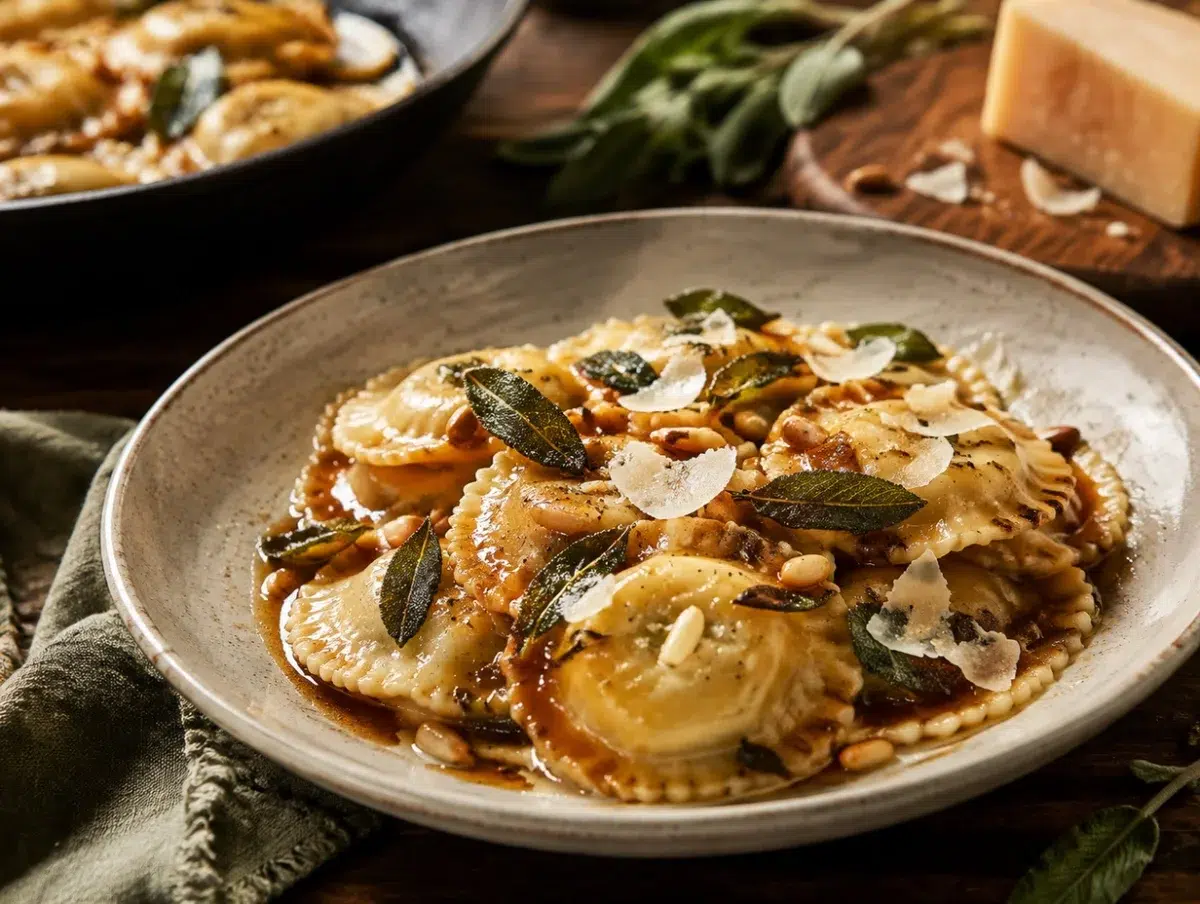
Can we talk about how there are exactly zero recipes that look this fancy and take this little effort? Because Brown Butter Sage Ravioli is genuinely one of those miraculous weeknight dinners — the kind that lands on the table in 20 minutes and makes everyone at the table go quiet mid-bite. The good kind of quiet. The oh wow this is actually incredible kind.
I first had sage brown butter sauce poured over pillowy ricotta ravioli at a tiny trattoria in Florence during one of my summers in Tuscany with my father’s side of the family. Five ingredients. No fuss. And I remember thinking — this is what Italian cooking really is. Not complicated. Just deeply, intentionally delicious. The brown butter (beurre noisette, as the French call it — the Italians just call it brilliant) is made by gently cooking butter until the milk solids caramelize into nutty, toasty, almost-hazelnut-flavored gold. When fresh sage leaves hit that hot butter, they crisp up and release warm, herby, almost-peppery oils that make the whole kitchen smell incredible.
Here’s what you get: a brown butter sage ravioli dinner that’s naturally vegetarian, uses store-bought ravioli (no judgment — we’re busy people), and comes together with one pan and one pot. It’s ready in 20 minutes flat, costs under $12, and looks positively restaurant-worthy. Meal prep-friendly for the sauce component. Endlessly adaptable with different ravioli fillings. And I promise — this has become my most-requested weeknight pasta. Yours, too, once you make it. Trust me. 🧈
Table of Contents
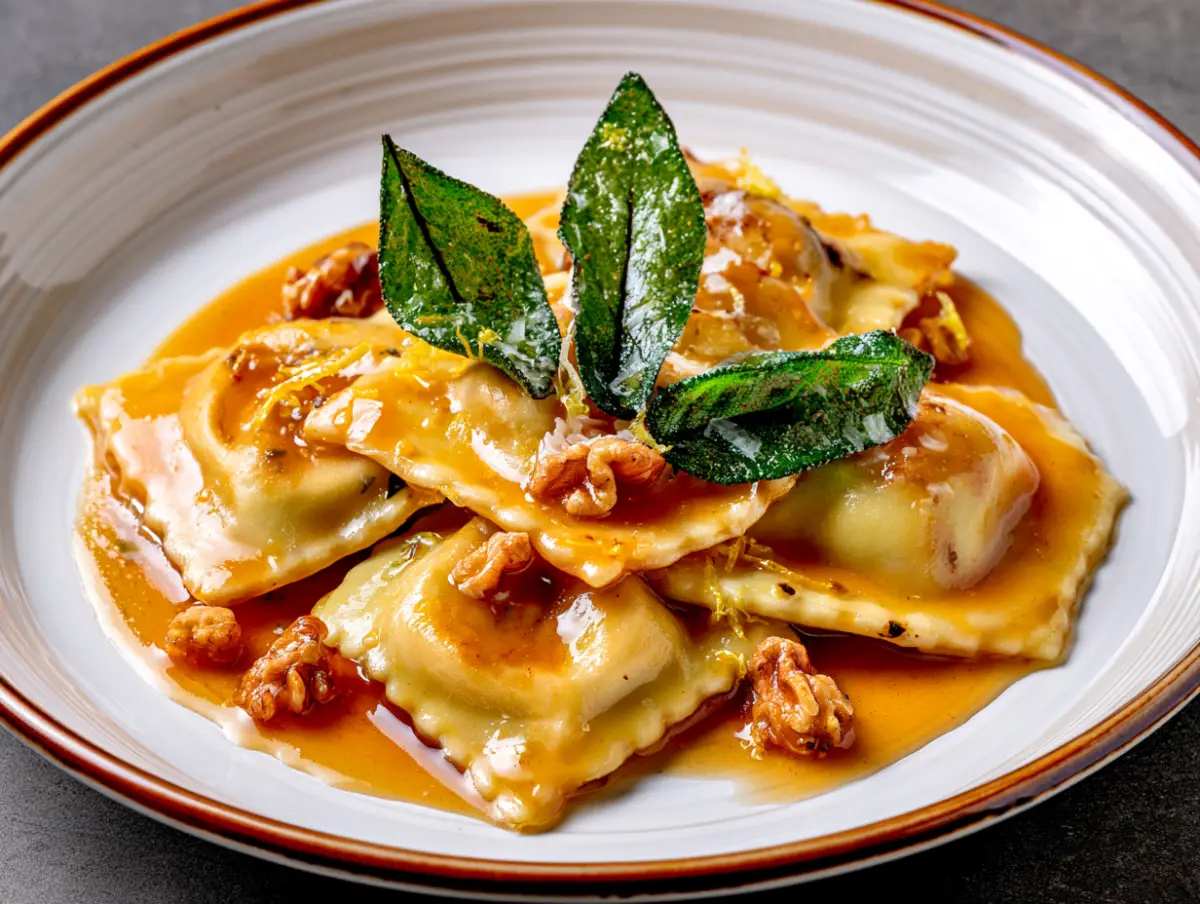
Brown Butter Sage Ravioli
Ingredients
Method
- 1. Boil water: Bring a large pot of water to a rolling boil. Add 1 tablespoon fine sea salt.
- 2. Brown the butter: Add unsalted butter to a light-colored skillet over medium heat. Cook, swirling occasionally, until the foam subsides and the butter turns amber-gold and smells nutty, 4–5 minutes.
- 3. Fry sage (and garlic): Add the completely dry sage leaves (and garlic if using) to the browned butter. Fry 1–2 minutes until sage is crispy and garlic is just golden. Watch carefully — remove pan from heat if anything threatens to burn.
- 4. Cook ravioli: Add ravioli to boiling salted water. Cook per package instructions until just tender. Reserve ¼ cup pasta water before draining. Use a spider strainer or slotted spoon to scoop ravioli directly into the sauce skillet.
- 5. Build the sauce: Return skillet to medium heat. Add pasta water and lemon juice to the butter, swirling to emulsify. Gently fold ravioli in the sauce for 1 minute.
- 6. Season and serve: Taste and adjust salt and pepper. Plate in warm bowls. Top with grated Parmesan, lemon zest, extra crispy sage, toasted nuts (if using), and a drizzle of EVOO. Serve immediately.
Notes
Why You’ll Love This Recipe
Health & Nutrition Benefits
I know what you’re thinking — Maya, butter doesn’t exactly scream Mediterranean Diet. Fair! But here’s the truth, and I say this as someone with a nutrition science degree from Barcelona: brown butter is used in relatively modest amounts (4 tablespoons for 4 servings), and when it’s balanced with the nutritional profile of the rest of the dish, the macro picture is quite reasonable.
More importantly, the sage in this butter sage pasta is genuinely functional food. Sage contains rosmarinic acid and carnosol — polyphenolic compounds with documented anti-inflammatory and antioxidant properties studied extensively in the Journal of Ethnopharmacology. It also contains ursolic acid, which has shown promise for supporting cognitive function and memory. My Cornell Plant-Based Nutrition certificate would absolutely approve.
Ricotta-filled ravioli provides a meaningful hit of calcium and protein from the cheese. Butternut squash ravioli adds beta-carotene and fiber. And the walnuts or pine nuts (optional but encouraged!) bring omega-3 fatty acids and additional protein. This is an indulgent dish by design — and that’s perfectly okay. Balance over restriction, always.
- ⚡ On the table in 20 minutes — faster than any restaurant
- 💚 Sage loaded with anti-inflammatory rosmarinic acid & polyphenols
- 🍱 Make the brown butter sauce ahead — reheats beautifully
- 🍽️ Under $12 for four servings using store-bought ravioli
Practical Benefits
This easy ravioli dinner is one of the most efficient recipes in my whole repertoire. The entire technique is: brown butter in a skillet, fry sage, toss ravioli. That’s it. There’s no chopping (unless you decide to garnish with toasted nuts), no marinating, no timing anxiety. If you can boil water and swirl a pan, you’ve got this completely. It’s also endlessly adaptable — cheese ravioli, butternut squash ravioli, mushroom ravioli, spinach and ricotta — the sauce works beautifully with all of them. Stock up on ravioli in the freezer and you’ll always have an elegant dinner option ready to go.
The Mediterranean Diet Connection
How This Dish Fits Mediterranean Diet Principles
The Mediterranean Diet isn’t rigidly fat-free — it’s about quality fats, plant-forward eating, and enjoying food with intention. This brown butter sage ravioli hits those notes beautifully. Butter in modest amounts is a traditional Italian fat source (particularly in northern Italy, where olive oil gives way to burro). Fresh herbs play a central role in flavor without requiring salt or heavy sauces. The pasta provides complex carbohydrates. And adding a simple green salad alongside turns this into a genuinely balanced Mediterranean-style meal. The PREDIMED study (and subsequent research from Blue Zones investigators) consistently shows that it’s the overall dietary pattern that matters — not whether any single ingredient is present. One pan of brown butter ravioli absolutely fits the picture.
Maya’s Personal Wellness Connection
Every time I make this dish in my San Diego kitchen, I’m transported straight back to those Tuscan summers. My nonno had a small sage plant in terracotta pots on his window ledge — he’d pinch off leaves and fry them in butter before tossing them over gnocchi or fresh pasta. It seemed impossibly simple for something that tasted so extraordinary.
Now, living on the California coast with access to the most incredible farmers markets, I grow my own sage too. When I toss those crinkled, silvery leaves into golden-brown butter and hear them sizzle and pop — that sound, that smell — is pure Tuscany. Food memory at its most powerful. This recipe connects me to where I come from and reminds me exactly why I started this blog.
Essential Ingredients
Core Ingredients
The genius of brown butter sage ravioli is that every single ingredient earns its place. Nothing extraneous. Let’s break it all down:
| Ingredient | Amount | Why It’s Great | Best Pick | Substitution |
| Fresh or refrigerated ravioli | 18–20 oz (510–567g) | Pillowy pasta pockets; holds the sauce beautifully; quick cook time | Fresh ricotta ravioli or butternut squash ravioli from the refrigerated section | Frozen ravioli (cook from frozen per package); gnocchi works equally well |
| Unsalted butter | 4 tbsp (56g / ½ stick) | Rich, complex Maillard-browning flavor; nutty caramelized milk solids | European-style unsalted butter (higher fat = better browning) | Vegan butter (Miyoko’s Creamery) for dairy-free — browning still works |
| Fresh sage leaves | 15–20 large leaves | Crispy texture; earthy, herbal warmth; anti-inflammatory polyphenols | Large, flat fresh sage from garden or farmers market | Fresh rosemary (different flavor but fries beautifully); 1 tsp dried sage (far less impact) |
| Garlic cloves, thinly sliced | 2 cloves (optional but recommended) | Savory depth; anti-inflammatory allicin; rounds out the butter flavor | Fresh whole cloves — always | Omit for classic Venetian simplicity |
| Fresh lemon (juice + zest) | ½ lemon | Cuts through the richness; brightens the entire sauce; vitamin C | Unwaxed organic lemon | 1 tbsp white balsamic vinegar for a slightly sweeter contrast |
| Pasta cooking water | ¼ cup (60ml) reserved | Starchy water emulsifies with butter to coat ravioli; prevents dryness | Must save this before draining! | No substitute — just don’t forget to save it |
| Parmigiano Reggiano or Pecorino Romano | ½ cup (50g) freshly grated | Umami depth; saltiness; nutty richness that ties the sauce together | Block Parmigiano Reggiano, grated fresh at home | Nutritional yeast (2 tbsp) for vegan version |
| Toasted walnuts or pine nuts (optional) | ¼ cup (30g) | Omega-3 fatty acids; crunchy textural contrast; earthy depth | Raw walnuts, toasted 3 min in dry pan until golden | Toasted pine nuts, pumpkin seeds, or omit entirely |
🧈 Maya’s Tip: The single most important rule for great brown butter: use unsalted butter and a light-colored pan. Dark pans hide the color change from golden to burned — a stainless steel or light-colored skillet lets you see exactly what’s happening. Pull the butter off heat the moment it smells nutty and looks amber-gold.
Dietary Modifications
This sage brown butter sauce adapts to almost any dietary need with simple swaps:
| Dietary Need | Replace | With | Notes |
| Vegan | Butter + Parmesan ravioli | Miyoko’s vegan butter + vegan ravioli (Kite Hill brand) + nutritional yeast | Vegan butter browns just like dairy — same technique applies |
| Gluten-Free | Regular wheat ravioli | Banza chickpea or rice-based GF ravioli | Cook time may vary; cook until just tender (GF pasta can get mushy fast) |
| Dairy-Free | Butter + Parmesan | Vegan butter for sauce; omit Parmesan or use Violife dairy-free alternative | The brown butter technique still works beautifully with dairy-free butter |
| Nut-Free | Walnuts/pine nuts | Toasted pumpkin seeds or sunflower seeds | Great for allergy-friendly households; same crunchy effect |
| Higher Protein | Plain ravioli base | Add 4 oz shredded rotisserie chicken or 1 cup white beans to the sauce | Stir in just before serving to warm through |
| Lower Calorie | Full butter amount | 2 tbsp butter + 1 tbsp olive oil (still browns, slightly fewer calories) | The flavor depth is slightly less but still very good |
Equipment & Quick Prep
Equipment Overview
| Tool | Why It Helps | Alternative |
| Light-colored stainless steel skillet (10–12 inch) | CRITICAL: lets you see the exact color of browning butter; prevents burning | Any light-colored or stainless pan — avoid dark non-stick |
| Large pot (6+ qt) for boiling ravioli | Ravioli need room to cook gently without crowding or sticking together | Any large pot; the bigger the better for ravioli |
| Spider strainer or slotted spoon | For gently scooping ravioli from water to sauce without breaking them | A slotted spoon works well; avoid a colander (ravioli can tear) |
| Measuring cup (liquid) | For reserving pasta water — have it ready before you drain! | Any heatproof cup set next to the pot as a reminder |
| Microplane zester | For getting fine lemon zest without bitter white pith — a finishing touch that elevates everything | Finest holes on a box grater |
Prep-Ahead Checklist
Good news: this quick pasta dinner requires almost zero prep. Here’s your complete 3-minute setup: Pull ravioli from the fridge (or let frozen ravioli sit at room temp 5 minutes). Set your large pot of water to boil over high heat now — this takes the longest. Slice 2 garlic cloves thinly if using. Pick sage leaves from stems and lay them on a paper towel. Zest and juice the lemon half. Measure butter. Have Parmesan ready to grate. That’s genuinely the entire prep list. The actual brown butter sage sauce takes 5 minutes from cold pan to done.
🧈 Pro Tip: Set your pasta water to boil 10 minutes before you want to eat. Once the water boils and you add the ravioli, the whole sauce comes together in the time it takes the pasta to cook. This is the kind of dinner you can start after a long day and have on the table before your hunger hits panic mode.
Step-by-Step Instructions
Prep & First Steps (Steps 1–4)
You’ve got this! This is genuinely the easiest 20-minute pasta dinner you’ll ever make — and it looks like you spent hours. Let’s walk through it:
- Salt and boil the water (10–12 min, start first): Fill your large pot with water and set it over high heat immediately — this is the longest step and you can do everything else while it heats up. Add 1 tablespoon of fine sea salt once it’s boiling. Your water should taste pleasantly salty. Properly salted pasta water seasons the ravioli from the inside out, and no amount of sauce can compensate for flat pasta.
- Prep while you wait (3 min): Slice your garlic cloves thinly. Pick sage leaves from their stems and pat completely dry on a paper towel — any moisture on the leaves will cause the hot butter to spit dramatically and the sage won’t get crispy. (Trust me on the drying step — I learned the hard way, splattered with hot butter in my first San Diego apartment kitchen.) Zest and juice the lemon half. Grate your Parmesan and have everything within arm’s reach of the stove.
- Start browning the butter (4–5 min): Add the unsalted butter to your light-colored skillet over medium heat. As the butter melts, it will foam, then the foam will subside. Continue cooking, swirling the pan occasionally, until the butter turns a beautiful amber-gold color and smells deeply nutty — almost like toasted hazelnuts. This is the Maillard reaction in action: the milk proteins and sugars are caramelizing. The moment you smell it and see the golden color (about 3–4 minutes), you’re at the sweet spot. Don’t walk away.
- Cook the ravioli (check package, usually 3–5 min): Add ravioli to the now-boiling salted water. Fresh ravioli typically cooks in 3–5 minutes; frozen may take 6–8 minutes. Cook until the ravioli float to the surface and feel just tender when you press gently on the edge. Reserve ¼ cup of pasta water before draining — set a measuring cup right next to the pot so you don’t forget! Use your spider strainer or slotted spoon to gently scoop the ravioli out rather than pouring them through a colander, which can tear them.
Cooking & Assembly (Steps 5–10)
- Fry the sage and garlic (2 min): With the browned butter still on medium heat, carefully add the dry sage leaves — they’ll sizzle dramatically for 5–10 seconds and then settle. Fry for 1–2 minutes until the leaves are crispy and fragrant. They’ll turn a deeper green and become slightly translucent at the edges. If using garlic, add it with the sage and cook until just golden, about 60 seconds. The kitchen should smell absolutely extraordinary right now — earthy, herby, nutty, warm. That aroma is the promise of what’s coming.
- Add the pasta water (30 seconds): Pour the reserved ¼ cup of starchy pasta water into the brown butter sage sauce. It will bubble vigorously — this is normal and this is the emulsification happening in real time. Swirl the pan to incorporate the water into the butter, creating a glossy, slightly thicker sauce that will coat each ravioli beautifully. Add the lemon juice now too and swirl again.
- Add ravioli and toss gently (1–2 min): Carefully add the cooked ravioli to the skillet and toss very gently — these are delicate little pillows and we want them intact! I use a soft rubber spatula to gently fold and coat each ravioli in the sage brown butter sauce. Cook over medium heat for 1 minute so the ravioli absorb some of that gorgeous butter flavor. If the sauce looks too thick, add another splash of pasta water.
- Taste and season: This is the moment where you make it yours. Taste a ravioli with some sauce and assess: does it need more lemon? More salt? More pepper? Adjust here. If you’re using unsalted butter with salted Parmesan, you may need very little additional salt. Freshly cracked black pepper is almost always welcome.
- Plate and finish: Use your spider strainer or tongs to carefully transfer ravioli to warm shallow bowls. Spoon the remaining brown butter sage sauce over the top generously. Grate fresh Parmesan over everything — be generous! Add the lemon zest, a few of the extra crispy sage leaves on top, and a handful of toasted walnuts if using. A final light drizzle of extra-virgin olive oil adds a Mediterranean touch. Serve immediately — brown butter sage ravioli is at its absolute peak the moment it’s plated. 🧈🌿
🧈 Maya’s Tip: Warm your serving bowls by filling them with hot water for 2 minutes while the ravioli cooks, then emptying and drying them before plating. Warm bowls keep the butter from solidifying immediately and keep the dish hotter for longer. Such a game-changer for 2 minutes of effort!
Tips, Tricks & Shortcuts
Success Tips for Perfect Results
- Use a light-colored or stainless skillet for browning butter — it’s non-negotiable. Dark pans make it impossible to see the color change until it’s already burned.
- Dry your sage leaves completely before frying — moisture causes explosive sputtering in hot butter and prevents the leaves from getting crispy.
- Brown butter can go from perfect to burned in 20 seconds. The moment it smells nutty and looks golden-amber, pull it off heat or add the sage to stop the cooking.
- Don’t skip the pasta water — that starchy liquid is what transforms a greasy butter pool into a cohesive, glossy sauce that clings to every ravioli.
- Fresh ravioli > frozen for this dish (though frozen works fine in a pinch). Fresh ravioli have a more delicate texture that pairs beautifully with the light butter sauce.
- Make extra crispy sage — seriously, make twice as many as you think you need. They disappear. Crispy sage is addictive, and guests will eat them straight off the serving platter.
Common Mistakes
| Mistake | Result | The Fix |
| Burning the butter | Acrid, bitter sauce — must start over | Use medium heat; light-colored pan; constant swirling; remove from heat the second it smells nutty |
| Wet sage leaves | Sputtering, popping oil; soggy sage that never crisps | Pat leaves completely dry with paper towels before adding to hot butter — this step is crucial |
| Over-boiling ravioli water | Pasta tears open; filling spills out | Keep pasta water at a gentle boil — vigorous boiling batters delicate ravioli |
| Forgetting to save pasta water | Dry, sticky sauce that doesn’t coat the ravioli | Set a measuring cup RIGHT NEXT TO the pot as a physical reminder before you start |
| Serving in cold bowls | Butter solidifies immediately on cool plates | Warm bowls with hot water for 2 minutes before plating — a simple step that makes a real difference |
| Over-tossing ravioli in sauce | Ravioli tear and filling escapes into the sauce | Use a silicone spatula and fold very gently — these are delicate pillows, not spaghetti |
Variations & Serving Ideas
Dietary Adaptations & Variations
Once you know how to make brown butter sage sauce, you’ll want to pour it on everything — and you absolutely should. Here are my favorite ways to riff on the classic:
- Butternut squash ravioli variation: Use butternut squash or pumpkin ravioli instead of ricotta cheese. The sweet squash filling is magical against the nutty butter — a classic fall combination that feels like Thanksgiving in a bowl.
- Mushroom ravioli upgrade: Wild mushroom ravioli + brown butter sage + a small splash of balsamic vinegar at the end = deeply earthy, complex, beautiful. Top with toasted pine nuts and fresh thyme.
- Spinach and ricotta classic: Spinach-ricotta ravioli is the most traditional Italian pairing with sage butter. The iron-rich spinach filling is nutritionally excellent and pairs perfectly with the nutty sauce.
- Walnut and lemon variation: Add ¼ cup toasted walnuts and an extra ½ teaspoon lemon zest to the finished dish for an omega-3 boost and textural contrast that takes the dish to another level.
- Vegan adaptation: Use Kite Hill almond milk ricotta ravioli + Miyoko’s vegan butter (it browns!) + nutritional yeast instead of Parmesan. Genuinely excellent — not a compromise.
Serving Suggestions & Beverage Pairings
This brown butter sage ravioli is a complete dinner on its own, but it shines alongside a simple green salad. Our Mediterranean White Bean Salad makes an excellent side — the fresh lemon dressing cuts beautifully through the richness of the butter sauce. For a more substantial spread, start with our Mediterranean Hummus Breakfast Bowl as an appetizer and follow the ravioli with our Mediterranean Sheet Pan Salmon for a full Italian-Mediterranean dinner party menu. A simple roasted broccolini or sautéed spinach alongside is also perfect.
Non-alcoholic pairing suggestions that work beautifully with the rich butter sauce: sparkling water with a slice of lemon and fresh sage leaf (so elegant!) is my absolute go-to for this meal. Iced hibiscus tea provides gorgeous floral acidity that cuts right through the richness. Fresh pomegranate juice or homemade lemonade also pairs beautifully — the tartness perfectly balances the nutty brown butter. On cool fall evenings, a warm ginger-lemon herbal tea alongside this dish is pure comfort.
Meal Prep & Storage
Storage Guide
| Method | Container | Duration | Notes |
| Refrigerator (assembled) | Airtight glass container | 2–3 days | Ravioli absorb sauce; add splash of water when reheating to loosen |
| Refrigerator (sauce only) | Small glass jar or airtight container | 4–5 days | Best method — make sauce ahead, cook fresh ravioli when ready |
| Freezer (sauce only) | Freezer-safe container or ice cube tray | Up to 2 months | Freeze in ¼ cup portions; thaw in fridge overnight or warm water 10 min |
| Freezer (assembled ravioli) | Not recommended | — | Ravioli texture suffers significantly when frozen after cooking |
| Reheating stovetop | Small saucepan over low heat | 3–5 min | Add 2 tbsp water or broth; stir gently to prevent ravioli from tearing |
| Reheating microwave | Microwave-safe covered bowl | 60–90 sec | Add splash of water; use 50% power; stir halfway through — very gentle |
Meal Prep Assembly Tips
Here’s how I actually use brown butter sage ravioli in my weekly meal prep: I make a double batch of the brown butter sage sauce on Sunday (it takes 5 minutes) and store it in a small glass jar in the fridge. Each night I need a fast dinner, I boil fresh or refrigerated ravioli (3–5 minutes), reheat the sauce in the same pan with a splash of pasta water, toss and serve. Dinner in under 10 minutes.
This approach also works beautifully for the sauce stored in ice cube trays — thaw and reheat individual portions for single-serve weeknight meals. The crispy sage leaves won’t reheat well (they go soft), so either fry fresh ones from your stored sage, or simply add dried sage to the reheated butter sauce. The flavored butter is still delicious even without crispy leaf texture.
Frequently Asked Questions
Substitution & Technique Questions
Q: Can I use dried sage instead of fresh?
You can use 1 teaspoon of dried sage as a last resort, but the dish will be quite different — dried sage doesn’t crisp up, misses that gorgeous leaf texture, and the volatile aromatic compounds that make fresh sage so special are largely lost through drying. If you can find fresh sage at all (it’s common at farmers markets and most grocery stores), please use it. For the crispy sage ravioli effect, fresh leaves are truly essential. If you’re in a bind, try fresh rosemary — it fries beautifully and gives a different but wonderful flavor.
Q: How do I know when the butter is browned enough — and not burnt?
Great question, and this is where most people get nervous. Here’s what to look for: after the initial foam subsides (about 2 minutes), you’ll start to see the butter turn from pale yellow to golden amber. The foam at the edges will turn light brown. Most importantly, it will smell nutty, almost like toasted hazelnuts or popcorn. At that moment — pull the pan off heat. Burned butter smells sharp and acrid rather than nutty. If you’re using a light-colored pan, you’ll be able to see the color clearly. The whole process from cold pan to perfectly browned takes 4–5 minutes on medium heat.
Q: Can I use salted butter?
Yes, in a pinch — but reduce or skip any additional salt in the sauce, since the butter is already salty and you’re adding salty Parmesan on top. Salted butter also has a slightly lower browning temperature, so watch it even more carefully. Unsalted butter gives you the most control over final seasoning, which is why professional cooks (and my Barcelona nutrition professors) always recommend it for cooking.
Q: What’s the best ravioli filling to use?
All of these work beautifully with brown butter ravioli: ricotta cheese (the classic), butternut squash or pumpkin (autumn dream pairing), wild mushroom (earthy and sophisticated), spinach and ricotta (traditional and nutritious), and lobster or crab for a luxe special-occasion version. The one universal rule: avoid ravioli with very tomato-heavy or strongly seasoned fillings — they compete with rather than complement the delicate brown butter.
Dietary, Nutrition & Meal Prep Questions
Q: Is Brown Butter Sage Ravioli a healthy dinner?
It’s a delicious, satisfying Italian butter sauce dish that uses butter in a moderate amount — 1 tablespoon per serving. That’s comparable to a well-dressed salad. The sage contributes genuine anti-inflammatory compounds (rosmarinic acid, documented in multiple pharmacological studies). The ravioli provides protein and carbohydrates. Add a green salad alongside and you have a balanced, nourishing meal. As I always say as a certified health coach — and not a doctor, so please consult yours for personal guidance — balance over restriction creates sustainable, joyful eating. This dish fits perfectly into that philosophy.
Q: Can I make this dairy-free?
Yes — and it’s genuinely great! Miyoko’s Creamery European-Style vegan butter browns beautifully (it’s made from cashews and has enough fat content to caramelize). Combine with Kite Hill almond ricotta ravioli and finish with 2 tablespoons of nutritional yeast instead of Parmesan. The nutty quality of nutritional yeast actually complements brown butter flavor quite well. This is one of those recipes where the vegan adaptation works better than expected because the beurre noisette technique itself is about fat behavior, not specifically dairy.
Q: Can I double this recipe for a dinner party?
Absolutely — this fall pasta recipe scales up perfectly. Use two skillets running simultaneously for the brown butter (or do it in batches and keep warm), and a very large pot for the pasta. Note: don’t crowd the ravioli when boiling — cook in batches if needed so they have room. You can keep the first batch warm in a low oven (200°F/93°C) on a baking sheet drizzled with a little olive oil while you cook the second batch.
Q: How can I make the crispy sage go further?
Make extra! Fry 30–40 sage leaves instead of 15–20. Any leftover crispy sage stores well in an airtight container at room temperature for up to 2 days — use them as a crunchy topping on soups, salads, roasted vegetables, or as a snack. They’re also stunning crumbled over our Creamy Tomato Basil Chicken or scattered on top of a simple Classic Greek Lemon Rice Pilafi for an elegant Italian touch.
Nutritional Highlights & Closing Thoughts
Why This Recipe Is Good for You
Let’s be real: brown butter sage ravioli is a comfort food. And I believe deeply in the nutrition science of comfort — the way a satisfying, beautiful meal reduces stress, promotes mindful eating, and makes vegetables and whole foods genuinely appealing. But there’s also genuinely functional nutrition in this dish. Sage (Salvia officinalis) has been the subject of over 200 peer-reviewed studies examining its polyphenolic content. Research published in Nutrients (2021) found that sage extracts showed significant antioxidant activity and cognitive-supportive properties. The butter provides fat-soluble vitamins A, D, E, and K2 — nutrients that support bone health, immune function, and cardiovascular health when consumed in appropriate amounts.
The Parmesan garnish adds approximately 75mg of highly bioavailable calcium per serving. If you add walnuts, you’re getting meaningful alpha-linolenic acid (ALA, a plant omega-3). And ravioli filling — whether ricotta or butternut squash — adds protein and beta-carotene respectively. A bowl of this brown butter sage ravioli is genuinely nourishing on multiple levels. You’ve got the science. Now go enjoy it.
Closing & Call to Action
There’s something magic about a recipe this simple producing a result this stunning. Every time I make brown butter sage ravioli, whether it’s a Tuesday night solo dinner or a fall gathering with friends, it gets the same reaction: wide eyes, immediate silence, then “can you send me this recipe?” And now you have it — no sending required!
If you make this dish, please drop a comment below and tell me which ravioli filling you used! The butternut squash + brown butter combination in fall is unbeatable in my opinion, but I know the ricotta classic has its devoted fans too. Tag me @MayaCastellanoKitchen on Instagram and use #MayaMakes — I genuinely love seeing your kitchen adventures. 🧈🌿
Looking for more elegant-but-easy Italian pasta ideas? Our Fresh Tomato Basil Spaghetti (Pomodoro) is another Italian classic that deserves a permanent spot in your rotation — pure, bright, simple. If you’d like to serve something alongside tonight’s ravioli, the Pasta Primavera is a beautiful spring-fresh companion. For a protein-forward Mediterranean dinner to pair the ravioli with, the Grilled Chicken Mediterranean Bowl is a crowd favorite. And if you’re planning a full Italian-inspired menu, the Italian Chicken Casserole is the kind of showstopper that makes people think you spent all day cooking. (You didn’t.) Buon appetito! 🧈