Can we talk about how hard it is to find a pasta that feels genuinely fancy but doesn’t require a culinary degree or three hours in the kitchen? I feel you. I was in that exact spot one Tuesday evening in my San Diego apartment, staring at a bag of yellow onions and a log of goat cheese — and this caramelized onion & goat cheese pasta was born. And honestly? It became one of the most-requested recipes I’ve ever posted.
Here’s the deal: sweet, jammy caramelized onions — the kind that smell like pure comfort — melt right into a silky goat cheese sauce that clings to every ridge of your pasta. We’re talking a dish so good it tastes like it came from a little Italian trattoria, but it comes together in around 50 minutes with ingredients you probably already have. No fancy technique. Just patience and good olive oil (very Mediterranean!).
This caramelized onion & goat cheese pasta is: ✔ Vegetarian and halal-friendly ✔ Packed with protein and gut-friendly probiotics from the goat cheese ✔ Built on Mediterranean Diet principles (hello, olive oil and fresh herbs!) ✔ Meal prep-friendly and absolutely weeknight-approved. Trust me — once you make this, it goes straight into your regular rotation. Let’s do this!
Table of Contents

Caramelized Onion &Goat Cheese Pasta
Ingredients
Method
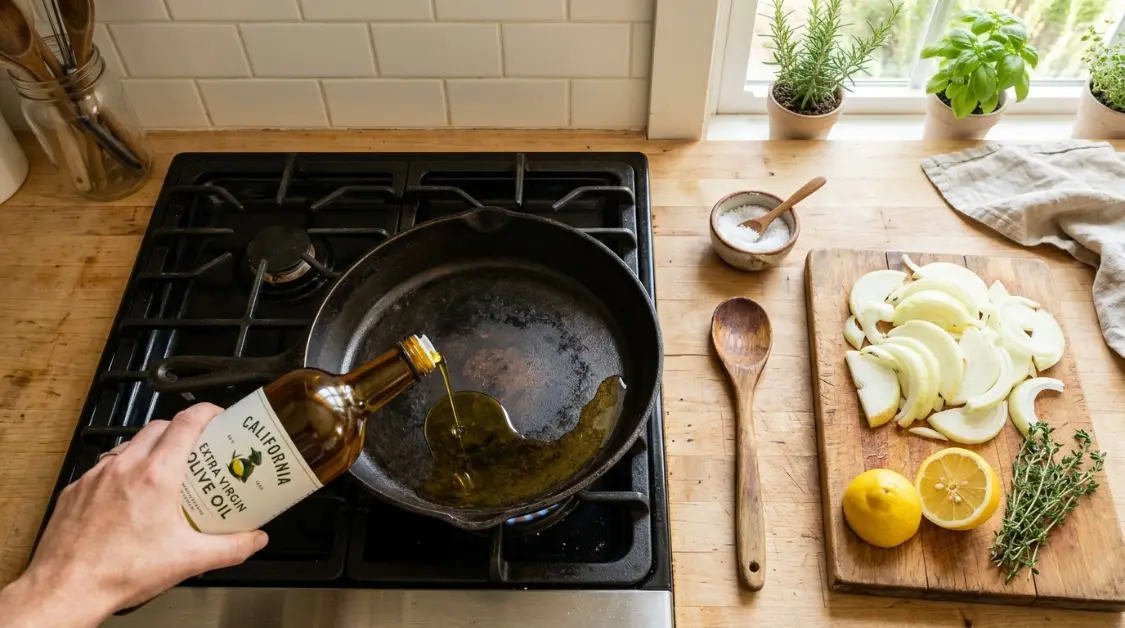
- 1. Heat a large heavy-bottomed skillet over medium-low heat. Add olive oil. When shimmering, add sliced onions and 1 tsp salt. Toss to coat.
- 2. Cook onions low and slow, stirring every 5–7 minutes, for 35–40 minutes until deeply amber, jammy, and sweet. Add 1 tablespoon water if sticking occurs. This step is the key to the whole dish — do not rush it.
- 3. Add minced garlic and thyme to the onions. Cook 2 more minutes, stirring constantly, until fragrant.
- 4. Pour in vegetable broth and scrape up all the caramelized fond from the bottom of the pan. Simmer 2 minutes.
- 5. Meanwhile, bring a large pot of generously salted water to a boil. Cook pasta according to package directions until 1 minute short of al dente. Reserve 1 cup pasta water before draining.
- 6. Reduce skillet heat to LOW. Add crumbled room-temperature goat cheese and 1/4 cup reserved pasta water. Stir constantly until a smooth, creamy sauce forms. Add more pasta water 1–2 tablespoons at a time as needed.
- 7. Add drained pasta to the skillet. Toss vigorously to coat. Squeeze lemon juice over pasta and add lemon zest. Toss again. Taste and adjust salt and pepper.
- 8. Serve immediately in warm bowls topped with fresh parsley, extra goat cheese crumbles, a drizzle of olive oil, and red pepper flakes if desired.
Notes
Why You’ll Love This Caramelized Onion & Goat Cheese Pasta
Health & Nutrition Benefits
Let’s talk about what’s actually going on in this bowl — because it’s not just delicious, it’s doing good things for your body. Goat cheese is an incredible source of calcium and protein (about 5g protein per ounce!), and research shows that the short-chain and medium-chain fatty acids in goat’s milk are easier to digest than those in cow’s milk — a game-changer if dairy sometimes leaves you feeling off. The PREDIMED study found that a Mediterranean Diet rich in olive oil and plant-forward proteins is associated with significantly reduced cardiovascular risk, and this pasta checks all those boxes.
The real star, though? Those onions. Quercetin — the powerful antioxidant in yellow onions — has been shown in multiple studies to have anti-inflammatory and heart-protective properties. Slow cooking actually concentrates these compounds. This dish is loaded with fiber, vitamins C and K (hello, fresh parsley and lemon!), and healthy monounsaturated fats from the olive oil. Nutrient-dense and delicious? Such a game-changer.
- ⚡ 17g protein per serving — keeps you full and satisfied
- 💚 Anti-inflammatory caramelized onions + olive oil combo
- 🍱 Mediterranean Diet approved — plant-forward and heart-healthy
- 💚 Gut-friendly goat cheese (easier to digest than cow’s milk!)
- ⚡ 5g fiber per serving — great for digestive health
Practical Benefits — Quick, Versatile, Budget-Friendly
Beyond nutrition, this recipe wins on pure practicality. The active cooking time is maybe 20 minutes — the onions do their slow, magical thing while you decompress from your day. It’s made in just two pans. It scales beautifully whether you’re cooking for one (meal prep perfection!) or feeding a table of six. And the base recipe costs under $15 to make four generous servings. Weeknight-friendly? Absolutely.
The leftovers might actually be better the next day — the flavors deepen overnight. If you’re into batch cooking, our pasta primavera recipe follows the same make-ahead philosophy and pairs perfectly with this one for a full week of meal-prepped lunches.
The Mediterranean Diet Connection
How This Dish Fits Mediterranean Diet Principles
The Mediterranean Diet isn’t a “diet” in the restrictive sense — it’s a lifestyle built on abundance. Olive oil over butter. Fresh vegetables and legumes. Whole grains. Moderate dairy. Minimal processed food. Sound familiar? This caramelized onion & goat cheese pasta hits nearly every pillar. Extra-virgin olive oil is the primary fat. We’re using fresh herbs and aromatics (garlic, thyme, lemon) instead of heavy cream-based sauces. Goat cheese provides calcium and protein from a small amount of high-quality dairy.
Pasta, especially whole wheat, fits perfectly within a Mediterranean framework when treated as a vehicle for nutrient-dense ingredients — not just a carb bomb. As Kenji López-Alt has noted in his food science research, starchy pasta water is the key to emulsifying sauces, which is exactly how we achieve that silky texture here without adding cream.
Maya’s Personal Wellness Connection
Growing up in Valencia with a Spanish mama who made everything with olive oil and a Tuscan papà who believed food was medicine — I never saw pasta as indulgent. It was fuel, joy, and connection. When I moved to San Diego for grad school, I realized how rare that perspective was. People here were avoiding carbs, counting every calorie, treating food like the enemy. I started my blog to show that the Mediterranean way — this way — is both delicious AND nourishing.
This creamy vegetarian pasta recipe is the dish I make when I need a reminder that healthy eating doesn’t require deprivation. It also pairs beautifully alongside our Mediterranean Chickpea Power Bowl if you’re building out a full Mediterranean meal plan.
Essential Ingredients for Caramelized Onion & Goat Cheese Pasta
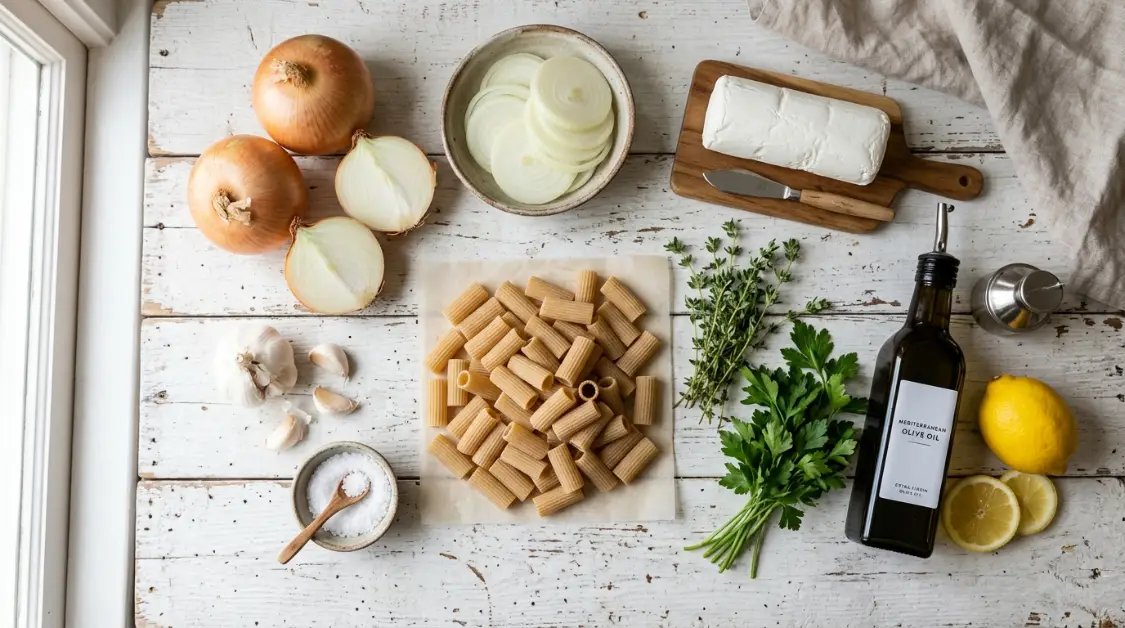
Complete Ingredients List
For the Caramelized Onions:
3 large yellow onions (about 900g / 2 lbs), peeled and thinly sliced into half-moons
3 tablespoons / 45ml extra-virgin olive oil
1 teaspoon / 5g fine sea salt
4 cloves garlic, finely minced
2 teaspoons fresh thyme leaves (or 1 tsp dried thyme)
60ml / 1/4 cup low-sodium vegetable broth
For the Pasta:
340g / 12 oz rigatoni pasta, penne pasta, or linguine pasta (whole wheat recommended)
1 tablespoon / 15g coarse sea salt (for pasta water)
For the Goat Cheese Sauce:
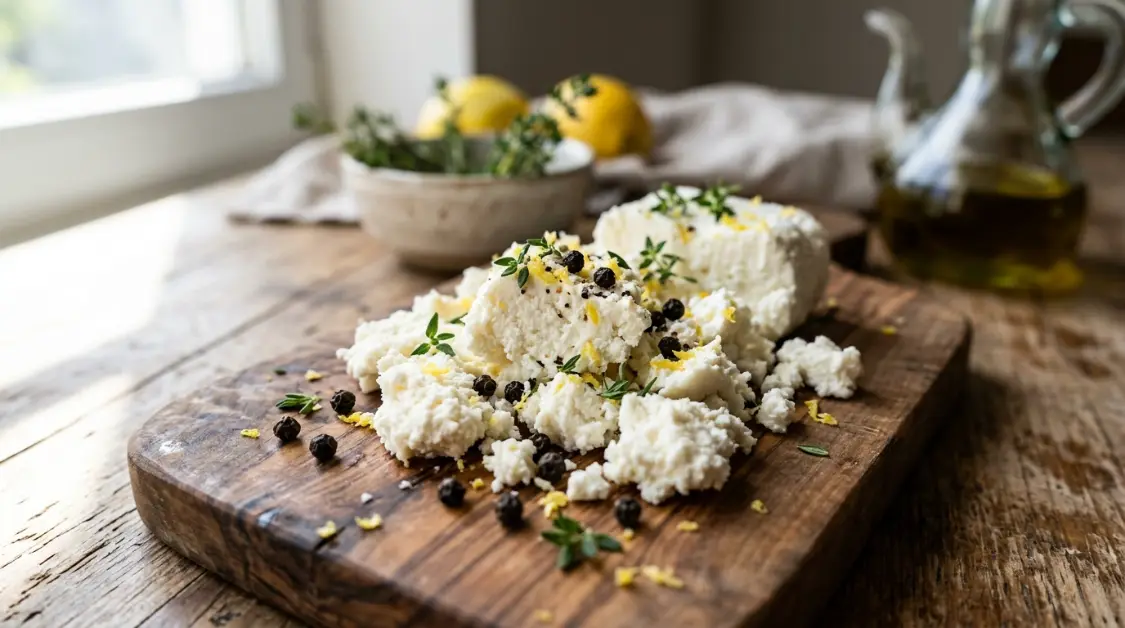
150g / 5.3 oz fresh soft goat cheese (chèvre), crumbled, room temperature
Juice and zest of 1 lemon
Freshly cracked black pepper to taste
To Serve:
Small handful fresh flat-leaf parsley, roughly chopped
Extra goat cheese crumbles for topping
Drizzle of extra-virgin olive oil
Pinch of red pepper flakes (optional)
Core Ingredients
Everything you need — why it works, and smart swaps for every situation. Shop tip: Buy your goat cheese the day you’re cooking for maximum creaminess. Look for a soft chèvre log at any grocery store or Trader Joe’s!
| Ingredient | Amount | Why It’s Great | Best Pick | Substitution |
| Yellow onions | 3 large (900g / 2 lbs) | Rich in quercetin — a powerful anti-inflammatory antioxidant; natural sweetness deepens with slow cooking | Large, firm yellow onions | Sweet onions or red onions |
| Goat cheese (chèvre) | 150g / 5.3 oz | Easier to digest than cow’s milk cheese; rich in protein, calcium, and heart-healthy fatty acids | Fresh, soft chèvre log | Cream cheese or feta (for dairy-free: cashew cream cheese) |
| Pasta | 340g / 12 oz | Whole wheat adds fiber; pasta water starch creates silky, clingy sauce | Rigatoni, penne, or linguine | Gluten-free pasta, zucchini noodles, chickpea pasta |
| Extra-virgin olive oil | 3 tbsp | Heart-healthy monounsaturated fats; key Mediterranean Diet pillar; aids caramelization | Cold-pressed EVOO | Avocado oil |
| Fresh thyme | 2 tsp | Antioxidant-rich herb that pairs beautifully with the sweetness of caramelized onions | Fresh sprigs (more flavorful) | Rosemary, oregano, or dried thyme (use half the amount) |
| Garlic | 4 cloves | Anti-inflammatory allicin content; deepens savory complexity of the sauce | Fresh cloves only | 1/2 tsp garlic powder |
| Vegetable broth | 60ml / 1/4 cup | Deglazes the pan, lifts all caramelized fond (flavor gold!), replaces wine | Low-sodium broth | Pasta water + squeeze of lemon juice |
| Lemon (zest + juice) | 1 whole lemon | Brightens the richness; vitamin C boosts iron absorption from the pasta | Organic, unwaxed | 1 tbsp apple cider vinegar + orange zest |
| Fresh flat-leaf parsley | Handful | Packed with vitamin K and C; adds fresh color contrast and flavor lift | Fresh only | Fresh basil or chives |
Maya’s Tip: Don’t skip the pasta water! It’s loaded with dissolved starch that makes your sauce smooth and silky — no cream required. I always set a ladle by the pot to remind myself to scoop some out before draining.
Dietary Modifications + Meal Prep Storage
One of the things I love most about this plant-forward pasta is how adaptable it is. Here’s your quick reference guide:
| Dietary Need | Replace | With | Notes |
| Gluten-free | Regular pasta | Chickpea or rice pasta | Add 1 extra tbsp broth as GF pasta absorbs more liquid |
| Vegan / Dairy-free | Goat cheese | Cashew cream cheese or vegan feta | Add 2 tbsp nutritional yeast for extra depth |
| High protein Pasta | Plain pasta | Lentil or edamame pasta | Adds 10–14g protein per serving |
| Lower calorie | Full pasta portion | Half pasta + half zucchini noodles | Reduce calories by ~120 per serving |
| Nut-free Pasta | Cashew cheese (if using) | Silken tofu + lemon blend | Season well with garlic, salt, nutritional yeast |
Meal prep storage by ingredient: Caramelized onions keep refrigerated in an airtight container for up to 5 days — or freeze in ice cube trays for up to 3 months (pure magic for busy weeknights!). Plain cooked pasta stores in the fridge for up to 4 days; toss with a drizzle of olive oil to prevent clumping.
Equipment & Quick Prep
Equipment You’ll Need
| Tool | Why It Helps | Alternative |
| Large heavy-bottomed skillet (12-inch) | Even heat distribution is everything for proper caramelization — thin pans create hot spots and burn spots | Dutch oven or wide sauté pan |
| Large pot for pasta | You need enough water to cook pasta evenly (at least 4 quarts) | Any large stockpot |
| Wooden spoon or silicone spatula | Gentle stirring prevents breaking the onions; metal can scratch the pan | Heatproof spatula |
| Ladle or measuring cup | Reserving pasta water is non-negotiable — it’s the secret sauce (literally) | Heatproof bowl + strainer |
| Microplane or zester | Fresh lemon zest elevates the whole dish — pre-grated just doesn’t compare | Fine box grater |
| Sharp chef’s knife | Uniform onion slices ensure they caramelize evenly, not some burnt and some raw | Mandoline slicer for speed |
Prep-Ahead Checklist
Estimated hands-on prep time: 15 minutes. Total time including caramelization: about 50 minutes. Here’s what to do before you start cooking:
- Peel and slice all 3 onions into thin half-moons — uniform slices matter for even caramelization
- Mince garlic cloves and set aside (add these late in the onion cook, as they burn fast)
- Crumble goat cheese and let it come to room temperature — melts much more smoothly
- Zest and juice your lemon; pick parsley leaves from stems
- Measure out vegetable broth so it’s ready for the deglaze
Batch Prep Tip: You can absolutely caramelize a double or triple batch of onions on the weekend and refrigerate or freeze them. Then this caramelized onion goat cheese pasta becomes a 20-minute weeknight dinner. That’s the Mediterranean meal prep dream.
Step-by-Step Instructions
Prep & First Steps (Steps 1–4)
You’ve got this! Let’s go step by step. My first batch of caramelized onions was a disaster — I cranked the heat to high and ended up with charred onion sticks in about 8 minutes. Don’t be me. Low and slow is the only way.
HEAT THE SKILLET (5 min): Place your large heavy-bottomed skillet over medium-low heat. Add 3 tablespoons of extra-virgin olive oil. Once the oil shimmers (you’ll see gentle ripples across the surface), you’re ready. Visual cue: oil should move freely, not smoke.
ADD ONIONS + SEASON (2 min): Add all sliced onions plus a generous pinch of salt (about 1 tsp). Toss to coat in the oil. The salt draws out moisture, which actually speeds up the initial softening phase.
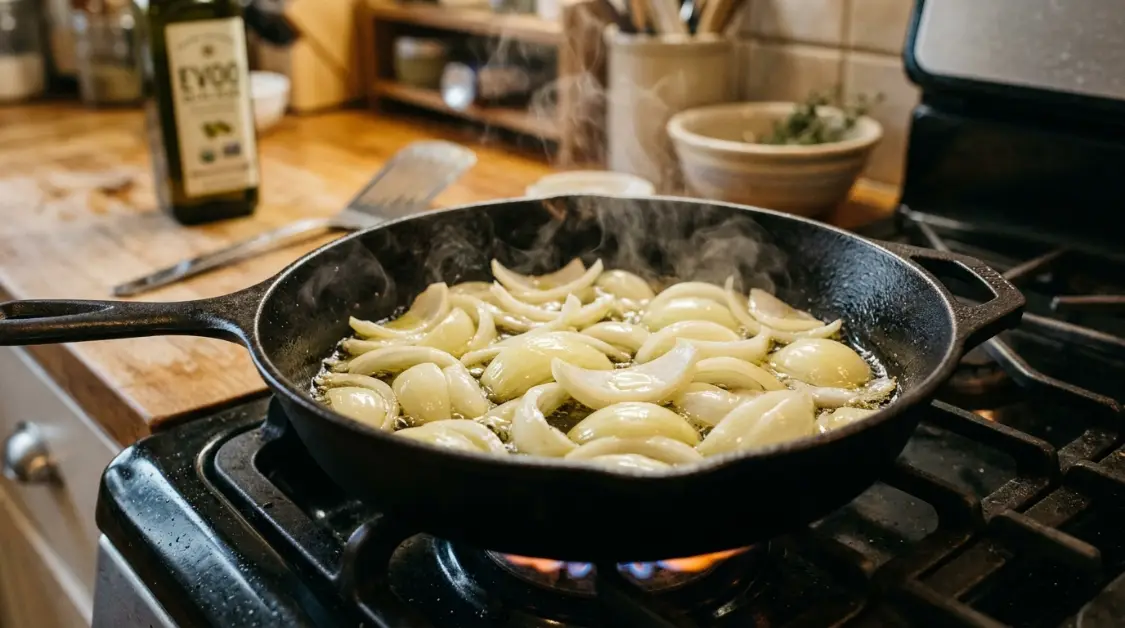
Efficiency tip: stir everything together with tongs — faster than a spoon.
CARAMELIZE LOW AND SLOW (35–40 min): This is where the magic happens. Stir every 5–7 minutes, adjusting heat as needed — you want a steady, gentle sizzle, not aggressive popping. If anything looks like it’s sticking, add a tablespoon of water and scrape up the fond. After 20 minutes, the onions will be soft and golden. After 35–40 minutes, they’ll be deeply amber, jammy, and smell impossibly sweet. That’s your goal. Do NOT rush this.
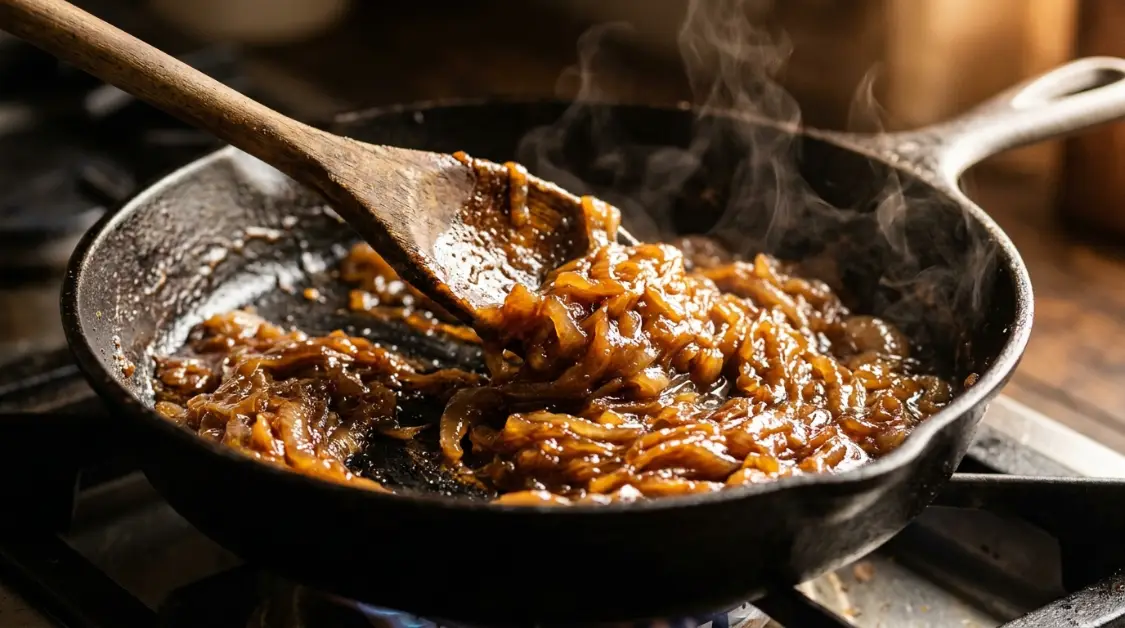
ADD GARLIC + THYME (3 min): Push the onions to one side of the pan. Add a tiny drizzle of olive oil to the cleared space, then add minced garlic and fresh thyme leaves. Cook 2 minutes until fragrant, then stir everything together. The kitchen at this point smells incredible — garlic, thyme, and caramelized sweetness all at once.
Maya’s Tip: Set a timer for 5-minute intervals during the caramelization stage. Use this time to prep your pasta water, zest your lemon, and assemble your other ingredients. Multitasking saves 10+ minutes total.
Cooking & Assembly (Steps 5–10)
DEGLAZE + SIMMER (3 min): Pour 60ml (1/4 cup) vegetable broth into the onion pan. Listen for that satisfying sizzle! Use your wooden spoon to scrape up every bit of the dark caramelized fond from the bottom of the pan — that’s concentrated flavor. Simmer 2 minutes until most of the broth is absorbed.
COOK THE PASTA (8–10 min): Meanwhile, bring a large pot of generously salted water to a rolling boil (taste it — it should be mildly salty). Add 340g (12 oz) pasta and cook until 1 minute short of al dente per the package directions. RESERVE 1 cup pasta water before draining. This is critical for your caramelized onion pasta sauce.
ADD GOAT CHEESE (3 min): Reduce the skillet heat to LOW. Add crumbled goat cheese to the onion mixture. Stir constantly — the cheese will slowly melt into the sweet onion base, creating a glossy, creamy sauce. Add 1/4 cup reserved pasta water and stir until completely smooth. The texture should be velvety, not grainy. (If it looks grainy, the heat was too high — lower it and add a splash more pasta water.)
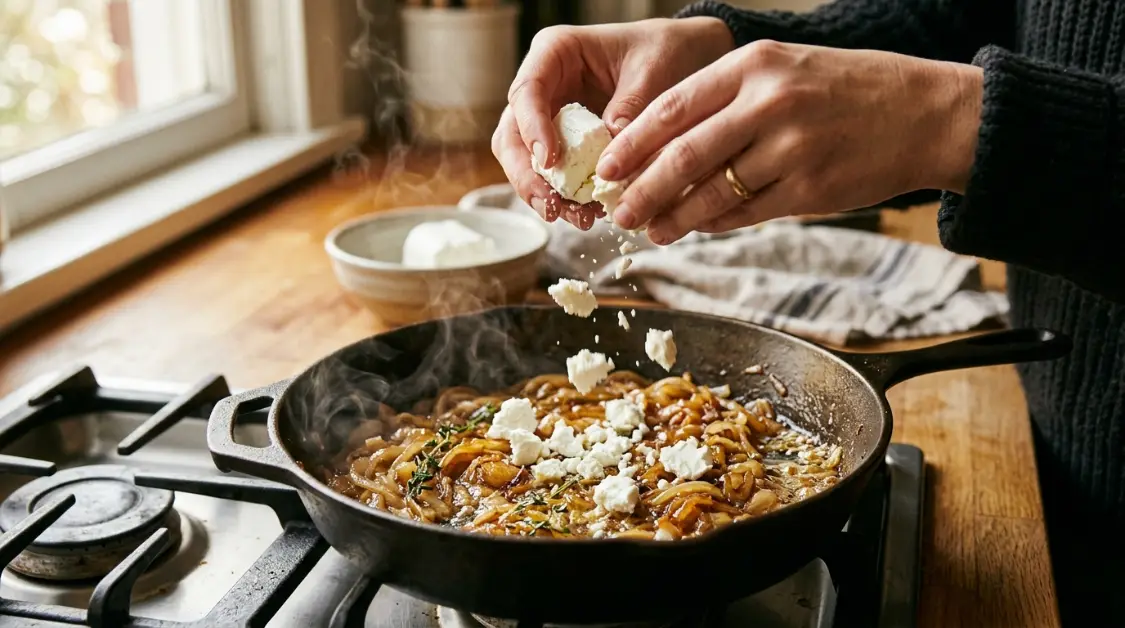
COMBINE PASTA + SAUCE (2 min): Add drained pasta directly into the skillet. Toss vigorously to coat every piece in the goat cheese caramelized onion sauce. Add more pasta water 2 tablespoons at a time if needed — the sauce should cling to the pasta beautifully without pooling. Squeeze lemon juice over everything and add lemon zest.
TASTE + ADJUST (1 min): This is your moment! Taste the pasta and adjust: needs more brightness? Another squeeze of lemon. Needs depth? A tiny pinch more salt. Needs richness? An extra crumble of goat cheese on top. Season with freshly cracked black pepper.
PLATE AND SERVE: Divide among warm bowls (I warm mine in a 200°F / 95°C oven for 5 minutes — game-changer for keeping pasta hot). Top with fresh flat-leaf parsley, an extra crumble of goat cheese, a drizzle of good olive oil, and fresh thyme. Serve immediately!
Tips, Tricks & Shortcuts
Maya’s Top Success Tips
- Go LOW and SLOW on onions: I cannot stress this enough. 35–45 minutes on medium-low heat. That’s it. No shortcuts.
- Make-ahead genius: Caramelize onions on Sunday and refrigerate up to 5 days. The rest of this healthy pasta recipe comes together in 20 minutes flat on a weeknight.
- Pasta water is non-negotiable: Reserve at least 1 cup. I usually grab 1.5 cups just to be safe. This starchy liquid is what emulsifies the sauce and gives it that restaurant-quality silkiness.
- Room temperature cheese: Cold goat cheese right from the fridge creates lumpy, uneven melting. Let it sit out 15–20 minutes before adding to the pan.
- Whole wheat pasta upgrade: Swap regular pasta for whole wheat to add an extra 3–4g of fiber per serving and a nutty depth that pairs beautifully with the sweet onions.
- Flavor layering: Don’t underestimate the lemon zest. It cuts through the richness of the goat cheese and gives the whole dish a brightness that makes it taste fresh, not heavy.
Pro Tip: If you’re serving this for guests, make the caramelized onion mixture up to 2 days ahead, refrigerate, and gently reheat before adding pasta and cheese. Looks effortless, tastes extraordinary.
Common Mistakes to Avoid
| Mistake | What Goes Wrong | How to Fix It |
| Rushing the onions on high heat | They burn on the outside, stay raw in the middle — bitter instead of sweet | Low-to-medium heat, 35–45 minutes minimum. Patience is the ingredient. |
| Skipping the pasta water reserve | Sauce becomes thick and gluey, doesn’t coat the pasta evenly | Always ladle out 1–1.5 cups before draining. Non-negotiable! |
| Adding goat cheese over high heat | Cheese breaks and turns grainy instead of creamy and luscious | Reduce to low heat before adding cheese. Stir constantly. |
| Under-salting the pasta water | Pasta tastes flat and bland even with a great sauce | Pasta water should taste like mild seawater — about 1 tbsp salt per 4 quarts water |
| Overcooking the pasta | Mushy pasta can’t hold up to the rich sauce — loses al dente texture | Pull pasta 1 minute before package time. It finishes cooking in the sauce. |
Variations & Serving Ideas
Recipe Variations
This creamy vegetarian pasta recipe is incredibly versatile. Here are my favorite riffs:
- Add a protein: Toss in some grilled chicken strips (similar to our delicious pesto pasta with grilled chicken technique — click through for tips!), sautéed shrimp, or white beans for a plant-based protein boost.
Speaking of, our Pesto Pasta with Grilled Chicken uses the same Mediterranean herb-forward approach if you want to add lean protein.
- Go vegetable-forward: Add a handful of wilted spinach or arugula right at the end — the heat wilts it perfectly in 30 seconds. Roasted cherry tomatoes (400°F / 200°C for 20 minutes) on top add gorgeous color and a pop of acidity.
- Autumn variation: Stir in roasted butternut squash cubes during assembly — the sweetness echoes the caramelized onions beautifully. A sprinkle of toasted walnuts adds crunch and omega-3s.
- Spice it up: A pinch of red pepper flakes added with the garlic gives a gentle warmth that plays brilliantly against the sweet onions. This is my California twist!
- Vegan version: Swap goat cheese for cashew cream cheese (blend 1 cup soaked cashews with lemon juice, garlic, and water). Tastes incredible and stays true to the anti-inflammatory pasta spirit.
Maya’s Tip: For a fun French onion soup-inspired version, stir in 1 tbsp of balsamic vinegar with the broth during the deglaze step. It adds a gorgeous depth and a hint of sweetness. Game. Changer.
Serving Suggestions
This caramelized onion & goat cheese pasta is a complete meal on its own — but it loves company! Pair it with our Mediterranean White Bean Salad for a protein-rich side, or serve alongside our Harissa Chickpea Roasted Cauliflower for a full Mediterranean spread.
For non-alcoholic beverage pairings (I love a thoughtful pairing!): sparkling water with a squeeze of lemon and fresh basil sprigs, a tall glass of fresh-squeezed pomegranate juice (the tartness is perfection with the sweet onions), iced hibiscus tea with orange peel, or a chilled glass of lemon ginger kombucha. So refreshing.
For a lighter starter before this dish, our Mediterranean Hummus Breakfast Bowl makes a beautiful shared appetizer plate when loaded with crudités and pita.
Meal Prep & Storage
Storage Guide
| Method | Container | Duration | Notes |
| Refrigerator (complete dish) | Airtight glass container | Up to 4 days | Add a splash of water or broth when reheating on the stovetop over low heat |
| Freezer (caramelized onions only) | Freezer-safe zip bags or glass | Up to 3 months | Freeze in ice cube trays first, then transfer — perfect single-serving portions! |
| Freezer (complete pasta) | Freezer-safe airtight container | Up to 2 months | Pasta texture changes slightly after freezing — add fresh goat cheese when reheating |
| Meal prep components (separate) | Individual airtight containers | Onions 5 days; pasta 4 days | Store caramelized onions and plain pasta separately — assemble when ready to serve |
Meal Prep Assembly Tips
This caramelized onion & goat cheese pasta is a meal prep dream — especially if you break it into components. Here’s my system for a full week of lunches:
- BATCH COOK ONIONS: Triple the onion quantity on Sunday. Caramelize the whole batch (3–4 hours low and slow, or use a slow cooker on LOW for 8 hours — hands-off magic!). Portion into small containers. Use throughout the week in this pasta, on grain bowls, in egg dishes, or anywhere you want a hit of sweet savory depth.
- COOK PASTA AHEAD: Boil pasta, drain, toss with 1 tsp olive oil to prevent sticking, and refrigerate up to 4 days. For best results, undercook by 2 minutes since it’ll reheat with the sauce.
- ASSEMBLE WHEN READY: Reheat onion mixture in a skillet over low heat, add a splash of broth to loosen. Add pasta and crumbled goat cheese, stir together with pasta water. Freshen with lemon and herbs right before eating.
- ❄️ CONTAINER RECOMMENDATION: Glass meal prep containers are best for reheating — go straight from fridge to microwave or into a low oven (300°F / 150°C) for 10 minutes. Add fresh herbs on top after reheating for brightness.
Frequently Asked Questions
Substitutions & Technique Q&As
Can I use a different type of cheese instead of goat cheese?
Absolutely! Cream cheese gives a similar creaminess but is milder and richer. Feta adds a tangy, saltier profile. Ricotta works beautifully for a lighter result. If you’re dairy-free, cashew cream cheese is my top pick — blend 1 cup soaked cashews with 2 tablespoons lemon juice, 1 garlic clove, and enough water to get a spreadable consistency. Season well. It melts into the sauce wonderfully.
Can I speed up the caramelizing process?
There’s really no reliable shortcut that gives you true caramelized onions — anyone claiming 10-minute caramelized onions is giving you sautéed onions (still tasty, just different!). The closest trick: slice onions thinner (about 1/4 inch / 6mm), add a small pinch of baking soda (speeds enzymatic browning), and keep the heat at medium rather than medium-low. You can get decent results in 25 minutes, but 40 minutes is the sweet spot.
What pasta shape works best?
Ridged pasta shapes like rigatoni, penne rigate, or cavatappi are ideal — their texture catches and holds the goat cheese sauce in every nook. Long pasta like linguine or spaghetti works too (it’s beautiful to twirl!). Avoid tiny shapes like orzo; the sauce pools instead of coating. Whole wheat pasta adds extra fiber and a nutty flavor I absolutely love with this recipe.
Can I make this without any broth?
Yes! You can deglaze with a squeeze of lemon juice (about 2 tablespoons) plus 2 tablespoons of pasta water instead. The result is a touch brighter and tangier — which is actually lovely. You can also use a splash of apple cider vinegar + water for a similar effect.
Dietary, Nutrition & Meal Prep Q&As
Is this recipe gluten-free?
The recipe as written is not GF, but it adapts very easily! Swap the pasta for your favorite gluten-free variety — chickpea pasta, rice pasta, or lentil pasta all work well. Add an extra tablespoon of broth since GF pasta tends to absorb more liquid. The rest of the ingredients are naturally gluten-free. (Always check your vegetable broth label to be sure!)
How many calories per serving?
Each serving comes in at approximately 485 calories, with 17g of protein, 18g of fat (primarily heart-healthy monounsaturated fats from olive oil), and 62g of carbohydrates with 5g of fiber. It’s a satisfying, balanced meal — not a light dish, but absolutely in line with Mediterranean Diet principles. I’m a certified health coach, not a doctor — always consult your healthcare provider for personalized nutrition advice.
Is goat cheese good for you?
Goat cheese is a nutritional win! It’s a good source of protein (6g per 1 oz serving), calcium, phosphorus, and vitamins A and B2. Its smaller fat globules and different protein structure make it easier to digest than cow’s milk cheese for many people. It also contains probiotics that support gut health. From my nutrition science training at the University of Barcelona, I can say: quality dairy in moderation has a solid place in a balanced diet.
Can I make this vegan?
100% yes! Replace the goat cheese with cashew cream cheese (recipe in the variations section above) or a good vegan feta. Add 2 tablespoons of nutritional yeast for a savory, cheesy depth. The caramelized onions are already vegan-friendly, and olive oil is the primary fat. This plant-forward pasta is one of the most naturally vegan-adaptable recipes I make.
How far in advance can I prep this for a dinner party?
Up to 2 days ahead! Make the caramelized onion mixture in full and refrigerate. Cook pasta the day of. When ready to serve, gently reheat the onion mixture over low heat with a splash of broth, add pasta and goat cheese, and finish with fresh lemon and herbs. No one will know it wasn’t made to order — promise.
Nutritional Highlights & Closing Thoughts
Why This Recipe Is So Good for You
Let me bring in my nutrition background for a second, because this caramelized onion & goat cheese pasta genuinely deserves a nutritional highlight reel. First, those onions: quercetin content in cooked yellow onions has been linked (in multiple peer-reviewed studies) to reduced inflammation markers and improved cardiovascular markers — the Blue Zones research consistently identifies onion-heavy diets as part of longevity patterns in Mediterranean populations.
Olive oil is where we get our beautiful healthy fat profile — primarily oleic acid, a monounsaturated fat shown in the landmark PREDIMED study to reduce LDL cholesterol while supporting HDL. Goat cheese provides calcium for bone health, protein for satiety, and those easier-to-digest medium-chain fatty acids I mentioned earlier. Add in the lemon’s vitamin C (which actually boosts iron absorption from the pasta!) and the thyme’s antimicrobial thymol compounds, and you’ve got a truly nutrient-dense dinner that’s satisfying without being heavy. It’s abundance, not deprivation — my whole cooking philosophy, right here in a bowl.
Make This Recipe & Let Me Know!
I am so genuinely excited for you to make this caramelized onion & goat cheese pasta. There is something so soul-satisfying about watching those onions transform over 40 minutes — it’s meditative, it’s aromatic, and the payoff is absolute magic in a bowl.
If you make this, please tag me on Instagram @themediterraneanrecipe — I seriously love seeing your kitchen creations. Drop a comment below and let me know: did you try it with whole wheat pasta? Did you add a veggie? Did your partner or kids ask for seconds? (Because mine always do!)
Want to keep the Mediterranean pasta vibes going? You’ll also love our Pasta Primavera Recipe loaded with spring vegetables, our Creamy Tomato Basil Chicken for a protein-forward option, our Grilled Chicken Mediterranean Bowl for a grain bowl spin, and our truly special Greek Yogurt Panna Cotta for a light, elegant dessert to round out your meal. So much good eating ahead — buen provecho!