Can we talk about how stressful entertaining can be? You want to impress your guests with something gorgeous and delicious, but you also don’t want to spend all day in the kitchen and miss your own party. That’s exactly why the ultimate Mediterranean mezze platter has become my absolute go-to for every gathering — from casual game nights to holiday celebrations to “I just need a gorgeous Tuesday dinner.”
A mezze platter is essentially the Mediterranean world’s answer to a grazing board: a beautiful spread of dips like creamy hummus and tangy tzatziki, fresh vegetables, marinated olives, salty feta cheese, warm pita bread, and bright herbs — all arranged on a big board for sharing. Here’s the best part: almost nothing needs to be cooked. The whole thing comes together in about 20 minutes, it’s naturally loaded with fiber, protein, and heart-healthy fats, and it looks like you hired a caterer. (You didn’t. You’re just that good.)
I grew up with mezze at every family gathering — whether it was my mama’s Sunday spread in Valencia overlooking the beach, or my nonna’s antipasti table in Tuscany (mezze’s Italian cousin!). When I moved to San Diego and started hosting my own dinner parties, building a Mediterranean mezze platter became my signature move. I’ve made hundreds of these, tested every combination, and I can promise you: this version — refined after years of my online Mediterranean meal prep courses and wellness coaching — is the one that makes everyone fight over the last piece of pita.
Table of Contents

Mediterranean Mezze Platter
Ingredients
Method
- 1. Place 3-4 small bowls on a large serving board or platter. Fill with hummus, tzatziki, and muhammara (or swoosh hummus directly onto the board). Drizzle each dip with olive oil and sprinkle with za’atar or paprika.
- 2. Arrange cubed feta, olive clusters, artichoke hearts, and pepperoncini around the dip bowls.
- 3. Fill remaining spaces with sliced cucumbers, cherry tomatoes, bell pepper strips, radishes, and carrots. Vary colors and shapes.
- 4. Tuck warm pita triangles along edges and in gaps. Add pita chips and crackers to fill remaining spots.
- 5. Garnish: tuck fresh herb bunches into gaps, scatter pomegranate seeds and toasted nuts, add lemon wedges, finish with a final drizzle of EVOO and flaky sea salt over the feta.
- 6. Let platter sit at room temperature 10-15 minutes before serving for best flavor. Serve and enjoy!
Notes
Why You’ll Love This Ultimate Mediterranean Mezze Platter
Health & Nutrition Benefits
This isn’t just party food — it’s one of the healthiest ways to feed a crowd:
⚡ Hummus delivers plant-based protein and fiber from chickpeas — studies show regular legume consumption supports gut health and blood sugar stability
💚 Extra virgin olive oil (drizzled over everything!) provides monounsaturated fats linked to cardiovascular protection — the PREDIMED study’s star ingredient
🍱 Raw vegetables like cucumbers, tomatoes, and bell peppers offer vitamins C, K, and A with minimal calories — the Mediterranean Diet’s colorful foundation
⚡ Feta cheese and olives add calcium, probiotics, and polyphenols — fermented dairy is a Blue Zones staple
My Barcelona nutrition professors always said: eat the rainbow. A mezze board IS the rainbow.
Practical Wins for Real Life
⚡ 20 minutes to assemble — zero cooking required (unless you warm the pita, which takes 2 min)
🍱 Almost entirely make-ahead! Prep dips 3 days before, assemble day-of
💚 Naturally gluten-free (with GF crackers), vegetarian, and mostly vegan — feeds every dietary need
⚡ Scales easily from 4 to 40 guests — just use a bigger board!
No cooking. No stress. Maximum wow factor. Such a game-changer for entertaining.
The Mediterranean Diet Connection
How Mezze Embodies Mediterranean Eating
Mezze isn’t just a recipe — it’s a philosophy. In Mediterranean and Middle Eastern cultures, meals are communal, leisurely, and built around sharing. A mezze platter embodies every principle of the Mediterranean Diet: abundant vegetables, legumes (hummus!), olive oil, fermented dairy (feta, tzatziki), whole grains (pita), and minimal processed food. The beauty is that grazing on a variety of small portions naturally encourages mindful eating — you taste, chat, enjoy, taste again. No rushing, no overloading a plate. For more Mediterranean appetizer inspiration, check out our spinach and feta pairing guide.
My Mezze Memories
Every culture around the Mediterranean has their own version of mezze. In Spain, it’s tapas — my mama would set out little plates of olives, manchego, and cured meats (we swap to smoked turkey now!) on the balcony. In Tuscany, my nonna called it antipasti — marinated vegetables, cheeses, and crostini. In Lebanon, Greece, and Turkey, it’s mezze in its truest form — hummus, tabbouleh, stuffed grape leaves, warm bread. When I build a mezze board in my San Diego kitchen, I pull from all three traditions. That’s the beauty of the Mediterranean: borders are blurry and flavors are generous. My California farmers’ market haul practically assembles itself into a mezze platter every Saturday.
Essential Components of the Ultimate Mediterranean Mezze Platter
Core Ingredients Breakdown
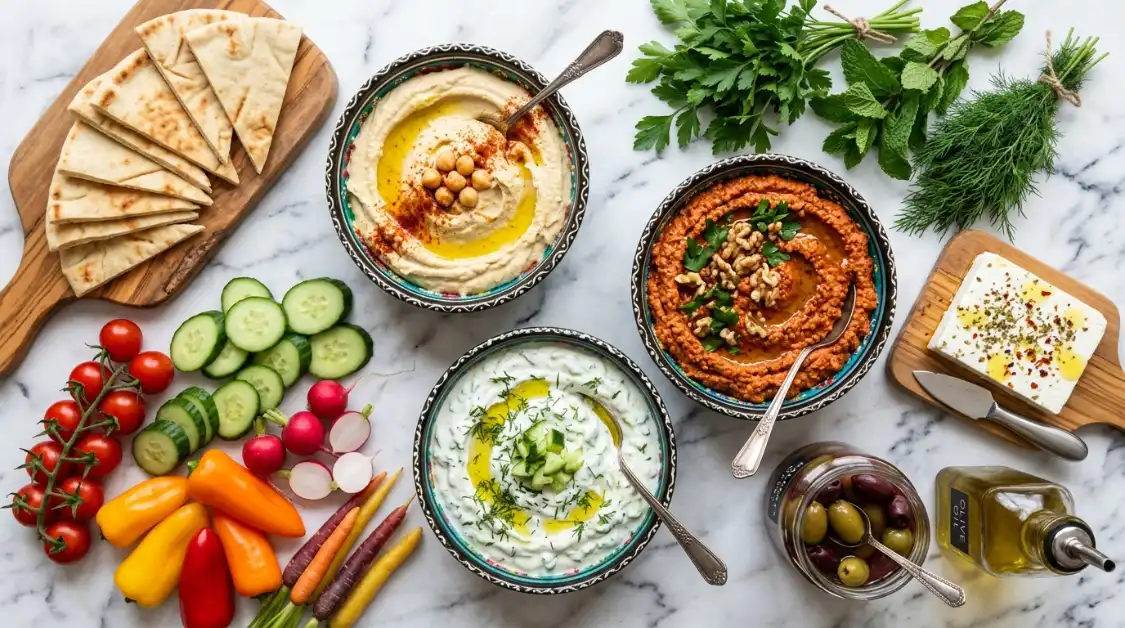
Think of your mezze platter as having five essential categories: dips, vegetables, cheese & olives, bread & crackers, and garnishes. Here’s everything you need:
| Component | Suggested Items | Why It’s Great | Best Pick | Substitution |
| Dips (2-3) | Hummus + tzatziki + muhammara (roasted red pepper walnut dip) | Chickpea protein + probiotic yogurt + antioxidant-rich peppers; creamy, tangy, smoky flavor trio | Homemade for freshness; store-bought for speed | Baba ganoush, white bean dip, or our feta pesto |
| Fresh vegetables | Persian cucumbers, cherry tomatoes, bell pepper strips, radishes, carrots | Fiber, vitamins C/K/A, crunch, color — zero cooking needed | In-season from farmers’ market; organic if budget allows | Blanched green beans, snap peas, endive leaves |
| Cheese | Block feta (cubed or crumbled), marinated feta in olive oil + herbs | Calcium, protein, gut-friendly probiotics from fermentation | Greek sheep’s milk feta for tangiest flavor | Halloumi (grilled), labneh, or vegan feta |
| Olives & pickled items | Kalamata olives, Castelvetrano olives, marinated artichoke hearts, pepperoncini | Healthy fats, polyphenols, Mediterranean depth and brininess | Mixed olive medley from the deli olive bar | Cornichons, pickled turnips, sun-dried tomatoes |
| Bread & crackers | Warm pita (cut into triangles), pita chips, whole wheat crackers | Whole grain fiber, satisfying crunch, vehicle for dips | Fresh bakery pita warmed 2 min in oven | GF crackers, seed crackers, cucumber rounds for low-carb |
| Proteins (optional) | Stuffed grape leaves (dolmas), falafel, marinated chicken skewers | Added protein and substance for making mezze a full meal | Store-bought dolmas are excellent quality | Marinated white beans, edamame, grilled tofu |
| Garnishes & extras | Fresh herbs (mint, dill, parsley), lemon wedges, EVOO drizzle, za’atar, Aleppo pepper, nuts (pistachios, almonds) | Color, aroma, polished presentation, anti-inflammatory compounds | Fresh herb bunches + quality EVOO | Dukkah spice blend, sumac, pomegranate seeds |
Love the feta element? Our cheese sauce with feta guide takes feta in a totally different (and delicious) direction, and our watermelon feta pasta salad is a stunning summer side.
Dietary Modifications & Prep Tips
| Need | Replace | With | Notes |
| Vegan | Feta + tzatziki | Vegan feta + cashew cream dip or dairy-free yogurt dip | Hummus, muhammara, vegetables, olives are already vegan |
| Gluten-free | Pita bread | GF crackers, seed crackers, or vegetable crudités only | All dips, veggies, cheese, and olives are naturally GF |
| Nut-free | Muhammara (contains walnuts) + pistachio garnish | Roasted red pepper hummus (no nuts) + pumpkin seed garnish | Verify store-bought hummus labels for nut cross-contamination |
| Low-carb / Keto | Pita + crackers + hummus | Cucumber rounds + cheese + olives + guacamole | Focus on feta, olives, veggies, and protein additions |
| Dairy-free | Feta + tzatziki | Marinated tofu cubes + dairy-free yogurt dip | Hummus, muhammara, veggies, olives are dairy-free |
| Higher protein | Standard platter | Add grilled chicken skewers + extra hummus + boiled eggs | Turns the mezze board into a complete high-protein meal |
Ingredient storage: Hummus and tzatziki keep 4-5 days refrigerated. Pre-cut veggies stay crisp 3 days in water-filled containers. Olives last weeks in brine. Feta stores 2 weeks submerged in brine. Make dips ahead, cut veggies the morning of, assemble right before serving. For more GF entertaining ideas, browse our gluten-free Mediterranean recipes.
Equipment & Quick Prep
What You’ll Need
| Tool | Why It Helps | Alternative |
| Large serving board or platter (18″+ round or rectangular) | Creates the visual wow factor; contains everything in one beautiful spread | Large cutting board, lined sheet pan, or multiple plates clustered together |
| Small bowls (3-4) | Hold dips and wet items like olives; prevents flavor mixing | Ramekins, mason jar lids, or small teacups — get creative! |
| Sharp knife + cutting board | Slice cucumbers, quarter tomatoes, cut pita triangles | Pre-cut veggie trays from the store save all the knife work |
| Food processor (if making dips) | Smooth hummus and muhammara in minutes | Buy store-bought dips — absolutely no shame in that! |
Prep-Ahead Checklist
Total assembly: About 20 minutes (less if using store-bought dips). Here’s how to spread out the work:
3 days before: Make hummus and muhammara. Store in airtight containers.
1 day before: Make tzatziki. Cube and marinate feta. Drain olives and artichoke hearts.
Morning of: Slice vegetables. Store in cold water to keep crisp.
20 min before serving: Warm pita (2 min in 350°F oven). Arrange everything on the board. Drizzle olive oil, sprinkle herbs and spices. Done!
Batch prep tip: Double your hummus batch and use it all week — in our enlightened Mediterranean chicken bowl, as a sandwich spread, or with our Mediterranean breakfast bowl for Mediterranean mornings.
Step-by-Step: How to Build the Ultimate Mediterranean Mezze Platter
Foundation & Layout (Steps 1–4)
Step 1 — Choose Your Board & Set the Anchors (2 min): Start with your largest board or platter. Place 3-4 small bowls in different areas — these will hold your dips and olives. I put them off-center for a more natural, organic look. Think of them as the anchors that everything else clusters around.
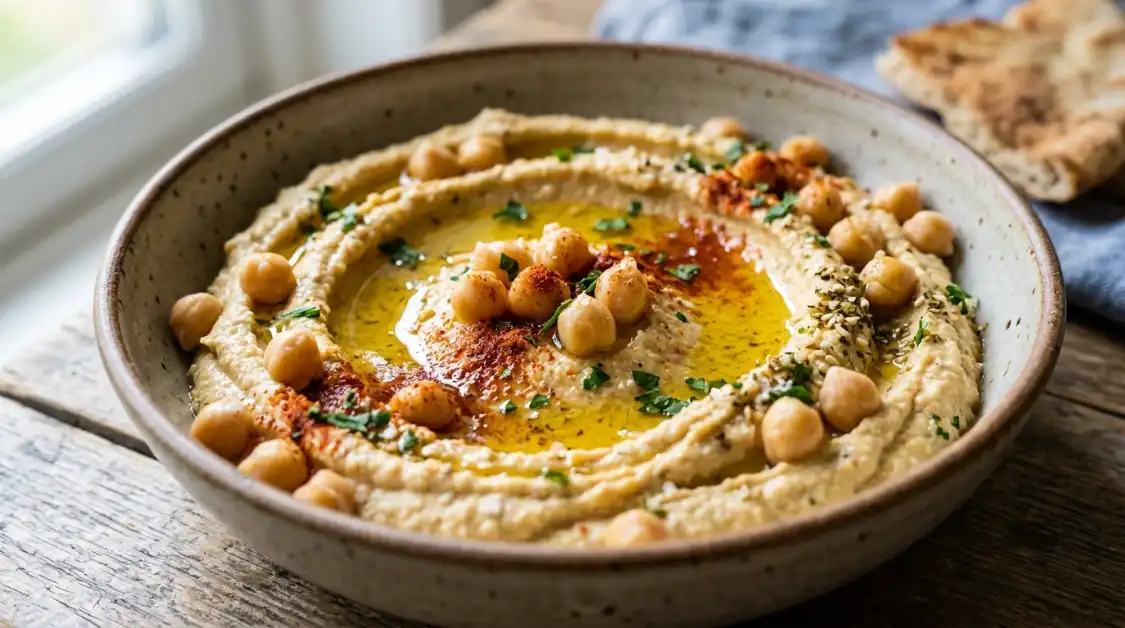
Step 2 — Add the Dips (3 min): Spoon hummus into one bowl (create a swoosh with the back of a spoon and make a well in the center for olive oil — this is the move!). Add tzatziki to another bowl. If you made muhammara, place it in a third. Thick dips like hummus can also be swooshed directly onto the board for a dramatic, restaurant-style presentation. Drizzle each dip with extra virgin olive oil and sprinkle with paprika, za’atar, or sumac.
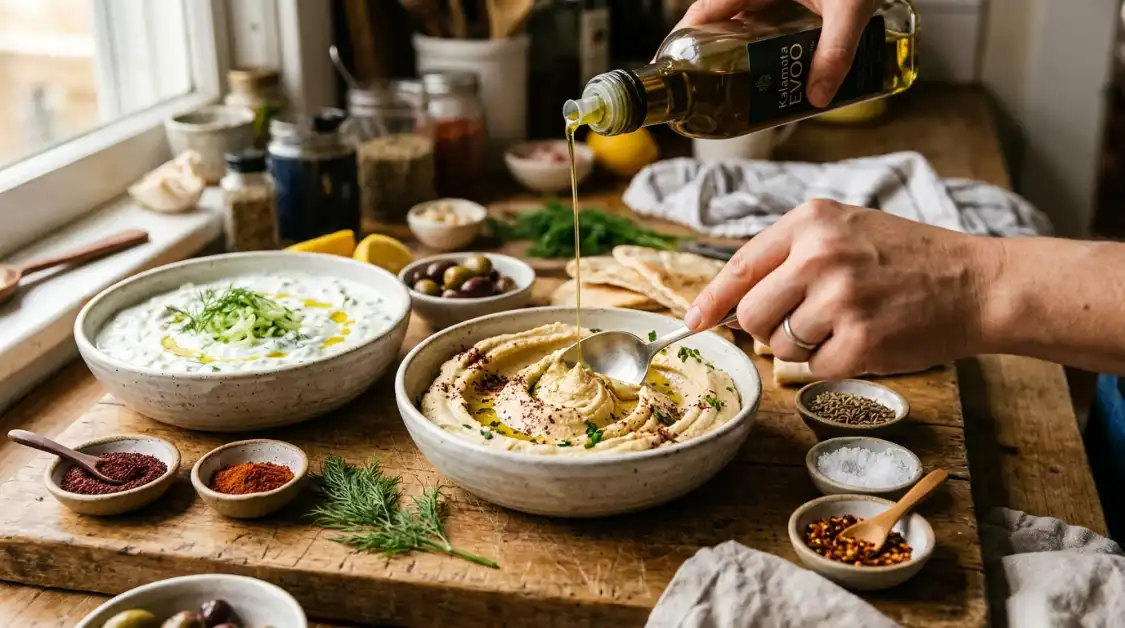
Maya’s Tip: The olive oil drizzle on hummus isn’t just aesthetic — the fat helps your body absorb the fat-soluble vitamins from the vegetables you’ll be dipping. Nutrition science meets beautiful food presentation! (My Barcelona professors would be proud.)
Step 3 — Place the Cheese & Olives (2 min): Arrange cubed feta (or a wedge) near one of the dips. Add clusters of different olives — I love mixing deep purple Kalamata with bright green Castelvetrano for color contrast. Scatter marinated artichoke hearts and pepperoncini around the board. These salty, briny elements are the flavor backbone of any great Mediterranean appetizer.
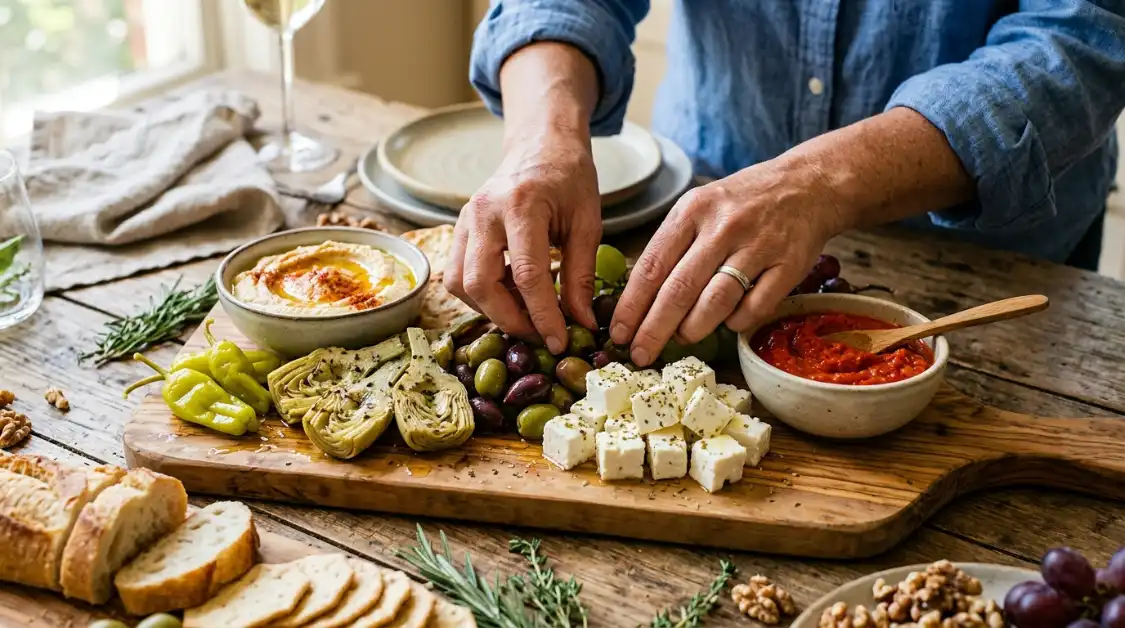
Step 4 — Build the Vegetable Sections (5 min): Now fill the spaces! Fan cucumber slices, line up carrot sticks, cluster cherry tomatoes, arrange bell pepper strips. The key is variety of color, shape, and height — some things flat, some standing up, some clustered. Think of it like a garden. I always say: if it looks beautiful, it IS beautiful. You’ve got this!
Finishing & Presentation (Steps 5–10)
Step 5 — Add the Bread (2 min): Tuck warm pita triangles along the edges and in gaps. Add pita chips in a pile or standing up for height. Crackers can fill the remaining spaces. The ultimate Mediterranean mezze platter should look abundant — no visible board surface!
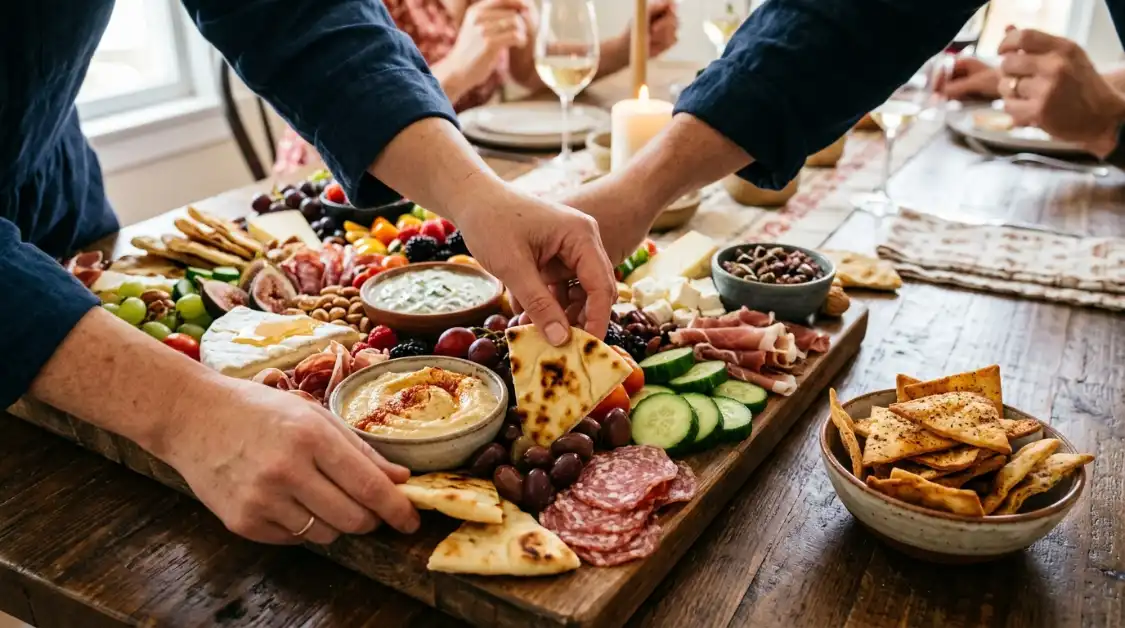
Step 6 — Add Protein Extras (1 min, optional): If making this a full meal, nestle stuffed grape leaves (dolmas) in clusters. Add falafel if you have them. For meat-eaters, grilled chicken skewers or our lamb shakshuka recipe flavors on small skewers work beautifully.
Step 7 — The Garnish Moment (2 min): This is where the magic happens. Tuck fresh herb bunches (mint, dill, flat-leaf parsley) into gaps. Scatter pomegranate seeds over the dips (that jewel-like pop of red!). Add lemon wedges for squeezing. Sprinkle toasted pistachios or almonds. A final drizzle of your best olive oil over everything.
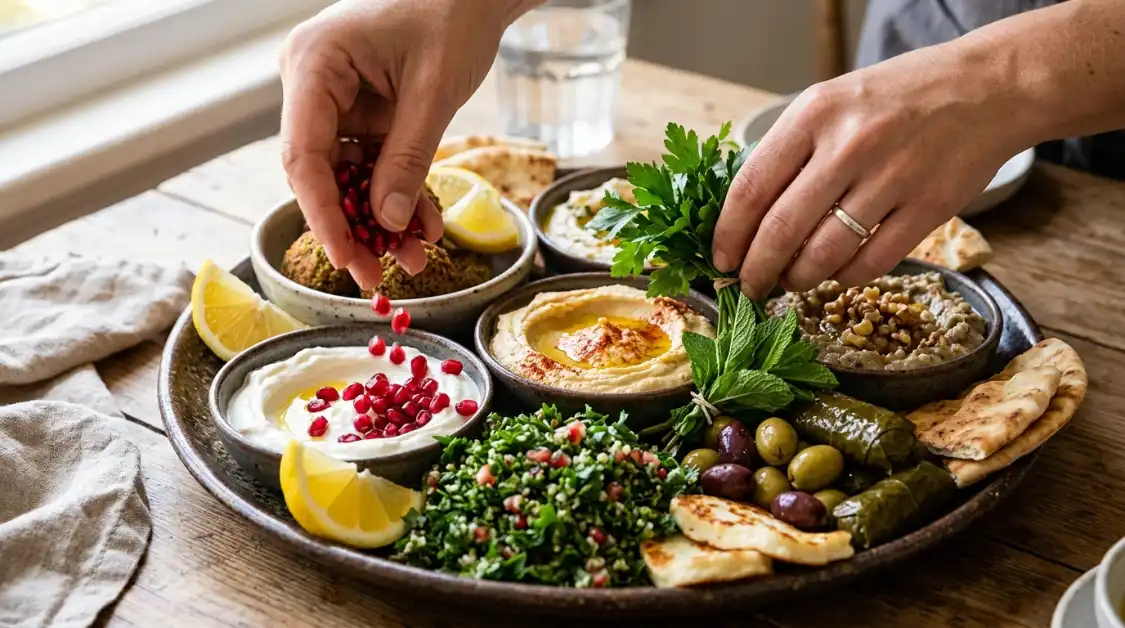
Pro Tip: Height creates drama. Stand some pita triangles upright, pile olives high in a corner, let herb bunches cascade over the edge. Your mezze board should look lush and overflowing — abundance is the Mediterranean way.
Step 8 — Final Seasoning: Dust za’atar over the hummus, flaky sea salt over the feta, Aleppo pepper over the tzatziki. These little finishing touches are what separate a good mezze platter from an unforgettable one. The aroma alone — warm spices, fresh herbs, olive oil — will have everyone hovering around the board before you even announce it’s ready.
Step 9 — Serve at Room Temperature! Let the platter sit out for 10-15 minutes if it’s been refrigerated. Dips taste better at room temperature — the flavors open up and the textures soften. (Harold McGee explains this in On Food and Cooking — cold mutes our taste buds.) Know what I mean? Cold hummus and warm hummus are practically different foods.
Step 10 — Gather & Enjoy! Put the board in the center of the table. Let people graze, chat, laugh, and reach across each other. That’s the entire point of mezze — it brings people together. My favorite way to eat.
For a stunning Mediterranean dinner after the mezze, try our roasted vegetables salmon or a bold spicy rigatoni.
Tips, Tricks & Shortcuts
My Best Assembly Tips
1. Place bowls first, fill around them. The bowls are your anchors — everything else radiates outward.
2. Odd numbers look more natural. 3 dips, 5 veggie types, 7 olive clusters. Our brains find odd groupings more visually appealing.
3. Mix store-bought and homemade. Homemade hummus + store-bought dolmas + store-bought olives is a perfectly balanced approach. No shame in shortcuts!
4. Use parchment under dips. If swooshing hummus directly on the board, place parchment underneath for easier cleanup.
5. Think color contrast. Green olives next to red peppers next to white feta next to purple Kalamatas. The more contrast, the more stunning your Mediterranean party platter looks.
6. Serve dips at room temp. Pull from fridge 15 min before serving — flavors bloom, textures improve. (My first mezze platter fail was serving ice-cold hummus. It tasted like cardboard. Trust me on this one.)
7. Label for allergy safety. Small cards near items with common allergens (nuts in muhammara, dairy in feta/tzatziki) help guests feel safe and welcome.
Common Mistakes to Avoid
| Mistake | Result | Fix |
| Serving dips ice-cold | Muted flavors, stiff textures — everything tastes bland | Pull from fridge 15 min before serving; let flavors bloom |
| Not enough dipping vehicles | Guests run out of pita/crackers and stop eating dips | Overestimate bread/crackers by 25%; replenish midway through |
| Overcrowding with one item | Platter looks monotonous; guests miss variety | Small amounts of many things > large amounts of few things |
| Flat, one-level presentation | Boring visual — looks like a cafeteria tray | Add height with standing pita, stacked olives, herb bunches, elevated bowls |
| Forgetting the olive oil drizzle | Dips look dry; missing the flavor that ties everything together | Always finish with EVOO, fresh herbs, and spice dust — the Mediterranean polish |
| No replenishing plan | Empty spots develop midway through the party | Keep backup pita, hummus, and veggies in the fridge for a mid-party refresh |
Variations & Serving Ideas
Themed Mezze Variations
Greek mezze: Focus on tzatziki, whipped feta, dolmas, Kalamata olives, cucumber, grilled halloumi. Drizzle with oregano olive oil. Try it alongside our spinach and feta pizza for a full Greek spread.
Lebanese mezze: Hummus, baba ganoush, tabbouleh, fattoush, stuffed grape leaves, pickled turnips. Heavy on the fresh herbs and lemon.
Spanish tapas twist: Patatas bravas, marinated peppers, manchego, olives, smoked almonds, our caprese pasta salad with orzo as a cold side.
Breakfast mezze: Labneh, boiled eggs, cucumber, tomatoes, olives, za’atar, warm pita. Our Mediterranean breakfast bowl complements this beautifully.
Kid-friendly: Mild hummus, pita chips, cherry tomatoes, cucumber coins, mild cheese cubes, grapes, crackers. Skip the spicy items.
Serving Suggestions & Pairings
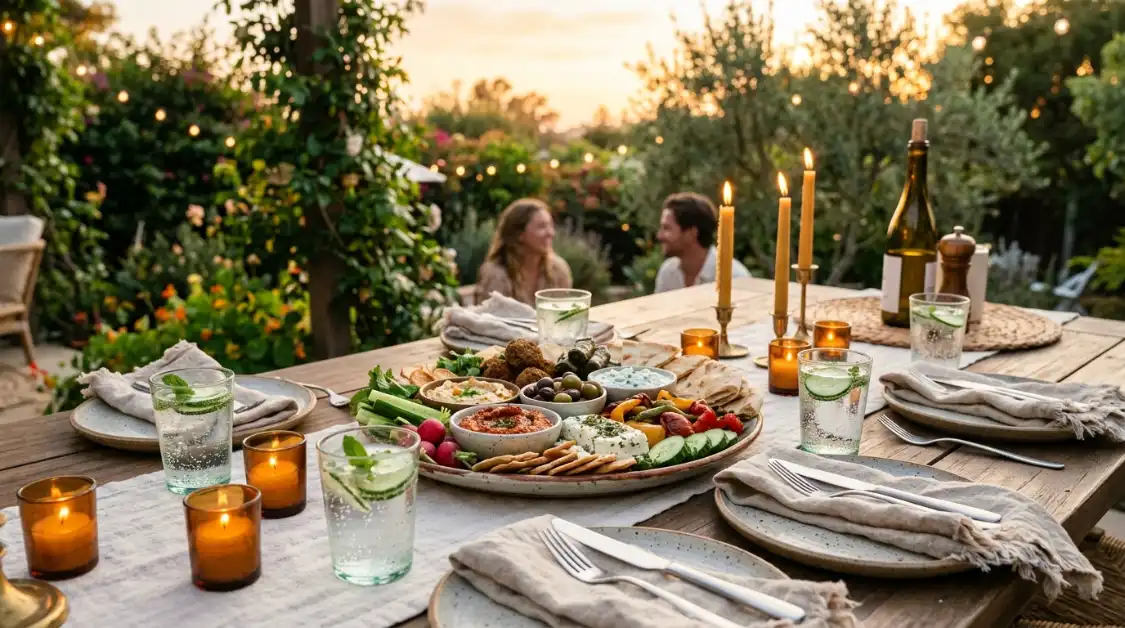
As an appetizer: Serve before a main course like our roasted vegetables salmon, grilled chicken, or a Mediterranean pasta night
As a full meal: Add protein (falafel, chicken skewers, boiled eggs) and serve with a grain like couscous or quinoa on the side
Non-alcoholic beverages: Sparkling water with cucumber and mint, fresh pomegranate juice, iced hibiscus tea, homemade lemonade with rose water, herbal chamomile tea
For parties: Set up two platters at opposite ends of the table so guests aren’t crowding one area. Refill with backup items from the fridge.
Meal Prep & Storage
Storage Guide for Your Mezze Components
| Component | Container | Duration | Notes |
| Hummus | Airtight glass container | 4-5 days fridge | Press plastic wrap onto surface to prevent browning; stir before serving |
| Tzatziki | Airtight container | 3-4 days fridge | May release liquid — drain and stir before serving |
| Muhammara | Glass jar | 5-7 days fridge | Flavor actually improves after a day! Great make-ahead dip |
| Cut vegetables | Water-filled containers or damp towel | 2-3 days fridge | Cucumbers and carrots stay crispest in water |
| Marinated feta / olives | In their brine or oil | 2 weeks+ fridge | The longer feta marinates, the more flavorful it gets |
| Assembled platter | Covered with plastic wrap | 4 hours max at room temp | Standard food safety; refrigerate if assembling early, bring to room temp before serving |
Meal Prep Tips
Best strategy: Make all dips 2-3 days ahead. Prep and store veggies the morning of. Assemble the ultimate Mediterranean mezze platter 30 min before guests arrive.
Leftover magic: Leftover hummus becomes sandwich spread. Leftover veggies go into a stir-fry or grain bowl. Leftover feta and olives top salads all week. Nothing goes to waste!
Weeknight mezze: Not just for parties! On busy weeknights, I throw together a simple mezze plate with store-bought hummus, whatever veggies are in the crisper, and warm pita. Dinner in 10 minutes. Our Mediterranean salads make a perfect accompaniment.
Frequently Asked Questions
Assembly & Technique Questions
How far in advance can I assemble the ultimate Mediterranean mezze platter?
You can assemble up to 4 hours ahead — cover tightly with plastic wrap and refrigerate. Pull it out 15-20 minutes before serving so dips reach room temperature and flavors open up. Don’t add the pita until right before serving so it stays warm and soft. Herbs and garnishes go on last for maximum freshness.
How much food do I need per person?
For an appetizer, plan about 4-6 ounces per person. For a full meal, double that to 8-12 ounces per person. I usually budget: 1/4 cup hummus, 5-6 pieces of vegetable, 2-3 pita triangles, and a small handful of olives and cheese per guest. Overestimate slightly — you can always use leftovers.
Can I use all store-bought items?
Absolutely! A mezze board made with high-quality store-bought hummus, good olives from the deli bar, pre-marinated feta, and fresh veggies is still stunning and delicious. The arrangement and presentation matter more than whether you made every single component from scratch. No shame in smart shortcuts.
What’s the best board or platter to use?
A large wooden cutting board (18″+ round or rectangular), a marble slab, or even a large sheet pan lined with parchment all work beautifully. If you don’t have a single large surface, cluster 2-3 plates together. The more surface area, the more you can spread out and create that abundant, overflowing look.
Dietary, Nutrition & Lifestyle Questions
Is a mezze platter healthy?
Yes — it’s one of the healthiest appetizer spreads you can serve! A Mediterranean mezze platter is rich in fiber (from hummus and vegetables), healthy fats (olive oil, olives, nuts), protein (chickpeas, feta, optional additions), and antioxidants (from colorful vegetables and herbs). It aligns perfectly with the Mediterranean Diet, which research consistently links to heart health, longevity, and reduced inflammation.
How do I make this completely vegan?
Easy! Skip the feta and tzatziki (or use vegan versions). Hummus, muhammara, vegetables, olives, pita, and herbs are all naturally vegan. Add marinated white beans or chickpea salad for extra protein. Many of the world’s best mezze platters are naturally plant-based. Check our gluten-free Mediterranean recipes for more plant-forward inspiration.
Can I make a mezze platter for one or two people?
Definitely! Scale down to a small plate with a scoop of hummus, a handful of veggies, some olives, feta cubes, and a couple of pita triangles. I make a mini mezze plate for myself at least twice a week for lunch. It’s the fastest healthy meal — no cooking, tons of nutrients, and it feels special.
What’s the calorie count for a mezze platter?
It varies widely based on portions, but a typical appetizer serving (hummus, veggies, feta, olives, 2 pita triangles) is about 320-380 calories with an excellent macro balance: healthy fats from olive oil and olives, plant protein from hummus, fiber from vegetables and whole wheat pita. I’m a certified health coach, not a doctor — always consult your healthcare provider for personalized advice.
How do I keep veggies from drying out on the platter?
Brush cut vegetables lightly with olive oil before placing on the board — this gives them a beautiful sheen and prevents drying. For extended display (2+ hours), mist with a spray bottle of water occasionally. Cherry tomatoes and cucumbers hold up best; delicate items like radish slices should be added closer to serving time.
Nutritional Highlights & Final Thoughts
Why This Platter Is Good for You
From my nutrition science background at the University of Barcelona and my Cornell plant-based certificate, here’s why the ultimate Mediterranean mezze platter is nutritional brilliance in disguise. Chickpea-based hummus provides plant protein, iron, and fiber that studies show supports blood sugar stability and gut microbiome diversity.
The array of colorful vegetables delivers vitamins A, C, and K plus polyphenols — antioxidant compounds that the PREDIMED study links to reduced cardiovascular risk. Feta cheese contributes calcium and vitamin B12, plus the probiotics from fermentation that support digestive health.
Olive oil ties it all together with oleic acid — the anti-inflammatory monounsaturated fat that is the cornerstone of the Mediterranean Diet’s health benefits.
And the fresh herbs? Mint, dill, and parsley are surprisingly nutrient-dense, adding vitamin K, iron, and volatile oils with anti-inflammatory properties. A mezze platter is the Mediterranean Diet on a board. Not preachy — just genuinely exciting from a nutrition standpoint.
Let’s Build One Together!
Whether you’re hosting a big celebration or just treating yourself to a gorgeous Tuesday-night dinner, I hope this guide inspires you to build your own ultimate Mediterranean mezze platter. It’s the kind of food that makes people feel welcome, nourished, and happy — and isn’t that the whole point?
Tag me on Instagram when you build yours — I absolutely love seeing everyone’s creative arrangements! Drop a comment below with your must-have mezze component. Hummus purist? Olive obsessed? Feta fanatic? I want to hear it all.
For more Mediterranean entertaining, try our feta pesto as an unexpected dip addition, the stunning spinach and feta pasta as a main course to follow, our beautiful watermelon feta pasta salad for summer gatherings, or finish the night with our easy tiramisu. Happy building, friends!
— Maya ❤️