These deviled eggs swap the mayonnaise for hummus, giving a filling that is creamy and lemony with a tahini backbone rather than a mayo-heavy one.
The tahini in hummus emulsifies much the way mayonnaise does, so the filling still sets smooth while the chickpeas add body and fibre. Makes 24 halves.
Table of Contents

Mediterranean Hummus Deviled Eggs
Ingredients
Method
- 1. STEAM THE EGGS: Place a steamer basket in a pot with 1 inch of water. Bring to a boil over high heat. Gently place eggs in the basket. Cover, reduce heat to medium, and steam for exactly 12 minutes.
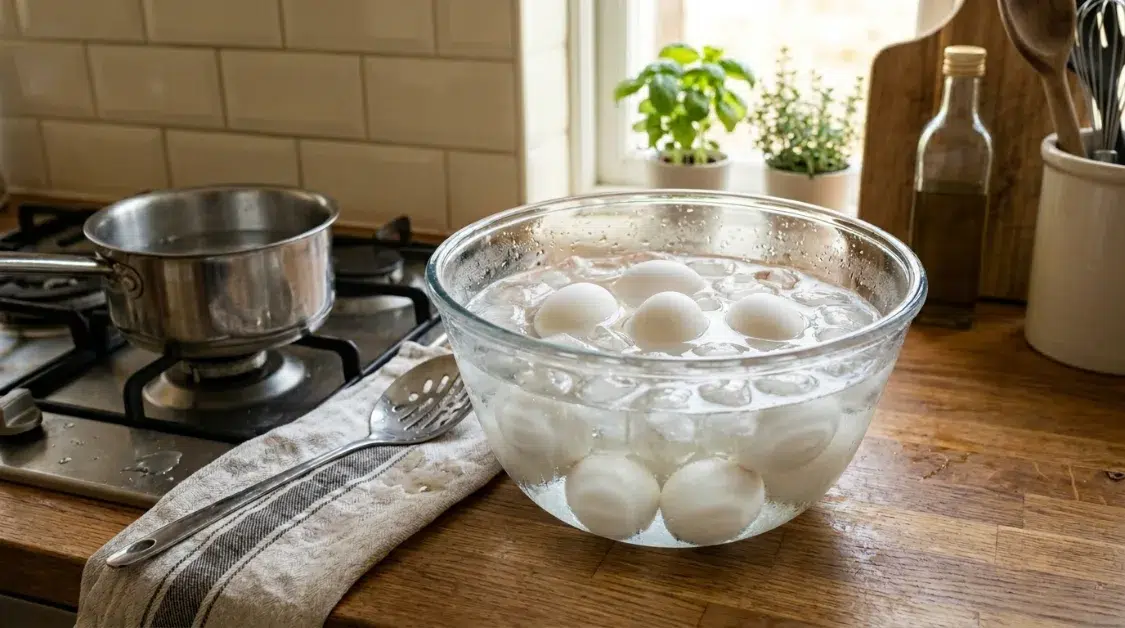
- 2. ICE BATH: Immediately transfer eggs to a bowl of ice water. Let sit for at least 10 minutes until completely cool.
- 3. PEEL: Gently tap eggs on the counter to crack the shells all over. Peel under cold running water for cleanest results.
- 4. HALVE: Slice each egg in half lengthwise. Carefully remove yolks and place in a medium mixing bowl.
- 5. MAKE FILLING: Mash yolks with a fork until finely crumbled. Add hummus, Dijon mustard, lemon juice, salt, and pepper. Stir and mash until smooth and well combined.
- 6. TASTE & ADJUST: Taste filling and adjust salt, pepper, or lemon juice as needed. If too thick, add water ½ teaspoon at a time.
- 7. FILL: Spoon or pipe the hummus filling into each egg white half, mounding slightly.
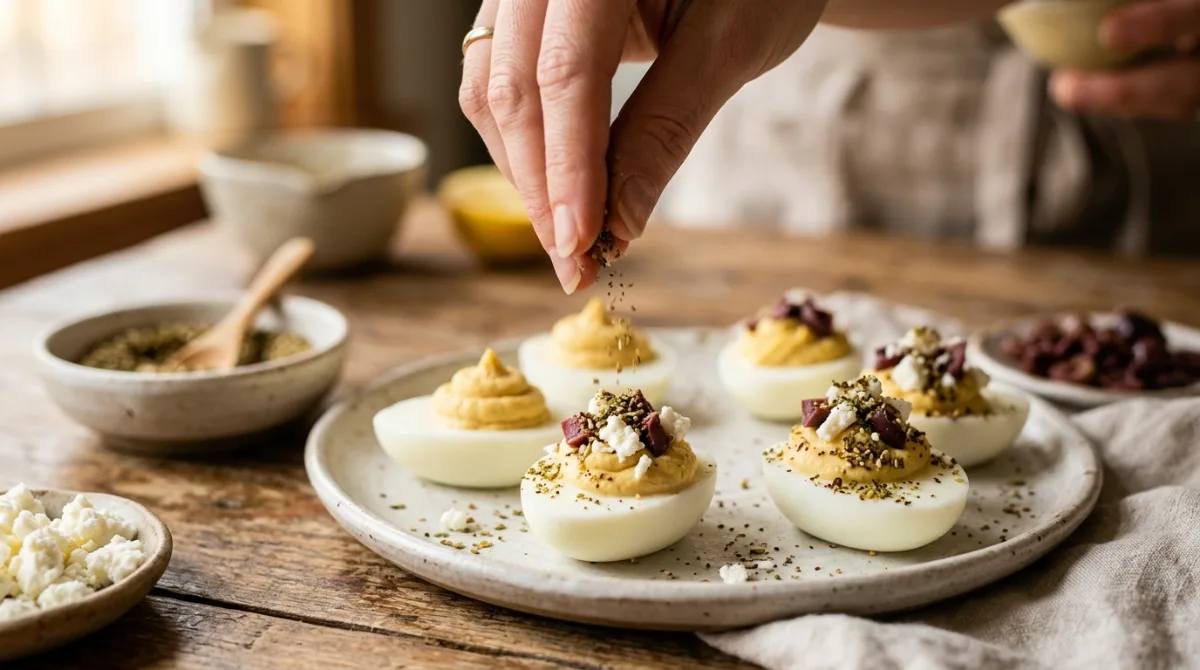
- 8. TOP: Sprinkle each egg with za’atar, add a few feta crumbles, a few olive bits, a tiny drizzle of olive oil, and a leaf of fresh parsley or mint.
- 9. SERVE: Arrange on a platter and serve immediately, or cover and refrigerate until ready to serve.
Notes
The Story Behind This Recipe
I brought regular deviled eggs to my friend Amira’s Eid brunch in April 2023 and she took one bite, paused, and said “why are these so… plain?” Right in front of everyone. (She was right, honestly.) That one comment launched what my husband now calls my “deviled egg era”—nine rounds of testing, three brands of hummus, a frankly embarrassing amount of za’atar, and one accidental batch that was so good my six-year-old nephew Sami ate seven halves before anyone noticed. These Mediterranean hummus deviled eggs completely ditch the mayo, replacing it with creamy hummus for a lighter, more flavorful, protein-packed appetizer that I’m never going back from. Here’s every trick I learned.
Why These Mediterranean Hummus Deviled Eggs Just Work
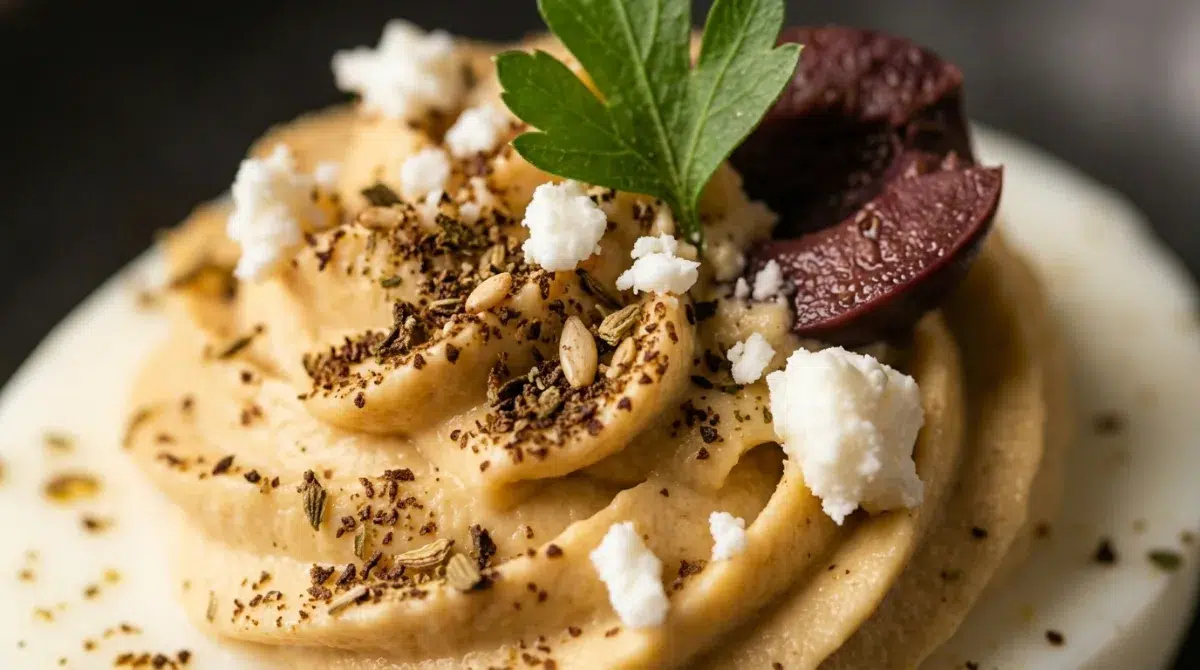
The Science of Hummus as an Emulsifier
Here’s the thing about mayo in deviled eggs—its whole job is emulsification, binding fat and water together into a creamy mixture. But guess what else does that? Hummus. The tahini in hummus is naturally emulsifying (as food scientist Harold McGee explains, sesame paste creates stable oil-in-water emulsions thanks to its high protein content), while the chickpeas add fiber and body that mayo simply can’t.
The result is a filling that’s actually creamier than traditional deviled eggs, holds its shape better on a platter, and doesn’t get that weird weepy film after sitting out for 30 minutes. Plus—and I genuinely didn’t expect this—the hummus filling stays stable at room temperature longer than mayo-based fillings because there’s no raw egg yolk-mayo combination creating that food safety gray zone.
The Appetizer That Fits Every Table
What I love about this Mediterranean egg appetizer is how universally it works. Casual barbecue? Yes. Holiday spread? Absolutely. Random Wednesday when you want a high-protein snack that isn’t, like, another sad protein bar? Especially then. Each half has about 4 grams of protein and the Mediterranean toppings—za’atar, crumbled feta, kalamata olive bits—make them look like you spent way more effort than you actually did. They’re naturally gluten-free, and if you’re doing the same thing as our Greek feta egg bake for brunch, these make the perfect cold appetizer alongside it.
Essential Ingredients for Mediterranean Hummus Deviled Eggs
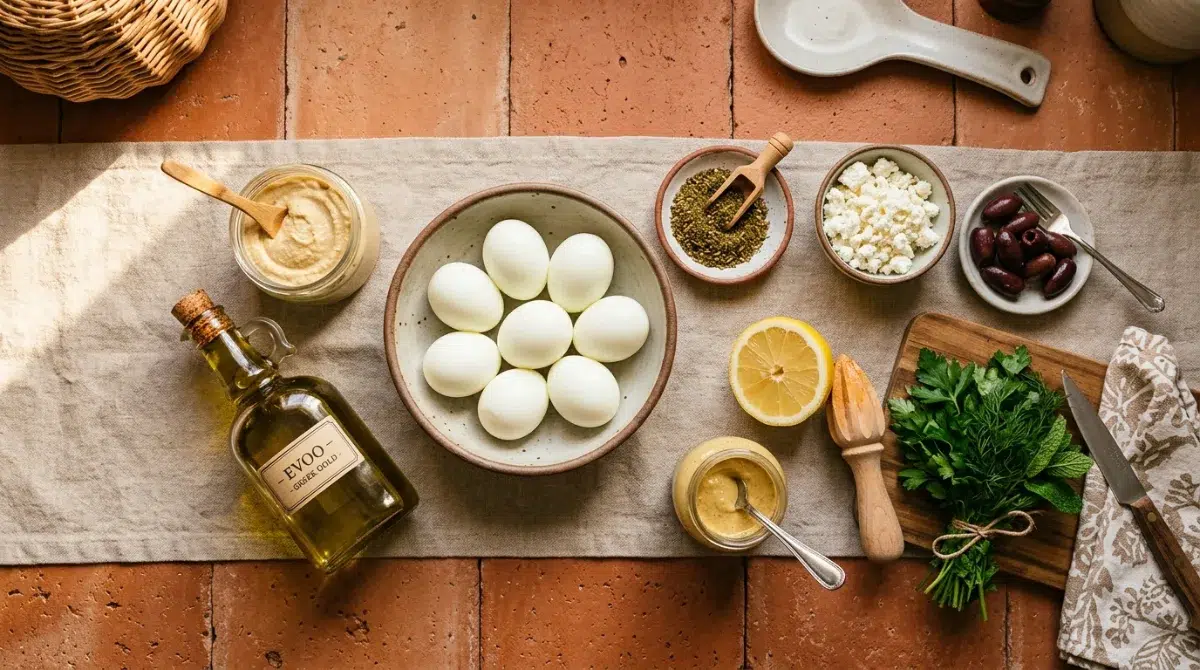
Complete Ingredients list
For the Eggs & Filling:
12 large eggs
1/3 cup hummus (classic or roasted garlic)
1 teaspoon Dijon mustard
1 tablespoon fresh lemon juice (about ½ lemon)
¼ teaspoon fine sea salt, plus more to taste
⅛ teaspoon freshly ground black pepper
For the Mediterranean Toppings:
1–2 tablespoons za’atar spice blend
2 tablespoons crumbled feta cheese
2 tablespoons kalamata olives, finely diced
1–2 teaspoons extra virgin olive oil, for drizzling
Fresh flat-leaf parsley or mint leaves, for garnish
Optional: smoked paprika, sumac, or Aleppo pepper for extra sprinkle
The Core Ingredient Lineup
The beauty of these no-mayo deviled eggs is that the ingredient list is short and almost everything is a pantry staple. You need: Large eggs (12 eggs = 24 halves, which feeds a good-sized gathering), hummus (about 1/3 cup—I’ll get into brands in a second), Dijon mustard (just a teaspoon, for that classic deviled egg tang), fresh lemon juice (please, please not the bottled stuff, I’m begging you), and a pinch of salt and pepper.
For the Mediterranean toppings: za’atar spice blend, crumbled feta cheese, kalamata olives (finely diced), extra virgin olive oil for drizzling, and fresh parsley or mint. For a heartier spread, pair these with our Mediterranean hummus breakfast bowl for a full Mediterranean morning. And if you love the za’atar-hummus flavor combination, our lemon chickpea patties with yogurt sauce use a similar Mediterranean spice profile.
Hummus Brand Comparison for Deviled Eggs
| Hummus Type | Flavor Profile | Texture for Filling | Best For |
| Classic/Traditional | Mild, garlicky, smooth | Excellent – creamy, pipeable | Best all-around choice for deviled eggs |
| Roasted Red Pepper | Smoky, slightly sweet | Good – may be slightly thinner | Adding color and smoky depth to filling |
| Roasted Garlic | Deep, mellow garlic | Excellent – thick and rich | Garlic lovers; strongest flavor pairing |
| Za’atar or Herb | Earthy, herby, tangy | Good – some brands are chunky | Double za’atar flavor with topping |
| Homemade | Customizable, fresh | Best – control exact consistency | When you want the freshest flavor possible |
The Za’atar Upgrade (The real difference Nobody Warned You About)
Okay so here’s the thing that took these from “pretty good healthy deviled eggs” to “people literally asking me for the recipe at every party”: the za’atar. I know I keep saying this word but stay with me. Za’atar is a Middle Eastern spice blend—wild thyme, sumac, sesame seeds—and when you sprinkle it on the hummus filling, the sumac adds this citrusy brightness that mimics the acidity you’d normally get from mustard or pickle relish in classic deviled eggs, but better. Way better. Kenji López-Alt talks about how sumac’s organic acids interact with fat molecules to amplify perceived creaminess, and I swear you can taste the difference.
USA substitution: If you absolutely cannot find za’atar, a blend of 1 tsp dried thyme + ½ tsp sumac + ½ tsp toasted sesame seeds will approximate it. But honestly? Za’atar is at Trader Joe’s now. You’ll find it.
How I Make Perfect Hummus Deviled Eggs
Preparation: The Perfect Hard-Boiled Egg (Finally)
I need to confess something: I could not consistently make good hard-boiled eggs until embarrassingly recently. Like, 2021 recently. I’d get that gross green ring around the yolk, or the shells would stick and I’d end up with eggs that looked like they’d been through a war. But this method works every single time and it’s backed by actual science—the steam method, which Kenji López-Alt extensively tested in The Food Lab.
Step 1: Steam, don’t boil. Place a steamer basket in a pot with 1 inch of water. Bring to a boil. Gently add eggs (straight from the fridge is fine—actually preferred). Cover and steam for exactly 12 minutes for large eggs. The steam creates a more consistent, gentle heat than boiling water, which means no overcooked, rubbery whites and no green-gray yolks.

Step 2: Ice bath immediately. Transfer eggs to an ice water bath for at least 10 minutes. This does two things: stops the cooking instantly (preventing that green ring, which is iron sulfide forming when hydrogen sulfide from the whites reacts with iron in the yolks at high temperatures—thanks, Harold McGee), and causes the egg to contract slightly away from the shell, making peeling dramatically easier.
Step 3: Peel under running water. Gently tap the egg on the counter to crack the shell all over, then peel under a gentle stream of cold water. The water gets under the membrane and helps lift the shell cleanly. And here’s a tip that sounds bizarre but works: use eggs that are at least a week old. Fresh eggs are much harder to peel because the albumen bonds more tightly to the inner membrane. (I learned this the hard way with farm-fresh eggs from my neighbor’s chickens. Beautiful eggs. Impossible to peel. I wanted to cry.)
If you enjoy the egg prep process, you’d love our Greek feta egg bake which uses similar Mediterranean flavors in a baked format. And for another egg-based Mediterranean appetizer that impresses guests, our spinach and feta pasta makes a gorgeous complement on a buffet table.
Assembling the Mediterranean Hummus Deviled Eggs
Step 4: Halve and extract yolks. Slice each egg in half lengthwise. Pop the yolks into a medium bowl. Pro tip: if your eggs want to roll around on the serving platter, slice a tiny sliver off the rounded bottom of each egg half to create a flat base. real difference for presentation.
Step 5: Make the filling. Mash the yolks with a fork until they’re finely crumbled (no big lumps). Add 1/3 cup hummus, 1 teaspoon Dijon, 1 tablespoon fresh lemon juice, and salt and pepper to taste. Mash and stir until completely smooth. The texture check: it should be thick enough to hold a peak when scooped with a spoon, but smooth enough to pipe if you want to get fancy. Too thick? Add water, half a teaspoon at a time. Too thin? Add a bit more mashed yolk or hummus.
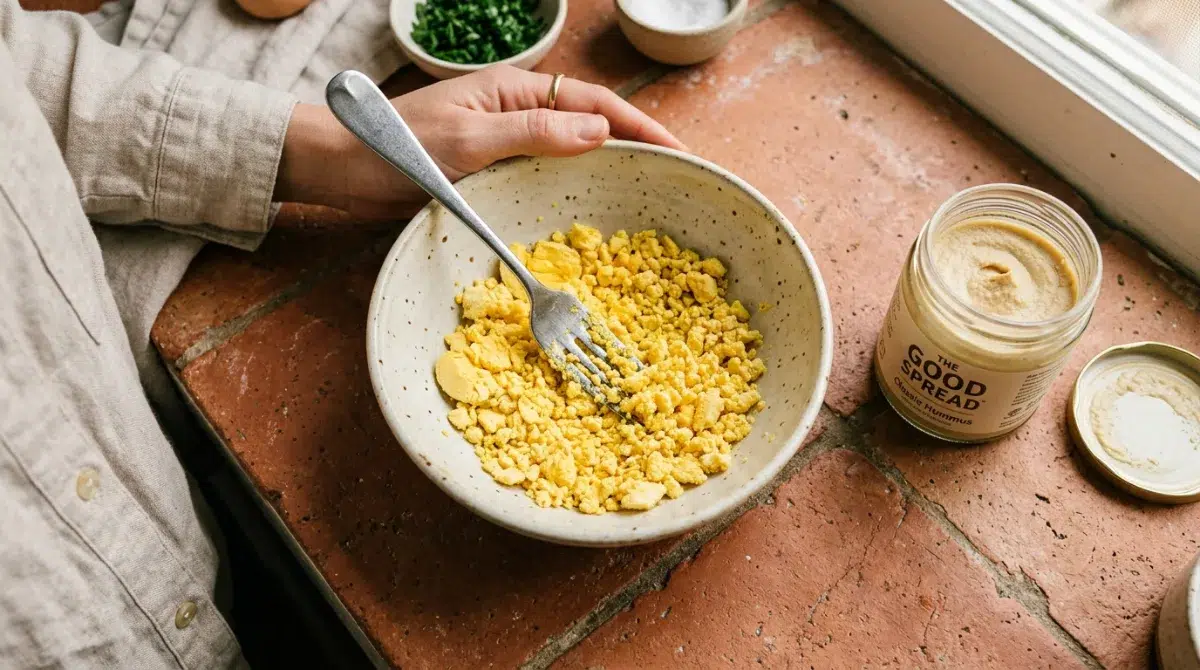
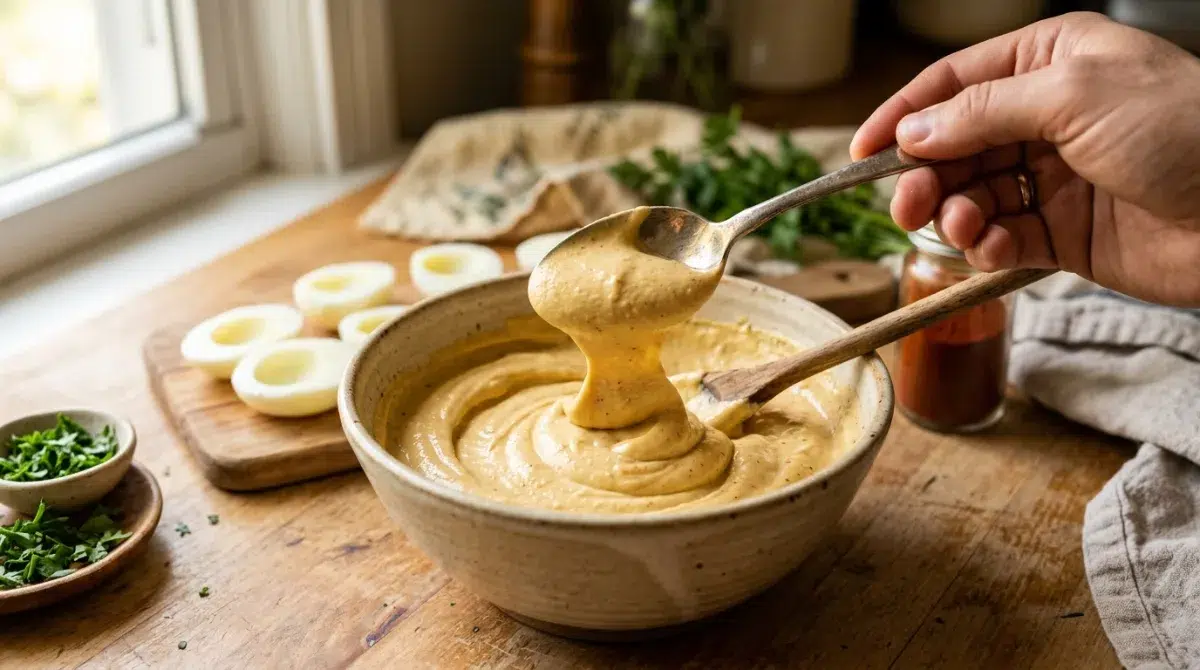
Step 6: Fill the whites. You can spoon the filling in (totally fine, no judgment) or pipe it using a zip-lock bag with a corner snipped off for prettier results. I usually do the spoon method for Tuesday night snacking and the piping method when I’m trying to impress people. Both taste identical, obviously.
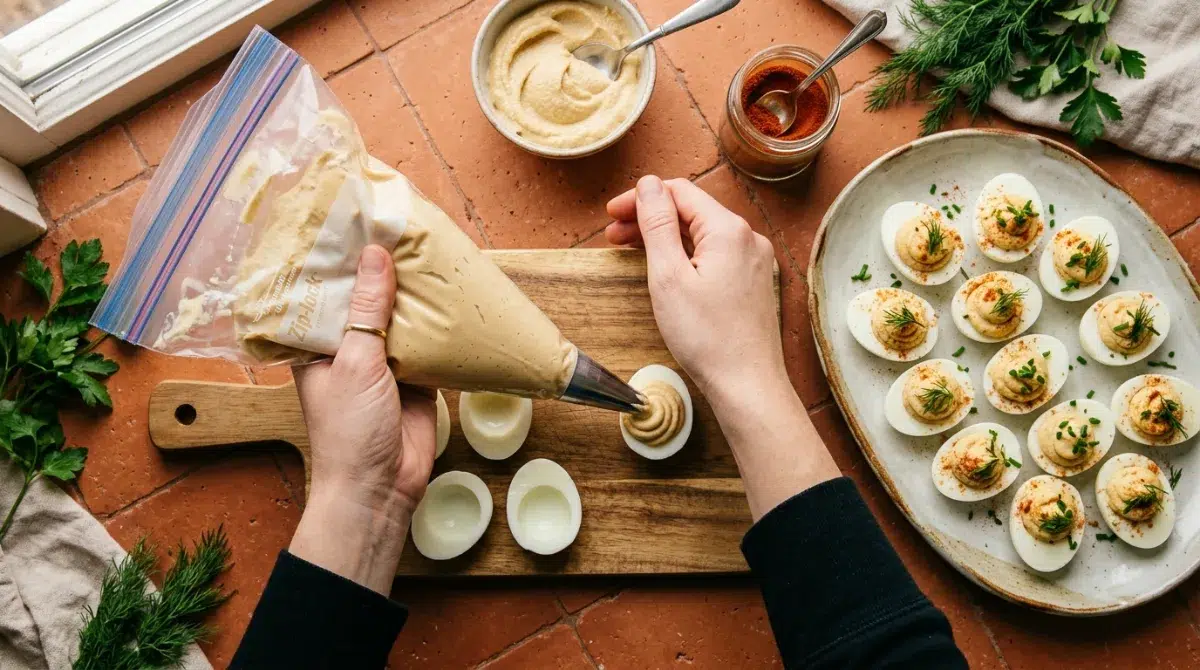
Step 7: Top with Mediterranean goodness. Sprinkle each egg with za’atar, a few crumbles of feta, diced kalamata olive bits, a tiny drizzle of extra virgin olive oil, and a leaf of fresh parsley or mint. This is where the magic happens—the combination of earthy za’atar, salty feta, briny olives, and bright herbs transforms these from “healthy deviled eggs” into something genuinely exciting.
Creative Variations for Your Hummus Deviled Eggs
Theme-Based Mediterranean Twists
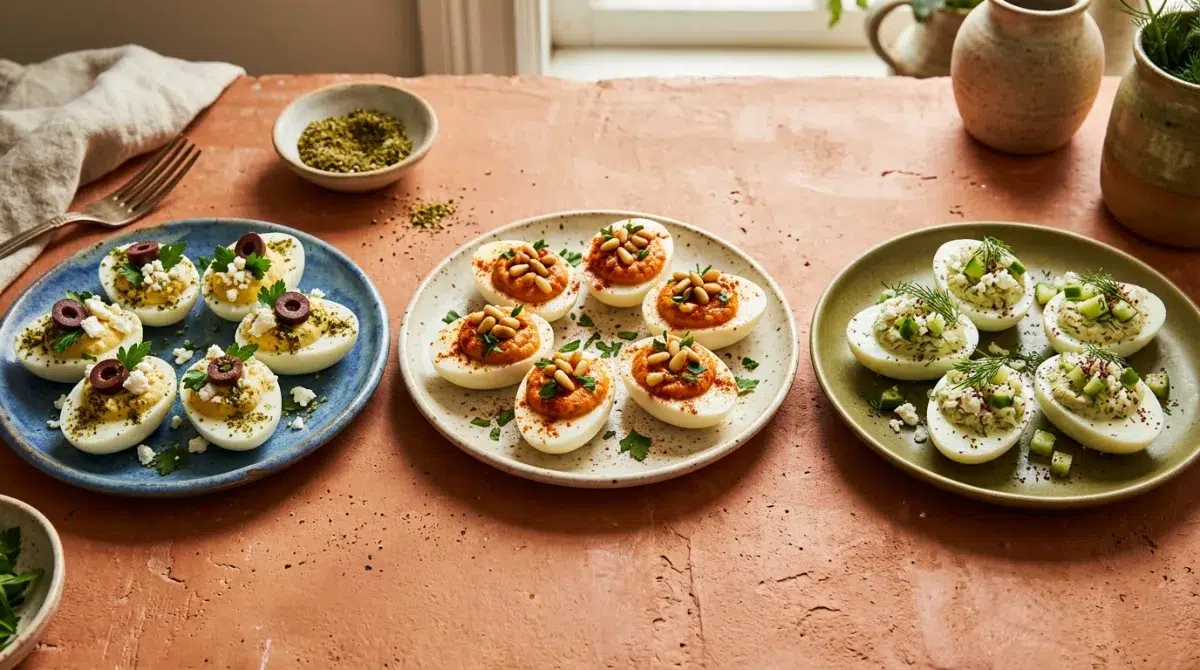
Once you’ve nailed the basic Mediterranean hummus deviled eggs, the variations are honestly endless. I’ve been testing different combos for almost two years and these are the ones that actually made people come back for seconds—and thirds. My cousin Dina tried the roasted red pepper version at Thanksgiving and, um, she texted me about it three days later. That’s the benchmark.
| Variation | Filling Twist | Topping | Flavor Profile |
| Classic Mediterranean | Traditional hummus + lemon | Za’atar, feta, olives, olive oil | Earthy, tangy, briny |
| Roasted Red Pepper | Roasted red pepper hummus | Smoked paprika, pine nuts, basil | Smoky, sweet, nutty |
| Greek Garden | Classic hummus + diced cucumber | Dill, feta, cherry tomato slice | Fresh, cool, herbaceous |
| Spicy Harissa | Hummus + 1 tsp harissa paste | Dukkah, pickled onion, cilantro | Spicy, complex, bold |
| Middle Eastern Mezze | Hummus + dollop of tahini | Sumac, toasted sesame, pomegranate seeds | Nutty, bright, festive |
Dietary Modifications & Budget Tips
Vegan: This is actually one of the few deviled egg recipes that has a genuinely good vegan version. Replace eggs with firm tofu “eggs”—scoop out the centers of halved boiled potatoes or use the JUST Egg brand for a more convincing substitute. The hummus filling works identically.
Paleo: Use a compliant hummus (made without chickpeas—yes, they exist, usually cauliflower-based) or substitute mashed avocado blended with tahini.
Kid-friendly: Skip the olives and za’atar, keep the feta, add a tiny sprinkle of everything bagel seasoning instead. My nephew Sami—the one who ate seven—specifically requests this version now.
Budget: Store-brand hummus works perfectly fine. Eggs are one of the cheapest protein sources around. The whole platter costs under $6 for 24 halves.
For another budget-friendly Mediterranean appetizer, try our Mediterranean chickpea power bowl which stretches pantry staples into a full meal. Our chickpea stuffed sweet potatoes are another affordable way to feed a crowd.
Storage & Serving for Mediterranean Hummus Deviled Eggs
How to Store (And Why These Are the Best Make-Ahead Deviled Eggs)
One of the biggest advantages of hummus deviled eggs over traditional mayo-based ones is the storage situation. These make-ahead deviled eggs hold up beautifully because hummus doesn’t separate or weep the way mayo-yolk mixtures tend to. Here’s the breakdown: Room temperature: safe for up to 2 hours (standard food safety guidelines for egg dishes). Refrigerator: covered in an airtight container, up to 3–4 days. Pro move: add the toppings (za’atar, feta, olives, herbs) right before serving so they stay vibrant and don’t get soggy. Freezer: not recommended. The egg whites get rubbery and watery once thawed. Just… don’t. I tried and it was bad.
For meal prep, you can hard-boil the eggs up to a week in advance (store unpeeled in the fridge) and make the hummus filling 2–3 days ahead. Assemble the day of your event. I usually prep a batch every Sunday and our grilled chicken Mediterranean bowl makes the perfect companion meal prep alongside these—same Mediterranean flavor family, totally different dish. For more Mediterranean meal prep inspiration, our Mediterranean white bean salad keeps just as well in the fridge.
Perfect Pairing Combinations
| Pairing Category | Specific Pairing | Why It Works | Pro Tip |
| Bread/Dip | Warm pita + extra hummus | Doubles down on Mediterranean flavors | Toast pita with olive oil and za’atar |
| Salad | Tabbouleh or fattoush | Fresh herbs echo the egg toppings | Dress salad right before serving |
| Protein | Grilled chicken shawarma | Rich meat contrasts light eggs | Slice thin, serve room temp |
| Vegetable | Marinated artichoke hearts | Briny tang complements the hummus | Drain and pat dry first |
| Soup | Lentil soup or tomato bisque | Warm soup + cold egg = textural contrast | Serve eggs alongside, not in the soup |
Nutritional Benefits of Mediterranean Hummus Deviled Eggs
Macronutrient Breakdown (Per 2-Egg-Half Serving)
I’m not a dietitian (and I want to be completely transparent about that), but the nutritional profile of these healthy deviled eggs is genuinely impressive compared to traditional versions. Swapping mayo for hummus cuts the saturated fat roughly in half while adding fiber and plant-based protein from the chickpeas. The Mediterranean toppings add micronutrients without significant calories. Here’s the breakdown:
| Macronutrient | Amount (per 2 halves) | % Daily Value | Primary Source |
| Calories | 95–115 kcal | 5–6% | Egg yolk, hummus, olive oil |
| Protein | 7–8g | 14–16% | Egg white, egg yolk, hummus |
| Total Fat | 6–8g | 8–10% | Egg yolk, olive oil, hummus |
| Carbohydrates | 3–4g | 1–2% | Hummus (chickpeas) |
| Dietary Fiber | 1–2g | 4–7% | Hummus, za’atar |
Key Micronutrients & Health Benefits
| Micronutrient | Amount | Key Benefit | Source in This Recipe |
| Choline | 147mg (per egg) | Brain health, memory function | Egg yolk |
| Vitamin D | 1.1 mcg | Bone health, immune support | Egg yolk |
| Selenium | 15.4 mcg | Thyroid function, antioxidant | Egg |
| Iron | 0.9–1.2mg | Oxygen transport, energy | Hummus (chickpeas), za’atar |
| Vitamin B12 | 0.6 mcg | Nerve function, red blood cells | Egg |
The glycemic index for this protein-packed egg appetizer is very low (GI: approximately 15–20) since eggs contribute virtually zero carbohydrates and the hummus adds only minimal chickpea-based carbs. The combination of protein, healthy fats, and fiber creates excellent satiety—which is a fancy way of saying they actually fill you up instead of leaving you reaching for the chip bowl five minutes later. For another nutrient-dense Mediterranean option, our Mediterranean sheet pan salmon delivers a similar balance of protein and healthy fats.
Frequently Asked Questions About Mediterranean Hummus Deviled Eggs
Can you use hummus instead of mayo in deviled eggs?
Absolutely—and honestly I think they’re better. Hummus provides the same creamy, emulsified texture that mayo does, thanks to the tahini and chickpea base. Use about 1/3 cup of hummus for 12 eggs (24 halves). The filling will be slightly thicker than traditional deviled eggs, which actually helps them hold their shape better on a platter.
How far in advance can you make Mediterranean hummus deviled eggs?
You can make the filling up to 3 days ahead and store it in the fridge. Assemble the filled eggs up to 24 hours before serving. Add the toppings (za’atar, feta, olives, herbs) right before serving for the best texture and freshness. Hard-boiled eggs themselves keep unpeeled in the fridge for up to a week.
What’s the best hummus flavor for deviled eggs?
Classic/traditional hummus works best because its mild, garlicky flavor lets the other Mediterranean toppings shine. Roasted garlic hummus is a close second if you want a stronger flavor. Roasted red pepper hummus adds beautiful color and a smoky dimension. Avoid flavors like chocolate or dessert hummus—trust me, I tested it once as a joke and it was genuinely terrible.
Are hummus deviled eggs healthier than regular deviled eggs?
Yes, by most nutritional measures. Swapping mayo for hummus reduces saturated fat by approximately 50%, adds plant-based fiber and protein from chickpeas, and eliminates the added oils found in most commercial mayonnaise. A typical hummus deviled egg half has roughly 50–55 calories compared to 70–80 for a mayo-based version.
How many Mediterranean hummus deviled eggs per person for a party?
Plan for 3–4 halves per person as an appetizer alongside other food, or 5–6 halves if deviled eggs are a main offering. For a gathering of 10 people, I’d make 2–3 dozen eggs (48–72 halves). They go fast—faster than you think.
Can I make hummus deviled eggs without eggs for a vegan version?
You can create a vegan version using halved baby potatoes (scooped out) or small avocado halves as the “white” and the hummus filling on its own. It won’t taste identical, but the Mediterranean toppings carry most of the flavor anyway.
What’s the best way to get a smooth deviled egg filling without lumps?
The secret is fully crumbling the yolks first with a fork before adding any liquid ingredients. Some people use a food processor for ultra-smooth results, but I find a fork and some elbow grease works perfectly. If the filling still has lumps, push it through a fine-mesh sieve—this was Amira’s trick and it works beautifully.
Pairing & Serving Ideas for Hummus Deviled Eggs
Occasion-Based Serving Guide
| Occasion | Serving Style | Pair With | Non-Alcoholic Drink |
| Easter Brunch | Deviled egg platter with herbs | Fresh fruit, pastries, quiche | Sparkling lemonade with mint |
| Summer BBQ | Casual on a bed of lettuce | Grilled kebabs, tabbouleh | Iced hibiscus tea |
| Holiday Appetizer | Piped, on tiered plate | Mezze spread, warm pita | Pomegranate sparkling water |
| Game Day | Simple, in a baking dish | Veggie crudites, dips | Fresh limeade |
| Meal Prep Lunch | In compartment containers | Cut veggies, crackers | Warm mint tea |
For the holiday appetizer route, pair your Mediterranean hummus deviled eggs alongside our whipped feta with hot honey—the sweet-spicy dip with the tangy hummus eggs is honestly one of the best flavor combos on a mezze table. And for game day, throw a few alongside our garlic parmesan focaccia torn into pieces for a spread that looks impressive but takes almost no effort.
Beverage Pairings (All Non-Alcoholic)
The earthy za’atar and tangy hummus pair best with bright, citrus-forward beverages. My absolute go-to is sparkling lemonade with fresh mint—the effervescence cleanses the palate between bites and the mint echoes the fresh herbs on top. Iced hibiscus tea is another fantastic option; its floral tartness plays beautifully against the feta saltiness. For colder months, hot mint tea is traditional with Middle Eastern appetizers for good reason. And honestly? Even plain sparkling water with a squeeze of lemon works. (I have a whole rant about how sparkling water is the most underrated party beverage but I’ll spare you. This time.)
Make These Mediterranean Hummus Deviled Eggs Your Own
Personalize Like a Pro
The best part about this recipe is that it’s a framework for your own creativity. Swap the za’atar for dukkah. Try different hummus flavors. Use pickled turnips instead of olives (if you can find them—Arab grocery stores usually have them). Add a drizzle of chili oil if you like heat. The core technique—hummus instead of mayo, Mediterranean toppings instead of paprika—stays the same, but the details are entirely up to you. Use leftover filling as a dip with our chicken shawarma crispy rice salad or spread it on toast with sliced tomatoes. Nothing goes to waste.
Share Your Creations
I’d genuinely love to see your versions. Tag your Mediterranean hummus deviled eggs, tell me about the toppings you tried, share your platter arrangements. And if you’re bringing these to a party and someone says they’re plain? Well… that probaly won’t happen this time. But if it does, at least you know how to make them even better. Now go boil some eggs and stock up on za’atar—your next gathering deserves these. And while you’re at it, bookmark our creamy tomato basil chicken for the main course to go with them.