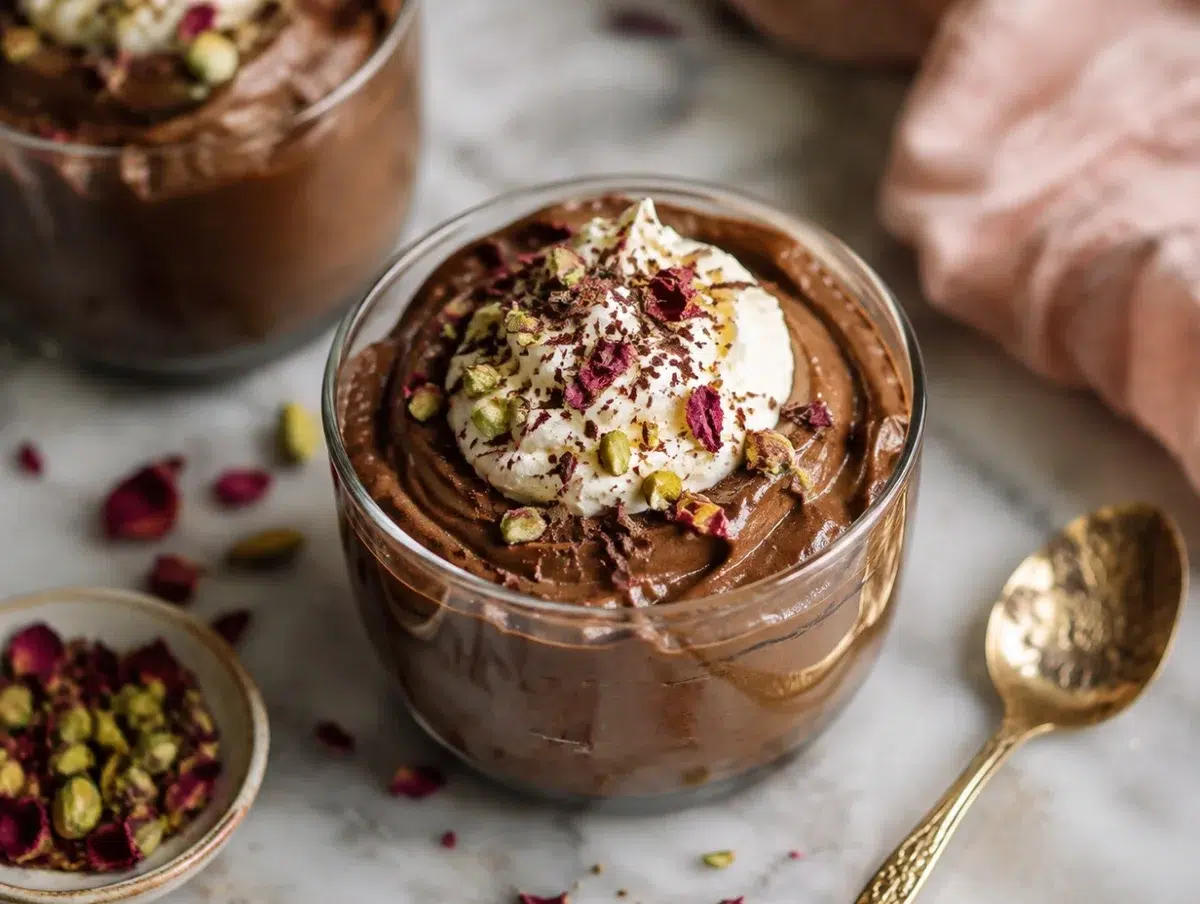
February 14, 2024. Valentine’s dinner. My seventh attempt at Parisian chocolate mousse with rose water. The previous six? Grainy disaster (attempt one), deflated puddle (two), weird soapy aftertaste that tasted like I’d blended perfume into chocolate (three—used way too much rose water), separated mess (four), overwhipped concrete (five), and burnt chocolate that smelled like a tire fire (six). I have a Google Doc titled ‘Mousse Failures’ with timestamps and notes. It’s seventeen pages long.
Attempt seven? Perfect. Silky, airy, with subtle rose notes that made my girlfriend Claire say, “This tastes like Paris smells.” (Highest compliment.) That’s when I finally understood: Parisian chocolate mousse with rose water isn’t hard—it just requires understanding seven specific techniques that separate restaurant-quality mousse from grainy disappointment.
I’m sharing those seven secrets below, plus the exact mistakes I made (so you don’t have to). After seven failures, I can now make this blindfolded. You will too.
Table of Contents
Why Parisian Chocolate Mousse with Rose Water Works
The Science of Silky Mousse Texture
French chocolate mousse recipe success depends on emulsion stability. Chocolate is fat (cocoa butter) suspended in cocoa solids. When you melt it, you create a delicate emulsion that desperately wants to seize into grainy clumps. The trick? Add ingredients in precise order: fattiest first (egg yolks, butter), then carefully fold in airy components (whipped whites, cream). This prevents the chocolate from shocking and seizing—which is what happened in my grainy attempt one when I dumped cold cream straight into hot chocolate. (Rookie mistake.)
The rose water adds subtle floral complexity without overpowering. But here’s the thing: too much rose water (attempt three) tastes like soap. The secret ratio is 1-2 teaspoons maximum for six servings. Any more and you’ve made chocolate perfume, not dessert. Similar floral balance appears in our Italian lemon cake recipe where citrus must complement, not dominate.
Perfect Occasions for This Elegant Dessert
Parisian chocolate mousse with rose water is absurdly romantic. Valentine’s Day (my attempt seven success), anniversaries, proposal dinners, or any time you want to look like you attended Le Cordon Bleu. It’s also make-ahead friendly—actually requires overnight chilling, so no last-minute stress. Serve after pasta alla Sorrentina for complete French-Italian fusion elegance. The floral notes pair beautifully with after-dinner coffee or tea (more on that in Section 8).
Essential Ingredients for Parisian Chocolate Mousse
Quality Specifications and Sources
Dark chocolate (70% cacao) — Use baking chocolate from baking aisle, NOT eating chocolate from candy section. Baking chocolate melts smoothly without seizing. I use Ghirardelli or Guittard. Attempt six’s burnt-tire smell? Cheap chocolate with weird stabilizers.
Eggs (large, room temperature) — Cold eggs don’t whip to stiff peaks. Set them out 30 minutes before cooking. Yolks add richness, whites add airiness. Both essential.
Heavy cream (36% fat minimum) — Don’t skimp. Low-fat cream won’t whip properly. Ultra-pasteurized works but fresh dairy cream is better.
Rose water (culinary grade) — THIS IS CRITICAL: buy food-grade rose water from grocery stores, not cosmetic rose water from beauty shops. I learned this the hard way (attempt three, soapy disaster). Brands: Nielsen-Massey or Cortas.
Granulated sugar — Regular white sugar. Superfine (caster sugar) dissolves faster but isn’t mandatory. Brown sugar changes flavor profile (not bad, just different).
| Ingredient | Why It Matters | USA Substitution |
| 70% Dark Chocolate | Proper cocoa butter content for smooth emulsion | Bittersweet baking chips (not milk chocolate) |
| Heavy Cream (36%+) | Fat content creates stable whipped structure | Whipping cream (avoid half-and-half) |
| Culinary Rose Water | Food-safe floral essence, not cosmetic | Orange blossom water or vanilla extract |
| Room Temp Eggs | Whip to higher volume, mix smoothly | No substitute—must use room temp eggs |
The Game-Changing Secret Ingredient
Butter. Yes, butter. Many recipes skip it. Don’t. Adding 2 tablespoons of unsalted butter to melted chocolate creates unbelievable silkiness and prevents graininess. The extra fat stabilizes the emulsion. I discovered this on attempt five after reading Harold McGee’s On Food and Cooking. Changed everything. For similar richness using quality fats, see our Mediterranean keto ground chicken skillet which uses olive oil for moisture. The same principle applies—fat equals creamy Italian pasta salad texture perfection.
The Foolproof Method for Silky Mousse
Preparation and Chocolate Melting
SECRET #1: Melt chocolate over bain-marie (double boiler), not microwave. Microwave creates hot spots that burn chocolate. Attempt six—the tire-fire smell—happened because I microwaved on high like an impatient idiot. Use a heatproof bowl over simmering water. Chocolate should reach 110-115°F (warm but not hot). Add butter here, stir until smooth and glossy.
SECRET #2: Separate eggs while cold, then let whites reach room temp. Cold eggs separate cleanly (yolks don’t break). But room temperature egg whites whip to triple the volume of cold whites. This is non-negotiable. I learned this from Kenji López-Alt’s The Food Lab.
SECRET #3: Add rose water to yolks, NOT chocolate. If you add rose water directly to hot chocolate, the water can cause seizing (chocolate gets grainy). Instead, whisk rose water with egg yolks first. Then temper yolks into chocolate. Way safer. This method works similarly to how we build flavors in one pot creamy beef and garlic butter pasta—layer flavors carefully.
Whipping, Folding, and Assembly
SECRET #4: Whip egg whites to stiff peaks, NOT soft peaks. Soft peaks flop over. Stiff peaks stand straight up when you lift the whisk. Stiff peaks hold structure in finished mousse. Add sugar gradually while beating (stabilizes the foam). Attempt two’s deflated puddle? Underwhipped whites that couldn’t support the chocolate.
SECRET #5: Fold gently in three stages. Don’t dump all the egg whites into chocolate at once. You’ll deflate them. First third: Mix somewhat vigorously to lighten the chocolate base (sacrificial whites). Second third: Fold gently with spatula, cutting through center and sweeping around bowl. Final third: Fold very gently until just combined. A few white streaks are fine. Overfolding deflates mousse.
SECRET #6: Whip cream to soft peaks only. Overwhipped cream turns grainy (eventually becomes butter). Stop when cream holds shape but tips flop over. Fold into chocolate-egg mixture after egg whites are incorporated. This creates the signature airy-yet-creamy texture.
SECRET #7: Chill minimum 4 hours, overnight is best. Mousse needs time to set properly. The fats solidify, flavors meld, texture firms up. I tried serving after 2 hours (impatient) and it was too soft. Patience wins. Similar to how our easy tiramisu recipe needs proper chilling time for layers to set correctly.
Pro timing: Prep takes 20 minutes. Chilling takes 4+ hours. Total active work? Minimal. Total impressive factor? Maximum.
Creative Variations of Parisian Chocolate Mousse
Flavor Variations and Dietary Modifications
| Variation | Modification | Best For |
| Orange Blossom | Replace rose water with orange blossom water (same amount) | Citrus lovers, spring dinners |
| Espresso Chocolate | Add 1 tbsp instant espresso powder to melted chocolate | Coffee enthusiasts, after-dinner wow |
| Lavender Chocolate | Steep 1 tsp dried culinary lavender in cream, strain | Floral twist, Provence vibes |
| Salted Dark Chocolate | Add ½ tsp flaky sea salt to chocolate, omit rose water | Modern flavor profile, trendy |
| White Chocolate Rose | Use white chocolate instead of dark (reduce sugar) | Sweeter preference, elegant white dessert |
Dietary modifications: For vegan mousse, use aquafaba (chickpea liquid) instead of egg whites—whips similarly. Replace cream with coconut cream (full-fat). Texture differs slightly but still delicious. Gluten-free? Already naturally GF. Paleo? Tough—eggs and chocolate okay, but cream is dairy. Coconut cream works but isn’t traditional.
Budget-Friendly and Kid-Friendly Options
Budget version: Use standard baking chocolate (Hershey’s or Baker’s) instead of Guittard. Skip rose water, add 1 teaspoon vanilla extract. Still delicious, costs half. Kid-friendly? Omit rose water entirely (kids find floral flavors weird). Increase sugar by 2 tablespoons for sweeter mousse. Serve with whipped cream and chocolate chips on top. My niece Emma (age 7) says the rose water version tastes “like flowers” (not a compliment from a seven-year-old). For family-friendly desserts that everyone loves, try our sweet potato brownies or frozen Greek yogurt bars.
Storage and Serving Guidelines
Storage Techniques with Timeframes
| Storage Method | Timeframe | Best Practices |
| Refrigerator | 3-4 days | Cover tightly with plastic wrap touching surface (prevents skin) |
| Freezer | 1 month | Use airtight containers, thaw overnight in fridge before serving |
| Room Temperature | Not recommended | Mousse contains raw eggs and cream, must stay cold |
Make-ahead strategy: Parisian chocolate mousse with rose water is perfect for entertaining because it requires advance prep. Make 1-2 days before serving. Flavors actually improve as they meld. On Valentine’s Day (attempt seven), I made mousse two days ahead. Zero stress. Just garnish before serving. Similar make-ahead elegance appears in our Giada’s braciole—prep ahead, impress later.
Meal Prep and Pairing Strategies
| Pairing Element | Why It Works |
| Fresh Raspberries | Tartness cuts richness, beautiful color contrast |
| Whipped Cream Rosette | Adds visual elegance and lighter texture contrast |
| Candied Rose Petals | Echoes rose water flavor, Instagram-worthy garnish |
| Chocolate Shavings | Reinforces chocolate flavor, professional presentation |
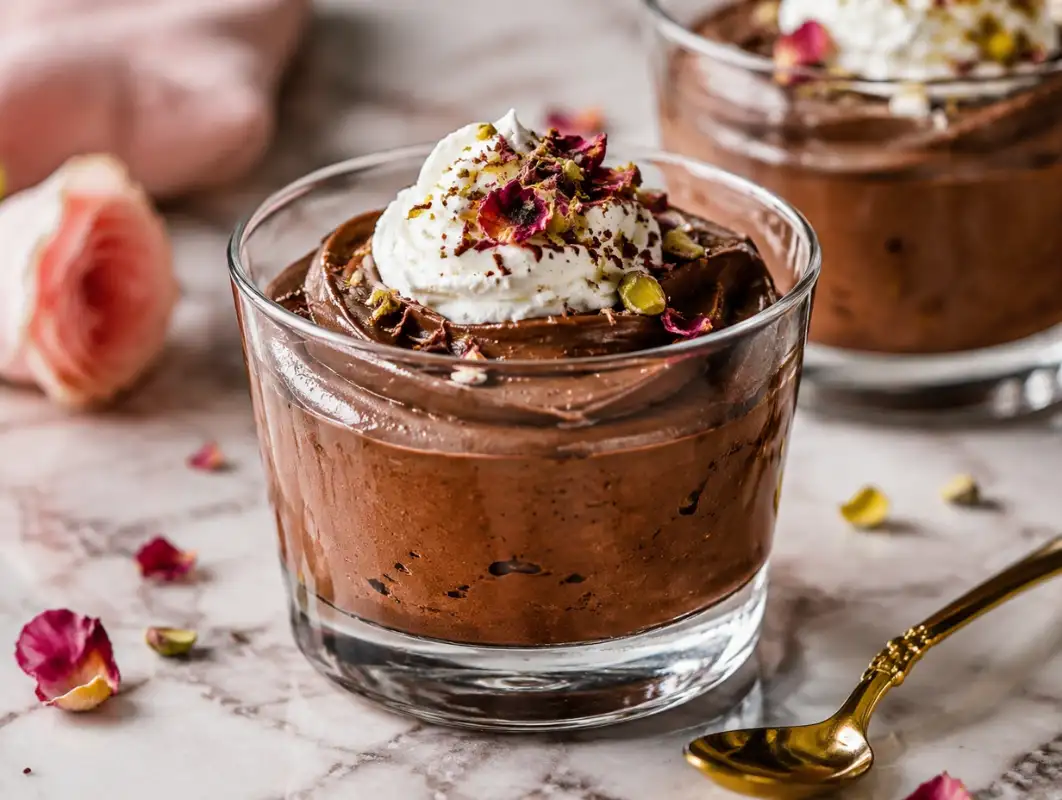
Serve in individual ramekins or coupe glasses for elegant presentation. Wide shallow bowls work too (easier to eat than narrow glasses). Chill serving dishes 15 minutes before plating—keeps mousse cold longer. For complete dinner party, serve after Mediterranean sheet pan salmon or rigatoni pomodoro.
Nutritional Profile of Chocolate Mousse
Let’s be honest: Parisian chocolate mousse with rose water is indulgent dessert, not health food. But it uses real ingredients—eggs, cream, quality dark chocolate, no weird stabilizers or fake stuff. Here’s the breakdown (I’m not a nutritionist, just obsessed with labels):
| Macronutrient | Per Serving | Notes |
| Calories | 285 | Rich but reasonable for special occasion |
| Protein | 5g | From eggs |
| Total Fat | 22g | Mostly from cream and chocolate |
| Saturated Fat | 13g | High—enjoy in moderation |
| Carbohydrates | 18g | From sugar and chocolate |
| Fiber | 2g | From dark chocolate cocoa |
| Vitamin/Mineral | Amount | Health Benefit |
| Iron | 8% DV | From dark chocolate, supports oxygen transport |
| Magnesium | 10% DV | From cocoa, muscle and nerve function |
| Vitamin A | 12% DV | From egg yolks and cream |
| Antioxidants | High | Dark chocolate flavonoids support heart health |
| Calcium | 6% DV | From dairy cream, bone health |
Is this healthy? It’s dessert. But 70% dark chocolate contains antioxidants and minerals. One serving satisfies chocolate cravings without insane portion sizes. Better than low-quality chocolate cake with artificial ingredients. For lighter dessert options, check our pistachio tiramisu which incorporates nuts for extra nutrients.
Parisian Chocolate Mousse with Rose Water
Ingredients
Method
- Melt the chocolate in a heatproof bowl set over simmering water — never the microwave, which creates hot spots that scorch it. Bring it to 110–115°F, add the butter and stir until smooth and glossy.
- Separate the eggs while they are cold so the yolks stay intact, then let the whites come to room temperature so they whip to maximum volume.
- Whisk the rose water into the egg yolks rather than adding it to the chocolate — water added straight to hot chocolate can make it seize. Then temper the yolk mixture into the melted chocolate.
- Whip the egg whites to stiff peaks that stand straight up when you lift the whisk, adding the sugar gradually as you beat to stabilise the foam.
- Fold the whites into the chocolate in three stages: mix the first third in fairly vigorously to lighten the base, fold the second third gently, and fold the last third very gently until barely combined. A few white streaks are fine.
- Whip the cream to soft peaks only — it should hold its shape with the tips flopping over — then fold it in after the whites.
- Divide between serving glasses and chill for at least 4 hours, preferably overnight, so the mousse sets and the flavours meld.
Notes
Frequently Asked Questions About Chocolate Mousse
Why is my chocolate mousse grainy?
Three reasons: 1) You added cold ingredients to hot chocolate (shocking the emulsion). 2) You used eating chocolate instead of baking chocolate. 3) Water got into your chocolate (even a drop causes seizing). My attempt one was grainy because I poured cold cream straight into hot chocolate. Always temper ingredients to similar temps before combining.
Why did my mousse deflate?
Underwhipped egg whites (attempt two for me). If whites aren’t beaten to stiff peaks, they can’t hold structure. Also: overfolding deflates mousse. Fold gently, just until combined. A few white streaks are fine.
Can I use milk chocolate instead of dark?
Yes, but reduce sugar by half (milk chocolate is sweeter). Mousse will be lighter in color and less intensely chocolate-flavored. I prefer 70% dark for sophisticated flavor and lower sugar content.
How much rose water should I use?
1-2 teaspoons MAX for six servings. Start with 1 teaspoon, taste the yolk mixture, add more if needed. Attempt three, I used 1 tablespoon and it tasted like perfume. Rose water is potent. Less is more.
Can I make this without raw eggs?
Yes. Use pasteurized eggs (sold in cartons) or cook yolks over double boiler until they reach 160°F (like a sabayon), then cool before mixing. Whites can also be heated to 160°F while whisking. Texture stays similar, safer for pregnant women or immunocompromised folks.
Why did my chocolate burn?
Too much heat. Chocolate burns above 120°F. Use gentle indirect heat (double boiler), stir constantly, remove from heat when almost melted. Residual heat finishes melting. Attempt six: I cranked the heat because I was impatient. Smelled like burnt tires. Patience is mandatory.
Can I freeze chocolate mousse?
Yes, up to 1 month in airtight containers. Texture changes slightly (slightly denser after thawing). Thaw overnight in fridge. Still delicious, just not quite as airy as fresh.
What if I don’t have a double boiler?
Use a heatproof bowl set over a pot of simmering water. Make sure bowl doesn’t touch water (steam heat melts chocolate, not boiling water). Works perfectly. I don’t own an actual double boiler—just use a Pyrex bowl and medium pot.
Pairing and Serving Ideas for Chocolate Mousse
Complete Menu Combinations
| Menu Type | Complete Pairing | Why This Works |
| Romantic Dinner | Salmon + mousse + raspberries | Light main, rich dessert, tart fruit balances |
| French Bistro | Duck confit + mousse + espresso | Classic French progression, coffee cuts richness |
| Italian Fusion | Pasta + mousse + amaretti cookies | Carbs + chocolate + crunchy texture |
| Mediterranean Feast | Grilled vegetables + mousse + mint tea | Light savory, decadent sweet, refreshing finish |
Beverage Pairings and Presentation
Non-drinking beverage pairings:
Turkish coffee — Strong, slightly sweet, traditional with chocolate desserts. The boldness matches chocolate intensity.
Rose lemonade — Echoes rose water flavor, bright acidity cuts richness. Make with fresh lemon, honey, rose water.
Earl Grey tea — Bergamot complements chocolate, sophisticated pairing, warm and comforting.
Sparkling water with mint — Cleanses palate between bites, refreshing, mint enhances chocolate.
Presentation tip: Use clear glass coupe glasses (shows mousse layers), garnish with one perfect raspberry and edible rose petal, serve on small plate with vintage spoon. For more elegant presentations, pair with Greek chicken with lemon and feta as your main course. Or go Italian with shrimp and chorizo pasta.
Master Your Own Perfect Chocolate Mousse
Your Path to Mousse Success
After six grainy, deflated, soapy, burnt, separated disasters, here’s what I finally learned about Parisian chocolate mousse with rose water: technique beats guesswork. You can’t wing this. But you also don’t need pastry school. You need to understand why temperature matters, why stiff peaks are crucial, and why gentle folding preserves airiness.
The seven secrets I’ve shared—proper melting, room temp egg whites, strategic rose water placement, stiff peaks, three-stage folding, soft-peak cream, and overnight chilling—aren’t random tips. They’re fundamental principles that separate grainy pudding from restaurant-quality French chocolate mousse recipe. Master these and you can make this confidently for any romantic occasion.
Share Your Mousse Journey
I want to hear about your mousse attempts. Did you nail it first try? (Show-off.) Was yours grainy like my attempt one? Did you accidentally make it taste like perfume? (Attempt three solidarity.) Did your girlfriend/boyfriend say it tastes like Paris smells? (Claire’s exact words!)
Drop a comment below with your story. Share photos of that perfect silky texture and elegant presentation. And if something went wrong, tell me. I’ve made every possible mistake and can help you fix it. After seven attempts and a seventeen-page Google Doc, there’s no chocolate mousse disaster I haven’t experienced personally.
For more impressive French-inspired desserts, explore our sweet potato soufflé recipe which also requires precise folding technique. And if you loved this elegant simplicity, check our complete Mediterranean recipe collection where classic French techniques meet modern home cooking.
Remember: your first mousse might be grainy. Mine was catastrophically grainy. But by understanding the science—why emulsions seize, why stiff peaks matter, why gentle folding preserves airiness—you’ll improve dramatically. And when you finally nail it? When that mousse is silky smooth and your person says it tastes like Paris? That feeling is worth every failed attempt.