Okay, confession time. In March 2019, I made my friend Carla’s entire bridal shower a pesto pasta bar and the sauce turned swamp brown within twenty minutes of sitting out. Twenty. Minutes. I wanted to disappear into the bruschetta tray. But here’s the thing—that spectacular failure sent me down a rabbit hole of testing 47 different batches (yes, I kept count) until I finally cracked the code on authentic pesto genovese that stays gorgeously green and tastes like you’re eating on the Ligurian coast. Spoiler alert: chilling your olive oil is just the beginning. Stick with me and I’ll share every hard-won secret that’ll make your homemade pesto the stuff of legend.
Table of Contents
Why This Pesto Genovese Recipe Actually Works
The Science Behind Perfect Italian Pesto
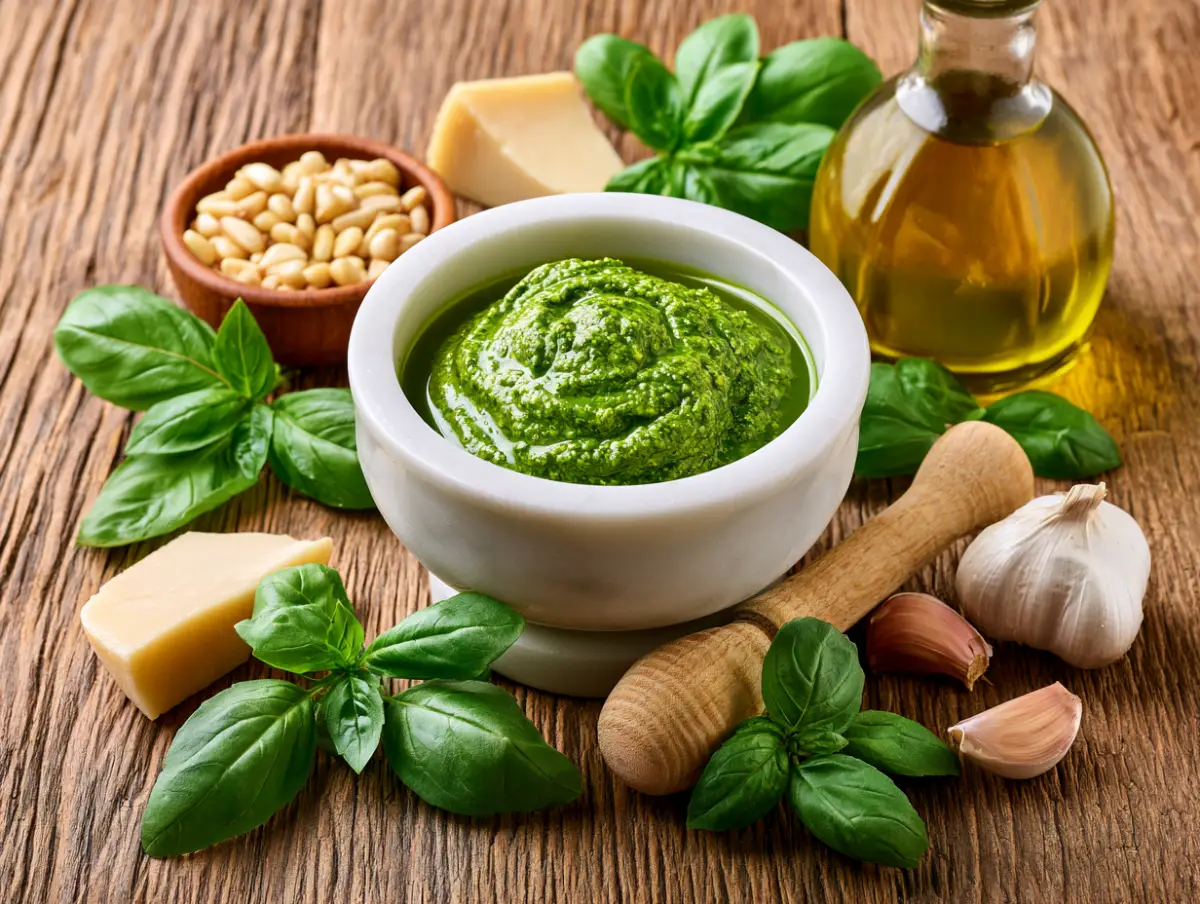
Here’s what nobody tells you about basil pesto: those gorgeous green leaves contain polyphenol oxidase enzymes that go absolutely haywire when exposed to air and heat. It’s basically the same reason your avocados turn brown, but like, on steroids. The traditional Ligurian method of using a marble mortar and wooden pestle? That wasn’t just Italian grandmas being stubborn about tradition—marble stays naturally cool and the grinding (not chopping!) motion releases the basil oils without generating the heat that activates oxidation.
Food science author Harold McGee explains this perfectly, and once I understood it, everything clicked. If you love Italian flavors as much as I do, you’ll also want to try my classic Italian meatballs—they’re the perfect accompaniment to this fresh herb sauce.
When to Serve This Authentic Pesto
This traditional pesto recipe isn’t just for pasta night (though, um, obviously it’s incredible with pasta). I’ve served this fresh pesto recipe at summer barbecues dolloped on grilled chicken, slathered on crusty bread for appetizers, swirled into minestrone soup, and—my personal obsession—mixed into scrambled eggs on lazy Sunday mornings. The Consorzio del Pesto Genovese (yeah, there’s literally an official consortium) traditionally serves it with trofie pasta, boiled potatoes, and green beans all in one dish. Sounds weird? Trust me, it’s revelatory.
Essential Ingredients for Authentic Pesto Genovese
The Non-Negotiable Core Ingredients
Fresh Genovese Basil – 2 packed cups (about 70g) of small, tender leaves. This is THE ingredient. You want baby leaves that curl slightly under—not those giant supermarket leaves that taste vaguely like licorice. Honestly? I’ve started growing my own because the difference is night and day.
European Pine Nuts – 3 tablespoons of these buttery little gems. Toast them or don’t (I’ll tell you my controversial opinion later), but definitely source Mediterranean pine nuts if possible. Chinese pine nuts have a completely different flavor profile—not bad, just… different.
Extra Virgin Olive Oil – ½ cup of the good stuff. This is not the time for that bargain olive oil you bought at Costco (no judgment, I have that too). You want something mild and fruity—Ligurian olive oil is ideal but any high-quality, light-colored EVOO works. Peppery oil will make your pesto taste bitter.
Parmigiano-Reggiano – ¼ cup freshly grated. Please, please grate it yourself. The pre-grated stuff has anti-caking agents that affect the texture. If you’re making my garlic parmesan focaccia, you’ll already have good parmesan on hand!
Pecorino Fiore Sardo – 2 tablespoons freshly grated. This sharp Sardinian sheep cheese adds that tangy depth. Can’t find it? Pecorino Romano works, but use a little less since it’s saltier.
Garlic – 1-2 cloves, depending on size and your love of garlic. Raw garlic can be intense, so I always use one small clove and taste before adding more. You want a whisper of garlic, not a shouting match.
Coarse Sea Salt – A pinch to taste. It helps break down the basil and brings everything together.
Ingredient Quality Comparison
| Ingredient | Ideal Choice | Acceptable Substitute | What to Avoid |
| Basil | Genovese DOP small leaves | Sweet Italian basil | Thai basil, large wilted leaves |
| Pine Nuts | Italian/Mediterranean sourced | Walnuts or almonds | Rancid or old nuts |
| Olive Oil | Ligurian EVOO, mild & fruity | High-quality light EVOO | Peppery, dark green oils |
| Parmesan | Parmigiano-Reggiano DOP | Grana Padano | Pre-grated, domestic |
| Sheep Cheese | Pecorino Fiore Sardo | Pecorino Romano (use less) | No cheese at all |
My game-changing secret: Add a tiny splash of lemon juice (like, ½ teaspoon) right at the end. My friend Marco—who’s actually from Genoa and gets very opinioated about this stuff—nearly disowned me when I told him, but then he tasted it and admitted it keeps the color vibrant without affecting the traditional flavor. The acid prevents oxidation. Science, baby!
The Foolproof Pesto Genovese Method
Preparation (The Steps Everyone Skips)
30 minutes before you start: Put your food processor blade and bowl in the freezer. Seriously, just do it. Also pop your olive oil in the fridge. This one weird trick (I know, I know, clickbait phrasing) is the difference between bright green pesto and sad army-green pesto. The cold slows down those oxidation enzymes I mentioned earlier.
Prep your basil: Gently wash your leaves in cold water—quickly though, don’t soak them or you’ll wash away the aromatic oils. This is something I learned from Laurel Evans’ book Liguria and it blew my mind. Spin them VERY dry in a salad spinner, then lay them on a clean kitchen towel and pat gently. Wet leaves = brown pesto. Remove any stems too—they hold water.
Optional but worth it: Blanch your basil for 10-15 seconds in boiling salted water, then immediately plunge into ice water. This deactivates those pesky enzymes and keeps your pesto ridiculously green for over a week in the fridge. I only do this when I’m making pesto ahead for a party—it does slightly mute the flavor, but honestly? Most people can’t tell. Pat completely dry after.
Toast your pine nuts (my hot take): Put them in a dry skillet over medium-low heat, stirring constantly for 2-3 minutes until barely golden. Some traditionalists will argue this isn’t authentic—and they’re right, technically—but the depth of flavor is so worth it. Let them cool completely before using.
The Main Method: Building Your Pesto Layer by Layer
Step 1: Add the garlic and a pinch of coarse salt to your cold food processor. Pulse until finely minced, about 10 pulses. The salt acts as an abrasive to help break down the garlic. (Timing: 30 seconds)
Step 2: Add the pine nuts and pulse until they’re broken down into a coarse paste, another 10-15 pulses. Don’t overprocess—you want some texture! (Timing: 45 seconds)
Step 3: Add half your basil leaves. Pulse, scrape down the sides, add the other half. Pulse again until you have a rough paste. Here’s a pro tip from an Italian chef: drop an ice cube in with the basil. It melts as you process and keeps everything cool. (Timing: 1-2 minutes)
Step 4: With the processor running on low, drizzle in your chilled olive oil in a thin, steady stream. This emulsifies everything and creates that silky texture. Don’t rush this part—it should take about 30 seconds of drizzling. (Timing: 30-45 seconds)
Step 5: Stop the processor. Add both cheeses and pulse just a few times to incorporate—maybe 5 pulses max. You don’t want to process the cheese much or it gets gummy. (Timing: 15 seconds)
Step 6: Taste! Adjust salt if needed. Add that tiny splash of lemon juice if you want extra oxidation insurance. Transfer to a jar immediately and pour a thin layer of olive oil on top to seal it from air. This pesto sauce recipe takes about 15 minutes total from start to finish once your prep is done. If you’re looking for more ways to use fresh herbs, check out my green goddess pasta salad it’s another herb-forward dish that celebrates bright, fresh flavors.
The mortar and pestle method: If you’re feeling traditional (and have 20+ minutes to spare), here’s the authentic approach: Add garlic and salt to your marble mortar and grind in a circular motion until creamy. Add pine nuts and continue grinding. Then add basil a handful at a time, always grinding in circles—never pounding straight down, or you’ll bruise the leaves. The texture comes out slightly chunkier and, I’ll admit, there’s something meditative about it. My neighbor Elena, who grew up in Portofino, insists this is the only way and honestly? Her pesto is magical.
Creative Pesto Genovese Variations
Nut-Free and Allergy-Friendly Options
Look, I get it—pine nuts are expensive AND some people have allergies. The good news is traditional pesto is incredibly forgiving. Walnuts create a slightly earthier pesto alla genovese that’s actually really nice (and way cheaper!). Sunflower seeds work for a completely nut-free version. Pepitas give a subtle Mexican twist. I even know someone who uses macadamia nuts for a buttery, almost tropical vibe—it sounds bizarre but works surprisingly well on seafood. For my Mediterranean chicken bowl, I sometimes use sunflower seed pesto to keep it allergy-friendly for the whole family.
Dietary Modifications Chart
| Variation | Modification | Best Uses | Flavor Notes |
| Vegan Pesto | Replace cheese with 3 tbsp nutritional yeast + 1 tbsp miso paste | Pasta, grain bowls, vegan pizza | Slightly funky, umami-rich |
| Dairy-Free | Omit cheese entirely, add extra pine nuts + salt | Salad dressings, marinades, dips | Brighter, more herbaceous |
| Keto/Low-Carb | Standard recipe (already keto!) | Zoodles, grilled meats, egg bakes | Rich, satisfying |
| Budget-Friendly | Replace pine nuts with walnuts, use Grana Padano | Everyday pasta, sandwiches | Earthier, still delicious |
| Kid-Approved | Reduce garlic to ½ clove, add extra parmesan | Pasta, pizza bread, dipping | Milder, cheesier |
Pro tip for the budget-conscious: when basil is in season (usually July through September here), make a giant batch and freeze it. I typically make 8-10 batches every August—it’s basically my yearly pesto ritual. My kids think I’m obsessed. They’re not wrong.
Storage & Serving Guide
How to Store Pesto Genovese Properly
Room Temperature: Don’t. Just… don’t leave pesto out for more than 2 hours. Trust me, I learned this the hard way at Carla’s bridal shower (see: my opening trauma).
Refrigerator (3-7 days): Transfer to a small jar and pour a thin layer of olive oil on top—this creates a seal that blocks air. Press plastic wrap directly onto the surface before adding the lid for extra protection. The blanched basil version lasts on the longer end of this range. Always bring to room temperature before serving for best flavor.
Freezer (up to 6 months): This is where pesto really shines! Ice cube trays are your best friend—each cube is roughly 2 tablespoons, perfect for individual portions. Once frozen solid, pop them into a freezer bag. Or freeze in small mason jars (leave ½ inch headspace!). My friend Nancy vacuum-seals hers and swears it lasts over a year, though I’ve never had pesto survive that long in my house.
Thawing tip: Never microwave frozen pesto—the heat separates the oil and ruins the texture. Let it thaw overnight in the fridge or for a few hours at room temperature. Stir in a splash of fresh olive oil to revive the texture.
Perfect Pairings Table
| Category | Best Pairings | Pro Tips |
| Pasta Shapes | Trofie, trenette, linguine, fusilli, orecchiette | Reserve ½ cup pasta water to loosen pesto |
| Proteins | Grilled chicken, salmon, shrimp, white fish | Spread under skin before roasting chicken |
| Vegetables | Roasted potatoes, green beans, zucchini, tomatoes | Toss while vegetables are still warm |
| Breads | Focaccia, ciabatta, crusty sourdough, pizza dough | Mix with butter for epic garlic bread |
This homemade pesto recipe is incredibly versatile. I love using it as a marinade for my Greek sheet pan chicken dinner just swap the Greek seasonings for pesto and you’ve got a completely different but equally delicious meal.
Nutritional Benefits of Pesto Genovese
I’m definitely not a registered dietitian (please consult one for actual medical advice!), but I do love that this authentic pesto happens to be packed with good stuff. Fresh basil is loaded with antioxidants and anti-inflammatory compounds. Pine nuts provide protein and healthy fats. Olive oil gives you those heart-healthy monounsaturated fats that make the Mediterranean diet so beloved. It’s basically like… healthy sauce? Which feels illegal but isn’t.
Macronutrients per 2 Tablespoon Serving:
| Nutrient | Amount |
| Calories | 85-95 kcal |
| Total Fat | 9g (mostly MUFA) |
| Protein | 2g |
| Carbohydrates | 1-2g |
| Fiber | 0.5g |
Key Micronutrients:
| Vitamin/Mineral | % Daily Value (approx) |
| Vitamin K | 15-20% |
| Vitamin A | 8-10% |
| Calcium | 6-8% (from cheese) |
| Iron | 4-5% |
| Manganese (from pine nuts) | 10-12% |
Compared to store-bought jarred pesto, homemade pesto typically has less sodium and no preservatives. Plus, the fresh basil retains more of its beneficial compounds than the processed stuff that’s been sitting on a shelf for months. If you’re looking for more nutritious Mediterranean meals, my Greek chicken casserole is another great option packed with vegetables and lean protein.
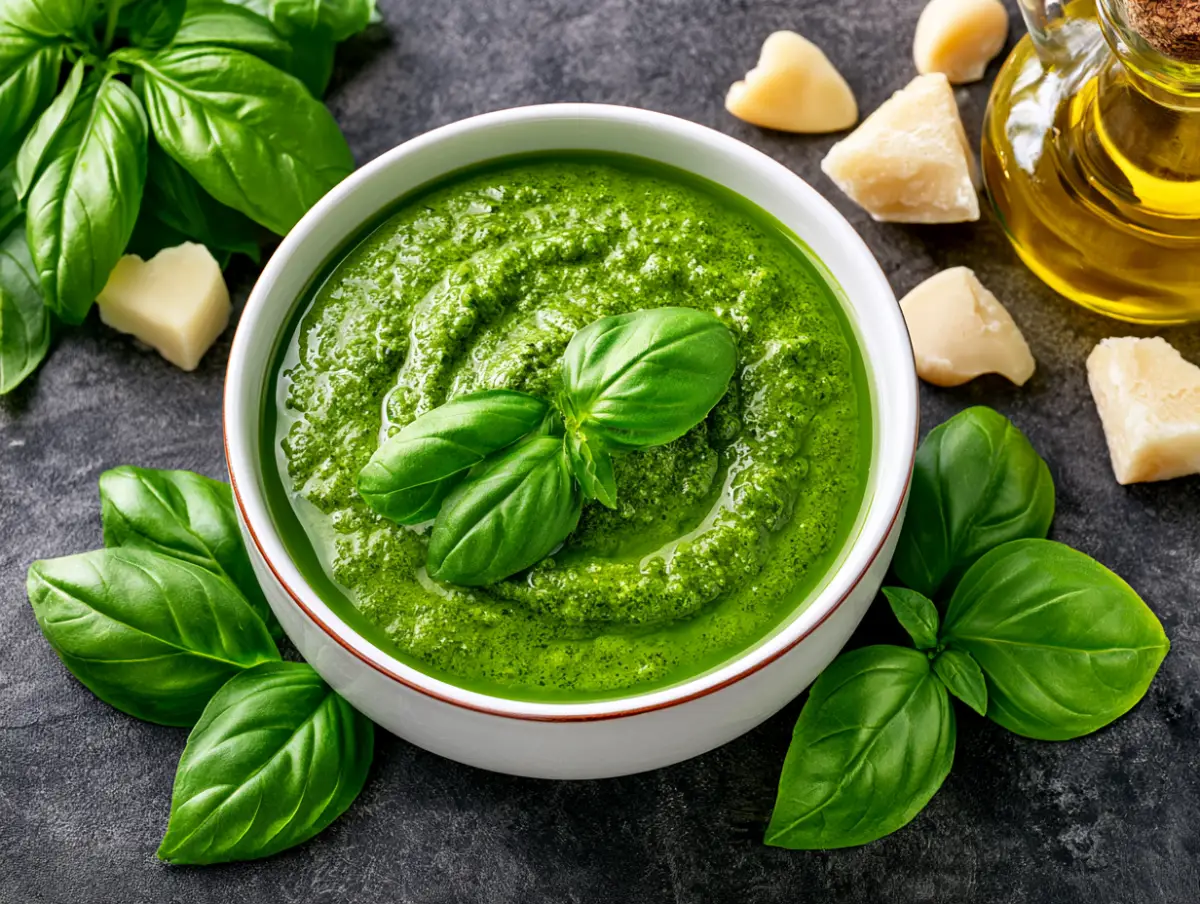
Pesto Genovese
Ingredients
Method
- Thirty minutes before you start, put the food processor blade and bowl in the freezer and the olive oil in the fridge. The cold slows the oxidation enzymes and is the difference between bright green pesto and army-green pesto.
- Prep the basil. Wash the leaves quickly in cold water — do not soak them or you wash away the aromatic oils. Spin them very dry in a salad spinner, lay them on a clean towel and pat gently. Remove any stems, which hold water. Wet leaves make brown pesto.
- Optional, for pesto made ahead: blanch the basil for 10–15 seconds in boiling salted water, plunge immediately into ice water, then pat completely dry. This deactivates the enzymes and keeps the pesto vividly green for over a week, at the cost of slightly muting the flavour.
- Toast the pine nuts in a dry skillet over medium-low heat, stirring constantly, for 2–3 minutes until barely golden. Let them cool completely before using. Traditionalists skip this; the depth of flavour is worth it.
- Add the garlic and a pinch of coarse salt to the cold food processor and pulse about 10 times until finely minced. The salt acts as an abrasive that helps break the garlic down.
- Add the pine nuts and pulse another 10–15 times until they form a coarse paste. Do not overprocess — you want some texture.
- Add half the basil leaves, pulse, scrape down the sides, then add the rest and pulse again to a rough paste. Drop in an ice cube with the basil to keep everything cool as it processes.
- With the processor running on low, drizzle in the chilled olive oil in a thin, steady stream over about 30 seconds. This emulsifies everything into a silky texture — do not rush it.
- Stop the processor, add both cheeses and pulse no more than 5 times to incorporate. Overprocessing the cheese turns the pesto gummy.
- Taste and adjust the salt, adding a tiny splash of lemon juice if you want extra oxidation insurance. Transfer to a jar immediately and pour a thin layer of olive oil over the top to seal it from the air.
Notes
Frequently Asked Questions About Pesto Genovese
How do I keep my pesto from turning brown?
Multiple strategies work together here! Chill your food processor blade and olive oil before making the pesto. Process quickly in batches rather than running the machine continuously. Add a small splash of lemon juice to lower the pH. Blanch your basil if making ahead. And always store with a layer of olive oil on top to block air exposure. My dipping sauces guide has more tips on keeping green sauces vibrant.
Can I freeze pesto genovese?
Absolutely—it’s honestly the best way to preserve it! Freeze in ice cube trays for easy portioning (about 2 tablespoons per cube). Once frozen solid, transfer to freezer bags. It’ll keep for 6 months easily, though I’ve used pesto frozen for up to a year with good results. Some people freeze without cheese and add it fresh after thawing, but I’ve never noticed a huge difference either way.
What’s the difference between pesto and pesto genovese?
“Pesto” just means “pounded” in Italian—any sauce made by crushing ingredients together can technically be called pesto. Pesto genovese specifically refers to the classic basil version from Genoa with pine nuts, parmesan, pecorino, garlic, and olive oil. There’s also pesto rosso (red pesto with sun-dried tomatoes), pesto alla trapanese (Sicilian with tomatoes and almonds), and countless other regional variations.
Can I make pesto without pine nuts?
Yes! Walnuts are the most common substitute and create a slightly earthier flavor. Almonds, cashews, sunflower seeds, and pepitas all work too. Fun fact: if you make pesto without any nuts, it’s technically called pistou (the French version). My Mediterranean chicken meatballs use a nut-free herb sauce that’s basically pesto without pine nuts.
How long does homemade pesto last in the fridge?
Properly stored with a layer of olive oil on top, homemade pesto lasts 5-7 days in the refrigerator. If you blanched your basil first, it can last up to 10 days. Always check for off smells or mold before using. When in doubt, freeze it instead—frozen pesto keeps way longer and the quality is nearly as good as fresh.
What type of basil is best for pesto genovese?
Genovese basil (sometimes labeled sweet Italian basil) is ideal—it has small, tender leaves with a sweet, clove-like aroma. Avoid large-leafed varieties which can taste mintier or even licorice-like. Thai basil, while delicious, has a completely different flavor profile and shouldn’t be used for traditional pesto. If you grow your own, harvest the leaves before the plant flowers for the sweetest flavor.
Should I toast the pine nuts for pesto?
This is my controversial opinion: yes. Traditionalists say no, and they’re technically correct that classic pesto alla genovese uses raw pine nuts. But lightly toasting them for 2-3 minutes adds incredible depth of flavor. It’s one of those “rules” I happily break. Just don’t tell the Consorzio del Pesto Genovese.
Can I make vegan pesto genovese?
You can make a vegan version that’s really delicious—just replace the cheeses with 3 tablespoons nutritional yeast plus 1 tablespoon white miso paste. The nutritional yeast provides that cheesy umami flavor and the miso adds depth. It won’t be identical to traditional pesto, but it’s honestly pretty great. My ragu alla bolognese has a similar approach to building deep flavor without traditional ingredients.
Pairing & Serving Ideas
Complete Meal Combinations
| Occasion | Menu Suggestion | Beverage Pairing |
| Weeknight Dinner | Pesto trofie pasta + simple arugula salad | Sparkling lemonade |
| Summer BBQ | Pesto-grilled chicken + corn salad + crusty bread | Fresh mint iced tea |
| Elegant Dinner Party | Pesto crostini appetizer → salmon with pesto → tiramisu | Italian sparkling water with citrus |
| Quick Lunch | Pesto caprese sandwich on focaccia | Cucumber agua fresca |
| Kid’s Birthday | “Green monster” pesto pasta + veggie sticks with pesto dip | Apple juice spritzers |
Beyond Pasta: Creative Uses
Don’t limit yourself to just pasta! I’ve used this basil pesto on everything from morning eggs to pizza to—okay, this sounds weird—mashed potatoes (but it’s SO good). Swirl it into vegetable soups at the last minute for instant upgrade. Mix with mayo for the best sandwich spread ever. Use as a marinade for my Greek chicken gyros instead of traditional seasonings for a fusion twist. Toss with roasted vegetables. Stuff under chicken skin before roasting. The possibilities are genuinely endless, and I keep finding new favorites.
Make This Pesto Genovese Your Own
Embrace the Imperfection
Here’s the thing about homemade pesto genovese—every batch will be slightly different, and that’s actually the beauty of it. Maybe you prefer more garlic (you garlic fiend, you). Maybe you like it chunkier. Maybe you’re Team Toasted Pine Nuts like me, or maybe you’re a purist. The Italians have been arguing about the “correct” way to make this for centuries, so you’re in good company. The authentic pesto recipe I’ve shared here is my tested-47-times version, but use it as a starting point and make it yours.
Join the Pesto-Making Community
I’d absolutely love to see your pesto creations! Tag me when you make this fresh pesto recipe—especially if you discover any genius uses I haven’t thought of. And if you have questions, drop them in the comments. My neighbor Elena still insists only the mortar and pestle method is legitimate, but I’ve converted her on the ice cube trick. Progress! For more Italian-inspired recipes, check out my shrimp and chorizo pasta and my Greek meatballs with orzo—both are weeknight favorites in our house. Now go make some pesto and transform your cooking forever. Your future self (and your dinner guests) will thank you.