
I need to tell you about the time I served lemon garlic butter salmon to my mother-in-law Elena in June 2023 and she — bless her heart — just… stared at it. Didn’t say a word. Took one bite. Then another. Then she asked me for the recipe, which, if you know Elena, is the equivalent of a standing ovation.
That particular fillet was attempt number twenty-two (I’m not exaggerating, I kept a tally in the margins of my favorite cookbook like some kind of unhinged scientist). The first version? A grey, rubbery disaster that my dog Milo wouldn’t even finish. But between that first attempt and the version Elena silently approved of, I figured out exactly why most home-cooked salmon falls short — and how to fix every single problem. Here are all the secrets I wish someone had told me from the start.
Table of Contents
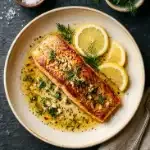
Lemon Garlic Butter Salmon: Never Dry Again – 6 Tips
- Total Time: 15 minutes (plus 10 min tempering)
- Yield: 4 servings
Description
Perfectly seared salmon fillets smothered in a golden lemon garlic butter sauce. Flaky, tender, and restaurant-quality in just 15 minutes. This easy lemon garlic butter salmon is the weeknight dinner you’ll make on repeat.
Ingredients
4 salmon fillets (6oz each, about 1-inch thick), skin-on preferred
3 tablespoons unsalted butter, cut into small cubes
1 tablespoon olive oil
4-5 garlic cloves, thinly sliced
2 tablespoons fresh lemon juice (about 1 large lemon)
Zest of 1 lemon (optional, for extra brightness)
¼ cup low-sodium chicken broth (or vegetable broth)
½ teaspoon fine sea salt
¼ teaspoon freshly ground black pepper
½ teaspoon paprika (optional)
Fresh dill or parsley, chopped, for garnish
Lemon slices, for serving
Instructions
1. Remove salmon from the refrigerator and let sit at room temperature for 10 minutes. Pat both sides thoroughly dry with paper towels.
2. Season both sides of the fillets with salt, pepper, and paprika (if using).
3. Heat olive oil in a 12-inch skillet (cast iron or nonstick) over medium-high heat until the oil shimmers.
4. Place salmon skin-side up (flesh-side down) in the skillet. Do not move for 4-5 minutes until a deep golden crust forms.
5. Flip salmon and cook skin-side down for 2-3 minutes. Transfer to a plate (salmon will not be fully cooked through yet).
6. Reduce heat to medium. Add butter to the same skillet and let it melt and foam.
7. Add sliced garlic and cook for 60 seconds until fragrant and barely golden.
8. Pour in lemon juice and chicken broth. Let sauce simmer for 2 minutes until slightly reduced.
9. Return salmon to the skillet. Spoon sauce over the fillets continuously for 1-2 minutes until salmon reaches desired doneness (130°F for medium).
10. Remove from heat. Garnish with fresh herbs and lemon slices. Serve immediately with pan sauce spooned over the top.
Notes
Storage:
Fridge up to 2 days in airtight container. Sauce can be stored separately for up to 5 days. Freezing cooked salmon not recommended.
Make-ahead:
Season salmon and prepare garlic/lemon up to 4 hours ahead. Store covered in fridge. The garlic butter sauce can be made in advance and rewarmed.
Substitutions:
Butter → ghee (1:1) or olive oil. Chicken broth → vegetable broth. Lemon → lime for an Asian twist. Atlantic salmon → any thick fish fillet (trout, cod, halibut).
Dietary modifications:
Dairy-free: use ghee or olive oil. Paleo/Whole30: use ghee, skip honey in variations. Low-sodium: use unsalted broth and reduce added salt.
Serving suggestions:
Over rice, with roasted vegetables, alongside a green salad, with crusty bread for mopping sauce, or flaked into grain bowls.
Oven method:
Preheat to 400°F. Place salmon on foil-lined sheet pan, spoon garlic butter over top, tent with foil. Bake 12-15 min, broil uncovered 2 min for color.
- Prep Time: 5 minutes
- Cook Time: 10 minutes
- Category: Mediterranean launch recipe
- Method: Baking / Sheet Pan
- Cuisine: Mediterranean
Nutrition
- Serving Size: 1 fillet with sauce
- Calories: 354 kcal
- Sugar: 0.5g
- Sodium: 380mg
- Fat: 23g
- Saturated Fat: 8g
- Unsaturated Fat: 13g
- Trans Fat: 0.3g
- Carbohydrates: 2g
- Fiber: 0.2g
- Protein: 34g
- Cholesterol: 116mg
Why This Recipe Works
The Science Behind the Perfect Sear
Here’s the thing about cooking salmon that nobody tells you upfront: the Maillard reaction — that gorgeous golden-brown crust — needs three conditions to happen. Dry surface, high heat, and patience. Harold McGee covers this extensively in On Food and Cooking: proteins and sugars on the fish’s surface only start browning above 280°F, and they need sustained contact with the hot pan.
This is why every decent salmon recipe tells you to pat the fillets dry (we’ll get into that more later) and why you absolutely cannot move them for the first four minutes. That garlic butter salmon recipe you see at restaurants? They’re not using magic — they’re just following the science and not panicking at the stove. The butter adds richness, but also contributes milk solids that accelerate browning. And the lemon juice? It doesn’t just add flavor — the acid helps denature surface proteins, which actually promotes a better sear. (I realize I sound like a food science textbook right now but honestly this stuff changed everything for me.)
Why It’s a Weeknight Game-Changer
This easy salmon dinner goes from fridge to table in about 15 minutes. Fifteen. That includes the sauce. No marinating, no complicated steps, no special equipment beyond a decent skillet and a spatula. It’s the kind of meal that looks and tastes like you spent an hour but actually leaves you with enough time to, I don’t know, sit down before eating for once? Pair it with our classic Greek lemon rice pilafi and a green salad and you’ve got a genuinely impressive dinner.
Essential Ingredients
Ingredients List
4 salmon fillets (6oz each, about 1-inch thick), skin-on preferred
3 tablespoons unsalted butter, cut into small cubes
1 tablespoon olive oil
4-5 garlic cloves, thinly sliced
2 tablespoons fresh lemon juice (about 1 large lemon)
Zest of 1 lemon (optional, for extra brightness)
¼ cup low-sodium chicken broth (or vegetable broth)
½ teaspoon fine sea salt
¼ teaspoon freshly ground black pepper
½ teaspoon paprika (optional)
Fresh dill or parsley, chopped, for garnish
Lemon slices, for serving
Choosing Your Salmon
Not all salmon is created equal — and I have a very strong opinion about this that I’m aware nobody asked for. For this Mediterranean salmon recipe, you want fillets that are at least 1-inch thick and ideally skin-on (the skin insulates the flesh and prevents overcooking, plus it peels right off after baking if you don’t want to eat it). Atlantic or Scottish salmon tends to be fattier, which means more forgiving and harder to dry out. Wild-caught sockeye is leaner and cooks faster, so you’ll need to watch it more closely. Either works, honestly, but if I’m choosing? Atlantic. Every time. I’ll fight someone over this. My friend Tariq says I’m being dramatic. He’s wrong.
Salmon Types: A Quick Comparison
| Salmon Type | Fat Content | Flavor Profile | Best Cooking Method |
| Atlantic/Scottish | High (rich, buttery) | Mild, delicate, melt-in-mouth | Pan-searing, baking — most forgiving |
| Wild Sockeye | Medium (leaner) | Deep, robust, almost meaty | Quick pan-sear — watch timing closely |
| King/Chinook | Highest (luxurious) | Rich, silky, slightly sweet | Pan-searing — premium option |
| Coho/Silver | Medium | Mild, slightly sweet | Baking in foil — great budget pick |
| Pink Salmon | Low | Mild, delicate | Not ideal — too thin for searing |
The Supporting Cast
Butter: Unsalted, always. You need to control the salt in this dish because between the butter, the seasoning, and the lemon, it’s easy to overshoot. If you only have salted, scale back the added salt by half.
Garlic: Fresh cloves, thinly sliced or minced — do NOT use a garlic press here. Kenji Lopez-Alt has written about how crushing garlic in a press releases more allicin and makes it burn faster in hot butter. Sliced garlic gives you that golden, nutty garlic flavor without the bitter edge.
Lemon: Fresh only. I cannot overstate this. Bottled lemon juice has a flat, chemical-y taste that ruins the brightness. One large lemon gives you plenty of juice plus zest.
The game-changer nobody mentions: bring your salmon to room temperature for 10 minutes before cooking. Cold fish hitting a hot pan means the outside overcooks while the center stays raw. Ten minutes on the counter changes everything. This same principle works beautifully for the salmon in our Mediterranean sheet pan salmon. And if you’re looking for another bright, lemony dinner, the technique here pairs well with the flavors in our creamy tomato basil chicken — same idea, different protein.
USA Substitution Note: Costco and Trader Joe’s both sell excellent skin-on Atlantic salmon at $8-12/lb. Kerrygold or any store-brand unsalted butter works perfectly. For a dairy-free version, use ghee (same richness, higher smoke point) or a good olive oil.
The Foolproof Method
Preparation (5 Minutes)
Remove your salmon from the fridge and let it sit on the counter for about 10 minutes — set a timer if you’re the type who gets distracted (hi, it’s me, I once left salmon on the counter for 45 minutes because I went down a rabbit hole reading about, of all things, the history of anchovy fishing in Sicily).
While it tempers, pat every surface aggressively dry with paper towels. Both sides. I mean it — press firmly. Wet salmon = steam = no crust = sadness. This is probably the single most impactful tip in this entire article. Slice 4-5 garlic cloves thinly. Juice one lemon (you’ll need about 2 tablespoons).
Cut 3 tablespoons of cold unsalted butter into small cubes and set aside. Season both sides of the salmon generously with salt and pepper. If you’re baking in foil instead of pan-searing, line a baking sheet with aluminum foil and lightly oil it. The prep is almost identical to what we do for our grilled chicken Mediterranean bowl — simple, fast, no fuss.
Pan-Searing & Sauce (10 Minutes)
Heat 1 tablespoon olive oil in a 12-inch skillet (nonstick or cast iron — I’ve tested both extensively and cast iron gives a better crust but nonstick is more forgiving) over medium-high heat until the oil shimmers.
Place salmon skin-side up (flesh-side down) in the pan. Do not touch it. Seriously. Walk away if you have to. Let it sear undisturbed for 4-5 minutes until a deep golden crust forms on the bottom. When it releases easily from the pan, flip. Cook 2-3 more minutes on the skin side, then transfer to a plate — it won’t be fully cooked through yet, and that’s fine.
Same skillet, lower the heat to medium. Add the cubed butter and let it foam. Drop in the sliced garlic and cook for about 60 seconds — it should be fragrant and barely golden. Not brown. Brown garlic is bitter garlic.
Pour in the lemon juice and ¼ cup of chicken broth (this prevents the butter from burning and creates enough sauce to actually drizzle). Let it simmer 2 minutes until slightly reduced, then slide the salmon back into the pan.
Spoon that gorgeous lemon butter sauce for fish over the fillets for another minute or so until the salmon reaches your desired doneness. 125°F for medium-rare, 135-140°F for medium. I pull mine at 130°F because carryover cooking brings it up another 5 degrees while resting. (I have a $12 instant-read thermometer from Amazon that has paid for itself approximately ten thousand times over.)
For the oven baked salmon method: preheat to 400°F, spoon the garlic butter mixture over the fillets on your foil-lined pan, tent with foil, and bake 12-15 minutes. Broil uncovered for 2 minutes at the end for color. Either method works beautifully and honestly I can’t always tell the difference at the table. If you make a batch of our lahanorizo Greek cabbage rice alongside it, you’ve basically got a full Mediterranean feast.
Creative Variations
Flavor Riffs Worth Trying
Once you’ve nailed the base lemon garlic butter salmon, the variations practically write themselves. I keep a list in my phone (right next to the “movies to watch” list that I never actually consult) and here are the ones that have earned permanent rotation:
| Variation | Swap/Add | Flavor Profile | Best For |
| Dill & Caper | Add 2 tbsp capers + fresh dill | Bright, herbaceous, Scandinavian | Date night, dinner parties |
| Honey Lemon Glaze | Add 1 tbsp honey to the sauce | Sweet-tangy, caramelized | Kids, picky eaters |
| Mediterranean Herb | Add oregano + sun-dried tomatoes | Warm, savory, Italian-leaning | Meal prep, grain bowls |
| Cajun Spice | Season with Cajun blend before searing | Smoky, spicy, bold | Weeknight comfort food |
| Asian-Inspired | Swap lemon for lime, add ginger + soy sauce | Umami, bright, complex | Rice bowls, noodles |
| Brown Butter Sage | Brown the butter, add sage leaves | Nutty, autumnal, sophisticated | Holiday dinners |
Dietary Modifications
Dairy-free: Replace butter with ghee (still has that rich flavor, higher smoke point) or use extra-virgin olive oil — the sauce won’t be as thick but it’ll still taste incredible.
Gluten-free: This recipe is naturally gluten-free as written — no flour, no breadcrumbs, nothing sneaky. Paleo/Whole30: Use ghee and skip the honey if doing the glaze variation.
Budget-friendly: Frozen wild-caught salmon fillets (Aldi, Costco, Trader Joe’s) work shockingly well here — thaw overnight in the fridge.
Kid-friendly: The honey lemon variation is magic for little ones. My coworker Dana’s daughter Sophia (she’s five) calls it “yellow fish” and asks for it weekly, which feels like it should be on my résumé somehow. Pair any of these with our pasta primavera for a complete meal, or try our Mediterranean white bean salad for a lighter side.
Storage & Serving
Storage Techniques
Let’s be honest — this healthy salmon recipe is best eaten fresh. Like, within minutes of cooking. But I get it, leftovers happen.
Fridge: Store in an airtight container for up to 2 days. The sauce solidifies but re-melts beautifully when reheated.
Reheating: Low oven (275°F) for 8-10 minutes is the move — the microwave works in a pinch but you’re going to get that fishy smell in your kitchen and honestly the texture suffers. Or — wait, actually, this is my favorite trick — eat it cold. Flake the leftover salmon over a salad with some of the solidified garlic butter as dressing. Absolutely divine.
Freezer: I don’t recommend freezing cooked salmon — the texture gets weird and mealy. Freeze the raw fillets instead (up to 3 months) and make the dish fresh. For weekly meal prep, I’ll sear 4-6 fillets on Sunday, store separately from the sauce, and reheat portions throughout the week. The sauce keeps beautifully for 5 days — just warm it in a small pan. If you’re into meal prep, try batching this alongside our Mediterranean chickpea power bowl — the combo covers all your macros.
Best Side Dishes
| Side Dish | Why It Works | Prep Time |
| Steamed rice or couscous | Soaks up every drop of that buttery sauce | 10-15 min |
| Roasted asparagus or broccoli | Charred edges complement the lemon butter | 15 min |
| Simple green salad | Light, crisp contrast to the rich salmon | 5 min |
| Garlic mashed potatoes | Comfort food pairing, doubles down on garlic | 20 min |
| Roasted baby potatoes | Crispy exterior, creamy inside | 25 min |
| Crusty sourdough bread | For mopping up the pan sauce (non-negotiable) | 0 min |
Our garlic parmesan focaccia is absolutely incredible for sopping up that pan sauce — I’m getting hungry just typing this.
Nutritional Benefits
Macronutrient Profile
Quick disclaimer: I’m not a dietitian, so take all nutrition info as estimates rather than gospel. But salmon is genuinely one of the most nutritionally dense foods you can eat — the omega-3 fatty acids alone (EPA and DHA) are associated with reduced inflammation, improved heart health, and better brain function. Per serving of this lemon garlic butter salmon (one 6oz fillet with sauce):
| Nutrient | Amount Per Serving | % Daily Value |
| Calories | 354 kcal | 18% |
| Protein | 34 g | 68% |
| Total Fat | 23 g | 29% |
| Saturated Fat | 8 g | 40% |
| Carbohydrates | 2 g | <1% |
| Fiber | 0.2 g | <1% |
| Sugar | 0.5 g | <1% |
| Sodium | 380 mg | 17% |
Key Micronutrients
| Micronutrient | Amount | Health Benefit |
| Omega-3 (EPA+DHA) | 1.8 g | Heart health, brain function, anti-inflammatory |
| Vitamin D | 570 IU | Bone health, immune function, mood regulation |
| Vitamin B12 | 4.8 mcg | Nerve function, red blood cell formation |
| Selenium | 40 mcg | Thyroid function, antioxidant protection |
| Potassium | 864 mg | Blood pressure regulation, heart rhythm |
| Phosphorus | 310 mg | Bone health, energy metabolism |
| Niacin (B3) | 12 mg | Energy production, cholesterol management |
Salmon has a glycemic index of essentially zero (it’s pure protein and fat), making it excellent for anyone managing blood sugar. The combination of omega-3 fats and high-quality protein makes this one of the most heart-healthy dinners you can make. For a complete nutrient-packed meal, serve alongside our Mediterranean shrimp white bean salad for double the seafood benefits.
Frequently Asked Questions
Your Top Questions Answered
What temperature should I bake lemon garlic butter salmon?
For oven baked salmon, preheat to 400°F (200°C). Bake skin-side down on a foil-lined sheet pan for 12-15 minutes. The salmon is done when the internal temperature reaches 125-140°F depending on your preference — 125°F for medium-rare, 140°F for well done. For an extra golden top, broil uncovered for the final 2 minutes.
How do I know when my garlic butter salmon is fully cooked?
The most reliable method is using an instant-read thermometer — pull at 130°F for medium (it’ll rise 5 degrees while resting). Visual cues: the flesh should be opaque and flake easily when pressed with a fork at the thickest part. If you see white albumin beading heavily on the surface, it’s likely overcooked.
Should I use skin-on or skinless salmon for lemon butter salmon?
Skin-on is ideal for this recipe. The skin acts as a natural insulator, helping the salmon cook more evenly and preventing the flesh from overcooking. After cooking, the skin peels right off if you don’t want to eat it. If you only have skinless fillets, reduce pan-searing time by about 1 minute per side.
Can I make lemon garlic butter salmon with frozen fillets?
Yes, but thaw them completely in the fridge overnight first. Never cook frozen salmon directly in a hot pan — the outside will overcook while the center stays raw. After thawing, pat them extra dry since frozen fish releases more moisture. Costco and Trader Joe’s frozen salmon works great for this recipe.
What can I substitute for butter in this salmon recipe?
Ghee is the closest 1:1 substitute — it gives the same richness with a higher smoke point and is Whole30/paleo compliant. Extra-virgin olive oil works for a dairy-free version, though the sauce will be thinner. Coconut oil is not recommended as the flavor clashes with the lemon and garlic.
How long can I store leftover lemon garlic salmon?
Leftover garlic butter salmon keeps in the fridge for up to 2 days in an airtight container. Store the sauce separately if possible for best texture. Reheat gently in a 275°F oven for 8-10 minutes. Freezing cooked salmon is not recommended as the texture becomes dry and mealy.
Why is my pan-seared salmon sticking to the pan?
Three common causes: the pan wasn’t hot enough, the salmon wasn’t dry enough, or you tried to move it too early. Heat the oil until it shimmers before adding the fish. Pat the fillets bone-dry with paper towels. And don’t touch the salmon for at least 4 minutes — it will naturally release when the crust has formed.
Quick Troubleshooting Tips
If your sauce breaks or looks greasy, add a splash of cold broth and whisk vigorously — the temperature shock helps re-emulsify the butter. If your garlic burns (it happens to all of us, like literally every single time I get distracted), start the sauce over. Bitter garlic ruins everything. And if your butter basted salmon is overcooked? Flake it into pasta with the sauce, extra lemon, and some parmesan. Nobody will ever know.
Pairing & Serving Ideas
Menu Combinations
| Occasion | Serve With | Beverage |
| Quick weeknight dinner | Rice + steamed veggies | Sparkling lemon water |
| Date night in | Roasted potatoes + arugula salad | Pomegranate sparkling soda |
| Sunday family dinner | Garlic bread + roasted vegetables | Fresh mint iced tea |
| Meal prep week | Quinoa + roasted broccoli | Chilled cucumber water |
| Holiday entertaining | Mashed potatoes + green beans almondine | Cranberry spritzer (no alcohol) |
For a stunning dinner party spread, serve this pan seared salmon lemon sauce alongside our gemista Greek stuffed peppers and tomatoes as a side — the roasted vegetable sweetness plays beautifully against the buttery fish. And for a lighter Mediterranean starter, our kolokithokeftedes zucchini fritters set the perfect tone before the main course.
Plating Like a Pro
Place the fillet slightly off-center on a warmed plate (warming your plates for 2 minutes in a low oven is such a small thing but it keeps the butter sauce liquid longer — I’m weirdly passionate about this). Spoon the pan sauce in a loose pool around and over the salmon. Scatter a few thin lemon slices, some chopped fresh dill or parsley, and maybe a tiny crack of black pepper. That’s it. Don’t overcomplicate it. The golden crust and glistening sauce do all the heavy lifting visually. My neighbor José once told me it looked “like something from a cooking show” and I’ve been riding that compliment for approximately two years.
Make It Your Own
Experiment With Confidence
The beautiful thing about this lemon garlic butter salmon is that once you understand the core technique — dry fish, hot pan, don’t touch, butter sauce after — you can riff on it forever. Swap herbs, add spices, try different citrus (orange and garlic butter salmon? Phenomenal.). Use it on trout, cod, halibut, even thick swordfish steaks.
The sauce works on basically any protein. I’ve put it on chicken (incredible), shrimp (even better), and once accidentally on a piece of toast that happened to be in the wrong place at the wrong time (honestly? also delicious). For more weeknight fish ideas, our pesto pasta with grilled chicken uses a similar fast-and-flavorful philosophy, and our Italian chicken casserole is another “looks fancy, takes no effort” winner.
Join the Community
I genuinley want to hear how this turns out for you. Did you try one of the variations? Discover a new side dish pairing I haven’t thought of? Have a strong opinion about the skin-on vs. skinless debate? (Please, join the discourse.) Drop a comment below or tag us on Instagram — your photos and tips make this community what it is. Someone last month suggested adding a splash of miso to the butter sauce and I’m still thinking about it. For more Mediterranean-inspired weeknight dinners, check out our creamy chicken orzo and our Greek sheet pan chicken dinner — both are reader favorites for a reason. Happy cooking!