
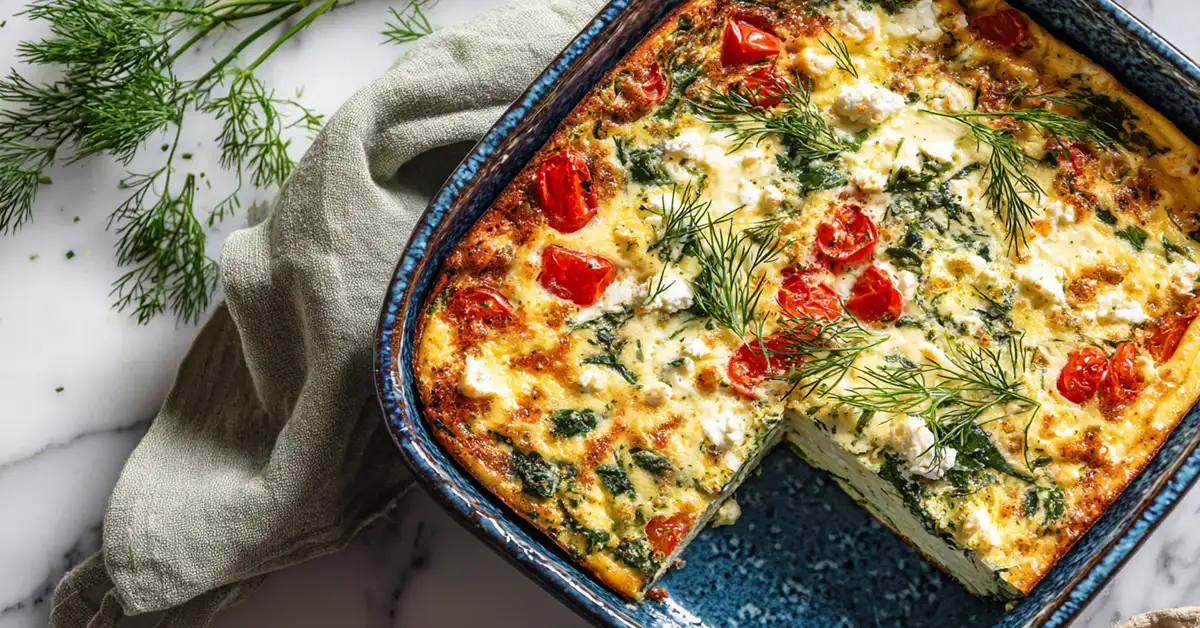
So here’s the thing — I burned my first Greek feta egg bake so badly in March 2019 that my smoke detector literally divorced me. Like, it just… stopped working after that. My neighbor Maria (who grew up in Thessaloniki and has strong opinions about everything egg-related) came over to investigate the commotion and couldn’t stop laughing at what she called my “charcoal casserole.”
But twenty-three test batches later? I’ve cracked the code on this Mediterranean breakfast casserole. This Greek feta egg bake has become my go-to for everything from lazy Sunday brunches to feeding my perpetually hungry brother-in-law Derek who shows up unannounced. (Seriously, Derek, we need to talk about boundaries.)
Today I’m sharing the five secrets that transformed my disasters into the creamiest, most flavorful baked eggs with feta you’ll ever taste — and honestly, if I can nail this, anyone can.
Table of Contents

Greek Feta Egg Bake: 5 Powerful Tips for Best Results
- Total Time: 45 minutes
- Yield: 6 servings
Description
This creamy Greek feta egg bake combines perfectly baked eggs with tangy feta cheese, tender spinach, and burst cherry tomatoes for an easy Mediterranean breakfast casserole. Ready in 35 minutes, this high-protein, low-carb dish is perfect for meal prep, weekend brunches, or easy weeknight dinners.
Ingredients
Ingredients:
8 large eggs, room temperature
6 oz feta cheese, block, crumbled
3 cups fresh baby spinach
1.5 cups cherry tomatoes, halved
1/2 medium red onion, diced
2 tablespoons extra virgin olive oil, divided
1/4 cup milk or Greek yogurt
1 teaspoon dried oregano
1/2 teaspoon garlic powder
1/2 teaspoon salt
1/4 teaspoon black pepper
Fresh dill or parsley for garnish (optional)
Instructions
Preparation: The Foundation
Preheat your oven to 375°F (190°C). I cannot stress this enough — let the oven actually reach temperature. I used to be an impatient “eh, it’s close enough” person. Reader, it was not close enough. Inconsistent heat equals inconsistent eggs.
1. Grease a 9×13 inch baking dish (or individual ramekins if you’re feeling fancy) with olive oil. Not cooking spray, not butter — olive oil gives you that authentic Mediterranean flavor base.
2. Heat 1 tablespoon olive oil in a large skillet over medium heat. Sauté 1/2 diced red onion until translucent and slightly caramelized, about 5-6 minutes. This step is technically optional but genuinely transformative.
3. Add 3 cups fresh baby spinach and cook until just wilted (like, 2 minutes max). Don’t murder it. Overcooked spinach tastes like sad lawn clippings.
4. Spread the spinach mixture evenly in your prepared dish. Scatter 1.5 cups halved cherry tomatoes on top.
The Main Method: Where Magic Happens
This is where my 23 test batches actually paid off. I’m weirdly proud.
5. In a large bowl, whisk together 8 large eggs, 1/4 cup milk (or Greek yogurt for extra creaminess), 1 teaspoon dried oregano, 1/2 teaspoon garlic powder, 1/2 teaspoon salt, and 1/4 teaspoon black pepper. Whisk until totally combined — about 30 seconds of actual effort.
6. Pour egg mixture over the vegetables in your baking dish. Give it a gentle stir to distribute everything evenly.
7. Crumble 6 ounces of feta cheese evenly over the top. Don’t mix it in — you want those gorgeous chunks visible and creating pockets as they bake.
8. Bake for 28-32 minutes, until the edges are set but the center still has a slight jiggle. This is crucial — it continues cooking after you remove it from the oven.
9. Let rest for 5 minutes before serving. Garnish with fresh dill or parsley if you’re feeling photogenic about it.
Notes
Notes:
Storage: Room temp 2 hours; refrigerate 4-5 days; freeze 2-3 months
Make-ahead: Assemble night before (without egg mixture), add eggs morning of
Feta sub: Goat cheese 1:1, ricotta salata 1:1, halloumi 3/4 ratio
Frozen spinach: Use 10oz thawed and VERY well-drained
Dietary mods: Already gluten-free and vegetarian; keto without tomatoes; dairy-light with less feta
Serving: Best with warm pita, crusty bread, or alongside simple salad
Macronutrient Breakdown (Per Serving):
Nutrient | Amount | % Daily Value |
Calories | 245 kcal | 12% |
Protein | 16g | 32% |
Total Fat | 18g | 23% |
Carbohydrates | 6g | 2% |
Fiber | 2g | 7% |
Key Micronutrients:
Micronutrient | Amount | Health Benefit |
Vitamin A | 1250 IU (25%) | Eye health, immune function |
Calcium | 285mg (22%) | Bone strength, muscle function |
Vitamin K | 145mcg (121%) | Blood clotting, bone metabolism |
Iron | 3.2mg (18%) | Oxygen transport, energy production |
Vitamin B12 | 1.8mcg (75%) | Nerve function, red blood cell formation |
The glycemic index of this Mediterranean breakfast casserole is essentially negligible due to the low carbohydrate content — making it an excellent choice for blood sugar management. Compared to traditional breakfast fare like pancakes (GI ~70) or toast with jam (GI ~65), this Greek feta egg bake keeps you in a much steadier energy range. For more nutrition-focused recipes, explore our Mediterranean salmon bowl guide.
- Prep Time: 10 minutes
- Cook Time: 35 minutes
- Category: Mediterranean Breakfast Recispes
- Method: Baking
- Cuisine: Mediterranean, Greek
Nutrition
- Serving Size: 1/6 of dish (approximately 1 cup)
- Calories: 245 kcal
- Sugar: 3g
- Sodium: 520mg
- Fat: 18g
- Saturated Fat: 7g
- Unsaturated Fat: 10g
- Trans Fat: 0g
- Carbohydrates: 6g
- Fiber: 2g
- Protein: 16g
- Cholesterol: 285mg
Why This Greek Feta Egg Bake Works (The Science Behind the Magic)

Okay, I’m gonna get a little nerdy here for a sec — bear with me. There’s actual food science that makes this Mediterranean egg dish so ridiculously good. When you bake eggs low and slow (we’re talking 375°F, not blazing hot), the proteins coagulate gently. This means you get that silky, custard-like texture instead of rubbery hockey pucks. I learned this the hard way when I tried cranking my oven to 450°F to “speed things up.” Spoiler: it did not speed things up. It created eggs that bounced.
The Feta Factor
Here’s something fascinating — feta cheese doesn’t fully melt like cheddar or mozzarella. It softens and becomes creamy while holding its shape, which creates these gorgeous pockets of tangy, salty goodness throughout your feta egg casserole. The salt content in feta (typically 1-2% sodium) also seasons the eggs from within as everything bakes together. It’s like… chemistry magic, but edible. Harold McGee talks about this in On Food and Cooking, and honestly, that man is a genius.
Perfect for Any Occasion (Yes, Even Tuesday)
This spinach feta egg bake isn’t just for weekend brunches — though it absolutely crushes at those. I make it for meal prep Sundays when I need healthy breakfast casserole options for the week. It’s fantastic for holiday brunches when you want to impress without actually working that hard. And honestly? It’s saved more than a few “what’s for dinner” panics in our house. My kids (ages 7 and 10, incredibly picky) actually eat this without complaining, which in my world is basically a miracle. If you’re looking to mix up your breakfast routine, check out our Mediterranean breakfast bowl for another protein-packed morning option.
Essential Ingredients for Greek Feta Egg Bake
Listen, I’m not one of those food bloggers who’ll tell you that you absolutely NEED seventeen specialty ingredients from three different grocery stores. This Greek egg bake recipe uses stuff you probably already have. But — and this is important — quality matters for a few key players.

Ingredients:
- 8 large eggs, room temperature
- 6 oz feta cheese, block, crumbled
- 3 cups fresh baby spinach
- 1.5 cups cherry tomatoes, halved
- 1/2 medium red onion, diced
- 2 tablespoons extra virgin olive oil, divided
- 1/4 cup milk or Greek yogurt
- 1 teaspoon dried oregano
- 1/2 teaspoon garlic powder
- 1/2 teaspoon salt
- 1/4 teaspoon black pepper
- Fresh dill or parsley for garnish (optional)
Ingredient Quality Guide:
| Ingredient | What to Look For | Why It Matters |
| Feta Cheese | Block in brine, Greek or Bulgarian origin | Pre-crumbled is often dry and less flavorful; block feta melts better |
| Eggs | Large, pasture-raised if possible | Richer yolks = creamier bake; room temp eggs cook more evenly |
| Spinach | Fresh baby spinach, vibrant green | Wilts down significantly; fresh has better texture than frozen |
| Tomatoes | Cherry or grape, firm but ripe | Burst when baked for pockets of sweet acidity; Roma works too |
| Olive Oil | Extra virgin, fresh and fruity | Adds authentic Mediterranean flavor; don’t skimp here |
My game-changing secret ingredient? A tablespoon of Greek yogurt whisked into the eggs before baking. I know, I know — it sounds weird. But it adds this subtle tanginess that plays perfectly with the feta, plus extra protein. My friend Yiannis (who actually IS Greek, unlike me, a girl from Ohio who just really loves Mediterranean food) gave me this tip after trying my fifth failed attempt. I still owe him a beer. Or, um, a sparkling water. Speaking of Greek ingredients, our guide to spinach and feta pairings has even more ways to use this classic combo.
USA Substitutions: Can’t find Greek feta? Danish or Bulgarian feta works fine. For a budget-friendly option, Trader Joe’s Mediterranean-style feta is surprisingly good. If cherry tomatoes aren’t in season, a 14oz can of diced tomatoes (well-drained!) does the job. And if you’re dairy-sensitive, some folks have had luck with vegan feta, though the texture’s a bit different.
The Foolproof Method: How to Make Greek Feta Egg Bake
Here’s where I usually go off on a tangent about how my mom never taught me to cook… wait, that’s exactly what I’m doing. Anyway! The actual technique for this baked feta eggs recipe is surprisingly straightforward once you know the tricks. And I’m going to share them all because gatekeeping recipes is dumb.
Preparation: The Foundation
Preheat your oven to 375°F (190°C). I cannot stress this enough — let the oven actually reach temperature. I used to be an impatient “eh, it’s close enough” person. Reader, it was not close enough. Inconsistent heat equals inconsistent eggs.
- Grease a 9×13 inch baking dish (or individual ramekins if you’re feeling fancy) with olive oil. Not cooking spray, not butter — olive oil gives you that authentic Mediterranean flavor base.
- Heat 1 tablespoon olive oil in a large skillet over medium heat. Sauté 1/2 diced red onion until translucent and slightly caramelized, about 5-6 minutes. This step is technically optional but genuinely transformative.
- Add 3 cups fresh baby spinach and cook until just wilted (like, 2 minutes max). Don’t murder it. Overcooked spinach tastes like sad lawn clippings.

- Spread the spinach mixture evenly in your prepared dish. Scatter 1.5 cups halved cherry tomatoes on top.
The Main Method: Where Magic Happens
This is where my 23 test batches actually paid off. I’m weirdly proud.
- In a large bowl, whisk together 8 large eggs, 1/4 cup milk (or Greek yogurt for extra creaminess), 1 teaspoon dried oregano, 1/2 teaspoon garlic powder, 1/2 teaspoon salt, and 1/4 teaspoon black pepper. Whisk until totally combined — about 30 seconds of actual effort.

- Pour egg mixture over the vegetables in your baking dish. Give it a gentle stir to distribute everything evenly.

- Crumble 6 ounces of feta cheese evenly over the top. Don’t mix it in — you want those gorgeous chunks visible and creating pockets as they bake.

Bake for 28-32 minutes, until the edges are set but the center still has a slight jiggle. This is crucial — it continues cooking after you remove it from the oven.

- Let rest for 5 minutes before serving. Garnish with fresh dill or parsley if you’re feeling photogenic about it.
Pro Tip: I always bring my eggs to room temperature before whisking (just leave them on the counter for 20-30 minutes while you prep everything else). Cold eggs straight from the fridge cook unevenly and can create rubbery spots. My friend Tony, who went to culinary school (and never lets us forget it), explained that the temperature differential is a real thing. For more protein-packed morning ideas, our Mediterranean breakfast recipes collection has tons of options
Creative Variations & Dietary Modifications for Your Greek Feta Egg Bake

Variations
The beautiful thing about this high protein breakfast is how customizable it is. I’ve made probably fifteen different versions at this point (my family might be sick of eggs, honestly), and they’ve all worked. Well, mostly worked. The sun-dried tomato experiment got a little… intense.
| Variation | Modifications | Best For |
| Greek Garden | Add kalamata olives, artichoke hearts, roasted red peppers | Vegetarian entertaining; Mediterranean diet followers |
| Protein Powerhouse | Add cooked chicken sausage or turkey crumbles | Athletes; meal prep; extra-hungry family members |
| Dairy-Light | Use 4oz feta instead of 6oz; substitute milk with oat milk | Lower sodium diets; lactose-sensitive folks |
| Budget-Friendly | Frozen spinach (thawed/drained); canned tomatoes; domestic feta | Meal prep on a budget; feeding a crowd; college students |
| Kid-Friendly | Mild feta; skip red pepper flakes; add mild cheddar; diced ham | Picky eaters; school day breakfasts; lunchboxes |
Dietary Modifications
keto/low-carb, this recipe is already your friend — just skip the tomatoes if you’re being super strict.
gluten-free, the base recipe is naturally GF (just double-check your feta doesn’t have weird additives). Check out our 10 gluten-free Mediterranean recipes for more options.
paleo, swap feta for compliant goat cheese and skip the milk.
vegetarian? You’re already there!
Storage and Serving Tips

Real talk: this spinach egg casserole is best fresh out of the oven. The edges get that gorgeous golden crispiness, the cheese is all melty and perfect… *chef’s kiss*. But I live in the real world where meal prep exists and nobody has time to cook every morning, so let me break down your options.
Storage Guide
| Storage Method | Duration | Best Practices |
| Room Temperature | 2 hours max | Only for serving; cover with foil after 1 hour to prevent drying |
| Refrigerator | 4-5 days | Airtight container or tightly covered dish; slice into portions first for easy reheating |
| Freezer | 2-3 months | Cool completely; wrap individual portions in plastic then foil; thaw overnight in fridge |
Meal Prep Strategy: I usually make this on Sunday, slice it into 6 portions, and store them in individual containers. Mornings are chaos in my house (three kids, one bathroom, you do the math), so having grab-and-go breakfasts is non-negotiable. Reheat at 350°F for 8-10 minutes, or microwave for 90 seconds if you’re in a rush. It’s not quite as good as fresh, but it’s a solid 8/10 versus the 10/10 of straight-from-the-oven.
Serving Suggestions
| Accompaniment | Why It Works |
| Warm pita bread | Perfect for scooping; authentic Mediterranean pairing; fills out the meal |
| Simple green salad | Fresh contrast to rich eggs; lemony vinaigrette cuts richness |
| Crusty sourdough toast | Crunchy texture contrast; great for dipping in runny yolk |
| Roasted potatoes | Hearty addition for bigger appetites; goes beautifully with oregano |
For a complete Mediterranean spread, serve alongside our roasted vegetable salmon or keep it simple with a dollop of tzatziki and some fresh cucumber slices.
Nutritional Benefits of Greek Feta Egg Bake
I’m not a registered dietitian — let me be clear about that. But I’ve done my homework on this low carb egg bake, and the nutritional profile is genuinely impressive for a dish that tastes this indulgent. The combination of eggs and feta provides complete proteins, while the spinach delivers a punch of vitamins without adding significant calories.
Macronutrient Breakdown (Per Serving)
| Nutrient | Amount | % Daily Value |
| Calories | 245 kcal | 12% |
| Protein | 16g | 32% |
| Total Fat | 18g | 23% |
| Carbohydrates | 6g | 2% |
| Fiber | 2g | 7% |
Key Micronutrients
| Micronutrient | Amount | Health Benefit |
| Vitamin A | 1250 IU (25%) | Eye health, immune function |
| Calcium | 285mg (22%) | Bone strength, muscle function |
| Vitamin K | 145mcg (121%) | Blood clotting, bone metabolism |
| Iron | 3.2mg (18%) | Oxygen transport, energy production |
| Vitamin B12 | 1.8mcg (75%) | Nerve function, red blood cell formation |
The glycemic index of this Mediterranean breakfast casserole is essentially negligible due to the low carbohydrate content — making it an excellent choice for blood sugar management. Compared to traditional breakfast fare like pancakes (GI ~70) or toast with jam (GI ~65), this Greek feta egg bake keeps you in a much steadier energy range. For more nutrition-focused recipes, explore our Mediterranean salmon bowl guide.
Frequently Asked Questions About Greek Feta Egg Bake
I get a lot of questions about this feta cheese eggs recipe (mostly from my mom, who calls me every time she tries to make it and then panics). Here are the answers to the most common ones:
Can I freeze Greek feta egg bake?
Yes! This make-ahead breakfast freezes beautifully for up to 3 months. Let it cool completely, then wrap individual portions tightly in plastic wrap followed by aluminum foil. Thaw overnight in the refrigerator before reheating. The texture stays surprisingly good — maybe 85% as good as fresh.
How long does feta egg bake last in the refrigerator?
Properly stored in an airtight container, your baked eggs with feta will last 4-5 days in the fridge. I’ve pushed it to 6 days once and it was… fine. Not great, but fine. I’d stick to 4-5 to be safe.
Can I make this Greek egg bake recipe ahead of time?
Absolutely — this is perfect for meal prep! You can assemble everything except pouring the egg mixture the night before. Cover and refrigerate, then add the eggs and bake in the morning. Alternatively, bake it completely and reheat portions throughout the week.
What’s the difference between shakshuka and Greek feta egg bake?
Great question! Shakshuka is North African/Middle Eastern and features eggs poached directly in a spiced tomato sauce with peppers and cumin. Greek feta egg bake is more like a casserole or frittata — the eggs are whisked and baked with Mediterranean ingredients. Both are delicious, just different vibes. If you love spiced tomato dishes, check out our lamb shakshuka recipe!
What cheese can I substitute for feta in egg bake?
Goat cheese is your best alternative — it has similar tanginess and crumble. You can also try ricotta salata for a milder option, or halloumi if you want something that holds its shape more. Boursin works in a pinch but changes the flavor profile significantly.
Can I use frozen spinach in this recipe?
You can, but you MUST thaw and thoroughly squeeze out all the excess water first. Like, more than you think. Then more than that. Frozen spinach releases a lot of liquid that’ll make your egg bake watery and sad. Use about 10oz frozen spinach (thawed) to replace the 3 cups fresh.
Pairing and Serving Ideas for Greek Feta Egg Bake

This Greek breakfast eggs dish is incredibly versatile — I’ve served it at fancy brunches and also eaten it standing over the kitchen sink at 7am (we’ve all been there). Here’s how to dress it up or down depending on the occasion.
| Occasion | Serve With | Beverage Pairing |
| Weekday Breakfast | Whole grain toast, sliced avocado | Fresh-squeezed orange juice |
| Weekend Brunch | Fruit salad, warm pita, tzatziki | Sparkling water with lemon |
| Holiday Gathering | Greek salad, hummus platter, olives | Fresh mint tea or lemonade |
| Light Dinner | Mixed greens, crusty bread | Iced hibiscus tea |
| Meal Prep | Pre-portioned with fruit cup | Pack your own coffee! |
For a truly Mediterranean spread, pair your Greek feta egg bake with our hummus bil lahme and some warm flatbread. Trust me on this one — it’s a combination that’ll have your guests thinking you spent way more time in the kitchen than you actually did.
Make This Greek Feta Egg Bake Your Own
Personalization Is Key
Here’s the thing I’ve learned after making this Mediterranean egg dish approximately a million times (slight exaggeration, but not by much): recipes are just starting points. The best Greek feta egg bake is the one that makes you happy. If you hate olives, leave them out. If you’re obsessed with sun-dried tomatoes, throw some in. Want to add za’atar because you just discovered it and now put it on everything? (That was me in 2021.) Do it.
The techniques I’ve shared — the low-and-slow baking, bringing eggs to room temp, not overcooking — those are the foundation. Build whatever house you want on top of it.
Join the Community
I genuinley love hearing how you’ve made this your own — the weirdest variation I’ve gotten was someone who added pickled beets (and swore it was delicious, though I’m skeptical). Drop a comment below with your version, or tag us on social media when you make it! And if it doesn’t turn out perfectly the first time, remember: I burned mine badly enough to break a smoke detector before I figured it out. You’ve got this.
Ready for more Greek-inspired dishes? Our stuffed eggplant recipe uses similar Mediterranean flavors and is another crowd-pleaser that’s easier than it looks.