 Written by Ines Zahraoui — Tunisian home cook and co-founder of The Mediterranean Recipe, developing and testing recipes in her own kitchen since 2020. More about Ines →
This is a real dish, this is real squid ink pasta. I want to say that first, because black pasta turns up every October dressed as a novelty and it deserves better than that.
Pasta al nero di seppia is eaten along the Italian coast, in Venice and Sicily and Puglia, and it has been for a very long time. The ink is not a colouring — it is a seasoning, the way anchovy is a seasoning, and it brings a clean saline minerality that tastes like the smell of the sea rather than like fish. It happens to be one of the blackest ingredients you can put on a plate naturally, which is why it turns up here in the third week of October.
The mistake almost everyone makes is using too much of it. Two teaspoons blackens an entire batch. More does not make it blacker — it makes it taste of nothing but the sea, and the garlic, chilli and lemon that make the dish worth eating disappear underneath.
Twenty-five minutes, one pan plus a pot, and it is the only main course on this site that needs no decorating whatsoever.
Table of Contents
Table of Contents
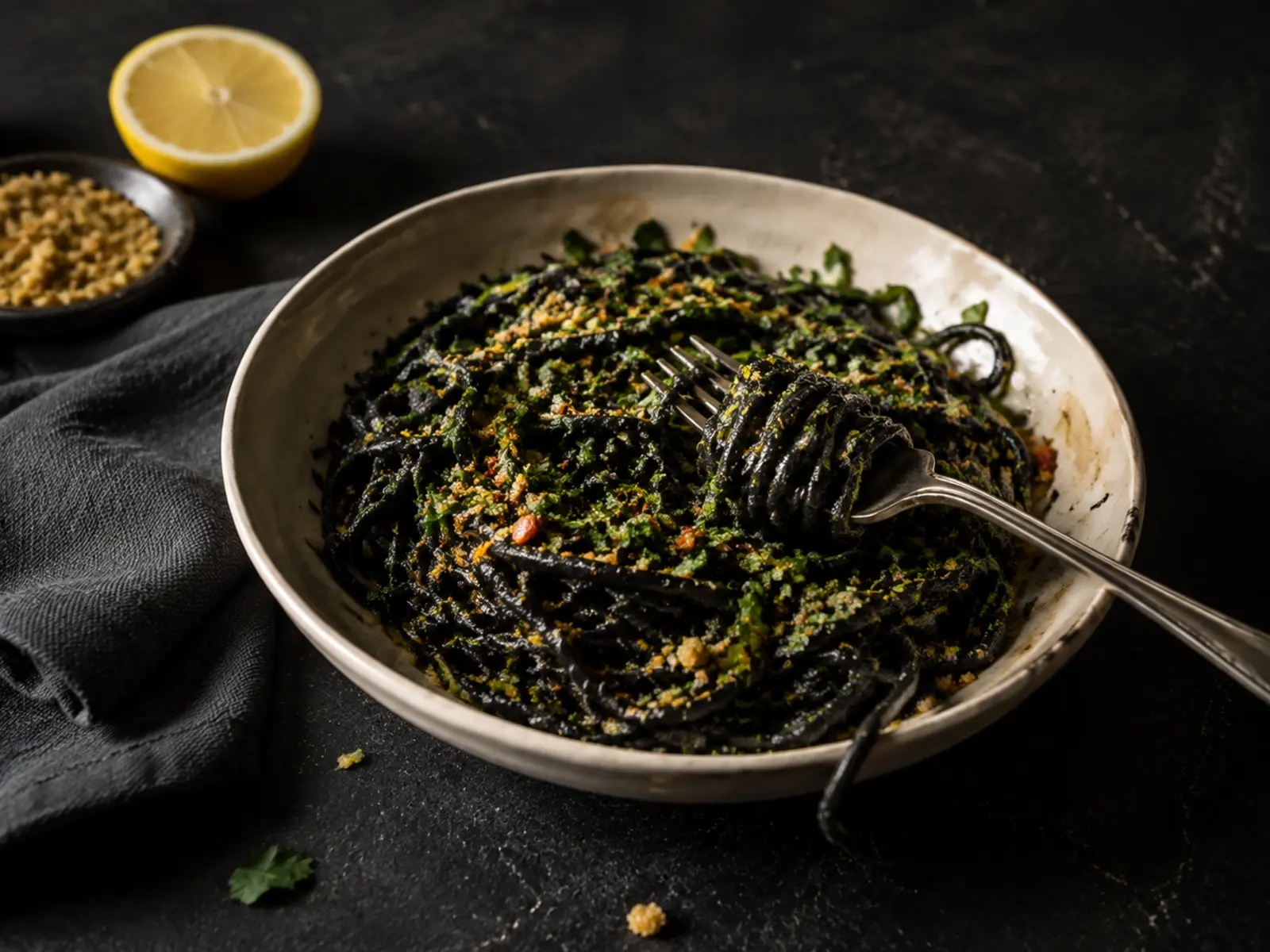
Squid Ink Pasta
Ingredients
Method
- Bring a large pot of well-salted water to a boil. Reserve 1 1/2 cups of the starchy pasta water before draining the pasta.
- Heat 1 tablespoon olive oil in a wide skillet over medium heat. Toast the breadcrumbs until crisp and golden; transfer to a bowl.
- Cook the linguine until just shy of al dente.
- In the same skillet, warm the remaining olive oil over medium-low heat. Add garlic and chilli and cook until the garlic is pale gold, not brown.
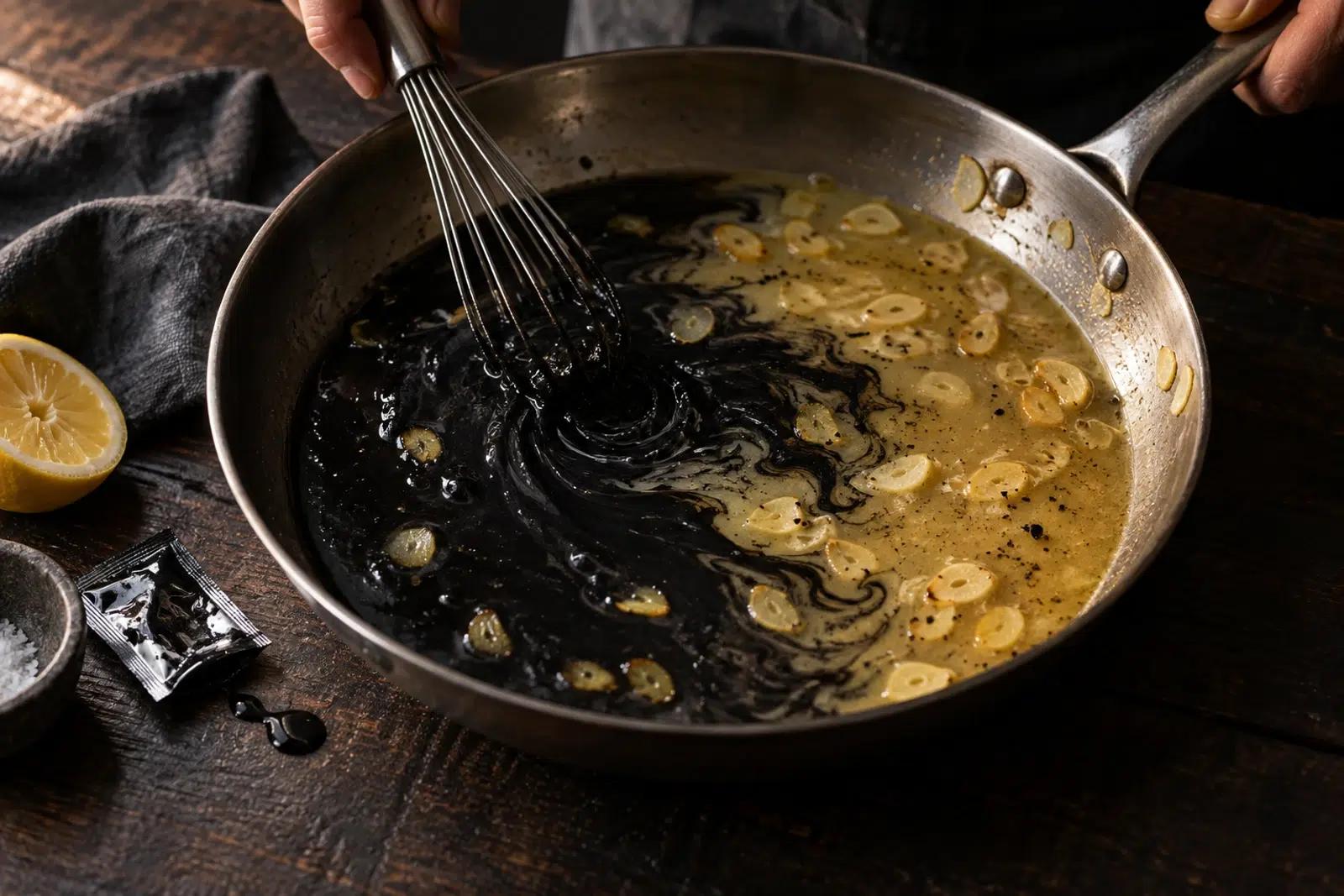
- Add 3/4 cup pasta water and simmer briefly. Take the skillet off the heat, whisk in the squid ink, then return to low heat.
- Add the drained pasta and toss vigorously, adding more pasta water a splash at a time until the sauce is glossy and coats the strands. Taste before adding salt.
- Off the heat, add lemon zest, lemon juice and parsley. Divide between pale bowls and finish with the toasted breadcrumbs. Serve immediately.
Notes
Why This Squid Ink Pasta Recipe Actually Works
- Two teaspoons of ink and the colour is total. This is a cheap ingredient used sparingly.
- The garlic, chilli and lemon are the dish. The ink is the backdrop.
- Twenty-five minutes, and twenty of those are the water coming to the boil.
- No decorating at all. It is already black.
- It is a genuine Italian coastal dish, which means someone will make it again in June.
Why the Breadcrumbs Are Not Optional
Black pasta is glossy, soft and uniform — visually and texturally it is one thing all the way through. A scatter of coarse golden breadcrumbs gives you crunch against slippery, and gold against black, and it is the single element that takes the dish from striking to good. In Sicily pangrattato on pasta is standard practice, historically as a substitute for cheese. Here it is doing the same job it always did.
Essential Ingredients
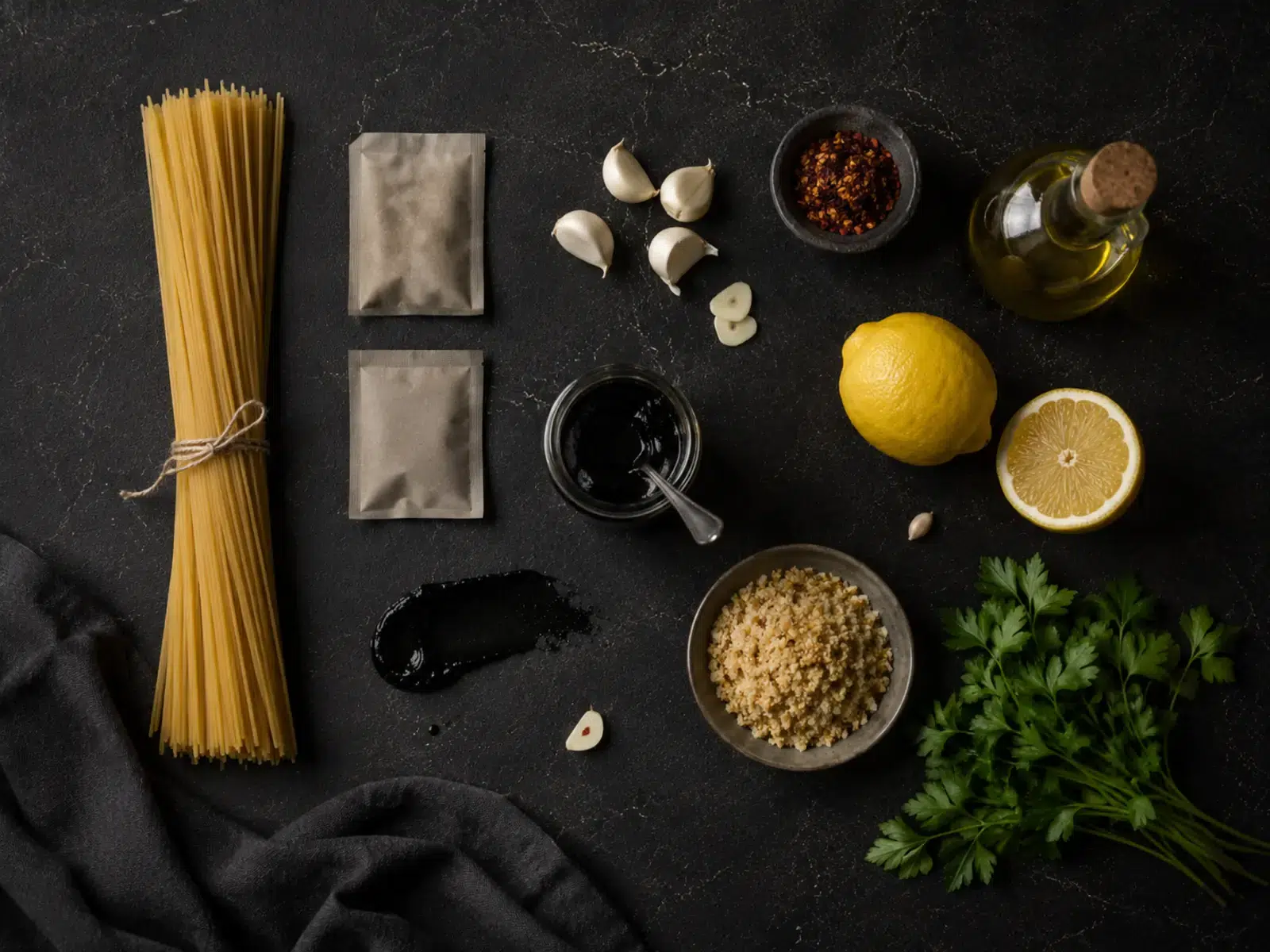
Squid ink. Sold in small sachets of 4g or in small jars, from Italian and Spanish delis and online. Cuttlefish ink and squid ink can both work here, but salt levels vary; taste before adding salt. Storage varies by product; follow the package directions and use opened ink promptly.
Pasta. Long — linguine pasta, spaghetti or bucatini. The sauce is thin and clings to strands better than it fills shapes.
Garlic. Sliced thin rather than chopped, so it perfumes the oil without catching.
Chilli. Enough to notice. The ink is saline and slightly sweet, and it wants heat against it.
Lemon. Zest and juice, both added off the heat. The single most important flavour on the plate after the ink itself.
Parsley. Green against black. Do not substitute basil, which goes dark and disappears.
Breadcrumbs. Coarse and dry, toasted in oil with garlic. See above.
The Foolproof Method
- Breadcrumbs first, then set them aside.
- Garlic and chilli in oil over medium-low. Pale gold, never brown.
- Pasta water in, simmer briefly.
- Off the heat, whisk the ink in.
- Pasta water in, simmer 2 minutes.
- Pasta in, toss hard with more water until glossy.
- Lemon and parsley off the heat.
Use Less Ink Than You Think
Here is the claim, and it is the one thing that separates a dish people ask about from a bowl of something faintly unpleasant.
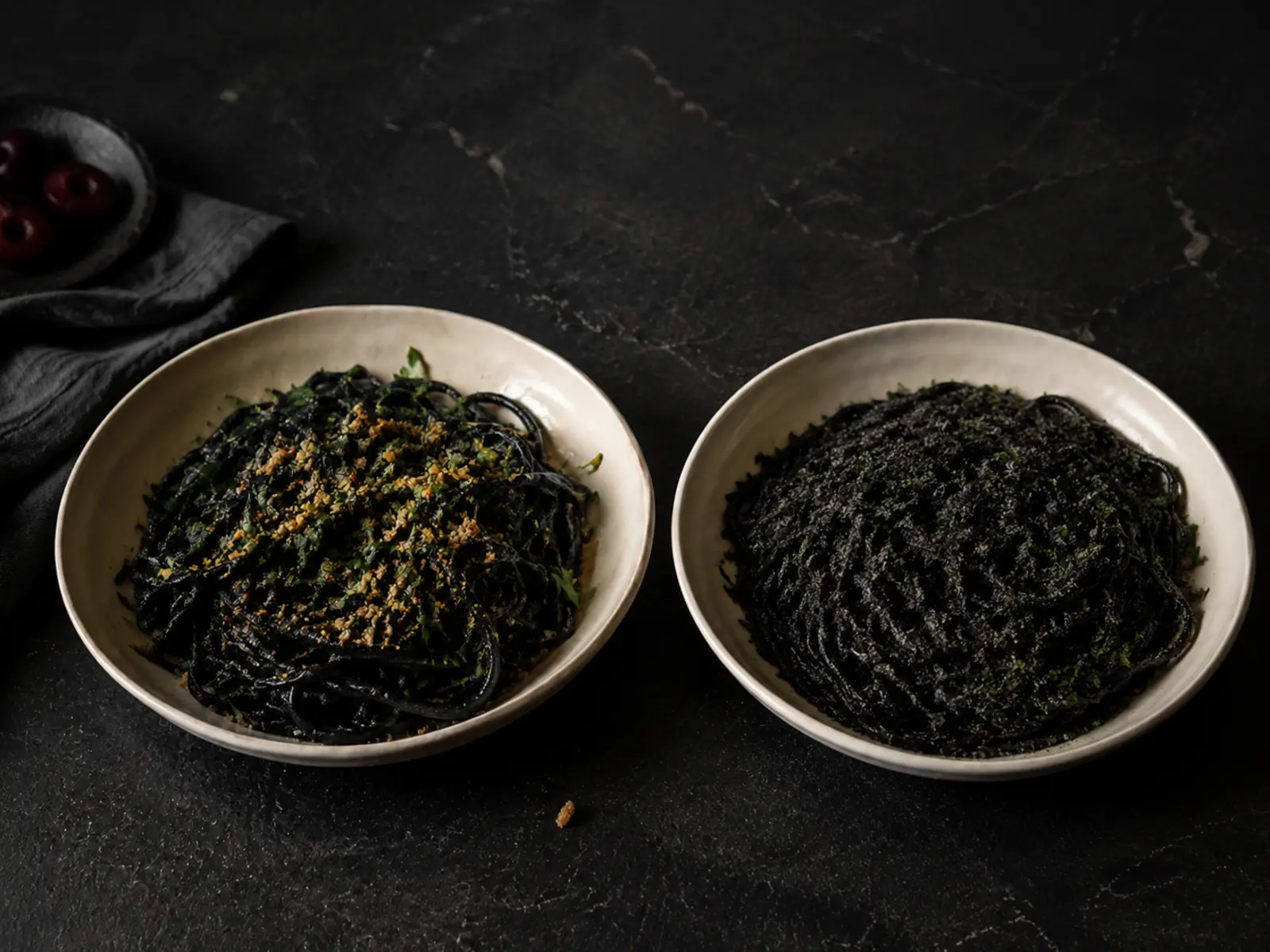
Two teaspoons — about eight grams — is enough for four servings. Other formulas use different amounts because product salinity and sauce volume vary.
The reason is that squid ink saturates the colour long before it saturates the flavour. In this tested formula the color becomes opaque quickly; two teaspoons in a pan of emulsified sauce and pasta water gives you a total, opaque, glossy black with nothing left to add. Additional ink changes the seasoning faster than the appearance, so taste before adding more.
And that salinity is aggressive. At four or five teaspoons the dish stops tasting of garlic and lemon and chilli and starts tasting of one thing, insistently, in a way that is tiring after about six mouthfuls. People put their forks down and cannot articulate why.
The two supporting rules:
Add the ink off the heat. Whisk it into the garlic and pasta-water base with the pan away from the burner. Hard boiling can make this small sauce harsh and reduce its gloss. Warm it through gently rather than cooking it aggressively.
Salt the pasta water normally, then taste before you salt the dish. Ink is already saline. A dish seasoned by habit rather than by tasting will be too salty almost every time.
If you have over-inked: more pasta, more lemon and a knob of butter will pull it back some of the way. It is a rescue, not a fix.
Where to Buy Squid Ink (And What It Costs)
Italian and Spanish delis are the most reliable source, usually in 4g sachets sold in pairs or in small glass jars. Fishmongers sometimes carry it and will occasionally give you ink sacs from whole squid if you ask. Online has the widest range and the highest prices.
Prices vary by region and supplier. For this recipe, two 4g sachets are enough; buy the smallest sealed quantity you can use within the label’s storage window.
What to look for on the label: cuttlefish or squid ink, water, salt, and often a little thickener such as xanthan gum. That is normal.
Storage: keep unopened product exactly as the label directs. Refrigerate after opening when instructed, keep it cold, and use it within the manufacturer’s stated window.
One note for the squeamish: it is a natural secretion from the animal and it is a normal food ingredient across the Mediterranean. If you are comfortable eating squid, you are comfortable eating this.
Black Pasta or Black Sauce? Not Both.
You can buy dried squid ink pasta, which is coloured through the dough itself. It is very good, it is what I use when I am cooking for eight, and it is sold in most Italian delis.
But do not use black pasta and an ink sauce together, which is what a surprising number of recipes tell you to do.
Two reasons. Flavour, first: the pasta already carries ink and the sauce carries more, and the combined salinity overwhelms everything. Second, and more surprisingly, appearance: black sauce on black pasta reads as a single flat mass with no definition. Strand separation disappears. A bowl of it photographs as a dark shape.
Pick one:
Black sauce on plain pasta — my preference. Pale strands take the sauce unevenly at first and end up with visible variation and gloss, which reads as pasta rather than as a void. Better texture on camera, better control of the seasoning.
Black pasta with a pale sauce — a garlic, oil and breadcrumb dressing, or a light cream, or just butter and lemon. Very striking, and the contrast is the point. This is the version to use for a crowd, since the pasta arrives black without you having to manage anything.
Either way, the breadcrumbs and the parsley are what stop the bowl being a single tone.
Creative Variations
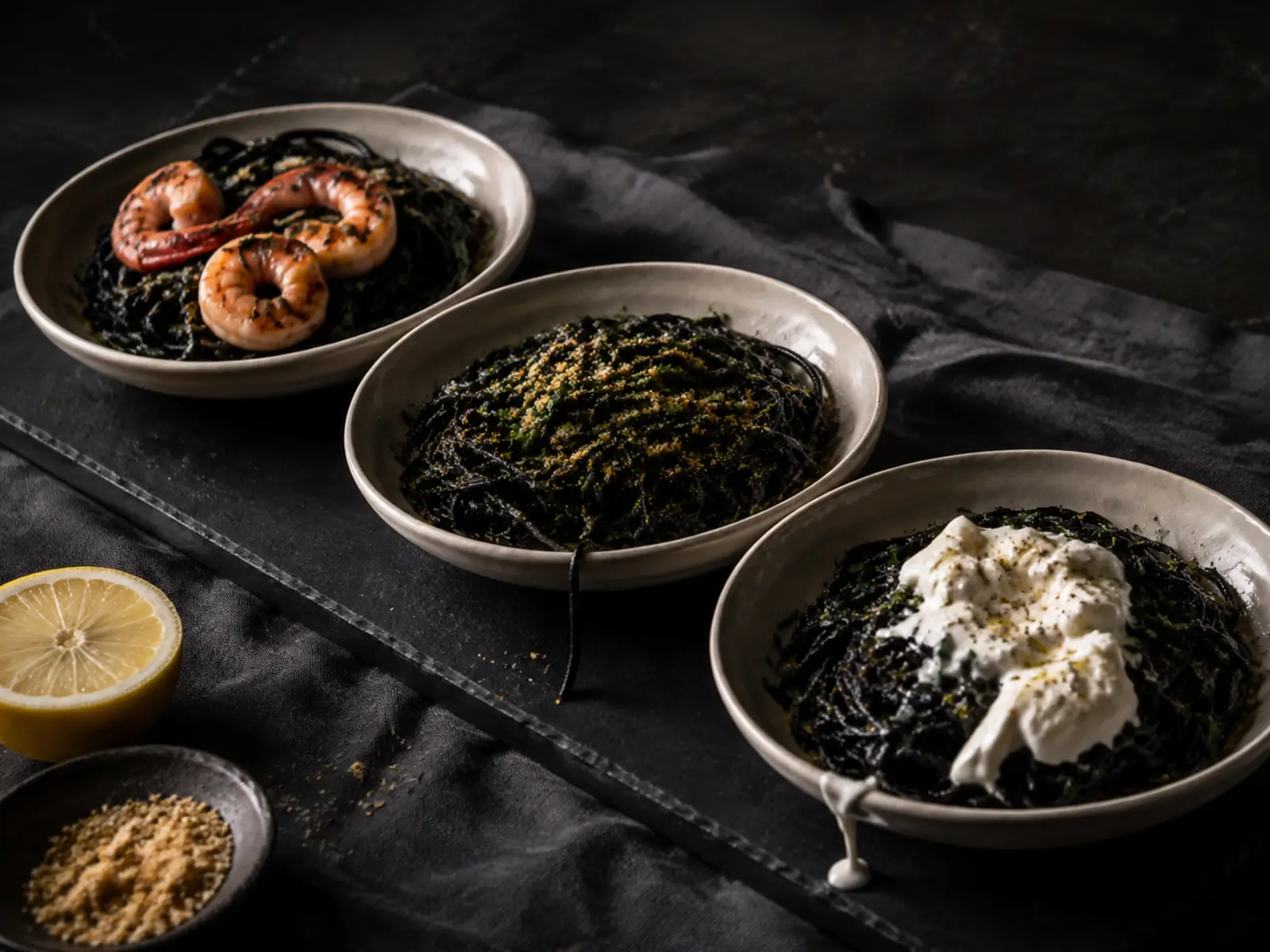
With prawns. Six or eight large prawns seared in the pan before the garlic, set aside and returned at the end. The classic version along the Adriatic and probably the best.
With bottarga. Grated cured mullet roe over the finished dish instead of breadcrumbs. Intensely savoury and very Sardinian. Expensive, and a little goes a long way.
With burrata. A torn ball of burrata dropped onto the black pasta at the table. Maximum contrast, and the melting white against the black is genuinely dramatic. Skip the chilli if you do this.
With clams. Vongole method — clams steamed with a splash of water and lemon, ink added to the resulting liquor. More work, and the best-tasting version on this list.
Short pasta for a masquerade. Cut the linguine into short lengths after draining, or use a short shape from the start. Long strands need a two-handed twirl and a downward look, which is exactly what a mask does not allow.
Storage and Serving
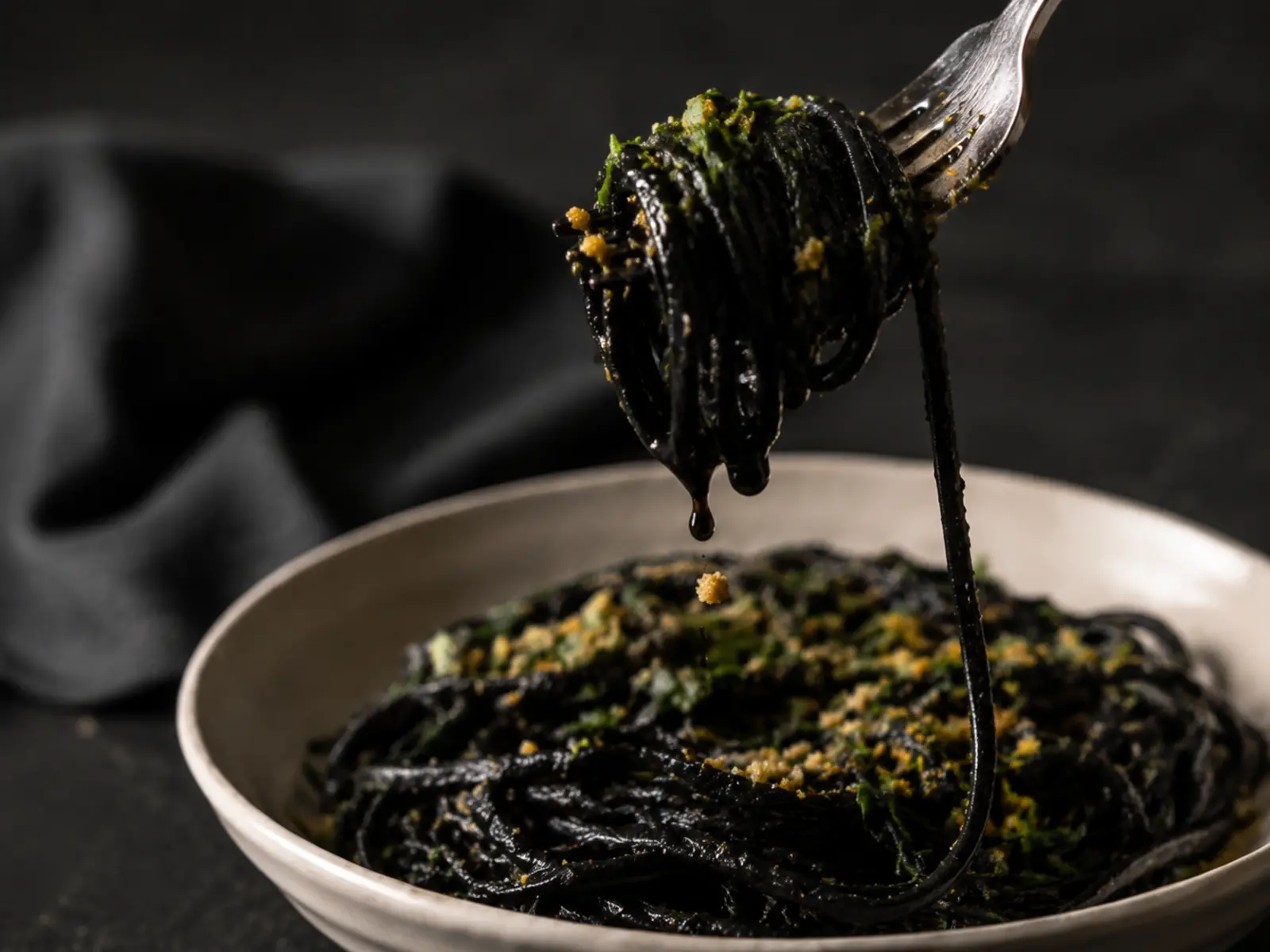
Serve immediately. Black pasta sitting in a bowl loses its gloss within about five minutes as the sauce is absorbed. Have the bowls warm and everyone at the table.
Leftovers: 2 days refrigerated. Reheat in a pan with a splash of water rather than a microwave. Acceptable, not glossy.
Do not freeze.
Bowl choice matters more than usual. Serve black pasta in pale, wide, shallow bowls — cream, white or unglazed terracotta. A dark bowl swallows it entirely and you lose the whole effect. This is the one dish in the cluster where a black bowl is the wrong call.
Quantities: 3½ oz of dried pasta per person as a main, or 2 oz as one course of several.
Nutritional Benefits
Squid ink is used in such small amounts that its nutritional contribution is negligible, though it does contain melanin and trace minerals. The dish’s real profile comes from olive oil, garlic and a lot of parsley. It is a comparatively light main course — no cream, no cheese, no meat unless you add it — and at around 520 calories a serving it sits well before a dessert course.
Five Rules to Keep Beside the Recipe
Measure 8g of ink for this four-serving formula
Build the garlic and chilli base gently
Use starchy pasta water instead of a beverage reduction
Whisk the ink in off the heat
Taste before salting and serve immediately
Scaling line: 2 mains: 200g pasta + 4g ink · 4 mains: 400g + 8g · 8 mains: 800g + 16g, finished in two wide pans
Frequently Asked Questions
What does squid ink taste like?
Clean, saline and mineral — like the smell of the sea rather than like fish. Used in the small quantity this recipe calls for it reads as a savoury depth behind the garlic and lemon rather than as a distinct flavour. Used heavily it becomes aggressively briny and flattens everything else.
c
About two teaspoons, or eight grams, for four servings. That is enough for total opaque black. More adds salinity but no additional colour, which is why over-inked pasta tastes of one thing and nothing else.
Where can I buy squid ink?
Italian and Spanish delis, most reliably, in small sachets or jars. Some fishmongers carry it. Online has the widest choice. Two 4g sachets make this four-serving batch. Follow the package date and opened-storage directions rather than a universal pantry rule.
Can I use black pasta instead of squid ink?
Yes, and dried squid ink pasta is excellent — but use one or the other, not both. Black sauce on black pasta is over-salted and photographs as a flat dark mass with no strand definition. Black pasta with a pale garlic and breadcrumb dressing is the better version of that approach.
Is squid ink pasta a real Italian dish?
Yes. Pasta al nero di seppia is eaten along the Italian coast, particularly in Venice, Sicily and Puglia, and has been for centuries. The Halloween association is a coincidence of colour, not the origin of the dish.
Why did my squid ink pasta turn out grey?
Possible causes include a diluted sauce, a lighter ink product or prolonged hard boiling. Add it off the heat, whisked into the garlic and pasta-water base, then return the pan to a low heat only to emulsify with the pasta water. Keep the heat low after the ink goes in so the sauce stays glossy and controlled.
Pairing and Serving Ideas
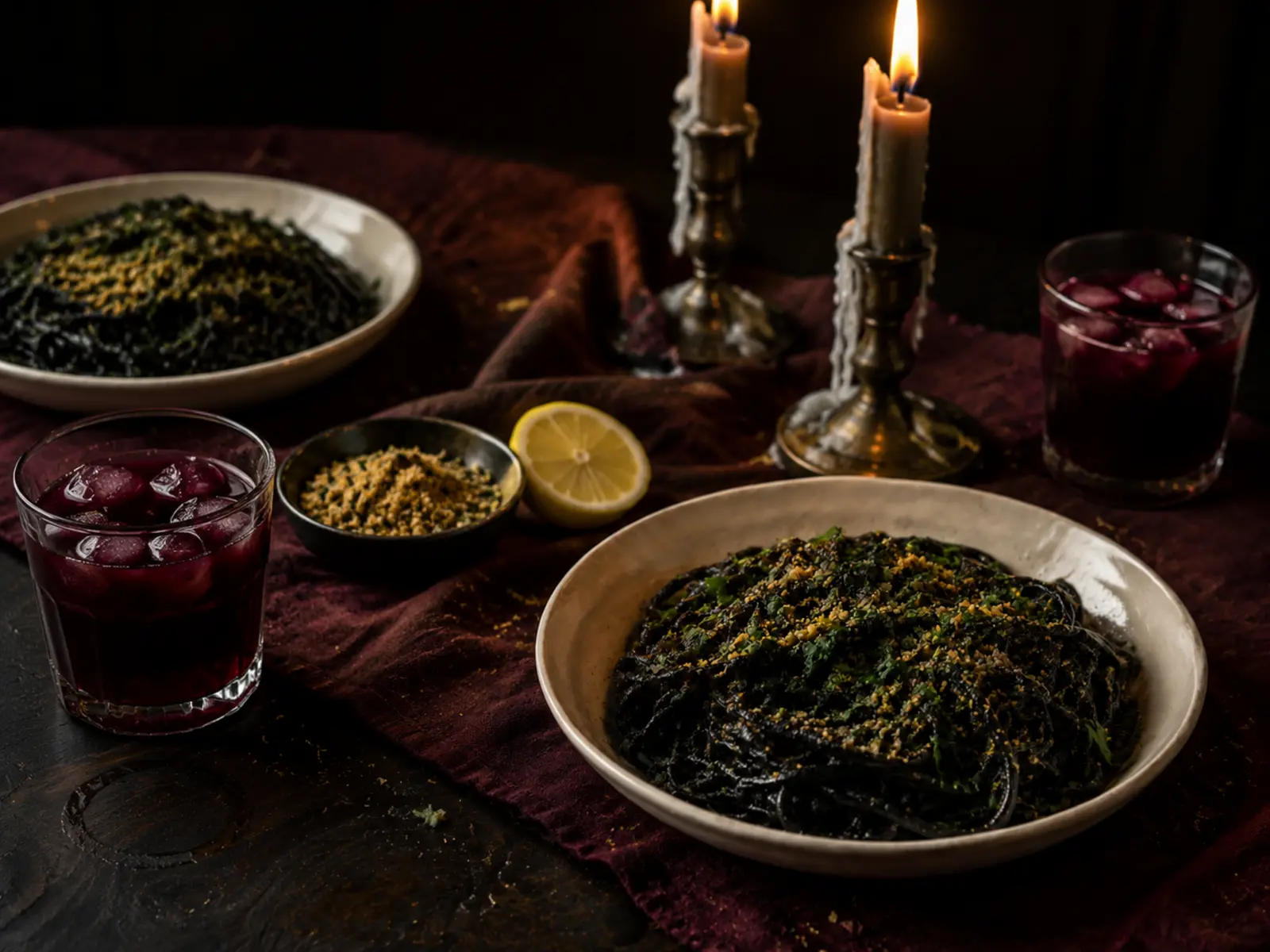
As the main course of a masquerade dinner, after a grazing board and passed soup shooters, cut short so people can eat it one-handed.
Before it: something red and sharp. The soup shooters are the obvious partner, and the colour sequence — red, then black, then something pale for dessert — is genuinely satisfying.
After it: something with acidity. Fresh figs, a citrus dessert, or the halva bark, which is bitter enough to cut it.
To drink: a chilled pomegranate-and-hibiscus shrub or sparkling lemon water, which has enough sourness to stand up to it.
On the table: pale bowls, dark cloth, candles. Nothing else.
Ready to Serve the Darkest Thing on the Table?
Two teaspoons. Off the heat. Pale bowls.
Toast the breadcrumbs first, because you will need the pan, and because they are the reason the dish works.