 Written by Ines Zahraoui — Tunisian home cook and co-founder of The Mediterranean Recipe, developing and testing recipes in her own kitchen since 2020. More about Ines →
Nobody expects the beans.
I have made these Fave dei Morti for eight or nine years now and the reaction is always the same. Someone eats one, says something appreciative about the almond, and then asks what they are called. Beans of the dead. And the conversation stops, because it is not a name you talk past.
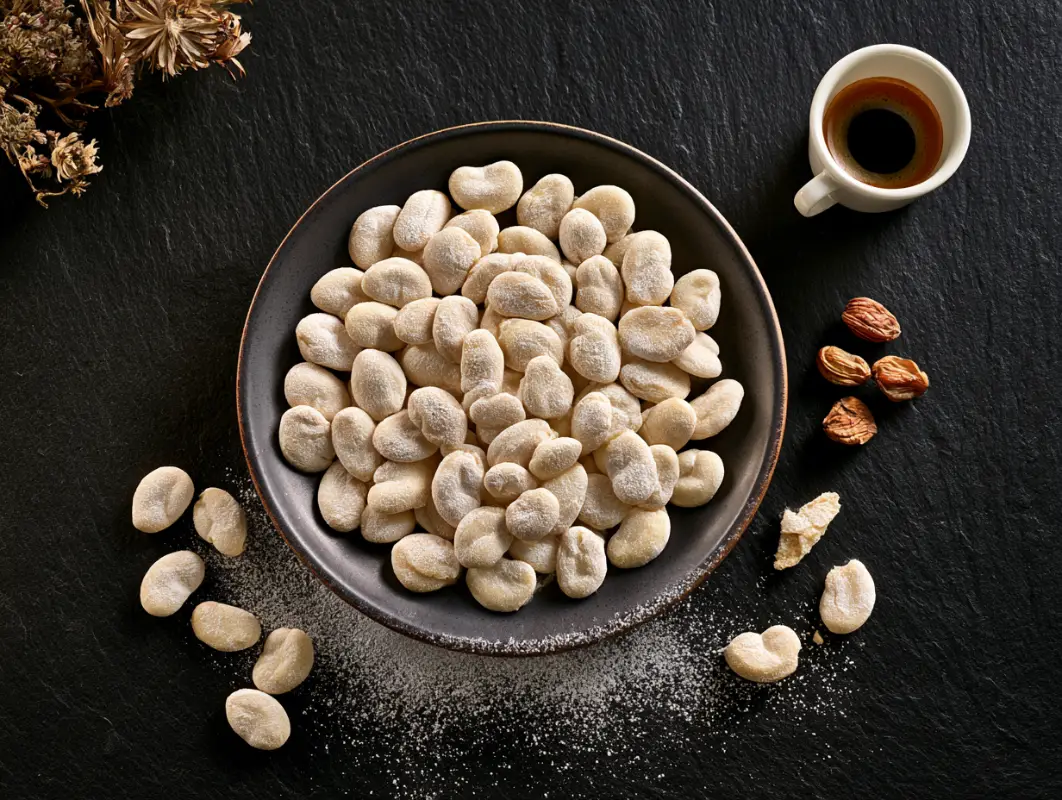
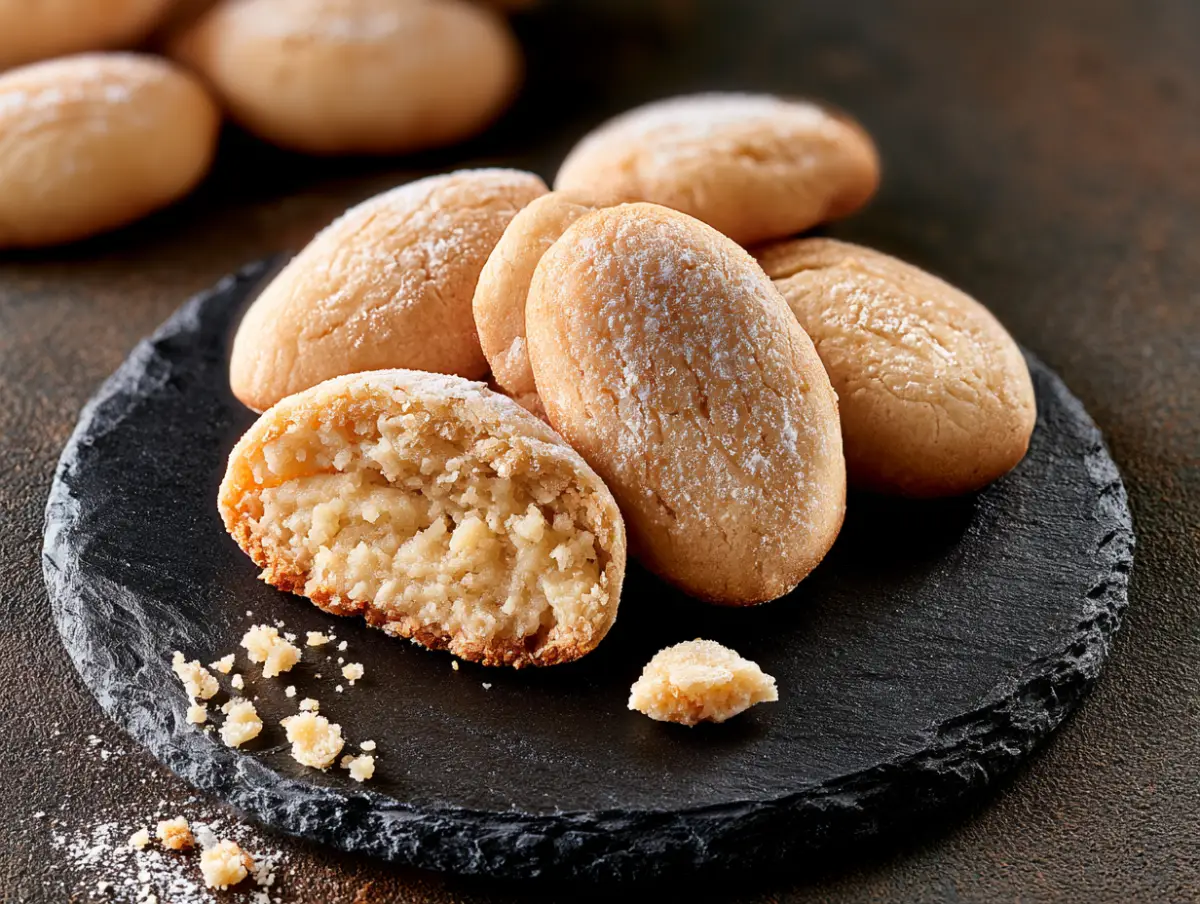
The cookies themselves are small, soft, chewy things about the size of a thumb joint, shaped like broad beans, dusted white. They are ground almonds, sugar, an egg and lemon zest, made in one bowl with no mixer, and they take twenty-five minutes of work. They give rather than snap — which is the opposite of ossi dei morti, and the reason you want both on the same plate. One shatters, one yields.
They keep for a fortnight in a tin, which means you can bake them in the middle of October and still be eating them on the second of November, when Italy is actually observing the day these were made for.
Table of Contents
Table of Contents
Fave dei Morti Recipe Card
Fave dei Morti (Italian Beans of the Dead Cookies)
Ingredients
Method
- If using whole almonds, pulse them with 2 tablespoons of the sugar until fine but not oily — stop before it turns to paste. Almond flour works and is faster.
- Combine the ground almonds, remaining sugar, flour, lemon zest and salt in a bowl.
- Add the beaten egg, soft butter, orange juice and almond flavouring. Work it with a spatula and then your hands into a stiff, slightly sticky dough. It will look too dry for about a minute, then come together.
- Chill for 30 minutes if the dough feels soft or your kitchen is warm. It makes shaping considerably easier.
- Roll teaspoon-sized pieces into small ovals about 1 inch long, then press each one gently flat between thumb and forefinger so it takes a broad bean shape — flattened, with a slight dent along one edge.
- Space 1 inch apart on parchment-lined trays. They spread only a little.
- Bake at 350°F (175°C) for 12 to 15 minutes only, until the bases are just golden and the tops are pale and still look faintly underdone. Do not wait for them to look finished.
- Cool completely on the tray. They firm as they cool.
- Dust generously with icing sugar once fully cold.
Notes
Why This Fave dei Morti Recipe Actually Works
- One bowl, no mixer, no rolling pin, no cutters.
- The shaping is forgiving — a bean is an oval you squashed, and no two real beans match.
- They keep two weeks, so this is a mid-October bake, not a night-before scramble.
- They post well, which is rare for a cookie.
- The name does the work. You will not have to explain why they are on a Halloween table.
They Are the Chewy One
Serve these next to ossi dei morti and you have two cookies from the same tradition doing opposite things. Ossi dei morti are crisp, cracked and brittle — they snap. Fave dei morti are soft and yielding, with a sandy almond crumb that goes chewy at the centre.
That contrast is the whole reason to make both, and it is why the plate reads as a spread rather than a repetition.
Essential Ingredients
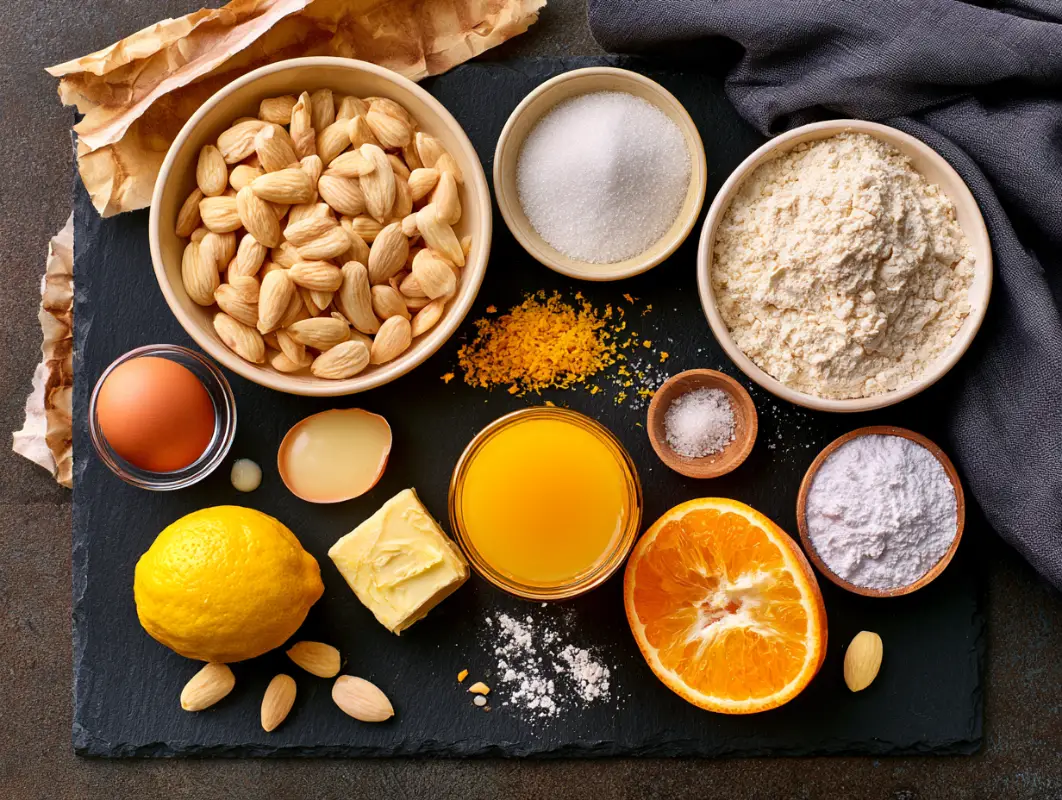
Almonds. The body of the cookie, not a flavouring. Blanched, ground fine but stopped well before they turn oily. Almond flour is genuinely fine here and is what I use most of the time.
Sugar. Less than in ossi dei morti, because these are not built on a meringue mechanism. Three-quarters of a cup for forty cookies is restrained for an Italian biscuit.
Egg. One, beaten, and it is the only binder. This is why the dough looks impossible for the first minute of mixing.
Butter. Very soft, and only two tablespoons. It is what keeps the centre chewy rather than sandy all the way through. Olive oil works and is traditional in some households.
Lemon zest. Non-negotiable. Without it these are sweet and flat; with it they are bright and much more interesting.
Orange juice, and a little almond flavouring. Most regional versions of this cookie carry a tablespoon of rum, Marsala or Amaretto, and it is there to deepen the almond. A tablespoon of fresh orange juice replaces the liquid exactly — orange with almond is a standard Italian pairing rather than a compromise — and a quarter teaspoon of alcohol-free almond flavouring restores the aromatic depth the liqueur was giving. Strong cold espresso, one tablespoon, is the other good answer and is what most Italian households actually drink with these anyway.
One thing worth knowing at the shelf, because the two bottles look identical: almond extract sold in the US is alcohol-based, since ethanol is the solvent that carries the benzaldehyde. Almond flavour is the alcohol-free version and is glycerin or propylene-glycol based. Unlike vanilla, where the FDA sets a minimum of 35% alcohol by volume for anything labelled “vanilla extract”, there is no federal standard of identity for almond extract at all — so the strength varies by brand and the label is the only thing that will tell you. Read the back, not the front.
The Foolproof Method
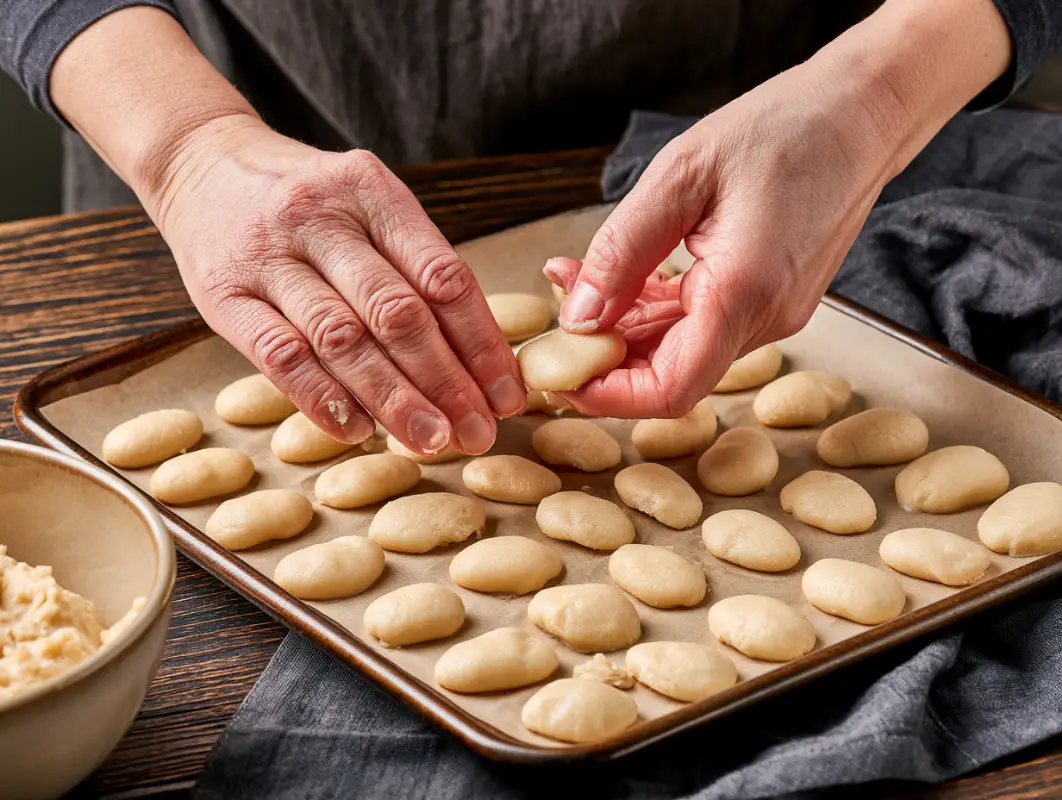
- Grind the almonds fine, stopping before they go oily.
- Mix dry, then add egg, butter, orange juice and almond flavouring. Work it with your hands.
- Chill 30 minutes if the dough is soft.
- Roll small ovals, then press each one flat between two fingers.
- Bake 12 to 15 minutes at 350°F. Pull them looking underdone.
- Cool completely on the tray, then dust heavily.
Why Beans? The Roman Connection
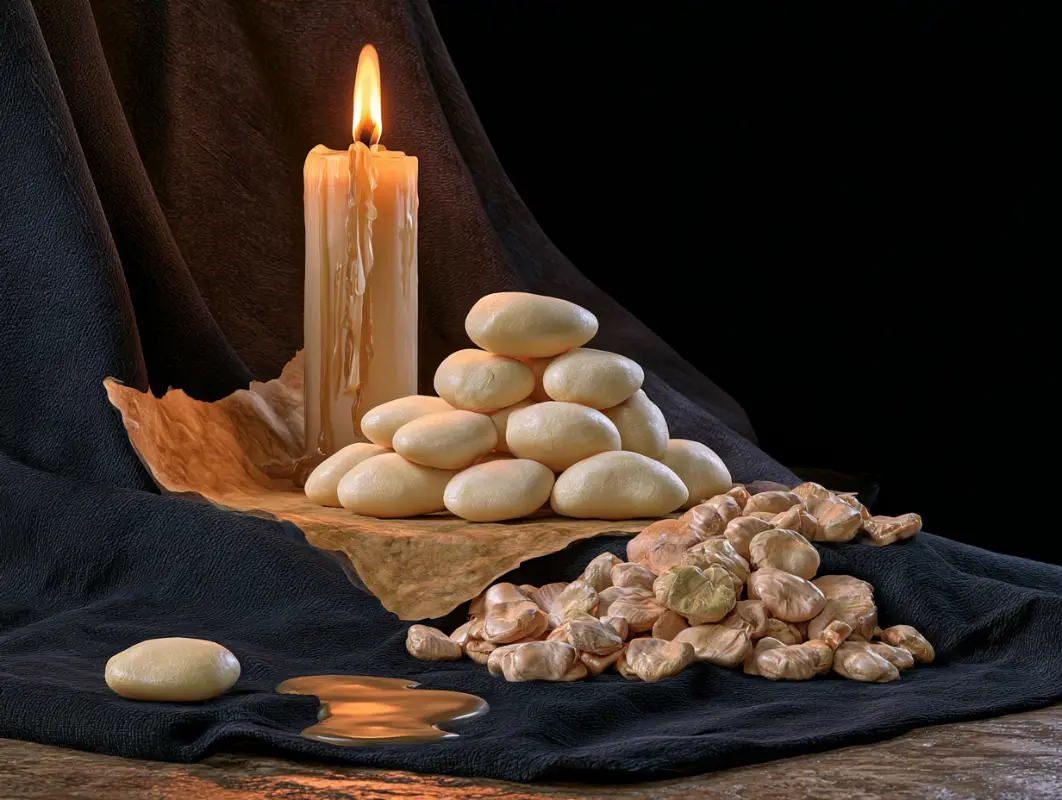
This is the part people remember, and it is genuinely old.
Broad beans — fave — carried a strong association with the dead in Roman funerary custom. Beans appear in Roman rites concerning the dead, they were offered and eaten at commemorative meals, and the association ran deep enough that Pythagoreans famously refused to eat them at all, with several ancient explanations offered, some of them involving the souls of the dead. Katie Parla, who has written about Roman food for two decades from Rome itself, puts it simply in her account of the Roman cookie: favas were a symbol of death in antiquity, so the name fits. Whatever the original reasoning, the link between beans and the dead was established in the Italian peninsula long before Christianity arrived.
That association survived. When the church settled All Saints’ Day on 1 November and All Souls’ Day on 2 November, the older bean symbolism attached itself to the new observance, and by the medieval period beans were being distributed as alms and eaten in commemoration of the dead across much of Italy.
At some point — and the honest answer is that I have not been able to establish exactly when — the bean itself was replaced by a small almond sweet shaped like a bean, and that is the cookie you are making. When that swap happened is not well documented before the modern period, and anyone who gives you a date for it is being more confident than the evidence allows.
A note on my own limits: I am not Italian, I am reading translated sources, and Italian regional food history is a field where confident single explanations are usually a warning sign. What is not in dispute is that these are called beans of the dead, that they are shaped like beans, that they are baked for the days Italy sets aside for the dead, and that beans and the dead have been connected in that part of the world for a very long time.
It is also, I think, quite a beautiful piece of continuity. A Roman offering became a medieval alms bean became a small almond cookie you can make in twenty-five minutes on a Tuesday.
The Venetian Tricolour Version
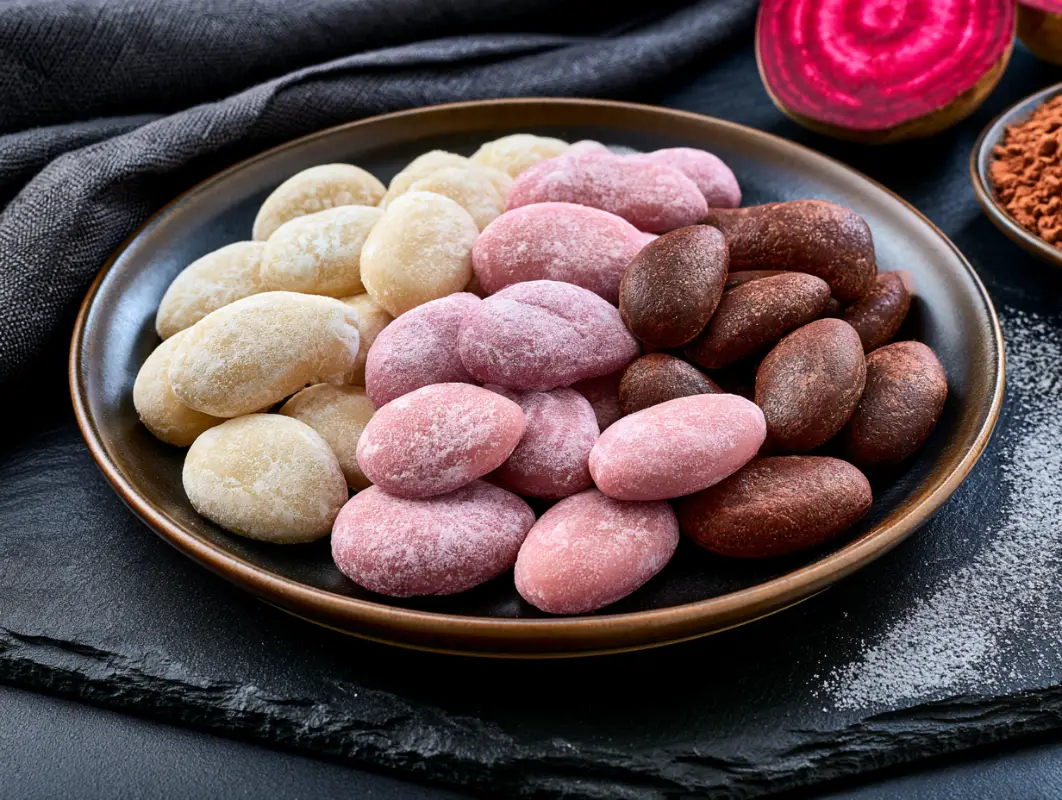
In and around Venice, fave dei morti are traditionally made in three colours and served together: pale, pink and brown. On a dark plate they are one of the best-looking things in the whole Italian repertoire, and it is a strong distinct pin angle.
Pale. The base recipe, unchanged.
Brown. Add 2 tablespoons of cocoa powder and 1 extra tablespoon of egg or a splash of milk to the third of the dough you are colouring. Deep, faintly bitter, and it takes the almond somewhere darker.
Pink. Traditionally coloured with alkermes, a crimson Tuscan liqueur flavoured with spices and rose water and historically coloured with cochineal. It is what makes zuppa inglese red, it is used across Italian pastry, and this recipe does not use it — partly because it is genuinely difficult to buy in the US outside a handful of specialist importers, and partly because it is a liqueur and nothing on this site calls for one. It is here as history, not as a shopping list.
The alkermes substitute that actually works: 2 teaspoons of concentrated beetroot juice plus 1/2 teaspoon of rose water added to a third of the dough. Reduce raw beetroot juice by half over low heat first so you are adding colour and not water. It gives a dusty rose-pink very close to the real thing, the rose water covers the flavour gap, and it is also the alcohol-free version — which should not be something a reader has to work out for themselves. Beetroot pigment fades somewhat in the oven, so make the raw dough a shade darker than you want the finished cookie.
What not to use: pink food colouring. It bakes to a synthetic bubblegum pink that looks exactly like what it is, and it is the one thing on this page that would undercut the entire no-dye position of the site.
Divide the dough into three before adding anything, and work the additions in with your hands.
Getting Them Chewy, Not Hard (Underbake Them)
Here is the one instruction that separates a good batch from a tin full of small stones, and almost every recipe underplays it.
Take them out while they still look underdone.
At twelve to fifteen minutes the bases will be just golden and the tops will still look pale, soft and faintly wet in the centre. Every instinct you have will tell you to give them three more minutes. Do not. These cookies carry on cooking on the hot tray for several minutes after they leave the oven, and they firm dramatically as they cool — a cookie that feels correct coming out of the oven will be genuinely hard by the time it is cold.
The mechanism is simple: there is very little flour and very little butter here, so the structure is almost entirely almond and sugar. Sugar sets hard as it cools. Every extra minute in the oven drives off more moisture from a cookie that had very little to begin with, and there is no fat to keep it tender.
The visual cue: the surface should have lost its raw shine but not taken any colour. If the tops are golden, they are already overbaked.
Cool completely on the tray, not a rack. The residual heat finishes the base and gives you the crisp bottom against the soft centre that is the whole point.
If you have overbaked a batch, they are not wasted — put a slice of apple in the tin with them overnight and they will soften noticeably. It is a rescue, not a fix, but it works.
The Five Rules for a Chewy Bean
- Grind the almonds fine but stop before they go oily. Oily almonds make a greasy dough and a flat cookie.
- Chill the dough thirty minutes if it feels soft or your kitchen is warm. Shaping is much easier cold.
- Press each one flat between two fingers. A bean is an oval you squashed; no two real beans match.
- Pull them while they still look raw. Pale tops, just-golden bases, and every instinct telling you to give them three more minutes.
- Cool completely on the tray, not a rack. The residual heat finishes the base and gives you the crisp bottom against the soft centre.
Keeping and Gifting
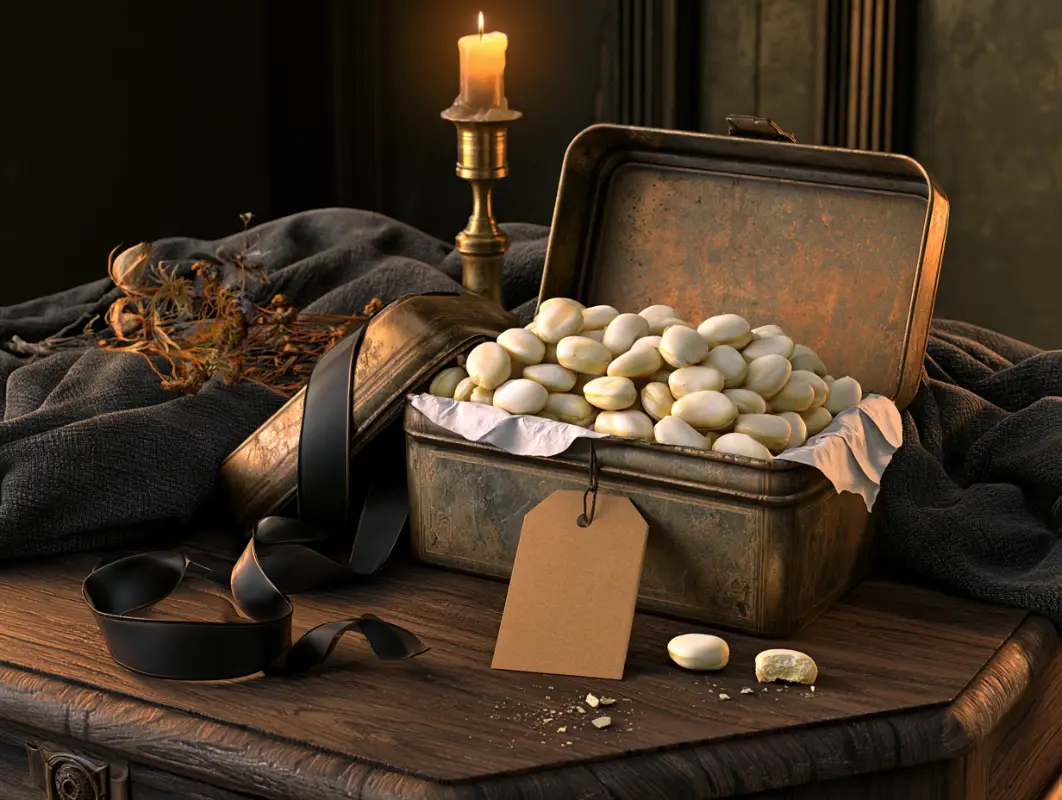
Tin, room temperature, two weeks. Airtight, parchment between layers. They improve for the first two or three days as the interior equilibrates.
Do not refrigerate. The fridge dries them and you lose the chew entirely.
They post well. Small, sturdy, no fragile edges, and they arrive intact if you pack them snugly in a rigid tin. Of the three Italian bakes in this cluster, these are the ones to send.
Bake mid-October. Between the 15th and the 20th covers you for both 31 October and the first two days of November. This is one of very few Halloween bakes where making it early is actively better.
Raw dough freezes 6 weeks, either as a block or pre-shaped. Bake shaped-frozen beans straight from the freezer with 2 extra minutes.
Gifting: a small tin, parchment, a black ribbon, and a card explaining what they are called. The name is the gift.
Nutritional Benefits
Two cups of almonds across forty cookies means vitamin E, magnesium and monounsaturated fat are doing most of the structural work here — the NIH Office of Dietary Supplements puts almonds among the best food sources of the first of those. There is only two tablespoons of butter in the entire batch and three-quarters of a cup of sugar — restrained by cookie standards.
At roughly 62 calories each they are a small, dense, almond-led sweet rather than a sugar delivery system, which is a reasonable thing to have in a tin during a week that is otherwise made of candy.
Frequently Asked Questions
What are fave dei morti?
Small chewy almond cookies shaped like broad beans, baked across Italy for All Saints’ Day on 1 November and All Souls’ Day on 2 November. The name means “beans of the dead” and refers to an old association between broad beans and the dead that predates Christianity in Italy. Regional versions vary in spice, shape and colour.
What is alkermes and what can I use instead?
Alkermes is a crimson Italian liqueur flavoured with spices and rose water, used to colour traditional pastries including the pink version of these cookies. It is hard to buy in the US. It is also a liqueur, so this recipe does not use it. Use 2 teaspoons of reduced beetroot juice plus 1/2 teaspoon of rose water instead — which is both the practical substitute and the alcohol-free one — the colour is close and the rose water covers the flavour difference.
Why are they called beans of the dead?
Broad beans were associated with the dead in Roman funerary tradition, and the association carried into Italian All Souls’ Day custom, where beans were distributed as alms and eaten in commemoration. At some point the bean was replaced by a small almond sweet shaped like one. Exactly when that swap happened is not well documented.
How long do fave dei morti keep?
Two weeks in an airtight tin at room temperature, and they are better after two or three days. Do not refrigerate — it dries them out and you lose the chew.
Can I make these gluten free?
Yes, easily. Replace the half cup of all-purpose flour with 1/3 cup additional almond flour plus 2 teaspoons of cornstarch. They spread very slightly more, so leave a little extra space on the tray.
Why did mine come out hard?
Almost certainly overbaked. These need 12 to 15 minutes and they must come out while the tops still look pale and faintly underdone — they firm a great deal as they cool. If the tops took any colour in the oven, they went too long.
Can I rescue an overbaked batch?
Partly, yes. Put a slice of apple in the tin with them overnight and seal it. The cookies draw moisture from the apple and soften noticeably by morning. Take the apple out after twelve hours or they go the other way. It is a rescue rather than a fix, but it works, and it is worth doing before you write off a tray.
Pairing and Serving Ideas
These want something to dunk into. In most Italian households that is a small cup of strong black coffee, and that is what actually happens rather than what gets written down. For a 1 November table, chilled mosto cotto stirred into sparkling water, or Sicilian almond milk over ice, does the sweet-and-dark job without a bottle. Mosto cotto — also sold as saba — is grape must cooked to a syrup before it can ferment, so it is not a wine and carries no alcohol.
The plate to build, if you are making more than one of these:
- Ossi dei morti — crisp, cracked, bone-shaped
- Fave dei morti — this one, soft and chewy
- Pan dei morti — dark, spiced, fruited
Three shapes, three colours, three textures, one tradition. On a dark plate with a candle it needs no other styling at all.
On a Halloween dessert table rather than a November one, put them next to something rich — halva bark or dark chocolate — because on their own they read as restrained next to more theatrical sweets.
Watch: Rolling the Beans
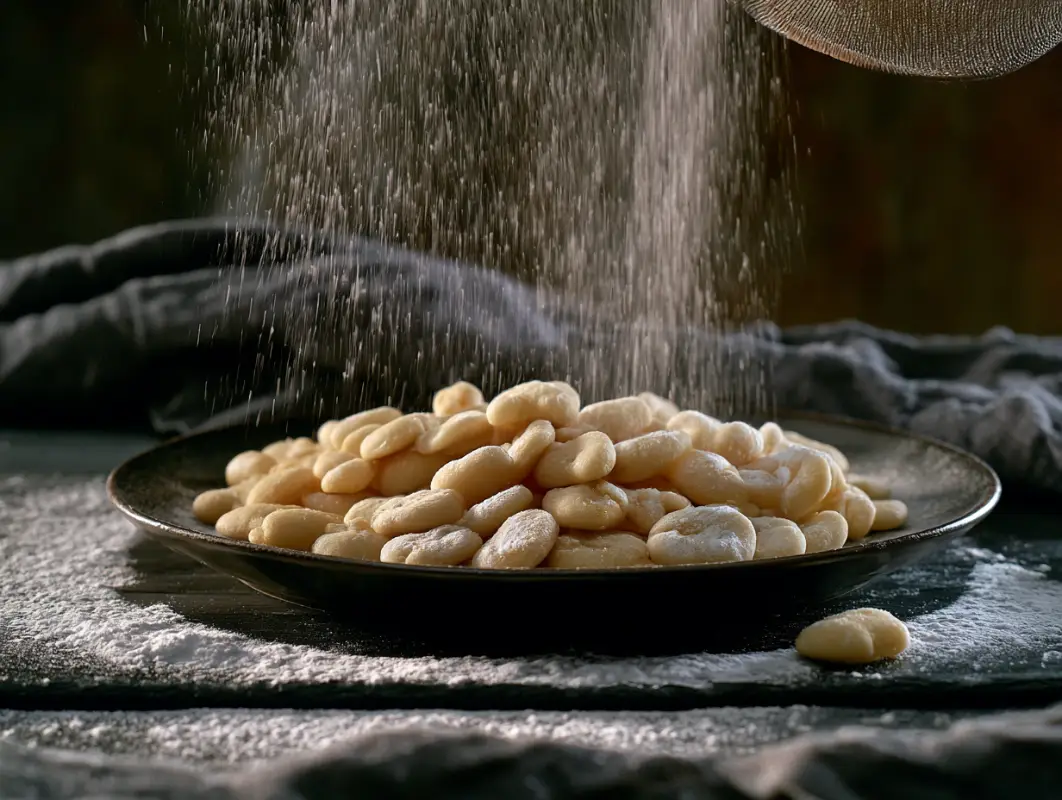
The dough coming together in one bowl, a teaspoon-sized piece rolled into an oval and pressed flat between thumb and finger, a tray filling up with uneven beans, then the baked cookies dusted heavily with icing sugar.
Ready to Bake the Strangest Good Cookie You’ll Make This Year?
One bowl, twenty-five minutes, and fifteen in the oven — with the timer set short, because the cookies that look finished are the ones that went too far.
Bake them mid-October, keep them in a tin, and have something on hand for the first of November when everyone else’s Halloween content has stopped working.