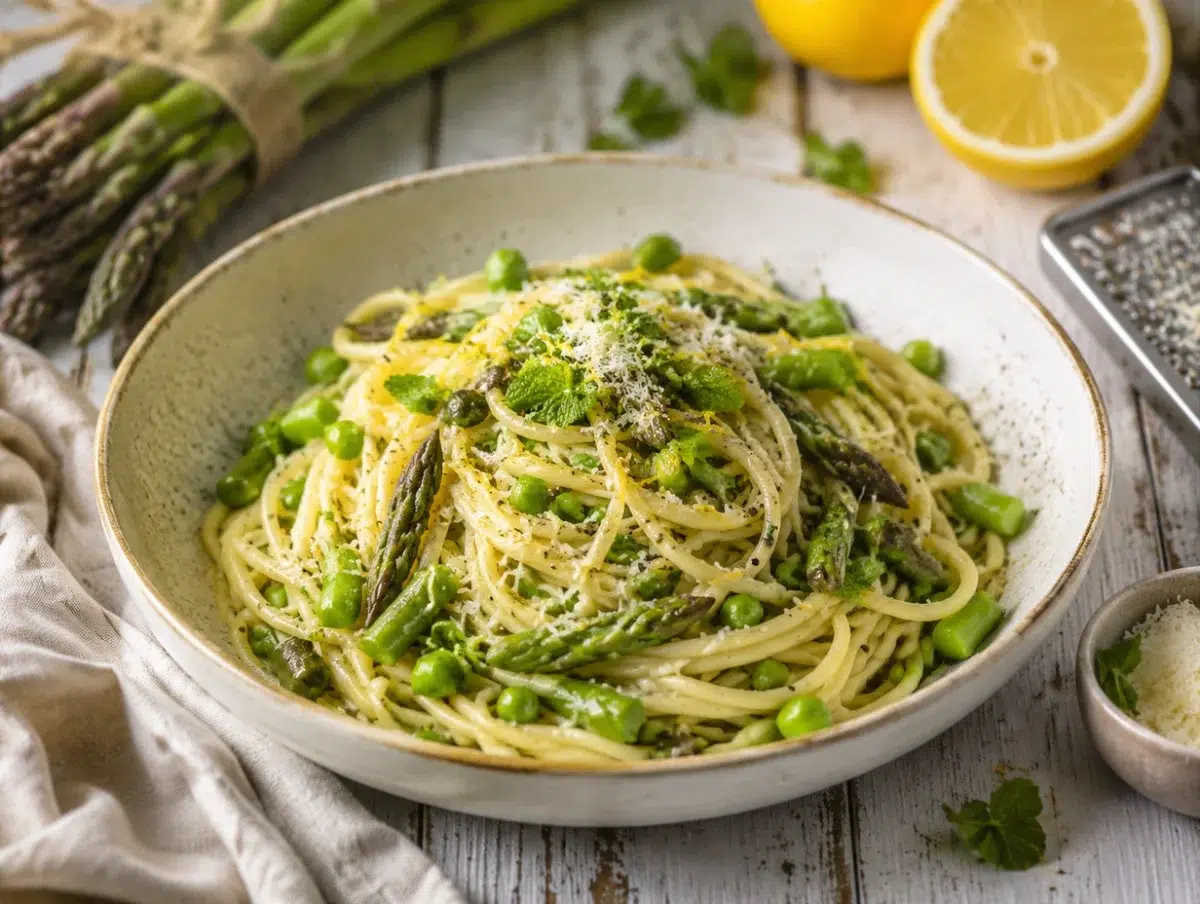
April 2023. I’m trying to impress my in-laws with a “simple spring dinner.” The asparagus is overcooked to the consistency of wet string, the peas have turned army-green, and there’s so much lemon juice the pasta could strip paint. My mother-in-law Helen — bless her — takes a bite, pauses, and says “it’s… lemony.” Which is, like, the polite Southern way of saying “this is inedible.”
Eleven batches later (one per weekend, because honestly I needed to heal between attempts), I finally nailed this lemon asparagus pasta with peas. And the secret wasn’t what I expected — it was about when you add things, not just what you add. Here are the five tricks that changed everything.
Table of Contents
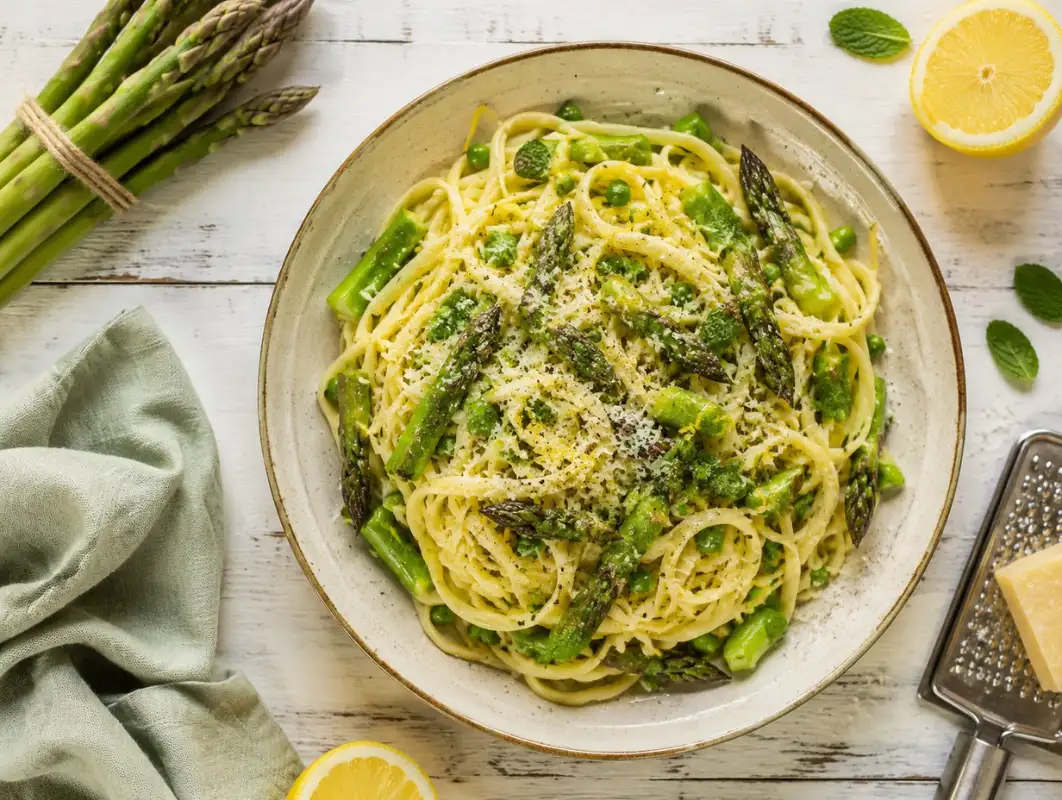
Lemon Asparagus Pasta with Peas
Ingredients
Method
- 1. Bring a large pot of generously salted water to a boil. Cook pasta until 1-2 minutes before al dente per package directions. Reserve 1.5 cups pasta water before draining.
- 2. While pasta cooks, heat 3 tablespoons olive oil in a large deep skillet over medium-high heat.
- 3. Add asparagus pieces and a pinch of salt. Sauté for 2-3 minutes until bright green and crisp-tender with light char.
- 4. Add minced garlic and red pepper flakes. Cook 30 seconds until fragrant.
- 5. Add frozen peas and cook 1-2 minutes until warmed through.
- 6. Using tongs, transfer pasta directly into the skillet. Add 1 cup reserved pasta water.
- 7. Toss vigorously over medium heat for 1-2 minutes until sauce is glossy and clings to pasta. Add more pasta water as needed.
- 8. Remove from heat. Add lemon juice, lemon zest, grated Parmesan, and torn basil.
- 9. Toss to combine. Season with salt and pepper to taste.
- 10. Serve immediately with additional Parmesan shavings, a drizzle of olive oil, and extra lemon zest.
Notes
Why This Lemon Asparagus Pasta Actually Works
The Science Behind Bright Spring Flavor
Here’s the thing nobody explains about lemon asparagus pasta with peas — the lemon has to go in at the end. Not at the beginning, not in the middle, at the absolute end. Citric acid is volatile — Harold McGee covers this in On Food and Cooking — and heat destroys the fresh, bright flavor compounds in lemon juice. Cook your lemon and you get flat, one-dimensional sourness. Add it off-heat and you get that electric brightness that makes people close their eyes and go “mmmm.”
The pasta water trick is food science too — that starchy, salty water contains amylose molecules that emulsify with olive oil and Parmesan to create a silky sauce without any cream. Kenji López-Alt calls this “the most important ingredient in Italian cooking.” He’s not wrong.
A Spring Pasta for Every Occasion
This spring pasta recipe is one of those beautiful multipurpose dishes. Fancy Tuesday dinner? Check. Quick lunch with leftovers from the fridge? Yep. Potluck contribution that makes you look like you have your life together? Absolutely. It shares DNA with our pasta primavera but goes in a brighter, more lemony direction that I think is just — wait, am I playing favorites with my own recipes? Maybe.
Essential Ingredients for Lemon Asparagus Pasta with Peas
The Ingredient Lineup (Quality Matters)
Asparagus: Get the thin spears if you can — they cook faster and have a more delicate sweetness that works better in this spring vegetable pasta. Look for tight, closed tips and firm stems. If the tips are floppy and open, that asparagus has seen better days (much like me on a Monday morning). Cut them on a diagonal bias into 1-inch pieces — this maximizes surface area for the Maillard reaction during sautéing. Our Mediterranean sheet pan salmon uses the same diagonal-cut technique for vegetables and it makes a visible difference.
Peas: Frozen peas are genuinely better than fresh for this recipe. Yes, I will fight about this. Frozen peas are blanched and flash-frozen within hours of harvest, locking in sugars before they convert to starch. Fresh peas from the grocery store have been sitting around losing sweetness for days. My neighbor Janet — she’s a retired agricultural scientist and will corner you at the mailbox to discuss plant biology — confirmed this. Unless you’re shelling peas literally from your garden, go frozen. For more fresh vegetable inspiration, our Mediterranean white bean salad uses the same philosophy of celebrating simple seasonal ingredients.
Lemons: You need both zest AND juice. Do not skip the zest. The essential oils in lemon zest contain limonene, which has a completely different (deeper, more aromatic) flavor than the juice’s citric acid. Together they create layers of lemon flavor instead of just acidic punch. Always use fresh lemons — bottled juice is sad.
Ingredient Comparison & Selection Guide
| Ingredient | Best Choice | Budget Alternative | Avoid |
| Asparagus | Thin spears, tight tips, bright green | Medium spears (trim woody ends well) | Thick woody spears or canned |
| Peas | Frozen petite peas (flash-frozen) | Fresh garden peas (shelled same-day) | Canned peas (mushy, gray) |
| Pasta | Bronze-die cut spaghetti or linguine | Any good-quality dried pasta | Pre-cooked or instant pasta |
| Parmesan | Parmigiano-Reggiano wedge, freshly grated | Grana Padano (similar, less expensive) | Pre-grated Parmesan in a shaker |
| Lemons | Heavy, thin-skinned, organic (for zest) | Conventional lemons (wash well before zesting) | Bottled lemon juice |
| Olive Oil | Extra virgin, cold-pressed, peppery finish | Good store-brand EVOO | Light or refined olive oil |
The Game-Changing Secret: Pasta Water Alchemy
Here’s trick number one that nobody told me: underfill your pasta pot. Use about 3 quarts of water instead of the usual 6 for a pound of pasta. Less water = more concentrated starch = thicker, silkier sauce when you toss it with olive oil and Parmesan. Rainbow Plant Life’s Nisha Vora taught me this trick and it’s a genuine game-changer for any lemon pasta or asparagus pea recipe.
USA substitutions: Can’t find thin asparagus? Cut thick spears into thin diagonal slices. No Parmigiano-Reggiano? Grana Padano or even Pecorino work — though Pecorino is saltier, so dial back the salt. For a vegan option, nutritional yeast gives a surprisingly similar umami punch.
The Foolproof Method for Perfect Spring Pasta
Preparation: Setting Up for Speed
This lemon asparagus pasta with peas comes together fast once you start cooking, so you absolutely must have everything prepped before you touch that stove. Trim your asparagus — snap off the woody ends (they’ll break naturally at the right spot, it’s weirdly satisfying) and cut into 1-inch diagonal pieces. Zest your lemons before juicing them. (I’ve made the mistake of juicing first and then trying to zest a sad, deflated lemon carcass. Not fun.) Mince your garlic — 4 cloves, because garlic is not an area where moderation serves anyone.
Start your pasta water boiling early. Salt it generously — it should taste like the sea. And I mean the Mediterranean Sea, not the Dead Sea. There’s a line. Cook your spaghetti or linguine until 1-2 minutes before the package says it’s done. This is important because the pasta finishes cooking in the pan with the sauce, absorbing all those flavors. The technique mirrors what makes our rigatoni pomodoro so perfectly saucy — that final simmer in the pan is everything.
The Cooking Method (25 Minutes, Start to Finish)
Step 1 (3 minutes): Heat 3 tablespoons extra virgin olive oil in a large, deep skillet over medium-high heat. Add asparagus pieces and a pinch of salt. Sauté for 2-3 minutes until bright green and crisp-tender — you want a little char on the edges. Do NOT overcook these. Soggy asparagus is a crime against vegetables and I will not be an accomplice.
Step 2 (1 minute): Add minced garlic and red pepper flakes (if using). Cook for 30 seconds until fragrant. The second you smell it, it’s done — garlic goes from perfect to burnt in about 10 seconds. Our pesto pasta with grilled chicken uses this same “nose knows” approach to garlic timing.
[Image 7: Tossing pasta with vegetables and pasta water]
Step 3 (2 minutes): Add frozen peas and cook for 1-2 minutes. They just need to thaw and warm through. Don’t baby them — high heat, quick cook, keep that bright green color.
Step 4 (3 minutes): Using tongs, transfer the almost-al-dente pasta directly from the pot into the skillet. Add 1 cup of that gorgeous starchy pasta water. Toss vigorously — this is where the magic happens. The starch emulsifies with the oil to create a glossy, clingy sauce.
Step 5 (1 minute): Remove from heat. OFF THE HEAT. Now add the lemon juice, lemon zest, grated Parmesan, a drizzle of olive oil, and torn fresh basil. Toss everything together. The residual heat melts the cheese into the sauce without the lemon losing its sparkle. If it’s too thick, splash in more pasta water. If it’s too thin… wait 30 seconds, the starch will tighten up. For a similarly bright, lemony Mediterranean dish, our classic Greek lemon rice pilafi uses the same off-heat citrus technique.
Step 6 (serving): Plate using tongs for that fancy restaurant twirl, top with more Parmesan shavings, a crack of black pepper, and honestly? A little more lemon zest. Because why not.
Creative Variations That’ll Keep This Exciting
Flavor Twist Variations
Once you’ve got the basic lemon asparagus pasta with peas down, it becomes a canvas. I went through what my partner calls my “pasta phase” (June 2023 through… well, it’s still going) where I tried a new variation every week. Some were revelations. One involved capers and anchovies and my apartment smelled like a pier for three days. We don’t talk about that one.
| Variation | Key Changes | Flavor Profile | Best For |
| Creamy Lemon | Add 2 tbsp cream cheese or mascarpone off-heat | Rich, velvety, indulgent | Date night dinner |
| Mediterranean Garden | Add sun-dried tomatoes + olives + capers | Briny, tangy, complex | Dinner party entertaining |
| Garlic Butter | Swap olive oil for butter, double the garlic | Nutty, rich, garlicky | Comfort food cravings |
| Pesto Swirl | Stir in 2 tbsp basil pesto at the end | Herby, nutty, aromatic | Quick weeknight meal |
| Lemon Primavera | Add zucchini, cherry tomatoes, and artichoke hearts | Garden-fresh, abundant, colorful | Spring/summer gatherings |
Dietary Modifications
Vegan: Skip the Parmesan, use nutritional yeast (3 tbsp) and a squeeze of extra lemon. Gluten-free: Use brown rice or chickpea pasta — Banza is great and holds up well. Paleo: Try spiralized zucchini or hearts of palm noodles.
Budget-friendly: Regular pasta + frozen peas + one bunch of asparagus = under $8 for 4 servings.
Kid-friendly: Use penne instead (easier to stab with a fork), toss peas into the pasta water to hide them in the sauce. My cousin’s kid calls this “green spaghetti” and actually eats it, which counts as a miracle.
Our Italian chicken casserole uses a similar kid-friendly approach of sneaking vegetables into cheesy pasta. For a heartier meal, pair this vegetarian pasta with our creamy tomato basil chicken for protein.
Storage & Meal Prep That Actually Works
How to Store Lemon Asparagus Pasta
Real talk: this easy weeknight pasta is best fresh. The asparagus softens, the peas lose their pop, and the lemon fades. But leftovers are still genuinely good if you handle them right.
Room temperature: 2 hours max.
Refrigerator: Up to 3 days in an airtight container.
Freezer: I honestly don’t recommend freezing this one — the vegetables get mushy and the lemon flavor goes flat. Make fresh batches instead; it only takes 25 minutes. Reheating: Add a splash of water or broth to the pan, heat on medium-low, and squeeze in fresh lemon juice before serving. That fresh lemon revives everything.
This light pasta dish stores well alongside our Mediterranean chickpea power bowl for a varied meal prep rotation.
Smart Serving Strategies
For meal prep, cook the pasta 2 minutes underdone and store sauce and pasta separately if possible — it reheats much better that way. The asparagus pea recipe works beautifully for “prep the components” style meal prep: blanch the asparagus, cook the pasta, store separately, and assemble fresh each day. Our Mediterranean shrimp white bean salad follows the same component-storage approach and stays fresh all week.
Serving Quantity Guide
| Occasion | Serving Size | Serves As | Best Pairing |
| Weeknight dinner | Generous bowl (2 cups) | Main course | Simple green salad |
| Dinner party starter | Small plate (1 cup) | First course | Crusty bread + olive oil |
| Meal prep lunch | Medium container (1.5 cups) | Standalone meal | Add grilled chicken for protein |
| Potluck contribution | Large platter | Side dish or main | Sparkling water with lemon |
Nutritional Benefits of This Spring Pasta
I’m not a dietitian (that’s my important caveat), but I’ve looked into the nutritional profile of this lemon asparagus pasta with peas and it’s legitimately impressive for a pasta dish. Asparagus is a folate powerhouse — one cup provides about 67% of your daily needs, which is critical for cell division and DNA synthesis. Peas add plant protein and fiber that most pasta dishes sorely lack. And the olive oil provides monounsaturated fats that are the cornerstone of the Mediterranean diet.
The glycemic impact is moderate — the fiber from vegetables and the fat from olive oil and cheese slow down carbohydrate absorption, so you don’t get that post-pasta crash. Which is important because nobody wants to be the person falling asleep at their desk at 2 PM after a pasta lunch. For another nutrient-dense Mediterranean meal, our grilled chicken Mediterranean bowl delivers a similar balance of protein, healthy fats, and vegetables.
Macronutrient Profile (Per Serving — ¼ of Recipe)
| Nutrient | Amount | % Daily Value* |
| Calories | 385 kcal | 19% |
| Total Fat | 14g | 18% |
| Saturated Fat | 3.5g | 18% |
| Protein | 14g | 28% |
| Carbohydrates | 52g | 19% |
| Fiber | 6g | 21% |
| Sugar | 5g | — |
*Based on 2,000 calorie diet
Key Micronutrients (Per Serving)
| Micronutrient | Amount | Health Benefit |
| Folate (B9) | 168mcg (from asparagus) | Cell division, DNA synthesis |
| Vitamin K | 52mcg (from peas + asparagus) | Bone health, blood clotting |
| Vitamin C | 22mg (from lemon + peas) | Immune support, iron absorption |
| Iron | 3.1mg (from pasta + vegetables) | Oxygen transport, energy production |
| Potassium | 380mg (from asparagus + peas) | Heart health, blood pressure regulation |
| Fiber | 6g (from vegetables + pasta) | Digestive health, blood sugar management |
Frequently Asked Questions
Can I use frozen asparagus in lemon asparagus pasta with peas?
I don’t recommend it — frozen asparagus gets mushy when thawed and won’t give you that crisp-tender bite that makes this spring pasta recipe special. Fresh asparagus is widely available year-round, though it’s cheapest and best in spring. If you must use frozen, don’t thaw it first; add it frozen to the hot pan for a quick sear.
What pasta shape works best for this lemon pasta?
Spaghetti and linguine are my favorites — the long strands catch the light sauce beautifully. But orecchiette, penne, and farfalle also work well. For the most authentic pasta al limone experience, choose bronze-die cut pasta with a rough texture that grabs the sauce.
How do I prevent the asparagus from getting mushy?
High heat and short cooking time are your friends. Sauté asparagus for only 2-3 minutes over medium-high heat — it should still have a slight snap when you bite it. The residual heat from tossing with hot pasta finishes the cooking. Don’t cover the pan, as trapped steam will make the asparagus soggy.
Can I make this easy weeknight pasta ahead of time?
You can prep all ingredients ahead: trim and cut asparagus, mince garlic, zest and juice lemons, grate cheese. Store these separately and the dish comes together in under 10 minutes of active cooking. For full meal prep, cook and store pasta and vegetables separately and assemble fresh.
What protein goes best with this vegetarian pasta?
Grilled chicken, pan-seared shrimp, or seared salmon are all excellent additions. For plant-based protein, white beans or crispy chickpeas work wonderfully. Add protein after the pasta is assembled to keep textures distinct.
Is lemon asparagus pasta with peas healthy?
Yes — it’s high in fiber, folate, and vitamin C from the vegetables, provides plant-based iron from the pasta, and uses heart-healthy olive oil as its fat base. At approximately 385 calories per generous serving with 14g of protein, it’s a well-balanced Mediterranean pasta dish.
Can I make this healthy pasta recipe without Parmesan?
For dairy-free or vegan versions, substitute 3 tablespoons of nutritional yeast for the Parmesan. It provides a similar umami, nutty flavor. You can also use Pecorino if you’re not avoiding dairy but just don’t have Parmesan on hand.
Pairing & Serving Ideas for a Complete Meal
Building a Spring Dinner Spread
This lemon asparagus pasta with peas is substantial enough as a main, but if you’re hosting, a few strategic sides elevate it to restaurant-level territory. A simple arugula salad with shaved Parmesan and lemon vinaigrette is the obvious choice — same flavor family, different texture. Crusty bread with good olive oil for mopping up the sauce is non-negotiable in my house. And for a complete Mediterranean spread, our gemista Greek stuffed peppers makes a stunning companion dish.
| Pairing Category | Options | Why It Works |
| Beverages (no alcohol) | Sparkling water with lemon, iced mint tea, elderflower lemonade, sparkling apple cider | Bubbles and brightness complement citrus |
| Salads | Arugula-Parmesan, fattoush, simple cucumber-tomato | Peppery or acidic greens balance pasta richness |
| Bread | Crusty sourdough, focaccia, garlic bread, warm pita | Sauce mopping is essential |
| Protein Sides | Grilled chicken, pan-seared shrimp, crispy chickpeas, white beans | Turns light pasta into hearty meal |
Occasion-Specific Suggestions
Easter dinner: This spring vegetable pasta screams spring celebration — serve it family-style in a big shallow bowl with extra Parmesan and herbs. Weeknight rotation: Keep asparagus and frozen peas stocked and you can make this light pasta dish any night. Al fresco dining: Serve it room temperature as a pasta salad — add a splash of extra lemon and olive oil before serving. Follow up with our limoncello tiramisu or a lighter option like our Greek yogurt panna cotta for a perfect Mediterranean finish.
Go Make Spring Happen in Your Kitchen
Make It Yours
The beauty of this lemon asparagus pasta with peas is how forgiving and adaptable it is. Swap peas for fava beans. Add cherry tomatoes. Throw in some artichoke hearts. Use mint instead of basil — or both, because life is short and herbs are cheap. The framework is simple: seasonal vegetables + lemon + pasta water + good Parmesan = spring on a plate. Our lahanorizo Greek cabbage rice follows the same philosophy of transforming humble ingredients into something extraordinary.
Share Your Spring Pasta Story
If you make this spring pasta recipe, I genuienly want to hear about it. Did you try the creamy variation? Add shrimp? Accidentally use the whole lemon including seeds? (Don’t worry, I’ve done that too.) Tag us, comment below, or send a carrier pigeon — I’m not picky about communication methods. And if you’re looking for more Mediterranean weeknight inspiration, our crustless spinach and feta quiche is another 30-minute wonder, or dive into our Mediterranean hummus breakfast bowl for a breakfast-for-dinner situation.
Now go boil some water. Spring is waiting.