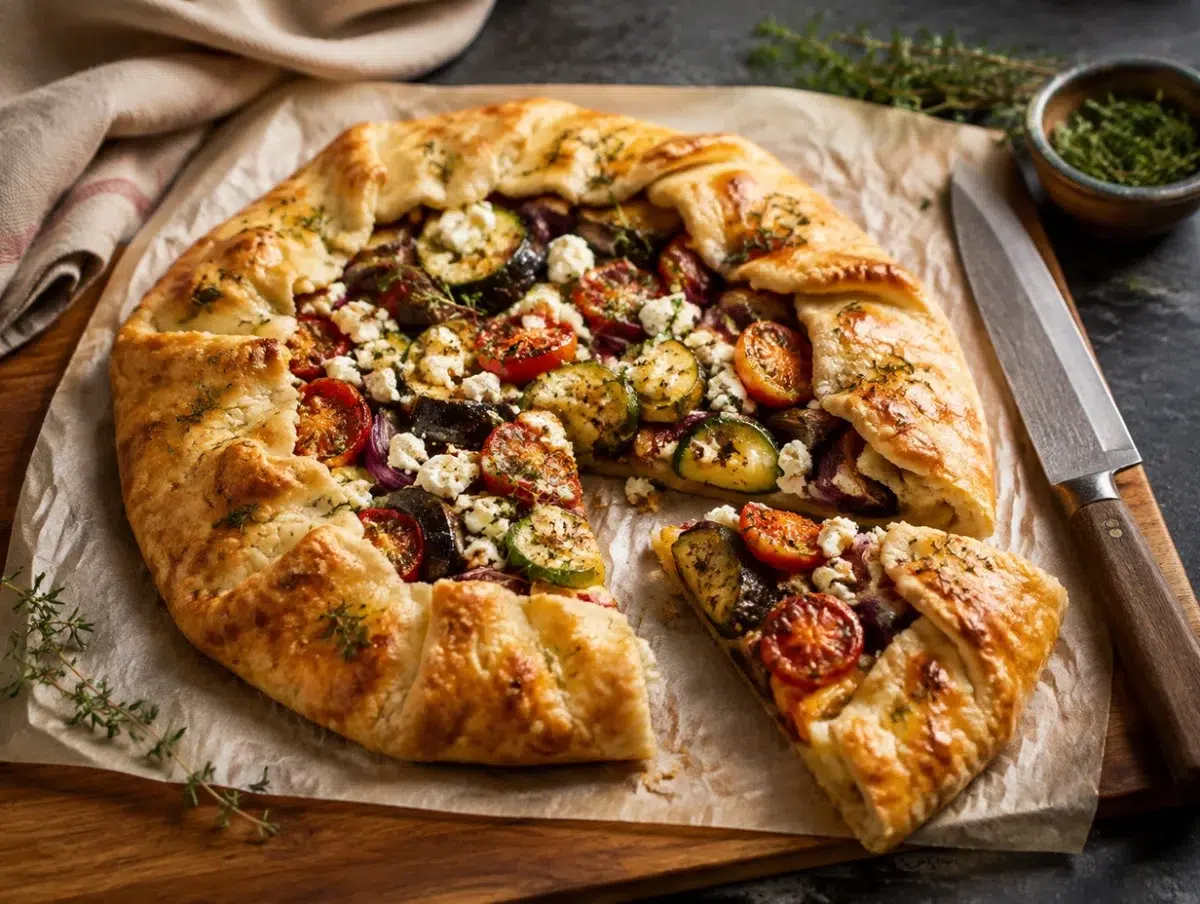
October 2023, and I’m standing in my kitchen at 4:47 PM — I remember the exact time because my smoke alarm went off and my phone logged it (thanks, smart home) — staring at what was supposed to be an impressive Mediterranean roasted vegetable galette for my book club.
The crust had cracked into what looked like a geological fault line, the filling was basically vegetable soup, and my friend Margot was arriving in forty minutes. After 9 increasingly desperate attempts over the following weeks (and one genuinely helpful phone call with a pastry chef cousin in Lyon), I finally cracked the code. Literally cracked — ha. Here are the 5 secrets that took me from pastry disaster to the person who now gets asked to bring the galette.
Table of Contents
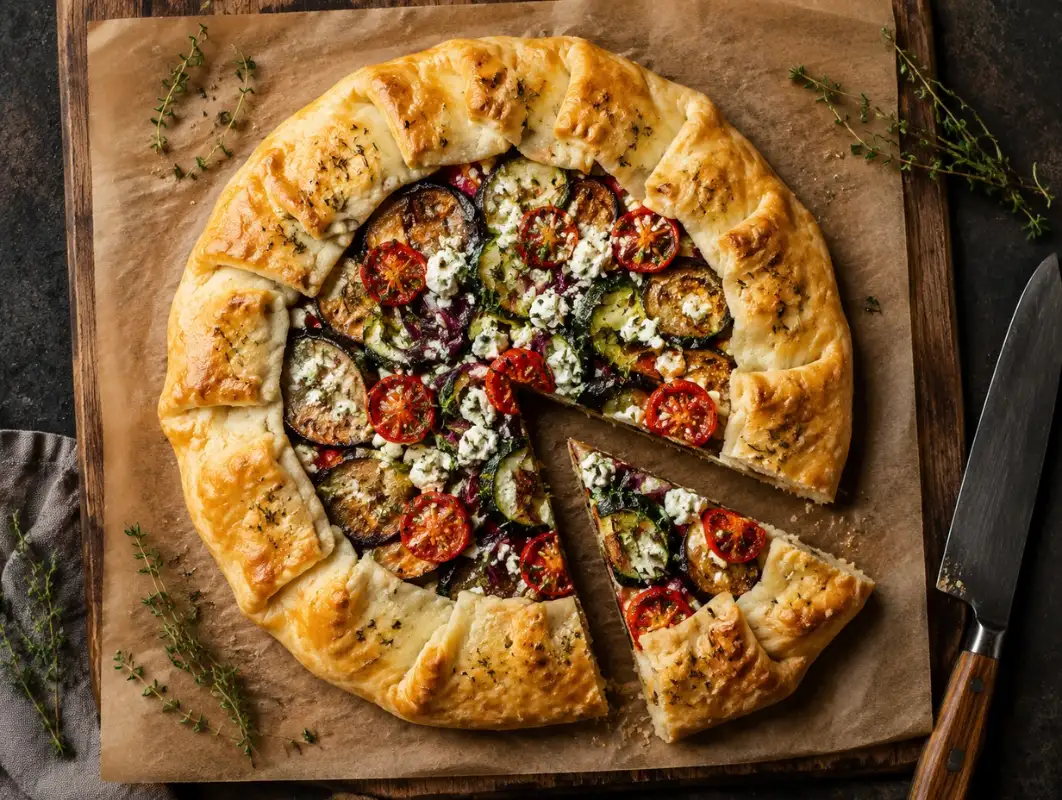
Mediterranean roasted vegetable galette
Ingredients
Method
- 1. Make the dough: Whisk flour and salt. Cut in cold butter until pea-sized and dime-sized pieces remain. Drizzle in ice water, toss with fork until dough just holds together. Press into a disk, wrap, and chill 1 hour (or overnight).
- 2. Roast vegetables: Preheat to 425°F. Salt eggplant 15 minutes, rinse, pat dry. Toss all vegetables with olive oil, oregano, garlic, salt, pepper. Roast 15-20 minutes on a sheet pan. Tilt pan to drain excess liquid.
- 3. Roll and fill: Reduce oven to 400°F. Roll dough on floured parchment to a 12-13″ circle. Spread goat cheese in center leaving 2-inch border. Top with drained roasted vegetables.
- 4. Fold and brush: Fold dough edges up and over filling, overlapping pleats. Brush with egg wash.
- 5. Bake: 35-40 minutes at 400°F until deep golden brown. Rotate pan halfway through.
- 6. Finish: Cool 10 minutes on pan. Garnish with fresh basil and a drizzle of olive oil. Slice into wedges.
Notes
Why This Mediterranean Roasted Vegetable Galette Works
The Science Behind a Flaky, Sturdy Crust
Here’s the thing about a savory galette that makes it secretly genius: it’s designed to look imperfect. Unlike a tart or a pie, the free-form crust actually works in your favor because the rustic folds create uneven layers of butter and flour, and each of those layers generates steam in the oven — which is exactly what creates flakiness. Harold McGee’s On Food and Cooking explains that the key to puff and flake in pastry is keeping butter in distinct cold pieces within the dough.
When those pieces hit oven heat, the water in the butter vaporizes and physically lifts the dough layers apart. That’s why every pastry chef will tell you the same thing: cold butter, cold water, don’t overwork it. The roasted vegetables, meanwhile, undergo Maillard browning and caramelization in the oven — the same reactions that make our Greek sheet pan chicken dinner taste so incredible — concentrating their flavors into something genuinely complex.
A Dish That Works Everywhere
What I love about this Mediterranean roasted vegetable galette is that it refuses to be pinned down. Elegant enough for a dinner party appetizer. Substantial enough for a weeknight main with a side salad. Gorgeous enough for a potluck where you want people to think you’re fancier than you are. (Which, honestly, is most potlucks.) It travels well, it’s beautiful at room temperature, and it photographs like a dream — which, in 2026, matters more than I’d like to admit.
Essential Ingredients for the Perfect Vegetable Galette
Your Ingredient Lineup
The beauty of a galette is simplicity — you’re working with maybe a dozen ingredients total, and each one earns its place. I’ve become, like, unreasonably picky about my zucchini selection. My partner once watched me reject four zucchinis at the farmers’ market and said “you’re not choosing a wedding venue” which — fair. But bad zucchini means watery galette, and watery galette means soggy crust, and soggy crust means crying. So. Here’s what you need:
| Ingredient | Quantity | Quality Spec | USA Substitute |
| All-purpose flour | 1 1/4 cups (160g) | Unbleached, measured by weight | King Arthur or Bob’s Red Mill |
| Unsalted butter | 1/2 cup (115g), cold | European-style (82%+ fat) | Kerrygold or Plugrá |
| Zucchini | 1 medium | Firm, under 8 inches, no soft spots | Yellow squash |
| Eggplant | 1 small/medium | Globe variety, heavy for its size | Japanese eggplant |
| Red bell pepper | 1 large | Deep red, heavy, no wrinkles | Orange/yellow pepper |
| Cherry tomatoes | 1 cup | Vine-ripened, firm, sweet | Grape tomatoes |
| Goat cheese (chèvre) | 4 oz (115g) | Soft, fresh, creamy log | Ricotta + pinch of lemon |
| Red onion | 1 small | Mild, sweet, tight layers | Sweet Vidalia onion |
| Fresh herbs (basil, thyme) | 1/4 cup + sprigs | Fresh, vibrant green, aromatic | Dried herbs at 1:3 ratio |
The Game-Changing Secret (This Changed Everything)
Okay, this is the single biggest thing that transformed my galette from disaster to showpiece: pre-roast your vegetables AND drain them.
I know — it sounds like an extra step nobody wants.
But Mediterranean vegetables are full of water (zucchini is literally 95% water), and if you dump them raw onto pastry dough, you’re basically making a steam bath for your crust.
What I do now: roast the vegetables at 425°F for 15-20 minutes, then tilt the baking sheet and let the liquid drain off for 5 minutes onto a towel. Kenji López-Alt talks about this same moisture management principle with pizza toppings, and it applies perfectly here. Also — and this is a strong opinion but I will die on this hill — you absolutely must use ice water for the dough, not just cold water. Ice water.
The temperature difference matters more than you’d think. Same concept behind the flaky crust in our spinach and feta pastries. And while we’re talking cheese, I prefer goat cheese to ricotta here because it has more tang and better structure — similar flavor philosophy to our whipped feta and garlic confit dip which also relies on that salty-tangy balance.
The Foolproof Method for a Mediterranean Roasted Vegetable Galette
Preparation: Making the Dough (15 Minutes + Chill)
First things first — wait, actually, let me back up. Before you even touch the flour, cut your butter into 1/2-inch cubes and throw it back in the freezer for 10 minutes. Seriously. This is non-negotiable.
Step 1: Whisk 1 1/4 cups flour and 1/2 teaspoon salt in a large bowl. Add frozen butter cubes and use a pastry cutter (or your fingers if you’re feeling old-school) to work the butter into the flour until you have pieces ranging from pea-sized to flat, dime-sized. The variety is important — those bigger pieces create the dramatic flaky layers.
Step 2: Drizzle 3-4 tablespoons of ice water over the mixture, one tablespoon at a time, tossing with a fork between additions. Stop when the dough just barely holds together when squeezed. It should look shaggy and crumbly — not smooth. If it looks smooth, you’ve gone too far. (Ask me how I learned this. The answer is: painfully.)
Step 3: Turn the dough out onto plastic wrap, press it into a flat disk, wrap tightly, and refrigerate for at least 1 hour. I usually make the dough the night before — it actually improves with an overnight rest as the flour fully hydrates. This is similar to the make-ahead approach we use for our garlic Parmesan focaccia dough.
Main Method: Roasting, Assembly, and Baking
Step 4 (0:00-0:20): Preheat oven to 425°F. Slice eggplant into 1/4-inch rounds, salt both sides, and let sit 15 minutes (same technique from our gemista Greek stuffed peppers and tomatoes). Meanwhile, slice zucchini into 1/4-inch rounds, quarter the bell pepper, slice the onion into thin wedges. Toss everything — including halved cherry tomatoes — with 2 tablespoons olive oil, dried oregano, salt, and pepper. Spread on a sheet pan in a single layer. Roast 15-20 minutes until edges are golden. Tilt the pan and drain liquid.
Step 5 (0:20-0:25): Roll the chilled dough on floured parchment paper into a rough 12-13 inch circle. Don’t stress about perfection — this is a galette, not a geometry exam. Transfer the parchment (with dough on it) to a baking sheet.
Step 6 (0:25-0:30): Spread crumbled goat cheese over the center of the dough, leaving a 2-inch border. This cheese layer does double duty: flavor AND a moisture barrier between wet vegetables and the crust. Arrange drained roasted vegetables over the cheese. Fold the border up and over the filling, overlapping the pleats as you go around. Brush the folded edges with egg wash (1 egg beaten with 1 tablespoon water).
Step 7 (0:30-1:10): Bake at 400°F (reduce from 425°F) for 35-40 minutes until the crust is deep golden brown and the filling is bubbly. Pro tip: Rotate the pan halfway through for even browning. Let the galette cool on the pan for 10 minutes before slicing — this lets the juices settle and keeps the bottom from getting soggy. Garnish with fresh basil and a drizzle of good olive oil.
Creative Variations for Your Vegetable Galette
Flavor Variations Table
One of the best things about a savory galette is that it’s essentially a blank canvas with a really, really good frame. Here are the varitions that have worked best in my kitchen:
| Variation | Key Change | Best For | Difficulty |
| Provençal | Herbes de Provence + Dijon | French dinner parties | Easy |
| Greek | Feta + olives + oregano | Mezze nights, potlucks | Easy |
| Roasted Root | Sweet potato + beet + parsnip | Fall/winter entertaining | Medium |
| Caramelized Onion | Slow-cooked onion + Gruyère | Cozy weeknight dinners | Medium |
| Pesto Garden | Pesto base + asparagus + peas | Spring celebrations | Easy |
Dietary Modifications and Budget Tips
For vegan, replace butter with cold coconut oil or vegan butter, and swap goat cheese for cashew ricotta (blend soaked cashews with lemon juice and nutritional yeast). The crust won’t be quite as flaky, but it’s still really good.
Gluten-free? Use a 1:1 GF flour blend with added xanthan gum, and freeze the dough 30 minutes before rolling.
Paleo folks can try an almond flour crust — it’s denser but pairs beautifully with roasted vegetables.
For kid-friendly plates, make mini galettes using a 6-inch circle of dough each, and let kids pick their own toppings — same approach that works brilliantly for our lemon chickpea patties with yogurt sauce.
Budget tip: store-bought pie dough works surprisingly well in a pinch. Use whatever vegetables are on sale — this galette is incredibly forgiving. Serve alongside our Mediterranean white bean salad for a complete, wallet-friendly meal.
Storage and Meal Prep Strategies
How to Store Your Vegetable Galette
Real talk: this Mediterranean roasted vegetable galette is at its absolute best within the first 2-3 hours of baking, when the crust is still crackling-crisp. But it’s still delicious after that — honestly, I think lukewarm galette might be one of the most underrated foods on earth.
Room temperature: Up to 4 hours on a serving board, loosely covered. The crust softens slightly but the flavor stays beautiful.
Refrigerator: Wrapped tightly or in an airtight container for 3-4 days. Reheat at 375°F for 10-12 minutes to re-crisp the crust. Do not microwave unless you enjoy sad, floppy pastry.
Freezer: Baked galette freezes for up to 2 months. Wrap in plastic, then foil. Reheat from frozen at 375°F for 20-25 minutes. Or freeze the assembled (unbaked) galette for up to 1 month and bake directly from frozen — add 10-15 minutes to bake time. Same prep-ahead philosophy we use for our Mediterranean chicken meatballs.
Meal Pairing Suggestions
| Accompaniment | Why It Works | Effort Level |
| Simple green salad | Bright, acidic contrast to rich crust | Low — 5 min |
| Roasted tomato soup | Warm comfort, dip the crust in | Medium — 30 min |
| Lemon rice | Light, citrusy, Mediterranean | Medium — 20 min |
| Hummus + crudités | Creamy protein alongside pastry | Low — store-bought |
| White bean salad | Hearty, makes it a complete meal | Low — 10 min |
Personally, my favorite combo is this galette with our classic Greek lemon rice pilafi on the side and a pile of peppery arugula — it’s the kind of meal that looks like a spread from a food magazine but takes well under an hour.
Nutritional Benefits of a Roasted Vegetable Galette
Quick disclaimer: I’m not a dietitian, so please treat this as general information rather than medical advice. That said, I genuinely feel good about eating this Mediterranean roasted vegetable galette regularly, and here’s why:
Macronutrient Breakdown (Per Serving — 1 slice, 1/6 of galette)
| Macronutrient | Amount | % Daily Value |
| Calories | 310 kcal | 15% |
| Protein | 9g | 18% |
| Total Fat | 19g | 24% |
| Saturated Fat | 11g | 55% |
| Carbohydrates | 28g | 10% |
| Dietary Fiber | 4g | 14% |
| Sugar | 6g | — |
Key Micronutrients
| Micronutrient | Amount | Key Benefit |
| Vitamin C | 68 mg (76% DV) | Immunity, skin health |
| Vitamin A | 195 mcg (22% DV) | Vision, immune function |
| Potassium | 480 mg (10% DV) | Blood pressure regulation |
| Calcium | 95 mg (7% DV) | Bone health |
| Iron | 2.4 mg (13% DV) | Oxygen transport, energy |
| Folate | 62 mcg (16% DV) | Cell growth, DNA synthesis |
The combination of colorful roasted vegetables provides a wide antioxidant spectrum — lycopene from tomatoes, anthocyanins from eggplant, beta-carotene from peppers. The moderate glycemic load from the whole-food vegetable filling helps balance the refined flour in the crust. For more antioxidant-rich Mediterranean meals, our Mediterranean chickpea power bowl is a wonderful weekday companion.
Frequently Asked Questions About Vegetable Galettes
What exactly is a galette and how is it different from a pie or tart?
A galette is a rustic, free-form pastry that’s shaped by hand on a baking sheet — no special pans needed. Unlike a pie (which has a top and bottom crust) or a tart (which requires a tart pan), a savory galette is folded up around its filling, leaving the center exposed. This makes it significantly easier to make and gives it that gorgeous, imperfect look that’s become so popular in Mediterranean cooking.
How do I prevent my vegetable galette from getting a soggy bottom?
Three critical steps: first, pre-roast and thoroughly drain your vegetables to remove excess moisture. Second, spread a layer of goat cheese or ricotta on the dough before adding vegetables — this creates a moisture barrier. Third, bake on the lowest oven rack to ensure the bottom crust gets direct heat. Dusting the dough with a tablespoon of semolina flour before adding the filling also helps absorb any remaining liquid.
Can I make the galette dough ahead of time?
Absolutely — in fact, galette dough improves with time. You can refrigerate the wrapped disk for up to 3 days, or freeze it for up to 1 month. The overnight rest allows the flour to fully hydrate and the gluten to relax, making it easier to roll out and resulting in a more tender crust.
Can I use store-bought pie crust for a Mediterranean roasted vegetable galette?
Yes! Store-bought pie crust is a perfectly acceptable shortcut. The main limitation is size — most commercial crusts are smaller, so you may need to make two smaller galettes or use less filling. Thaw completely before unrolling, and handle gently to avoid tearing.
What vegetables work best in a savory galette?
The classic Mediterranean roasted vegetable galette uses zucchini, eggplant, bell peppers, tomatoes, and red onion. But you can use almost any roasted vegetable: asparagus, mushrooms, butternut squash, sweet potato, beets, fennel, or artichoke hearts. The key is pre-roasting to remove moisture and cutting vegetables to similar thickness for even cooking.
Is a vegetable galette healthy?
A roasted vegetable galette provides a good mix of fiber, vitamins, and antioxidants from the vegetables, plus protein and calcium from the cheese. The crust does contain butter, so it’s not low-fat, but one slice provides a moderate 310 calories with 4g of fiber. It’s a well-balanced meal when paired with a simple green salad.
How do I know when the galette is done baking?
Look for a deep golden-brown crust (not just light gold — really commit to the browning), bubbly filling, and a bottom that sounds hollow when you gently tap the baking sheet. The internal temperature should reach about 375°F if you use an instant-read thermometer on the crust.
Pairing and Serving Ideas
Complete Meal Combinations
| Meal Type | Galette + | Side | Beverage |
| Dinner Party | Arugula salad | Roasted garlic bread | Sparkling water + lemon |
| Weeknight Dinner | Tomato soup | Crusty bread | Fresh lemonade |
| Brunch | Green salad | Soft-boiled eggs | Iced mint tea |
| Picnic / Potluck | Mediterranean bean salad | Fruit + cheese board | Sparkling grape juice |
Occasion Suggestions and Beverage Pairings
For dinner parties, I slice the galette into elegant wedges and serve it on a wooden board alongside a pool of balsamic reduction — it looks impossibly fancy. For casual weeknights, pair it with our creamy tomato basil chicken for a satisfying two-course meal. For brunch, the galette shines alongside our Greek feta egg bake and a big bowl of fruit. And for truly special occasions, set up a galette bar with multiple varieties alongside our Mediterranean hummus breakfast bowl — your guests will lose their minds.
Make This Vegetable Galette Your Own
Experiment Fearlessly
If there’s one lesson from my 9 test batches (and that one very memorable smoke alarm incident), it’s that a Mediterranean roasted vegetable galette wants to be personalized. Maybe you add a smear of pesto underneath the cheese. Maybe you go absolutely wild with za’atar on the crust. Maybe you spiral the vegetables into a pattern so pretty it belongs in an art gallery — or maybe you just pile them on haphazardly because it’s Tuesday and you’re tired and that’s also fine. The template is yours. Use the same experimental spirit we encourage in our pasta primavera — start with what works, then make it your signature.
Join the Community
I genuinely want to see your galettes — the picture-perfect spiraled masterpieces AND the ones that look like they survived an earthquake. (Been there. Solidarity.) Share your creations in the comments, tag us on social media, or just quietly pat yourself on the back for making something beautiful from flour and vegetables. And if you’re looking to round out your Mediterranean baking rotation, our Mediterranean sheet pan salmon and pesto pasta with grilled chicken are both phenomenal options that pair gorgeously with a leftover slice of galette the next day.