I’m going to be honest with you — the first time I made ful medames, it was a disaster. Like, genuinely inedible. It was March of 2019 and my friend Hana (who grew up in Cairo) had been raving about this Egyptian fava bean stew for months. So naturally, I thought, how hard can stewed beans be? Very hard, apparently, when you forget to soak them overnight and then try to speed things up with a rolling boil that turns your kitchen into a foam volcano.
After 14 test batches — yes, fourteen — I finally cracked the code on this legendary Egyptian breakfast recipe. And honestly? The secrets I learned along the way changed how I think about every bean dish I’ve made since. Today I’m sharing every single one of those secrets with you, so you can skip straight to the creamy, cumin-scented, olive-oil-drizzled perfection that is a proper ful medames.
Table of Contents
Ful Medames (Egyptian fava bean stew)
Ingredients
Method
- 1. If using dried beans: Sort, rinse, and soak beans overnight (8-12 hours) in cold water with 1/2 tsp baking soda. Drain and rinse thoroughly.
- 2. Heat olive oil in a heavy pot over medium heat. Cook onion until golden (5 min). Add garlic and cook 30 seconds.
- 3. Add cumin and cayenne; toast 30 seconds. Add tomatoes and cook 2-3 minutes until softened.
- 4. Add fava beans and water. Bring to a gentle simmer. Cook: 45-60 min for dried beans or 10-15 min for canned beans.
- 5. Mash about half the beans with a potato masher or wooden spoon. Season with salt, pepper, and lemon juice.
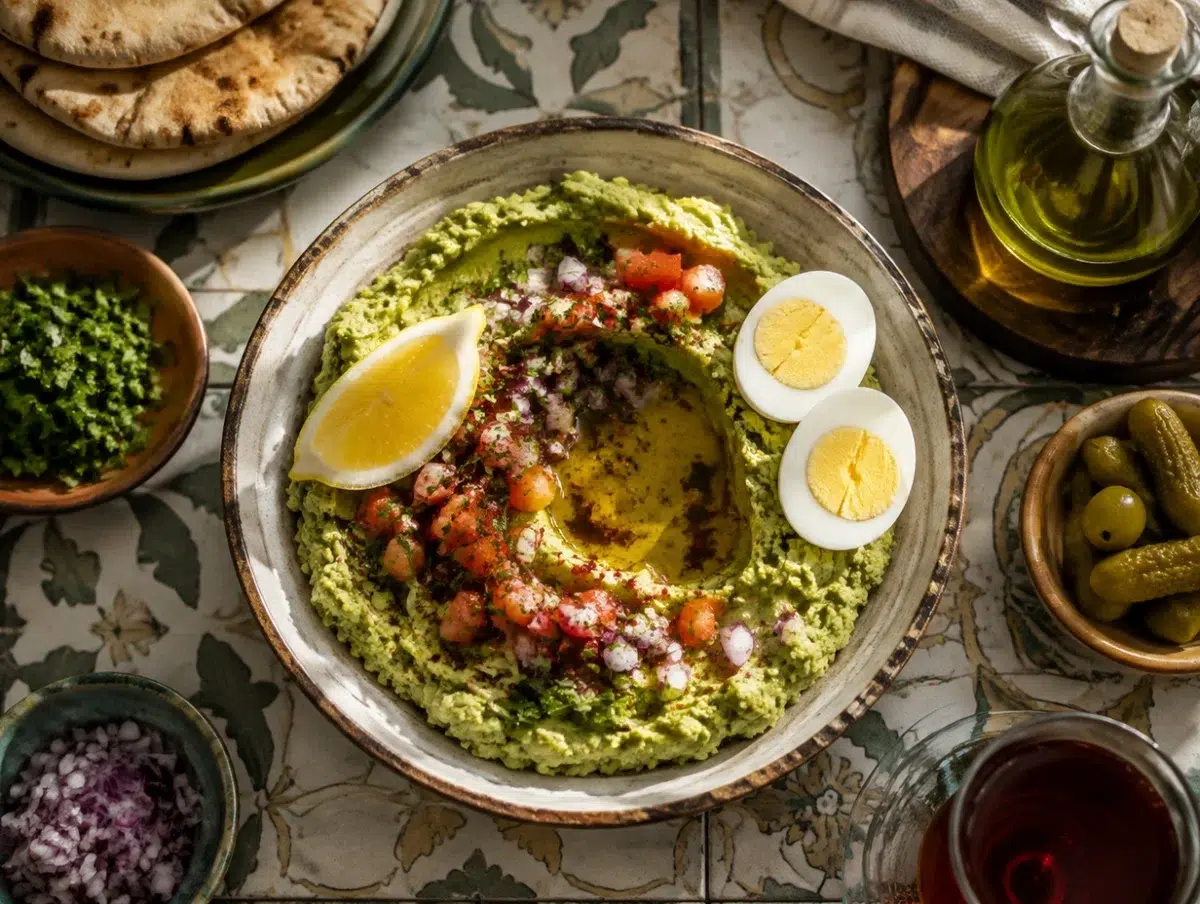
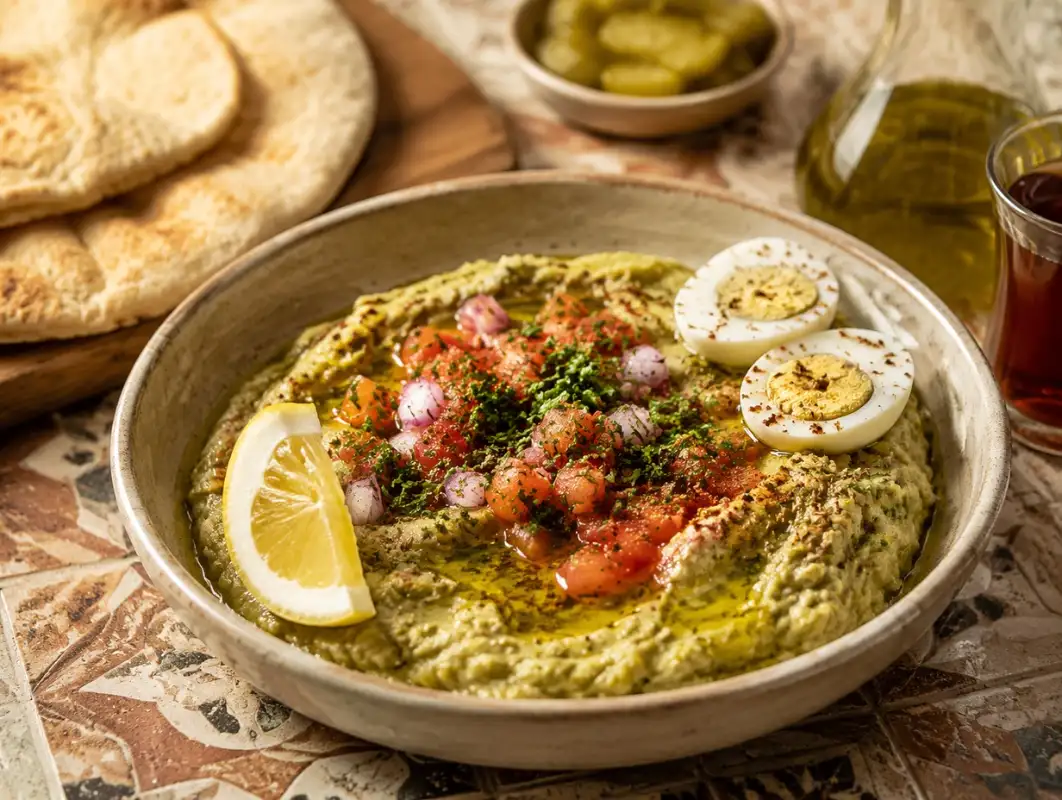
- 6. Rest 5 minutes. Serve in bowls topped with olive oil, tomatoes, parsley, onion, cumin, and lemon wedges.
Notes
Why This Ful Medames Recipe Works
The Food Science Behind the Creaminess
Here’s the thing most recipes won’t tell you: the creaminess in a great fava bean stew isn’t just about mashing. It’s about starch gelatinization. When you simmer fava beans low and slow, the starch granules absorb water, swell, and eventually burst — releasing amylose molecules that thicken the cooking liquid into something almost velvety. As food scientist Harold McGee explains, this is the same principle that makes a good risotto creamy.
The partial mashing technique (crushing about half the beans while leaving the rest intact) creates a dual-texture experience that is, in my extremely strong opinion, the only correct way to serve ful medames. The cumin isn’t just there for flavor either — it contains compounds that may aid in digestion of complex legume proteins, which is honestly the kind of multitasking I wish I was capable of on a Monday morning. This foul mudammas method produces results that rival what you’d find at any Egyptian breakfast cart.
When to Serve This Egyptian National Dish
Ful medames is traditionally an Egyptian breakfast recipe, but let me tell you — limiting this dish to mornings would be a crime. It works beautifully for weekend brunch spreads (pair it with our Mediterranean hummus breakfast bowl for an absolute feast), weeknight dinners when you need something nourishing in under 30 minutes, Ramadan suhoor meals where you need sustained energy, or meal prep situations where you want something that actually gets better overnight. The broad beans recipe below is the kind of thing that feeds a crowd without breaking the bank — and that’s exactly why it’s been Egypt’s national dish for literally thousands of years.
Essential Ingredients for Authentic Ful Medames
Your Ingredients Lineup
The beautiful thing about this Egyptian fava bean stew is its simplicity — but that means every ingredient has to pull its weight. Quality matters here more than in almost any other dish I make (and I will absolutely die on that hill). Here’s what you need and exactly what to look for:
| Ingredient | Quantity | Quality Spec | USA Substitute |
| Fava beans (dried) | 2 cups (400g) | Small Egyptian variety preferred | Canned fava beans (2 x 15oz cans) |
| Extra virgin olive oil | 3-4 tablespoons | Cold-pressed, peppery finish | Any quality EVOO |
| Fresh lemons | 2 large | Juicy, thin-skinned | Bottled lemon juice (3 tbsp) |
| Garlic cloves | 4-5 cloves | Fresh, firm, no green sprouts | 1.5 tsp jarred minced garlic |
| Ground cumin | 1.5 teaspoons | Freshly ground or recently opened | Store-bought ground cumin |
| Tomatoes | 2 medium, diced | Ripe Roma or vine-ripened | 1 cup diced canned tomatoes |
| Fresh parsley | 1/2 cup, chopped | Flat-leaf Italian parsley | 2 tbsp dried parsley (less ideal) |
The Game-Changing Secret Ingredient
Okay here’s where things get interesting. My friend Hana’s grandmother — the woman who basically taught me everything about this foul mudammas through aggressive FaceTime sessions — swears by adding a tiny pinch of baking soda to the soaking water. Like, maybe 1/2 teaspoon per cup of dried beans. And honestly? It’s the single biggest difference between “decent” and “transcendent” ful medames.
The alkaline environment breaks down the pectin in the bean skins, which means they cook faster AND get creamier. Kenji López-Alt has written about this phenomenon with chickpeas, and the same principle applies here with fava beans. If you enjoy legume-based dishes, you’ll notice similar techniques in our lemon chickpea patties with yogurt sauce where getting the bean texture right is everything. Also — and I know this is a controversial take — I prefer red onion over white for the topping. The sweetness just works better with the earthy fava beans. (My neighbor Dave thinks I’m wrong about this. Dave is incorrect.)
The Foolproof Method for Ful Medames
Preparation: Setting Yourself Up for Success
Before you even think about turning on the stove — wait, actually, let me back up. The night before you want to make this, you need to sort and soak your dried fava beans. I know, I know, planning ahead is annoying. But trust me on this one.
Step 1: Sort through your dried fava beans and remove any pebbles or sad-looking beans. (I once bit down on a tiny rock in a batch of foul mudammas and my dentist still gives me a look every six months.)
Step 2: Rinse the beans well under cold water. Place in a large bowl — they’ll expand significantly, so use something bigger than you think you need.
Step 3: Cover with cold water by at least 3 inches. Add 1/2 teaspoon of baking soda per cup of beans. Stir to dissolve. Let soak for 8-12 hours (overnight is perfect). The beans will roughly double in size.
Step 4: Drain and rinse the beans thoroughly — you want all that baking soda gone. This step matters more than people realize.
If you’re using canned fava beans (no judgment, honestly — our Mediterranean white bean salad uses canned beans to great effect), just drain and rinse them. Skip straight to the cooking section.
Main Method: Cooking Your Egyptian Fava Bean Stew
Step 1 (0:00-0:03): Heat 2 tablespoons of extra virgin olive oil in a heavy-bottomed pot or Dutch oven over medium heat. Cast iron works beautifully here. Add 1 diced onion and cook until softened and just golden, about 5 minutes. Stir in 4-5 minced garlic cloves and cook for 30 seconds until fragrant — do NOT let the garlic brown or it turns bitter. (I learned this the hard way during batch #3.)
Step 2 (0:03-0:05): Add 1.5 teaspoons of ground cumin and a pinch of cayenne or Aleppo pepper flakes. Toast the spices for 30 seconds. You should smell warm, nutty aromatics — this is the Maillard reaction beginning, and it’s everything. Add diced tomatoes and cook 2-3 minutes until they break down slightly.
Step 3 (0:05-0:20): Add the drained fava beans with enough water to cover by about 1 inch (roughly 2-3 cups). Bring to a gentle simmer — not a boil. This is where patience becomes your best friend. If you’re using dried pre-soaked beans, simmer for 45-60 minutes until completely tender. For canned fava beans, simmer just 10-15 minutes to let everything meld together. If you’ve made our Mediterranean shrimp and white bean salad, you know how important it is to let beans absorb surrounding flavors.
Step 4 (0:20-0:23): This is the magic step — the partial mash. Using a potato masher or the back of a large wooden spoon, crush about half the beans against the side of the pot. Leave the rest whole. Season generously with salt, black pepper, and the juice of 1-2 lemons.
Step 5 (0:23-0:25): Pro tip: Let the ful medames rest off heat for 5 minutes before serving. It thickens as it sits, and the flavors intensify. Honestly this is the hardest part because the smell is incredible and you just want to eat it immediately.
Creative Variations of Ful Medames
Classic Variations Table
One of the things I love most about this fava bean stew is how every household, every country, every cook puts their own spin on it. Here are some of my tested variations (um, remember those 14 batches?):
| Variation | Key Change | Best For | Difficulty |
| Lebanese-Style | Add chickpeas + tahini drizzle | Extra protein, creamier dip | Easy |
| Yemeni-Spiced | Zhug (spicy herb paste) topping | Heat lovers, adventurous eaters | Medium |
| Alexandrian | Tomato sauce base, more garlic | Tomato fans, saucier texture | Easy |
| Breakfast Bowl | Topped with boiled/fried eggs | Full breakfast, extra protein | Easy |
| Loaded Mediterranean | Feta, olives, pickled turnips | Party appetizer, sharing | Easy |
Dietary Modifications
The great news is that ful medames is naturally vegan and gluten-free in its base form — which honestly makes my life so much easier when I’m cooking for my sister’s family (she went plant-based in 2021 and hasn’t looked back).
For a paleo-friendly version, skip any bread accompaniment and serve over roasted sweet potato halves instead — similar to what we do with our chickpea stuffed sweet potatoes.
For a kid-friendly version (because yes, my niece initially called this “yucky brown mush”), reduce the cumin by half, skip the chili entirely, and serve with warm pita cut into fun shapes. She now asks for it every Saturday, which I consider my greatest culinary achievement.
On a tight budget? Dried fava beans cost pennies per serving, making this Middle Eastern breakfast one of the most economical meals you can prepare. Serve it alongside our zucchini chickpea fritters for a filling meal that costs less than a fancy coffee.
Storage & Meal Prep Strategies
How to Store Ful Medames Properly
Good news: this Egyptian fava bean stew is a meal prepper’s dream. Honestly, it’s one of the few dishes that I think tastes better the next day because the flavors continue to develop as it sits. Here’s exactly how to handle storage:
Room temperature: Up to 2 hours after cooking. Do not leave ful medames sitting out longer than this — I know, I know, your Egyptian grandmother probably left it out all morning, but food safety is food safety.
Refrigerator: Transfer to an airtight container and store for up to 4-5 days. The stew will thicken considerably in the fridge — just add a splash of water and a drizzle of olive oil when reheating.
Freezer: Freeze in portion-sized containers for up to 3 months. Let thaw overnight in the fridge, then reheat on the stovetop. The texture holds up remarkably well, which makes this Egyptian breakfast recipe ideal for meal prep. This is similar to how we store leftover Mediterranean chicken meatballs — portioned and ready to reheat.
Perfect Pairing Suggestions
| Accompaniment | Why It Works | Prep Time |
| Warm pita bread | Scooping vehicle, soft vs. creamy contrast | 2 min (warmed) |
| Boiled or fried eggs | Protein boost, rich yolk meets earthy beans | 5-10 min |
| Pickled turnips/cucumbers | Acidity cuts richness, adds crunch | 0 min (store-bought) |
| Tahini sauce | Nutty creaminess, extra healthy fats | 2 min |
| Fresh veggie platter | Brightness, crunch, added nutrition | 5 min |
For a complete weekend brunch setup, I love serving ful medames alongside our Greek feta egg bake — the combination is basically a Mediterranean breakfast paradise.
Nutritional Benefits of Ful Medames
I want to be clear upfront: I’m not a dietitian and this isn’t medical advice. But holy cow (wait, holy bean?), the nutritional profile of this Egyptian fava bean stew is legitimately impressive. Fava beans are one of those rare ingredients that somehow manage to be both filling and nutritionally dense without tasting like a punishment.
Macronutrient Breakdown (Per Serving, ~1.5 cups)
| Macronutrient | Amount | % Daily Value |
| Calories | 310 kcal | 15% |
| Protein | 16g | 32% |
| Total Fat | 12g | 15% |
| Saturated Fat | 2g | 10% |
| Carbohydrates | 36g | 13% |
| Dietary Fiber | 10g | 36% |
| Sugar | 3g | — |
Key Micronutrients
| Micronutrient | Amount | Key Benefit |
| Folate (B9) | 177 mcg (44% DV) | Cell growth, fetal development |
| Iron | 3.2 mg (18% DV) | Oxygen transport, energy |
| Manganese | 0.6 mg (26% DV) | Bone health, metabolism |
| Potassium | 456 mg (10% DV) | Blood pressure regulation |
| Magnesium | 57 mg (14% DV) | Muscle function, relaxation |
| Copper | 0.4 mg (44% DV) | Immune function, collagen |
This fava bean stew has a relatively low glycemic index (around 40) thanks to the high fiber and protein content, making it a solid option for blood sugar management. The soluble fiber in fava beans may also help lower cholesterol levels. If you’re building a high-protein plant-based meal plan, pair this with our Mediterranean chickpea power bowl for variety throughout the week.
Frequently Asked Questions About Ful Medames
What is ful medames and where does it originate?
Ful medames (also spelled foul mudammas) is an Egyptian fava bean stew that’s widely considered Egypt’s national dish. Evidence suggests that fava beans were consumed in Egypt as far back as the 12th Dynasty (around 1991-1786 BCE). The name literally translates to “stewed fava beans” in Arabic. Today, this Middle Eastern breakfast is enjoyed across the Levant, North Africa, and the Horn of Africa, with each region adding their own twist.
Can I use canned fava beans instead of dried for this recipe?
Absolutely! Canned fava beans are a perfectly valid shortcut and they’re what most home cooks outside of Egypt use. Just drain, rinse, and add them to the pot — your cooking time drops from over an hour to about 15 minutes. The texture won’t be quite as silky as slow-cooked dried fava beans, but honestly the difference is subtle and the convenience is massive.
Is ful medames vegan and gluten-free?
Yes to both! The base fava bean stew recipe is naturally vegan and gluten-free. The only thing to watch is your bread choice — make sure you grab gluten-free pita if that’s a concern. The toppings (olive oil, lemon, tomatoes, herbs) are all plant-based and gluten-free as well.
What are the best toppings for ful medames?
Classic toppings include a generous drizzle of extra virgin olive oil, fresh lemon juice, diced tomatoes, chopped flat-leaf parsley, sliced red or green onion, and a sprinkle of cumin. Popular additions include tahini sauce, boiled or fried eggs, pickled vegetables, diced cucumber, Aleppo pepper flakes, and crumbled feta cheese. The beauty of this dish is its customizablity — it’s basically a canvas for your favorite Mediterranean flavors.
How do you pronounce ful medames?
It’s pronounced “fool meh-DAH-mes” — and yes, the “ful” part sounds like the English word “fool.” The dish goes by many transliterated spellings including foul mudammas, foul moudammas, and ful madammes. Don’t stress about getting it exactly right — just enjoy the beans!
Can I freeze leftover ful medames?
Yes! Ful medames freezes beautifully for up to 3 months. Store in portion-sized airtight containers, let cool completely before freezing, and thaw overnight in the fridge before reheating on the stovetop with a splash of water. Add fresh toppings after reheating for best results.
What’s the difference between ful medames and hummus?
While both are popular Middle Eastern bean dishes, they use different legumes and techniques. Hummus is made from chickpeas blended into a smooth paste with tahini. Ful medames uses fava beans (broad beans) that are partially mashed into a chunky, stew-like consistency. The flavor profiles are also quite different — ful medames is earthier and more rustic, while hummus is nuttier and smoother.
Is ful medames healthy for weight loss?
This fava bean stew is an excellent choice for weight management. It’s high in fiber (10g per serving) and protein (16g per serving), both of which promote satiety. At around 310 calories per generous serving, it’s nutrient-dense without being calorie-heavy. The complex carbohydrates provide sustained energy rather than blood sugar spikes.
Pairing & Serving Ideas for Ful Medames
Complete Meal Combinations
| Meal Type | Ful Medames + | Side | Beverage |
| Quick Breakfast | Warm pita + boiled egg | Sliced cucumbers | Fresh mint tea |
| Weekend Brunch | Pita + fried egg + feta | Full veggie platter | Sparkling water w/ lemon |
| Weeknight Dinner | Rice + grilled veggies | Simple green salad | Iced hibiscus tea |
| Party Spread | Pita chips + crudités | Hummus, olives, cheese | Fresh lemonade |
Occasion-Based Serving Suggestions
For a show-stopping brunch, serve your ful medames in a shallow bowl with a dramatic swirl of olive oil, diced tomatoes scattered across the top, and warm garlic Parmesan focaccia torn into rustic pieces alongside. I also love pairing this with our Greek chicken gyros for a full Mediterranean feast that’ll have your guests thinking you’re running a restaurant. For casual gatherings, set up a “ful bar” with the stew in the center and bowls of toppings surrounding it — let people customize their own bowls. It’s the kind of interactive dining experiece that takes the pressure off you as the host.
Make This Egyptian Fava Bean Stew Your Own
Your Kitchen, Your Rules
Look, I’ve given you the method that works after those 14 painful test batches — but the real magic of ful medames is that it’s been a living, evolving dish for thousands of years. Every Egyptian grandmother, every street cart vendor, every home cook adds their own signature. Maybe yours involves an extra squeeze of lemon, or a shower of sumac, or even (dare I say) a spoonful of labneh on top.
Whatever makes your heart sing, do it. The beans don’t judge. Start with this recipe as your foundation, and then make it yours. Once you get confident with the basics, try incorporating flavors from our chicken shawarma crispy rice salad spice blend for an fusion twist that somehow just works.
Join the Conversation
I’d honestly love to hear how your ful medames turns out — the good, the bad, the accidentally-forgot-to-soak-the-beans. Drop a comment below with your version, tag us on social media, or just send good vibes into the universe for fava bean lovers everywhere. And if you’re looking for more Mediterranean breakfast inspiration to round out your rotation, make sure to check our grilled chicken Mediterranean bowl and our classic Greek lemon rice pilafi — both pair incredibly well with leftover ful medames. Now go forth and stew some beans. You’ve got this.