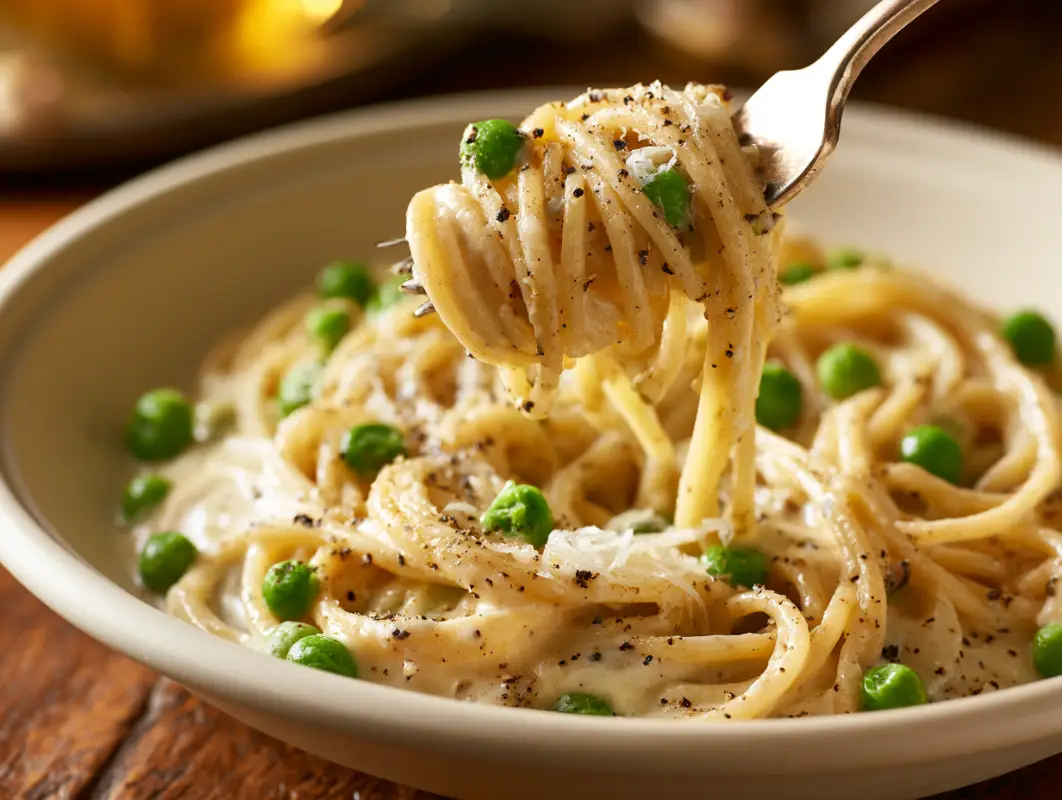
March 2024. I’m in my kitchen attempting cacio e pepe with spring peas for the eleventh time — yes, I was counting — and for the eleventh time, the Pecorino has seized into a sad, gluey clump stuck to my spaghetti like cheese-flavored cement. My partner Sam, who has watched me fail at this specific dish more than any other in my cooking career, walks in and goes, “so… scrambled cheese pasta again?”
Scrambled. Cheese. Pasta. That’s what he called it. And honestly? Fair. But twenty-one batches later — including a breakthrough at 2 AM after watching an Italian grandmother on YouTube — I finally cracked this notoriously finicky recipe. Here are six secrets to a silky cacio e pepe recipe that will never clump.
Table of Contents
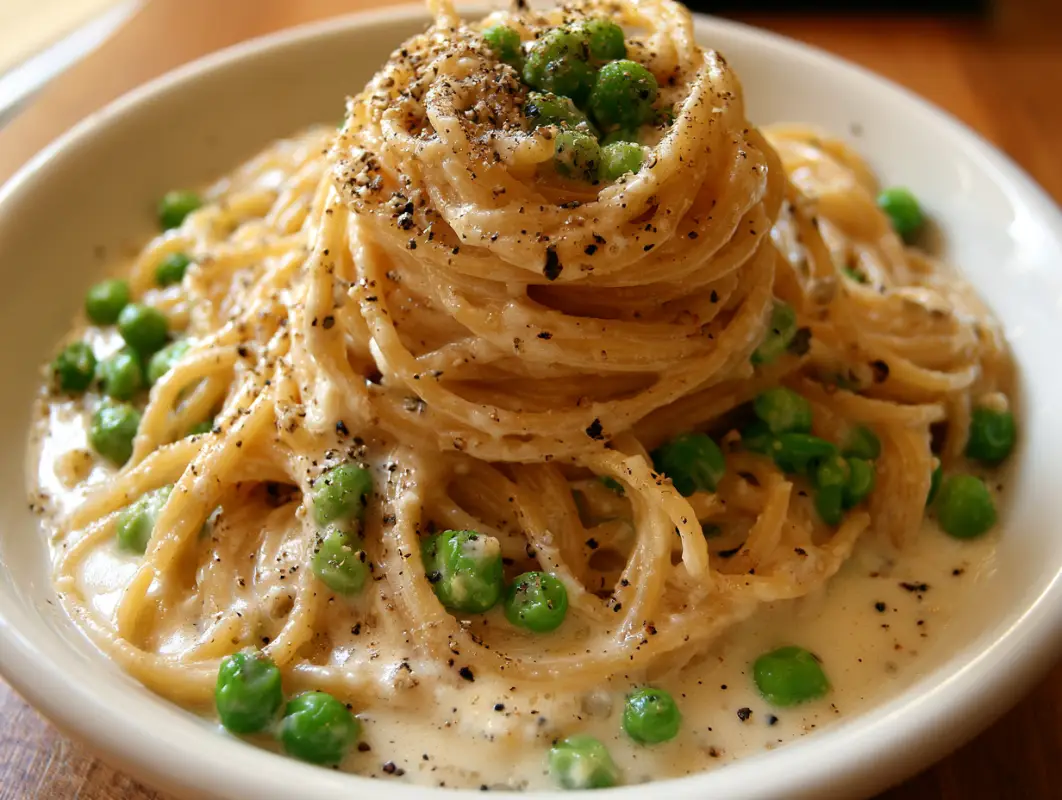
Cacio e Pepe with Spring Peas
Ingredients
Method
- 1. Bring a large pot of generously salted water to a boil. Cook spaghetti until 2 minutes before al dente (about 6-8 minutes depending on brand).
- 2. Add frozen peas to the pasta water during the last 2 minutes of cooking.
- 3. Reserve 2 cups of starchy pasta water. Drain pasta and peas.
- 4. While pasta cooks, melt butter with olive oil in a large skillet over medium heat. Add cracked pepper and toast 1-2 minutes until fragrant.
- 5. Add 1 cup reserved pasta water to the skillet. Simmer and reduce by half, about 2 minutes.
- 6. Add drained pasta and peas to the skillet. Toss over low heat for 30 seconds.
- 7. Remove from heat. Wait 30 seconds for the pan to cool slightly.
- 8. Add grated Pecorino (and Parmesan if using) in three additions, tossing vigorously between each. Add splashes of reserved pasta water as needed for a creamy, coating consistency.
- 9. Serve immediately in shallow bowls. Drizzle with olive oil, crack fresh pepper on top.
Notes
Why This Cacio e Pepe with Spring Peas Works
The Science of Emulsifying Cheese Into Pasta
Cacio e pepe is the most deceptively simple dish in Italian cooking — it’s literally cheese, pepper, and pasta. Three ingredients. And yet it’s famously the dish that destroys home cooks because the sauce relies on a fragile emulsion. Harold McGee explains it beautifully: when finely grated Pecorino Romano meets starchy pasta water at the right temperature (around 160-180°F), the milk proteins and fat in the cheese disperse into a smooth, creamy sauce. Too hot and the proteins tighten — that’s your clumpy cement. Too cool and nothing melts.
The spring peas aren’t just pretty garnish. They add natural sweetness that balances the sharp, salty Pecorino, and their starch contributes additional body to the sauce. Kenji López-Alt noted that adding starchy vegetables to cheese-based pasta sauces creates a more stable emulsion — the pea starch acts as a secondary thickener alongside the pasta water. It’s the same emulsification principle that makes our classic Greek lemon rice pilafi so impossibly creamy.
A Spring Twist on a Roman Classic
Traditional cacio e pepe is a year-round staple in Rome. But even Romans toss in seasonal vegetables when spring arrives — peas, fava beans, artichokes. This spring pea pasta version respects the original while adding a burst of green sweetness that makes it feel like April on a plate. It’s a quick 20-minute pasta that works equally well as a weeknight dinner or a dinner party showpiece.
Essential Ingredients for Cacio e Pepe
Complete Ingredients List
• 12 oz (340g) spaghetti or bucatini
• 2 cups (about 4 oz/115g) finely grated Pecorino Romano (DOP preferred)
• ½ cup (about 2 oz/55g) finely grated Parmigiano-Reggiano (optional)
• 1½ teaspoons coarsely cracked black peppercorns, plus more for serving
• 1 cup (150g) frozen petite sweet peas
• 2 tablespoons unsalted butter
• 1 tablespoon extra virgin olive oil, plus more for drizzling
• Kosher salt
The Ingredient Lineup (Quality Is Everything)
With only five core ingredients, there’s nowhere to hide. Every single one matters. The Pecorino Romano: buy a proper Italian wedge — look for “DOP” on the label, which guarantees it’s made from sheep’s milk in the Lazio region of Italy. (I once used pre-grated Pecorino from a bag and the sauce turned into rubber. Never again.) Grate it yourself on a microplane for the finest possible texture — the finer the cheese, the smoother the emulsion.
The peas: frozen peas are genuinely better than fresh for this recipe, unless you have access to truly fresh-picked garden peas. Commercial “fresh” peas have often been sitting around long enough to convert their sugars to starch, while frozen peas are flash-frozen within hours of harvest, locking in that sweetness. Our pasta primavera uses the same frozen-over-fresh logic and our spinach and feta pairing guide explores the science of why frozen vegetables sometimes win.
Ingredient Comparison & Selection Guide
| Ingredient | Best Choice | Budget Alternative | Avoid |
| Pecorino Romano | Italian DOP wedge, sheep’s milk | Domestic Pecorino Romano wedge | Pre-grated Pecorino in bags/tubs |
| Peas | Frozen petite sweet peas | Regular frozen green peas | Canned peas (mushy, metallic taste) |
| Pasta | Spaghetti, bucatini, or tonnarelli | Any long pasta (linguine, fettuccine) | Short pasta (misses the twirl factor) |
| Black Pepper | Whole peppercorns, freshly cracked | Coarsely ground from a grinder | Pre-ground fine black pepper |
| Butter | European-style unsalted (higher fat) | Regular unsalted butter | Salted butter (over-seasons the sauce) |
| Parmesan (optional) | Parmigiano-Reggiano DOP wedge | Grana Padano (similar, less expensive) | Pre-grated Parmesan in a shaker |
The Game-Changing Secret: Temperature Control
This is the trick that took me from “scrambled cheese pasta” to silky perfection, and it’s embarrassingly simple once you know it: the pasta water must be warm, not boiling, when it meets the cheese. If you toss the cheese into a screaming hot pan, the casein proteins in the Pecorino contract violently and form clumps. Instead, you remove the pan from heat, let it cool for about 30 seconds, and then vigorously toss the cheese in.
My friend Giulia — she grew up in Trastevere, the neighborhood in Rome where cacio e pepe basically was invented — told me her nonna used to say, “if the pan is hissing, the cheese isn’t listening.” Honestly, I think about that every single time I cook this now.
USA substitutions: Can’t find Pecorino Romano? A 50/50 blend of Parmesan and Pecorino works — the Parmesan is milder and less likely to clump. Can’t find fresh peppercorns? Coarsely ground pepper works, just use less since it’s more concentrated. Frozen peas are available year-round at every grocery store.
The Foolproof Method for Cacio e Pepe with Spring Peas
Preparation: Set Up Before You Start
This easy Roman pasta moves fast once the water boils. Everything must be prepped before you turn on the stove. Finely grate 2 cups of Pecorino (about 4 ounces) on a microplane — not a box grater, the shreds are too thick. (I will die on this hill alongside the block feta hill. I have many hills.) If using Parmesan too, grate ½ cup separately.
Crack your peppercorns coarsely — put them in a zip-lock bag and crush with a heavy pan, or use a mortar and pestle. You want irregular pieces, not dust. The big flakes give each bite a different pepper intensity, which is part of what makes classic Italian pasta like cacio e pepe so addictive. Our rigatoni pomodoro uses a similar coarse-crack approach for its red pepper flakes.
The Cooking Method (20 Minutes Total)
Step 1 — Boil the pasta (10 minutes): Bring a large pot of salted water to a boil. Cook spaghetti until 2 minutes before al dente — it finishes cooking in the sauce. With 2 minutes left, add 1 cup frozen peas to the pasta water. They cook while the pasta finishes. Reserve 2 cups of pasta water before draining. This is not optional. This water is your sauce.
[Image 6: Toasting cracked pepper in butter in a skillet]
Step 2 — Toast the pepper (2 minutes): While the pasta cooks, melt 2 tablespoons butter in a large skillet over medium heat. Add the cracked pepper and toast for 1-2 minutes until fragrant and slightly smoking. Toasting blooms the volatile oils in the peppercorns — what food scientist Harold McGee calls “unlocking the aromatic compounds” — and deepens the flavor dramatically compared to just sprinkling raw pepper on top.
Step 3 — Build the sauce base (2 minutes): Add 1 cup of the reserved starchy pasta water to the pepper-butter pan. Let it simmer and reduce by about half. This concentrated starchy liquid is what holds the emulsion together — it’s the glue. Our lahanorizo Greek cabbage rice uses this same starch-reduction technique for a silky finish.
Step 4 — The magic moment (3 minutes): Add drained pasta and peas to the skillet. Toss over low heat for 30 seconds. Then REMOVE FROM HEAT. Wait 30 seconds. Now add the grated Pecorino in three additions, tossing vigorously between each. Add splashes of reserved pasta water as needed — you want a sauce that’s creamy and clings to the pasta like a thin coating. Not watery. Not gluey. If it clumps, add more warm (not hot) pasta water and toss aggressively. This cacio e pepe with spring peas should look like liquid gold with green jewels scattered through it.
Step 5 — Serve immediately: Plate using tongs for height, drizzle with a tiny bit of olive oil, crack more pepper on top, and serve instantly. This Italian pasta recipe waits for no one — it tightens as it cools. Our pesto pasta with grilled chicken shares this “serve it while it’s alive” philosophy.
Creative Variations to Try
Flavor Twist Variations
After mastering the base, I went through what Sam now calls my “pepe phase” — about six weeks where every dinner involved some version of this cheese and pepper pasta. Some variations were transcendent. The lemon zest version made my neighbor Claire actually close her eyes while chewing, which I’m choosing to interpret as a compliment. The one where I tried using blue cheese was… we don’t talk about the blue cheese incident.
| Variation | Key Changes | Flavor Profile | Best For |
| Lemon Zest Brightener | Add zest of 1 lemon at the end | Bright, fresh, aromatic | Spring dinner party |
| Asparagus & Pea | Add blanched asparagus tips with the peas | Earthy, green, elegant | Easter or spring brunch |
| Mushroom Cacio e Pepe | Sauté 8 oz mushrooms before building sauce | Deep, umami, woodsy | Cozy autumn dinner |
| Cacio e Pepe e Zucca | Add ½ cup butternut squash purée to sauce | Sweet, earthy, creamy | Fall comfort food |
| Crispy Chickpea Topping | Top with roasted chickpeas for crunch | Nutty, protein-packed, textured | Meal prep lunches |
Dietary Modifications
Gluten-free: Brown rice spaghetti or chickpea pasta holds up well in this creamy cheese pasta — the extra starch actually helps the sauce. Vegan: Um, this one’s tough because it’s literally called “cheese and pepper.” Nutritional yeast + cashew cream + black pepper creates something in the neighborhood, but I won’t pretend it’s the same. Budget-friendly: Domestic Pecorino + frozen peas = under $8 for 4 servings. Kid-friendly: Reduce pepper by half and use more Parmesan than Pecorino (milder flavor). Kids tend to love the creamy texture, just ease up on the “pepe.” Our Italian chicken casserole takes the same gentle approach to Italian flavors for younger palates. For a heartier spread, pair with our Mediterranean white bean salad alongside.
Storage & Serving Realities
Honest Talk About Storing Cacio e Pepe
I’m going to be honest with you in a way that most recipe blogs aren’t: cacio e pepe does not reheat well. The sauce that’s silky-smooth at serving tightens into a dense, almost gummy texture within hours. That’s the nature of a cheese-and-starch emulsion — it’s designed to be eaten immediately.
Room temperature: Best within 15 minutes of cooking (I’m serious). Refrigerator: Up to 2 days, but you must reheat with 3-4 tablespoons of starchy water or broth on low heat, stirring constantly. Add a small handful of extra grated Pecorino to re-emulsify. Freezer: Honestly? Don’t. Just… don’t. This simple Italian dinner stores better alongside our Mediterranean chickpea power bowl which actually improves overnight, covering your make-ahead needs.
Smart Serving Strategy
The best strategy is to cook this 20-minute pasta fresh every time — it’s fast enough that make-ahead isn’t necessary. For dinner parties, prep all ingredients in advance (grate cheese, crack pepper, measure peas) and do the actual cooking as a performance piece. Guests love watching cacio e pepe come together — it’s basically kitchen theater. Our Mediterranean sheet pan salmon makes an elegant protein partner for a Mediterranean-Italian fusion dinner.
Serving Strategy Guide
| Scenario | Approach | Serves As | Best Companion |
| Weeknight dinner | Cook fresh, 20 min start to finish | Quick main course | Simple arugula salad |
| Date night | Prep ingredients ahead, cook tableside | Impressive main | Roasted vegetables + sparkling water |
| Dinner party starter | Half portions in small bowls | Elegant first course | Follow with grilled fish or chicken |
| Spring entertaining | Double recipe, serve immediately | Centerpiece main | Garden salad + crusty bread |
Nutritional Benefits of Cacio e Pepe with Peas
I’m not a dietitian (disclaimer from someone who just described eating pasta at 2 AM as “research”), but the nutritional profile of this cacio e pepe with spring peas is surprisingly respectable. Pecorino Romano is protein-dense — about 8g per ounce — and provides significant calcium from sheep’s milk. The peas contribute plant-based protein, fiber, and a solid hit of vitamins A, C, and K.
The black pepper isn’t just flavor — piperine, the compound that gives pepper its heat, has been shown to enhance nutrient absorption, particularly of selenium and B vitamins. So the pepper literally helps your body use the nutrients in the cheese and peas more effectively. The olive oil provides heart-healthy monounsaturated fats. Our grilled chicken Mediterranean bowl offers a lighter, protein-forward Mediterranean option if you want contrast across your weekly meals.
Macronutrient Profile (Per Serving — ¼ of Recipe)
| Nutrient | Amount | % Daily Value* |
| Calories | 480 kcal | 24% |
| Total Fat | 18g | 23% |
| Saturated Fat | 10g | 50% |
| Protein | 22g | 44% |
| Carbohydrates | 58g | 21% |
| Fiber | 5g | 18% |
| Sugar | 4g | — |
*Based on 2,000 calorie diet
Key Micronutrients (Per Serving)
| Micronutrient | Amount | Health Benefit |
| Calcium | 320mg (from Pecorino) | Bone density, muscle function |
| Vitamin K | 28mcg (from peas) | Blood clotting, bone health |
| Iron | 3mg (from pasta + peas) | Energy production, oxygen transport |
| Vitamin C | 14mg (from peas) | Immune support, collagen production |
| Piperine | Significant (from black pepper) | Enhances nutrient absorption |
| Vitamin A | 750 IU (from peas) | Vision, immune function |
Frequently Asked Questions
Why does my cacio e pepe sauce clump instead of being creamy?
The pan is too hot when the cheese is added. Pecorino’s casein proteins seize and clump above 180°F. The fix: remove the pan from heat, wait 30 seconds, then add cheese in small batches while tossing vigorously. Add splashes of warm (not hot) pasta water between additions to keep the emulsion smooth.
Can I use Parmesan instead of Pecorino Romano for cacio e pepe?
You can use a 50/50 blend of Parmesan and Pecorino — this actually makes the sauce easier to emulsify because Parmesan has slightly different protein structure. All-Parmesan works in a pinch but lacks the distinctive sharp, salty tang that defines authentic cacio e pepe recipe flavor.
Should I use fresh or frozen peas in spring pea pasta?
Frozen peas are actually better unless you have truly garden-fresh peas picked that day. Commercial “fresh” peas have often been sitting long enough to lose sweetness. Frozen peas are flash-frozen at peak ripeness and cook perfectly when added to the pasta water during the last 2 minutes.
What pasta shape is best for cacio e pepe with spring peas?
Spaghetti is the most common choice. Bucatini (thick, hollow spaghetti) and tonnarelli (square-cut) are traditional Roman options. The key is long pasta that you can twirl, which helps the cheese sauce coat every strand. Short pasta works but misses the classic presentation.
How do I get the right amount of pepper in cheese and pepper pasta?
Start with 1.5 teaspoons of coarsely cracked black pepper for 4 servings. Toast it in butter or olive oil to bloom the aromatic oils. If you’re sensitive to heat, reduce to 1 teaspoon. For pepper lovers, go up to 2 teaspoons. The pepper should be noticeable but not overwhelming.
Can I make cacio e pepe ahead of time?
This is not a great make-ahead dish — the cheese sauce tightens as it cools. Your best strategy is to prep all ingredients in advance (grate cheese, crack pepper, portion peas) and cook the actual dish fresh in 20 minutes. If you must reheat, add warm water and extra cheese on very low heat.
Is cacio e pepe with spring peas a traditional Italian recipe?
Classic cacio e pepe is a centuries-old Roman dish. Adding seasonal vegetables like peas, fava beans, or artichokes is a common spring variation in Roman trattorias. It’s respectful of tradition while celebrating the season — even Italian purists approve.
Pairing & Serving Ideas
Build an Italian Spring Spread
This cacio e pepe with spring peas is rich, so pair it with something light and acidic. A bitter green salad — arugula with lemon and shaved Parmesan — is the classic Roman companion. Roasted artichokes or grilled asparagus echo the spring theme beautifully. Our gemista Greek stuffed peppers brings a Mediterranean vegetable side that contrasts the creamy pasta perfectly.
| Pairing Category | Options | Why It Works |
| Beverages | Sparkling water with lemon, Italian limonata, iced green tea, mint tea | Bright acidity cuts through rich cheese |
| Salads | Arugula-Parmesan, radicchio, fennel-citrus, tricolore | Bitter greens balance creamy pasta |
| Vegetables | Grilled asparagus, roasted artichokes, sautéed broccolini | Spring vegetables complement the peas |
| Bread | Garlic crostini, focaccia, ciabatta | Light bread, not too filling |
Occasion-Specific Suggestions
Spring dinner party: Serve as a first course in shallow bowls — elegant, seasonal, impressive. Quick weeknight: Make it the main with a bag salad on the side. Twenty minutes, done. Easter or spring celebration: The green peas make it visually festive without any effort. End the meal with our limoncello tiramisu for a bright Italian dessert, or our Greek yogurt panna cotta for something creamy and light.
Go Master This Roman Classic
Make It Your Own
The beauty of cacio e pepe with spring peas is its simplicity — and the framework is endlessly adaptable. Swap peas for asparagus tips, add a squeeze of lemon, throw in some wilted spinach, or top with crispy chickpeas for crunch. The core formula — pasta + Pecorino + pepper + starchy water + gentle heat = magic — works every time once you master the temperature. Our crustless spinach and feta quiche follows the same minimalist philosophy: few ingredients, great technique, incredible results.
Share Your Cacio e Pepe Story
If you make this weeknight pasta, I genuienly want to hear about it. Did you nail the sauce on the first try? Did you accidentally add the cheese to a screaming hot pan and create cheese cement? (If so, welcome to the club — the membership is huge and the support group meets on Tuesdays.) Tag us, drop a comment, or send a strongly worded email about pepper ratios. For more Italian-inspired dinners, explore our creamy tomato basil chicken for a creamy Italian option, or our easy tiramisu when you need the ultimate no-bake Italian dessert.
Now go grate that Pecorino. Your nonna would be proud.